‘Rebel Without a Cause’ Movie and 4K Review

The following review was written by Ultimate Rabbit correspondent, Tony Farinella.

James Dean only made three major motion pictures in his short career: “East of Eden,” “Rebel Without a Cause” and “Giant.”  Unfortunately, he tragically passed away in a car accident at only twenty-four-years old.  He will always be remembered as one of the greatest “What ifs?” in Hollywood history.  However, when people say the name James Dean or think of the man, they think of how naturally cool he was and how he was able to connect with a younger audience that was yearning to be seen and heard.  Dean had the ability to speak their language and get across that intense emotion and pain on screen.  Perhaps no film of his does a better job of this than “Rebel Without a Cause,” which still holds up incredibly well today.

The film is set in Los Angeles during the mid-1950’s, and as soon as the audience sees Jim Stark (James Dean) on screen, they know he is troubled and dealing with a lot of issues at home.  It is one of the reasons he is arrested for public intoxication.  His father, Frank (Jim Backus), is trying to connect with his son and be there for him, but Jim doesn’t exactly look up to him.  He sees the way his father is afraid of his wife, Carol (Ann Doran), and how she bosses him around.  Quite frankly, he doesn’t see his father as much of a man. While Jim is showered with material items, he is looking for something more out of his parents, and they are unable to provide that because they are always bickering with one another.  His mother’s solution to their problems is to always move to a new city.

No matter where they live, Jim never truly feels like he fits in or is living an authentic life. There is a tremendous line in the film from Jim Stark which sums up his feelings on life, “If I had one day when I didn’t have to be all confused and I didn’t have to feel that I was ashamed of everything. If I felt that I belonged someplace. You know?”  Even though he might partake in bad behavior, Ray (Edward Platt), a police officer in the juvenile unit, sees something in Jim and wants to help him and make sure he stays on the straight and narrow. Ray knows it’s not easy considering the life Jim has at home with his parents.  On the surface, everything looks fine and dandy with his parents.  Jim, however, sees through the façade his parents show to the world, and he is not buying it. As his friend Plato puts it, Jim is sincere.
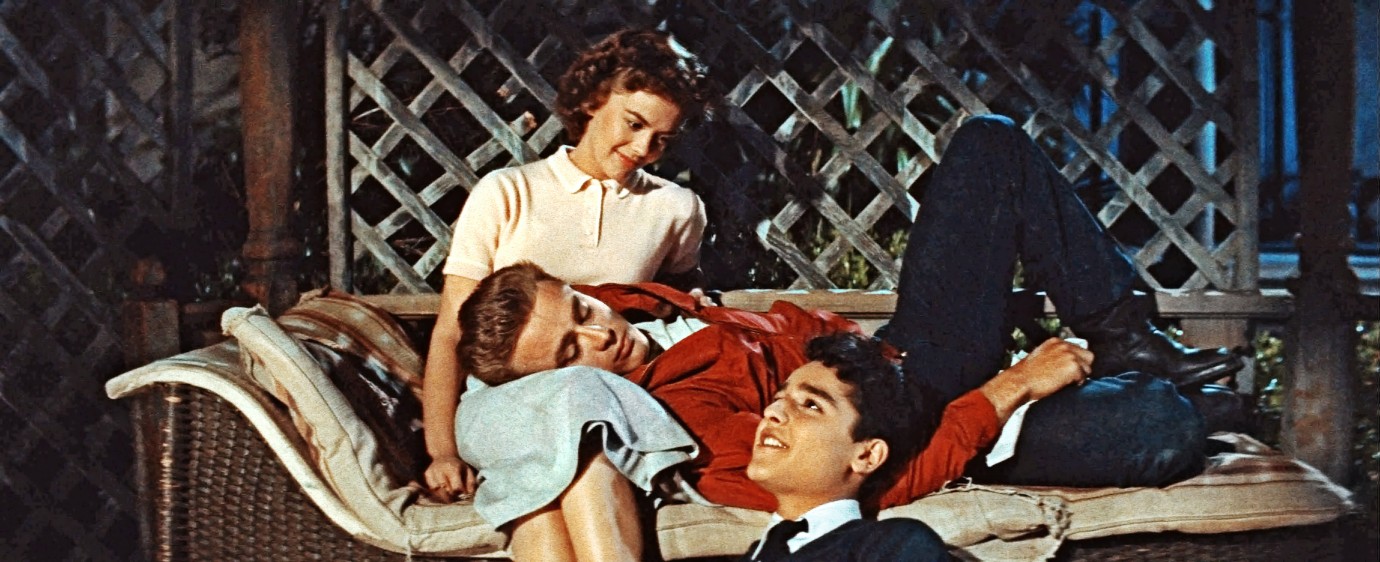
There are two other kids he connects with through the juvenile ward in prison and at Dawson High, and they are Plato (Sal Mineo) and Judy (Natalie Wood).  Plato has mental health problems and is without a family or friends.  Jim is his friend, though, and Plato looks up to him as a father figure.  Judy is dealing with problems at home as well, as her father is not too happy with the fact his sixteen-year-old daughter is growing up.  He calls her a tramp and is disconnected from her.  The three of them form a tight bond and kinship after some time. One of the other kids at Dawson High, Buzz (Corey Allen), is looking to make life a living hell for Jim, first by challenging him to a knife fight and then to a dangerous game with fatal consequences.  This does not end well for Buzz, and it leaves Jim with some serious questions about what is the right thing to do in the aftermath of this accident. When he looks to his parents for advice and guidance, they give him answers which are not in line with Jim’s strict moral code of what is right and wrong.

Buzz’s gang is looking for revenge against Jim, and they are also concerned about the consequences they might face from the police. This whole ordeal brings Judy, Plato and Jim closer together, as they all share a common bond: feeling misunderstood from the world that has been presented to them by their families.  Plato has been left behind.  Yes, he gets money, but Plato would trade it all for the love of his parents instead of living with a caregiver.  Judy wants her father to understand she is growing up and not his little girl anymore, and he is fighting this at every turn.  With Jim, he has no respect for a father with no backbone and a controlling mother.  Together, they have their own little family, and it is quite beautiful to see as an audience member.  It reminds me of the old saying, “Friends are the family you choose.” This is a very powerful motion picture in so many ways, and it really struck a chord with me considering the lack of understanding and involvement my parents had in my own life growing up.
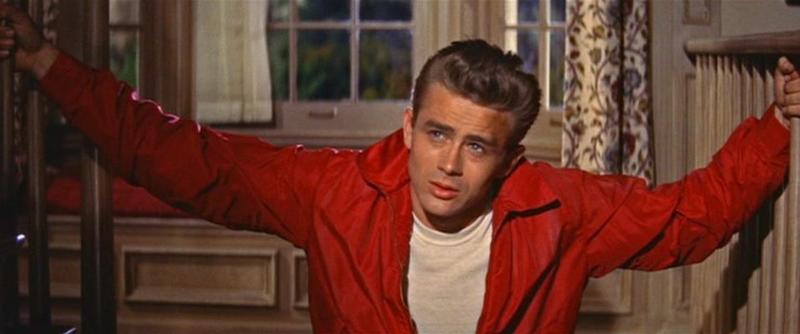
If you love acting as much as I do, you will love the acting of Dean and Wood as they are so tender and gentle together on screen.  If Dean had lived a lengthy life, there is no doubt in anyone’s mind that he would have been the next Marlon Brando.  Even though he is playing someone who is cooler than the other side of the pillow, he is also vulnerable, sensitive and relatable without ever coming across as weak.  He is simply human. Wood, in addition to being a real Hollywood beauty on screen, is tough but sweet, and she and Dean work perfectly together.  There is a scene where they are talking about love, and the way she is rubbing her chin on his face is simply beautiful and movie magic.

As soon as I finished this movie, I couldn’t wait to sit down on my laptop and start writing this review.  It was a film I had not seen in ages, so I felt like I was watching it for the first time.  It is directed by one of my favorite directors, Nicholas Ray, whose films include “In a Lonely Place,” “Bigger Than Life” and “They Live by Night.”  “Bigger Than Life,” in particular, is one of my favorite films of all time.  It deals with the side effects of medication that was way ahead of its time.  The films I’ve seen of Ray’s have all left me speechless as a viewer.  I give a slight nod to “Rebel Without a Cause,” but “Bigger Than Life” is also a really, really good film which I recommend you check out as soon as possible as it is part of the Criterion Collection.  With “Rebel Without a Cause” and “Bigger Than Life,” I almost feel like Nicholas Ray is speaking to me directly.

* * * * out of * * * *

4K Info: “Rebel Without a Cause” is released on a two-disc 4K/Blu-ray combo pack from Warner Brothers Home Entertainment.  It is rated PG-13 for some violence and thematic elements and has a running time of 111 minutes.  It also comes with a digital copy of the film.

Video Info:  This is another fantastic release from Warner Brothers as they dig deeper into their rich history of classic films for their 100th year anniversary. The film is simply electric on Ultra HD, High Dynamic Range. There were scenes here and there which looked a little grainy, but they were cleaned up quickly and did not linger, so they were not massive issues. James Dean and Natalie Wood look GREAT on 4K, and the film itself is a stunner with rich, vivid colors which pop off the screen.

Audio Info:  Thankfully, we are treated to a great Dolby Atmos track with this 4K release, and I am really happy about that because out of the three films I received to review (“Rebel Without a Case,” “Cool Hand Luke” and “The Maltese Falcon”), this film was my favorite, and it received the best audio track. All of the sizzling dialogue is on display here, and it really pops with the Dolby Atmos track. Subtitles are included in English, French and Spanish as well.

Special Features:

Commentary by Douglas L. Rathgeb

“James Dean Remembered” (1974 TV special)

“Rebel Without a Cause: Defiant Innocents” (featurette)

“Dennis Hopper: Memories from the Warner Lot” (featurette)

Screen Tests

Wardrobe Tests

Deleted Scenes

Should You Buy It?

HECK YES!! If you have never seen any of James Dean’s films, this is the place to start, without question.  As a matter of fact, after watching “Rebel Without a Cause,” I bought “Giant” on Amazon, as I want to own as many of Dean’s films in 4K as possible. I am such a fan of actors who put so much of themselves and their histories into their films.  I didn’t know a lot about Dean’s backstory, but I knew he used a lot of his childhood to tap into this performance.  It shows in each and every scene as he is so raw, real and vulnerable for the camera. He likes the camera, and the camera likes him.  This film perfectly captures the disconnect between teenagers and their parents during this era without ever being preachy or too on-the-nose.  It hits all the right notes.  The late, great Natalie Wood is also a movie star on screen.  I am such a fan of this period of Hollywood where actors were taking chances and putting their blood, sweat and tears into their performances.  The film comes with the previously released Blu-ray special features, so there is not anything new as far as documentaries on Dean. The Dolby Atmos track is a very nice touch and, despite a few rough patches, the 4K video transfer is just about perfect. It is a red-hot movie in 4K, and I loved getting to watch it in this format. This is a day-one purchase without any hesitation, whatsoever.

**Disclaimer** I received a copy of this film from Warner Brothers to review for free.  The opinions and statements in the review are mine and mine alone.

‘Cool Hand Luke’ Movie and 4K Review

WRITER’S NOTE: The following review was written by Ultimate Rabbit correspondent, Tony Farinella.

When I think of a movie star, I think of someone who possesses the “it factor” and stands above the rest of the pack.  Paul Newman was a movie star, and I would argue it was never more prevalent than in the film “Cool Hand Luke.”  Of course, many can talk about his mesmerizing performances in films such as “The Verdict,” “The Hustler,” “Slap Shot” or “The Sting.”  However, in “Cool Hand Luke,” he burns up the screen and you can’t take your eyes off of him.  It’s such a minimalistic performance, but it is captivating, spellbinding and intense.  There is no wasted moment or line of dialogue from this legendary actor here.  When I think of Newman, I think of this film.

After World War II, Luke (Paul Newman) finds himself knocking over parking meters while under the influence of alcohol, which lands him a two-year stay in prison.  Upon entering the chain gain of prison, Luke keeps to himself, but he has this unique and magnetic presence about him without even trying to do anything out of the ordinary. There is an aura about him which keeps people interested in him and talking about him.  There is a story behind the man, but the film allows those layers to unfold throughout.   Many of those working on the chain gang in this prison camp seem to fall in line and follow orders.  Luke, on the other hand, is not a fan of authority. He likes to ruffle their feathers, especially when it comes to Boss Godfrey (Morgan Woodward) and the Captain (Strother Martin).

He endears himself to his fellow prison mates by playing cards, trying to escape, and even having a contest where he says he can eat fifty eggs in an hour.  They start to see hope and light at the end of the tunnel, thanks to Luke.  As the title says, he is cool.  Every little thing about him is cool and laid-back.  Even when his attempts to escape don’t go as planned, he flashes that famous Paul Newman smile with those baby blue eyes and rolls with the punches.  He refuses to be defeated or get angry about his situation.  Instead, he is looking for solutions.  One of his closest friends there is Dragline, played by George Kennedy, in an Academy-Award winning performance.

Throughout the prison, we also see legendary actors such as Dennis Hopper and Harry Dean Stanton, which I really appreciated as I’m a huge fan of their careers. Director Stuart Rosenberg knows how to show the mundane of prison life without ever making it feel boring or uninteresting.  Much like Newman, he doesn’t waste a single scene or shot here.  Everything here has a rhyme and a reason to it. The film has a lot of outdoor scenes, and they look absolutely stunning in 4K.  This is truly one of the best-looking 4K films I’ve watched in a while.  The sunshine and the light symbolize what Luke brings to the prisoners.  He lets them know there is more to life than digging ditches.

I don’t think the anti-hero has ever been portrayed as well on screen as it is here by Newman.  The fact he’s not trying to be liked is what makes us, as an audience, like him even more.  It’s all natural.  This is a man who is in prison along with a host of prisoners that have done various crimes.  They admit that.  The film is able to make us like all of them, Dragline especially, and really root for them to get out from under the thumb of this rigid prison and its rules.  In many ways, I feel like “Cool Hand Luke” was a film in 1967 that was ahead of its time.

There are so many great quotes from the film that I could spend a good portion of my review reciting them. I’ll stick to the famous one, which is, “What we’ve got here is failure to communicate.” This quote was also used in the opening of the Guns N’ Roses song “Civil War”.  This film is a powerful masterpiece.  As someone who is a big believer in anti-establishment and someone who doesn’t always like to play by the rules, “Cool Hand Luke” is a film which resonated with me. You might knock Luke down and you might have him on the ropes, but he is not going to go down without a fight.  He is also going to smile in your face, no matter what happens to him or how much you push him.  He’s never going to lose that smile.

* * * * out of * * * *

4K Info: “Cool Hand Luke” is released on a two-disc 4K/Blu-ray combo pack from Warner Brothers Home Entertainment. The film has a running-time of 126 minutes and is rated PG.  Keep in mind, the ratings system was run much differently during this time.  It’s not an overly violent film, and I don’t recall a ton of curse words in it.  It also comes with a digital copy of the film.

Video Info: “Cool Hand Luke” never looked bad on Ultra HD, High Dynamic Range.  The film looks stunning and crystal clear.  As I mentioned, a good portion of the scenes take place outside, and it’s a colorful and bright looking film without being too bright where it’s going to hurt your eyes.  They did a tremendous job of cleaning this picture up, as I loved every second of this beautiful transfer.  I tip my cap to the fine folks over at Warner Brothers on this one.

Audio Info:  The same can be said for the audio which comes on DTS-HD MA: English 2.0 Mono and Dolby Digital: Spanish and French. Subtitles are also included in English, Spanish, and French.  The audio is crystal clear throughout, and all of the tremendous dialogue can be heard without any issues whatsoever.

Special Features:

Commentary by Historian/Paul Newman Biographer Eric Lax

A Natural-Born World-Shaker: Making Cool Hand Luke

Trailer

Should You Buy It?

You are buying this for the movie itself as well as the audio and visual aspects that Warner Brothers have put together for this tremendous release. You are not buying it for the special features, which I’ve talked about in previous reviews.  I’m a big believer in preserving film history, and I love that it is the 100th anniversary of Warner Brothers because they are digging deep into their archives with releases of some of the greatest films ever made.  They are also taking the time to make sure they are seen and heard in the highest video and audio quality possible.  They are not just upgrading these films to re-release them.  They are making sure, as a viewer, you are not only going to enjoy a classic film, but that you are going to enjoy it in 4K with a transfer worthy of the film itself.  Because of this, it is up to us, as film collectors and lovers, to support and purchase films like “Cool Hand Luke” on 4K.  It ensures us that we will get more great physical media releases in the future. I can’t recommend this film and this visual presentation any further. Buy it right now!

**Disclaimer** I received a copy of this film from Warner Brothers to review for free.  The opinions and statements in the review are mine and mine alone.

‘The Texas Chainsaw Massacre 2’ is a Mixed Bag, But It’s Never Boring

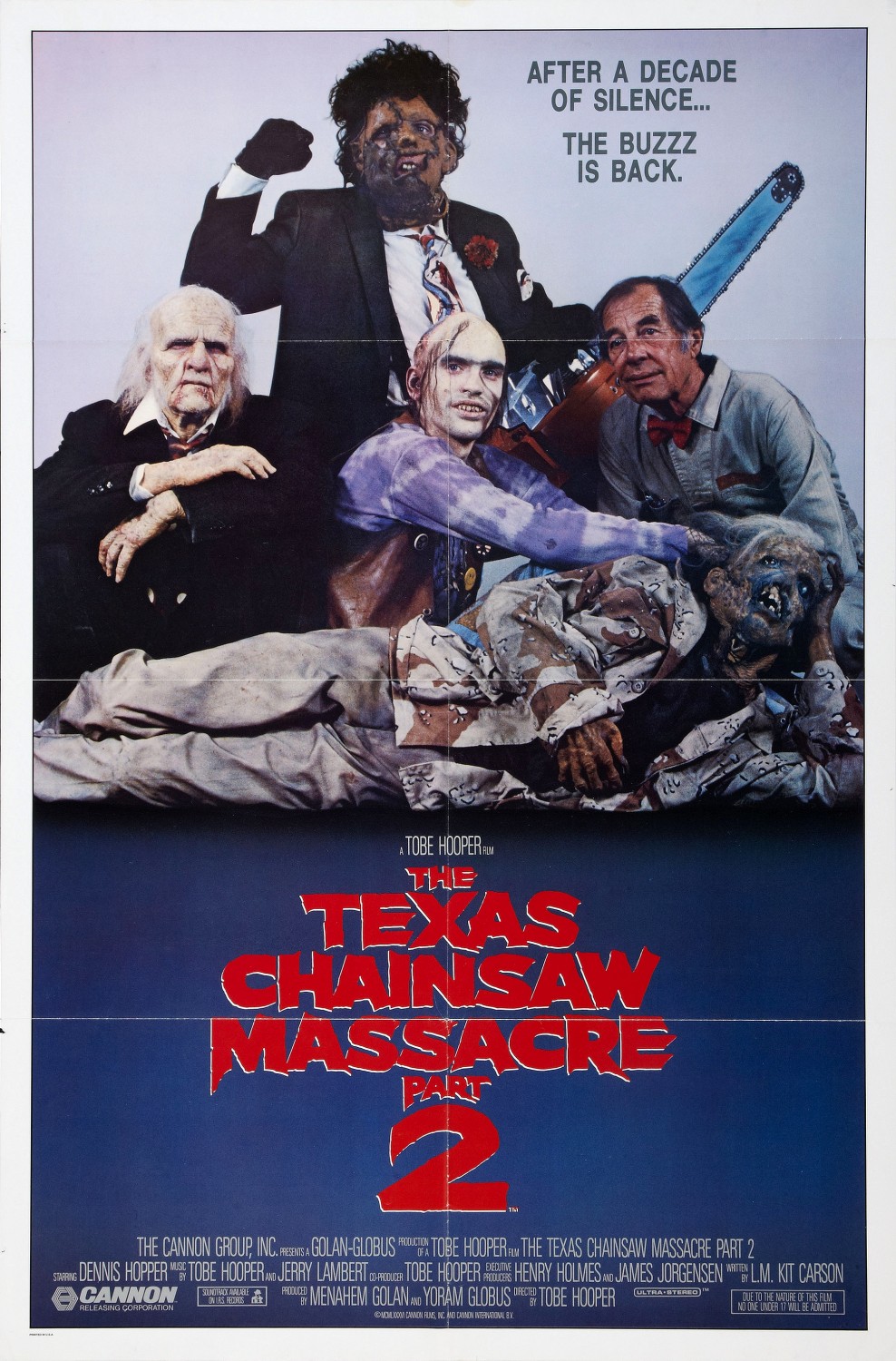
The Texas Chainsaw Massacre 2 poster

After I finished watching “The Texas Chainsaw Massacre,” I was in no hurry to watch part two. The 1974 horror classic still probes to be an intensely unsettling cinematic experience decades after its release, and Tobe Hooper’s film was far more terrifying than I expected it to be. Recovering from the original was no different than when I slowly pulling myself back together after watching Darren Aronofsky’s “Requiem for a Dream” or just about any Lars Von Trier film. But with Hooper having recently passed away, the time had come for me to check out “The Texas Chainsaw Massacre 2,” a sequel heavily criticized when it opened in 1986, but which has since become a cult classic in the eyes of many.

“The Texas Chainsaw Massacre 2” takes place over a decade after the original, and an opening narration tells us the police searched for Leatherface and his cannibal family but never found any trace of them. But of course, it doesn’t take long for this sequel to reintroduce us to Leatherface as he gleefully slices away at a pair of obnoxious high school seniors who harass on-air radio DJ Vanita “Stretch” Brock (Caroline Williams). Stretch captures the audio of these kids’ murders and passes it on to Lieutenant Baude “Lefty” Enright (Dennis Hopper), uncle to Sally Hardesty and her wheelchair-bound brother Franklin who were victims of Leatherface’s chainsaw wrath. From there, the two of them become determined to end Leatherface and the Sawyer family’s reign of terror once and for all.

How you enjoy this sequel largely depends on what your expectations are when you go into it. If you think Hooper planned to match the claustrophobic terror and unnerving power of the original, you are in for a serious disappointment. But if you are able to accept this sequel in regards to what Hooper intended to accomplish with it, I think there is a good deal of fun to be had even if feels like there is a lot missing from this follow-up.

With “The Texas Chainsaw Massacre 2,” Hooper wanted to focus more on the black comedy he said was inherent in the original. Was there black comedy in the original? Yes, but it took a couple of viewings to realize this was the case. This sequel, however, was made to satirize both horror movies and the excess of the 1980’s. Since this one came out in 1986, the time had come to take aim at the greed which came to define this particular decade. Also, when you take into account how the poster gleefully parodies the one for “The Breakfast Club,” you should know this a film which will not take itself too seriously. Plus, this was released by Cannon Films, so you could count on it being entertaining, and maybe for reasons its director didn’t intend.

Looking back at “The Texas Chainsaw Massacre 2,” my feelings about it are decidedly mixed. I did enjoy the frenzied energy Hooper and company brought to the proceedings, and the actors look like they had great fun committing onscreen mayhem. At the same time, it feels like a missed opportunity as the style and substance of this sequel proved to be much too distant from the original. Its links to the 1974 film are very weak to where this feels like a sequel in name only. Sally Hardesty (Marilyn Burns’ character from the original) is only mentioned in the opening narration as having since gone into catatonia. It would have been cool to see her come back in one way or another, perhaps as some badass hardened warrior eager to get revenge. Heck, this sequel came out in the summer of 1986 not long after Sigourney Weaver set a new standard for female action heroes in “Aliens.” Had Burns come back, it could have been the summer of the vengeful female warrior.

One thing which especially bummed me out was the lack of actors returning from the original. In fact, the only actor from the original to appear here was Jim Siedow who reprises his role as Drayton Sawyer. While his creepy face alone is the kind which inspires wicked nightmares, Siedow doesn’t get as much to do this time around. As for Leatherface, he is portrayed by Bill Johnson and not Gunnar Hansen who brought a twisted realism to the iconic horror character. Johnson isn’t bad as he can wield a rusty chainsaw like the best of them, and his sudden appearance from a room filled with vinyl records results in one of this sequel’s scariest moments, but Hansen is sorely missed here as no other actor can possibly match what he brought to the first film.

The rest of the cast, however, does rise to the frenzied challenge Hooper laid out for them. Bill Moseley, who has since appeared in Rob Zombie’s “House of a 1,000 Corpses” and “The Devil’s Rejects,” looks to be having the time of his life as Chop-Top Sawyer as he gleefully tortures Stretch even after a part of his skull gets accidentally sawed off by Leatherface. Speaking of Stretch, Caroline Williams brings a wonderfully spunky energy to the role as she uses her smarts to outwit the Sawyer family in an effort to escape with her life, and her last moment in this sequel is a memorable one to say the least.

But the actor I got the biggest kick out of watching in “The Texas Chainsaw Massacre 2” was Dennis Hopper who played former Texas Ranger Baude “Lefty” Enright, a man deeply obsessed with finding the Sawyer family and avenging the suffering they and Leatherface inflicted on his kin. Hopper was in the midst of a major comeback in 1986 as he appeared in “Hoosiers,” “River’s Edge” and, most famously, David Lynch’s “Blue Velvet.” While those films are better examples of his acting, his performance in this sequel is equally inspired as he clearly knew he was in an over-the-top horror movie and relished the opportunity to go mano-a-mano with Leatherface. Seeing the “Easy Rider” battle Leatherface with a chainsaw is wickedly gleeful fun as a battle with chainsaws is something this sequel just had to have.

So, when all is said and done, I did admire “The Texas Chainsaw Massacre 2,” but certainly not it in the same way I admired the original. Hooper’s vision wasn’t lacking here in the slightest, but he instead took things in direction fans were prepared for 30 years ago. It is only with the passing of time we can look at it differently and understand how it attained cult status. I don’t think it’s a bad film, but it does feel strange compared to what came before.

Looking back, “The Texas Chainsaw Massacre 2” represented one of several attempts by Menahem Golan and Yoram Globus of taking a well-received motion picture and turning it into a hopefully long-running franchise. Clearly, they had more luck commercially, if not critically, with “Death Wish,” but at least this sequel fared much better than “Superman IV: The Quest for Peace,” the film which pretty much put the final nail in the coffin for Cannon Films.

Of course, “The Texas Chainsaw Massacre” franchise didn’t stop there as the buzz of the saw is still an inviting sound to horror fans all over the world, and filmmakers have continued on with other sequels, a remake, prequels and, yikes, an upcoming origin story. People still want to experience the visceral thrill the 1974 horror classic in one way or another, but when it came to “The Texas Chainsaw Massacre 2,” perhaps Hooper realized from the start that it was not possible to top the original or match its terrifying power. Instead, he felt it was better to try something a little different, and that’s what he did with this sequel for better and for worse.

* * ½ out of * * * *