‘The Color Purple’ (2023) Movie and 4K Review

The following review was written by Ultimate Rabbit correspondent, Tony Farinella.

It wasn’t that long ago when I had the pleasure of reviewing 1985’s “The Color Purple” on this very website, and I absolutely adored the film.  When I heard there was going to be another adaptation, I was eager to see how it was going to turn out, especially because it was going to be a musical.  Musicals are tricky, as they need just the right amount of music to make it work.  The music needs to really lend itself to the scenes instead of taking over the film entirely. If it’s one song after another without any time to let them breathe, it can take away from the performances on screen. I’m happy to report “The Color Purple” has all of the right ingredients to succeed with flying colors.
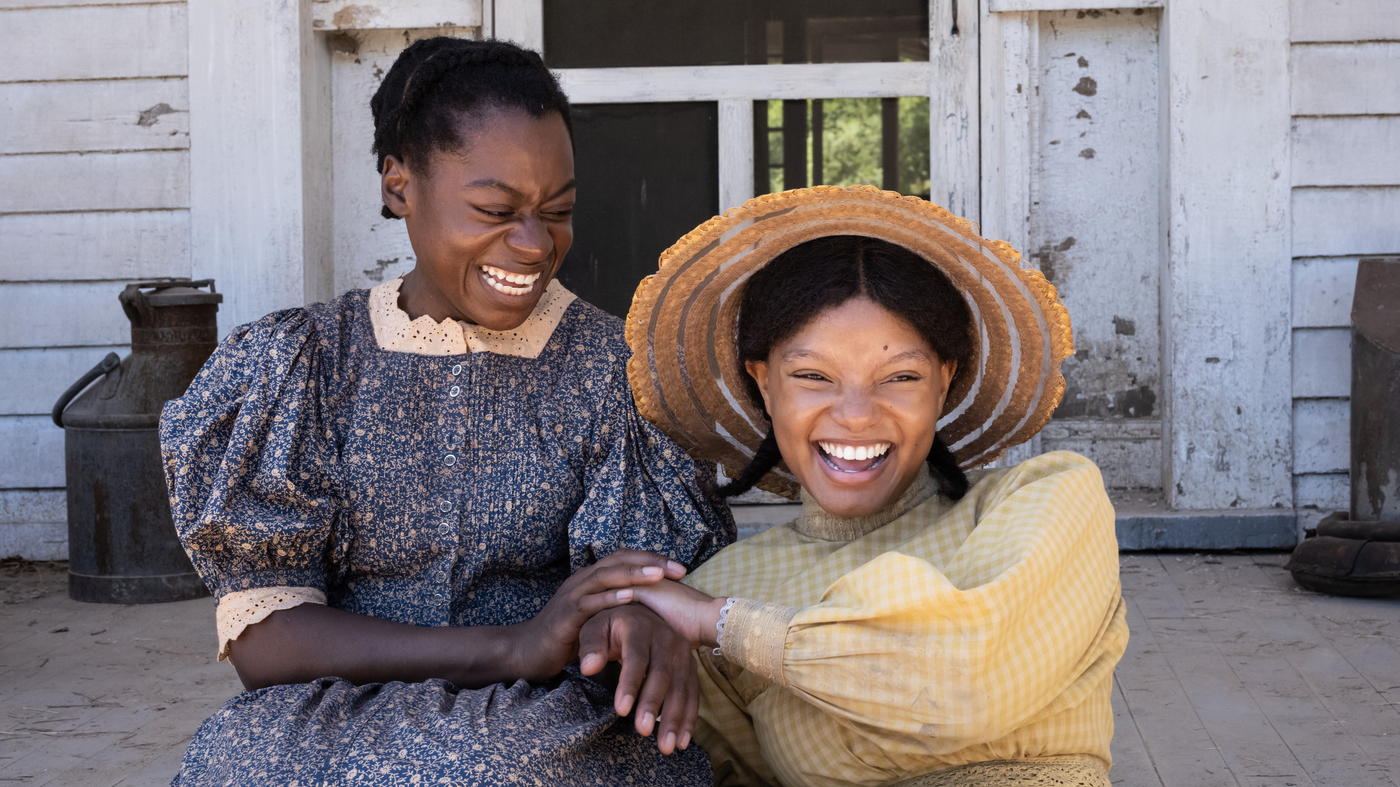
The film follows two sisters, Celie and Nettie Harris (Phylicia Pearl Mpasi and Halle Bailey) who are stuck living with an angry and abusive father named Alfonso, played by Deon Cole. He’s especially hard on Celie, who has two children after being raped by her own father.  He separates her from her children, which causes her much distress and agony. It isn’t long before the two sisters are separated after their father gives away Celie to a man by the name of Mister, played by Colman Domingo.

Mister is a farmer who already has three children of his own, and he’s equally as rough on Celie as her father.  She’s basically doing everything for him, and she feels defeated from the years of abuse from both her father and her current husband. In addition to this, Mister is also hiding all the letters she receives from her sister Nettie, so they have no contact with one another.  Between not being able to see her children or her sister, she feels like life is nothing but misery and pain for her each and every day.

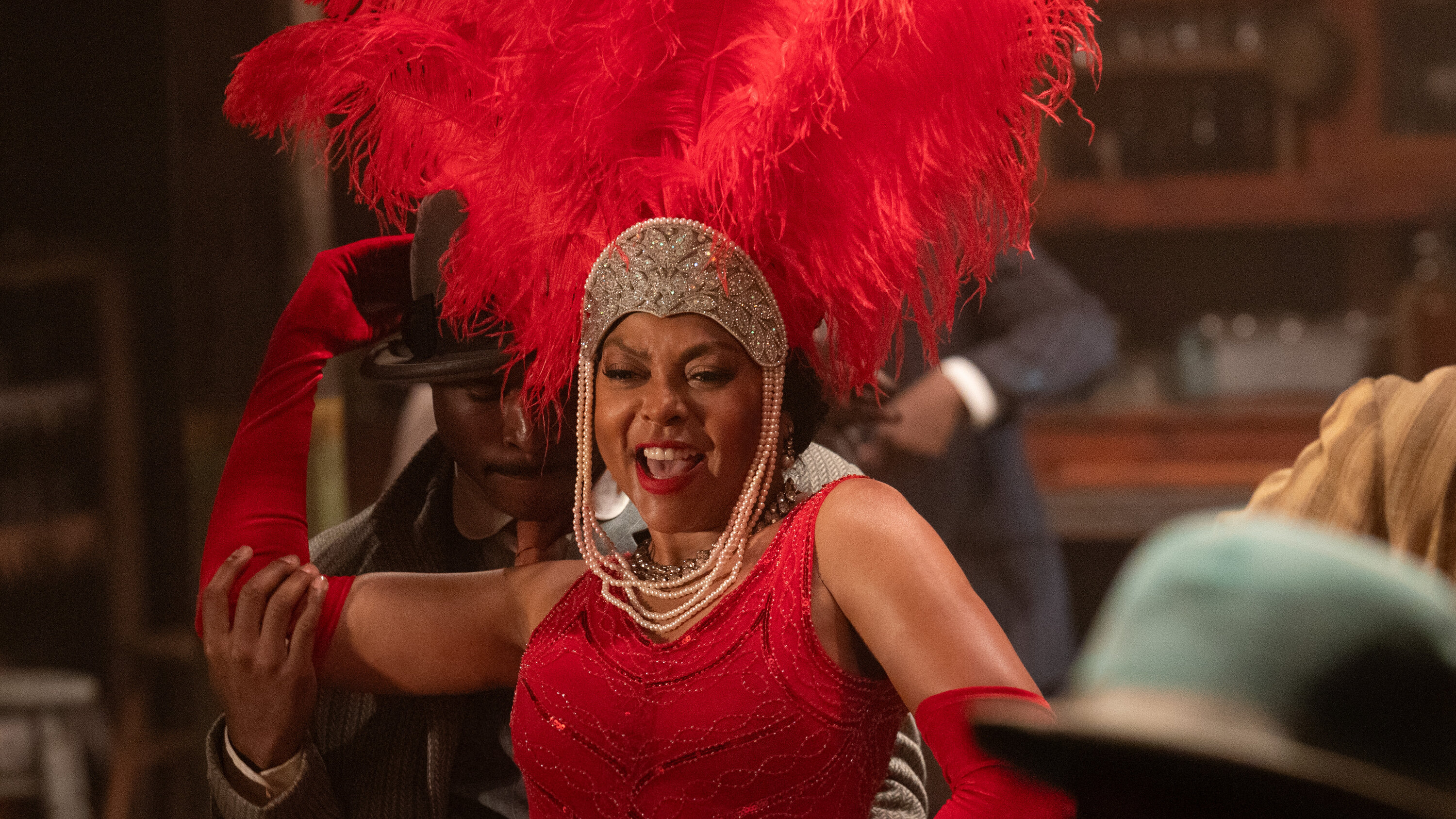
As Celie gets older, she is played by “American Idol” winner Fantasia Barrino.  She definitely has the emotional range as an actress to pull off this incredibly demanding performance. When it comes to the musical numbers, it is second nature to her.  Along the way, she gets to know Sofia, played by Danielle Brooks. She is married to Mister’s son, Harpo (Corey Hawkins), and she is not afraid to whip him into shape.  This is the first time that Celie has seen a strong female in her life.  She is used to women having to take everything from their husbands without being able to defend themselves.  It is certainly not the case with Sofia.  One day, Celie hopes to be as strong as Sofia.  She also meets another strong and confident woman in Shug Avery (Taraji P. Henson), a jazz singer who completely captivates Mister.
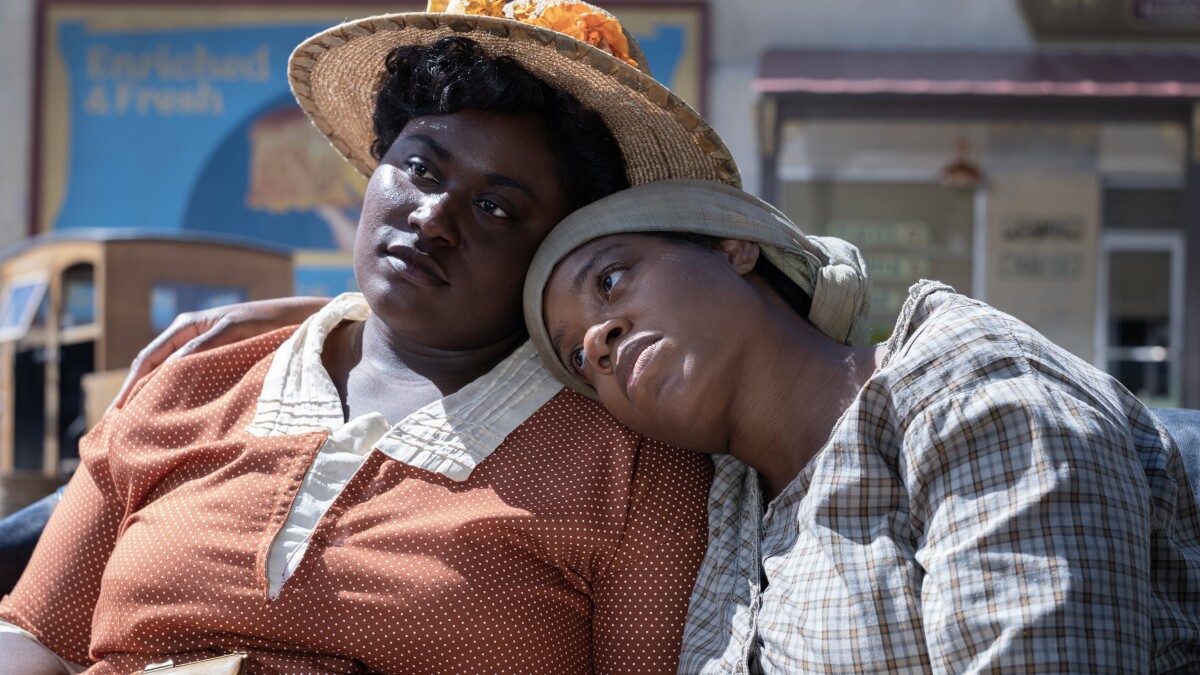
During this film, we see a journey which starts in 1909 and goes all the way until 1947, and it’s one of two sisters who are bound and determined to meet up with one another again, no matter what it takes. Along the way, even Sofia deals with some hardships of her own and feels defeated and drained by her new circumstances.  Celie learns to grow and finds out how to stand on her own two feet.  Heck, even Mister learns a thing or two about himself and how he needs to modify his own behavior.  Everyone’s character arch is worth watching throughout the course of the film’s two hour and twenty-minute run time. 

This is a film that never feels boring, stale, or repetitive because these are fleshed out characters whom, as an audience, you care about and root for throughout the course of the story.  For the most part, the film is pretty true to the original 1985 film in terms of its major moments.  As a whole, it works on so many levels. It starts with this tremendous cast of actors and actresses from Fantasia Barrino to Taraji P. Henson to Danielle Brooks to Colman Domingo to Corey Hawkins to Gabriella Wilson ‘H.E.R.’. Everyone brings their heart and soul to the project in addition to their lungs. They were very diligent about putting this cast together from top-to-bottom. Ciara also appears as an older version of Nettie.
“The Color Purple” is ultimately a story about sisterhood, resiliency, strength, and the human spirit. I don’t think it’s fair to compare the two films as they are trying to accomplish the same thing while going about it in completely different ways. The music enhances the story and adds a different take to the material while also keeping the essence of Steven Spielberg’s original film alive and well.  For my money, this is a perfect film.  I was emotional during it, I laughed at the appropriate moments, and the songs stayed with me as well.  I wanted to listen to the soundtrack as soon as the film was over, and I played it on repeat.

Remakes of popular films are tough to pull off, especially when it’s from a novel, a nearly forty-year-old film, and a successful Broadway musical as well. However, when the new version is a fan of the original film, you have what is known as a labor of love.  If you enjoyed 1985’s “The Color Purple,” you will certainly enjoy 2023’s “The Color Purple.” It is about perspective, though.  I believe this film needs to be seen as its own entity.  If you are able to do that, you will enjoy the heck out of it. 

The filmmakers know the audience cares about these characters, knows them, and wants to see them succeed.  It takes you on an emotional journey from start to finish with a tremendous payoff in the end which is very satisfying. You very much live through these characters. You feel their pain, their happiness, and you root for them to succeed. Along the way you laugh, you cry, and you never lose hope.  That, in my opinion, is the beauty of a great film like “The Color Purple.”  There is a reason why this story has stayed with people for so many years and still resonates with viewers to this day.

* * * * out of * * * *

4K Info: “The Color Purple” is released on a single-disc 4K from Warner Brothers Home Entertainment. It also comes with a digital copy of the film. It has a running time of 141 minutes and is rated PG-13 for mature thematic content, sexual content, violence and language.

Video Info:  There is a beautiful Dolby Vision transfer on the film here, and it looks magnificent. This is a film filled with life and color, and it’s on full-display with this flawless transfer. The HDR really brings out the richness of the picture quality.

Audio Info:  We are also treated to a pitch-perfect Dolby Atmos soundtrack here which allows us to enjoy each and every single song the way it was intended to be heard.  It stays at just the right bass and volume throughout the film, as it’s never too loud or too soft.

Special Features:

Creating The Color Purple: A Bold New Take on the Beloved Classic

Hell Yes! The Iconic Characters of The Color Purple

In the Flow: Creating The Color Purple’s Biggest Musical Moments

 A Story For Me: The Legacy of The Color Purple

Should You Buy It?

If you enjoy the power of cinema, do yourself a favor and pick up “The Color Purple” on the day of its release.  It is worth every penny, especially with the special features that are included here along with a Dolby Vision transfer and a Dolby Atmos soundtrack.  This is also a terrific film that really tugged at my heartstrings.  I wasn’t really sure what to expect when I put this movie in my 4K player and sat down to watch it.  However, I was blown away by its high-energy, its music, the intense drama, and the phenomenal performances. This version of “The Color Purple,” which was directed by Blitz Bazawule, is the kind of movie I wish Hollywood made more of these days.  It’s an adult drama that invigorates the spirit and is good for the soul.  “The Color Purple” on 4K comes highly recommended as a day one purchase.

**Disclaimer** I received a copy of this film from Warner Brothers to review for free.  The opinions and statements in the review are mine and mine alone.
‘BlackkKlansman’ is Spike Lee’s Best Joint in Years

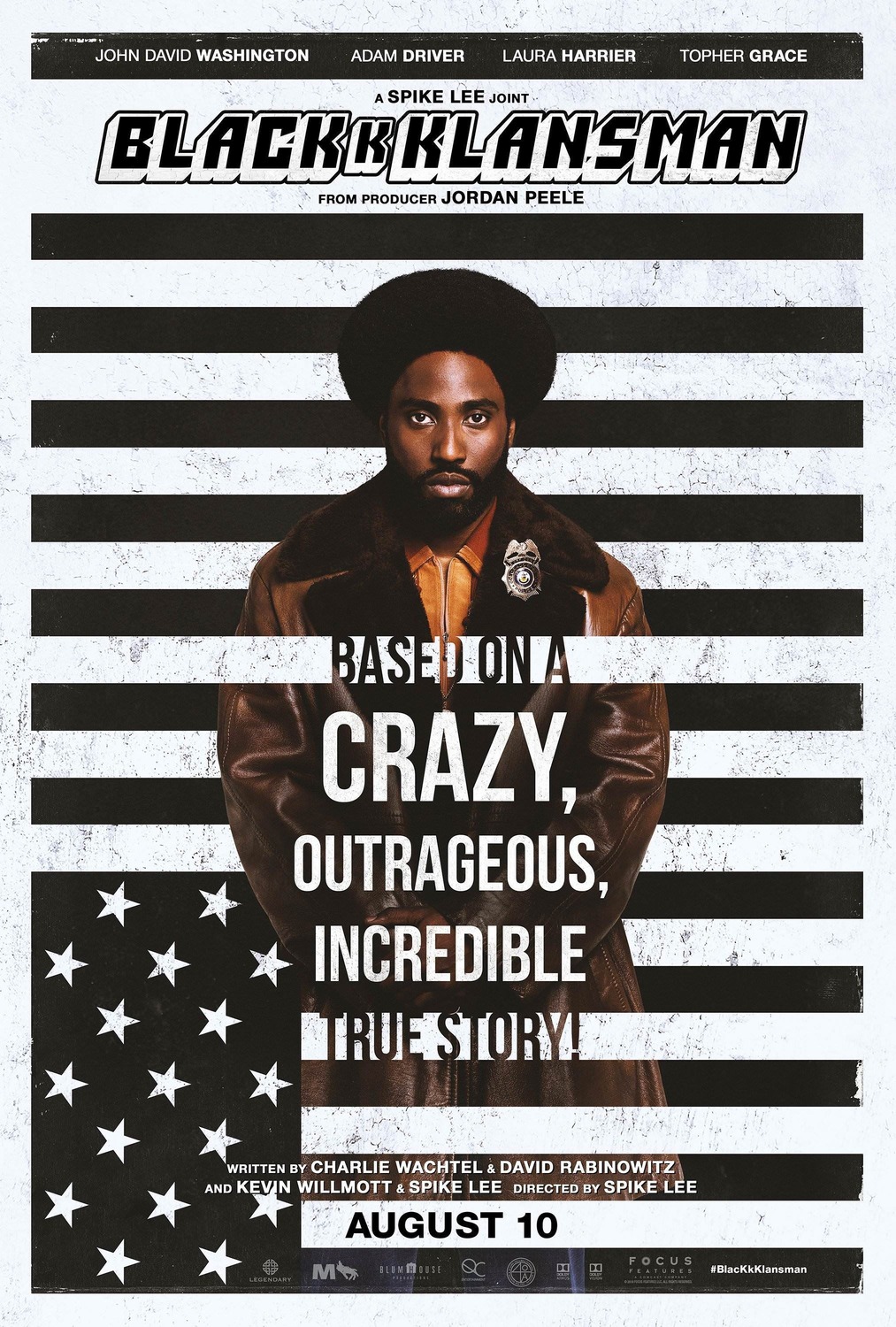
BlackkKlansman movie poster

Those who read my reviews know how much I despise the term “based on a true story” as it has long since lost its meaning for me. However, Hollywood has been looking for ways to provide variations on this phrase in recent years in an attempt to give it back the value it once had. One of my favorites was “Argo” which was advertised as being based on a “declassified” true story which made it worth seeing all the more. Still, every other movie these days is “based on a true story,” and pointing this out should make you wonder which ones were not. Besides, aren’t all movies based on or inspired by things we have experienced in real life?

BlackkKlansman,” a Spike Lee joint, is the latest movie to be “based on a true story,” but its poster has advertised as being “based on a crazy, outrageous, incredible true story.” Personally, I prefer the phrase Lee uses in the movie itself which says it is based on “some fo’ real, fo’ real shit.” This description feels far more honest as it would have seemed unbelievable were this movie released a few years ago. What results is the best joint Lee has made in years, and I could not recommend it more highly.

Based on the memoir “Black Klansman,” it stars John David Washington as Ron Stallworth who, when we first meet him, is on his way to apply at the Colorado Springs police department and become its first ever black detective. This distinction, however, doesn’t do much for him in the beginning as his fellow officers, particularly the slimy Patrolman Andy Landers (Frederick Weller) who does little to hide his racist attitudes, and he is eager to rise up in the ranks.

Following a boring stint in the records room, Stallworth gets transferred to intelligence where he comes across an advertisement for the Klu Klux Klan which looks to find new members. It is great fun watching Washington talk on the phone with Ryan Eggold who plays Walter Breachway, President of the KKK chapter of Colorado Springs, as he effortlessly convinces him he is as white as they come. This act quickly grabs the attention of Detective Flip Zimmerman who is played by Adam Driver, and it is a gas watching Driver slowly turn around in his chair once he realizes what Stallworth is up to.

Of course, Stallworth does make a critical mistake during this phone call; he uses his real name. As a result, he is forced to turn to Zimmerman who has to pretend to be Stallworth in person as they further infiltrate the KKK. This infiltration becomes a delicate balancing act as Stallworth continues to fool the racist organization over the phone while Zimmerman is forced to fool them in person. In the process, we come to discover how much easier it is for a black man to pretend to be white than it is for a white man to pretend to be black.

“BlackkKlansman” couldn’t be timelier as it digs deep into a past which has a frightening resemblance to America’s present. The KKK is shown here to be as violent and racist as they are today as they keep chanting “America first” and plot acts of violence designed to eliminate those in their way and instill fear in the general public. One of the most disturbing scenes comes as we watch them cheer unabashedly at a screening of D.W. Griffith’s “Birth of a Nation” which portrayed the KKK as heroic and African-Americans as being unintelligent and sexually aggressive. Lee does nothing to hide the racist caricatures Griffith put onto the silver screen back in 1915, and they are as infuriating to take in today as they were a hundred years ago.

It’s very ironic how “BlackkKlansman” was released in theaters around the same time Dinesh D’Souza’s latest propaganda piece, “Death of a Nation,” came out. Both movies deal with “Birth of a Nation” in different ways and acknowledge how it was the first American motion picture ever to be shown inside the White House. D’Souza portrays President Woodrow Wilson as getting a liberal erection from watching Griffith’s movie, and he took this a step further in “Hillary’s America” by having a KKK member on horseback leap out of the screen to where Wilson is shown as being completely hypnotized by this image. D’Souza, however, leaves out “Birth of a Nation’s” more inflammatory segments which include deeply offensive depictions of blacks, something Lee does not shy away from showing here.

As is the case with movies “based on a true story,” “BlackkKlansman” does take numerous liberties with the source material. The events of this story took place in 1979, but Lee has moved the timeline back to 1972 which allows him to acknowledge certain Blaxploitation classics as well as the re-election efforts of President Richard Nixon. It is also said how David Duke never realized Stallworth was a black man until 2006, but the change here was worth it as leads to one of the movie’s best and funniest scenes. With movies like these, it is more important to be true to the spirit of the facts than anything else, and those who have a problem with that can always read Stallworth’s memoir instead.

There’s some additional irony here with “BlackkKlansman’s” release as it is coming out not long after the “Superfly” remake. One scene has Stallworth talking with his girlfriend, Patrice Dumas (Laura Harrier), about which movie was cooler, “Super Fly” or “Shaft.” Patrice replies how “Super Fly” unfairly stereotypes black men as criminals, but it also showed a realistic grittiness to life in the city which was complemented by the brilliant soundtrack composed by Curtis Mayfield. It would be interesting to see how Patrice would have felt about this summer’s remake which threatened to glamorize gangster life more than ever before, and it made me wonder why anyone bothered remaking this blaxploitation classic in the first place.

Then there is former President Nixon whom D’Souza tried to convince us was a true progressive like any other Republican in “Death of a Nation.” We do not see much of Nixon in “BlackkKlansman,” but we do see his re-election posters displayed prominently in KKK hangouts as they were supposedly big supporters of his. Seeing this makes me think of the old Vulcan proverb Spock spoke of in “Star Trek VI” which said “only Nixon could go to China.”

“BlackkKlansman” is designed to make us mad at how history is repeating itself as white supremacist groups have flourished under the Donald Trump administration, but it is also insanely funny at times as it is almost impossible to believe anyone could have gotten away with what Stallworth and Zimmerman did here. Then again, in a time where John Melendez, a.k.a. Stuttering John of the Howard Stern Show, managed to trick Trump into believing he was Senator Bob Menedez in a phone conversation, perhaps it doesn’t seem unbelievable in the slightest

Honestly, it has been some time since I last saw a Spike Lee joint. His movies get overwhelmed at times by his camera tricks and flourishes and overly bombastic music scores which make me want to turn the volume. But with “BlackkKlansman,” Lee has crafted a film where everything feels perfect and spot on, and what results is highly entertaining and deeply visceral. Even as the “Do the Right Thing” director wants you to see how the past never left us, he invites us to revel in Stallworth’s successful infiltration even as those in power want to bury his victories.

There is not a single weak performance to be found here. Both Washington and Driver dig deep into their characters’ complexities as they try to remain professional in an increasingly volatile situation, but their own personal beliefs threaten to get in the way. Jasper Pääkkönen proves to be a fiery presence as Felix Kendrickson, the white supremacist who looks like a grenade primed to explode at any given moment. Corey Hawkins is magnetic as Kwame Ture when he rouses his followers at a civil rights rally. And Topher Grace proves to be an inspired choice to play a young David Duke who is shown to be aloof as to who Stallworth really is, and that’s even when Stallworth is assigned to be his security detail while in Colorado Springs.

It is no mistake Lee concludes “BlackkKlansman” with footage from the Unite the Right rally which took place in Charlottesville, Virginia as the movie is being released on its first anniversary. We see white supremacists marching the streets with tiki torches saying they will not be replaced, we see the real David Duke talk about how Trump is making “America great again,” we see Trump respond to the rally by saying how there were good people on both sides, and we see the car attack perpetrated by a white supremacist which injured many and killed Heather Heyer. While we look at the past as if it is barely visible in our rearview mirrors, it is real events like these which remind us how these same mirrors have the message of how things we see in them are much closer than they appear.

The image of an upside-down American flag which fades into black and white is the perfect image to end “BlackkKlansman” on as we are truly living in “The Twilight Zone” with everything that’s going on. It also reminds me of the final image of that same flag in John Singleton’s “Higher Learning” which ended with the word “unlearn” being typed out over it. Those who do not learn from the past are condemned to repeat it, and history continues to repeat itself again and again and again. The fight for justice has never ceased, and the progress we all thought Americans had made is not as great as it seemed. Lee has made an overtly political movie which could not have come out at a more appropriate time, and it is his best one in years.

* * * * out of * * * *