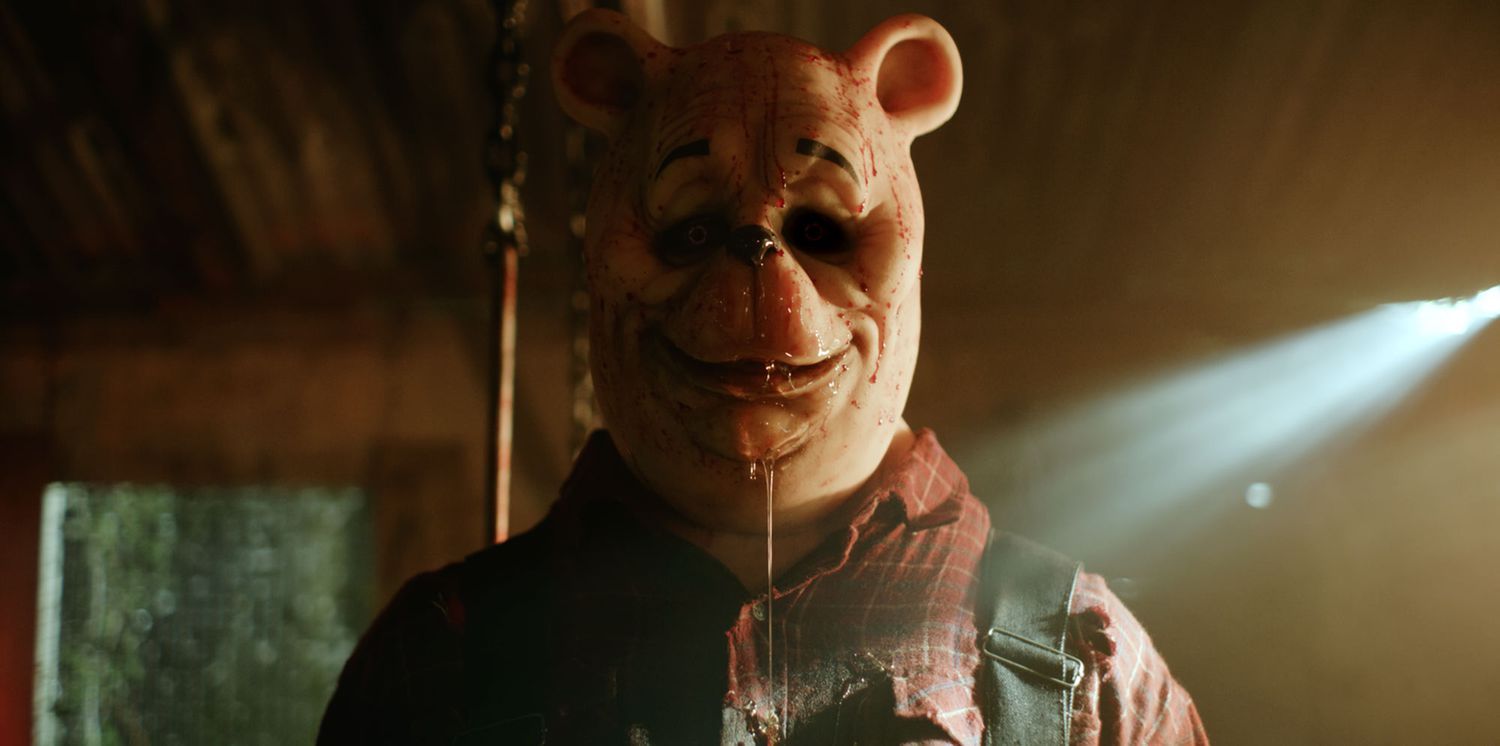
Winnie-the-Pooh and the Bloody Movie That’s NOT for Kids
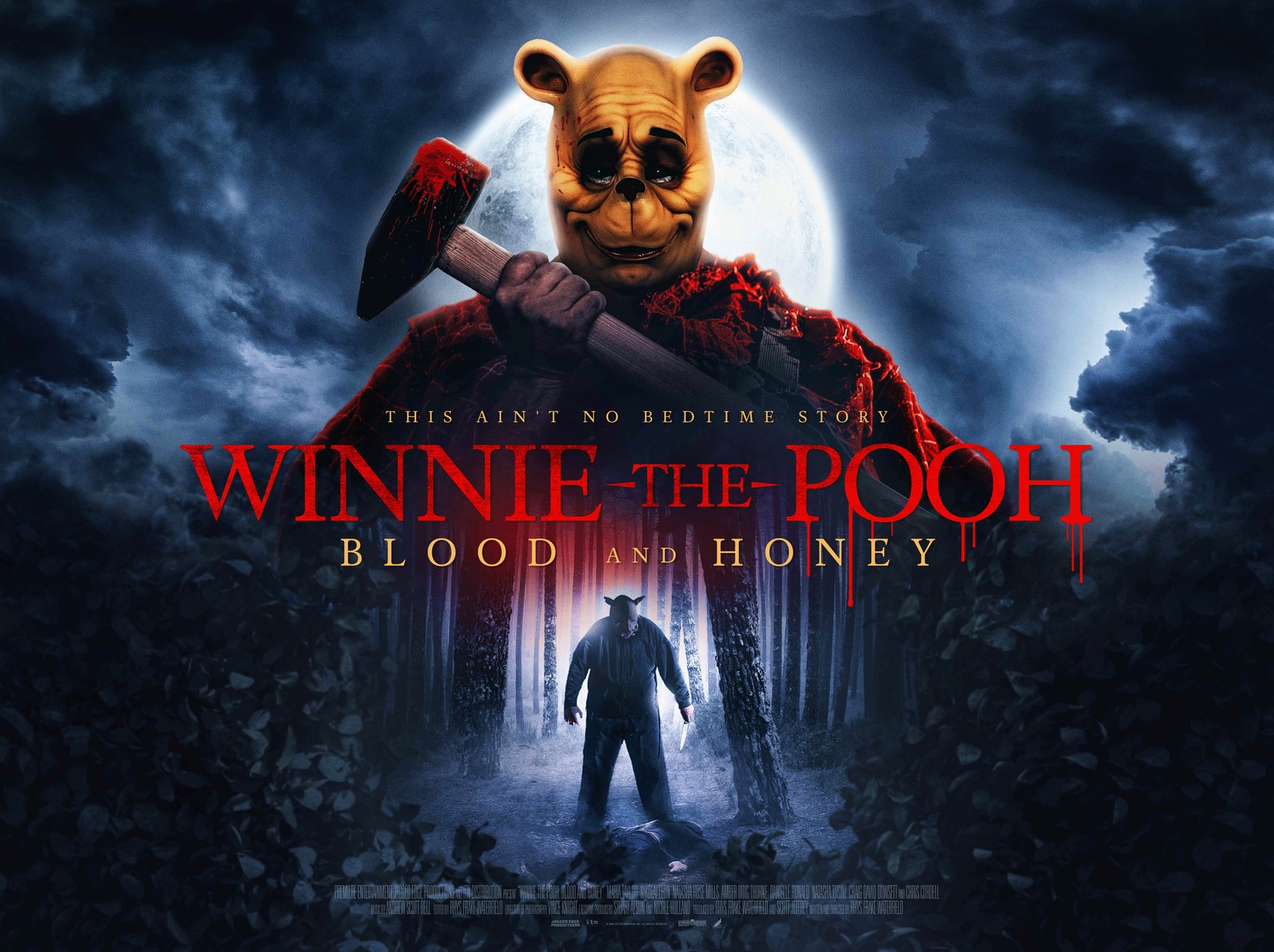
It was released back in 2023, but I still have not seen “Winnie the Pooh: Blood and Honey.” This is a horror film which came about when A.A. Milne’s “Winnie-the-Pooh” went into public domain and led filmmaker Rhys Frake-Waterfield to concoct this tale of the “silly old bear” turning into a viciously feral animal after Christopher Robin leaves the Hundred Acre Wood for college. Piglet joins Pooh on a murderous rampage when a group of young female university students make the mistake of renting a cabin in the Hundred Acre Wood.
Like I said, I have not watched “Winnie the Pooh: Blood and Honey.” While the idea of turning this chubby little cubby all stuffed with fluff into a slasher this side of Freddy Krueger, Michael Myers or Jason Voorhees seems to promise an entertaining and trashy time at the movies, watching the trailer made me believe the filmmakers did nothing more than simply give audiences another generic horror movie with the usual cliches which have defined this genre far too often. Plus, Eeyore is not in this film, and everybody who knows me knows I have been a die-hard Eeyore fan forever. Had this clinically depressed donkey had a bigger role, I would have given it a look.
Anyway, I bring this up because I was recently reminded of a news story from October 2023 when a fourth-grade teacher at a charter school in Florida, in this case The Academy of Innovative Education, ended up showing his students this poorly reviewed horror flick. From what I have been told, the teacher showed his students this film because they selected it from the various options given to them, but they eventually asked the teacher to turn it off as they in no way expected this “silly old bear” to commit heinous acts of violence.
Understandably, the children were traumatized, and the parents were very pissed off (can you blame them?). One parent, Michelle Diaz, said she felt “completely abandoned” by the school, and that it was not up to the children to decide what movie to watch in the slightest. She also added that the teacher should have researched its content before anything else, and I could not agree with her more.
Seriously, what was this teacher thinking? There are so many ways you can research a movie and its content. You can check its rating, and whether it is rated G, PG, PG-13, R or NC-17, there is a description underneath as to why the movie is rated as such. And when it comes to R-rated motion pictures, the descriptions are always tremendously entertaining. Take Rob Zombie’s magnum opus, “The Devil’s Rejects,” for example. The theatrical cut was rated R for “sadistic violence, strong sexual content, language, and drug use.” Now this should be enough of a reason to avoid taking your five-year-old to see it, and not just because you cannot afford a babysitter. For others, it may prove to be a major selling point. Horror buffs in particular will look at this description and say to one another, “Gnarly! Let’s check it out!”
Now in the case of “Winnie the Pooh: Blood and Honey,” it was released unrated, so it may not have come with such a description. I am not even sure if this cinematic work of speculative fiction was even screened for the MPA (formerly the MPAA). Had it been, I imagine they would have neutered the hell out of it as if it were the average “Friday the 13th” sequel.
In addition, you can find out so much about any film if you visit the Internet Movie Database (IMDB), you can have the plotline and events completely spoiled for you on Wikipedia, you can check on Rotten Tomatoes if it has a fresh or rotten score, and the reviews on the site should give you a solid idea if it is appropriate or not for a preschooler. There are other websites out there designed for parents to inform of them of inappropriate material for children in a movie. Please reply in the comments if you know of any specific websites like those. I know they are lurking out there somewhere on the world wide web.
Now at this point, many will say that Winnie the Pooh is in this movie’s title, and that the name brings about feelings and images of innocence, friendships and cuddly animals we all want plush toys out of. This A.A. Milne creation does not bring up any quick comparisons to “Henry: Portrait of a Serial Killer,” and seeing him wear a hockey mask like Jason Voorhees was unthinkable for decades.
But here’s the thing: the word “blood” is in this movie’s title. Doesn’t that word trigger anybody anymore? Did that Miami teacher even take this into account? I mean, how many other “Winnie the Pooh” stories, specials and movies have featured the word “blood” in the title? There was the “Blustery Day,” there was “Winnie the Pooh and Tigger Too,” there was another about the honey tree Pooh was jonesing to get into, and there is no forgetting the day with Eeyore (my personal favorite).
What else could have been implied by having the word “blood” in the title of this deeply twisted motion picture? I shudder to think as it would surely make both Walt Disney and A.A. Milne roll over in their graves, cryogenic or otherwise. Imagine the following cinematic scenario:
“Pooh, what are doing?”
“I found something sweeter than honey, Christopher Robin. It’s the blood of Christ!”
“Silly old bear!”
“No, seriously. I am here to save your soul!”
But hey, the implications of this movie title could get even worse and more unimaginable. Just think:
“Christopher Robin! What is that?”
“Kanga is menstruating Pooh. Want to take a closer look?”
“Oh bother, I have now lost my appetite for honey!”
Imagine Piglet observing this taking place. He would have ended up having the mother of all panic attacks.If he could get a word out in the process, that would have been extraordinary.
So basically, you cannot convince me that you are not being well-informed on movies being released today. All sorts of warning signs are there for you to research, and that’s regardless of whether or not you are a Miami schoolteacher. Please do not tell me you were not warned. As for the children, I hope they got the mental health talk they needed. What may seem silly and cheap to us adults is a child’s horrific horror show. Granted, “Winnie the Pooh: Blood and Honey” was made for only $50,000 dollars, and the trailer does not betray its low budget and reeks of severe cheapness, but even the cheapest character mask can be every bit as traumatizing as watching the horse Artax drown in “The Neverending Story.”
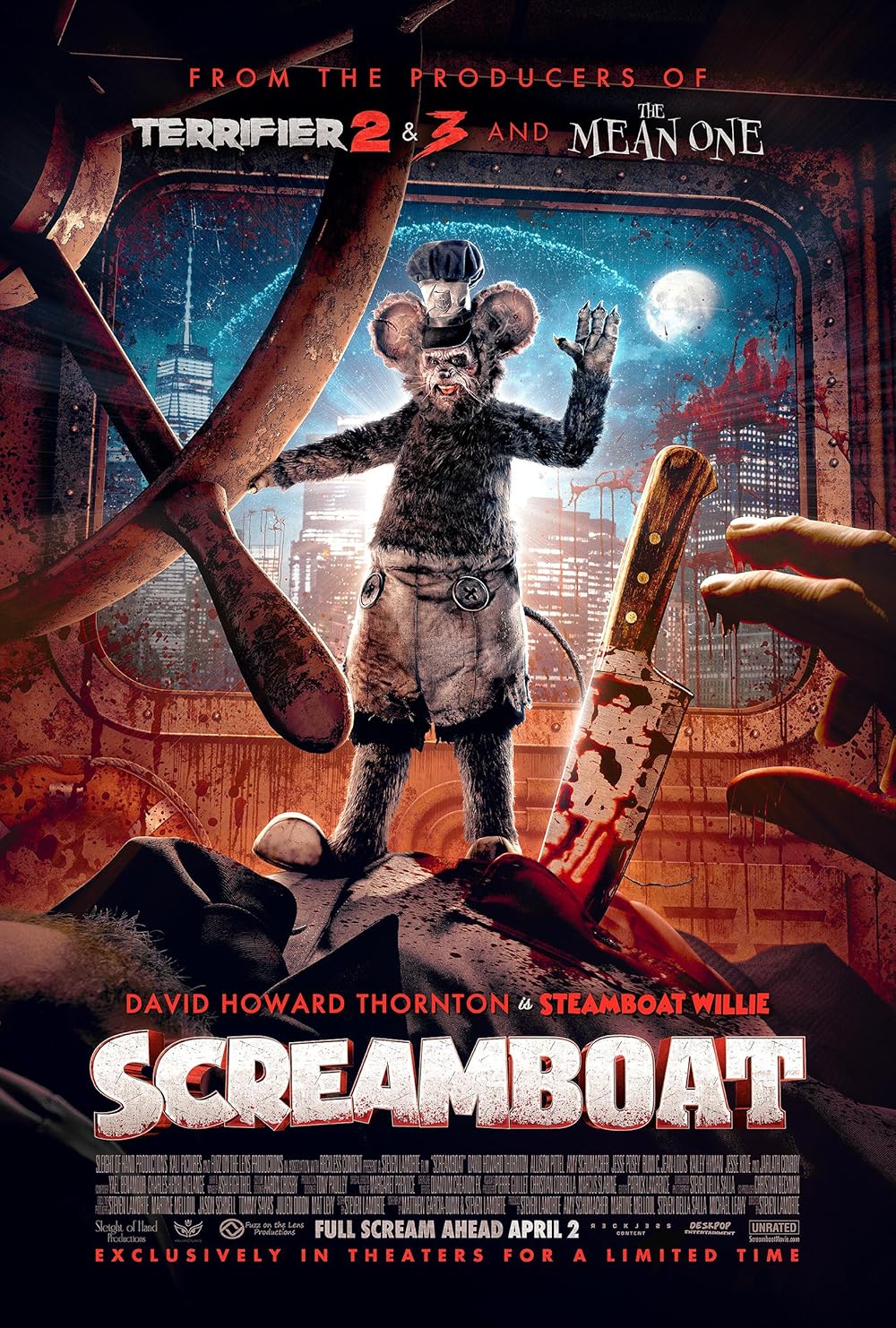
Meanwhile, “Winnie the Pooh: Blood and Honey” has come to inspire the Twisted Childhood Universe which has filmmakers taking such lovable characters from our childhood and turning them into bloodthirsty slashers. So far, we have gotten “Peter Pan’s Neverland Nightmare,” “Bambi: The Reckoning,” and “Pinocchio: Unstrung” was just released overseas. Other twisted childhood movies in development include “Awakening Sleepy Beauty,” “Snow White Returns” “Tigger’s Return,” and there is another coming featuring Mary Poppins. As for America, we have gotten “Popeye the Slayer Man,” and “Screamboat” which is a shameless reimagining of “Steamboat Willie” where a group of New Yorkers get terrified by a monstrous mouse. Canada has gifted everyone “Mickey’s Mouse Trap” which has a hypnotized manager wearing a Mickey face who terrorizes innocent people in an amusement arcade, and a sequel is currently in development.
As for myself, I am waiting for “Eeyore Resurrection” which could be something along the lines of “In a Violent Nature.” Whereas the corpse of serial killer Johnny rose from the dead to reclaim the locket stolen from him, Eeyore could rise from the dead to retrieve his tail which, apparently, was used as a weapon in “Winnie the Pooh: Blood and Honey.” Eeyore could be threatening innocents with a machete, and one could be pleading for their life to where the depressed donkey could raise his machete in the air and say, “So long little butterfly!”
Or maybe Eeyore could be chasing other teenagers down in a car equipped with some kind of buzzsaw on the hood. While they try to run away from Eeyore’s death machine, he could be saying to himself, “Can’t avoid the inevitable!”
Seriously, we could have Busta Rhymes co-star in this, and it could one of the most penultimate moments a horror movie could ever have:
“Who are you?”
“I’M A HEFFALUMP, MUTHA FUCKA!!!”
But not to worry, I will make sure parents know it is not appropriate for most children. As artists, we do have the responsibility to warn others.
Seriously, have to have a strong idea of what you are about to watch.