‘One Flew Over the Cuckoo’s Nest’ Movie and 4K Review
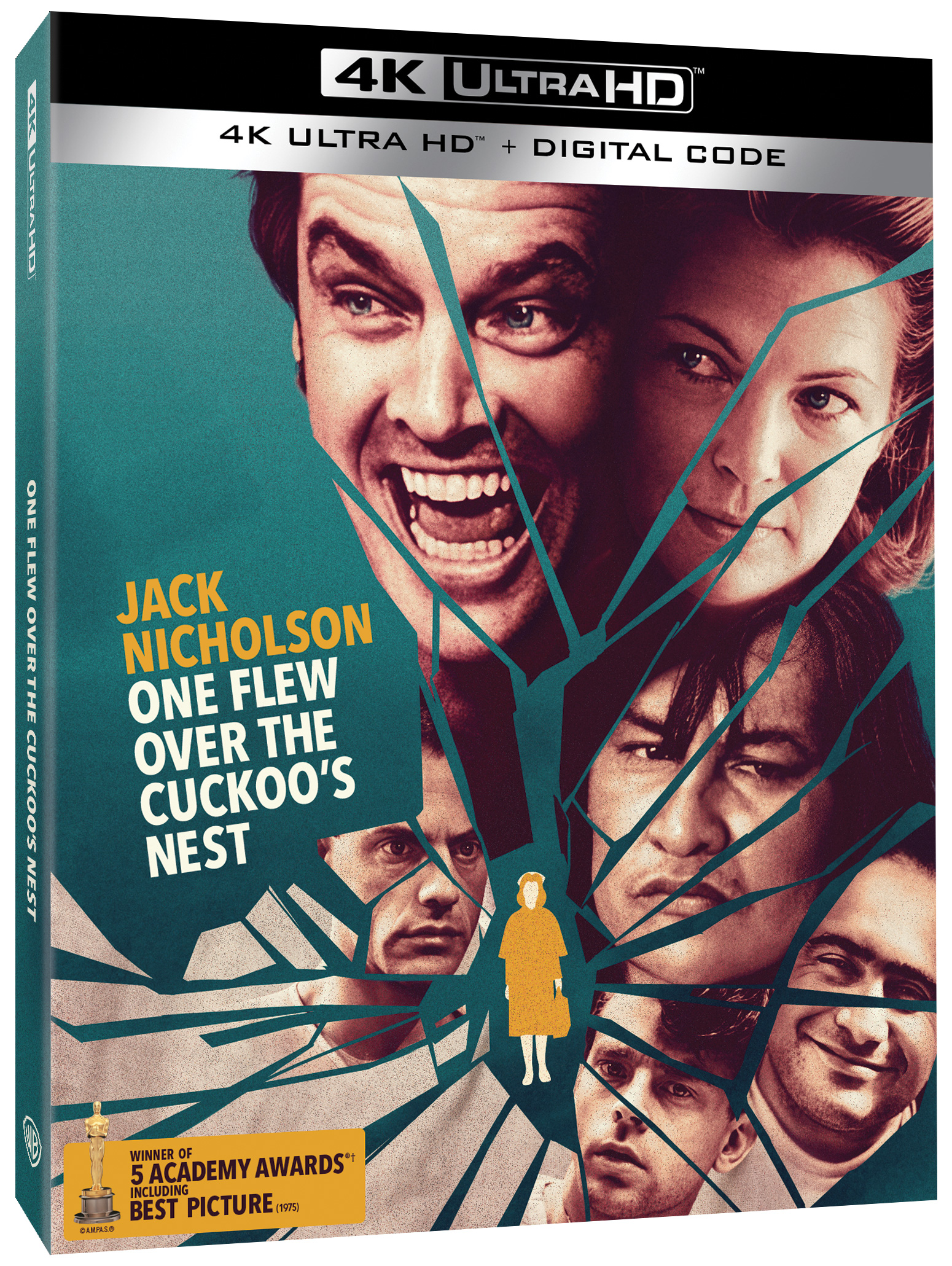
The following review was written by Ultimate Rabbit correspondent, Tony Farinella.

When it comes to 1970’s cinema, there was a sense of exploration, discovery and reflection that hasn’t been found in Hollywood since that decade. The filmmakers had a lot to get off their chests, and their way to process what they were seeing and feeling was through their moviemaking.  One of my favorite films from that decade was 1975’s “One Flew Over the Cuckoo’s Nest,” which is celebrating its 50th anniversary this year with this 4K release. I’ve always connected with films which have a powerful message and leave a lasting impression on me as a viewer long after the viewing experience has ended. “One Flew Over the Cuckoo’s Nest” is one of my favorite films of all-time, and one I find myself returning to often as a viewer.

I must confess that one of the reasons I connect with the material is because I’ve battled with mental illness for a good majority of my life, and I’ve also spent time in a psychiatric hospital. When you have a mental illness and tell people about it, they usually look at you sideways and they handle you with care. They think if they do something to upset you, rub you the wrong way, or make you unhappy, you are going to end up back in the hospital again. Friends and family “proceed with caution” when they are around you.  It’s frustrating and challenging. In Miloš Forman’s film, written by Lawrence Hauben and Bo Goldman, it challenges you to expect more out of yourself, not be put in a box, and to live and be free despite your mental illness.
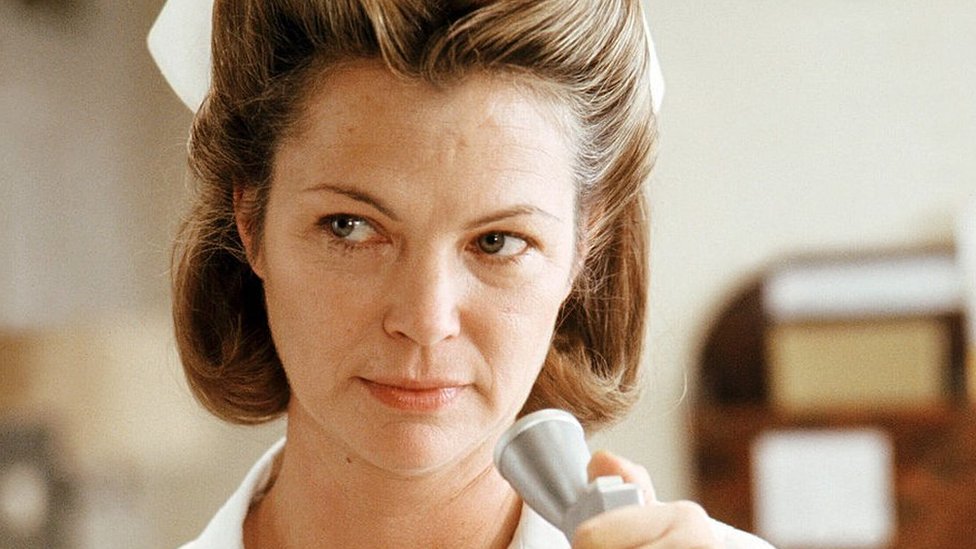
But I digress. Randle McMurphy (Jack Nicholson) ends up in a mental institution after having one too many brushes with the law. In his mind, instead of facing further punishment, it’s better to claim insanity and spend time in the mental institution.  Even though he’s a criminal, he’s no dummy. He’s charming, funny and charismatic, which immediately makes him enemies with Nurse Ratched (Louise Fletcher), who is colder than a mother-in-law’s heart with her treatment of the patients at the hospital. She knows they probably do not have the strength or energy to fight back, and she’s going to take full advantage of that.

Randle shows up, and he gives them a sense of purpose, an identity, and a reason to live. He encourages them to think for themselves, stand up for themselves, and not let their mental illness define them. The cast of actors is filled with Hollywood legends such as Christopher Lloyd, Brad Dourif and Danny DeVito. They all make their presence known with their performances without being too showy or over-the-top. In a film about people in a mental institution, it would have been easy to be loud, goofy, or to act like a complete loon. Instead, they are nuanced and unique. Another standout is Chief Bromden, played by Will Sampson. He’s a deaf-mute who is clearly processing a lot in his head, and Randle is determined to get through to him.

Another reason “One Flew Over the Cuckoo’s Nest” speaks to me is the idea of standing up to authority.  I’ve always been someone who doesn’t like being told what to do, doesn’t like following rules which don’t make any sense, and likes to challenge outdated notions. If you tell me I can’t do something, I want to know why and not just be told, “Because I told you so. These are the rules.” I want to understand the rules and why they are in place, and if they don’t add up, I’m going to speak up on that issue. I’ve never been one who likes to be silenced. This was the way of 1970’s cinema. It was about being confrontational and in-your-face without apologies or excuses.
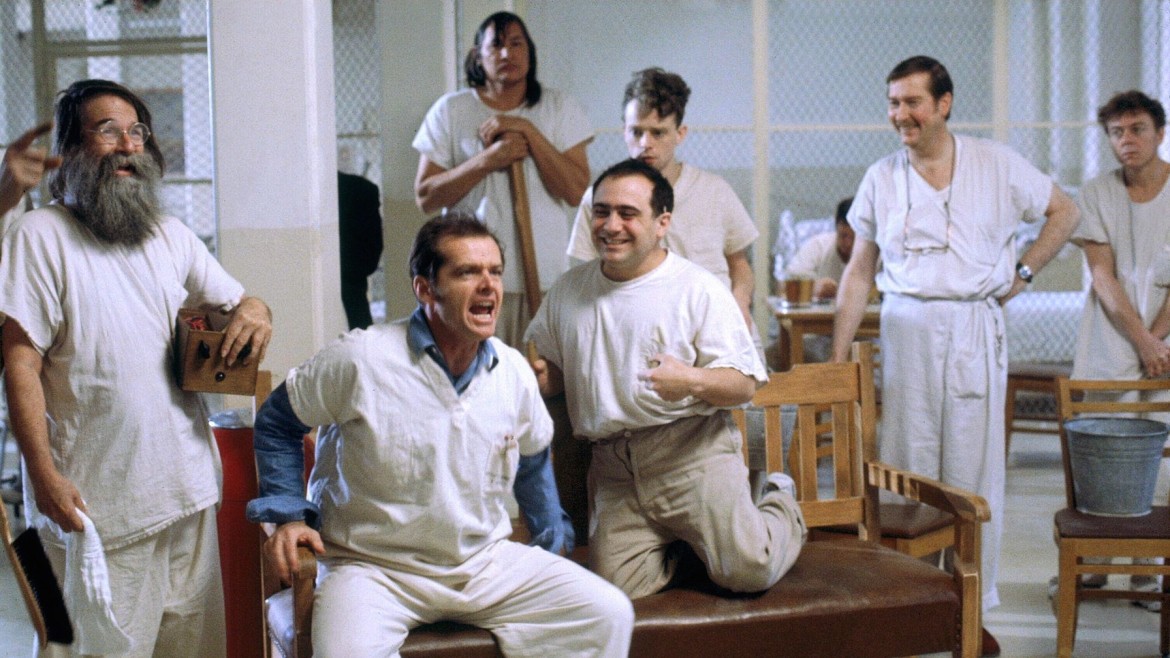
The great movies in Hollywood have been those which stand the test of time because they strike a chord with the audience. The screenplay for “One Flew Over the Cuckoo’s Nest” is absolutely perfect. I wouldn’t change a thing about it.  The performances, top to bottom, are amazing. For my money, this is Jack Nicholson’s best performance of his legendary and storied career. From his facial expressions to the way he delivers his lines, his performance is a masterpiece. You can’t take your eyes off him when he’s on screen. It reminds me of the old line from the legendary wrestler “Rowdy” Roddy Piper, “Just when you think you have the answers, I change the questions.” Louise Fletcher as Nurse Ratched is perfect to play opposite Jack, as she shows no emotion. She’s cold, matter-of-fact, and unflinching. She knows she has all of the power, and she’s not afraid to wield it. She enjoys being the puppet master.

If I’m lucky enough to live another 50 years, I’ll still enjoy “One Flew Over the Cuckoo’s Nest.” It’s a perfect example of old-school Hollywood craftsmanship. There is a reason why it is one of only three films to win Oscars in the major five categories (Best Picture, Best Actor, Best Actress, Best Director and Best Screenplay). This is a flawless piece of cinema, and it fuels me with energy, enthusiasm and passion. I’m going to sound like the old man shouting at the cloud here, but this is how Hollywood used to make movies.  This is a movie about people dealing with emotions, challenges and problems.  We are with them every step of their journey, and we are invested in them. When we are watching the movie, we forget we are watching characters.

* * * * out of * * * *

4K info: “One Flew Over the Cuckoo’s Nest” is released on a single-disc 4K from Warner Brothers Home Entertainment in celebration of its 50th anniversary. The film has a running time of 133 minutes and is rated R for language and violence.

4K Video Info: I love the way 4K HDR enhances the picture quality but still keeps the integrity of the film alive. The picture is crisp and clear, but it also knows when to be dark and moody depending on the scene and the mood.

4K Audio Info: The DTS-HD Master Audio track comes with subtitles in English, Spanish, and French. The audio track is more subdued throughout the film, as it’s in a mental hospital, but it’s not so subdued that you have to turn it up or can’t hear it.  It also knows when to make the soundtrack more powerful and intense during the impactful moments of the film.

Special Features:

Conversations on Cuckoo: Group Therapy (NEW)

Conversations on Cuckoo: Moviemaking Memories (NEW)

Completely Cuckoo

Deleted Scenes

Should You Buy It?

I would hope after reading my review, you would know the answer is a resounding HELL YES. If you haven’t picked up on that, I haven’t done a very good job in my review. The film also comes with a pair of fun new special features, with my personal favorite being the one that includes conversations with vital cast members about the casting process they went through fifty years ago. Warner Brothers is one of the few big studios that is not only releasing classic films on 4K, but they are also taking the time and effort to include some new special features as well. The film has never looked or sounded better than it does with this 4K release. You can buy the 4K in either a slipcover version or a steelbook. The film itself is a masterpiece and one of the greatest films of all time. This has been one of my favorite releases of 2025.  As a film lover, you owe it to yourself to add this film to your collection.

**Disclaimer** I received a copy of this film from Warner Brothers to review for free.  The opinions and statements in the review are mine and mine alone.
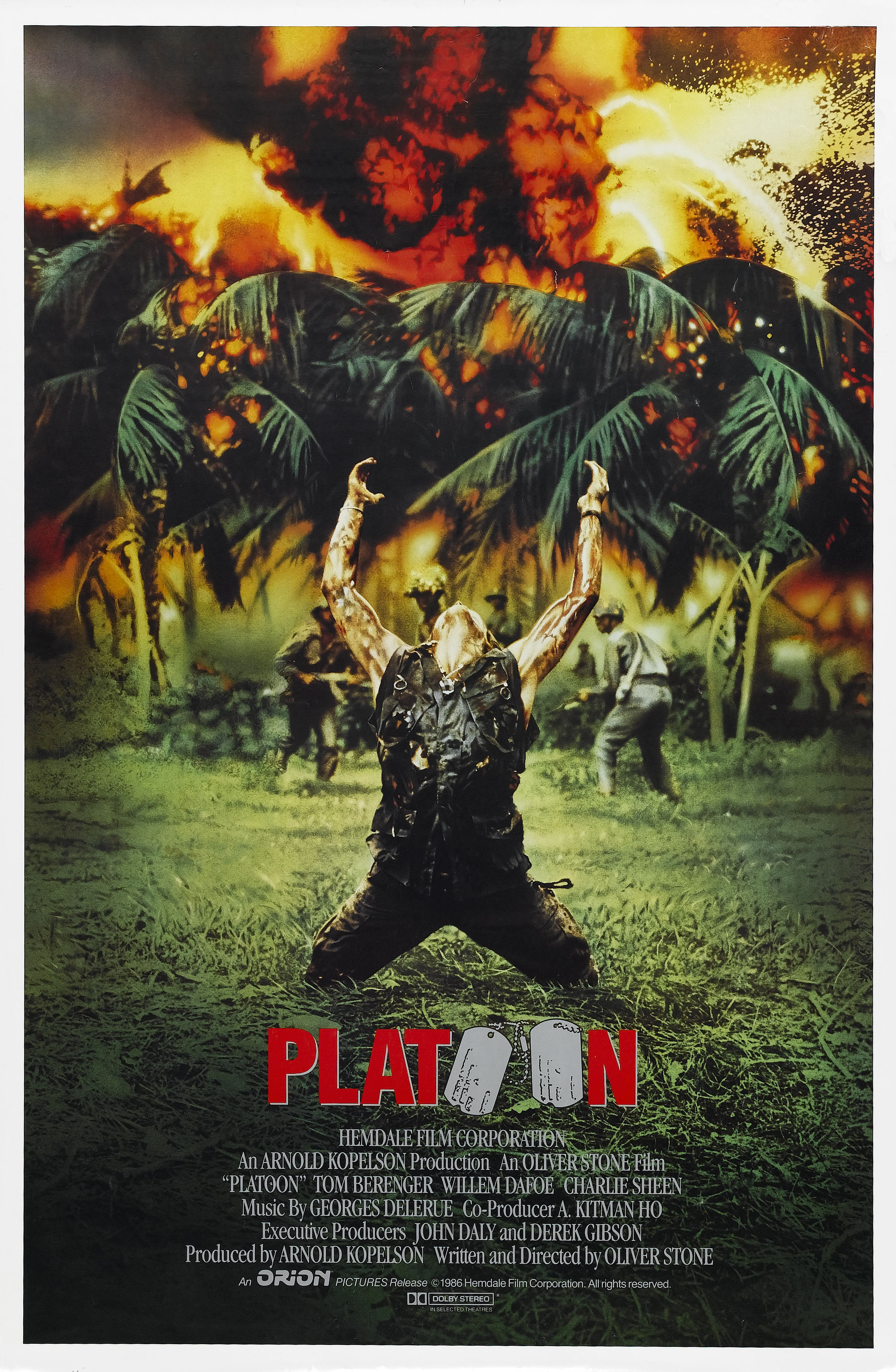
No, I Haven’t Seen It Until Now: ‘Platoon’

Platoon movie poster

I think its use of “Adagio for Strings” by Samuel Barber is one of the reasons I stayed away from watching “Platoon” for the longest time. It still is one of the saddest pieces of music I have ever heard, although it would later be eclipsed by the even more emotionally devastating “Symphony No. 3” (subtitled “Symphony of Sorrowful Songs”) by Henryk Górecki which Peter Weir used to powerful effect in “Fearless.” Plus, the way the violence in “Platoon” was described to me by friends at school, like when a soldier gets his arms blown off by a bomb, filled my mind with horrible images which had no business infecting my mind at such a young age.

It took buying the 25th anniversary edition of “Platoon” on Blu-ray for me to finally sit down and watch it. I hadn’t even seen the movie yet, and here I am buying it at Costco for $11.99 By then, I had seen many Oliver Stone movies like “Born On the Fourth of July,” “JFK,” and “Natural Born Killers,” so I was long overdue to give this Best Picture winner a look.

Before “Platoon,” I had seen “Apocalypse Now,” “The Deer Hunter,” and “Full Metal Jacket” which viewed the Vietnam War from different perspectives. The one thing they had in common was they were directed by filmmakers who had never served in Vietnam. Stone, however, had served there, so “Platoon” is largely autobiographical for him. As a result, this is probably the first truly realistic depiction of the Vietnam War anyone could have ever hoped to see in a movie.

Charlie Sheen stars as Chris Taylor, and it’s interesting watching him here as this was long before his days on “Two and a Half Men.” Taylor serves as the narrator and most relatable character as, like him, we are coming into this war fresh-faced, naïve and innocent. The first scene where Taylor comes off a plane with a bunch of newbies is an omen of what is to come. Seeing body bags filled with fallen soldiers and crossing paths with those men who have seen the war up close quickly gives you a good idea of what Taylor will probably end up looking like at the movie’s end.

Sheen is perfectly cast as he makes Taylor go from being a newbie to an experienced combat veteran in little time. It’s a shame Sheen has since pissed away a good portion of his talent to where he’s pretty much playing a version of himself as some drunken womanizer, be it on a television show or a movie. His work here is a strong reminder of how good he can be as he is utterly believable in a role no one would cast him in today.

Seeing Taylor struggle on through the Vietnamese jungle after the opening scene is a quick indication of how unprepared he is for combat. Like many wars Americans have fought, it was on the soil of another country they were completely unfamiliar with. We see how this puts them at an immediate disadvantage as they look completely exhausted and depleted even at the start of the day.

When it comes to Vietnam, Taylor makes it clear he is a unique case as he tells everyone he dropped out of college to volunteer and serve in the war. This makes him seem like part of a generation raised to believe fighting in a war is both noble and infinitely patriotic, something to be proud of. Taylor also feels that not only poor kids should be sent to fight instead of the rich, but he soon learns the truths about war, one of which is given to him by King (Keith David) who tells him something which resonates strongly even today: “You got to be rich in the first place to think like that. Everybody know, the poor are always being fucked over by the rich. Always have, always will.”

The other two performances worth noting are given by Willem Dafoe as Sergeant Elias and Tom Berenger as Sergeant Barnes. Both figure prominently in Taylor’s tour of duty, and even he says these two were fighting for his soul. Dafoe is mesmerizing as the idealistic soldier who sees America’s involvement in Vietnam ending badly. The Christ-like pose he gets in, whether its holding a machine gun over his shoulders or as he runs from the Vietnamese soldiers, is no mistake. Elias ends up dying for the sins of his fellow soldiers while doing his best to protect them.

Berenger’s performance as Barnes ranks among his best ever. He succeeds in getting inside the head of someone who has been shot at so many times to where they are forever psychologically altered. Having seen death up close, Barnes acts as if he has surpassed it. In some ways, Berenger doesn’t need those makeup scars to show you how many firefights his character has been in as watching him walk through the jungle, completely unaffected by explosions going off around him as if he were Colonel Kilgore in “Apocalypse Now,” is more than enough proof of this.

Stone makes you feel the blood, sweat, tears and exhaustion these soldiers experience, and it’s all so vivid to where we come out of “Platoon” feeling like war veterans ourselves. It leaves all those other movies which make war seem like fun to utter shame. Coming from a filmmaker who has seen this particular war up close, we cannot deny the authenticity he puts on display.

“Platoon” also captures how quickly people can lose their moral bearings in the face of war. The scene in the village is by far the movie’s most unnerving moment as we watch Taylor and the other soldiers get overcome by their boiling anger and hatred. What’s so horrifying is that while you would like to believe you would have acted differently than they did, there’s no way you can be sure if you haven’t been in combat. The line between soldier and killer gets seriously blurred here, and it’s not hard to understand why.

Before filming began, the cast was treated to an intensive military training course under the tutelage of former Marine Captain Dale Dye who also served in Vietnam. They were made to dig foxholes and subjected to forced marches and nighttime ambushes which utilized explosions. This succeeded in breaking them down, and you can see and feel the weariness in them throughout. It more than adds to the sheer realism we see here.

There’s no victory to be found in “Platoon,” only death and destruction on both sides of the conflict. The movie gets at the truth of war which Danny DeVito talked about in “The War of the Roses” when he said, “There is no winning! There’s only degrees of losing!”

The violence and death portrayed may not seem quite as visceral as it did when the movie first came out. There have been many other war movies since like “Saving Private Ryan” which featured scenes of such brutal violence that no other filmmaker could possibly match. Plus, we all know about the Vietnam War in general and big a mistake it was for America for many years now. Still, “Platoon” is nothing less than powerful as its vision of the craziness and insanity of war is impossible to shake once you have seen it.

The Vietnam War may be a thing of the past, but the lessons we learned from it still need to be taught over and over again. America keeps fighting wars which, whether necessary or not, continually overstay their welcome and leave a lot of people feeling angry and betrayed. Oliver Stone certainly understands that, and he makes “Platoon” into a movie which shows the damage of war and why we can’t just let the past be the past.

* * * * out of * * * *

William Friedkin Discusses the Creation of ‘The French Connection’ Car Chase

The French Connection car chase

William Friedkin’s “The French Connection” was shown as part of American Cinematheque’s tribute to him, and he went into great detail about how the famous car chase came together. It is still one of the best car chases in cinema alongside “Bullitt,” and it’s the kind Hollywood doesn’t dare do anymore.

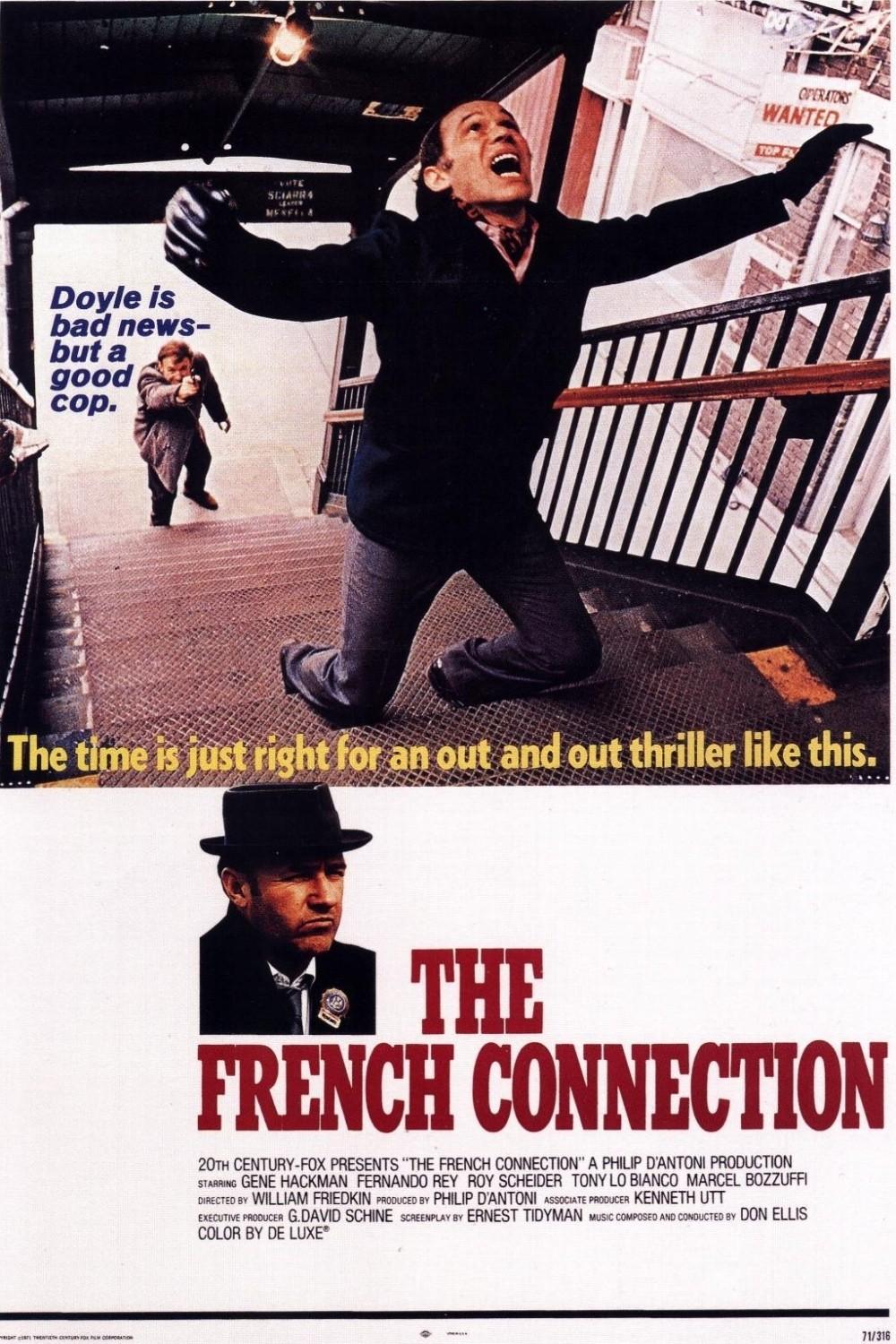
The French Connection movie poster

Actually, it turns out there was never a car chase in the original script for “The French Connection,” but Friedkin felt it needed one as this was a police procedural, and the audience would need a temporary release from it. Also, Friedkin didn’t do any storyboards to prepare for it. In fact, he has never done storyboards for any of his movies because he feels he has to see it in his mind. The shots captured on film come together from what he sees at the time, and he doesn’t even use a second unit to shoot any footage. All that you see on screen in “The French Connection” comes from life as it happened in front of Friedkin.

In coming up with the chase, he and some crew members walked down 50 blocks of New York streets to figure out how it would work best. As Friedkin kept walking, he suddenly felt the subway under his feet. Now logistically, he couldn’t do a car chase with a subway as it was underground, but it made him wonder if there were any elevated trains left in New York. The production team ended up finding one in Brooklyn, so Friedkin went to the Transit Authority to get their cooperation in pulling this chase off.

The first thing to figure out was how fast the trains could go. Friedkin said if they went over 100 mph, they couldn’t do the chase as it would be impossible for Popeye Doyle to follow the train by car. The train supervisor he talked to said the trains go at 50 mph, so what seemed impractical suddenly became possible. Not only did Friedkin want to have a car chase the train, he also wanted to crash the train for the chase’s climax. But the train supervisor said it would be too difficult because they had never had an elevated train crash or even heisted. Having heard all this did not deter Friedkin, and he planned to steal the scene if the transit authority’s cooperation was not going to be granted.

As Friedkin and his crew headed for the exit, the train supervisor suddenly said, “Wait a second. I told you it would be difficult. I never said it would be impossible!” He told Friedkin that if he were to help him with this, then he would need $40,000 and a one-way ticket to Jamaica. His reasoning was if the movie was to be done Friedkin’s way, he would be fired, and retiring to Jamaica was always in the back of his mind. Sure enough, the supervisor was fired, and he moved to Jamaica like he said he would, so it’s safe to say he lucked out.

In filming the chase, the shots were picked up just as they happened in real life. There’s no way they would ever be able to film a chase like this today without prior approval from the city, but Friedkin and his crew were young and reckless, and they unleashed mayhem New York never saw coming. There were not supposed to be any accidents while filming it, but there ended up being many of them which forced the crew to fix the car after each take. I’m pretty sure they ended up using more than one as a result. Friedkin ended up saying they did a number of things he would never even think about doing today, and that they were very fortunate no one got hurt.

Taking all this information into account, this car chase feels even more thrilling than when I first saw it. The way it was filmed was completely insane, and the fact they pulled it off at all was a miracle. When Gene Hackman finally brings the 1971 Pontiac LeMans he is driving to a complete stop, the sold-out audience at the Aero Theatre applauded loudly which shows how powerful the sequence remains today. “The French Connection,” like many of Friedkin’s movies, has deservedly stood the test of time.