‘The Conjuring: Last Rites’ Movie and 4K Review
The following review was written by Ultimate Rabbit correspondent, Tony Farinella.

The Conjuring: Last Rites” is the final film in “The Conjuring” franchise, which has been wildly popular and a staple in the horror genre since the first film was released in 2013. In total, it is the ninth film in “The Conjuring” universe, which also includes the two “Nun” films along with three “Annabelle” films. While not all of them have been home runs, there is a certain style and craftsmanship that goes into the films which is hard to ignore. Most of all, the films are powered by the powerful performances of Patrick Wilson and Vera Farmiga as Ed and Lorraine Warren, the paranormal investigators who love helping those in trouble, but not as much as they love each other. They are the lifeblood of these films. Without them being the emotional compass, the films would simply be ghost stories with some jump scares here and there.
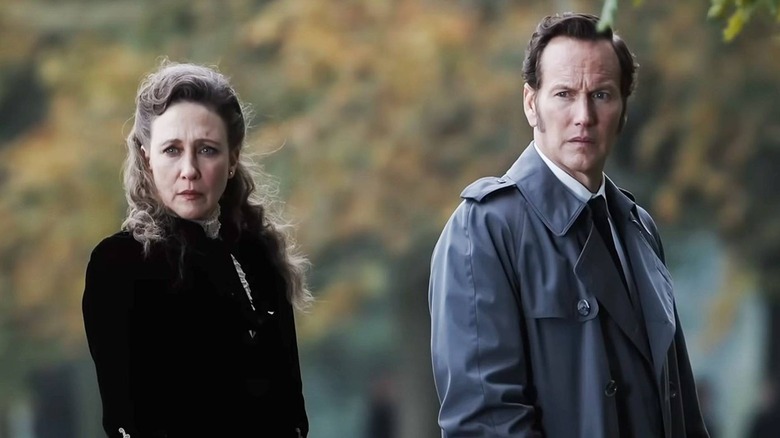
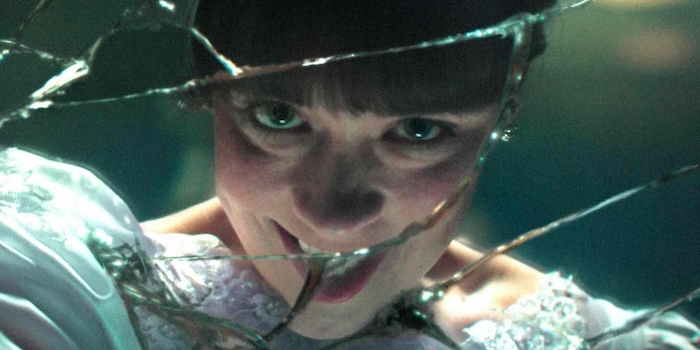
This film opens in 1964, as Ed and Lorraine Warren are investigating a mysterious murder at an antique shop while Lorraine is pregnant. While there, she comes across a mirror which holds ominous and sinister forces within it, which almost causes her to lose her child, Judy, during childbirth. Fast forward to two decades later, and Judy (Mia Tomlinson) is in a relationship with a former police officer named Tony (Ben Hardy), and they are on their way to meet up with the Warrens for Ed’s birthday party. Ed and Lorraine are in semi-retirement because of Ed’s heart, and they mostly are giving tours on college campuses, which are usually met with jokes about the Ghostbusters. They are struggling to find their purpose in life without being full-time paranormal investigators. Ed has the itch to get back into things, but he needs to look out for his health and slowdown, which isn’t coming naturally to him.

Meanwhile, in Pennsylvania, the Smurl family, which includes the husband, wife, four daughters and two grandparents, are starting to have some real challenges after they come across a haunted mirror that was given as a gift to one of the daughters after her first communion. At the same time, Judy is starting to have visions, the same ones she had when she was younger. Her mother tells her to block them out, but that’s becoming harder to do each and every day. It won’t be long before the Warrens and the Smurls are forced to confront their problems and figure out how they are connected to each other and how they can fix them. If they don’t, it may be fatal for all parties involved.
“The Conjuring: Last Rites” is directed by Michael Chaves, who is no stranger to this franchise, having directed the previous “Conjuring” film along with “The Nun 2.” He’s a talented director, and he knows how to create an atmospheric film that is moody and ominous, and he shows off the time and place in which it is set.  Chaves knows how to create haunting horror imagery on screen, but he doesn’t quite know how to make it all pay off in the third act. It also doesn’t help that the film is two hours and fifteen minutes, which makes it the longest film in “The Conjuring” universe. While it held my attention for a very long time, the payoff didn’t feel satisfying.  It left me feeling like the film ended on a flat and rather unremarkable note. All of the performances are top-notch, especially from Wilson and Farmiga. They know how to bring humor, pathos and intelligence to the film.

Overall, this is a case of trying to create the same magic time and time again, but sometimes it simply isn’t there. By no means is this a bad film, but it doesn’t have the impact or power it should have, especially considering this is the final film in this franchise. Of course, they can always do more “Annabelle” or “Nun” films, but as far as “The Conjuring” franchise, this is the end. However, you can’t always believe that when it comes to horror films, especially considering the money this one made. It is entertaining and made with style, but it doesn’t know how to wrap things up in a concise and efficient manner. By the time the shit hits the fan, the film has overstayed its welcome.  These films are best when they are about one hour and forty-five minutes, or maybe two hours. Anything longer than that, and they are overstaying their welcome.  There is no need for this film to be two hours and fifteen minutes.  There are certain scenes which feel like they would have been better as deleted scenes instead of being included in the final cut.

“The Conjuring: Last Rites” is a film I enjoyed watching until I started to become disinterested and restless by what was happening on screen. I liked a good majority of it, but as stated previously, it really falls apart in the third act.  It had a feeling of “been there, done that.”  The strong points include the performances of its two leads, the direction of Michael Chaves, and the overall style and look.  Its weaker points include its length and its ending.  I was happy to have watched it and it’s a fun horror movie, but it didn’t have the sense of urgency and power of the previous installments in this franchise.

* * ½ out of * * * *

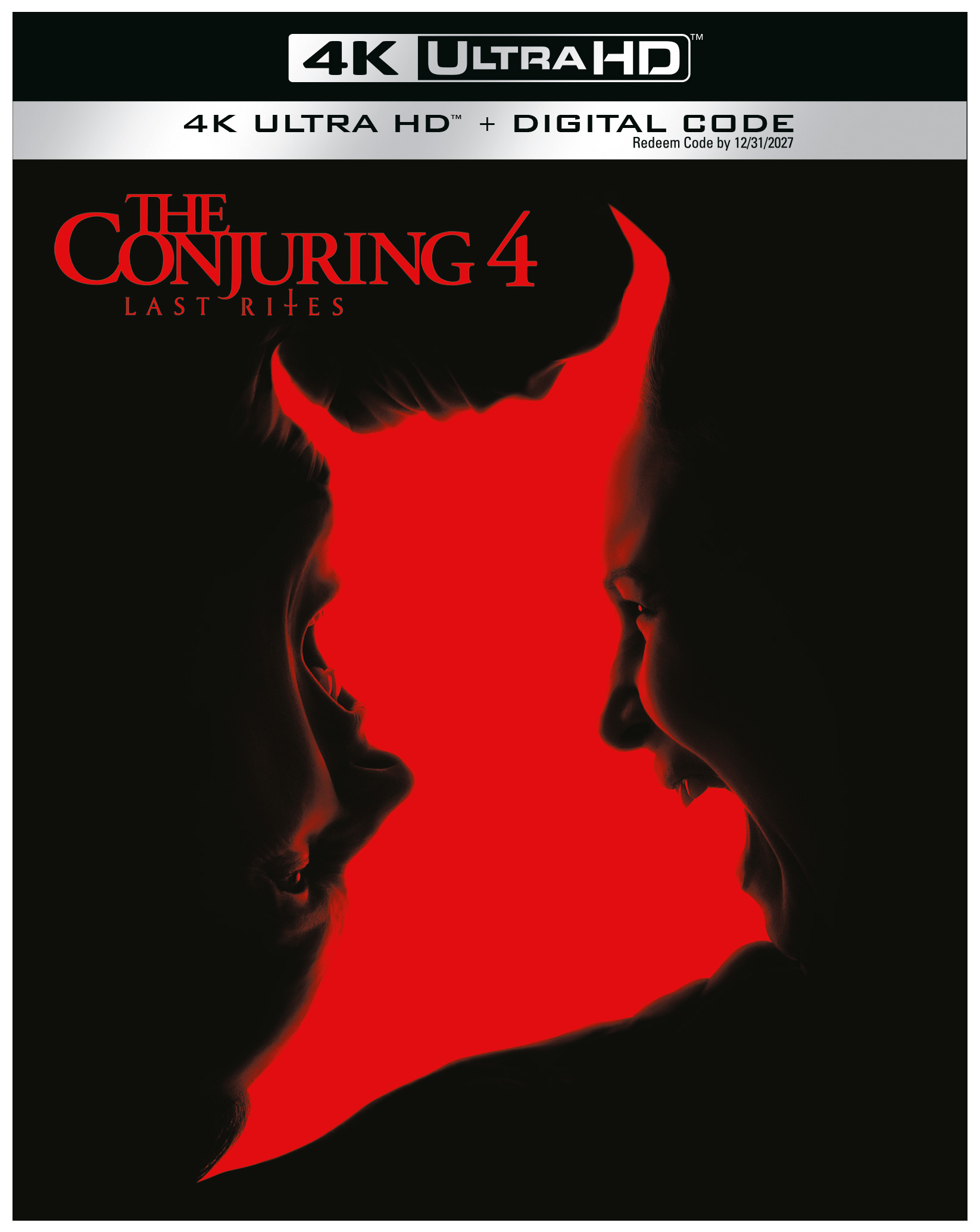
4K Info: “The Conjuring: Last Rites” is released on a single-disc 4K from Warner Bros. Home Entertainment.  It comes with an impressive slipcover and a digital copy as well. It also comes in a steelbook version.  It has a running time of 135 minutes and is rated R for bloody and violent content along with intense terror.

4K Video/Audio Info: The film comes with a Dolby Vision transfer, which looks perfect on 4K.  The HDR really brings out the dark blacks of the film and creates a spooky experience watching it at home.  The same is true of the Dolby Atmos track, which really pops during the jump scares which are sprinkled throughout.

Special Features:

Last Rites: An Era Ends – featurette

The Conjuring: Crafting Scares – featurette

Michael Chaves: Believer – featurette

Should You Buy It?

As I was watching “The Conjuring: Last Rites” with my wife for the first hour and a half, I was saying to her, “I’m really enjoying this movie.  It has me on the edge of my seat, and the story is unfolding perfectly.” However, all of that good mojo started to fade in the rearview mirror by the time the film was wrapping things up with its third act.  I started to become fatigued and disinterested in the conclusion of the story. It took a long time to get where they needed to go, and when they finally did wrap things up, it didn’t seem to matter much anymore. Still, this is an OK film that will play well on HBO Max or on streaming. I don’t think it’s the kind of film you need to run out and purchase right away, unless you want to own all four of “The Conjuring” films on physical media. I’m still waiting for the second film to hit 4K, which will hopefully be very soon. This film looks and sounds terrific on 4K, and I really liked the slipcover version of it. I really wanted to recommend it, but the ending was flatter than four o’clock.

**Disclaimer** I received a copy of this film from Warner Bros. to review for free.  The opinions and statements in the review are mine and mine alone.

‘Bohemian Rhapsody’ Takes Us Back to When Queen was King

Bohemian Rhapsody poster

Many will say this in their reviews of “Bohemian Rhapsody,” and I have to as well: Freddie Mercury was a one-of-a-kind performer. Whenever he was onstage, he had a commanding presence only a handful of artists could ever hope to equal. Nothing seemed to ever hold him back as he rocked us in a way few others, if any, ever could. Watching him and Queen perform in front of thousands of fans also had a cinematic quality to it, and I went into this biopic hoping Bryan Singer (and Dexter Fletcher who replaced him as director) could capture the exhilaration of their live performances. Could such a thing even be possible?

Well, right from the start when Queen performs their own kick-ass version of the 20th Century Fox fanfare, “Bohemian Rhapsody” proves to be an exhilarating ride. While there were times when I thought the filmmakers could have dug even deeper into Freddie’s life and the lives of his fellow bandmates, Brian May, Roger Taylor and John Deacon, it proves to be a biopic which takes you back in time to when Queen was the biggest thing in music, let alone in the world. But at its center is an iconic singer who is on a long journey not to stardom, but finding respect for himself.

When we first meet Freddie, we learn his birth name was Farrokh Bulsara and that he was the child of a Parsis couple, something I was previously unaware of. His mother Jer (Meneka Das) proves to be a loving presence, but his father Bomi (Ace Bhatti) doesn’t even try to hide his disappointment over the lackadaisical way in which his son lives his life. By day he works as a baggage handler at Heathrow Airport, and he spends his nights at a local club where a band named Smile performs to an enthusiastic audience. When the lead singer quits, Freddie seizes the opportunity to grab the job, but Brian and Roger feel his overbite will easily upstage him. That is, of course, until they hear him sing.

“Bohemian Rhapsody” at times speeds through the history of Queen to where I wished they would slow down a bit and focus on bits and pieces which haven’t been covered as much in the past. I kept hoping there would be a sequence on the making of the “Flash Gordon” soundtrack, one of the best soundtracks ever. The filmmakers don’t even get around to dealing with the songs they did for “Highlander,” and that was a real bummer. Still, we get to learn about the beginnings of some of their most famous songs like “Another One Bites the Dust” which features one of the greatest bass lines in the history of music, and the immortal rock anthem that is “We Will Rock You.”

One of the movie’s centerpiece’s is the creation of the song “Bohemian Rhapsody” which allowed Queen, as the Beatles did with “Sgt. Pepper’s Lonely Hearts Club Band,” to push the boundaries of mainstream music to create something truly unique. This all leads to a scene where the exasperated EMI executive Ray Foster (a priceless Mike Myers) explains how no radio station is about to play a six-minute song, especially one which features opera in it. While it is seen as one of the greatest rock songs ever created, this doesn’t stop the filmmakers from throwing out initial reviews of it which showed anything but admiration. It’s only over time that something can ever be truly considered a classic.

Looking at Freddie’s life overall, it does seem deserving of an R-rating. But for a PG-13 movie, I felt “Bohemian Rhapsody” dug deep enough into the man’s life in ways I usually expect a PG-13 movie to avoid. Some may say this is a sanitized biopic, but I was surprised at how willing the filmmakers were to portray Freddie’s debauched lifestyle and of the underground worlds he chose to delve into. The scene in which Freddie learns he has AIDS is especially devastating, especially when scored to the song “Who Wants to Live Forever.” There is even video footage of people with AIDS, and seeing Freddie watching it is especially heartbreaking as it gives him a glimpse as to what is in store for him.

When it comes to music biopics, I keep thinking of ones like Oliver Stone’s “The Doors” and “I Saw the Light” and of how they kept their main subjects at a distance. This proved to be especially frustrating as I felt like I never got to know more about their main characters, Jim Morrison and Hank Williams, and even wondered why anyone would bother to spend time with them. “Bohemian Rhapsody” doesn’t make this same mistake nor does it hide from Freddie’s flamboyant lifestyle which alienated many of his closest friends. It’s not afraid to make the singer unlikable at times, but it also pays him the respect he deserves especially when he humbly reunites with his bandmates who, unlike other musicians, were never afraid to tell him no.

Rami Malek gives a truly phenomenal performance as Freddie Mercury. If you are still wondering what this movie would have been like had Sacha Baron Cohen not dropped out, Malek will silence those thoughts immediately. It’s as if the actor is possessed by Freddie’s spirit as he inhabits the role with a fearlessness and a gusto to where it is impossible to think of someone who could have been better suited to play the lead singer of Queen. Malek owns the movie from start to finish, and you can’t take your eyes off of him.

Malek also does a brilliant job of letting you see Freddie’s inner turmoil as he struggles with who he is and his sexuality. In many ways Freddie was a social outcast before he came to be the lead singer of Queen, but he becomes even more of an outcast at the height of his fame. Seeing him in almost near isolation from the rest of humanity is distressing, and it reminds me of what the late Robin Williams said in “World’s Greatest Dad:”

“I used to think the worst thing in life was to end up all alone. It’s not. The worst thing in life is ending up with people who make you feel all alone.”

Kudos also goes out to Lucy Boynton who proves to be a fetching presence as the love of Freddie’s life, Mary Austin. Boynton, whom you may remember from “Murder on the Orient Express,” makes you believe how Mary was a huge lifeline to Freddie, especially when he became deluded and was ruthlessly manipulated by those who never had his best interests at heart. Even as their loving relationship was torn apart, they remained the best of friends, and I believe Freddie when he was quoted as saying how Mary was really his one true friend in the world.

But if you need only one reason to buy a ticket to “Bohemian Rhapsody,” it is Singer’s (and Fletcher’s) recreation of Queen’s epic performance at Live Aid in 1985. I’m sure you have all seen footage of this concert on YouTube, but I was enthralled at how the filmmakers made us feel like we were right there in Wembley Stadium where the band played to the largest crowd any band could ever play to. This recreation proves to be one of the most exhilarating sequences I have seen in any 2018 movie, and it is the perfect way to cap off this biopic.

Could a better movie have been made about Freddie Mercury and Queen? Perhaps, but I find it tiring to think of what could have been and would much rather deal with what ended up on the silver screen. “Bohemian Rhapsody” proved to be an immersive cinematic ride which brings back to life an amazing performer who left the land of the living far too soon, but whose role in music history will never ever be forgotten.

Regardless of who deserves the most credit, we owe Dexter Fletcher many thanks as he managed to bring this chaotic production to the finish line and oversaw it during post-production. Without him, I wonder if this movie would have ever been completed.

* * * ½ out of * * * *