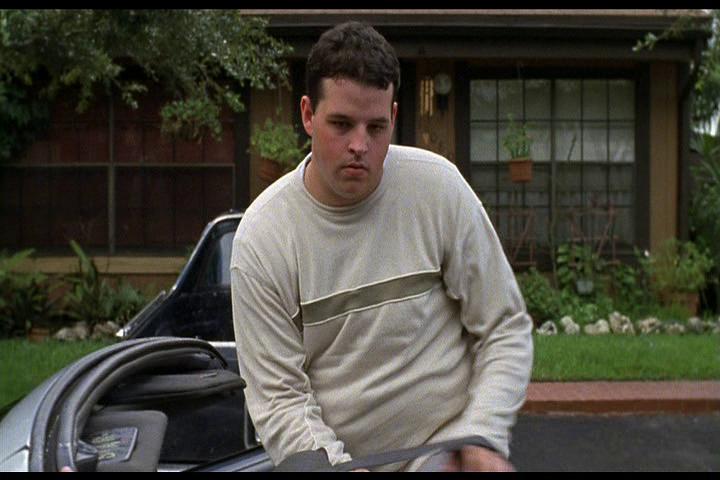
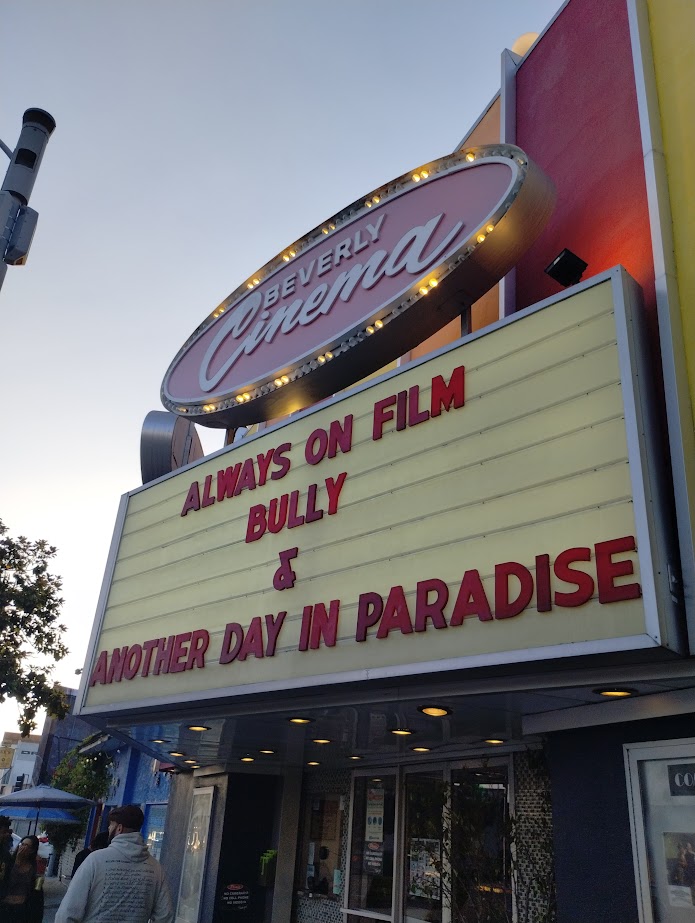
On August 12, 2025, New Beverly Cinema presented a Larry Clark double feature of two of his films: “Bully” and “Another Day in Paradise.” Before “Bully” unfolded on the silver screen, actor and filmmaker Joel Michaely brought out a special guest: Daniel Franzese who played Derek Dzvirk. “Bully” was Daniel’s film debut, and it quickly earned him his SAG card. Daniel thanked Joel for being there and remarked how he killed Joel once in a horror movie entitled “Cruel World” where he shot him in the head.
Daniel said “Bully” was the first time he ever got to hold a screenplay in his hands, and he talked about meeting the casting director, Carmen Cuba, at his audition.
Daniel Fransese: She was like, “Do you wanna see who you are going to play?” I said okay, and she opened up the true crime novel (written by Jim Schutze), and I looked exactly like the guy. And I was just like, oh shit! I can actually get this! So, it was very scary and nerve wracking.”
Rumors are that the set of “Bully” was a crazy one, and being that this was Daniel’s first film as an actor, you can understand and appreciate his feelings at the time.
DF: I’m a pretty easy-going guy, and I am also a theatre guy and a standup comedian. I’m used to being around other people, and I am good at getting along with different personalities. But this movie was next level. we are getting ready to do fittings and start our first day of this movie, and Larry (Clark) is screaming because Brad (Renfro) was in jail for trying to steal a boat. He’s screaming, “This was three years of my life! This kid’s not going to ruin it!” He’s throwing papers and I was like, whoa! That was day one and you can just imagine how the stress level got worse from there.
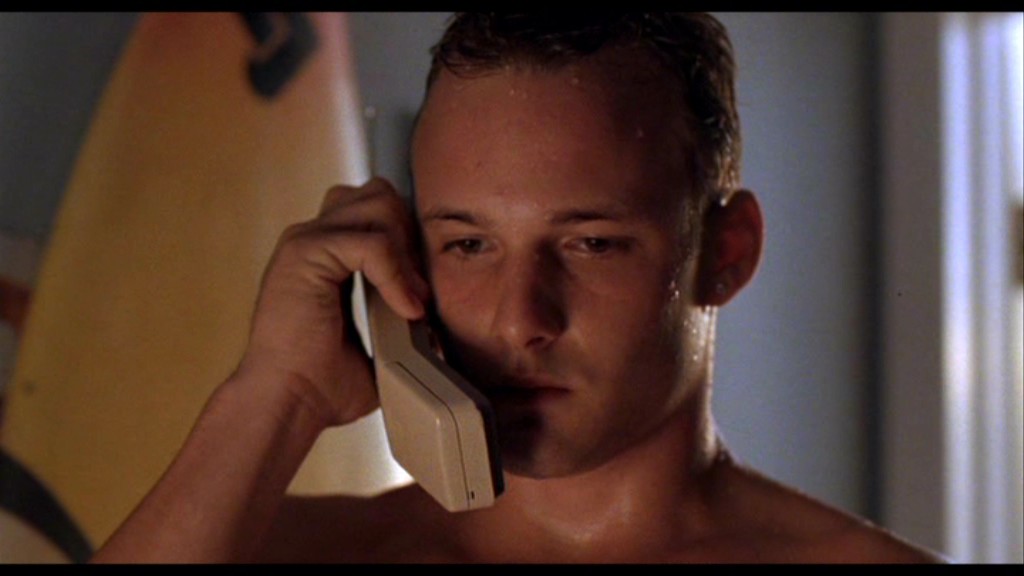
From there, the discussion went to the late Brad Renfro who played Marty Puccio in “Bully.” Brad first gained worldwide attention at the age of 12 years old when he was cast as Marcus “Mark” Sway in Joel Schumacher’s cinematic adaptation of John Grisham’s “The Client.” Like many people on this planet, let alone actors, he died at far too young an age He was only 25 years old, when he passed away after a drug overdose. Daniel talked about working with Brad.
DF: Brad was great. I think he was like one of those golden retriever type people. Not evil, but dangerous. We were doing the table read for the first time, and Brad showed up wearing a white tank top completely soaked in lighter fluid. He came in saying, “I’M TRYING TO GET THE BARBECUE TO GO!” It was like, whoa! He was from Knoxville and had like that “Jackass” sensibility where you didn’t know what he could do, but I don’t think he ever had a mean bone. His intentions were always nice. If anything, he partied too much, and he once told me that at 12, he made hundreds of thousands of dollars to do “The Client,” and he was getting a lot of his drugs and stuff from family members as a kid. I don’t think he got a fair shot. If anything, the reason why I advocate for younger people in Hollywood or talked about my experiences on this movie which were crazy, I was never speaking from a victim place. I was speaking from a place of advocating for people like Brad who didn’t have anyone saying anything for them. I just think, we’re making art. It doesn’t have to be that crazy. We don’t have to be stealing boats or going nuts on sets to produce good material.
After “Bully,” Daniel went on to appear in many films, but he may still be best remembered for playing high school social outcast Damian in 2004’s “Mean Girls.” Like Joel and myself, I wondered what it was like going from an independent film to a studio movie where everybody is expected to be on their best behavior.
DF: I just don’t think the 2000s will be looked upon as a time where it was easy for people on movie sets. I really don’t. People always ask me all the time how to get their kid in Hollywood, and I say don’t. I waited until I was at least in my 20’s (before going to Hollywood), and that’s the only thing which might have saved me. A lot of our contemporaries are not around with us anymore or are in a crazy state. It was a rough time. I can’t say it was easier or better, but I think it’s better now.
Regardless of the crazy set, Daniel made it clear to the New Beverly audience what the experience of making “Bully” was like, and of how the filmmakers strived to capture the spirit of the true story it is based on.
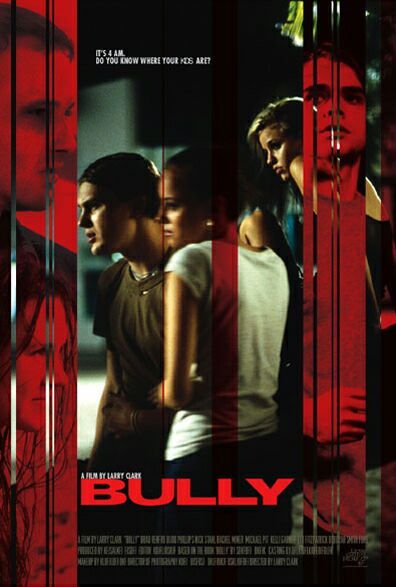
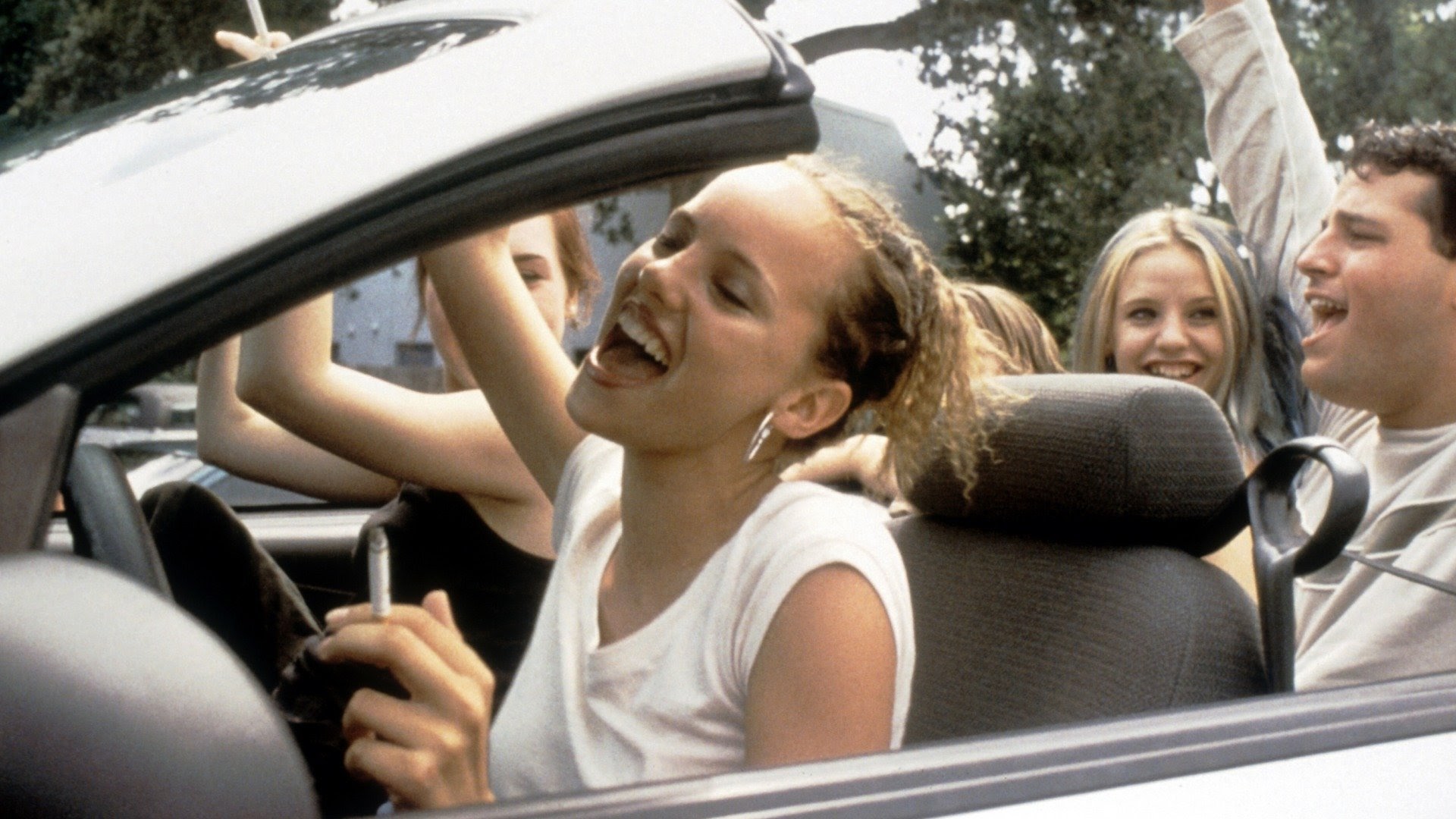
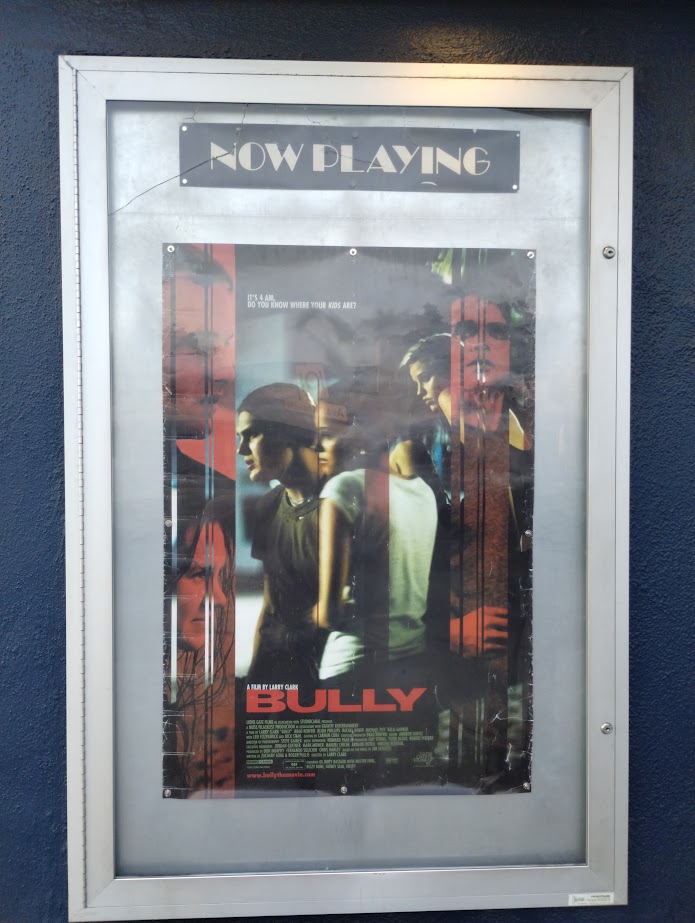
Bully (2001)
Directed by Larry Clark
Shown in foreground: Bijou Phillips
DF: On a positive note, though, this movie was awesome. It was so fun to make. Larry was cool, the people I was working with were all like people from Thrasher Magazine, it was just like bad ass people. They did shoot in the real locations; it was the real apartment complexes, and it was the real Pizza Hut (we shot in).
Daniel also made it clear how he was the only local hero for hire in Larry Clark’s “Bully.”
DF: They were scouting locations for the gay clubs, and I was just a young kid just figuring that stuff out and performing at the clubs with people I was in musical theatre with and stuff like that. They were like hey we’re making a movie, and I’m like I’m an actor! I had no idea it was going to turn into this. Carmen Cuba, she discovered a lot of people, and I give her all the credit for plucking me out of obscurity and putting me with these people.
An audience member told Daniel that he was from South Florida, and this led Daniel to talk about when he worked at The Gateway Theater in Fort Lauderdale as a kid. a year later, “Bully” premiered there. Daniel found his road from being an usher to a working actor to be honestly insane.
DF: I was there at the theater going, would you like the popcorn combo? I am a movie lover. I worked at Blockbuster (Video), I worked at movie theaters, that’s all I did. Until I was able to support myself as an actor, I was either an usher in theatre or worked at movie theaters. It (“Bully”) was shot in Fort Lauderdale and the whole crew got their premiere at the movie theater where I worked at. So, whoever served me popcorn today, keep writing your scripts.
Like many, Daniel Franzese considers New Beverly Cinema to be one of his favorite places in Los Angeles, and that it was extra special for him to see “Bully” being screened there on 35-millimeter film. To see films presented there in their original format, something often not available to movie buffs in most places, means a lot to him.
The following review was written by Ultimate Rabbit correspondent, Tony Farinella.
Out of all the films I watched in 2014, “American Sniper” was the one which hit me the hardest. I had never seen a film like it before, and I was surprised I enjoyed it as much as I did, considering I’m not a huge fan of war films. This is much more than a war film, though. It’s a personal story, and this part of the film resonated with me much more than any shootings. Although there is one particular shooting that made me wince, Chris Kyle was only doing what he was trained to do as a Navy Seal.
Bradley Cooper stars as Chris Kyle in one of the best performances of his career. Not only did he put on the weight to play Kyle, but he completely became him. On the special features, they talked about how they would have moments on set that would cause goosebumps because his performance was so true to life. It’s always a thing of beauty when you see an actor completely devote themselves to a role and a film. It helps that the film was directed by the legendary Clint Eastwood. There’s also a quality screenplay by Jason Hall, adapted from Kyle’s book of the same name.
Kyle believes strongly in America and goes through some intense training that would make most men run for the hills, but he eventually becomes a sniper for the Navy Seals. Before he even attempts to do this, someone informs him that most men quit. Kyle says he is no quitter. Meanwhile, he meets his wife, Taya, played by Sienna Miller, and they eventually have a child together, adding even more pressure to Kyle’s life. He ends up taking part in four tours, which puts a strain on their relationship and his well-being. He knows he is doing a service to his country and protecting his fellow men, but that doesn’t make things any easier.
Bradley Cooper gained 40 pounds of muscle to play Navy SEAL Chris Kyle in the film American Sniper. “It wasn’t at all like a costume,” he said. “It was like … this sort of transformative experience to me because there was no going home from it.”
One of the things I admired the most about this film was the patience in which it was filmed. Kyle ends up doing four tours, and we get to see the tours along with him spending time with his family. For me, the “at home” scenes were far more effective than his time as a sniper. This is not to take anything away from his time on tour and how it’s filmed. The scenes are jarring and extremely well shot. I’m just always more engrossed in the human side of the story, and that truly adds more to what’s happening during his time becoming “The Legend”, a nickname he seems proud of at times, but also a little uneasy about as well. He is known as the U.S.’s deadliest sniper.
A lot of attention and praise was put on Cooper upon the film’s release, but credit also goes out to Miller as she has an extremely tough role to portray as well as Taya. She has to be supportive of her husband while also looking out for the best interests of her family. One thing is certain: her love for Kyle never waivers. She just worries about feeling disconnected from him. It’s clear he’s not the same when everything is over. How can he be? As he tells his psychiatrist, he thinks more about the men he couldn’t save as opposed to the ones he did. However, Taya wants her husband back, and she wants the man she married. The ability to disconnect from the war is a hard one, and that is explored in great detail in this magnificent film.
“American Sniper” made my list of the top ten films of 2014, and it is also one of the best films Eastwood has ever directed. Everyone watches movies for various reasons. I watch movies to be moved and engrossed by great stories and fascinating people. On my third viewing, I’m happy to report “American Sniper” holds up incredibly well. It’s also enhanced by the 4K transfer Warner Brothers has added to the film as well. It was released a few years before 4K discs became a reality, and with this being the ten-year anniversary of the film, it’s a great time to add it to your collection and upgrade the Blu-ray if you already own it.
* * * * out of * * * *
4K Info: “American Sniper” is released on a single 4K disc from Warner Brothers Home Entertainment. It also comes with a digital copy of the film as well. The film runs at 132 minutes and is rated R for strong and disturbing war violence, and language throughout including some sexual references.
Video Info: “American Sniper” on 4K really takes you into the heat of battle. I did mention that the war scenes didn’t hit me as emotionally as the sequences between Chris and Taya, but they still had their impact nonetheless. You would have to be a rock to not be moved and affected by what’s happening on screen. All of it is shot with just the right number of colors and texture. It’s sort of a dreary looking film, but that is to be expected with war.
Audio Info: The Dolby Atmos soundtrack is also an improvement over the inconsistent audio on the previously released Blu-ray of the film, which was a bit too loud at times. This time, it’s right on cue throughout the entire film. It was also fairly consistent during the quieter moments as well.
Special Features:
One Soldier’s Story: The Journey of American Sniper
Chris Kyle: The Man Behind the Legend
Clint Eastwood: A Cinematic Legacy – The Heart of a Hero
Navy SEALs: In War and Peace
Bringing the War Home: The Cost of Heroism
The Making of American Sniper
Guardian
Should You Buy It?
“American Sniper” is finally on 4K, and it was well worth the wait. The technical aspects are amazing, as they usually are with a Clint Eastwood film, especially on 4K. Bradley Cooper turns in an astounding performance and one which really hit me like a ton of bricks. Sienna Miller also turns in an underrated and potent performance as well. This is a film firing on all cylinders, and it will make a great addition to your physical media collection. This is top-notch filmmaking and a film that comes from a labor of love from everyone involved. When you have films like this one, the audience is the ultimate winner. The special features are also ported over the Blu-ray release as well, and they add a lot of context and information on the making of the film and Chris Kyle’s backstory. This is a day-one purchase, especially with the impressive slipcover which is included with this release.
**Disclaimer** I received a copy of this film from Warner Brothers to review for free. The opinions and statements in the review are mine and mine alone.
WRITER’S NOTE: This movie review was written in 2012. I present it now as the latest baseball season has now begun.
“Moneyball” is, for my money, the best baseball movie since “Bull Durham” as, like Ron Shelton’s 1988 classic, it takes a very unique look at this American pastime and the players who inhabit it. Whereas most baseball movies are about rising to the occasion and winning the big game, this one is more interested in the mechanics and statistics as the characters, all based on real life people, work to see if the current state of this sport can be improved. This is not about winning mind you, but of recapturing a love for the game which has long since passed so many people by.
Brad Pitt stars as Billy Beane, general manager of the Oakland Athletics (a.k.a. the Oakland A’s) who has just witnessed his team’s tough postseason lost to the New York Yankees. In its aftermath, he watches as the team’s key players of Johnny Damon, Jason Giambi and Jason Isringhausen leave for more lucrative deals with other more desirable franchises. From there, the team’s management becomes obsessed about finding the best players to fill their spots. What stands in their way, however, is they have a budget of $40 million to work with which, in any other case, would sound like a lot, but it’s pitiful compared to the Yankees’ overall budget of $100 million.
While visiting a coach from a rival team, Beane comes across Peter Brand (Jonah Hill), a Yale economics graduate who has new and radical ideas of how to assess a baseball player’s value. After hearing Brand’s theories, Beane hires him to join the Oakland A’s, and they both put his unusual theories to the test. This quickly upsets the team’s scouts who cannot, and do not, want to see the validity of these chances being taken. Regardless of the objections, Beane is insistent everyone go in this new direction. But as “Moneyball” goes on, it becomes clear that Beane is not just doing this because of a lack of money, but to find a new way to fall in love with baseball as it ended up betrayed him years before he became a manager.
There are a number of things at work in this film; the need to change the game, the disadvantage some teams have compared to others, and the demons that keep fighting certain baseball players who continue playing this game even when they are long past their prime. In flashbacks, we discover how Beane was an exceptional baseball player in high school, and that scouts for the big teams were serious about signing him up for the major leagues before he could even consider college. His baseball playing career, however, turned out to be a stunning disappointment, and it is this failure which haunts him to this day.
Brad Pitt gives one of his best performances ever as Billy Beane, and he finds a balance to where he inhabits the character more than acts. He draws us emotionally into this movie even more than some might expect, and he brings a realism to Beane which makes his acting never less than compelling.
Jonah Hill, best known for “Superbad,” “Funny People” and “Get Him to The Greek” among other films, gets to go against type here with this dramatic role. He does an excellent job of playing Brand as so fresh-faced to this job and becomes our eyes to the realities of baseball which many people may not be aware of. Seeing Hill imbue Brand with a strong intelligence and a big heart proves he has a lot more to offer than just hilarious performances in comedy movies, and it marks an important change of pace for him as a result.
Another great performance comes from Philip Seymour Hoffman as Art Howe. You never catch Hoffman acting as he portrays Howe as an individual being worn down by endless contract negotiations and is constantly questioning the control he has over his own team. Howe is adamant that he is the one to manage the players above everyone else, but he eventually finds he does not have the energy for a prolonged argument with Beane or Brand as they have their own plans. It is the weariness of Howe which Hoffman so perfectly captures, and he remains one of the best actors working today.
“Moneyball” is based on Michael Lewis’ non-fiction novel of the same name, and it has been adapted by two of Hollywood’s best screenwriters: Steven Zaillian and Aaron Sorkin. Neither of them ever tries to spell out everything for the audience because they are smart enough to give them enough information to where we can all come to very understandable conclusions. And on top of everything, their dialogue remains as brilliant as ever.
In a year which has seen more remakes or recycled ideas as opposed to anything resembling originality, “Moneyball” succeeds in giving us a story which feels so fresh and highly innovative. In dramatizing real-life events, the movie makes you want to see people go against the grain because it does not help to keep things the same as they have always been. It also makes us remember what is so great about the game of baseball in a time where headlines about steroids and other performance enhancing drugs and the constant abuse of them make it all seem like a sick joke. Surely there is plenty of innocence left to this American pastime, right?
WRITER’S NOTE: This interview took place back in 2013.
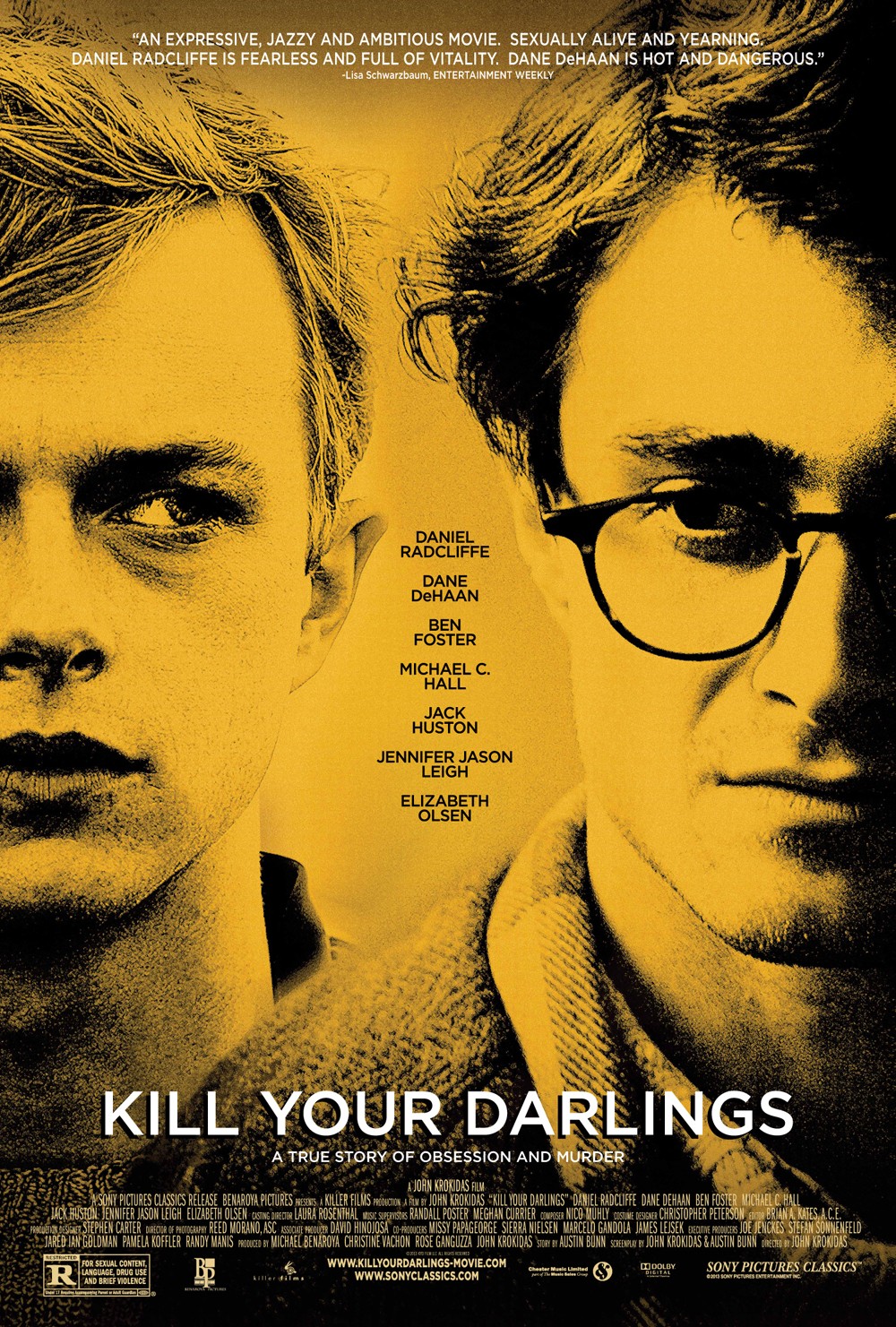
John Krokidas makes his feature film directorial debut with “Kill Your Darlings” which stars Daniel Radcliffe, Dane DeHaan and Michael C. Hall. The movie is about a murder that occurred in 1944 which brought three poets of the beat generation (Allen Ginsberg, Jack Kerouac and William Burroughs) together for the first time. Radcliffe portrays Ginsberg as a 17-year-old who is about to start college at Columbia University, and he ends up falling under the extroverted spell of fellow classmate Lucien Carr (DeHaan) who introduces him to the poets who would later bring a new vision to writers everywhere. It is when Carr murders his love David Kammerer (Hall) that their relationship starts to become unglued.
Krokidas co-wrote the script for “Kill Your Darlings” with his Yale University roommate Austin Bunn. A former magazine journalist, fiction writer and reporter, Bunn graduated from Yale and went on to get his master’s degree at the University of Iowa Writers’ Workshop. As for Krokidas, he later attended New York University’s Graduate Film Program where he made the short films “Shame No More” and “Slo-Mo.”
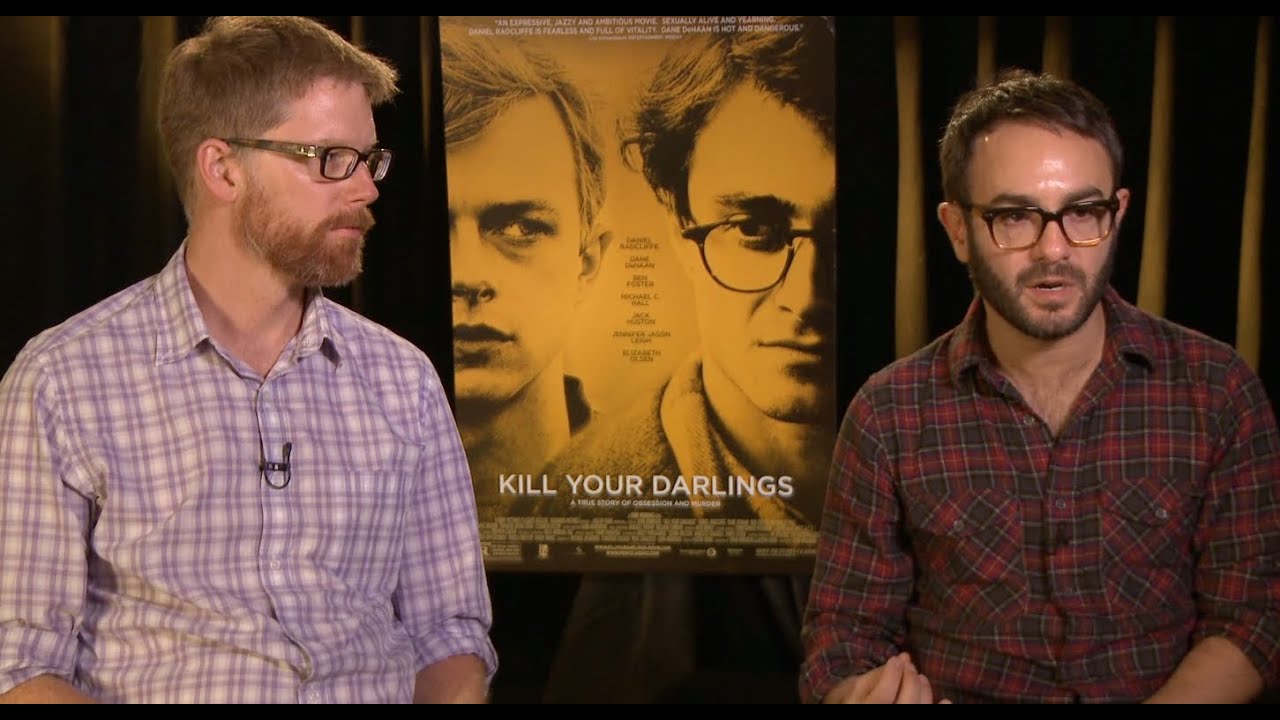
I got to hear how Krokidas and Bunn made the film under challenging circumstances when they appeared at the “Kill Your Darlings” press conference held at the Four Seasons Hotel in Los Angeles, California.
Question: What was the division of creative responsibility between you two like?
Austin Bunn: Probably like a lot of people in this room, I discovered the beats in college. I used to go to the campus bookstore and just track down the poetry collection, find Allen’s books and read them like they were some secret transmissions from the future version of myself. I was a closeted, young creative writer from New Jersey so Allen Ginsberg’s work meant the world to me. So, I had this really strong connection with Allen and of beat biographies and the history. I read a lot of the back catalog and I had come to John with the idea. So, in terms of the division of responsibility, I would write the first draft and then John would come in. The thing about John, as you will soon learn, he wanted to raise the emotional decibel level in every scene. John is one of the most riveting and vital and least hagiographic version of this story. We didn’t want to take the beats’ greatness as a given, so John sort of demanded that we write a really emotional roller coaster. Then we just went back and forth. John talks about it as the Postal Service, like the band version of producing a script. We were living in different cities at the time; I was at the University of Iowa Writers’ Workshop as a graduate student and John was in New York finishing film school.
John Krokidas: Austin wanted to do this as a play first. He was a playwright and a short story writer of some renown, and we were college roommates and we shared ideas with each other as college roommates and good friends do. But I, of course, started seeing the movie version in the back of my head and I had just gotten out of NYU film school and started convincing him that the play would be really flat and undramatic, but as a movie…
Austin Bunn: The Jedi mind trick!
John Krokidas: This would be amazing. But I would say I’m the structure guy I think, coming from NYU’s film program. I’m very traditionalist in terms of Sidney Lumet’s “find your spine,” and Austin is really wonderful with character and dialogue. If anything, he’s on a religious crusade against expository dialogue, and I would write these three paragraph monologues for each character expressing their emotion like that scene where Jennifer Jason Leigh finally turns to Allen to give him advice. I had a two-page monologue version and Austin crossed it all out (Austin laughs) and wrote the one line that’s in the movie, “The most important thing your father ever did was fail me,” which said everything.
Question: The movie is also very visual too because of the beats’ energy and such. How did you go about creating the look with cinematographer Reed Morano?
John Krokidas: I’m so proud of what we brought to this film. The movie is set in 1944 and it’s a murder story. Even in the writing process, I looked up and saw that “Double Indemnity” won Best Picture that year, and it was the year of “Laura” and “Gilda” and all these great American Film noirs. So, I said, “Why don’t we incorporate this even in just the fabric of the movie and start with the jail scene in a place of heightened tension flashback to more innocent times, and then build again to see whether or not these characters can escape or not escape their fate?” So, I started looking at noir style at first, but I thought an academic recreation of Film noir, who wants to see that? Going back to spine and theme, I thought what this piece was really about was young people finding their voice. So, what about going from conformity, the row houses of New Jersey and the pillars of Columbia, to nonconformity? And of course, where film noir went in the hands of the French was the New Wave. So I thought, “Okay well let’s start off with these controlled, composed, expressionistic-lit shots, and then as the boys go down the rabbit hole together, let’s take the camera off the tripod. Let’s get some jazzier free-form style.” So, I made this book of the 1940s. I had learned that Ang Lee, for “The Ice Storm,” did a 50 page book on the 1970s with colors, fonts and important historical events, you name it. So, I did that with the 1940s and then gave it to Reed. The great thing that I have learned on this is you can do all the academic treatises you want, but then you hire great people. She saw the goal post of what I wanted and then she showed me Jean-Pierre Melville’s films. She showed me films that meant a lot to her and then let kind of what I wanted filter through her own imagination. What I am amazed by specifically in her work is we did this movie in 24 days. Each scene was done in two hours or less, and she has the instincts to be like a documentary camera person and is able to light like that at the same time. We wanted to make sure this film felt relevant and contemporary as opposed to just being a traditional biopic.
Austin Bunn: (We didn’t want it to be) the greatest hits version of their lives.
John Krokidas: It was looking at Ryan McGinley photographs and contemporary, counterculture, young images of today and then finding what connected them to the 1940s. What was resonant in counterculture then and today at the same time.
Question: What was the direction that you were giving your actors? We were told that sometimes you would pull them aside for a more dramatic scene, but was there a consciousness you went into to direct the film and the actors? Were they any kind of specific kind of notes you gave them?
John Krokidas: Here’s the embarrassing story; Austin and I actually met freshman year because we were both acting in a production at Yale of “The Lion in Winter.”
Austin Bunn: Yes.
John Krokidas: Neither of us were the greatest actors in the world which is, I think, why we went into writing and directing. But I trained as an actor as an undergraduate and what you learn is that each actor has their own method and way. It’s whatever it takes for them to get the emotions to the surface. So, when I met with each actor that I cast, I would just simply ask them, “Have you trained? How do you like to work and what don’t you like?” Michael C. Hall gave me one of the greatest lessons in directing in which he said, “If what I am doing is not making you happy, don’t tell me that because that will make me self-conscious and it will make me think about what I’m doing. Just tell me to add whatever you want to what I’m doing.” That’s just a great lesson for life. Dan and I, when we were working together, we spent time before production (he was so generous and hard working on this) and he wanted to approach this like it was his first film which was very poignant to me. I said, “Would you like to try learning a new method and approach acting in a different style?” He said, “Absolutely!” So, with Dan, he’s so bright and in his head, and for the intellectuals Meisner works really well in focusing your action on what you are trying to do in the scene. Dane had trained extensively, and what he does is create a Bible for the character and does tons of research before production. Then he burns it and starts really becoming the character on set. Ben Foster (who plays William Burroughs) has something I’ve never seen another actor do which is, once we’ve basically got the scene up on its feet, he goes and he does the blocking of the scene by himself in the location several times. He calls it “the dance” because once he’s memorized the dance and knows the physicality (“I need to pick up the fork here, I need to put it down there”), he doesn’t have to think about it anymore and that’s completely freeing to him. So it’s like cooking this huge seven course meal where you have to get everything done at exactly the right time, but every plate needs a little bit of love in a different way. To me the greatest thing was being able to get this dream cast and then just to work with them to find how they like to work and what got the best out of them.
Austin Bunn: John had a really intuitive idea which was to keep the actors from reading past this point in the biographies, so none of the actors came in burdened by the mythology of who these guys would become. They were just 19-year-old kids. So, I think that was really smart and it released the actors from having to play the later decisions in their lives and the kinds of writers they would become. They just got to be young people, and that was a great relief I think for them.
John Krokidas: Yeah, and for us too as writers. I had a talk with Jack Huston once when he and I shared the same room and I’m saying, “Oh my god, I’m directing you as Jack Kerouac.” But we were like, “No. You are Jack who is a college student on a football scholarship who hates the other jocks, who just wrote a book which he thinks might be completely trite and he just wants to get out of college and have some real-life experience and join the war so he could begin to have real material to write his next book. That’s who you are.” That just liberated all of us.
Question: When writing the script, how much are you tied to the truth and how much are you allowed to take creative license?
John Krokidas: We did so much research for this. We felt we had to, and I think part of it’s our academic background because there’s so much in the biographies. There are so many biographies of them out there, but then also we would find different accounts online for example from David Kammerer’s friends. They said that that relationship between him and Lucien was never portrayed accurately and that Lucien actually kept coming back to David and David was asking him to end the relationship. And then we may have broken into Jack Kerouac’s college apartment together. We did the trick of pressing all the buzzers and then somebody let us in. But what’s interesting is Columbia students were living there and they had no idea that they were in Jack Kerouac’s apartment. So, we physically went to all of the locations in which this movie took place, and that just helped inform our writing process as well; getting to be able to visualize the actual spaces. Add to that, we went to Stanford University to the Allen Ginsberg archives. It wasn’t about the lack of material out there. If anything, it was about making sure that we really just focused on who they were up until the point which the movie takes place.
Austin Bunn: Just to add to that, the people that I know that have seen the film have been really surprised at how much is actually totally accurate. The day after the murder, Allen Ginsberg went to the West End Bar, “You Always Hurt the One You Love” was playing on the jukebox and he wrote the poem that ends the film. It ends with “I am a poet;” that is a line from August 20, 1944 so we worked really hard to weave it in. But like John was saying before, we didn’t want to do the dutiful, stuffy, every box checked kind of biopic that has been around for a while. We wanted to do something that felt more in line with the spirit of the beats that was more specific and honest and transgressive, and I hope we got there.
Question: Did you two have a specific goal of what you wanted to portray and what you wanted the audience to leave with either of the time or of the characters themselves?
John Krokidas: What I want the audience to leave with is that feeling of when we were 18 and 19 years old just like these guys were in the movie; when everything seemed possible and you knew that you had something important to say about with your life. That you wanted to do something different and unique and not just what your parents taught you, not just what school taught you, but you wanted to really leave your mark on the world. The fact that after the movie these guys actually did it and created the greatest counterculture movement of the twentieth century is amazing. I have had plenty of people come up to me after seeing the movie and said, “This movie made me want to be a better writer” or “this movie made me want to go back and start playing music again.” That to me means everything. That’s ultimately, deep in my heart, why I wanted to make this movie.
Austin Bunn: The pivot point was this murder. I loved Allen Ginsberg for his openness and his honesty, and to think that at one point in his life he was called upon to defend his best friend in an honor slaying of a known homosexual, the very thing that Ginsberg went on in his life to defy and radically create change about the idea of being in the closet and the shame around that issue, that contradiction was really exciting to us dramatically.
John Krokidas: You know this movie took, from the time that we started talking about this until the time that we are getting the chance to be with you all today, over 10 years to make. When I really think about it, the thing that kept me going and kept me wanting to tell this story is that there needs to be something that pisses me off at night. The fact that in 1944 you could literally get away with murder by portraying your victim as a homosexual, that pissed me off to no end. This isn’t a political movie and it’s one scene and it’s obviously what informed how Lucien Carr got away with murder, but for me that was the thing that kept me up all night that said, “No, I have to tell the story.”
Question: The movie has different kinds of music playing throughout it like jazz and contemporary music. Did you envision using different musical styles when it came to making this movie?
John Krokidas: I originally wanted a bebop jazz score similar to Miles Davis’ score for Louis Malle’s “Elevator to the Gallows” because the transition from swing to bebop at this time was exactly what these guys wanted to do with words; to go from rhythms to exploding them into something beautiful. My music supervisor, Randal Poster, said to me, “John put down your academic treatise, put down your paper. Go make your movie. Your child’s going to start becoming the person that he or she wants to be.” So I went and I made my movie, and then I put jazz music on the film and it didn’t work at all. And then I went and did only period accurate music and it felt like Woody Allen’s “Radio Days” which is a great movie but it’s not the young rebellious movie about being 19 and wanting to change the world that we wanted to make. So, I actually went back to the playlists that Austin and I used a while writing this movie and I used Sigur Rós and stuff that was timeless but contemporary, and it brought the movie to life. Then I realized that the composer Nico Muhly had arranged all of those albums and worked with Grizzly Bear and Björk and other people that we were using as temp track. So, we got the movie to Nico and just thankfully he loved it. Now that I knew that I had contemporary music in a period film, then we get to that heist sequence. I had heist period music on it, it was so corny. The sequence didn’t work, it didn’t have any stakes to it, and I can academically tell you when the beats come on, they led to the hippies which led to the punks, and the punks led to Kurt Cobain and the 90s, etc. But the truth is that while I can intellectualize it, you go with what’s visceral and what feels honest and true to you. For me, the biggest lesson in making my first film is to do all of your homework, do all your research, know what you’re doing, but then don’t be afraid to get out of the way if your movie starts to tell you what you should be doing.
Question: How did you decide on what literary quotes to put in, and how did you work with the actors in establishing the cadence and the elocution on those?
Austin Bunn: What a great question! If you know any of the beat history, this new vision was real for them and they have written volumes about it, none of which makes any sense. We couldn’t make heads or tails of it.
John Krokidas: Do you all remember your journals when you were 20 years old or those conversations you had at three in the morning with other college students? We got to read their version of it, and there’s a reason that we hide all of our journals and don’t let them see the light of day.
Austin Bunn: It was challenging. With the uninhibited, uncensored expression of the soul, that’s actually a credible quote directly from the Ginsberg new vision manifesto. So in some ways we knew we had to distill some of that material from the Ginsberg journals to help make the argument for how valuable this manifesto was and the irony honestly of what transpires in the plot which is the very thing that Allen’s called to do which is to create this censored version of history. But in terms of the poetry itself, it was really challenging because as we all know there are movies about poets and writers where recitations happen and they are really flat and they can be corny and there’s a time where you tune out of the movie when you’re waiting for the poetry to end. Specifically, I think of Allen’s first poem that happens on the boat. We were really challenged to find a poem that would speak to audiences but was genuinely an Allen Ginsberg poem written in his voice. So what we had to do was really channel Allen. His early work is quite rough and burdened by trying to impress his dad and his professors. John had the concept of this isn’t a poem that he’s just reading to impress people, it’s a poem he’s reading to Lucien Carr. The audience knows that, you know that and Lucien finds it out on the boat at that moment. That really gave me permission to kind of rethink what the poem was going to do and how we would make it, so we came upon Allen’s method which was kind of magpie; stealing from the American vernacular and going out and finding common speech and repurposing it, creating this Whitman-esque inclusion. So you hear in the poem things that you’ve already heard in the film just like Ginsberg did himself. Things like Allen in wonderland is reworked in the poem, unbloomed stalwart is the very thing that David said to him at the party. So we’re kind of hopefully paying off not just a poem that is emotionally powerful, but also something of the method that Ginsberg would use for the rest of his life.
John Krokidas: Radcliffe was such a hard worker. While he was on Broadway doing a musical, we would meet once a week for two months before even preproduction and rehearsals began to work on the accent and to work together. I have him on my iPhone reading “Howl.” We didn’t look at the later recordings, we looked at the earliest vocal recordings possible of Allen Ginsberg to make sure that we weren’t capturing the voice of who he became, but his voice at that time and what his reading voice was like. To be honest, it’s just really telling the actor, “You’re not performing a poem. You are letting Lucien know that he is loved with this poem and that you love him and that you can see inside him.” It’s playing the emotion underneath the poem which was the direction.
Question: What does it do for you when all the main characters are gay? Normally you got the female characters who can be a love interest but they are not going to be a rival. Usually, even now in films and in life, there is a separate role where as if you are all the same gender, you can all be anything to each other.
John Krokidas: I think this is a movie with every character is discovering what their sexuality is (gay, straight, bi or all over the place), and more importantly whether or not they are worthy of being loved. I personally don’t know if Lucien Carr was straight or gay, and to me it’s irrelevant because I have seen this relationship play out amongst gay people I have known so many times where an older man who is gay and a younger man of questionable sexuality develops such a close bond. The stereotype I think would be is that the young man had an absent father figure or finds the older man’s confidence and just the care and nurturing qualities of them very attractive. What happens though is that those two get so intimate that ultimately there’s nowhere else to take the relationship but sexual, and when that happens then the power position in that relationship twists and the younger man suddenly realizes that he holds the power because he’s the sexually desired one. That’s where a lot of conflict ensues. Whatever you read about that relationship between Lucien and David, everyone knew that they were codependent. Everyone knew it was toxic and going to end badly. Nobody knew it was going to end in murder.
Austin Bunn: I think a lot of the biopics we see are kind of denatured of their sexual qualities and the edginess of the relationships in them. So, I think we were trying to do something that restored some of that ambiguity, lust, desire and confusion that is genuinely in the beats’ history. We were not making that up.
“Kill Your Darlings” is available to own and rent on DVD, Blu-ray and Digital.
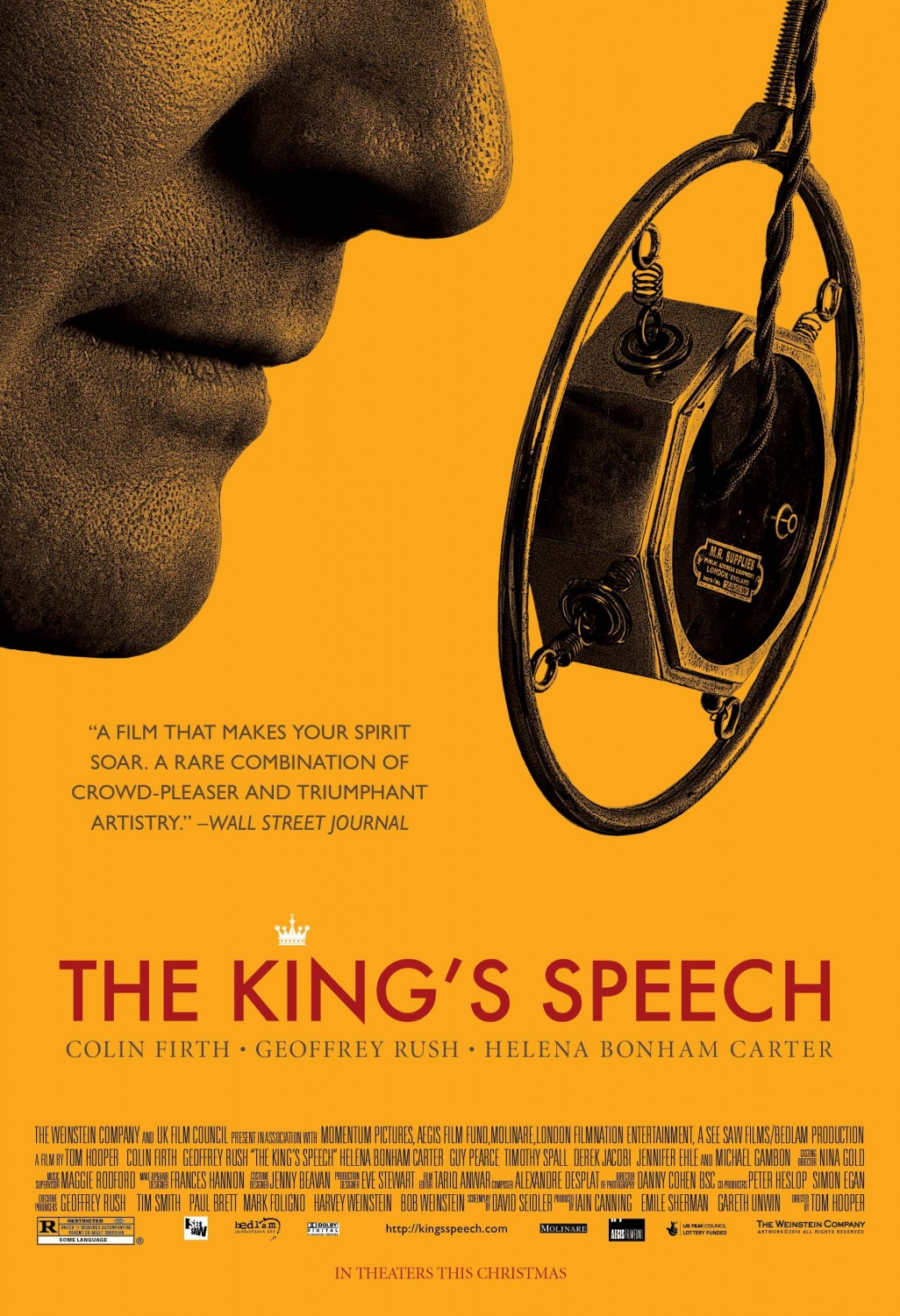
Many will probably look at “The King’s Speech” as one of those snobby British art movies, but this of course will say so much more about its so-called critics than anything else. The story of a man who, it is said, “bloody well stammers” and works to overcome this affliction which keeps him from completing sentences let alone a whole speech sounds more like one of those formula movies where we watch a human being triumph over personal obstacles with the help of a mentor. Then again, not many of those movies are about King George VI, and with this being “based on a true story,” it all adds more dramatic heft to this particular story even as I continually tire of that overused phrase.
Formulaic or not, “The King’s Speech” is a magnificent film which takes hat seems like an easy to overcome problem (or so others might think) and turns it into compelling cinema. This is in large part thanks to a wonderful cast that includes Colin Firth, Geoffrey Rush, and Helena Bonham Carter. There’s nary a single weak performance to be found here, and this was one of the best acted films of 2010.
Seriously, I bow down to Firth after watching him here. That he gives a brilliant performance is no surprise as he has had an amazing career to date, but this particular role seems all the more difficult for him or anyone else to pull off. Mastering the technical part of it and making the stammering seem utterly believable must have been a job unto itself. How do you get an audience to suspend disbelief and get them to believe you are seriously afflicted with such a seriously irritating impediment?
Now other actors would probably try to master the stammer to where they are not thinking about it. But with Firth, he digs deep into the role to get at who King George VI was as a person and what has affected him emotionally. That he gets at the heart of this character and creates such a vivid portrait of a leader many do not know much about is what makes his performance so damn good. As for the technical aspects of the role, I am guessing Firth saw this as secondary, but it should go without saying that he perfects the stammer from start to finish.
Then there is Geoffrey Rush who also served as one of this film’s producers. As Lionel Logue, the King’s speech therapist, he serves as the Mr. Myagi of “The King’s Speech.” Lionel gets the King to do a variety of exercises which are as physical as they are vocal, but his biggest challenge is in getting George to exorcise the personal problems which affect him and his speech more than anything else. All the tongue twisters and warm ups won’t do a thing until the King confronts the emotional scars which he has endured up to this point in life.
Ever since his Oscar winning turn in “Shine,” Rush has been one of the most entertaining actors in movies. I don’t know if it is his deep voice or incredibly dry wit, but he’s never boring in any film he’s in. Whether it’s as the Queen’s servant in “Elizabeth” or Jack Sparrow’s foe in the “Pirates of The Caribbean” movies, Rush has remained such a fascinating presence in one performance after another. Sometimes all it takes is a look or a move from him to get a big response from the audience, and it was a big audience when I saw “The King’s Speech” at a nearby theater. Seriously, seeing him strike a pose in a chair Lionel has no business sitting in is enough to get a big laugh, and that is saying a lot?
When it comes to Helena Bonham Carter, just how many great performances has she given us? It still does not feel all that long since she appeared in “A Room with A View,” and that film was made back in 1985. Still, she glides effortlessly from role to role, and it truly is impossible to pigeonhole her. Whether it is “Fight Club” or Tim Burton’s disappointing remake of “Alice in Wonderland,” she has proven capable of playing any role given to her with relative ease, and not many can pull this off these days.
As the King’s wife, Queen Elizabeth, Carter is sublime throughout. She makes Elizabeth both empathetic to her husband’s problems and very strong in the role which is suddenly thrust upon her. Her performance here is actually quite subtle, and you never really catch her acting. Seeing her interact with “commoners” is a delight as she comes off as professional but very polite and never snobby. I keep talking about actors who inhabit roles more than play them and Carter proves to be one of them here.
There are also other great performances to take note of as well in “The King’s Speech.” I was surprised to see Guy Pearce on board as George’s brother, King Edward VIII, whose passion for another overcomes his royal responsibilities. Derek Jacobi shows up as Cosmo Gordon Lang, the Archbishop of Canterbury, whose advisements to the King perhaps go a bit further than they need to. I almost did not recognize Michael Gambon as King George V, his booming voice covered up by a face which is very un-Dumbledore like. Claire Bloom also is wonderful as Queen Mary, and she is also another one of those actors you never catch acting. And then you have Timothy Spall who plays the famous British Prime Minister Winston Churchill almost as well as I did back in junior high school.
The cast of this movie, when you look at it, is a roster of those British actors who were not cast in a “Harry Potter” movie, and those who had somehow managed to find a break in between those movies to pop in for a performance here.
Seriously though, the story does have that setup of a person who asks for help from a “wise old man” and then keeps coming and quitting on him before coming back again for more lessons. But director Tom Hooper and screenwriter David Seidler keep it from ever becoming a routine film, and their attention to historical accuracy throughout is very commendable. Adding to this is the chemistry of the actors who interact with each other so well. I also have to say that the process of a man giving a speech to an entire nation has never seemed so exciting before I watched this film. “The King’s Speech” may not be an action thriller per say, but the last half had me on the edge of my seat.
Hooper brilliantly sets up the tension between King George VI and his audience right from the start. As we watch George at a local race, stumbling over a speech he is forced to give, Hooper really puts us into the mindset of someone with a serious problem of speaking in front of others. We are made to feel the way Firth’s character does, and we immediately sympathize with what he is going through. That scene hangs over our heads and the main characters all the way to the end to when, I guess you could say, George has his “Rocky” moment.
“The King’s Speech” was more than deserving of the accolades which were bestowed upon it back in 2010. While “The Social Network” would have been my choice for Best Picture at the 83rd Annual Academy Awards, there is no denying just how well made Hooper’s film was, and it still holds up to this very day.
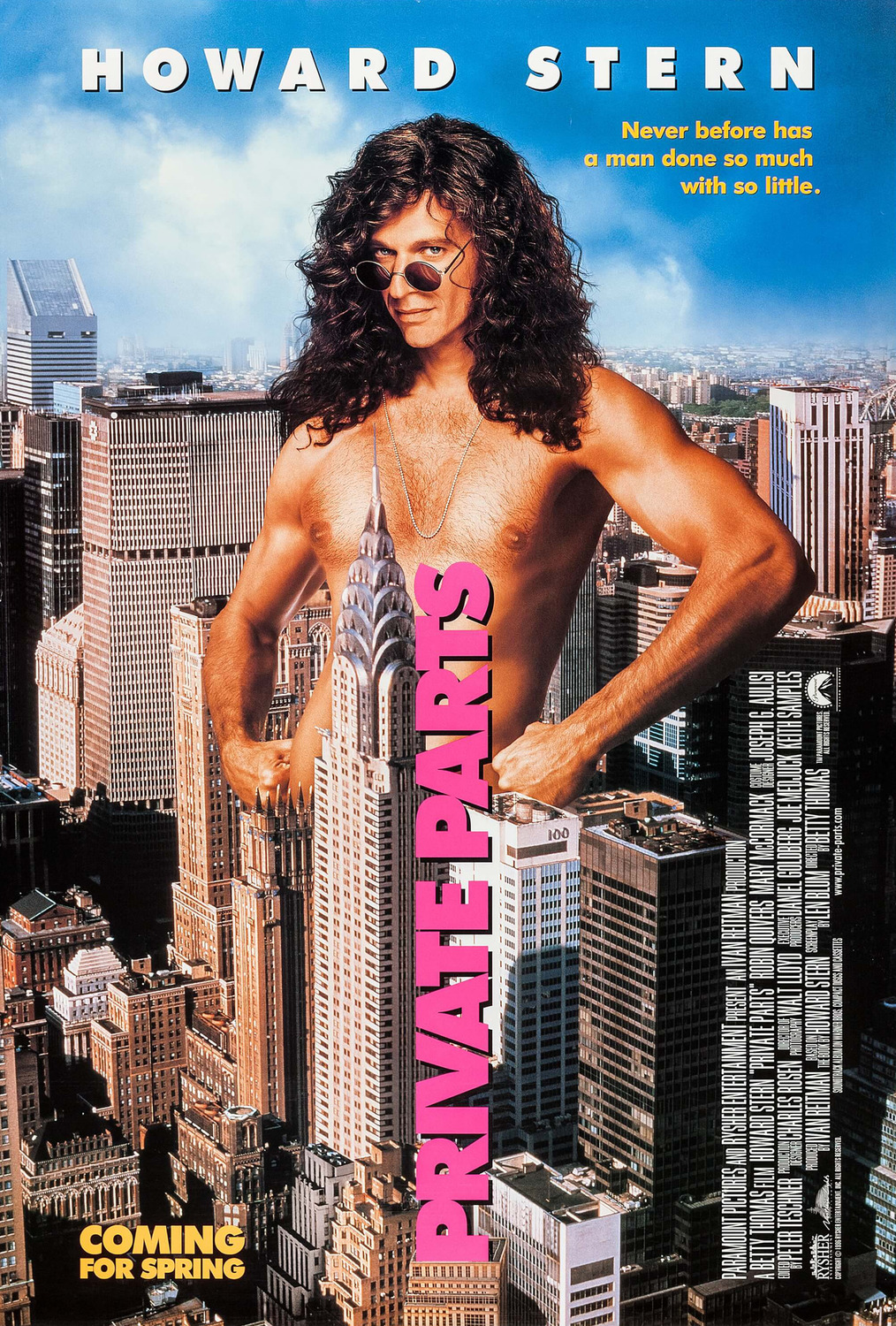
When this trailer begins, it looked like we were going to get another period piece movie. Back in the 1990’s, a lot of period movies were being released such as “Howard’s End” which my parents took me to see, and I found myself really liking it. From there, we got others such as “The Remains of the Day,” “The Age of Innocence” and “The Madness of King George,” and they contained many great performances and much more to take in. Whatever movie this trailer was for, it felt like I was in store for another period piece which would immerse me into a whole other time and place.
But the next thing I know, subliminal messages such as “SEX,” “BABES” and “CHICKS” started flashing at us from the silver screen, and I am wondering to myself, while laughing out loud, what the hell? Clearly, something far more devious was in store for audiences as these flashes of “SEE IT,” “FEEL IT” and “NUDITY” came straight at us with a thunderous guitar lick. Was this a trailer for another “Naked Gun” sequel?
Before I knew it, Howard Stern appeared onscreen making funny noises into a microphone, and I found myself getting really excited. I was not the biggest fan of Stern’s in the 1990’s but, like everyone else, I was constantly curious to see what he was going to do next. With this trailer being scored to AC/DC’s “You Shook Me All Night Long,” I found myself getting excited for it in a way Stern had not excited me before. While I wondered what was going on in his head from time to time, seeing him in a motion picture quickly seemed like a monumental event.
This trailer for “Private Parts” quickly made my list of my all-time favorites as it presented me with something highly unusual and wonderfully rebellious. This trailer went out of its way to satirize the kind which promised something to a select audience, and then proceeded to pull the rug out from under us all. It made me super excited to the film, and I loved how it twisted the form of the average movie trailer to an exhilarating extent. And, having seen this film many times since, I can confirm that the trailer delivered on what it promised audiences to great effect.
Ever since her Oscar win for “As Good as It Gets,” it seems like Helen Hunt has been keeping a markedly low profile. She has kept busy with other projects and even took the time to make her directorial debut with “Then She Found Me,” but we do not hear about her as much these days as we did back in the 1990s during her “Mad About You” heyday. But now she is back in a big way with her critically acclaimed performance as sex surrogate Cheryl Cohen Greene in Ben Lewin’s “The Sessions,” and it serves as a reminder of how great she can be when given the right material.
“The Sessions” is based on the true story of poet Mark O’Brien (played by John Hawkes) who hired Greene to help him lose his virginity at the age of 38. O’Brien had spent the majority of his life in an iron lung and was paralyzed from the neck down due to getting polio as a child. However, a certain part of his body below the waist still works, and Greene became the person he hired to help him exercise it.
Now playing a real-life person has its challenges because you want to honor the individual without impersonating them. For Hunt, however, the challenge became understanding Greene’s job of being a sex surrogate as she was never aware a job like this existed before. Talking with Greene opened Hunt up to how she could respectfully portray such a person onscreen.
“She used the term ‘sex positive,’ ” Hunt said of Greene. “And I went: ‘Wow, I want to be sex-positive. I want to be part of a movie that is that; I’ve never seen that.’ So, it was more her vibe about her positive, enthusiastic, nonjudgmental way of talking about this topic that is usually laden with weirdness.”
Hunt ended up doing 90% of her research for the role with Greene, and it was Greene’s enthusiasm and frankness about everything which made Hunt ever so excited to portray her in “The Sessions.”
“She (Greene) has a sense of adventure about her grandkids growing up, helping someone have an orgasm, making this movie, meeting me and my boyfriend, chocolate from the raw restaurant I took her to,” Hunt said. “All of those things light her up. I thought, ‘What if I could be like that about sex in a movie?’ That would be amazing.”
Greene also made it very clear to Hunt how her job as a sex surrogate differs greatly from being a prostitute.
“The prostitute wants your return business, and she (the sex surrogate) doesn’t. She wants you to learn what you need to learn, so you can go off and have a relationship. That’s a substantial difference,” Hunt said of Greene’s description of her work.
Director Lewin went even further in describing Greene as being “a middle-class soccer mom who has sex with strangers.” As a result, the role Hunt plays in “The Sessions” proved to be more complex than the one Hawkes plays.
“Her preoccupation was in achieving the emotional journey,” Lewin said of Hunt. “I got a real buzz talking with her because there were aspects of the character I hadn’t thought through that she had. She’s a frighteningly intelligent actor.”
The sex scenes between Hunt and Hawkes have a wonderfully awkward feel to them as his character gets to experience sexual intimacy for the very first time. Hunt said neither she nor Hawkes ever did a full read-thru of the script or even rehearsed together much. Instead, Hunt spent a lot of time on her own writing down her own feelings about sex, and what she ended up saying about the act really shows up in the film.
“Sex is never perfectly elegant: The light isn’t just right, and the underwear doesn’t fall on the floor perfectly, and the hands don’t clutch, and you don’t come at the same time. It’s all bullshit, basically,” Hunt said. “And the disability of this character renders all of that impossible, so you’re left with something much more like your own experience as a nondisabled person, which is that you’re human and that it’s good and it’s bad and it’s weird that it’s silly, and it’s embarrassing that it’s scary, so I think that the disability is just a way to get to what it’s actually like.”
Like her co-star Hawkes, Helen Hunt deserves all the accolades she has been getting for her performance in “The Sessions.” You believe her when she says that parts like this one don’t come around often enough, and you can sense her sheer excitement in playing Greene in this movie.
“She was someone who radiated this unabashedly humanistic view of what the human body is capable of,” Hunt said of Greene. “As an actress, I was hungry to play someone like that. As a person, I’m hungry to live that way.”
WRITER’S NOTE: This article was written back in 2012.
“The Sessions” and John Hawkes’ performance in it as journalist and poet Mark O’Brien have earned some of the most rapturous praise of any movie in 2012. The film tells the story of how O’Brien, who was confined to an iron lung due to being stricken by polio as a child, hired sex surrogate Cheryl Cohen Greene (Helen Hunt) to help him lose his virginity at the age of 38. Hawkes, who earned an Oscar nomination for his performance in “Winter’s Bone,” has talked extensively about his concerns about taking on the role as well as the physical challenges he faced in playing O’Brien.
Hawkes’ biggest concern was whether or not it might be better for a disabled actor to play O’Brien instead of him. As a result, he’s still waiting for some sort of backlash to hit him. Ben Lewin, who directed “The Sessions” and is himself a Polio survivor, did take the time to find a disabled actor to play Mark, but he eventually became convinced Hawkes was the man for the job.
“Of course, that was my first question: Why not a disabled actor? They are a uniquely qualified group of people for this role, who are undervalued and underused,” Hawkes said. “I’ve had a lot of disabled actors come to me after screenings, and they told me to get over it.”
“It is the 800-pound gorilla in the room in a way,” Hawkes continued, “but it’s something that, Ben (Lewin) being a polio survivor himself, and the fact that he put the time in to look for disabled actors, he felt like, would it be politically correct to hire a slightly disabled actor to play a severely disabled actor? He ultimately just hadn’t found his guy. We met, and he felt like I could do it.”
Once cast, Hawkes became determined to mirror the physical condition O’Brien was stuck in for the majority of his life. To that extent, he and the props department created what was described as a “torture ball;” a soccer ball-sized foam pad that he tucked under the left side of his back to force his body to curve dramatically. In addition, he also used a mouth stick which was much like the one O’Brien used to turn the pages of a book or dial a telephone. It was this “torture ball,” however, which threatened to leave Hawkes with permanent physical damage to his body.
“Finding that position was difficult and did hurt. I’ve got a guy that I’ve been seeing for years, who is a combination massage therapist and chiropractor. I’d have 15 minutes with him, two or three times a week, or half an hour, if I was lucky. He told me that I wasn’t doing very good things to my body, but it was my choice. I’m not a martyr or masochist, but when the script says that your spine is horribly curved, you can’t just lie flat on your back and pretend,” Hawkes said.
But ultimately what makes Hawkes’ performance so good is that he doesn’t turn him into just another pity case. Filmmakers are typically expected to give us an emotionally manipulative experience when it comes to portraying physically disabled characters, making us feel sorry for them and of what they are unable to accomplish because of their limitations. Hawkes and Lewin, however, were determined not to go down this route.
“A character like that had every reason to wallow, but that’s just not interesting to watch on screen,” Hawkes said. “I’ve played a lot of underdogs and I like people who aren’t equipped to solve their problems but just keep trying anyway. There’s something really noble and interesting about watching someone keep banging their head against the wall.”
One of the other things which helped Hawkes was watching the documentary “Breathing Lessons: The Life and Work of Mark O’Brien” which won its director Jessica Yu the Oscar for Best Documentary Short Subject in 1997.
“There was Mark’s body, and there was his voice,” Hawkes said, referring to the documentary. “And so, I didn’t invent a lot. I just tried to really take as much of the Mark that I saw and tried to make it my own, to embody him.”
The effect Hawkes’ performance has had on those who were very close to O’Brien has been profound. Just ask Cheryl Cohen Greene, the sex surrogate whom Hunt’s character is based on.
“The first time I heard John I got chills,” said Greene. “I’m sitting there on the set with headphones thinking, that’s Mark. It’s scaring me. John got him completely.”
John Hawkes’ performance as Mark O’Brien looks very likely to earn him an Academy Award nomination for Best Actor, and many will agree that he deserves the recognition for his work. It marks another memorable role for this actor who first came to Hollywood over a decade ago, and he has many more great performances ahead of him.
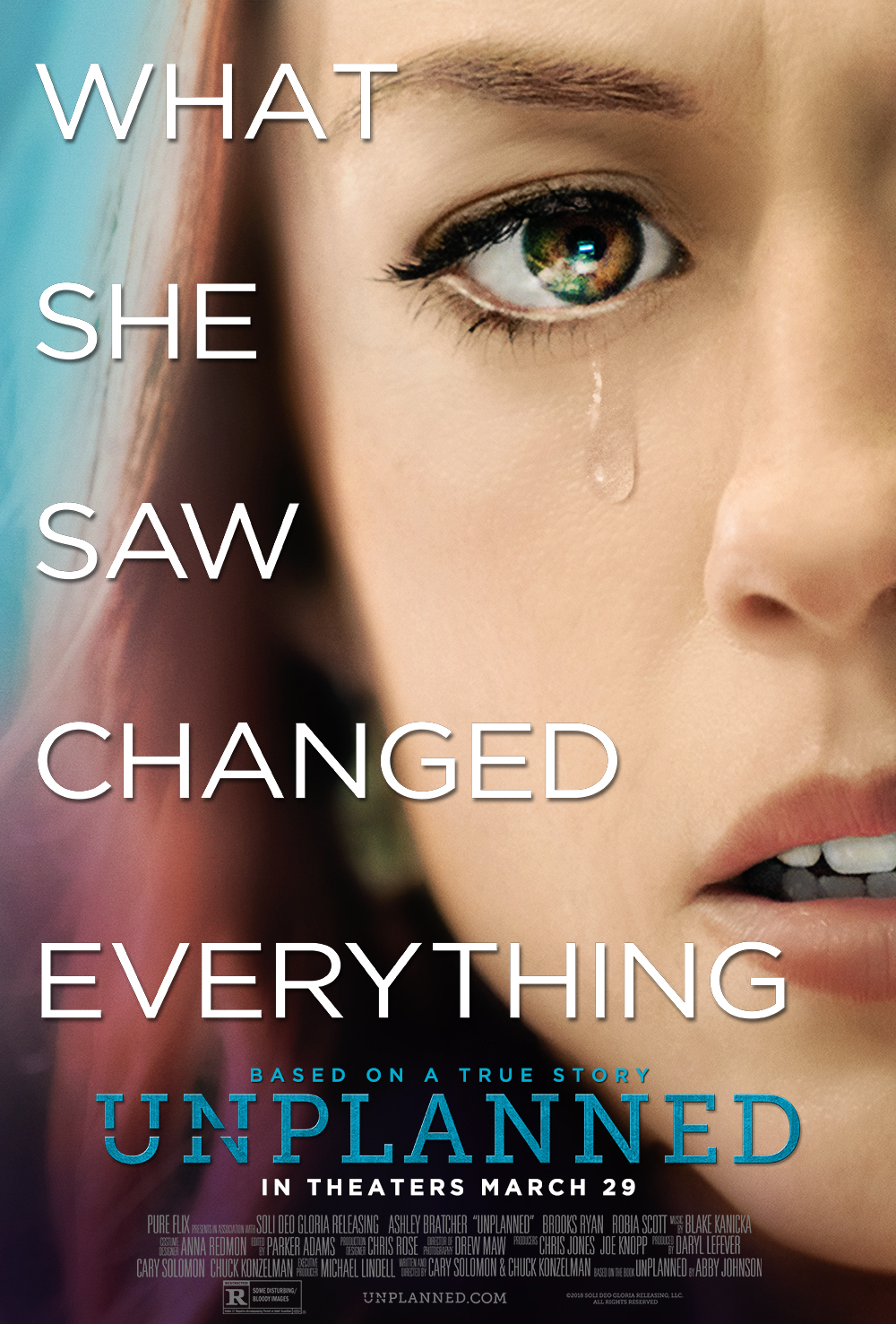
It is only with morbid curiosity and the fact it was available to view for free on Tubi that I found myself watching the 2019 anti-abortion drama “Unplanned.” Now those who know me know I am forever pro-choice, am very angry at the overturning of Roe vs. Wade, and I am a staunch supporter of Planned Parenthood, so clearly this film was not made for someone like me. Still, I dared myself to sit through this motion picture to see if I can provide any sort of objective criticism on it. So, whatever side of this issue you are on, pray for me.
“Unplanned” is based on the memoir by Abby Johnson who worked for years at a Planned Parenthood clinic before eventually becoming a staunch anti-abortion activist. Abby is played by Ashley Bratcher, and the film opens up on her being asked to assist in an ultrasound-guided suction aspiration abortion for a patient who is 13 weeks pregnant. As she assists, she watches the monitor and sees the fetus trying to fight back against the doctor’s attempts to remove it. So overwhelmed by what she sees, she goes straight to bathroom and cries her eyes out. From there, the film flashes back to eight years earlier when Abby first joined Planned Parenthood and of her experiences with both management and the anti-abortion protesters she later befriends.
Okay, let me start with what I like about “Unplanned,” and that is Ashley Bratcher’s performance. Regardless of how you feel about the subject matter, she does give a strong and convincingly emotional performance as she makes Abby’s inner conflicts quite palpable. In the process, she gives us one of the best performances you could ever hope to find in a Pure Flix production. And let’s face it, their films are not known for having Oscar caliber performances.
Also, the filmmakers do feature a scene which, ever so briefly, serves to separate certain pro-lifers from others. One ani-abortionist screams at a woman entering the clinic for not keeping her legs crossed, but others are not quick to engage such unnecessarily harsh language.
And I do have to say that “Unplanned” does end with one of the biggest laughs I have had at the movies recently as the filmmakers give us an end card stating that Planned Parenthood had no involvement or participation in this film’s production. Wow! Really?! You think?!
Well, I have clearly reached the tipping point here, haven’t I? While everyone is entitled to their opinions and beliefs to where all need to be heard, none of this changes the fact that “Unplanned” is shamelessly manipulative, full of propaganda and outright lies, and its presentation of Planned Parenthood as being like the evil Empire from “Star Wars” is defamatory and borderline criminal. Clearly the filmmakers were not the least bit interested in being unbiased, and I am obligated to hold them accountable for the bullshit parade they have given us here.
Let us start with the opening ultrasound abortion scene. The special effects are truly awful as no fetus recoils like that at 13 weeks, and this is a scientific fact. If a fetus could recoil in such a way, I have no doubt the filmmakers would have used real ultrasound footage to bolster their case. Also, we never do learn exactly why this patient is getting this specific kind of abortion. Was she raped? Is her overall health in danger? Was there a strong chance of her dying if she didn’t get this abortion? Well, no one here seems interested in such questions.
As for the scenes of Abby’s abortions, particularly her second one, writers and directors Cary Solomon and Chuck Konzelman are completely shameless in making it look both bloody as hell and life-threatening. With all the blood on display, it’s no wonder this is the first Pure Flix production to earn an R rating. The truth is, abortions are actually safer than childbirth, which itself can be very dangerous. But yeah, there are people who hate science for all the wrong reasons and are determined to remain willfully ignorant.
I also found its portrayal of Planned Parenthood as nothing more than a corporate monolith interested in profiting from abortion not just repellent, but completely and inescapably reprehensible. Much of this is corrupted view of the non-profit organization illustrated through the character of Cheryl, director of the clinic Abby works at. Played by Robia Scott, Cheryl comes as a smug as hell individual who is far too cold hearted to be the least bit believable as a fighter for abortion rights. For the filmmakers, Cheryl is essentially a Darth Vader-like character who spouts a lot of crap about how abortions are Planned Parenthood’s cash cow, and that the organization should be run no differently than a fast-food restaurant. Seriously, I kept waiting for her to tell Abby, “I find your lack of abortions at this clinic disturbing.”
And, like many faith-based features, “Unplanned” suffers from a low budget, cheap cinematography, a music score designed to assault your emotions as opposed to simply manipulating them and, as expected, a lot of bad acting. While Bratcher shines, everyone else emotes or acts as if they are reading off of cue cards which are just a few feet away. Granted, they are reduced to spouting many ridiculous and dangerous talking points, particularly towards the movie’s conclusion, but they are in serious need of acting lessons more than anything else. As for Brooks Ryan who plays Abby’s second husband, Doug, he acts as though he barely has a pulse. In the scene where she gives birth to their daughter, he is far too serene and calm to be the least bit believable as an expectant father, and it got to where I wanted Abby to, as Robin Williams once said, grab his scrotum and pull it up over his head.
But what enraged me the most about “Unplanned” is how the filmmakers deny Abby not just her personhood, but her womanhood more than anything else. While she has a loving husband and parents, they cannot help but look down on her as they are defiantly pro-life while she spends most of this movie being pro-choice. When Abby eventually does her 180 on abortion, they come to embrace her fully in a way that they always should have regardless of their differences. Plus, there is a scene in which Doug forgives Abby for her past abortions, and it feels like he is saying to her, “It’s okay. Because you are pro-life now, I can truly see you as a woman now.”
That’s right folks, “Unplanned” is not as pro-life as it is anti-woman. The implications of this are so deep that I have a feeling the filmmakers may not even realize this. The women here are viewed as being selfish and thoughtless for taking on jobs instead of being stay at home mothers. The men, however, are portrayed as such angelic creatures who look to save these women from their own ghastly impulses. Look, not everyone needs to be saved, and if history has taught me anything, it is that women have never been the gentler or weaker sex, ever. Seriously, this is as chauvinistic and misogynistic as any film I have seen in recent years, and there is no excuse for that.
Oh, and Mike Lindell, the My Pillow guy and one of “Unplanned’s” executive producers, has a cameo as a tractor driver who gleefully pulls down a Planned Parenthood sign after the clinic is shut down. But looking deep into his eyes, Lindell looks more like he is vicariously destroying a sign of a local chapter of the Better Business Bureau, and we know how the Better Business Bureau feels about him.
Well, have I given you all an objective review of “Unplanned?” I want to say yes, but with movies like these, is almost impossible not take a side, and this one will simply reinforce those on both aisles of the abortion debate.
Look, maybe the world would be a better place with no abortions, and it should be clear that no one really wants to get one. There has to be a movie out there somewhere in which people on both sides of the abortion debate can find some common ground, and it would be great to find any common ground in such divisive times. “Unplanned” is not that movie, and it was never designed to be as it was made by people who choose to be willfully ignorant, and those people end up making life more difficult for everyone.
To be completely honest with you, “Unplanned” proves to be one of the most infuriating and intellectually insulting motion pictures ever made by human beings. Then again, it was made by the same people who gave us “God’s Not Dead.”
The following review was written by Ultimate Correspondent, Tony Farinella.
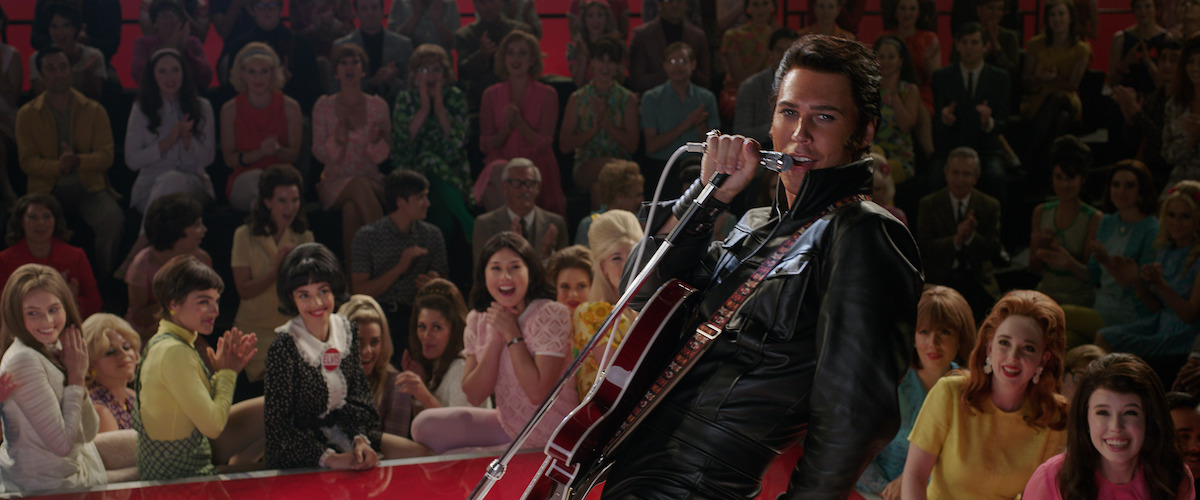
Elvis Presley is, without question, one of the biggest names in music history. As a matter of fact, many think he’s the gold standard. Nearly four decades after his death, he is still worshiped and celebrated by legions of fans. However, there has never been a true Elvis biopic worth its salt. For a man with such a historic legacy, it seemed rather unusual that a true Elvis biopic with a big studio behind it had never been released. This changed in 2022 with the release of “Elvis,” directed by Baz Luhrmann. If there ever was a director to bring the life of Elvis to the big screen, it was certainly Luhrmann. He’s known for his big productions and big budgets. There is a reason why he hasn’t directed many films. He puts everything into his work, and he’s involved in many aspects of the filmmaking process as a whole.
I remember hearing about this film back in 2020 as Tom Hanks contracted Covid-19 while filming his part as Colonel Tom Parker. When it was finally able to hit the big screen in the summer of 2022, I noticed it was getting people back in the theaters once again. Now, it has not grossed anywhere near the level of “Top Gun: Maverick,” but it’s still playing in certain theaters to this day even though it was released in June. I credit this to the power of Elvis as he always had a way of bringing people together. This is certainly the case with this big screen blockbuster.
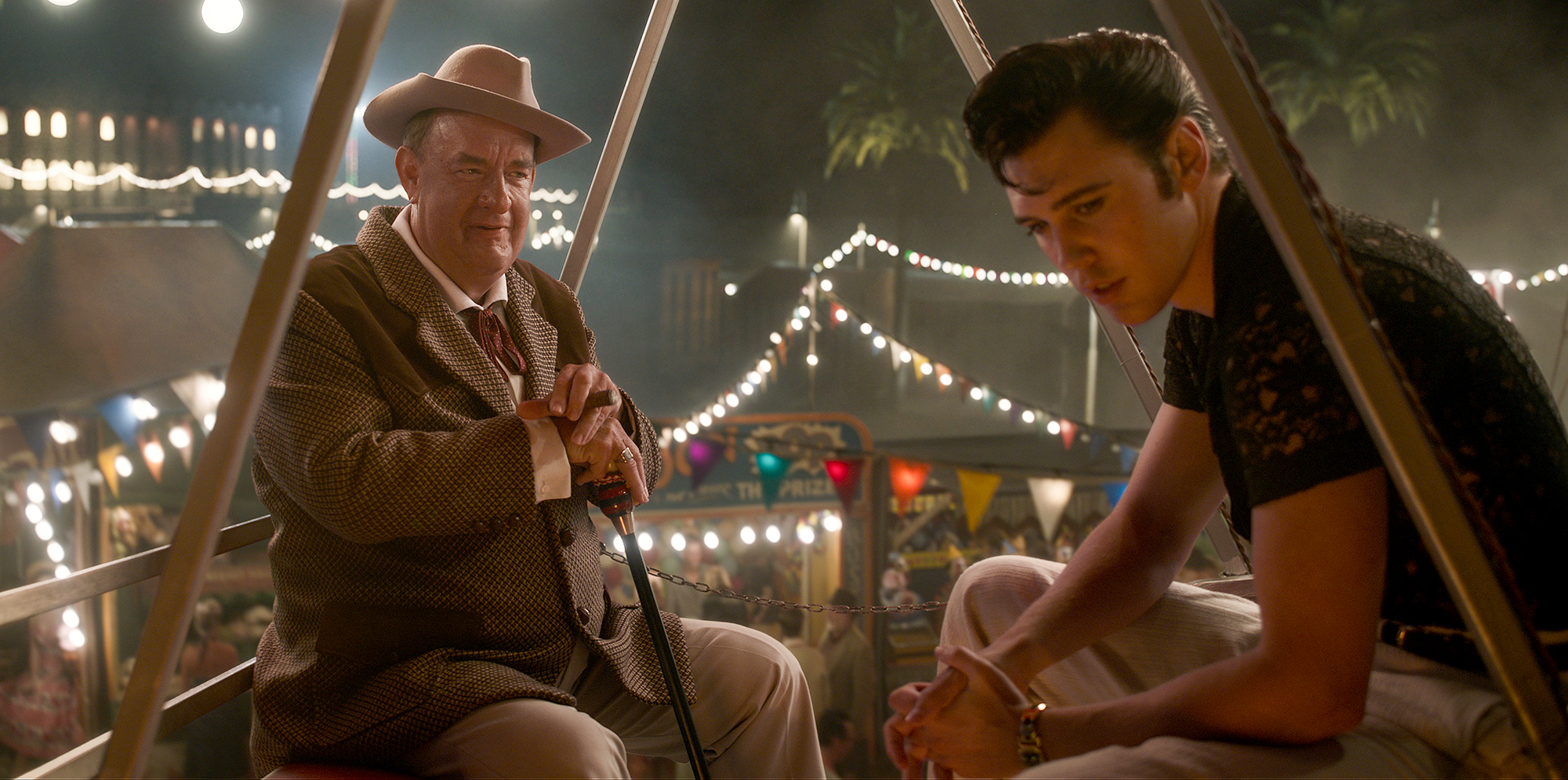
While the film is called “Elvis,” it could have easily been called Elvis and Colonel Tom Parker, as it focuses on the relationship between the two. Colonel Tom Parker is played by Tom Hanks. If I had to go out on a limb here, I’d say they wanted to cast a big-name actor in Hanks because not many people were familiar with Austin Butler. Prior to seeing the film, I had never heard of Butler myself. While I understand the casting of Hanks and the reason behind Parker being such a pivotal character in the film, his performance is extremely cartoonish and silly. Colonel Tom Parker was a character indeed, but this performance feels like Hanks in a fat suit with a forced accent.
This film focuses on how Elvis was discovered by Colonel Tom Parker who took him under his wing as he saw something special in the young man. Elvis, being loyal to his family, especially his mother, would do anything to help them out financially, so he did whatever Colonel Tom Parker told him to do even if his mother saw right through him. Elvis’ father was a bit of a simpleton and really wasn’t looking out for his son’s best interests as he had problems of his own. Colonel Parker, on the other hand, was a carney who knew how to manipulate and con Elvis into doing anything he wanted him to do. Elvis was loyal to a fault. As a matter of fact, they had a contract where Colonel Parker would get half of Elvis’ earnings, which is unheard of in today’s entertainment industry.
Elvis was clearly influenced by African American music, and the film is wise to show that here. While many African-Americans say Elvis stole their music, others say he took from their music while adding his own touches to it. There are many opinions on the subject, but the film does give African-American artists their due and shows he was impacted and moved by their music while growing up in the South. It’s a tricky subject but the film gives African-American artists their due and acknowledges how Elvis was in awe of what they were doing at the time and how heavily inspired he was by the musical scene on Beale Street in Tupelo, Mississippi.
Elvis Presley is also seen as dangerous because of his sexuality and dance moves. It’s funny to think of this now because of what other artists are doing today and how far they push the envelope with their sexuality. You have to remember that when Elvis was around, it was during the late 1950’s and early 60’s, so audiences were not yet exposed to this type of artist. Some feared his music and dancing would promote sexuality amongst the younger crowd. Luhrmann also touches on Elvis’ film career, his relationship with Priscila Presley, and his time in the Army. Luhrmann and his fellow collaborators cover a lot of ground in 159 minutes, but the film doesn’t feel too long in the tooth as there is always something happening on screen.
Let’s start with the pros of the film: Austin Butler is now an official movie star. It would not surprise me if he is nominated and even wins an Oscar for Best Actor. The Academy loves musical biopics, and this is the type of performance which seems right up their alley. It’s definitely one of the best performances of 2022, but there are other films yet to be released in this calendar year. It wouldn’t get my Oscar vote if I had one, but I certainly think it’s a phenomenal performance. Butler looks and sounds just like Elvis.
The film also takes the time to dive into the effect the deaths of Robert Kennedy and Martin Luther King Jr. had on Elvis as he wanted to make music about something instead of always playing it safe due to Colonel Tom Parker’s influence. The soundtrack is also top-notch and it’s incredibly moving at times. It’s flashy, fun, in-your-face, and a real crowd-pleaser.
Now let’s talk about the cons: Tom Hanks. What in the world is this performance? I read a comment from Scott Mendelson from Forbes who said it seemed like Hanks was trying to win an Oscar and a Razzie at the same time. That is the perfect way to describe his performance. The film also follows the usual beats of a biopic: the young kid doesn’t believe in himself, has success, hits roadblocks, and it ends on a high-note. The only difference here is the Elvis story doesn’t end on a high note as we all know.
The film also seems a little too uncomfortable with criticizing Elvis and a lot of the things he did in his life and career. He was far from perfect, but the film seems content to blame it all on Parker instead of looking at Elvis for some of the blame. When all is said and done, he’s far from innocent.
I enjoyed “Elvis,” but I didn’t love it. Luhrmann doesn’t show the ugly side of Elvis, and there was an ugly side to him. It’s not a very deep or relatable film either. The story could have been a little more meaningful and thought-provoking but, at times, it seems to fall in love with its star much too often. It’s a good movie, but it’s not a great one. I recommend you check it out, as you won’t be disappointed, but I would have liked a little more meat on the bone here.
* * * out of * * * *
4K/Blu-ray Info: “Elvis” is being released on a two-disc 4K and Blu-ray combo pack from Warner Brothers Home Entertainment which also comes with the digital copy of the film. It is rated PG-13 for substance abuse, strong language, suggestive material, and smoking. It has a running time of 159 minutes.
Video Info: “Elvis” comes to 4K on eye-opening HDR 10+ along with Dolby Vision. It’s a stunning movie filled with life and color, and it truly took my breath away watching it in 4K. With some films, you don’t really notice the difference with a 4K release. Bu this is a film where, if you have a 4K player and TV, it is the way to go without hesitation. It came to life right before my eyes.
Audio Info: The Dolby Atmos track brings all of the great music right into your living room. This is a great disc, and they really went all out for this release. Subtitles are also included in English, Spanish and French.
Special Features:
Bigger Than Life: The Making of ELVIS
Rock ‘N Roll Royalty: The Music & Artists Behind ELVIS
Fit for a King; The Style of ELVIS
Viva Australia: Recreating Iconic Locations for ELVIS
“Trouble” Lyric Video
Should You Buy It?
If you are a hardcore Elvis Presley fan, and I know plenty of them in my own life, you have already made up your mind and are buying this on its release date. If you are not an Elvis fan, I still think this is a solid and well-made flick. Would I buy the film if I were a casual Elvis fan? I would because of the 4K release Warner Brothers Home Entertainment has put out along with the great special features on its making. However, I’d probably wait for the price to drop a little bit as the 4K version is going for $29.99. This film was made for 4K.
Elvis Presley fans, this is probably the best Elvis movie which will ever be made, and it makes me happy to see people I care about enjoying it. From talking to the diehard Elvis fans in my life, they are in love with this film and have seen it multiple times in theaters and started watching it right away when it debuted on HBO Max. It definitely resonated with a ton of people. I liked “Elvis” and recommend it, but I wish it had a bit more of an edge. It played it safe too often for my liking. Still, this is one of the best 4K releases of the year so far and a great use of the technology.
**Disclaimer** I received a copy of this film from Warner Brothers to review for free. The opinions and statements in the review are mine and mine alone.





 The Ultimate Rabbit