‘The Alto Knights’ Movie and Blu-ray Review
The following review was written by Ultimate Rabbit correspondent, Tony Farinella.

The Alto Knights” is a film that, on paper, should have been a big hit.  It was directed by the legendary Barry Levinson who has directed such films as “Diner,” “The Natural,” “Rain Man” and “Bugsy.” It also stars the iconic Academy Award winner Robert De Niro, and even though not all of his films are worthwhile, it’s rare you see him give an uninteresting or bland performance.  The writer was Nicholas Pileggi, who wrote “Goodfellas’ and “Casino” alongside Martin Scorsese.  The producer was Irwin Winkler, whose credits are too lengthy to list. With all the talent involved in this project, you would think they would have at least made an above average flick.

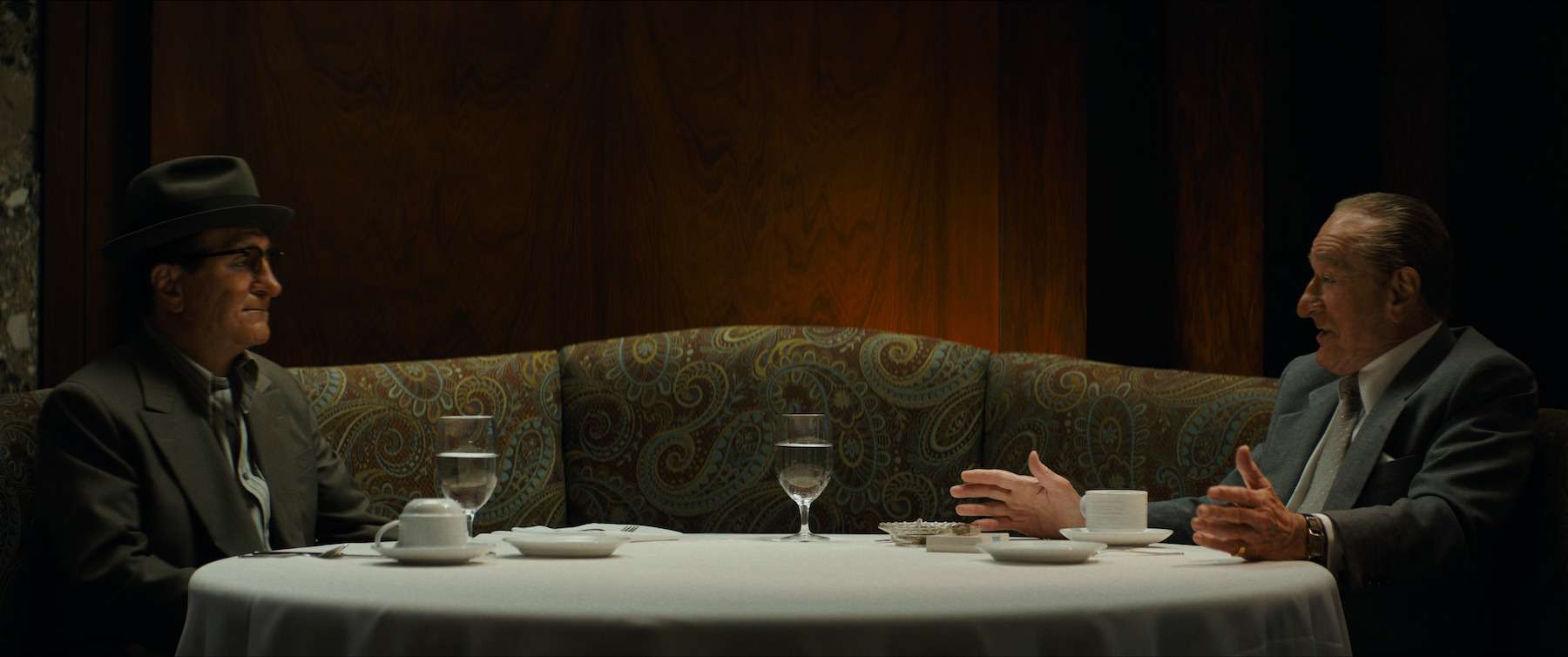
“The Alto Knights” features two performances by De Niro as he plays two separate gangsters in the 1950’s, Vito Genovese and Frank Costello. My first issue with the film is why on earth did we need to have competing gangsters played by De Niro? While it might sound like an interesting concept, having De Niro play two roles in the same film, it’s quickly obvious this is a gimmick that just doesn’t work. It has been done in other films before, such as “Mickey 17,” “Sinners” and “The Social Network,” but De Niro looks ridiculous and laughably bad with all the makeup on him.

When the film opens, Frank is recovering from a failed assassination attempt put on him by his best friend, Vito. They have been friends since they were young, but they have two very different philosophies when it comes to being gangsters. Frank is someone who doesn’t like to rock the boat, and he’s not afraid to grease some palms to keep out of trouble. He cherishes his marriage to his wife Bobbie, played by Debra Messing. Vito, on the other hand, lives by the credo of, “I take out. I don’t put in.”
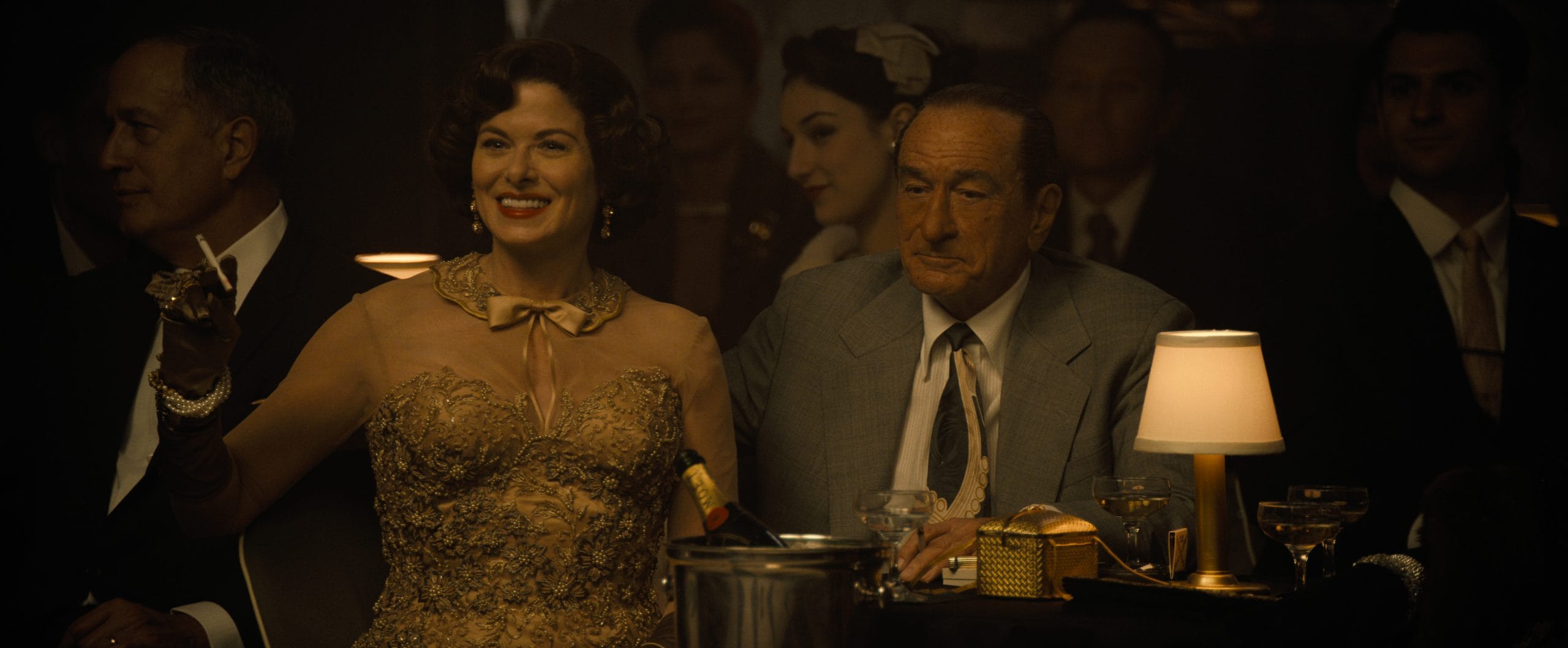
Vito doesn’t believe Frank is actually going to live a quiet life and retire as he sees him as a politician, someone who will smile to your face and stab you in the back when you aren’t looking. Frank, on the other hand, sees Vito as someone who will stop at nothing to get what he wants, and he will not go down without a fight. This leads to a war between the two men where only one can survive, and it’s about who will flinch first. One thing is clear—no matter who wins, the audience will end up being the real loser.

“The Alto Knights” is a film which made me feel sad at how bad it was, as there is no way it should have been this unwatchable and boring. All of the proceedings have a been there, done that feel to them.  Films about the mob, gangsters and the crime life have been done to death, and I don’t think there is anything new to add to the genre at this point. This is not to say they can’t come back at a later date and time with the right material, but this film feels dead on arrival as it feels like a parody of other gangster movies. This is a film that was not only a massive commercial failure, but it was a critical failure as well.

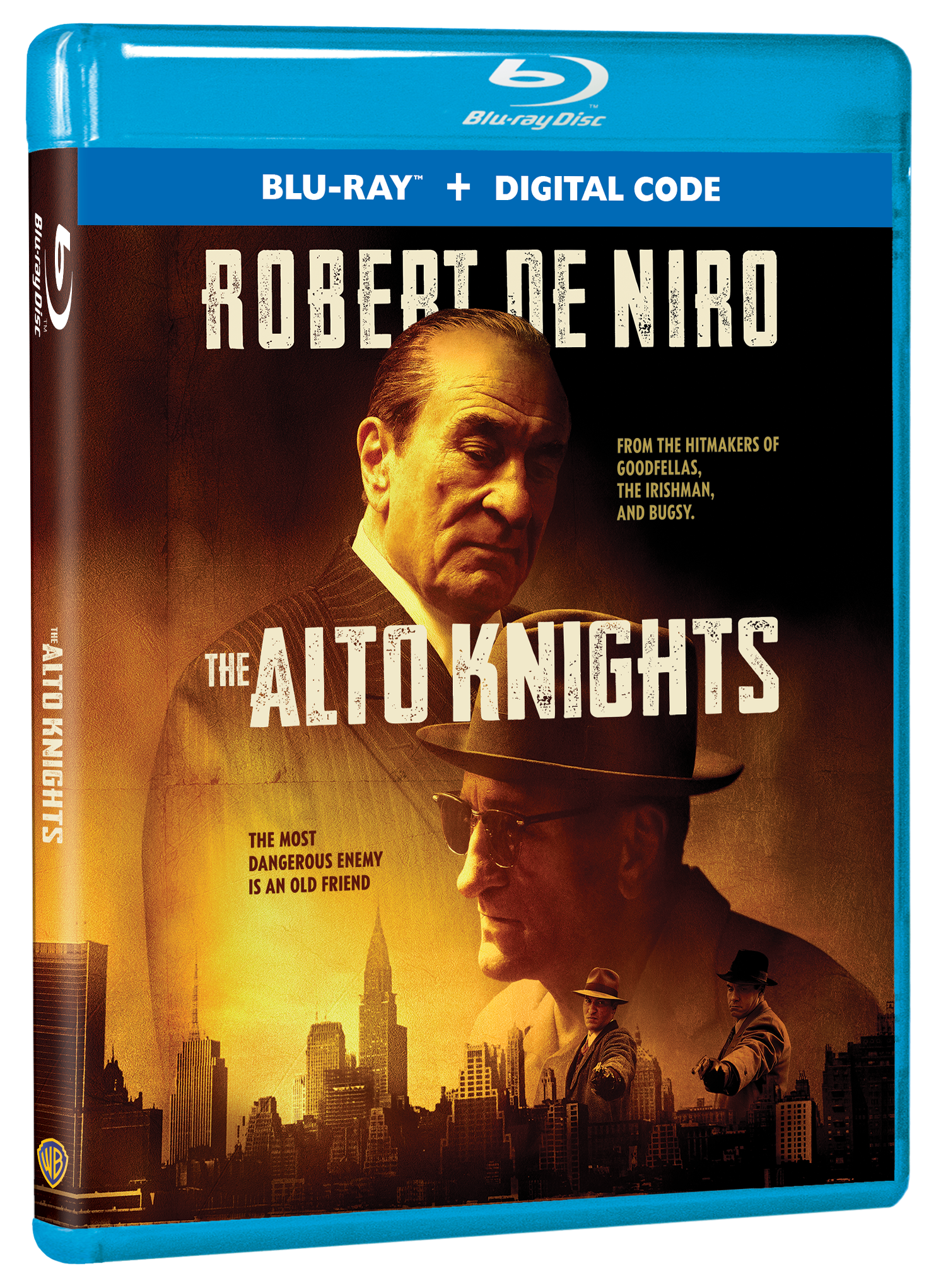
When you have seen De Niro play this role before, it’s hard not to look at this performance and think to yourself, “Why?”  Why did anyone think this was a good idea? The poster for the film says, “From the hitmakers of ‘Goodfellas,’ ‘The Irishman’ and ‘Bugsy.’” I’m going to assume they thought people would hear about De Niro in a new gangster movie from the writer of “Goodfellas” and would be interested in seeing it as a result.  It’s clear from the box office numbers they could not have been more wrong. As a matter of fact, I don’t even remember this film getting any attention or advertising when it was released only two months ago.

One of my least favorite things to do as a moviegoer is to watch the clock during a movie.  During “The Alto Knights,” I couldn’t stop looking at the clock and waiting for it to end.  As stated earlier, the film made me depressed as it felt like De Niro and Levinson were was wasting his time on rotten garbage like this. They are both in their 80’s, and we don’t know how many films they have left in them.  I’m sad they wasted their talents on this project, and I’m sad I wasted my time watching it.
* out of * * * * 

Special Features:

One Legend, Two Mobsters – Featurette

Blu Ray Audio/Video Info: The 1080p high-definition transfer is perfect for this film, and it features a clear and vivid image. The Dolby Atmos track also brings all of the classic hits of the 1950’s into your living room.

 Should You Buy It?

“The Alto Knights” is not a film you should waste your time on, unless you are absolutely obsessed with gangster movies and need to watch them all. If you have a morbid curiosity in this film, I’m here to tell you to not waste your time.  I went into it knowing it didn’t have great reviews, but I said to myself, ‘How bad could it be?’ Trust me, it’s that bad. It’s painful to watch De Niro in this film, and I just wanted it to end.  It didn’t take long for me to realize I was stuck in a bad movie, and I just had to bide my time until it was over. There are better gangster movies to see, and there is even a better gangster show to watch in “The Sopranos.” This is one of the biggest disappointments to come out of Hollywood in the past five years, and it is a hard pass.

**Disclaimer** I received a copy of this film from Warner Brothers to review for free.  The opinions and statements in the review are mine and mine alone.
‘Homicide: Life on the Street’ Commentary on ‘A Shot in the Dark’

Recently, “Homicide: Life on the Street” has undergone a major renaissance of sorts. The show is now finally available to stream on Peacock, and we have two new podcasts dedicated to the acclaimed series. First, there is “Homicide: Life on the Set” which is hosted by filmmaker and podcaster Chris Carr and Susan C. Ingram who worked as a union camera assistant on “Homicide,” and they have interviewed actors, writers, directors and technicians who worked behind the scenes and have made unforgettable stories to tell. Then there is “Homicide: Life on Repeat” which has actors Reed Diamond and Kyle Secor reviewing each episode of the show from start to finish, and that’s regardless of whether they are in said episode or not. With all this going on, “Homicide” looks to be gaining a new generation of fans and may even become a bigger hit with viewers than ever before.

With this “Homicide” commentary, I focus on the fifth episode of the first season entitled “A Shot in the Dark.” Directed by Bruce Paltrow and written by Jorge Zamacona, it follows multiple plot threads back when the show could get away with that. Stanley Bolander (Ned Beatty) and John Munch investigate the double shooting of a drug dealer, Frank Pembleton (Andre Braugher) and Beau Felton (Daniel Baldwin) join forces reluctantly to look into a theory regarding Adena Watson’s murder, Tim Bayliss remains convinced that the arabber Risley Tucker murdered Adena and wants to bring him in for questioning, and Steve Crosetti (Jon Polito) and Clark Johnson continue to look into the shooting of Chris Thormann (Lee Tergesen) who has miraculously survived his nearly fatal wounds. It’s amazing just how much the writers got into one single episode!

In the midst of all this, Bolander seems unable to deal with the aftermath of his date with Dr. Blythe (Wendy Hughes), Felton and Pembleton battle with one another over how they see things, and Bayliss gets revenge at Captain Barnfather for releasing information he shouldn’t have released. Of course, Bayliss still pays a price for going after a superior officer. And Munch? Well, let’s just say he steals the show at the very end.

Please check out the commentary below. “Homicide: Life on the Street” is now available to stream on Peacock, and the entire show is still available on DVD through Shout Factory.

‘Homicide: Life on the Street’ Commentary on ‘Son of a Gun’

It has been a bit, but I am now back with another “Homicide: Life on the Street” commentary track. This time it is for “Son of a Gun,” the fourth episode of the first season. This episode contains several plot threads as the detectives furiously investigate the shooting of Officer Chris Thormann (Lee Tergesen), Tim Bayliss (Kyle Secor) and Frank Pembleton (Andre Braugher) continue to investigate the murder of Adena Watson, Stanley Bolander (Ned Beatty) goes out on a date with Doctor Carol Blythe (Wendy Hughes), and there is also the case of Calpurnia Church (Mary Jefferson) who has murdered many people for the insurance money. This is a lot for any hour-long drama to handle, but everyone involved seems to find the right balance to where nothing feels superfluous.

“Son of a Gun” was directed by Nick Gomez who helmed a couple of indie crime dramas back in the 1990’s: “Laws of Gravity” and “New Jersey Drive.” It marked the first appearances of Sean Whitesell who portrays Dr. Eli Devilbiss, Edie Falco who portrays Chris Thormann’s wife, Eva, and Walt McPherson who plays an patrolman who may or may not be Roger Gaffney, the most odious and bitter character in the “Homicide” series.

This episode was the first thing I ever saw Edie Falco in, and she previously appeared in Gomez’s “Laws of Gravity.” From here, Falco would go on to play a role in Tom Fontana’s HBO prison drama “Oz,” and she would eventually make her breakthrough a few years later on “The Sopranos.”

There are also other memorable performances to be found in this episode. The great Luis Guzman appears as Bolander’s next door neighbor, Lorenzo “Larry” Molera, who has quite the love for wood. Then there is the late Wendy Hughes who plays a potential girlfriend to Bolander in Carol Blythe, and seeing her and Beatty together provides this episode with the series’ more intimate moments.

Check out the commentary below. The complete series of “Homicide: Life on the Street” is currently available to purchase from Shout Factory. To this date, it is still not available to stream on any service. This is likely due to music rights.

‘OZ’ Audio Commentary on ‘The Routine’

Continuing on with my series of audio commentaries, I have decided to take a break from “Homicide: Life on the Street” and do one on another show, the infamous HBO prison drama “OZ.” I became aware of this show when I found out that, like “Homicide,” it was executive produced by Tom Fontana and Barry Levinson. It was created by Fontana who originally sought to create a show about a minimum-security prison which he would have called “Club Med,” but he opted instead to do one on a maximum-security penitentiary once he got permission to do so from the head of HBO Original Programming.

It needs to be noted that “OZ” was the first hour-long drama ever produced by HBO. Most people forget this as “The Sopranos” came on a year or two later and quickly upstaged this groundbreaking show. Like “Homicide,” “OZ” never got much love from the Emmys or other major awards show, but it laid a solid path for the hour-long drama to exist on HBO. Shows like “The Sopranos” and “Game of Thrones” would possibly never have existed without the success of this show.

This commentary is on the premiere episode of “OZ” which is entitled “The Routine.” Written by Fontana and directed by Darnell Martin (“I Like It Like That”), it perfectly sets up the visual style which would quickly define the show and introduced us to a plethora of actors and actresses including Edie Falco, J.K. Simmons, Eamonn Walker, Harold Perrineau, and Kirk Acevedo. This episode also demonstrates quite dramatically how not a single character we see here will ever be safe. Anyone could die at any time, and this continually filled me with endless anxiety as a viewer.

Please check out the audio commentary below. “OZ” is available to stream on Max (formerly HBO Max) and to own and rent on DVD.

‘Homicide: Life on the Street’ Commentary on ‘Ghost of a Chance’

So here I am with another commentary track for an episode of “Homicide: Life on the Street.” This one is titled “Ghost of a Chance,” and it is the second episode of the first season. The story is by Tom Fontana, the teleplay was written by Noel Behn, and the episode was directed by Martin Campbell. Campbell would later go on to direct to James Bond films, “Goldeneye” and “Casino Royale.” After the brilliance of “Gone for Goode,” I wasn’t sure the next episode would be anywhere as good. Thankfully, it was.

“Ghost of a Chance” starts off with the murder of Adena Watson, the first case for rookie detective Tim Bayliss (Kyle Secor), and the one case which would haunt him the most throughout this series. There are also some other plotlines explored here. John Munch (Richard Belzer) and Stanley Bolander (Ned Beatty) investigate the death of Thomas Doohen whose widow, Jessie (Gwen Verdon), cannot wait to be rid of him, Kay Howard (Melissa Leo) and Beau Felton (Daniel Baldwin) work to find much-needed evidence in a murder case, and Bolander develops a crush on Carol Blythe (Wendy Hughes) which has him acting rather awkwardly.

We are also introduced to Officer Chris Thormann (Lee Tergesen), a character who will become especially important in later episodes.

Please check out the commentary below.

‘Homicide: Life on the Street’ Commentary on ‘Gone For Goode’

So here I am with another commentary track after the one I did for “Pump Up The Volume.” But this time, it is for an episode of one of my favorite television shows of all time, let alone of the 1990’s, “Homicide: Life on the Street.” Specifically, the commentary is on this show’s very first episode, “Gone For Goode,” which did a brilliant job of introducing us to various Homicide detectives, and also showed how it was not going to be your usual cop show. Instead, it was initially designed to be one without onscreen violence, something which executive producer and showrunner Tom Fontana thought was crazy, and he quickly signed up with the show as a result.

What hooked me onto this show was the fact it was being developed by Barry Levinson, the Oscar winning filmmaker of “Rain Man.” He also directed the “Gone For Goode” episode and introduced its cinematic style which no other director could direct their way out of.

With this commentary track, I express my thoughts on this episode and the show at large. Upon watching “Gone For Goode,” I was immediately hooked into what this groundbreaking series had to offer, and I did my best to provide as much trivia about its making as I could. I’m not sure there will ever be a perfect commentary track to anything unless it is done by Martin Scorsese or Bruce Campbell, but I would like to think this one comes close. If you say it does, it will do wonders for my fragile ego.

Please feel free to listen to the commentary track below as you watch this episode on your DVD player. At this time, “Homicide: Life on the Street” is not available to stream, most likely due to music rights, but you can purchase the complete series on DVD from Shout Factory. It was previously available in a box set from A&E Home Video, but it has long since gone out of print.

All-Time Favorite Trailers: ‘Toys’

I still remember watching this particular trailer before Phil Alden Robinson’s highly entertaining comedy caper, “Sneakers.” Most movie trailers do follow a certain formula as marketers are determined to sell their product to the widest audience possible, but every once in a while, we get one which breaks the mold and gives us something different and unforgettable. This came with the teaser trailer for Barry Levinson’s “Toys” which featured Robin Williams improvising in a field which he called the largest studio on the 20th Century Fox lot, and I almost believed him when he said the field was inside one building. Back then, Williams was at the height of his box office powers, and this trailer quickly reminded me of how brilliant a comedian he was.

This trailer essentially has Williams riffing on the various ways this movie could be promoted to the public, and each of them proves to be hilarious even as certain references have long since become dated. And if you didn’t know about the existence of Rosh Hashanah, the Jewish New Year, you certainly did after watching this trailer. And yes, we can agree it is not the right holiday to release this movie, let alone any movie, on.

The only downside of this trailer is it made “Toys” look like a full-on comedy. For those who saw it, however, they can agree it was hard to put Levinson’s movie into one particular genre. In fact, it proved to be one of the most experimental movies released by a major Hollywood studio back in the 1990’s as well as one of the biggest box office flops of that decade. But for those willing to go into “Toys” with an open mind will find it to be strikingly original and one of the most powerful anti-war movies ever. At the very least, you have to love Ferdinando Scarfiotti’s art direction which he spent more than a year working on.

Robin Williams, you are still missed…

Toys movie poster