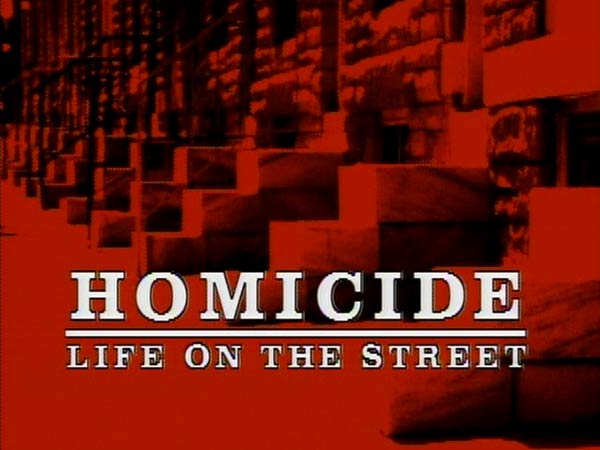
Recently, “Homicide: Life on the Street” has undergone a major renaissance of sorts. The show is now finally available to stream on Peacock, and we have two new podcasts dedicated to the acclaimed series. First, there is “Homicide: Life on the Set” which is hosted by filmmaker and podcaster Chris Carr and Susan C. Ingram who worked as a union camera assistant on “Homicide,” and they have interviewed actors, writers, directors and technicians who worked behind the scenes and have made unforgettable stories to tell. Then there is “Homicide: Life on Repeat” which has actors Reed Diamond and Kyle Secor reviewing each episode of the show from start to finish, and that’s regardless of whether they are in said episode or not. With all this going on, “Homicide” looks to be gaining a new generation of fans and may even become a bigger hit with viewers than ever before.
With this “Homicide” commentary, I focus on the fifth episode of the first season entitled “A Shot in the Dark.” Directed by Bruce Paltrow and written by Jorge Zamacona, it follows multiple plot threads back when the show could get away with that. Stanley Bolander (Ned Beatty) and John Munch investigate the double shooting of a drug dealer, Frank Pembleton (Andre Braugher) and Beau Felton (Daniel Baldwin) join forces reluctantly to look into a theory regarding Adena Watson’s murder, Tim Bayliss remains convinced that the arabber Risley Tucker murdered Adena and wants to bring him in for questioning, and Steve Crosetti (Jon Polito) and Clark Johnson continue to look into the shooting of Chris Thormann (Lee Tergesen) who has miraculously survived his nearly fatal wounds. It’s amazing just how much the writers got into one single episode!
In the midst of all this, Bolander seems unable to deal with the aftermath of his date with Dr. Blythe (Wendy Hughes), Felton and Pembleton battle with one another over how they see things, and Bayliss gets revenge at Captain Barnfather for releasing information he shouldn’t have released. Of course, Bayliss still pays a price for going after a superior officer. And Munch? Well, let’s just say he steals the show at the very end.
Please check out the commentary below. “Homicide: Life on the Street” is now available to stream on Peacock, and the entire show is still available on DVD through Shout Factory.
I am back with my latest audio commentary on an episode of “Homicide: Life on the Street,” and the one on display here is “Night of the Dead Living,” a nice little play on words on the title of the classic horror film, “Night of the Living Dead.” It was directed by Michael Lehmann who gave us one of the greatest black comedies ever made, “Heathers” which starred Christian Slater and Winona Ryder. Lehmann also directed “Hudson Hawk” which starred Bruce Willis and proved to be a critical and commercial bomb, but has since become a cult classic of sorts. The teleplay was written by Frank Pugliese who won a WGA Award for his work on this episode. Pugliese is a writer and playwright, and his plays include “Aven’U Boys” which an Obie Award, and he wrote the screenplay for the 2006 film “Infamous.”
“Night of Dead Living” was the third episode of “Homicide’s” first season, but NBC decided to air it as the season finale due to its slow pace and the fact they were trying hard to “woo” more viewers for this show which was already suffering a decline in ratings. For me and many others, the airing of this episode in this order was confusing as hell as it looked as though Tim Bayliss and Frank Pembleton had another chance at closing the Adena Watson case. Watching it now, it feels like the cruelest of teases.
What I love about this particular episode is how unusual it is for “Homicide” let alone any other police drama as it is one without any murders or crimes committed. The detectives are working the night shift during a hot summer night, and Lieutenant Al Giardello is furious because the air conditioning is off in the office and everyone is sweating like crazy to where they are taking off their ties. That is, except for Frank Pembleton who remains as cool as can be despite the heat.
Please check out the commentary track below and let me know what you think about this episode.
So here I am with another commentary track for an episode of “Homicide: Life on the Street.” This one is titled “Ghost of a Chance,” and it is the second episode of the first season. The story is by Tom Fontana, the teleplay was written by Noel Behn, and the episode was directed by Martin Campbell. Campbell would later go on to direct to James Bond films, “Goldeneye” and “Casino Royale.” After the brilliance of “Gone for Goode,” I wasn’t sure the next episode would be anywhere as good. Thankfully, it was.
“Ghost of a Chance” starts off with the murder of Adena Watson, the first case for rookie detective Tim Bayliss (Kyle Secor), and the one case which would haunt him the most throughout this series. There are also some other plotlines explored here. John Munch (Richard Belzer) and Stanley Bolander (Ned Beatty) investigate the death of Thomas Doohen whose widow, Jessie (Gwen Verdon), cannot wait to be rid of him, Kay Howard (Melissa Leo) and Beau Felton (Daniel Baldwin) work to find much-needed evidence in a murder case, and Bolander develops a crush on Carol Blythe (Wendy Hughes) which has him acting rather awkwardly.
We are also introduced to Officer Chris Thormann (Lee Tergesen), a character who will become especially important in later episodes.
So here I am with another commentary track after the one I did for “Pump Up The Volume.” But this time, it is for an episode of one of my favorite television shows of all time, let alone of the 1990’s, “Homicide: Life on the Street.” Specifically, the commentary is on this show’s very first episode, “Gone For Goode,” which did a brilliant job of introducing us to various Homicide detectives, and also showed how it was not going to be your usual cop show. Instead, it was initially designed to be one without onscreen violence, something which executive producer and showrunner Tom Fontana thought was crazy, and he quickly signed up with the show as a result.
What hooked me onto this show was the fact it was being developed by Barry Levinson, the Oscar winning filmmaker of “Rain Man.” He also directed the “Gone For Goode” episode and introduced its cinematic style which no other director could direct their way out of.
With this commentary track, I express my thoughts on this episode and the show at large. Upon watching “Gone For Goode,” I was immediately hooked into what this groundbreaking series had to offer, and I did my best to provide as much trivia about its making as I could. I’m not sure there will ever be a perfect commentary track to anything unless it is done by Martin Scorsese or Bruce Campbell, but I would like to think this one comes close. If you say it does, it will do wonders for my fragile ego.
Please feel free to listen to the commentary track below as you watch this episode on your DVD player. At this time, “Homicide: Life on the Street” is not available to stream, most likely due to music rights, but you can purchase the complete series on DVD from Shout Factory. It was previously available in a box set from A&E Home Video, but it has long since gone out of print.
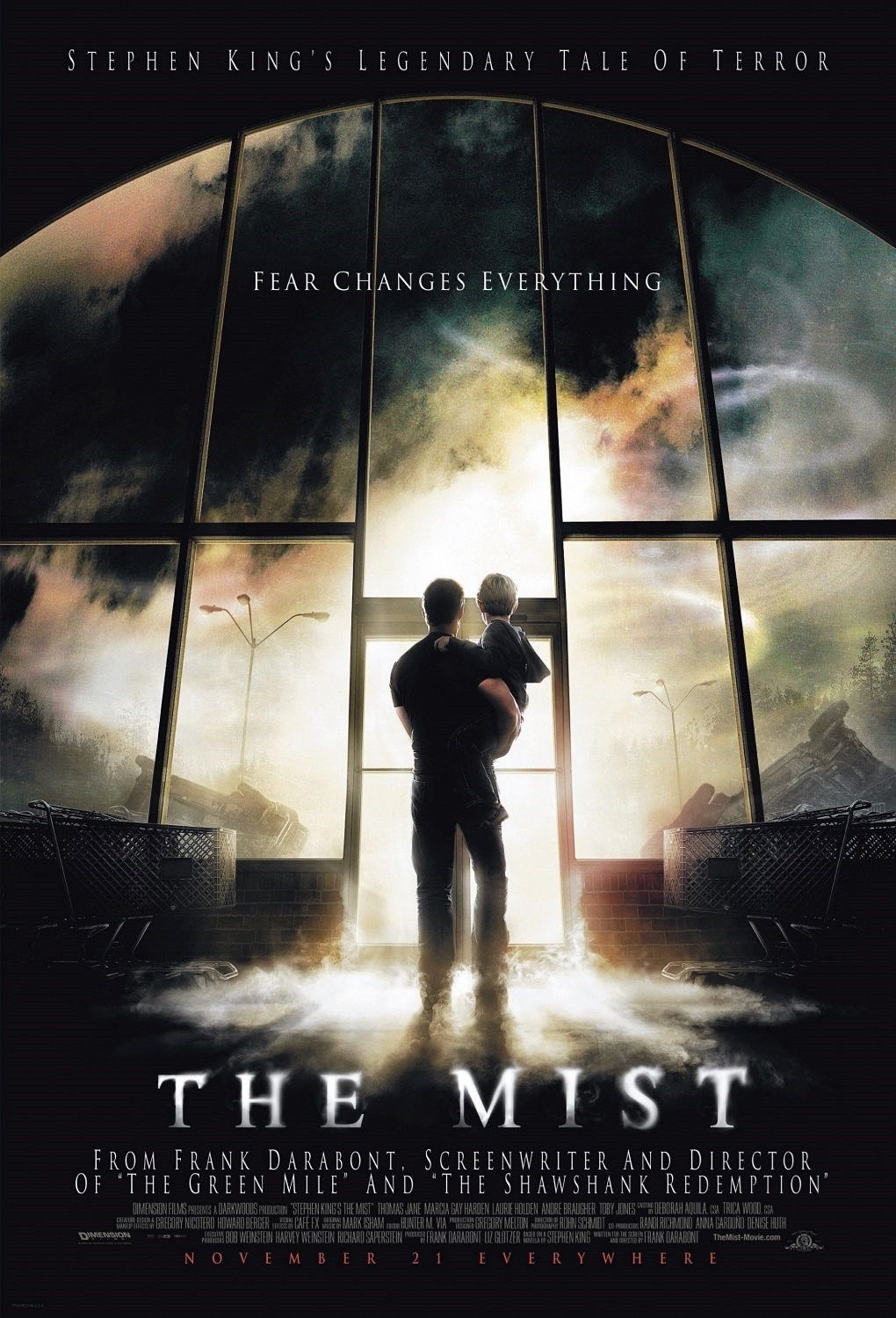
There was a time when Frank Darabont created the most effective cinematic adaptations of Stephen King’s novels. He gave us one of the all-time great adaptations of King’s works with “The Shawshank Redemption,” a classic which you can still catch it on TBS or TNT every other week. Darabont also directed “The Green Mile” which was very good and left its audience in tears at its humbling conclusion. These days, Mike Flanagan has become the King adaptation master of choice with his takes on “Gerald’s Game” and “Doctor Sleep,” both of which proved to be wonderfully unnerving. Before this, however, was Darabont’s adaptation of King’s “The Mist,” and it represented his first time dealing with one of King’s full out horror stories. Having said this, he still brings this particular King horror tale to life in way few other filmmakers ever could.
“The Mist” takes place, as many of King’s works do, in the state of Maine. We see our main character, David Drayton (Thomas Jane), doing his work as a graphic artist on something which appears to be right out of “The Dark Tower,” and it establishes what David does while simultaneously establishing the kind of movie we are about to see. It is a motion picture which deals with people whom we recognize from the real world we inhabit and the small towns we grew up in. This is not often the case as many horror films deal with stock characters we cannot wait to see done away with.
One day, there is a storm which hurls a tree into David’s work studio, and he ends up going into town with his son the next day to pick up supplies. In the process, he also ends up taking along his next-door neighbor Brent Norton (Andre Braugher) regardless of the fact Brent’s tree fell down on David’s boathouse and completely destroyed it. But while at the market, a mist starts to blanket the town to where there is zero visibility. A local townsman named Dan ends up rushing into the store crying out, “There’s something in the mist!”
From there, everyone is trapped in the supermarket as the thought of stepping outside its doors is far too fearful an action. This is largely the result of there being something in the mist which quickly proves to be anything but human, and this creates divisions between everyone trapped in the store. This division is primarily brought about by Mrs. Carmody (Marcia Gay Haden), a fervent believer in the word of the bible who believes judgment day is upon us and that the end is indeed very near.
Watching “The Mist,” you can recognize the familiar types of characters which occupy the average Stephen King story; the man who doesn’t want to be the hero but ends up being one even if it is not by his own doing, the religious fanatic who will not allow themself be torn away from they believe to be the truth, and townspeople who appear to be brave on the outside but terrified on the inside. What I really liked about this film is how Darabont never lets them become just mere stereotypical characters. While these characters may appear to be just that, it is a credit to the writing and acting that everyone involved in this film’s production rose above the genre’s conventions to give us something more human than we typically expect.
What interests Darabont here is not so much the monsters on the outside, but instead the monsters which lurk deep in our psyches. How we would possibly react when all the things we depend on in our life are suddenly taken away from us? No easy answer is given, but it is clear we are left with our instincts for survival at any cost. Darabont does excellent work in creating an inescapably claustrophobic environment where escape is easier said than done and trust can easily become a disposable commodity.
Leading the cast is Thomas Jane who first has made an unforgettable impression when he co-starred in “Boogie Nights.” He then went on to do “Deep Blue Sea” which more or less typecast him as the hardened hero who shows more courage than anyone around him. But here, he is simply an ordinary man caught up in an unimaginable situation, and he is struggling to maintain his sanity in an increasingly desperate situation.
“The Mist” is filled with many fine actors who fully humanize their roles and succeed in avoiding the mistake of making these characters seem stereotypical and easily disposable. It is great to see Andre Braugher here as the disbelieving neighbor/lawyer who makes the idiotic assumption he is being setup for a practical joke. In any other movie, we would simply just hate his character Brent for not believing the protagonists, but Braugher succeeds in making us believe why he might see how Brent could not see the inherent danger everyone is caught up in. As an audience, we of course know better of what is really going on, but it makes you think of how people would normally react in a horrifying situation like this. Could we easily believe in such things? Wouldn’t we be skeptical of what others tell us? Aren’t some us sick and tired of being the butt of everyone’s jokes?
Also in the cast is Toby Jones who is a wonderful presence here as Ollie, a supermarket employee who turns out to be very handy with a gun. Then we have other character actors like Jeffrey DeMunn who plays Dan Miller, and William Sadler who plays Jim Grondin. Frances Sternhagen is also on board as a friendly schoolteacher named Irene and has some of the best and most memorable of moments in this movie. You also have Lauren Holden as Amanda Dunprey, a new school teacher who befriends David and his son Billy (Nathan Gamble).
All of these actors do a great job of making the characters all the more real to us so that we don’t simply laugh them off the screen for doing stupid things that horror movie characters usually do. You get the sense that if this were written and directed by anyone other than Darabont, it would look like just about any other horror movie we have seem hundreds of times already. But there is going with the story of this movie that makes it more than your typical horror movie.
But the best performance comes from Marcia Gay Harden who plays the seemingly crazed Mrs. Carmody. A religious zealot if there ever was one, Carmody can be easily compared to Carrie Wright’s mother from “Carrie” as both are hopelessly devoted to God and the Bible even though their belief structure has long since been corrupted. Harden is a brilliant actress, and she makes Mrs. Carmody far scarier than the monsters which constantly threaten to infiltrate the overcrowded supermarket everyone is stuck in. She also makes you believe how people would end up following her when the fate of the world continues to descend down on them all. Her crazy beliefs end up making believers out of others, and a mob mentality quickly forms a sharp division between the characters stuck in the store which threatens to bring out the worst in everyone. Harden’s portrayal of such a frightening individual has long since stayed with me after watching this film when it came out in 2007.
Not everything about “The Mist” is perfect. The monsters, when they do appear, are effectively creepy and eerie, but they are also clearly CGI, and this takes away from what we are shown. Darabont ends up creating more of an intense effect when we don’t see the monsters up close, but instead from a distance. When they are shrouded by weather they inhabit, they seem infinitely more terrifying as a result. If you have a fear of creepy crawlers like spiders, you may want to think twice about checking this movie out.
The ending of “The Mist” is different from King’s book, and King himself was quick to point this out to everyone who bothered to listen. What I can tell you about the ending is that it is both uncompromising and devastating in its impact. It makes you look back at everything which happened to where you realize the line between good people and bad people, protagonists and antagonists, heroes and villains can be ever so easily blurred. The people we end up fearing the most are ourselves and of what we are capable of. We can easily descend into craziness and insanity when all the things we need most in life are suddenly taken away from us. The moment we give up on life and accept its horrifying fate is the moment when we all become less than human, and considering the times we are currently living through, this seems more pertinent than ever before.
I walked out of “The Mist” completely shaken and unable to speak. It contains a shattering ending which is unlike any we usually from any film we typically watch. What makes it all the more unsettling is that we cannot help but think of what we would do in the same situation. There are many who cannot bear to think of the answer such a question, but there are those whose drive to survive is impossible to ignore.
“The Mist” may not as good as “The Shawshank Redemption,” but it is still an effectively made motion picture with excellent performances and an ever-growing intensity. It is also one of the better adaptations of a Stephen King novel in years, and it keeps itself from sinking into the clichés of the average horror movie.
Whether or not you believe in extra-terrestrials is beside the point. We end up fearing ourselves more than anything else, and this fear can easily cripple us from doing what we want to do in our lives.
The tagline of “The Mist” was right: Fear changes everything…
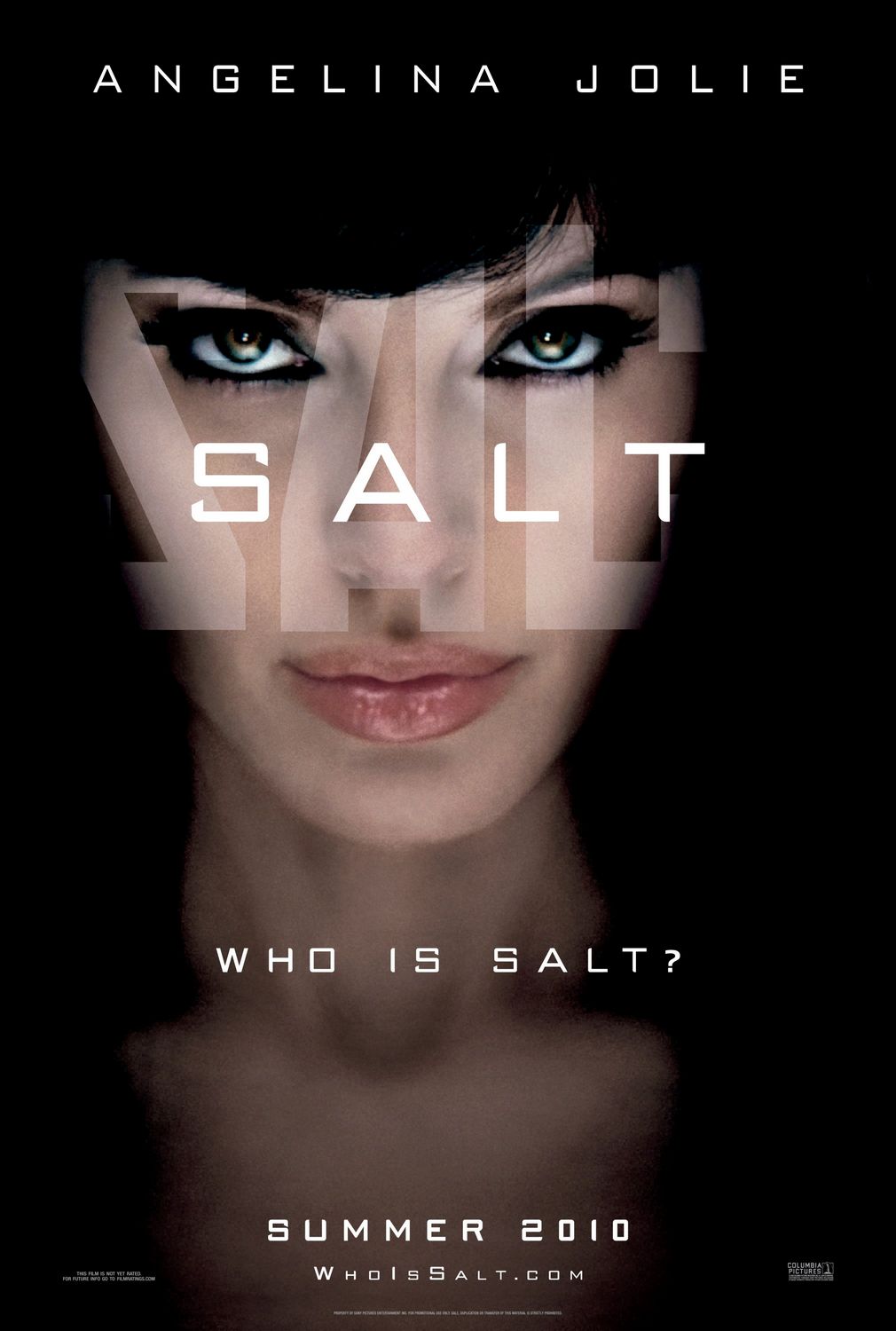
Looking back, the summer 2010 movie season was truly the summer of the preposterous action movie. We got the big screen version of “The A-Team” which had four guys trying to steer a parachuting tank with its turret by firing rounds out of it, then there was Tom Cruise who could do just about anything except take the time to go to the bathroom in “Knight and Day” (Jack Bauer had that problem too), and even the brilliant “Inception” employed a concept which is not at all possible (unless the military is trying to keep it a secret). And then there was “Salt” starring Angelina Jolie which runs very rapidly through a river of plot holes and leaps in logic, and it’s just as much fun as the films I just mentioned. Thanks to director Phillip Noyce (“Clear and Present Danger” and “Rabbit Proof Fence”) who keeps things moving at such a fast pace, there’s not much time to sit back and count all the inconsistencies. All we can do is hang on to the edge of our seats and revel in the slam bang action brought to us without an overuse of CGI effects.
Jolie plays CIA agent Evelyn Salt who is just about to head on home to her loving husband Mike (August Diehl) who loves to study spiders when she and her partner Ted Winter (Liev Schreiber) suddenly get the opportunity to interrogate a Russian defector. During this interrogation, the defector reveals that a highly trained Russian agent will assassinate the Russian President when he visits the United States. He the name of this agent is Evelyn Salt, and the chase is on from there. Immediately thrown under a veil of heavy suspicion, Evelyn desperately rushes out of the office to find her husband before he disappears from her life forever. Never mind abiding the law or taking the time to explain herself, she wants her husband now! When a woman gets pissed, it is in your best interest not to argue with her, especially if she is a CIA agent!
Evelyn Salt is a mixture of both Jason Bourne and Jack Bauer, and this is especially the case in how she manages to evade capture or break free from highly trained agents and officers on more than one occasion. The movie really plays on Jolie’s strengths throughout, and of the kind of person the media has perceived her to be. I say this because over the years she has been treated like some seriously deranged human being who would have sex with her bother instead of a regular person which she is if anyone actually bothered to notice. Jolie plays on these perceptions throughout “Salt” as we watch her relentlessly pursue those who wish to capture and question her, and also when she changes her appearance to get closer to her objective.
I also liked how by the time she comes to meet the man who will soon become her husband, you can believe she has been fully trained to all she can do. A lot of movies would have you believe these characters were born with these skills and have perfected them since they were toddlers. With Jolie, you never doubt her even as the movie becomes more ridiculous by the minute.
There are so many twists and turns throughout “Salt” to where it shamelessly flaunts its illogic plot developments throughout to where we give up trying to figure it all out. Compared to many of Noyce’s other movies, this is easily the most kinetic action movie he has made to date even when compared to “Dead Calm” which introduced Nicole Kidman to the world. You could complain about how things don’t add up, but Noyce never lets the pace of the movie lag for a second, and we never find the time to sort through the plot and characters while we are watching. For other movies this would be a major hindrance, but for “Salt” it works to its advantage. You’re too thoroughly entertained to even care if this film is messing with our head one time too many.
In addition to the talents of Ms. Jolie, you also have Liev Schreiber as her partner and friend Ted Winter. Many consider Schreiber to be this stone-faced actor who wears the same expression in each and every movie he does, but this is probably because they have never seen him act onstage where he gives one brilliantly inspired performance after another. Schreiber holds his own opposite the formidable Jolie as he desperately works to protect his friend from those who would make her disappear, and you root for him as he gets closer and closer to getting a full idea of who she really is.
You also have Chiwetel Ejiofor as Peabody, an agent above Winter who pursues Salt relentlessly. He’s the character you want to shake around and slap in the face so he can see how wrong he is about her (or how wrong we think he is). Chiwetel has done great work over the years, most notably in Stephen Frears’ “Dirty Pretty Things,” and he makes Peabody more than your average one-dimensional government official who would foolishly believe a Russian defector over a loyal agent from the CIA.
We also have to give Noyce a lot of credit for not relying on a plethora of CGI effects in “Salt.” When you see Jolie clinging for dear life on her apartment building 12 stories up from the ground, that was really her (get ready for some serious vertigo). It all reminded me of how good “Live Free or Die Hard” was as it tried to make the effects as real as possible as the filmmakers came to realize the typical film going audience would no longer be easily fooled by CGI effects. Sometimes they are not even better than the real thing.
If there is one seriously massive complaint I have against “Salt,” it’s in regards to Andre Braugher’s role as the Secretary of Defense. Those of you who know me are fully aware of what a die-hard fan I am of the NBC cop show from the 1990’s, “Homicide: Life on the Street.” Braugher’s work on the show was beyond brilliant, and not many other actors can manipulate people through such theatrically volcanic explosions of anger. Furthermore, let us not forget his work in movies like “Glory” where he made the first of many memorable impressions. But in “Salt,” he is relegated to a role where he barely has any lines and is given far too little to do. What gives?! You want to cast Braugher in a movie, then you give him a role which is in tune with his well-known talents. Stop giving him roles which could be played by anyone.
Maybe “Salt” is more fun than it deserves credit for. But along with a pulsating music score by James Newton Howard and some tight film editing by John Gilroy and the well-regarded Stuart Baird, the movie gives you a good dose of adrenalin pumping fun which we don’t always get on the silver screen. Nitpick all you want about the events in “Salt,” it’ll still keep you on the edge of your seat throughout.
 The Ultimate Rabbit