David S. Ward Looks Back at the Making of ‘Major League’

major-league-movie-poster

The 1989 sports comedy “Major League” got a special screening at the Aero Theatre in Santa Monica, and joining moderator and American Cinematheque program director Grant Moninger for a Q&A was the movie’s writer and director David S. Ward and producer Chris Chesser. This screening brought out many excited fans who consider “Major League” to be the best baseball movie ever made.

Moninger started off by saying that after watching “Major League,” it seemed like the most fun film to make as everyone got to film and play baseball. When he asked Ward what the making of the movie was like, we were surprised by his answer.

“It was one of the most difficult movies to make that I ever had been associated with,” said Ward. “When we started we had one of the hottest summers in 75 years in Milwaukee where we shot the movie. We started out with six weeks of night shooting because we had to work around the (Milwaukee) Brewers schedule at the time, and staying up all night for six weeks just kills you. It was an independent movie at the time, and we didn’t have a lot of money and we didn’t have a lot of anything.”

Regardless of the production difficulties, however, Ward said he did have a great time making “Major League” because of the guys, and he even said that Rene Russo, who played Berenger’s ex-girlfriend Lynn Wells, was one of the guys as well. Ward described the cast as being magnificent and said everybody pulled together to make this movie work. It was just the physical difficulty of making it was hard, and it was something the cast and crew hadn’t planned on dealing with.

Ward went on to describe the “red tag” scene in the locker room in which the players discover whether or not they have been cut from the team. This scene ended up being shot in the basement of a high school which had no windows, and it was already 95 degrees when they began shooting there at four in the morning.

“We had two jerseys for each player, and I remember Tom (Berenger) doing a take and he would sweat through his jersey because it was so hot,” Ward said. “We would take his jersey and give him the other one, and we’d blow dry the one that was sweated through with a hair dryer. Well, it dried it, but it also made it hot. When he sweated through the other one, he had to put on the dry one which was hot!”

When it came to casting “Major League,” Ward said he would only cast people who could play baseball:

“I had actors come in and tell me they played Triple-A ball for the Cardinals, and Chris (Chesser) and I would take them outside and we’d play catch with them, and the Triple-A guy couldn’t throw the ball 15 feet; he never played baseball in his life! People will say anything to get the part, so we just took them outside and we tested them out.”

The cast ended up having two weeks of training before filming began with Steve Yeager who was a former Major League baseball player himself. This was about getting everybody in shape not only to play baseball but also to do basic physical conditioning.

“If you’re not used to playing baseball every day, you don’t realize how many quick starts and stops there are and you can pull muscles and hamstrings,” Ward said. “If an actor gets injured, you can’t shoot with them for a while and your schedule gets screwed up. So, everybody got in shape both physically and baseball-wise and that was a big help.”

Players from other baseball teams were also cast such as Peter Vuckovich who was an All-Star pitcher for the Milwaukee Brewers and Cy Young award winner. Vuckovich played the New York Yankees’ first baseman Haywood, and Chesser remarked he was actually asked to read for the part of the Yankee reliever nicknamed “The Duke.” However, he and Davis found Vuckovich to be “so ugly and so menacing” to where it made more sense to cast him as the player who insults Berenger and hits home runs off of Charlie Sheen. But Chesser also said although Vuckovich looked like he could hit a baseball out of the field, he actually “never hit the ball out of the infield” and never hit a single home run in his entire career.

When it came time to film the climatic game where the Cleveland Indians play against the New York Yankees for the division title, Ward said he and Chesser promoted a night at the stadium to get extras, and 27,000 people showed up. Looking back, the evening was an amazing experience for him and the cast as they had so many cheering people to work with.

“We taught them how to sing ‘Wild Thing,’” said Ward. “We had cameras roaming around all night just picking up people. The girls who came out and danced on the dugout, they just did it! We didn’t ask them to do it, they just got out and did it! I just looked at that and said, thank God!”

Ward added there was a group of about 350 people who came out every night, and he even remembered a couple who had tickets to the Summer Olympics in Seoul that same year. The couple debated whether to travel to Seoul like they planned or stay for the last two days of the movie’s shooting. Ward encouraged them to go to the Olympics, but they ended up staying.

Moninger also asked about the late James Gammon who played head coach Lou Brown, and the mention of the actor’s name got a big applause from the audience. Ward got a bit choked up when talking about Gammon and said he never had any other actor in mind for Lou other than him.

“I was just thrilled to get him, “ Ward said. “He was everything I thought he would be. He’s a great gentleman and a wonderful man. Nothing bothered him. He was a rock of Gibraltar in every way. I remember going to his memorial service and one of the things that was really moving to me is they had his jersey from ‘Major League’ hanging up. He gave so many great performances, and yet the one everyone identifies him with is this one.”

When it came to writing “Major League,” Ward said he was inspired to write about Cleveland as he grew up there. The year this screening took place, every major sports team in Cleveland was pathetic, and Ward remembered it being pretty much the same way when he was deciding on what movie he was going to write next.

“I was thinking that probably the only way the Cleveland Indians would win anything in my lifetime is if I wrote a movie with them winning,” Ward said. “So what kept me going was I just didn’t want to be another Cleveland failure.”

One big question the audience had was why “Major League,” which takes place in Cleveland, wasn’t actually shot there. Ward responded he knew he was going to get into trouble for that.

“The reason we shot it in Milwaukee was that Cleveland is a big union town, and we couldn’t do it independently there,” Ward said. “The other thing was that they hadn’t built the Jacobs Field (which is now the Progressive Field) ballpark yet, so the team was still playing at Cleveland Municipal Stadium. Also, the Browns were playing pre-season games there, and the field had football lines on it. That wouldn’t have looked very good, so it wasn’t feasible to shoot there.”

Another audience member brought up Bob Uecker who played Indians sportscaster Harry Doyle in “Major League” and asked how much of his dialogue was written and improvised. Ward replied he wrote the character of Harry and his lines, but when Uecker was cast he discovered just how incredibly funny he was. What also helped Ward was that Uecker knew a lot of things about baseball players he didn’t, and he felt he would have been an idiot not to let Uecker improvise if he wanted to. When it came to Uecker’s famous line of “just a bit outside,” Ward said he wrote it, but it didn’t sound anywhere as funny in his head as when Uecker said it.

Everyone at the Aero Theatre had a wonderful time hearing all these stories about how “Major League” came to be. After so many years, this movie really holds up as it is hilarious and has a lot of heart. While many of the actors other than Berenger and Bernsen were not able to make it to this screening, we did get a surprise guest with Jo-bu, Pedro Cerrano’s voodoo god doll. Ward and company celebrated the appearance with Jo-bu with some rum, the same kind Eddie Harris (played by Chelcie Ross) stole and took a drink from when nobody was watching. You all remember what happened to him, right?
Wes Craven Gives a Live Commentary on ‘A Nightmare On Elm Street’

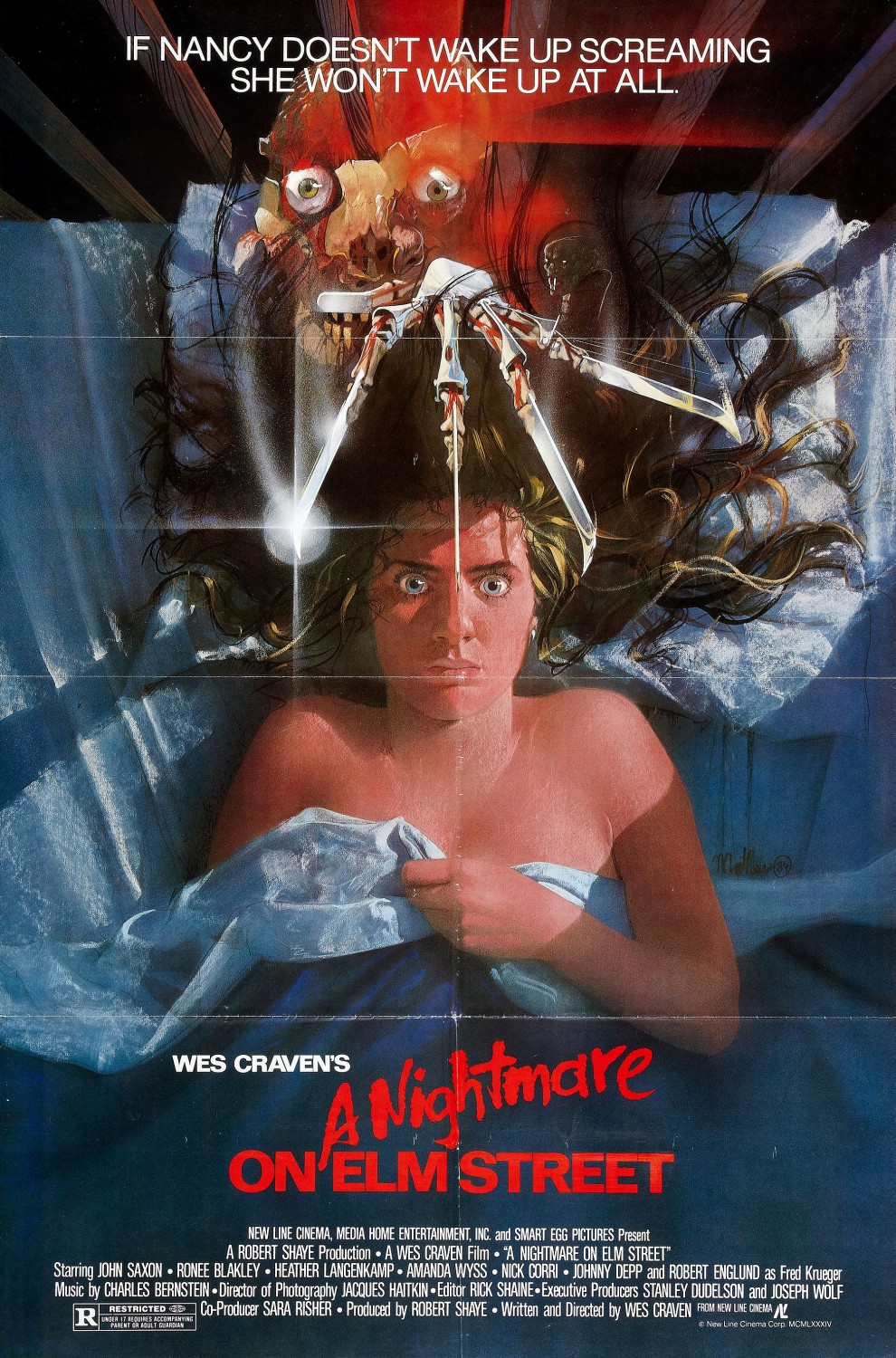
A Nightmare on Elm Street original poster

It has been a year since filmmaker Wes Craven passed away after a long fight with brain cancer. Despite the fact he was 76 years old, it still feels like he left this world far too soon. The following article is about a screening of perhaps his most famous film which I attended seven years ago, and it remains one of the most enjoyable, informative and entertaining screenings I have ever attended in Southern California.

Wes Craven made a special appearance on March 29, 2009 at the Aero Theatre in Santa Monica for a special screening of the original “A Nightmare on Elm Street.” This horror classic was released back in 1984 by the then fledging distributor New Line Cinema, and it remains one of the great horror classics of all time. This screening was sold out as Craven was there to do a live commentary of the film, and he was joined by director Mick Garris who started things off by saying, “I hate those people who talk through the movie!”

What shocked everyone the most was that the 35 mm print of “A Nightmare on Elm Street” was in pristine condition to where it looked like it had never even been run through a film projector before. Both Craven and Garris gave their compliments to the Aero Theater for getting their hands on such a beautiful print, and the audience applauded in agreement.

Garris started off with the question Craven must get every single day of his life: “Where did you get the idea for this movie?”

Laughingly, Craven said the idea for “A Nightmare on Elm Street” came when he was watching late night television, and a story came on regarding a young man who had died after having horrible nightmares. This case led to a series of articles in the Los Angeles Times about the boy and how he told everyone there was a man inside his dream trying to kill him. His father, a doctor, kept giving him sleeping pills to help him rest more easily. But when the police found the boy’s lifeless body, they also found all the sleeping pills his father gave to him underneath his bed. He never took a single one.

Craven also said the film was inspired by a dream sequence he did in “The Last House on the Left” where a character named Weasel has this nightmare where he is strapped down on an operating table with the parents of one of his victims hovering over him in and dressed in scrubs. The husband ends up taking a hammer and a chisel and places the chisel right on Weasel’s front teeth. The hammer comes down with a thrashing blow, and Weasel suddenly wakes up. Craven said when people talk about “Last House on the Left,” it is always this particular scene they bring up which astonishes him. Turns out it stayed with him to the point where someone suggested he make a movie out of a dream. Guess what happened next.

Craven also made it clear that “A Nightmare on Elm Street” was not inspired by any specific episode of “The Twilight Zone.” Instead he said he was trying to establish the world of dreams as he finds them, as we all do, endlessly fascinating. Throughout the movie, he discussed the subject of dreams at length and talked of how they have no rules to them. Dreams seem to revolve around the violence and darkness we experience in the world either through the news or firsthand, and Craven discussed how they seep into our subconscious all the time by saying, “If we were ever fully conscious of all the bad things that were happening to us, it would be too painful for us to handle.”

When Craven he took his script to every studio in Hollywood, he said the executives all rejected it because they found it to be ridiculous. But even as he got more and more broke, he kept shopping it around until he met Robert Shaye, the head of New Line Cinema, at a party in New York. Back then, New Line Cinema existed merely as a storefront in downtown New York, and it would have gone bankrupt had this movie not been successful. Indeed, New Line Cinema will forever be known as the house Freddy Krueger built.

Craven also remarked about how he didn’t know much about signing contracts at the time when he signed with Shaye to “A Nightmare on Elm Street.” Since he was already so broke and filled with doubt of what he could do, he felt he had no choice but to sign the contracts given to him. But what he thought would be a 50-50 situation turned out not to be the case, and from that point on New Line Cinema owned the movie and Freddy Krueger. The realization of this brought forth many hisses from the audience.

But when he was asked to make another “Nightmare” movie, which became “Wes Craven’s New Nightmare,” Craven asked for profit participation in the franchise he did not previously have. Shaye later told Craven he agreed that he was not treated fairly, and the deal between him and New Line got restructured to where Craven got what he rightfully deserved.

Garris pointed out how “A Nightmare on Elm Street” had an amazing cast for a genre film and asked Craven about his casting process. Craven replied he looked for actors who didn’t have a lot of credits to their name in the hope of getting people who could act more naturally. This was actually Johnny Depp’s very first movie, and Craven recalled how incredibly nervous Depp was throughout the shoot. Depp did manage to get a friend of his to help him out, and that same friend got cast as a coroner.

Of all the young actors, the most experienced was Amanda Wyss who played Tina. Amanda also starred in “Better Off Dead” as the girlfriend who thoughtlessly breaks John Cusack’s heart.

In casting Heather Langenkamp as Nancy Thompson, Craven said he chose her because she was basically “solid peasant stock” (the audience was shocked at this description) and looked like an “every woman.” This was what he wanted for this part, and Langenkamp turned in an excellent performance playing a character everyone could relate to. Nancy was also the first of many strong female characters Craven would utilize in his movies.

Garris then asked Craven how he created Freddy Krueger. Craven replied the inspiration for Freddy arose when he came across a homeless guy with a bowler hat who was shuffling his way slowly down the sidewalk, his face a mask of nasty scars. He said the sight of this man creeped him out a lot, and the image of the man stayed with him long after he vanished. The name Freddy came from a kid who Craven said used to beat him up at school, and he was at one time going to be based on a janitor he remembered from school who frightened him and his classmates. He was also adamant that Freddy not have a mask since this had already been done to death in the “Halloween” and “Friday The 13th” movies.

Krueger was also originally envisioned as being older, but this changed when Robert Englund came in to read for the part. Unlike other actors who were reluctant to portray such a dark and evil character, Englund was not intimidated by it and was willing to be serious with the material. Craven said Englund took a great delight in playing Freddy, and his audition convinced him the character did not have to be an old man for it to work. When an audience member asked if there was some sort of sound device or technique used to make Freddy’s voice sound deeper, Craven answered by saying, “Robert’s voice was all Robert’s.”

The budget for “A Nightmare on Elm Street” was around $1.8 million, but a big chunk of financing fell through two weeks into the shoot, putting the cast and crew in a position where they would not get paid. But once Shaye explained the situation to them all, not one crew member left the set. When the movie opened, it earned back its $1.8 million budget in just one weekend.

Craven also described how the special effects were created and what inspired them:

  • During the scene where Nancy falls asleep in her high school English class and sees Tina being dragged away in a body bag, the trail Tina leaves behind her was inspired by the slime trails left by snails.
  • When Nancy gets stuck on the stairs while running away from Freddy, the goo she steps in was actually oatmeal.
  • When the centipede comes out of Tina’s mouth, it apparently got lost on the set and the bug wranglers couldn’t find it. When the crew broke for lunch, none of them came back.
  • When Nancy cornered Freddy in the downstairs basement and set him on fire, the man doing the stunt was Craven’s racquetball partner.
  • In regards to the montage of Nancy setting up the traps to take Freddy down, the book she uses as a manual was actually a World War II manual on booby trapping.

Craven didn’t hesitate to bring up the constant fights he had with the Motion Picture Association of America (MPAA). When Tina’s bloody body, after being dragged over the ceiling, is dropped on the bed, the splash of blood when she landed was quite enormous. The MPAA asked him to cut down the scene to avoid an X (now NC-17) rating. Craven recalled these experiences as both very painful and never ending for him as they occurred with just about every film he made (“Music of the Heart” might have been an exception).

Those fights with the MPAA continued on with “Scream,” and Craven admitted he was baffled why none of the members realized that it was a satire. They even suggested the third act be completely cut, and this illustrates one of the many horrendous suggestions the MPAA comes up with when they judiciously give ratings.

One audience member asked Craven why he used teenagers instead of adults in the movie, and he replied very simply, “Adults would never have watched it.”

One of the funniest moments of the evening was during the scene where Freddy attacks Nancy’s mother, and how her burnt corpse descends into the mattress beneath her. Craven didn’t even try to hide the fact this was one of the least successful special effects in the movie. Regarding John Saxon, who played Nancy’s father, and his expression in the scene, Craven said, “John’s not upset that his wife just died. It was the special effects that tore him up!”

Charles Bernstein composed the movie’s unforgettable and unnerving score, and Craven praised his work as Bernstein had very little money to work with. Craven said he wrote the “1, 2, Freddy’s coming for you” poem, and Bernstein put music to it and took it from there.

As the evening continued on, we got to know more about Craven more as a person. In regards to his career as a horror filmmaker, he told Garris it was all a roll of the dice. When his good friend Sean S. Cunningham asked him to make “The Last House on the Left,” Craven remembered telling him, “I don’t know anything about making a scary movie.”

The audience was also surprised to learn Craven was not allowed to see movies as a kid, and it was not until much later that he finally got the nerve to sneak out of his parents’ home to see one. He credits “To Kill a Mockingbird” as the movie which changed his life and said the original “Texas Chainsaw Massacre” frightened him to death and left him in an unnerved state for months. But even after he had kids of his own, Craven said he never really changed as a director or in the kind of films he made.

When a movie of his opens in theaters, Craven said he always gets out of town as soon as possible. Life can get very miserable if your movie turns out to really suck. When Garris asked Craven if he got to see “A Nightmare on Elm Street” when it opened, Craven made it clear he hates watching his movies in a theater because he is usually driven mad by problems with the sound and projection.

There has never been any doubt Craven is an extremely intelligent filmmaker and human being. To hear him talk about the themes embedded in “A Nightmare on Elm Street” as well as the importance of horror movies made this live commentary all the more fascinating. Freddy Krueger became so popular with audiences because bad guys are far more interesting than the good guys. Another way of looking at this is of how the devil is more interesting than God because he is not bound by any moral obligations, and there is no rule he is not willing to break.

The way Craven sees it, horror is good for you as it forces you to deal with the chaotic. While other filmmakers are busy making “torture porn” movies, which Craven is not a fan of, he said he never tries to make horror look cool. Eventually, we all have to deal with the chaos of life, and we cannot spend the rest of our lives hiding from reality. If you watch the news, violence surrounds us in our everyday lives and gets deeply rooted in our subconscious mind. Horror films are affected by current events of the time they were filmed in

One of the best points that Craven made was that if you don’t know what darkness is inside of you and turn a blind eye to it, then you are in deep trouble. You cannot hide away from your dark side, and you need to be fully aware of what extremes people will go to in order to survive.

In the end, this is what makes Nancy so brave; she is the only one in “A Nightmare on Elm Street” capable of dealing with reality. This is in direct contrast to Nancy’s mother, Marge (Ronee Blakley), an alcoholic who hides vodka bottles in different parts of her house. She also becomes overly protective of her daughter by having metal bars put up on the doors and windows. Her way of dealing with reality is not healthy, and it is endemic of the other characters as they are not handling it very well either. But in the end, kids need to know they have allies in their parents, and Nancy manages to find one in her father.

“A Nightmare on Elm Street” still holds up after all the years despite the dated styles and special effects. Garris said he loved how everything keeps building up and of how there is an increasing sense of dread throughout. This movie taps into those terrifying dreams we all had when we were young, and this is just one of the reasons why it remains so terrifying to this day; it deals with the never ending fascination we have with dreams, and it creates a world for them to exist where anything can happen.

Rest in peace Wes Craven.

Copyright Ben Kenber 2015.

Molly Shannon revisits Mary Katherine Gallagher and ‘Superstar’ in Los Angeles

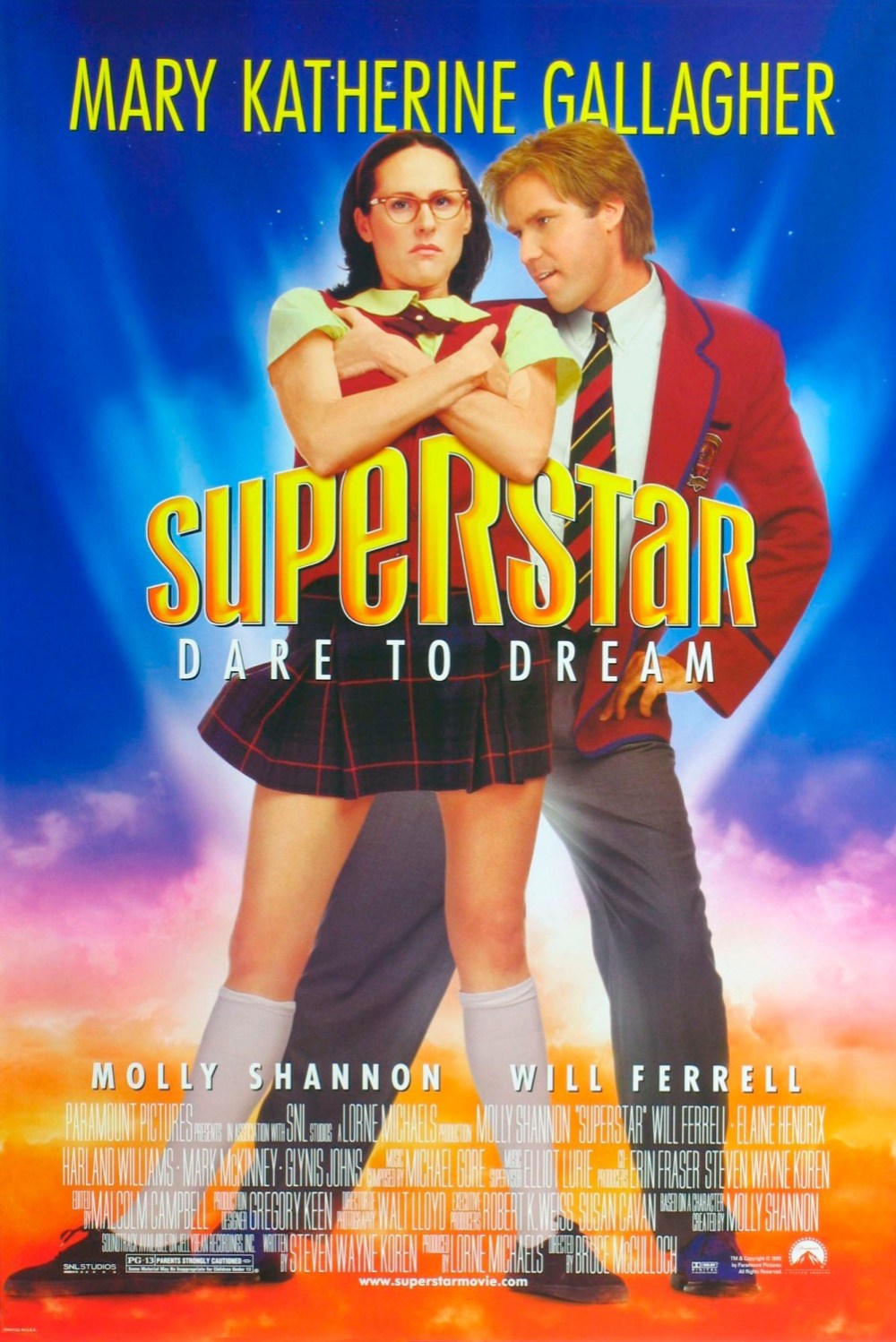
Superstar poster

Molly Shannon had quite the run on “Saturday Night Live,” giving us such hilarious characters like the 50-year-old Sally O’Malley, self-proclaimed “Joyologist” Helen Madden, “Goth Talk” co-host Circe Nightshade and “Delicious Dish” co-host Terri Rialto. But her best character by far was the social outcast Catholic schoolgirl Mary Katherine Gallagher whose severe mood swings and love of TV movies she would always do monologues from still have us in hysterics to this day. Mary’s popularity became so huge to where she eventually got her own movie called “Superstar” in which she attempts to live out her dream of getting a kiss from the most popular guy at school, Sky Corrigan (Will Ferrell). Despite a middling reception upon its release in 1999, the movie has since earned a cult following.

Shannon got to revisit Mary Katherine Gallagher and “Superstar” when American Cinematheque, in partnership with Alamo Drafthouse, screened the movie at the Egyptian Theatre in Hollywood. Joining her was the movie’s director Bruce McCulloch and its screenwriter Steve Koren. Shannon, who hasn’t aged much since her “SNL” days, was all smiles and showed no hesitation in doing Mary’s signature “Superstar” pose to the delight of the audience.

The first question on everybody’s mind was how Shannon came up with Mary Katherine Gallagher, and she replied the character was originally a version of herself, albeit a very exaggerated one. Like Mary, Shannon attended Catholic school, was never really comfortable there and got very nervous when going to confession. She also said the idea for Mary putting her fingers into her armpits came from a friend of hers she used to go on vacation with in Palm Springs. They were at the age where body odors began emanating from their bodies, and Shannon’s friend got her to smell her armpits and vice versa. Shannon also added she is no longer a practicing Catholic.

McCulloch, best known for being on “The Kids in the Hall,” originally turned down the opportunity to direct “Superstar.” Shannon at the time was co-starring opposite Drew Barrymore in “Never Been Kissed,” and Barrymore begged her to go after him and stop the airplane he was on from taking off. McCulloch said his reason for turning down this movie was because he was scared he wouldn’t be able to deliver the goods. He was also concerned he would be taking on another person’s project as well as their life and a significant part of that person’s career. Still, Shannon managed to track McCulloch down and he agreed to direct.

Koren had worked with Shannon on “SNL” and had written the Mary Katherine Gallagher sketches, so it seemed appropriate that the two of them wrote the screenplay for “Superstar.” Actually, it was Lorne Michaels who was “really into the movies,” as Koren put it, who wanted to see Mary get her own film. Koren said when writing the screenplay, it came down to thinking about the history of Mary and where she came from. After that, it was about giving the screenplay a three-act structure and going through a number of rewrites to where they had too much material. In the end, McCulloch said they managed to simplify things by making “Superstar” into a girl movie about finding yourself and of Mary getting her first real kiss.

McCulloch remarked how Shannon never wanted to stop even after shooting 11 takes of the same scene due to the ferocious energy she brought to Mary. He found this to be refreshing as other actors he worked with were not like that. In fact, he even recalled when he finished a third take with an actor and wanted to do another, and the actor looked at him and asked, “Don’t you have it yet?”

One of the many things we love about Shannon’s portrayal of Mary is how fearlessly she threw herself into the physical comedy and crashes into any and every object in her path. Shannon said she grew up watching John Ritter on “Three’s Company” which became a huge inspiration for her. She also added she always made sure to stretch out beforehand and that physical comedy can be very dangerous when doing it with another person.

Shannon also confirmed that when it came to making out with the tree, it was never sterilized beforehand. McCulloch even added he “had to pull her off that goddamn tree” more often than not.

As for her favorite moments in “Superstar,” Shannon said one of them was when Mary was watching the television movie “The Boy in the Plastic Bubble” starring John Travolta as it proved to be her escape from sadness. She also loved the scene where Mary was in her bedroom talking about her breasts as it reminded her of when she was a little girl and thought about “bras” and “big boobs” most of the time.

When “Superstar” was released in 1999, Shannon admitted to seeing it in the theater “so many times.” She kept thanking God for the opportunities given to her, and she reveled in the audience’s reaction to the movie. At one particular showing, she remembered a little boy who saw her and then quickly looked at the screen and then back at her. He leaned over to his mom and said, “Mom, I think that’s the girl in the movie.”

Each of the night’s guests had worked on “SNL,” and an audience member asked how hard it was for them to leave the show. McCulloch recollected that after a season or two he wasn’t sure if he wanted to come back, and he later moved on “The Kids in the Hall.” Koren replied he left when he was hired to be a writer for “Seinfeld,” and it was very tough on him emotionally to move on from “SNL.” As for Shannon, she said she loved the show and wanted to leave while still in love with it. She had nothing planned when she left, and her reasons for leaving were more personal as her father was dying from cancer. Quitting the show allowed her to spend more time with him before he passed away.

It was great to see such an enthusiastic audience come out to see “Superstar” at the Egyptian Theatre. Shannon proved to be a delight as she has lost none of her enthusiasm for Mary Katherine Gallagher or acting. It was also a lot of fun to see McCulloch and Koren share their insights about the movie’s making as it proved to be better than its reputation suggests. As for where Mary would be today, Shannon is convinced she would be in a lot of therapy, but she also hoped Mary would have found love. Regardless, there’s no denying that after all these years, Mary is still a superstar.

Copyright Ben Kenber 2016.