Virginia Madsen Reflects on Portraying Maya in ‘Sideways’
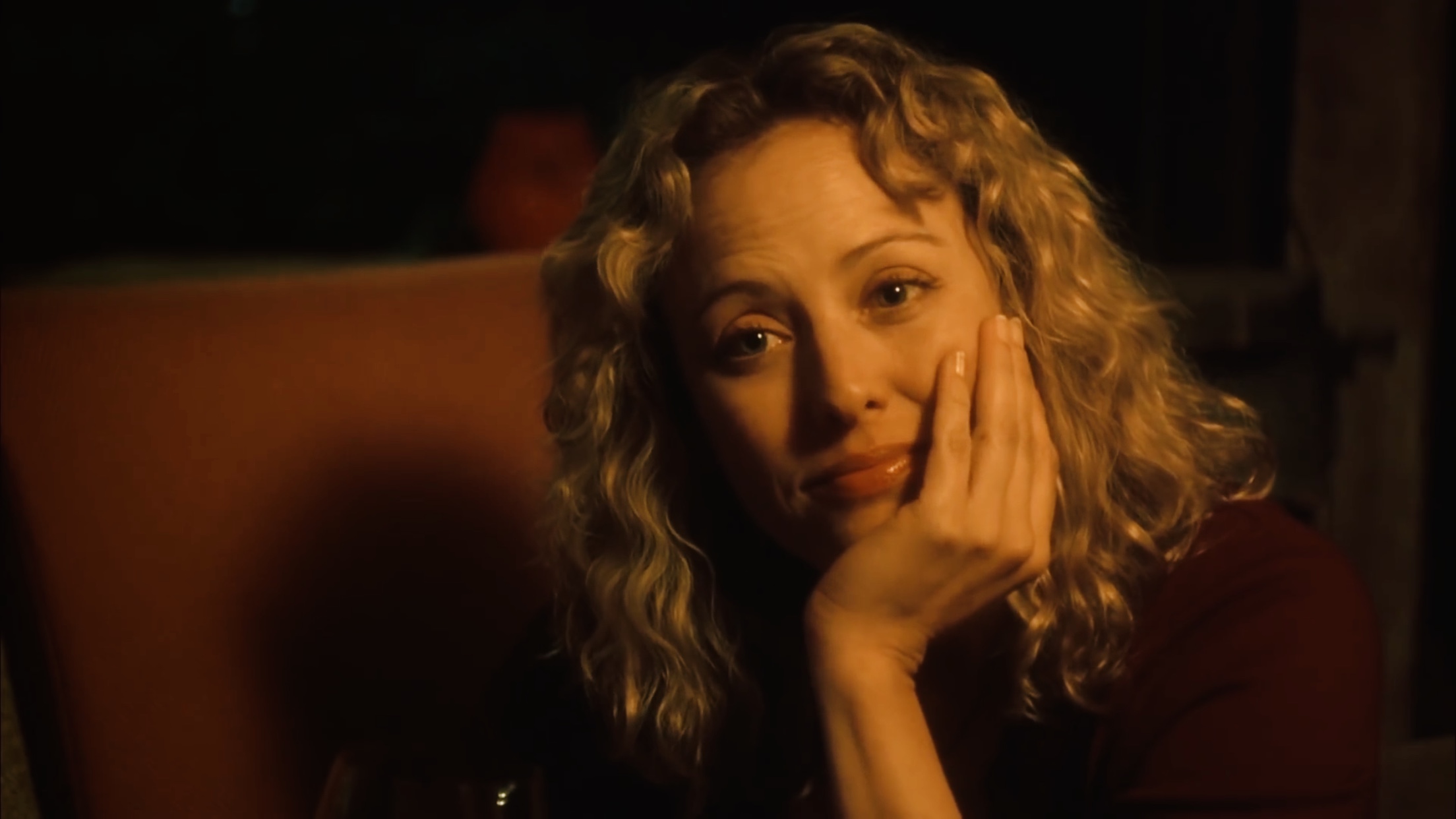
I was lucky enough to attend an anniversary screening of Alexander Payne’s “Sideways” at Laemmle’s Monica Film Center in Santa Monica, California. I remember and watching and loving this film back when it was released back in 2004, and now it has reached its twentieth anniversary which just scares the hell out of me. This screening was followed by a Q&A with some of the film’s participants as well as the authors of the recently released book “Sideways Uncorked,” Kirk Honeycutt and Mira Advani Honeycutt.

But make no mistake, the real star of the evening was Virginia Madsen whom everyone who loves “Sideways” was truly thrilled to see. She portrayed Maya, the divorced waitress who captures the attention of the ambitious but very depressed Miles (Paul Giamatti), a writer who just might be about to publish his novel for the world to see. Madsen deservedly earned an Oscar nomination for Best Supporting Actress for her unforgettable performance here. Cate Blanchett ended up winning it that year for her work in “The Aviator,” but there is no forgetting what Madsen did, especially after Maya’s speech about her love of wine.

Before “Sideways,” Madsen was best known for her work in movies like “Candyman,” “Electric Dreams,” “The Prophecy” and “The Rainmaker.” Around the time it came to audition for this now classic film, Madsen openly admitted her career was not doing well and that the odds were against her in playing Maya.

Virginia Madsen: There was talk about getting someone who had a bigger name, but I got the audition and I was working with a coach, so I was really, really ready. They weren’t giving us the whole script though, and then I said, well, can I just have a couple of more scenes, and they just sounded like me.

In addition, she was very familiar with the Santa Inez valley and the other areas which “Sideways” takes place in as she considers them her weekend getaway. Also, this film marked the first time Payne made a film outside of Omaha, Nebraska.

Virgina Madsen: I lived about an hour from there. I didn’t ever go wine tasting. I just went there to sort of be a hippie and climb trees and have this beautiful sense of serenity, so I knew what I felt like when I was in the valley. So, I just went to play myself.

And we can all agree that Madsen’s greatest scene in “Sideways” was when she talks to Miles about her love of wine as it seduces us every bit as much as it seduces Miles. As a result, this made her meeting with Paul Giamatti all the more agonizing.

Virginia Madsen: I loved the part where I talked about wine in that scene with Paul, so I just got this one chance in the room with him. So, I said I just love this screenplay, I love this role, and I love when she talks about the life of wine. I went into the monologue, which you were not supposed to do for the audition. He went, “would you like to do the monologue?” I said, “Yes, sure.” I was so prepared. The tone in the writing changes in that scene. And when it was over, we just looked at the casting director and he said, “You know, we should have everyone do that monologue!” He (Giamatti) wanted me, but it took a while to hear a yes. I knew who Paul was as an actor, and I knew we would have chemistry. I am never wrong about that.

Then there came the time when Madsen met up with Payne about “Sideways,” and he offered her the role of Maya at the Chateau Marmont, something any actor or actress loves to be given the role of a lifetime at. But this also resulted in something actors might be reluctant to agree to.

Virginia Madsen: We met at the Chateau Marmont, and he said, “I want to ask you, would you do me the honor of playing Maya in my film ‘Sideways?’ And I was like, “Oh, well.” And he said, “I have one request though, are you willing to do this movie without makeup?” And I said, “Well Alexander, I’m not wearing makeup now, and that’s what I mostly do.” I did that in three films before that, and the greatest thing about that is you don’t have to get up quite so early. The only request I made back to him was, as long as I can wear mascara and some lip gloss on the date because, if a woman goes on a date, she’s just gonna do a little something, and he agreed to that. It seems to be nowadays more than ever this effort to make people look real, and they kind of look like hell, and that’s also distracting.

After all these years, “Sideways” has lost none of its power to entertain, be it in comedic or dramatic ways. Some films are quickly undone by time, but this one never will as everyone can relate to it and its characters in various ways. And when it comes to Madsen’s performance, she will make you fall in love with Maya every single time.
Jason Reitman talks with Chris Klein about ‘Election’

election-chris-klein

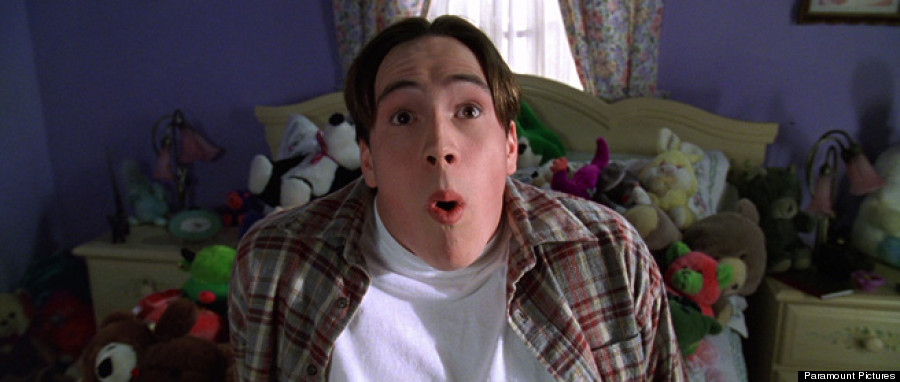
Jason Reitman, director of “Juno” and “Up in The Air,” started the first night of his movie program at New Beverly Cinema with a double feature of “Ferris Bueller’s Day Off” and “Election.” “Election” was released in 1999 and directed by Alexander Payne who would later go on to give us “About Schmidt” and “Sideways.” Reitman said he considers this film to be the unofficial sequel to “Ferris Bueller’s Day Off” as it answers the question; what ever happened to Ferris after high school? Reflecting on what Edward R. Rooney, Dean of Students, said of how Bueller’s life would be in a ruinous state 20 years from now, “Election” shows this wasn’t far from the truth. Here we see Matthew Broderick, still stuck in high school, as Civics teacher Jim McAllister. There is no escaping the hell that is high school for him this time, and he is confronted with a go-getter named Tracy Flick (Reese Witherspoon) who is running for Student Body President.

Reitman started off talking about how Volkswagen was willing to pay a lot of money for Broderick to drive a VW Bug in “Election,” but Payne was adamantly against it. This was proof, Reitman said, of how this was a director who stuck to his guns and never strayed from his cinematic vision.

Whereas “Ferris Bueller’s Day Off” was John Hughes’ love letter to Chicago, “Election” was Payne’s love letter to Omaha. This city in Nebraska has been the setting for just about every movie Payne has made, and Payne told Jason he loves to shoot in the Midwest of America because of “the wind.”

Before “Election” started, Reitman brought out a special guest to talk about the making of Payne’s movie: Chris Klein. Klein played the well-meaning but hopelessly dim high school football star Paul Metzler. After “Election,” Chris went on to star in “American Pie” and later went against type in John McTiernan’s remake of “Rollerball.” That movie was never mentioned during the Q&A, and probably for a good reason.

“This may sound hokey, but this is what dreams are made of.”

That’s how Klein described being cast in this film, and he ended up being plucked from obscurity as a result. At the time, he was living in Omaha and going to high school. People would never take him seriously when he said his dream was to be a professional actor. You have to wonder what those same people must think of him today.

During pre-production for “Election,” Klein said Payne was scouting out high schools and other locations in Omaha when his high school principal, who was essentially acting as his agent at that point, brought Klein to the director’s attention. While Paul Metzler was a football star, Klein had become the star of the plays and musicals at his school. One day, his teacher was instructed to tell Klein to get some papers which he forgot to bring with him. As he was walking down the hallway, Payne passed by him as he headed in the opposite direction. The next day, Payne called Klein up and asked him to audition and do a cold reading for him. Klein said he actually didn’t know what he was reading for and had he known it was for “Election,” he’s sure he would have blown the entire thing.

Klein said he had not seen any of Payne’s previous films, so the director gave him a copy of “Citizen Ruth” which he ended up watching with his mother. For those not familiar with this particular film, it starred Laura Dern as a glue-sniffing drug addict who ends up becoming pregnant, and she spends the movie deciding whether or not to get an abortion. Keep in mind that Omaha, Nebraska is a very conservative area, so neither Klein nor his mother were adequately prepared for this motion picture. His mother ended up saying, “WHAT IS THIS MOVIE??!! IS THIS REALLY THE GUY YOU ARE ABOUT TO WORK WITH???!!”

“Election” marked the first time Klein had ever been on a film set, and he remarked how he never realized they played music during a scene. Also, when he read the screenplay, he told Payne he didn’t know it was supposed to be funny. Payne responded by saying this was exactly what he wanted. He told Klein his character Paul Metzler was nervous and never comfortable in front of people, and this characterization worked out perfectly for this movie.

For Reitman, Klein’s experience making “Election” reminded him of various panels he has been on with actors from his own movies. Many of them said they had no idea what Reitman was doing until the whole thing was over. Klein described what Reitman pointed out as being very similar to his experience making “Election.” It never occurred to him what kind of film they had made until he went to the premiere and saw it with an audience. Afterward, he exclaimed, “HEY! WE ACTUALLY DID SOMETHING FUNNY!”

Admittedly, having grown up in conservative Omaha for most of his life, Klein said there were several scenes which concerned him. But none concerned him more than when Paul gets a blow job. Reitman, however, pointed out how the blow job is a huge moment for Paul in that it is the first one he has ever gotten. But this is the way Klein saw the whole scene:

“Believe me; I have gotten A LOT of blow jobs! The thing though is none of them were ever put up on the big screen before!”

Reitman remarked how directing an actor, not an actress mind you, to do an orgasm in a film is “really hard.” This was a challenge Reitman faced when he directed Michael Cera in “Juno” in a scene where he was very intimate with the title character. Reitman said Cera is a wonderful guy and a great actor, but getting that expression on his face of the thing we want to experience multiple times throughout our lives proved impossible, so the scene ended up on the cutting room floor. All this talk about blow jobs led Reitman to remark, “This has turned into an amazing Q&A!”

Klein learned many lessons about being on a movie set when making “Election.” Throughout it all, he spent just about every hour on location to where Payne ended up telling him, “Don’t worry, you can go home. We’ll call you when we’re ready for you.”

Another thing which really altered his perception of moviemaking was when the actress originally cast Paul’s sister, Thora Birch, got replaced. As Klein saw it, she was basically fired, and he became very fearful he would be next to go. Payne may have been watching a young actor growing right before his eyes, but Klein described the whole process as him taking it all so seriously so he wouldn’t get fired.

Klein finished by saying working on “Election” was an amazing experience as well as a lucky one, and watching professionals like Matthew Broderick and Reese Witherspoon, both of whom he described as being “very generous” to him and others, made this one of the very best experiences he has ever had. To all this, Reitman remarked, “I’m so glad you two (Klein and Payne) ran into each other at your high school!”

Before the Q&A concluded, Reitman he has since become friendly with Payne as they constantly meet up at film festivals. Payne has been very complimentary on Reitman’s work, and Reitman said this has meant so much to him. Now they text each other on a regular basis, so he had asked Payne if there was one shot in “Election” which best describes the whole movie. Jason read the entire text he received from Payne to the audience:

“The entire movie rests on the one shot of the protagonist washing his genitalia in the shower of that motel room.”

election-movie-poster