Exclusive Interview with Tim Smit on His Directorial Debut, ‘Kill Switch’

Tim Smit photo

Acclaimed writer, director and visual effects artist Tim Smit makes his feature film directorial debut with “Kill Switch.” Based on his short film “What’s in The Box?” which gathered a large audience on YouTube, it stars Dan Stevens as physicist and NASA pilot Will Porter who is recruited by Alterplex, a power company which has built an enormous tower designed to harness unlimited quantum energy. The company’s vice-president, Abby (Bérénice Marlohe), informs Will a mirror universe has been created solely to drain energy from, and he is sent into it with a device called a “Redivider” which will balance the power between the two universes. But as you can imagine, nothing goes quite as planned as the mirror universe proves to more than anyone thought it could be as Will finds himself on the run from drones, soldiers, and people he is no longer sure he can trust.

“Kill Switch” takes place in a future version of our world, and it is largely a POV movie as we see much of the action from Will’s eyes as he struggles to say alive in an especially hostile universe. I talked with Smit about the movie’s origins, how the story evolved from a short into a feature film, and of how he was able to create a visual effects heavy movie in just 18 days and on a small budget.

Kill Switch poster

Ben Kenber: I really like the way this movie is set up because you are thrown into this story to where you cannot help but be gripped by everything going on. You’re not sure what is happening and, like Dan Steven’s character, you are desperate to find out. When conceiving “Kill Switch,” did you know how the story was going to end, or did you just start off with the idea and went from there?

Tim Smit: We knew that, when I did the short a couple of years ago, the box was going to be used as sort of a kill switch for destroying a parallel universe meant for energy harvesting. But we never really knew the full arc of the story before we hired the writers to get involved, so it took a while to get to the point we ended up with. It was interesting and a very steep learning curve for me to work on this as a conceptual arc as a writer and also as a director, and of course the visual effects too. It wasn’t fairly clear, but we got there as we developed the kill switch idea.

BK: The screenwriters you hired for this project, Charlie Kindinger and Omid Nooshin, what would you say they brought to this story which wasn’t in your short film?

TS: What they did is they fleshed out the characters much more than we already had in the original short. But they also wrote the dialogue and they did the screenwriting of the story. It was a difficult movie to write because of the whole POV aspect. It’s difficult to tell a story through POV. Also, we did have, for that reason, to introduce the whole flashback storyline to help us with that, and to help provide a rest for the audience so that they do not get POV tired. So, they focused on that the feeding of information so the audience knew enough to keep going with the movie, and they were more associated with that than the base idea.

BK: I did watch the short “What’s in The Box?” which led to the “Kill Switch” feature film, and the whole idea of the parallel universe is something which has been explored in science fiction constantly such as the “Dark Mirror” episode of the original “Star Trek” series. What inspirations did you draw from when putting together the short and the feature film?

TS: So, the main inspiration behind it was a couple of things actually. Visually it was inspired by a couple of video games because this was always meant to be sort of an homage to video gaming, and we used various inspirations like “Half-Life,” “Halo” and games like that. From a physics standpoint, the idea for the parallel world came from the concept of Schrödinger’s cat, a thought concept where you got a box and in it is a cat with a poison. If you keep the box closed, you don’t know if the cat survived because the poison still has a chance to kill the cat. You only know the cat is dead when you open the box. So, this is kind of like the idea for the initial mystery where you’ve got this black box and you don’t know yet what it is and you don’t know what it does, but it triggers you to go along and see what it ends up doing. So, the whole idea of Schrödinger’s cat was the main inspiration behind the short and the box as a MacGuffin.

Kill Switch POV still

BK: The POV shots reminded me a lot of Kathryn Bigelow’s “Strange Days” which also had them. When you put those shots together, did you have a set of rules you wanted your collaborators to follow during shooting?

TS: Yeah, we did a couple of things, some of them worked better than others, which we wanted to explore. One of them was, most of the time, we wanted to see the other actors. As a rule of thumb, we wanted Will Porter to be running behind the other characters so you can actually see what’s happening. So that was something we took into consideration while we filmed this because you are kind of used to the main character taking the lead, but in this case, he’s following them because otherwise it would be difficult to see them. It’s a very simple thing you have to keep in mind, and that was one of the rules we followed.
Kill Switch Dan Stevens

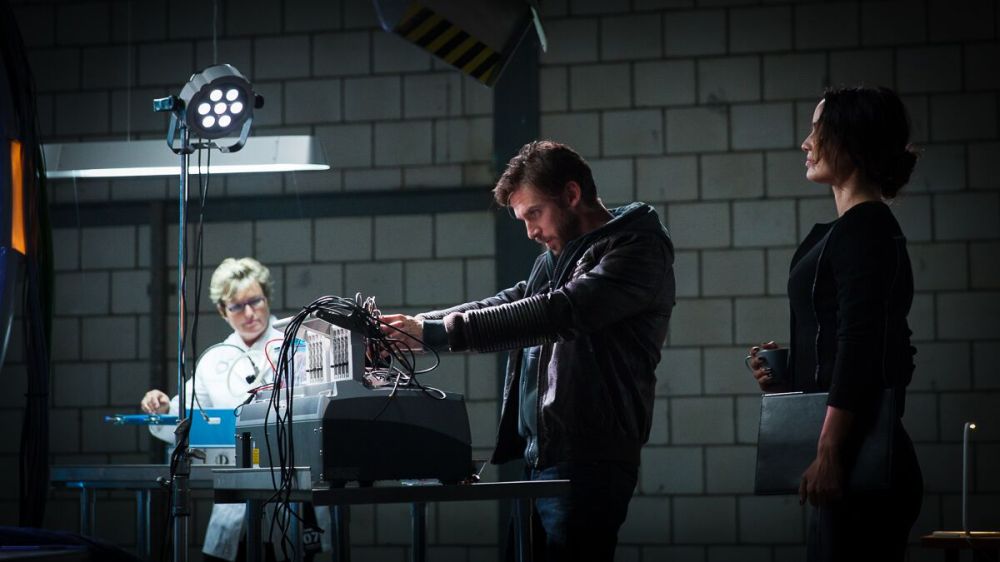
BK: Did Dan Stevens have to do any camerawork himself for the POV scenes?

TS: No. Obviously I would’ve loved to have used him, but we just didn’t have the budget for him for all the days. So, we just hired him on some of the days where he would be the voice, and of course on the days where we would shoot conventional scenes. Our DOP was basically the character, and then Dan came in later and did the ADR for the character.

BK: The special effects are actually pretty good for a low-budget movie like this. We see objects like train cars falling out of the sky. Did you set any rules for yourself as to what kind of objects and vehicles could fall into the echo universe?

TS: So, we focused initially on metallic objects just because that made it easier to create for us. The idea was that this parallel world is being arched for energy, but somehow the original world is fighting back as the universe is trying to balance itself out, and it does so by pulling over objects from the original universe into this echo universe. The rule of thumb was the first thing to be pulled over was small metal objects for various reasons, but you can figure out in physics that there are only four main forces, and one of them is electromagnetic. It is not inconceivable that something like metal will react first or that something else will react to metal first. It made easier for us to make these objects fall down. It’s harder to do entire buildings or something like water. It was a compromise, but I felt it worked from the basic physics ideas as well. We see this boat falling from the sky, it’s not metaphorical.

BK: The whole idea of an echo universe is interesting because the characters say there is not supposed to be any organic life in it, but we can see from the start there is.

TS: Yes, that’s what I like about the movie as well. It’s not as fleshed out as it should be, but the idea is that this company didn’t care. They were just interested in creating this echo universe, and they are telling us that it’ll be fine and there will be no organic life, but they don’t care. They just care about the energy, and of course they didn’t expect it to be that intense or of the rebellion that arrives. But I kind of like that idea of what are your priorities as a company. These huge oil companies are pretty much going across the line, and that’s what drew me to this story as well. That was something I could really personalize.
Kill Switch Berenice

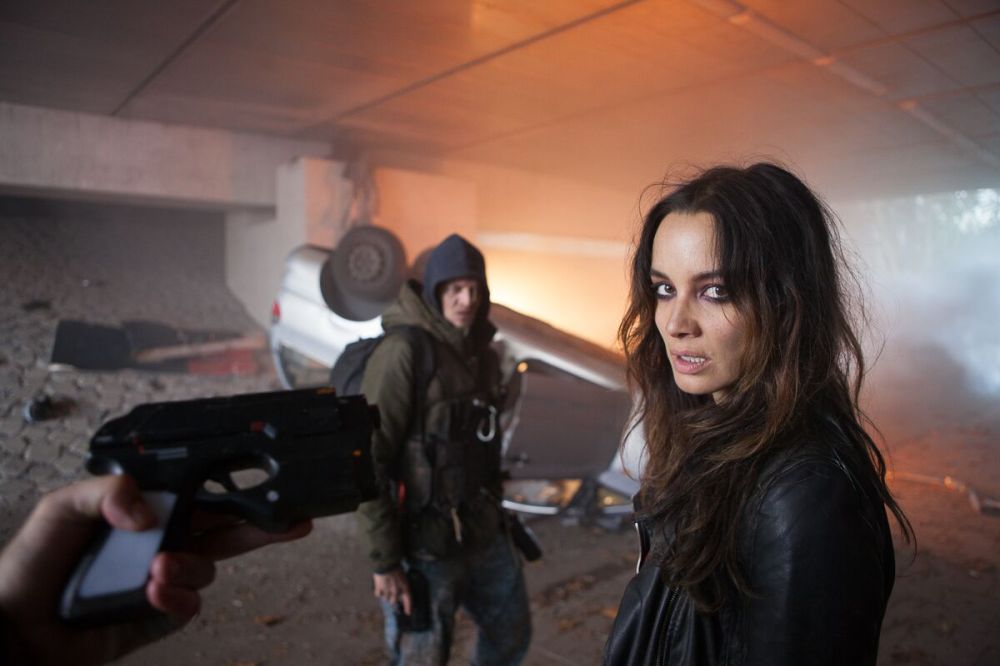
BK: Dan Stevens has a very challenging role because he wasn’t on set too much, but he still had to get to the emotion of what is characters going through. Also, Bérénice Marlohe has a wonderfully intimate presence throughout the film. How did you come to cast both these actors?

TS: It was amazing to work with these two. The great thing about Bérénice and Dan is that they are both so interested in science fiction, and they are both really interested in broadening their own horizons and trying to do something new. It’s an experiment, this film. Let’s be honest, you don’t see a POV movie every day. It’s an attempt to do something new especially with a director that’s also doing all of the effects. It was an experiment on multiple levels, and they were committed and went for it, and that’s what I really appreciated about them. It was a very difficult movie especially for Bérénice because she was acting against I camera where there is no reaction, and most of the enemies are CG. It was very demanding for her to do, but she gave it her best and gave it everything she had. We had 18 days to do everything.

BK: 18 days? That’s very impressive especially for a science fiction movie.

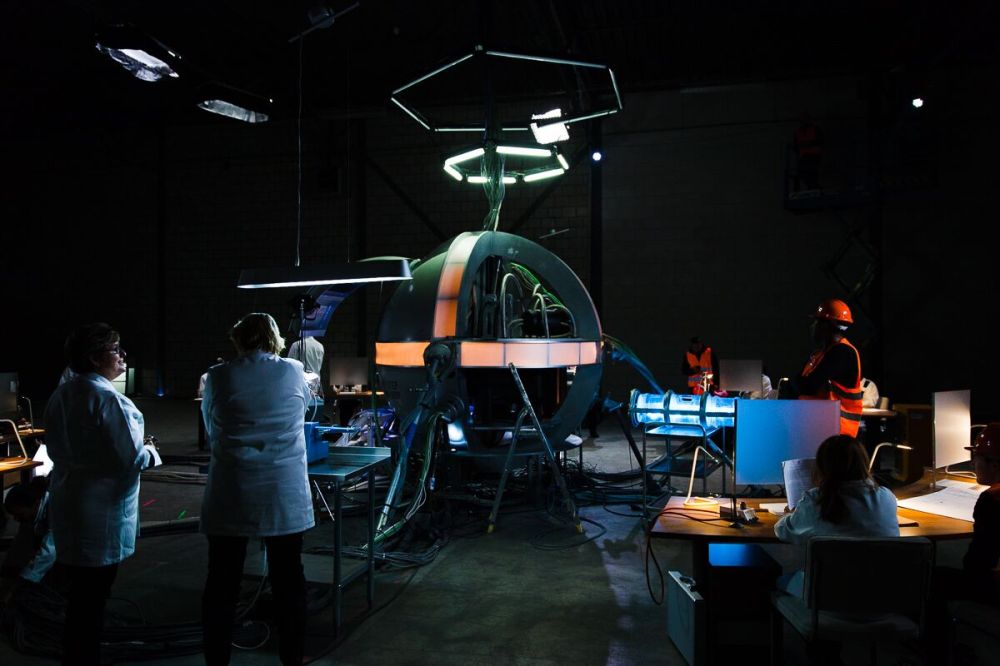
TS: It was something I underestimated when I started working on this. I was experienced as a visual effects artist, but I wasn’t experienced as a character director. You would think shooting this movie, even though it was 18 days, would’ve given you a whole set of problems and obstacles to get over, which we had. But even after it was all done, that’s when the real challenge started. You would think that after having a number of years of the effects experience that it would be easier, but it was actually the other way around. It was very difficult for me to combine the directorial duties and the effects duties at one point. You can get so involved in the technical part that you get sort of a tunnel vision and you still have to be the director. There is the reason why the director is separate from the visual effects department because that makes the movie better.
Kill Switch vessel

BK: “Kill Switch” takes place in a future which seems not too distant from our own. We never get an exact date of the time the movie takes place in. Was that intentional on your part?

TS: Yeah, actually it was, but sometimes in the movie you do see the date on the newscasts, but it was never deliberately mentioned. I felt, in my mind, the movie was in the near future, but the concepts we are introducing we do not have access to in the near future. The problem with going further into the future is your design and your world view changes, and the budget doesn’t allow that. If you really want to know which year it was, it was actually 2043. So, it was further into the future, but not that far. It was a budget reason.

BK: You studied natural sciences as a student. Did those studies inform the science of this movie?

TS: Yeah, the studies did help. A lot of people wonder why I studied natural sciences if you wanted to be a filmmaker, but the way you were trained as a scientist really does help in making movies. There’s a certain amount of problem solving that you are used to which is really helpful as a director, and the visual effects that I did, they tend to be of a physical origin. With physics, you are trying to explain or describe the real world. With visual effects, you are kind of doing the opposite. You are using formulas to create a fake or, at least, a realistic looking fake world. To me, that is really fascinating and the physics background helped in doing that.

I want to thank Tim Smit for taking the time to talk with me. “Kill Switch” is now playing nationwide at the following theaters:

Laemmle Monica Film Center, Los Angeles

Cinema Village, New York

AMC Rio, Washington, D.C.

AMC Methuen, Boston

AMC Southfield, Detroit

AMC Arizona Center, Phoenix

AMC West Oaks, Orlando

AMC Ritz Center, Philadelphia

AMC Woodridge, Chicago

AMC Town Center, Kansas City

Poster, stills and trailer courtesy of Saban Films.

Click here to visit the movie’s website.

’47 Meters Down’ Thrills You Just When You Thought it was Safe to Go Back into the Water

47 Meters Down movie poster

From its poster, “47 Meters Down” looks like one of those Syfy flicks like “Sharknado” or “Lavalantula” which are enjoyable for being infinitely silly and having pathetic CGI effects. Or perhaps it would be like one of those knockoff movies from The Asylum, a production company shameless in capitalizing on blockbuster films by using titles and screenplays similar to them (“Snakes on a Train” or “Transmorphers” anyone?). Perhaps the filmmakers wanted to make something similar to the 2016 sleeper hit “The Shallows” which stared Blake Lively as a surfer who has to use her wits in order to keep from being eaten by a great white shark. Either way, I came into this movie figuring it would be one you should not take the least bit seriously and enjoy for all the wrong reasons.

But to my surprise, “47 Meters Down” is a very effective thriller which is lean in its execution, and its main intent is to take you on a pulse pounding ride. In many ways, it is like Renny Harlin’s “Deep Blue Sea” which, while by no means an artistic triumph, played around with the clichés we remember most from shark movies like “Jaws,” and it employs them to where we think we know what to expect, but our expectations are thrown for a loop. What results is a motion picture which knows exactly what it needs to do and how to do it.

Mandy Moore and Clair Holt star as Lisa and Kate, sisters who, as the movie starts, are on vacation in Mexico. One night they run into some local guys who invite them to go cage diving for sharks. Just like Richard Dreyfuss in “Jaws,” these two women will be lowered into the ocean in a cage where they will get to see those sharp-toothed creatures up close without being eaten. But of course, we all know things will not go as planned as our two leads and the characters around them make one stupid mistake after another. Then again, if they didn’t make those mistakes, there would be no movie.

The clichés abound in “47 Meters Down” as the boat the ladies will be traveling on looks far too rusty to sail anywhere safely. You have Matthew Modine on board as the captain of the ship, Taylor, and I couldn’t help but be reminded of Quint from “Jaws.” There’s also the fact that these ladies have never scuba-dived before, and you know this is just asking to invite disaster. We have the air gauges which act as the plot’s ticking time bomb as the ladies threaten to run out of air sooner than they think, they cut themselves to where blood flows from their bodies, thus inviting any shark in the vicinity to drop by and feast on human flesh, and there’s always the one guy who is there to save everybody’s ass, but we all know how long he will last (or do we?).

Lisa also exhibits tremendous anxiety about doing this even as Kate assures her this will be the best time the two of them have ever had (it won’t). Hearing this conversation between them immediately reminded me of a number of “Star Wars” characters saying this infamous line from one movie to the next: “I’ve got a bad feeling about this.” Another unforgettable piece of dialogue which crossed my mind was Jon Voight’s line from “Deliverance” when he said to Burt Reynolds, “Let’s go back to town and play golf.” This was good advice which was left unheeded, and it makes perfect sense how Lisa’s common sense could be overturned by Kate’s need for adventure.

As you can imagine, everything goes terribly wrong as the boat winch breaks, and the women plummet down 47 meters to the seafloor. Director Johannes Roberts wisely keeps the majority of the action underwater as Lisa and Kate struggle to stay calm and not use up their dwindling supply of air. He puts us right in their shoes as, like them, we are left to wonder what the crew members in the boat are doing to bring them back to the surface or if they are doing anything at all. Roberts is also aided strongly by a pulse-pounding film score from Tomandandy whose work on “Killing Zoe” and “The Hills Have Eyes” remake rank among my favorites. Their music heightens an already intense motion picture to something which will fry your nerves and leave you on the edge of your seat even as we are forced to endure some unintentionally hilarious moments.

Granted, you can’t always expect David Mamet or Aaron Sorkin to be underwater with you when words fail you. When Moore cries out about how the shark almost got me, the audience I was with couldn’t help but laugh as it seems like such a silly thing to say. But then again, what would really say if we were stuck in the same predicament? I doubt we would be uttering a monologue out of Eugene O’Neill’s “A Long Day’s Journey into Night.” Of course, it always helps to have John Milius around when you need him.

Moore and Holt do strong work in creating a bond between and work hard to create characters who, while not having too much in the way of depth, quickly realize they need one another to survive this ordeal. Seeing one of them take off their mask and remove their oxygen tank just to get through the bars of the cage is enough to make one shiver, and this is accomplished without the use of special effects. The actresses are also aided by actor Matthew Modine who plays the Captain of the boat, Taylor. For the most part, we hear his voice more than we see him, but he gives strong support as he encourages his guests, people he never should have put in any danger, a reason to stay calm. In addition, he also reminds the ladies and the audience that the bends is not just the title of a Radiohead album.

Roberts previously directed “The Other Side of the Door,” a supernatural horror thriller which started off well, but later got bogged down in clichés it would have been smarter to avoid. “47 Meters Down,” however, is all about clichés, and just as Harlin did with “Deep Blue Sea,” he manages to manipulate those clichés to where we think we know what to expect, and then we are totally caught off guard. Just watch the scene where the actresses are playing around with an underwater camera, and you will understand what I mean.

Yes, the sharks are CGI, but they are still frightening antagonists in this movie. After a while, the terror comes from a combination of what we think is going on above the water as well as what we cannot see. The water is made to look especially murky to where we can’t see much of what is in front of us, and this leads to an especially scary moment when a character swims out to a certain point, and then suddenly can’t remember the direction in which she came.

Look, “47 Meters Down” is not Oscar material, but it never pretends to be either. While it may not reach the heights of “Jaws” or the unbearable intensity of “Open Water,” it is a taut thriller which will allow the audience a nice diversion for a couple of hours. Roberts and his cast understand exactly what this movie aims to be, and they deliver in a way which will get your adrenaline pumping. You can laugh all you want at the foolishness of the characters, but in this instance their foolishness is necessary for this movie to work at all.

* * * out of * * * *

‘Wonder Woman’ is the Comic Book/Superhero Movie We Need and Deserve

Wonder Woman movie poster

Wonder Woman” is not just the comic-book/superhero movie we needed, it’s the one we deserve. Audiences have been long overdue for a female-led superhero movie, and this one proves to be well worth the wait. Director Patty Jenkins has taken this famous DC Comics character and given her the cinematic treatment she richly deserves, and it’s a relief she has gotten it considering the failure of “Batman vs Superman: Dawn of Justice” (the theatrical version anyway) and “Suicide Squad.” For once, the DC Comics Extended Universe has a win, and “Wonder Woman” proves to be the best of its kind since Christopher Nolan’s “Dark Knight” trilogy, and that’s saying a lot.

One the main reasons “Wonder Woman” is such a success comes down to the actress playing the title role, Gal Gadot. Many scoffed at her casting as they saw Gadot as nothing more than a Miss Universe contestant who was cast for her looks over everything else. Those same people did not take into account how Gadot served in the Israeli Defense Forces for two years as a combat instructor, or that she studied law for a time. All this experience made her the perfect choice to portray Diana, Princess of Themyscira, Daughter of Hippolyta, who would became better known by her civilian identity of Diana Prince.

Seriously, Gadot shows so much range here as she takes Diana from being an Amazonian princess infinitely eager to become a warrior like her Aunt, General Antiope (Robin Wright), to becoming a total fish out of water when she leaves the island of Themyscira and ventures into World War I-era London. She embodies this immortal Amazonian princess with vigor, strength, intelligence and a lot of heart, and it’s not just her beauty which kept my eyes glued to the screen whenever she graced it.

Also matching Gadot scene for scene is Chris Pine who plays United States Army Air Service Captain Steve Trevor. Pine has long since proven himself a terrific actor thanks to making the role of Captain Kirk his own in the past three “Star Trek” movies, but he really knocks it out of the park here as a man who discovers the meaning of true heroism thanks to both duty and love. Steve could have been portrayed as an overly cheeky character who easily stumbles over his unmistakable attraction for Diana, but Pine gives the character a lot of heart as well as a strong arc as Steve comes to discover he is not so different from the enemy he is pursuing.

In fact, this is what I love about “Wonder Woman;” it explores the dynamics of an immortal princess and the all too mortal human beings she encounters in her journeys. This could have been a simple good girl and guys versus bad guys adventure, but Jenkins and screenwriter Allan Heinberg have more on their minds than giving us the usual summer blockbuster. A good deal of thought went into this one, and while the best visual effects available were put to astonishing use, it is the story and characters which keep us riveted more than anything else. While stories of heroes trying to do good in the world have us scoffing at them with cynicism to where it feels like we cannot take them seriously, “Wonder Woman,” and the “Captain America” movies which proved to be better than we expected them to be, show how virtue can be such an immeasurable strength when portrayed in the right way.

Jenkins, who directed Charlize Theron to Oscar-winning glory in “Monster,” turns what could have been a cheesy spectacle into a thrilling motion picture from start to finish. Memories of the “Wonder Woman” TV show still echo in my brain to this day, and its theme song is one of my all-time favorites. As much as I would have loved to have heard that theme song in this iteration, it’s just as well it wasn’t included as this is a Wonder Woman for a new generation of fans as well as those from the past. There is no invisible jet on display here, nor are there any scenes of Diana Prince turning around in circles and bursting into a flash of light while changing into her Wonder Woman attire. But while Jenkins studiously works to avoid any cheese in her cinematic interpretation, she does not treat the material ever so seriously as she allows for a good sense of fun and spirit which makes this motion picture all the more entertaining. The hero at this movie’s center is not just a powerful one, but a sincere one as well, and this makes it all the more thrilling to sit through to where seeing it once is not enough.

In a summer season which has so far proven to be as underwhelming as it has promised to be, “Wonder Woman” is a much-needed breath of fresh air as superhero/comic book movies have threatened to become stale. But with this thrilling motion picture and “Logan,” we have been given a strong reason to rejoice as filmmakers are intent on providing us with something enthralling to witness.

I do, however, have to say that while not having the invisible jet in this movie was a smart move, having the lasso of truth was. Lord knows we could use this same lasso in today’s frightening world of politics as those in power show no hesitation in lying about what they know. At least with the lasso, we could get to the truth about all the issues which permeate our cynical yet concerned minds today.

Also, I love how Wonder Woman is not the kind of heroic character who shows any hesitation about being “the one.” Too many movies in recent years have featured people who spend the majority of their time complaining about how they are not sure they are “the one.” Princess Diana, however, doesn’t show any hesitation in going up against any nemesis who threatens to lay the world she lives in to waste. Perhaps this should serve as infinite proof of how women are not the weaker sex and never have been.

* * * * out of * * * *

‘Captain Underpants: The First Epic Movie’ is Wonderfully Entertaining

Captain Underpants movie poster

Sooner or later, we were bound to have a superhero, animated or live action, wearing just underwear. The main characters of “Captain Underpants: The First Epic Movie” tell the audience how superheroes typically look like they are in their pajamas, so they have created one who is wearing little to nothing. Most of the time, superheroes are wearing things we would never wear to the office, and there are others who look like they are barely dressed as it is. With Captain Underpants, we now have a heroic character who wears underwear as well as a cape, and he shows no shame in his appearance. Why should he anyway? He’s a superhero, and one look at him will confirm whether he prefers boxers or briefs.

“Captain Underpants” is a series of children’s novels written by Dav Pilkey who channeled his class clown behavior and learning disabilities into them, and now it has been adapted to the big screen by Dreamworks Animation. I had no idea what to expect from this “First Epic Movie” as I am unfamiliar with these books, but I am delighted to say the filmmakers have created an animated film which appeals to both kids and adults. While kids can revel in the adventures these characters have, the adults will get a kick out of the subversive comic elements which remind us of the problems we Americans experience with our malfunctioning education system. Just keep in mind, a lot of these problems began occurring before Betsy DeVos became Secretary of Education.

Anyway, we are quickly introduced to the main characters, George Beard (Kevin Hart) and Harold Hutchins (Thomas Middleditch), a pair of fourth-graders and best friends who revel in entertaining their classmates with pranks and creating comic books in their treehouse which they have branded as the headquarters for their company, Treehouse Comix Inc. Their friendship, however, is threatened by the evil Mr. Krupp (Ed Helms), the elementary school principal. After one prank too many, Mr. Krupp, decides to tear them apart by putting them into separate classrooms. But our young heroes quickly turn the tables by hypnotizing him with a 3D Hypno Ring they got out of a cereal box, and this allows them to turn Mr. Krupp into their most popular comic book creation, Captain Underpants.

I loved how this movie touches on a child’s view of elementary school to where I was reminded of the years I spent there. The thought of being in a separate classroom from your best friend was a real fear as recess time never seemed long enough to hang out together. And yes, school did seem like a prison at times where the teachers, the bad ones anyway, look determined to suck the fun out of anything and everything while making us learn facts and dates, some of which will escape our minds in the distant future. Heck, the teachers need textbooks to be reminded of these same things.

But moreover, “Captain Underpants” reminds us of how powerful our imaginations were at that age. We had such vivid fantasy worlds playing in our heads, and we went to places and experienced adventures where we were always the hero. Seeing George and Harold bring these adventures to life in comic books should make you remember when your imaginary worlds were infinite in what they promised. While the forces of schoolwork and conformity loom large in their lives, and they will loom even larger as they get older, we root for these two kids to persevere as we are reminded of how children need time to play and create. I feels like, in this day and age, the fun of childhood has given way to preparing kids for those damned SATs even before they graduate from pre-school.

Okay, maybe I’m making “Captain Underpants: The First Epic Movie” sound more serious than it has any right to be. In the end, this movie is all about fun as George and Harold try their best to keep their hypnotized principal in check even as his alter-ego of the Captain keeps him bouncing all over the place as he attempts to save those who don’t necessarily need saving. Seeing these two kids switch Mr. Krupp into Captain Underpants and vice versa makes for one of this movie’s funniest moments.

Of course, there proves to be an even bigger threat than Mr. Krupp here as the movie’s main villain, Professor Poopypants (Nick Kroll), comes to the elementary school as the new science teacher. His plan? To eradicate laughter from the planet as he has long become impatient with everybody not taking him seriously. Then again, how can anyone be taken seriously with a name like Poopypants? Just wait until you hear his full name.

Directed David Soren (“Turbo”) and screenwriter Nicholas Stoller (“Forgetting Sarah Marshall”) have given us a tale of good versus evil which is largely predictable, but they keep throwing left turns at us which keeps this movie feeling less so even when the climax is never in doubt. Not all the jokes work, but there are some which are priceless, and Professor Poppypants statement on the state of education is dead on. And yes, there are some fart jokes, but the ones here are far more creative than any which begged for your laughter in the abysmal “Diary of a Wimpy Kid: The Long Haul.

Both Hart and Middleditch have loads of playing the two fourth graders, and they remind you of the benefits of doing voiceovers in animated movies: you can get away with playing children even when you’re in your 30’s! As for Helms, you can always count on him to make a superhero sound so confident even as said superhero has yet to learn of his limits, of which there are many. Kroll has fun playing around with supervillain clichés as Professor Poopypants as he exploits the bad guy conventions which come with crazy hair and an all too thick accent. Jordan Peele, riding high on the success of “Get Out,” has a blast voicing the tattle tale we all love to hate, Melvin Sneedly. Kristen Schaal also co-stars as Edith, the school lunch lady whose shyness and closeted affections for Mr. Krupp she makes all the more palpable.

“Captain Underpants: The First Epic Movie” may not go down as an animated classic, and its animation does pale in comparison to what Pixar typically comes up with, but it is filled with an abundance of imagination and cleverness which I did not expect to find. The filmmakers clearly have a great affection for the books of Dav Pilkey, and if this is to become Dreamworks’ next big animated franchise, it will be lots of fun to see where it goes from here.

By the way, does it really make sense that Principal Krupp would just turn right into the hero George and Harold created from their imaginations? Oh wait, it’s an animated movie. Who cares?

* * * out of * * * *

‘Alien: Covenant’ Mixes the Old and the New for a Pulse-Pounding Ride

Alien Covenant poster

With the “Alien” franchise, it always helps to keep your expectations in check. The first one, released back in 1979 was one of the scariest science-fiction movies ever made, “Aliens” was one of the most intense, “Alien 3” was one of the most infinitely depressing, and “Alien Resurrection” was the slimiest by far. When Ridley Scott, who directed “Alien,” returned to the franchise with “Prometheus,” he presented us with a film containing, as he said, “strands of ‘Alien’ DNA in it,” but it was also designed to have its own mythology and ideas while existing in the same cinematic universe. Each time, the filmmakers brought their own unique vision to this franchise and succeeded in creating something daring, and at times maddening, which no other franchise would have dared pulled off. As for the “Alien vs Predator” movies, the less said, the better.

Now Scott returns again to the franchise with another prequel, “Alien: Covenant,” which looks to be a return to basics after the mixed reaction “Prometheus” received. Sure enough, composer Jed Kurzel’s score starts off with a taste of Jerry Goldsmith’s theme from “Alien” which has the audience feeling like they are entering familiar territory. But Kurzel’s music also has the music Marc Streitenfeld created for “Prometheus,” and it made me realize Scott was not about to leave the themes he explored previously in the dust.

“Alien: Covenant” picks up ten years after “Prometheus” as we come across the spaceship Covenant making its way to a remote planet where colonists intend to start a new life. These plans go awry when a neutrino blast hits the ship, killing some of the passengers and leaving the survivors in a state of devastation they cannot be expected to quickly recover from. Suddenly they intercept a human radio transmission from a nearby planet not on their charts and despite some objections, which of course are ignored, they change course to investigate. From there, you have a pretty good idea of what will happen.

Scott, as usual, works visual wonders along with cinematographer Dariusz Wolski which put us right into the action instead of just viewing it from a distance. Seeing these humans arrive on a planet we know many of them will not leave, not in one piece anyway, jacks up the tension in no time at all, and he still knows how to make those xenomorphs look more vicious than the average sci-fi creatures.

At the same time, he continues the themes of “Prometheus” with the assistance of one of its best actors, Michael Fassbender (god he has an awesome last name!). Fassbender returns as David, the synthetic android who is revealed to be alive and in one piece on this new planet, and he also plays Walter, another synthetic android assigned to look after the crew of the Covenant. Seeing David and Walter share scenes with one another prove to be some of this movie’s most fascinating for me as Fassbender makes you forget special effects were involved in him having a conversation with himself.

The balance between the themes of “Prometheus” and the typically visceral action of the average “Alien” movie is a tricky one, and Scott manages to pull it off for the most part. Still, it will be interesting to see how audiences react to this one as they may like certain parts of “Alien: Covenant” more than others.

I do wish Scott and screenwriters John Logan and Dante Harper had given more attention to the characters here as many of them appear to be too one-dimensional for this movie’s own good. This franchise thrives on our getting to know these characters as individuals we can relate to, but many of them appear to exist solely for the xenomorphs to rip apart limb from limb. Some characters fare better than others, but the rest of the pack deserved more attention than they got.

Katherine Waterston, unforgettable in Paul Thomas Anderson’s “Inherent Vice,” has a big challenge here as she is essentially playing the Sigourney Weaver/Ellen Ripley role as terraforming expert Daniels Branson. What I really admired about Waterston’s work here is how she never invites easy comparison to Weaver, and I never bothered spending time comparing the two actresses as the movie unfolded before me. Waterston fully embraces her character’s complex emotions as she is forced to deal with an unexpected tragedy which would easily wreck another, and she turns Daniels into formidable warrior long before the movie’s furious climax.

Another actor I got a kick out of seeing here was Danny McBride who plays the chief pilot of the Covenant, Tennessee. McBride is best known for his no-holds-barred comedic performances in “Pineapple Express,” “Tropic Thunder,” “The Foot Fist Way,” and the HBO series “Eastbound & Down,” and several critics have said they felt he was miscast here. I completely disagree as he brings the kind of the down-to-earth character the “Alien” movies can’t exist without as well as a subtlety which makes his emotions feel genuine and never faked. Once again, I truly believe that if you can do comedy, you can do drama.

I also have to give Billy Crudup a lot of credit for taking a character like the self-serious man of faith, Christopher Oram, who lacks the confidence a leader should have and making him into someone more human than any other actor could have. I say this because this kind of character usually comes across as totally annoying and infinitely idiotic, but Crudup succeeds in making Christopher down to earth and more empathetic than you might expect. And those scenes he has with Fassbender in the latter half? Priceless.

Does “Alien: Covenant” reach the exhilarating heights of the first two “Alien” movies? No, but I wasn’t surprised it didn’t. We have long since gotten used to these vicious creatures to where they aren’t as terrifying as when we first met them. Still, I found “Alien: Covenant” to be a pulse-pounding ride with strong performances, a sleek design and the kind of stunning look you can always expect from the average Ridley Scott film. It pays homage not just to its predecessors, but also to “Blade Runner” as well, and it has an infinitely unnerving conclusion which reminds us all that in space, no one can hear you scream.

Just try to go into it with an open mind. There is a bit of the old here which I know fans will enjoy, but there is also a lot of thought put into the story which you don’t often get with the usual summer blockbuster.

* * * ½ out of * * * *

‘Diary of a Wimpy Kid: The Long Haul’ is Too Long Even at 90 Minutes

Diary of a Wimpy Kid The Long Haul poster

With “Diary of a Wimpy Kind: The Long Haul,” I enter this long-running movie franchise a fresh newbie. I have not seen the previous entries, and this will save me the trouble of comparing this one to what came before. This one also has an entirely new cast of actors as the previous cast had other things to do or simply got too old to play the roles they made famous. But if this sequel truly equals its predecessors in terms of quality, I have all the reason in the world to avoid them at all costs.

As you may be able to discern from its title, “The Long Haul” is a road movie as we watch the Heffley family travel in a minivan to visit their grandmother for her 90th birthday. However, young Greg Heffley (Jason Drucker), the hero of this series, has other plans as he and his brother Rodrick (Charlie Wright, who looks a lot like Ezra Miller here) intend to escape their parents’ loving clutches and go to a video game convention where they can redeem their meager social status and become mega-popular in the eyes of their schoolmates.

At this point in my life, I feel like I have seen every road movie ever made, and this made watching “The Long Haul” especially cloying and painfully irritating. This one has shamelessly stolen from all the classics like “National Lampoon’s Vacation,” “Midnight Run,” “Lost in America” and “Tommy Boy” among others to where this feels like a greatest hits collection performed by a cover band that cannot come close to equaling what the original artists pulled off. The filmmakers could have taken this material and made it all their own, but perhaps the studio executives were more interested in making this movie seem as bland and generic as humanly possible.

Seriously, every single cliché from road movies is on display in “The Long Haul.” You have the family staying at a motel which should be condemned and has a pool the kids are excited about swimming in until they discover it is either empty or grossly polluted. There’s also plenty of flatulence jokes, family members getting mud all over them while trying to move their car, parents singing songs their kids can’t stand, a kid vomiting while on an amusement park ride, and there’s a spoof of the “Psycho” shower scene, a classic scene which has been spoofed to death. The only thing missing is Christie Brinkley driving along in her red Ferrari which, while this is a PG-rated movie, would have been a welcome sight.

Over the years, I have come to resent movies about young kids as they fail to represent them realistically and instead present them as types of characters designed to appeal to a certain demographic. At least Greg Heffley, the main character of this series, resembles someone we can relate to as his anxieties remind us of how horrifying it was to be socially ostracized at school. But everyone else here is designed to fill a certain niche, and the actors, as a result, can only do so much with the shallow material they have been given.

If there is one thing I liked about “The Long Haul,” it was Alicia Silverstone who plays the matriarch of the Heffley family, Susan. It’s been a long time since she stole our hearts in “Clueless” and all those Aerosmith music videos, and she remains as appealing as ever even as the screenplay fails her constantly. Ever since her big breakthrough, she hasn’t been seen as much and has been largely relegated to projects which, more often than not, fly under the radar. But seeing her here reminded me of what a wonderful presence she can be in any movie, and that’s even though this one is largely undeserving of her talents.

Directing “The Long Haul” is David Bowers who was a storyboard artist on “Wallace & Gromit: The Curse of the Were-Rabbit” and directed the vastly underrated animated film “Flushed Away.” Rumor has it Bowers wanted to make this “Diary of a Wimpy Kid” sequel into an animated film, and I truly believe it would have been a far more interesting cinematic experience if he had done that instead. The books themselves have a unique cartoon style which I think would lend itself well to a feature film, but as this series has been a live action one for three movies, I imagine studio executives were not about to change anything up.

When all is said and done, “Diary of a Wimpy Kid: The Long Haul” is an endlessly irritating exercise in futility, and I’m not even sure fans of this franchise will find much to enjoy here. I snickered through most of it, and I don’t recall laughing once. Instead, I found myself wondering why the characters’ cell phones never seemed to run out of energy. I mean, there should have at least been one scene where they plugged them into a power source as I find myself recharging mine every other half hour. Also, that slide the kids travel down at the movie’s start is red and, when they come out at the end, suddenly turns blue. Glaring errors like these became far more interesting to me than anything else in this sequel’s 90-minute running time.

Seriously, save your money and binge watch “Freaks & Geeks” instead as it represents a far more entertaining example of growing up a kid. It was a brilliant show, and like all brilliant shows which aired on network television, it lasted only one season.

* out of * * * *

The Performances Make ‘3 Generations’ Worth a Look

3 Generations movie poster

I prefer to review movies for what they are as opposed to what I wanted them to be, but with “3 Generations,” this proves to be a bit of a challenge. For the most part, I think it is a sweet and thoughtful movie about transgender issues. But yes, it could have dug deeper into an issue many struggle with in life as this one touches on the family dynamics at play when one member decides to transition to another gender. For many, this is a volatile issue with many psychological scars being inflicted on those who do not deserve to be misunderstood, but director Gaby Dellal and her co-writer Nikole Beckwith at times take this story in a comical direction to where it borders on becoming a sitcom. Still, I can’t help but like this movie for what it is as deals with its subject matter in a sympathetic way and features three terrific performances which alone make it worth the price of admission.

Elle Fanning stars as Ramona who is now going by the name Ray because she sees herself as “a boy with tits.” Ray sees herself (excuse me, himself) as a boy trapped in a girl’s body, and he is determined to undergo gender reassignment to correct this. The main obstacle, however, is getting the consent of her parents to go through with it. His mother, Maggie (Naomi Watts), is willing to sign off on the procedure even though her anxiety and concerns over Ray’s decision make her smoke close to a full pack of cigarettes a day. His father, Craig (Tate Donovan), has been out of the picture for so long that Maggie would rather everyone believe he is dead. As for Ray’s grandmother, Dolly (Susan Sarandon), she wonders why he can’t simply be a lesbian like her.

At the center of “3 Generations” is Fanning who gives an excellent and heartwarming performance as Ray, and she fully invests in her character’s commitment to changing his identity into something far more acceptable to himself. Watching her is also a strong reminder of how teenagers are brilliant at seeing straight through their parents’ hypocrisy and bullshit to where they threaten to be more mature than those raising them. Whereas the other characters around him face an intense level of worry and anxiety, Ray knows exactly what he wants and shows zero doubt over what he feels he needs to do, and it represents the bravery I wish I had as a teenager.

You can never go wrong with Watts in anything she appears in, and she inhabits Maggie as your average mother; always wanting the best for her child while constantly worrying about the future. Maggie is almost convinced Ray will come to her one day with a beard on his face saying he made a mistake, but she is also the one closest to him willing to grant his wish to become a boy. Watts makes Maggie’s suffering all the more relatable as she reminds us all of how life is all about suffering, but through it all, we can find a happiness which a lot of times feels out of reach.

Sarandon is a wonderful presence here as Dolly who lives with her lover Frances (Linda Elmond), Maggie and Ray all under the same roof in a big apartment in New York’s West Village. This Oscar-winning actress is always great at playing the veteran mother who has seen it all and approaches her daughter’s problems like the pro she is. At the same time, her scenes tend to get overwhelmed by sitcom-like humor which threatens to take away from this movie more often than not. Still, Sarandon won me over as she always does, and the moments with Elmond remind us of the constant struggles couples go through. And by this, I mean any couple.

“3 Generations” works best when it focuses on Ray and his struggle become the boy he was always meant to be. We see him working out trying to build muscle, and he is determined to switch schools in order to get a fresh start in life once his transition is complete. At times, it focuses a little too much on the adults in this situation, and this is even though their concerns deserve our attention as well. While humor does come in handy in stories like these as they can become painfully too real, the filmmakers go a little overboard especially in a scene where Watts and Sarandon try different ways to treat Ray’s black eye.

Yes, this is a flawed movie that should have been better, but I still found myself liking “3 Generations” quite a bit as the performances are strong, and it has some surprises up its sleeve as it heads towards the finish line where we are reminded of how parents are never, ever perfect human beings. It all leads up to a final scene between a mother and her child which brought a real smile to my face as the constant struggles we face in life can lead to moments of true happiness.

Perhaps the transgender community deserves a strong movie than “3 Generations,” or maybe there are several out there we haven’t bothered to watch yet. All the same, I enjoyed this movie for what it was, and for me, that was enough. Still, it is a little hard to believe a family like this can afford such a big apartment in New York. You know the rents out there are ridiculously expensive, right?

* * * out of * * * *

“3 Generations” was originally given an R rating, but The Weinstein Company managed to succeed in getting the MPAA to give it a PG-13 which makes a lot more sense. This movie is certainly appropriate for teenagers, and this subject matter really shouldn’t be off limits to them. Then again, the MPAA has made many mistakes throughout the years, and it is unlikely this will be their last.

‘Risk’ Invites You into WikiLeaks’ Inner Circle… Somewhat

Risk documentary poster

Laura Poitras’ “Risk” is one of those documentaries which had me believing the scenes left on the cutting room floor were as, or perhaps even more, riveting as what ended up on the screen. It offers us a look into WikiLeaks and its creator Julian Assange, and it is a very intimate look which I was never sure we could ever get. What we get is a very compelling look at the inner workings of this organization which thrives on getting to the truth which is more often than not kept away from our prying eyes, and we see how this organization is constantly threatened by its infinitely powerful adversaries and perhaps by Assange himself. Yet at the same time, it feels like there is much more to the story than what we see onscreen.

Poitras filmed this documentary over the course of six years and was granted an astonishing amount of access to WikiLeaks and Assange. It starts off with Assange trying to get in touch with former Secretary of State Hillary Clinton as the security of WikiLeaks has been breached to where Clinton’s emails are about to be revealed to a public eager to sift through them voraciously. Assange has been accused of conspiring with the Russian government to interfere in the 2016 Presidential election, but he is shown here to be very eager to inform Clinton of how her problems are going to be much bigger than his own.

The most introspective moments in “Risk” happen near its start as Assange talks about what drew him to the work he does today. In a talk with Poitras, he says he doesn’t believe in being a martyr as much as he does in those who take risks for the things they care deeply about. The way he sees it, it is far more dangerous to do nothing than it is to do something, and the inaction of many has certainly led people to go against their best interests for no intelligent reason.

As the documentary goes on, however, the focus of it becomes a bit muddled as Poitras admits she is not sure what to make of Assange after a while. We never see her onscreen, but she does provide narration at various points where she admits she can’t ignore the contradictions of Assange’s character and is convinced he doesn’t like her. There is a scene where he and a fellow lawyer retreat to the woods for a private conversation, and at times he urges Poitras to take her camera off of him as he shares something he doesn’t want her to know. Towards the end, she says her friendship with Assange deteriorated to the point where they were constantly yelling at each other. Taking this into account, it makes you wonder just how much access she really had to his world as he remains so close and yet so far away.

One thing which cannot be denied is the size of Assange’s ego as he confronts many obstacles and impediments with a strange confidence even while the odds are stacked against him. We can’t help but laugh at scenes where those who work closest to him exhibit an exasperation as they clearly more aware of the ramifications of his actions more than he ever bothers to. He also manages to keep Poitras and even Lady Gaga at a distance as he is questioned about his intents and of what might happen if WikiLeaks one day comes to a sudden halt.

Assange does address the sexual assault charges in how he feels the U.S. government will exploit them for the sake of turning the American people against them. Still, in her director’s statement, Poitras says there was legal and personal pressure and demands by him and his colleagues to remove scenes which deal with the sexual assault investigations, and this was further complicated by another member of his staff being accused of the same thing. “Risk” does not imply guilt on Assange’s part, but it also doesn’t prove he is innocent either. This, more than anything else, makes me wonder what was left out of the final cut. Assange appears assured that WikiLeaks can never be taken down, but it feels like his inner circle sees the dominoes falling down a lot quicker than he does.

Looking back, “Risk” is really more about Poitras than it is about Assange. We never see her face, but we do get narration from her throughout. On one hand, she has the kind of access so many others can only dream of having, but you feel her growing confusion as she continually wonders if she can ever figure this man out fully. At the end, it seems like she may never know as he becomes more and more remote to where she wonders if she has just been used to further his agenda.

Certainly, no one knows more about risk than Poitras as she has been constantly interrogated and detained by U.S. officials whenever she traveled internationally, but this has not deterred her from reporting on mass surveillance and getting Edward Snowden on camera to discuss what he knows about it. Her previous documentary, “Citizenfour,” quickly became one of the most politically potent films ever made about the power a government can have over its citizens and its quest to silence those who dissent. “Risk” finds her continuing her quest for the truth even as her main subject is at times elusive as the forces surrounding him become more determined to shut him down for good.

I wish the film had been more probing into Assange’s life as he still remains a bit of an enigma, and there will always be a cloud of distrust hanging over him until the day he dies. Still, “Risk” gives us the closest of looks at an organization which continues to expose the things your government doesn’t want you to know about. If you can get past its flaws, it is a compelling watch which will have you contemplating the future of the free press and the first amendment. It ends on an ominous note as the FBI is determined to prosecute anybody and everybody involved with WikiLeaks, and I left the theater wondering how much longer we will have the First Amendment to fall back on. Hopefully, it will never disappear, but with the Trump administration, many unthinkable things have suddenly become possible.

* * * out of * * * *

Norman: The Moderate Rise and Tragic Fall of a New York Fixer

Norman movie poster

What I love about Richard Gere as an actor is his ability to play morally questionable characters with such a seductive charm to where I cannot help but root for him to succeed despite his morally dubious intentions. Whether he’s playing an infinitely corrupt cop in “Internal Affairs,” a fraudulent hedge fund manager in “Arbitrage” or a publicity-seeking lawyer in both “Primal Fear” and “Chicago,” Gere makes these characters hopelessly charismatic even as they sink deeper into a realm of lies, deception, and things much worse. Some actors are great at making you despise the villains they play, but Gere is brilliant at making you become enamored with the villainous characters he portrays as he makes breaking the law seem so seductive.

I was reminded of this while watching Gere in “Norman: The Moderate Rise and Tragic Fall of a New York Fixer” as he plays a man eager to achieve great success in his lifetime. While his character of Norman Oppenheimer is not as devious as Dennis Peck or Robert Miller, he’s a guy trying to sell everyone on his financial schemes which never seem to become a reality. When things finally start working out for him, they end up leading him down a road which could lead to either great success or tragic consequences.

Norman is a loner who lives in the shadows of New York City power and money, and he works hard, perhaps much too hard, at being everyone’s friend as he offers the elite something he can’t possibly provide on his own. His efforts, however, lead to little in the way of success, and his constant networking threatens to drive people away as people are easily annoyed just by the sound of his voice. Still, he comes across as a nice guy whom you wouldn’t be quick to shoo away because Gere convinces you Norman means well even as he manipulates those around him to his benefit.

But one day he comes across Micha Eshel (Lior Ashkenazi), a charismatic Israeli politician who is alone in New York and at a very vulnerable point in his life. Norman seizes on this vulnerability and befriends Micha in a way few others would dare to, and he cements their budding friendship by buying Micha a pair of shoes. But these are not any ordinary pair of shoes which you would find at your local Payless Shoe Source. The price of this particular pair of shoes is the same as the average one-bedroom apartment in Los Angeles, and while Norman initially hesitates once he sees the price, he buys them anyway to gain Micha’s respect. This pays off big time three years later when Micha becomes Prime Minister of Israel as he quickly remembers what Norman did for him. From there, Norman bathes in the respect he has craved for such a long time, and he uses Micha’s name to achieve his biggest deal ever.

When we look into Gere’s eyes, we can see when Norman is lying and when he is being honest with those around him. While other actors would have played this character in a more stereotypical or annoying fashion, Gere makes him into a genuinely well-meaning person whom you find yourself rooting for even when he doesn’t have much to back up his promises with. We also come to see what motivates him: he has a desperate need to matter. He wants his existence to be a necessary part of other peoples’ lives, and this should give you an idea of just how lonely a soul he is.

Writer and director Joseph Cedar, who previously gave us the acclaimed movies “Beaufort” and “Footnote,” leaves parts of Norman’s life ambiguous to the viewer. Norman claims he has a wife and child, but we never see them. Do they actually exist? In the end, it doesn’t matter because Norman truly believes they do, and this belief empowers him to persist in achieving what would seem out of reach to everyone else. Even when he is manipulating others, he never comes across as less than genuine, and we can’t help but root for him.

Cedar made this movie as a re-imaging of an archetypal tale about the Court Jew. Those who, like me, were unfamiliar with this tale, it involves the Court Jew meeting a man of power at a point in his life where his resistance is low, and the Jew gives this man a gift or a favor which the man remembers once he rises in stature. To say more would give a good portion of “Norman” away, but learning of this tale makes one realize why the Jewish people are often closely associating with banking as the job of a banker was one of the very few career paths available to Jews in the past. So, the next time people out there say Jews are greedy with money, remind them we narrowed down their career goals for no good reason.

In addition to Gere, there are other terrific performances worth noting in “Norman.” Charlotte Gainsbourg, looking almost unrecognizable from her tour of duty with Lars Von Trier, co-stars as Alex, one of Norman’s many marks who somehow sees right through his ways to where she is empathetic to his struggles. Steve Buscemi also shows up as Rabbi Blumenthal whose synagogue Norman is trying to save from developers. It feels weird to see Buscemi in a role like this as he plays a decent man who wants the best for others as we are so used to seeing him play unsavory characters in “Reservoir Dogs,” “Con Air,” “Fargo,” and “The Sopranos.” Either that, or there are still movies of his I need to watch.

In a lot of ways, Norman Oppenheimer is a different kind of character from the ones Gere has played in the past, but it also isn’t. He has been great at portraying people who are not easily likable, but he makes us like them as he is infinitely clever at getting us over to his side. After all these years, Gere remains an excellent actor on top of a movie star, and we are past due in realizing this. He has never been just a pretty face, and “Norman” has him giving one of his best performances to date. I have no doubt there are many more great performances from him we have yet to see.

* * * ½ out of * * * *

‘The Fate of the Furious’ has the Franchise Running on Fumes

The Fate of the Furious poster

So here we are again in the land of fast cars and unabashedly mindless entertainment. We all know what to expect when we walk into a “Fast & Furious” movie, so we should only complain so much, right? “The Fate of the Furious” is the eighth film in this now 16-year-old franchise, and the filmmakers bring most of our favorites back including Vin Diesel, Michelle Rodriguez, Dwayne Johnson, Tyrese Gibson, Chris “Ludacris” Bridges and Nathalie Emmanuel, and “Furious 7” co-stars Kurt Russell and Jason Statham are back to do more damage as well. And yes, there are fast cars aplenty on display here, and you can gleefully expect Gibson to pick the sexiest one even if it is not well-equipped for where he is taking it.

Still, I came out of “The Fate of the Furious” feeling surprisingly underwhelmed. What we have here is not a bad movie, but one which barely rises to the level of being okay. I didn’t get the same rush I typically get as this family of characters drive through one city after another at breakneck speeds while giving every insurance company a lot of grief. Part of me wants to blame the fact that the franchise’s last entry, “Furious 7,” was one of the best and most emotionally of the bunch, but perhaps these films are now drifting on fumes as it feels like we have finally gone too many laps around the same track.

Anyway, Dominic Toretto and Letty Ortiz are on their honeymoon in Havana, Cuba when Dom comes across the alluring Cipher (Charlize Theron), a criminal mastermind and cyberterrorist who makes him an offer he can’t refuse, and it involves betraying those closest to him. Why does Dom go out of his way to betray family? You have to watch the movie to find out, but it involves him stealing an EMP device and some nuclear codes which Cipher wants for her own nefarious purposes.

Having been betrayed by Dom, Luke Hobbs somehow ends up in prison despite all his years of service to law enforcement, and he ends up in a cell right across from his nemesis, Deckard Shaw. After an over the top prison fight which has them both escaping, they run into Frank Petty who informs him and the team they will be working together to bring Dom to justice. Yes, there is only so much plot to be found in “The Fate of the Furious,” but there is still much to take in here. In retrospect, maybe there’s too much.

When it comes to these “Fast & Furious” movies, you are obligated to suspend disbelief, and they usually move at a pace which keeps you from thinking too much about what’s going on. But with this one clocking in at over two hours, my brain was thinking a lot more about the crazy scenarios than usual to where I was taken out of the movie more than twice. For starters, having Statham become a good guy seems far-fetched considering how evil and dangerous he was in “Furious 7.” Granted, his scenes opposite Johnson make for the best moments in this entry as they bait and insult each other as they constantly threaten to beat one another to a bloody pulp. Still, the change in loyalties can only go so far even in this series.

Also, the majority of the car chases on display feel more like special effects than the real deal. There are some cool moments like when Cipher manages to hack into dozens of cars to where they rain on everything and everybody. Still, it felt more like I was watching a video game instead of a movie as the filmmakers stretch credibility beyond its limits from start to finish. In the end, they can only get away with so much.

Directing “The Fate of the Furious” is F. Gary Gray who gave us “Friday,” “The Negotiator,” “Set It Off” and one of the best biopics in recent memory, “Straight Outta Compton.” There’s only so much he can bring to the table as this franchise thrives on familiarity and cars to an infinite degree, but he lets certain scenes drag out when the pedal should be put to the metal. And when that submarine jumps out from under the ice, I couldn’t help but wonder if perhaps this franchise had finally jumped the shark as it tried to outdo itself in terms of stunts. For all I know, the next installment will have this family teaming up with aliens from Mars as they battle another nemesis who’s even worse than the previous one.

This sequel does have the invigorating appearance of Charlize Theron who portrays perhaps the coldest and cruelest villain Dom and company have ever faced. Theron gives us a deliciously evil antagonist in Cipher, and her strength comes from never having to overplay the character. She keeps a cool demeanor throughout as she makes us see Cipher is always one step ahead of her opponents without even having to show us why. Those beautiful eyes reveal to us a corrupted soul who has those in her command under in her complete control. Theron has always been great at playing a badass whether it’s in a movie like this, “Mad Max: Fury Road” or the upcoming “Atomic Blonde,” and she is a memorable addition to this franchise.

Aside from that, a lot of what I saw in “The Fate of the Furious” felt kind of worn out compared to what came before. Diesel delivers his usual stoic performance as Dom, but his veiled threats to Cipher could have felt more threatening. Even the banter between Gibson and Bridges, who can always be counted on to provide comic relief, feels tired as they constantly yell at one another as if they were in the latest Michael Bay movie. As for bad characters switching alliances, it’s a little difficult to believe Deckard Shaw would help Dom so easily after he killed off one of Dom’s best friends. People like these don’t just forgive each other easily.

Regardless, there will be a ninth “Fast & Furious” movie in the near future as this franchise shows no signs of slowing down. I just hope the filmmakers bring a fresh energy to the next installment as “The Fate of the Furious” lacks it more than I could have anticipated. Instead of trying to outdo the stunts which came before, maybe everyone can bring renewed focus to the characters and give us real stunts instead of ones generated by CGI. This isn’t a terrible movie, but it could have and should have been much better than it was.

For the record, there is no post-credits sequence, so feel free to take care of your urine ache sooner rather than later.

* * ½ out of * * * *