‘Bad Teacher’ – A Wannabe ‘Bad Santa’
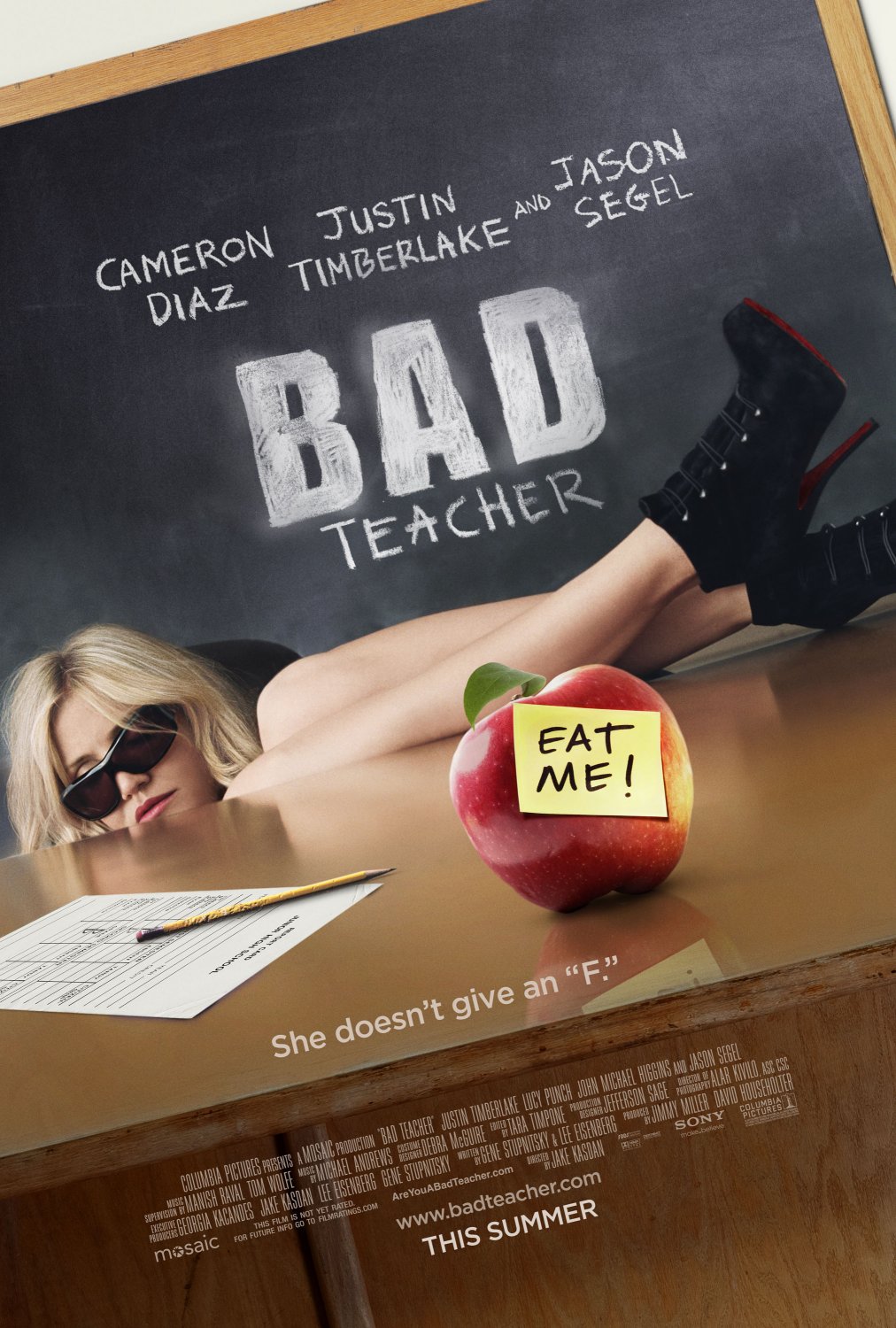
Bad Teacher” so desperately wants to be a devious black comedy like “Bad Santa” but for teachers. Depressingly, it doesn’t even come close to reaching such devilishly hilarious heights. Despite some good laughs sprinkled throughout, this movie is a surprising bore with few surprises up its sleeve. You can see things coming long in advance, and the punch line deflates very quickly. Cameron Diaz, Jason Segel, Justin Timberlake and a talented cast do their best with a severely underwritten script, but the movie wears out its welcome within the first ten minutes.

Cameron Diaz stars as the teacher of the movie’s title, Elizabeth Halsey. She is dumped by her rich fiancé at the start as he figures out that she is only with him for his money, and this forces Elizabeth to go back to her teaching job which she claims is “the only thing I’m good at.” Her teaching style, however, consists of showing her students movies like “Stand and Deliver” and “Lean on Me” before moving on to the R-rated stuff. While they watch, she’s either nursing a hangover or working towards one with tiny little bottles of Jim Beam whiskey stashed in her desk. But while Jack Black played a somewhat similar character nursing a hangover in “School of Rock,” Diaz comes up short here.

The thing with movies like “Bad Santa” is that, as deplorable as the lead characters were in their actions and demeanor, there was something which made me want to keep watching what they went through, and in the hopes that they would reach some sort of evolution or catharsis. Whether they were likable or not, they were interesting. Billy Bob Thornton succeeded in “Bad Santa” in painting a complex portrait of a man who was as pitiful as he was cruel to others.

This brings us to a really big problem with “Bad Teacher;” Elizabeth Halsey is not an interesting character. She is essentially a shallow human being looking to manipulate those around her to get what she wants. Through schemes like school car washes and, as it is described, “extra tutoring,” Elizabeth works towards raising money to get breast implants as they seem more important than anything else. Aside from that, there’s not much to the character here. She comes across as one-dimensional without much to work with in terms of complexity or a back story, and this just sinks the film even further down into the muck.

Regardless of what has been said, I believe Diaz is a very good actress. She is endowed with great comedic talents which were put to good use in movies like “There’s Something About Mary,” and she has proven to be a strong dramatic actress in “Any Given Sunday” and “Being John Malkovich.” While she is game in making Elizabeth a despicable teacher, she never becomes like the ones everyone hated during school years, and the lack if any interesting and redeeming qualities makes this a waste of her talents. With a better screenplay, she would have been fantastic here.

“Bad Teacher” does pick up a little as it goes on, and it scores some great laughs when Elizabeth discovers that the teacher whose class gets the highest scores on the state exam gets a bonus of around $5,000. Seeing her switch her class from movie watching to reading the first 100 pages of “To Kill a Mockingbird” in one night for a quiz the next day is comedic gold. It gets even better when she uses unorthodox methods to make the students learn like standing them in a line and hurling balls at them when they give the wrong answers. Unfortunately, these are some of the highlights, and they all happen at the movie’s midpoint.

Other scenes like Elizabeth getting revenge on faculty members becomes anticlimactic as I could see long in advance how her vengeance would end. When she is running the school car wash and dresses scantily, it’s funny for a minute. I have seen so many movies over the years which have utilized this sight gag, sexy women at a car wash barely dressed, and it’s so old now. We have been there and done that, and nothing is done to make this particular gag look the least bit fresh.

One actor who fares better in this movie is Jason Segel who plays gym teacher, Russell Gettis. His humor is unforced, and he never strives too hard in making us laugh and succeeds in sneaking jokes when least expected. If only “Bad Teacher” had more of this humorous magic… I mean, I can dream, can’t I?

After all these years, I’m glad Justin Timberlake has singing career to fall back on as he has not had the greatest luck in movies despite his inspired turn in “The Social Network.” Watching him opposite Diaz is interesting in part because we all know they were once a couple, but the chemistry they had in life doesn’t quite translate to the silver screen. His character of substitute teacher Scott Delacorte is a rich guy who Elizabeth courts as she selfishly wants someone wealthy to pamper her for life. But it becomes far too obvious how this relationship will turn out, and while Timberlake does what he can with the material given to him, he can only do so much.

Other actors who have their moments include Phyllis Smith who steals scenes as the shy Lynn Davies. Her muted ways make for amusing moments as she argues about certain things bothering her at a very subdued level. Stealing even more scenes though is Lucy Punch who plays Elizabeth’s arch nemesis, Amy Squirrell. Punch fills her character with a certain joy brought on by an innocence which masks a deep resentment that eventually gets the best of her.

The director of “Bad Teacher” is Jake Kasdan who is of course the son of famed filmmaker Lawrence Kasdan, Jake’s a good director, and his movie “Walk Hard: The Dewey Cox Story” remains one of the most vastly underrated comedies of all time. But here, he is unable to find the balance between comedy and character. If the characters in this here movie were a little more down to earth and nowhere as contrived, he could have made this film truly work and give it a spark few comedies could have.

Many may watch “Bad Teacher” with high hopes that it will be a deliciously nasty comedy along the lines of “Observe and Report” or “World’s Greatest Dad,” let alone “Bad Santa.” The problem is this one is nastier than it is funny. Doing comedy is hard work, but making a black comedy is even more difficult. Hopefully, Jake will have more luck in the future with this kind of film, as he has done good work in the past. And I also say this because the recently released “Red One,” which he directed, is, like this one, far from ever being a critical darling.

* * out of * * * *

‘Moneyball’ – One of the Best Baseball Movies Ever

WRITER’S NOTE: This movie review was written in 2012. I present it now as the latest baseball season has now begun.

Moneyball” is, for my money, the best baseball movie since “Bull Durham” as, like Ron Shelton’s 1988 classic, it takes a very unique look at this American pastime and the players who inhabit it. Whereas most baseball movies are about rising to the occasion and winning the big game, this one is more interested in the mechanics and statistics as the characters, all based on real life people, work to see if the current state of this sport can be improved. This is not about winning mind you, but of recapturing a love for the game which has long since passed so many people by.

Brad Pitt stars as Billy Beane, general manager of the Oakland Athletics (a.k.a. the Oakland A’s) who has just witnessed his team’s tough postseason lost to the New York Yankees. In its aftermath, he watches as the team’s key players of Johnny Damon, Jason Giambi and Jason Isringhausen leave for more lucrative deals with other more desirable franchises. From there, the team’s management becomes obsessed about finding the best players to fill their spots. What stands in their way, however, is they have a budget of $40 million to work with which, in any other case, would sound like a lot, but it’s pitiful compared to the Yankees’ overall budget of $100 million.

While visiting a coach from a rival team, Beane comes across Peter Brand (Jonah Hill), a Yale economics graduate who has new and radical ideas of how to assess a baseball player’s value. After hearing Brand’s theories, Beane hires him to join the Oakland A’s, and they both put his unusual theories to the test. This quickly upsets the team’s scouts who cannot, and do not, want to see the validity of these chances being taken. Regardless of the objections, Beane is insistent everyone go in this new direction. But as “Moneyball” goes on, it becomes clear that Beane is not just doing this because of a lack of money, but to find a new way to fall in love with baseball as it ended up betrayed him years before he became a manager.

There are a number of things at work in this film; the need to change the game, the disadvantage some teams have compared to others, and the demons that keep fighting certain baseball players who continue playing this game even when they are long past their prime. In flashbacks, we discover how Beane was an exceptional baseball player in high school, and that scouts for the big teams were serious about signing him up for the major leagues before he could even consider college. His baseball playing career, however, turned out to be a stunning disappointment, and it is this failure which haunts him to this day.

Brad Pitt gives one of his best performances ever as Billy Beane, and he finds a balance to where he inhabits the character more than acts. He draws us emotionally into this movie even more than some might expect, and he brings a realism to Beane which makes his acting never less than compelling.

Jonah Hill, best known for “Superbad,” “Funny People” and “Get Him to The Greek” among other films, gets to go against type here with this dramatic role. He does an excellent job of playing Brand as so fresh-faced to this job and becomes our eyes to the realities of baseball which many people may not be aware of. Seeing Hill imbue Brand with a strong intelligence and a big heart proves he has a lot more to offer than just hilarious performances in comedy movies, and it marks an important change of pace for him as a result.

Another great performance comes from Philip Seymour Hoffman as Art Howe. You never catch Hoffman acting as he portrays Howe as an individual being worn down by endless contract negotiations and is constantly questioning the control he has over his own team. Howe is adamant that he is the one to manage the players above everyone else, but he eventually finds he does not have the energy for a prolonged argument with Beane or Brand as they have their own plans. It is the weariness of Howe which Hoffman so perfectly captures, and he remains one of the best actors working today.

“Moneyball” is based on Michael Lewis’ non-fiction novel of the same name, and it has been adapted by two of Hollywood’s best screenwriters: Steven Zaillian and Aaron Sorkin. Neither of them ever tries to spell out everything for the audience because they are smart enough to give them enough information to where we can all come to very understandable conclusions. And on top of everything, their dialogue remains as brilliant as ever.

In a year which has seen more remakes or recycled ideas as opposed to anything resembling originality, “Moneyball” succeeds in giving us a story which feels so fresh and highly innovative. In dramatizing real-life events, the movie makes you want to see people go against the grain because it does not help to keep things the same as they have always been. It also makes us remember what is so great about the game of baseball in a time where headlines about steroids and other performance enhancing drugs and the constant abuse of them make it all seem like a sick joke. Surely there is plenty of innocence left to this American pastime, right?

* * * * out of * * * *

‘Contagion’ Movie and 4K Review

The following review was written by Ultimate Rabbit correspondent, Tony Farinella.

Some of my favorite films are the ones which stick in my brain long after the credits have rolled. They make me uncomfortable, get under my skin, and make me anxious.  You might wonder why someone would want out of such a moviegoing experience, but I believe the best films really challenge and require something out of the viewer. I have seen “Contagion” three times now. I saw it during its theatrical run in 2011, re-watched it on Blu-ray during the height of the pandemic in 2020, and I watched it again recently on 4K. Every single time I’ve watched it, I’ve been utterly engrossed in it, even though I know all of the beats and how it’s going to play out. If anything, I gain something extra from this film because of how much it ended up being pretty damn accurate.

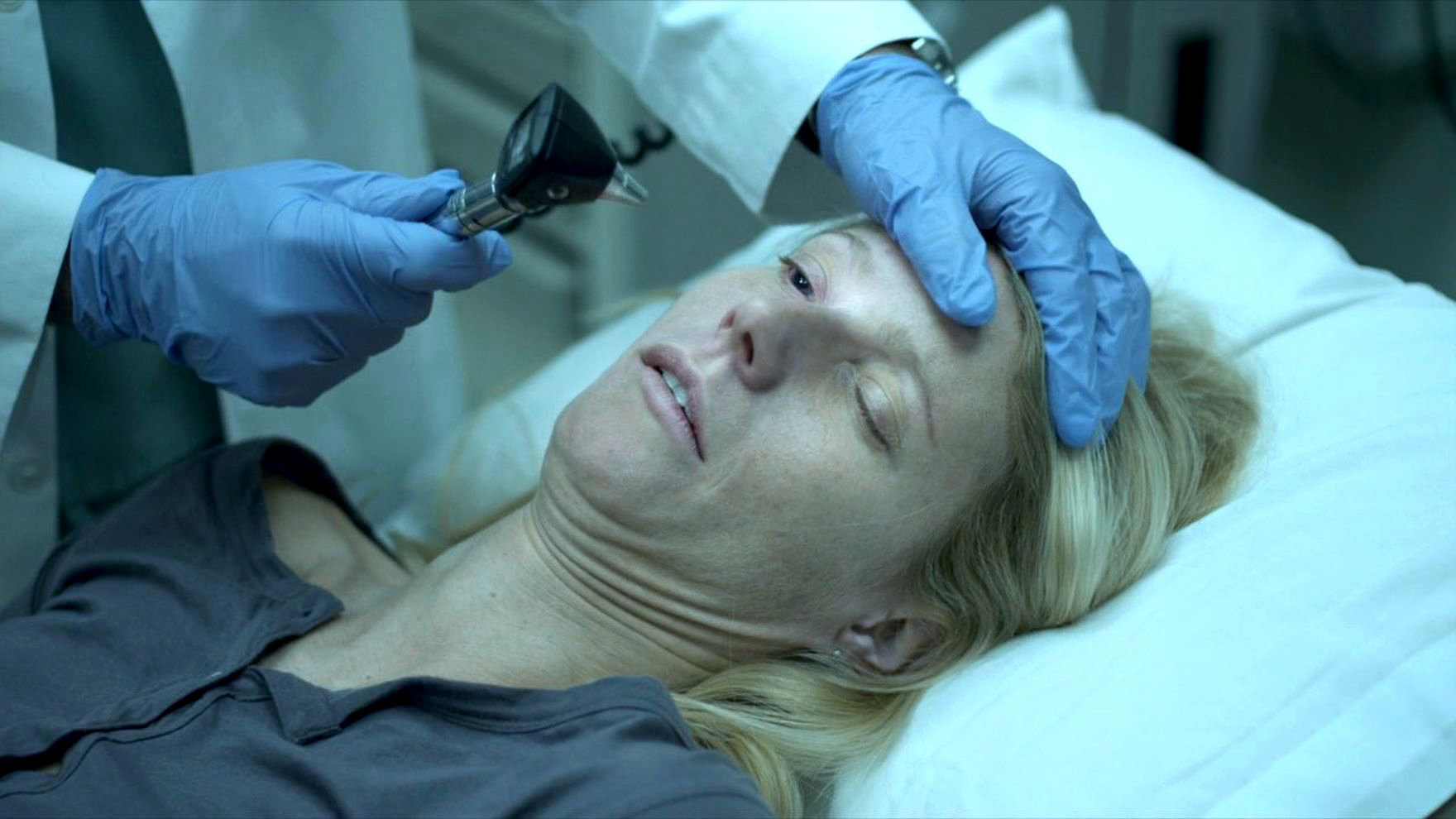
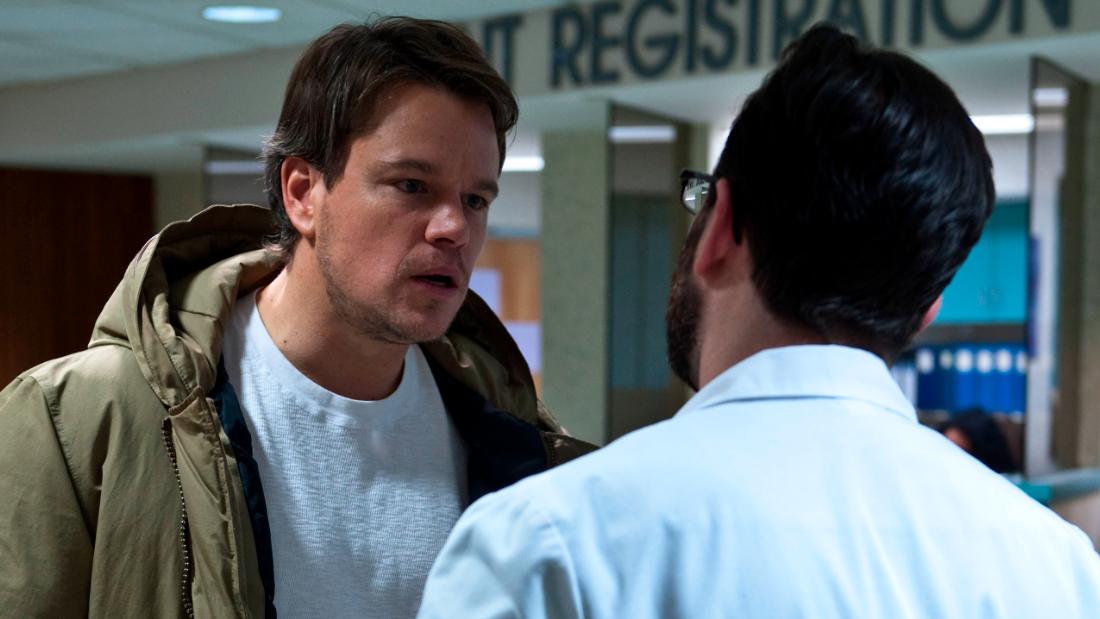
“Contagion” opens by introducing us to Beth Emhoff (Gwyneth Paltrow), an executive returning home to her husband and son after a trip to Hong Kong. Upon returning home, she has a seizure and dies in the hospital, which leaves her husband, Mitch (Matt Damon), with plenty of questions but no answers.  It becomes even more agonizing for Mitch when his stepson passes away shortly after his wife.  He is wondering what she came down with, how it was transmitted, and if he is at-risk for it along with his daughter. His whole world has been turned upside down, and he’s constantly on edge, angry, and making sure he’s doing his due diligence to stay safe.

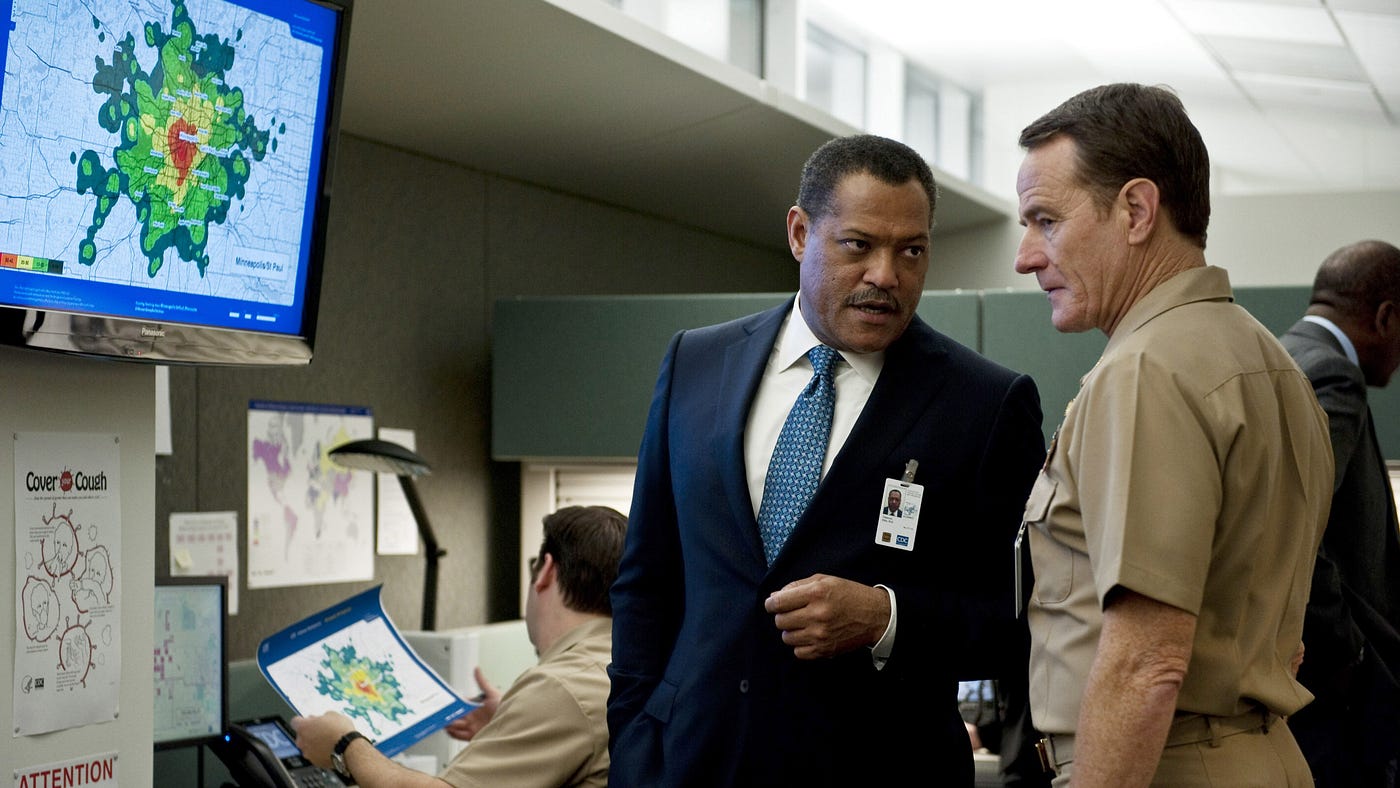
The story then shows us Dr. Ellis Cheever (Laurence Fishburne), who works for the CDC, and he’s looking to trace the root of this problem.  Is it something people should be concerned about or is it an isolated incident? He brings in Dr. Erin Mears (Kate Winslet) from the Epidemic Intelligence Service, to talk to anyone and everyone who was in contact with Beth.  She is going to look anywhere and everywhere for a connection to what might have happened to Beth. She also wants to find out if anyone else is in danger of catching what Beth had as well.

It doesn’t take long for panic and hysteria to take over when the death toll is increasing every day.  It’s becoming a dog-eat-dog world out there, and people are willing to do whatever it takes to not only survive, but to protect their loved ones as well.  They are not afraid to take extreme measures if they need to, as they don’t want to be another victim of this deadly virus which, in the film, is called the MEV-1. Dr. Ally Hextall (Jennifer Ehle), meanwhile, is working around the clock to come up with a vaccine to treat this disease.

There is also a conspiracy theorist named Alan Krumwiede with a very popular blog, and he’s played by Jude Law. Alan is brainwashing his website visitors to try Forsythia, which he believes will cure this disease.  This creates two problems: one, people begin to look at Forsythia as a miracle cure and when the pharmacies run out of it, people start to loot and destroy them. The second problem is that people are now hesitant to take the vaccine, which will actually save lives and help stop the spread of MEV-1.  He’s looking out for his own personal gain and profit, but during times of panic, people will believe anything they read on the Internet.

There is also a storyline involving Dr. Leonora Orantes, a WHO epidemiologist, played by Marion Cotillard, who is looking through countless footage of Beth in order to determine the sequence of events in which she contracted the illness and whom she might have inflicted as well. Leonora is in Hong Kong doing this, and because they are worried about how their village will survive, they kidnap her in order to make sure they have access to the vaccine when it’s released.  They don’t want to hurt Leonora, and she is not scared for her life, as she just wants to help them. As stated previously, desperate times call for desperate measures. When it’s a matter of life and death, you never know what you are capable of doing as a human being.

The only issue I had with “Contagion” and why I couldn’t give it the full four stars is the fact that some stories are more interesting than others and, at times, the plot can be a little bloated.  There are some tremendous performances in the film, especially from Matt Damon, Laurence Fishburne, Kate Winslet and Marion Cotillard. Director Steven Soderbergh gives his actors plenty of space and freedom to show off their considerable acting chops. When the film is firing on all cylinders, it’s truly engrossing and engaging. It’s pretty easy to follow as well, even when they are using scientific terms which might not be as common or familiar to someone like myself.

“Contagion” an ambitious film, and for 80% of its running time, it’s a great movie.  The other 20% is a bit of a slog and can be a little over-stuffed plot-wise. Overall, though, it is a really, really good movie which features some of the biggest names in Hollywood on screen together.  It’s a dark, moody, and tense film that is relentless when the pressure is turned up. I will say this: every single time I’ve watched “Contagion,” I’ve enjoyed it even more and gained something new from it and an even greater appreciation for what it achieved on camera. This is a powerful piece of cinema, and it is a film that will always leave an impact because of what happened to the world in 2020.

I’ll end my review by saying this: I’m not an expert on Covid-19 and the pandemic, but this film foreshadowed a lot of what happened in 2020; from social distancing, handwashing, conspiracy theorists, vaccines and the ability to access to them, and what human beings are capable of doing when they are pushed to the brink of life or death.  For a lot of people, they probably want to put 2020 in the rearview mirror and not watch a movie which focuses on things that were difficult or challenging for the world.  I, on the other hand, find it therapeutic and cathartic to watch a movie like this, as it’s a way for me to deal with what happened in my own way. 

* * * ½ out of * * * *

4K Info: “Contagion” is released on a single disc 4K from Warner Brothers Home Entertainment. It has a running-time of 106 minutes and is rated PG-13 for disturbing content and some language.  It also comes with a digital copy of the film.

Video Info: The minute I popped this movie into my 4K player, I was instantly transfixed by the picture quality.  It was a huge upgrade from the Blu-ray which I previously owned. The film has a dark and brooding look to it with green and blue hues. According to the press release, this was sourced from the original camera negative and the remastering was overseen by Soderbergh. This is exactly what you are looking for when you buy a 4K. You want it to come from the original camera negative and have it looked over by the director.  This is a beautiful 4K and the HDR is incredibly crisp and clear.

Audio Info:  There is also a Dolby Atmos soundtrack here, so this is a win-win for film collectors out there.  The music was composed by Cliff Martinez, who has worked on some of my favorite film scores, such as “Spring Breakers,” “Pump Up the Volume” and “Drive.”  He’s collaborated quite a bit in his career with Soderbergh. This movie does not work as effectively without this mesmerizing score.

 Special Features:

The Reality of Contagion – Featurette

The Contagion Detectives – Featurette

Contagion – How a Virus Changes the World –Featurette

Should You Buy It?

I was so happy to be able to review “Contagion” on 4K and check it out. I recently reviewed “Wonka,” which I thought was an incredible 4K, but this one is even better, considering the improvements they made on the transfer. It still has the same gritty and dirty look to it while also providing an improved picture quality at the same time. The film itself is very close to being a masterpiece. I was very close to giving it four stars, but I had to deduct half a star because of a few issues, which I mentioned in my review. Still, with that being said, “Contagion” comes highly recommended. As physical media shifts to mostly online retailers, it is our duty to support 4K releases of films like “Contagion.”  Why? Because it encourages Warner Brothers and other studios to go into their archives and upgrade other great movies as well.  At the end of the day, they will do their part if we show them there is a legitimate market for physical discs.

**Disclaimer** I received a copy of this film from Warner Brothers to review for free.  The opinions and statements in the review are mine and mine alone.

‘The Muppets’ – Jason Segel and Company Get Jim Henson’s Creations Just Right

Watching Kermit the Frog sing “Rainbow Connection” in “The Muppets” brought back one of my most cherished memories. “The Muppet Movie” was the first film I ever saw on the silver screen, and I consider myself fortunate that this was the case. I even brought along my own Kermit hand puppet with me, and I had him singing “Rainbow Connection” along with the real Kermit, and this was long before such actions might have been annoying to other audience members like when anyone takes out their cellphone during the latest cinematic spectacle which the MCU has to offer. These characters were a large part of my childhood, and I still find them endlessly entertaining all these years later.

“The Muppets” represents the kind of Muppet movie I have been yearning to see for years; one which appeals to the whole family and does not condescend to kids in the slightest. Ever since Jim Henson passed away in 1990, everything Muppet has been geared towards children without much thought to adults. The ironical humor we knew these felt characters for vanished without a trace, and Disney took over the franchise without really knowing how to sell them to either new or old generations. This became abundantly clear when “Muppets from Space” collapsed both critically and commercially back in 1999, and perhaps this was because they were not partying like it was 1999.

But with “Forgetting Sarah Marshall’s” Jason Segel and “Flight of the Conchords'” co-creator James Bobin directing and Bret McKenzie supervising the music, “The Muppets” is a movie the whole family can enjoy together, and it will put a smile on even the most jaded fan’s face. Granted, a number of puppeteers from this infamous franchise (namely Frank Oz) refused to participate because they felt the script did not respect the characters. I beg to differ on that.

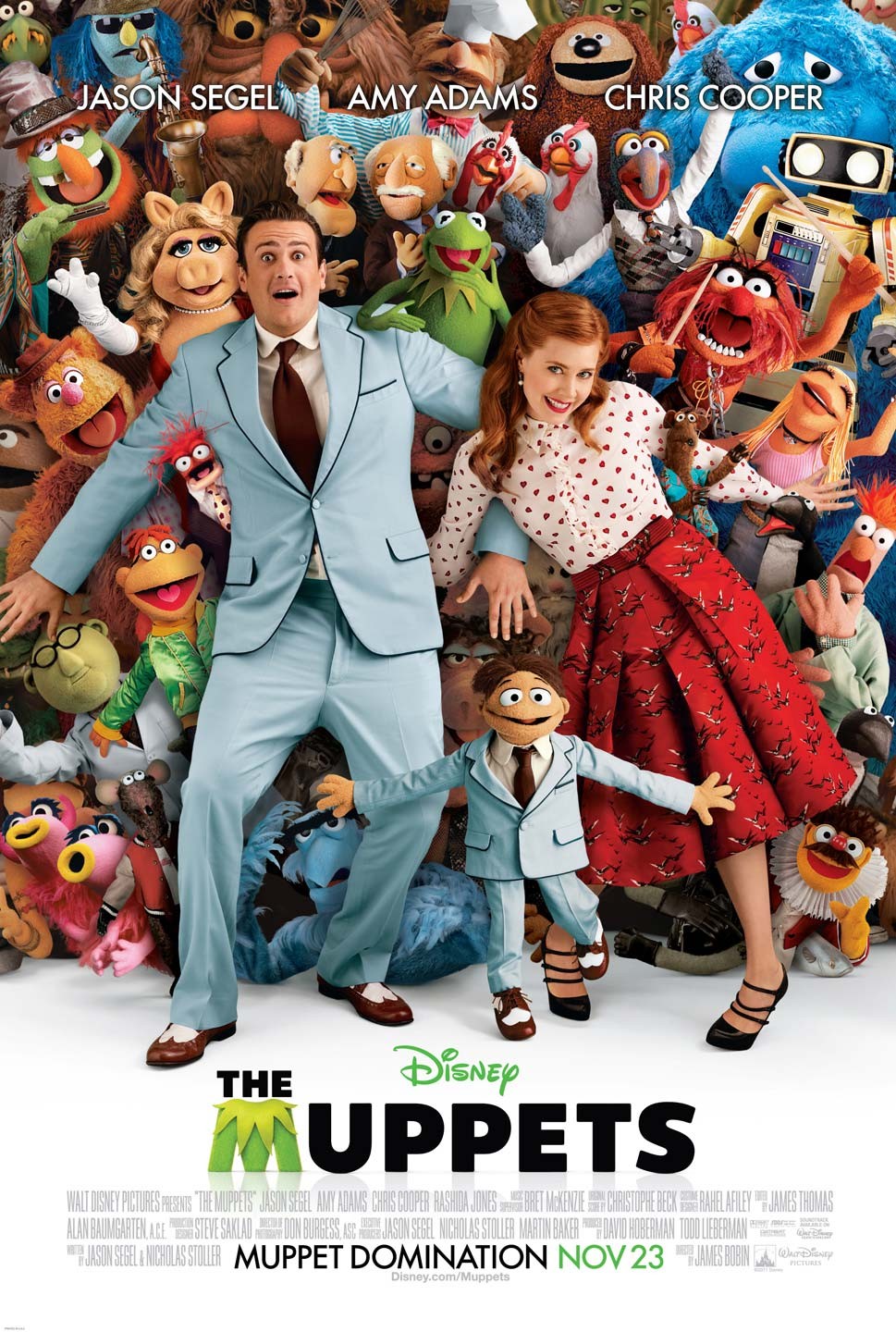
Segel stars as Gary whose brother Walter is a Muppet himself, and both are die-hard fans of “The Muppet Show” in childhood. Their love for the Muppets stays strong even through puberty, and they finally get their chance to visit Muppet Studios when Gary invites Walter to come along with him and his girlfriend Mary (Amy Adams) on a vacation to Los Angeles. But when they get there, they find the Muppet theatre it is now in a dilapidated state as Kermit and company have not performed together or seen each other in years.

Even worse, Walter overhears the evil oil magnate Tex Richman (Chris Cooper) planning to buy the Muppet theatre not to preserve it as a historic landmark, but to instead drill for oil underneath it. As a result, Walter, Gary and Mary join forces to reunite the Muppets in order to put on a telethon which will raise the money needed to save not just the Muppets, but the theatre where all the magic started.

My guess is Oz and the other puppeteers never saw the Muppets splitting up and going their separate ways, but having re-watched a lot of “Muppet Show” episodes recently, they did not always have the best time working together. Besides, they did split up, if only temporarily, in “The Muppets Take Manhattan” when Kermit got all pissed off about the gang constantly leaning on him to figure out what to do next. Heck, that Kermit didn’t ditch Miss Piggy sooner is amazing in retrospect.

Starting off with the Muppets having gone their separate ways years ago gives “The Muppets” an interesting jumping off point. Like many, these characters wonder if they are still relevant in today’s popular culture. While they are a big favorite of my generation, whether they can translate to another is still feels uncertain.

Even though the voices of the original Muppet performers are not present, the characters have not changed nor have they gotten cynical (unlike Statler and Waldorf). Steve Whitmire performs Kermit the Frog and does great work in capturing his unforgettable mannerisms without ever simply going through the motions. The same goes with the rest of the puppeteers here as they make each character from Miss Piggy to Animal all their own.

It ia also interesting to see where all these Muppets are at today. Kermit is living in a mansion which is not in the best condition, Miss Piggy is the editor in chief of Vogue Paris, Scooter works at Google, and Sam the Eagle is a Fox News-like personality which seems to be the perfect venue for his endless pomposity. But the one Muppet who practically steals this movie is Animal who we meet up with again at an anger management clinic where Jack Black is his sponsor.

As for the human actors, Segel is a hoot as Gary, and his love for the Muppets shines through every contribution he has in this film. Amy Adams remains infinitely adorable as her sweetness is no act, and she scores a huge musical highlight with the song “Party of One.” We even get to see Chris Cooper do a rap song, and it is not as terrifying as it sounds. As for Jack Black, he becomes the most unwilling guest star “The Muppet Show” has ever had.

The music is really good as well, and it never becomes cringe-inducing thank goodness. “Life’s a Happy Song” starts off the proceedings with a happiness which feels genuine, and you can tell Segel is having the time of his life while singing it. The one song though which truly deserved a Best Original Song nomination is “Man or Muppet” where both Segel and Walter bring down the house in deciding who they really are, as if the answer was not the least bit obvious. And yes, it did win the Oscar in that category, but this should not have surprised anyone as this song did not have much in the way of competition.

It is also great to see that ironic humor the Muppets were famous for back on display here. They push the bounds of the PG rating to where if the kids do not get what is being said, it is probably just as well. I loved how they got away with the Muppet chickens singing Cee-Lo Green’s “Fuck You” without its explicit lyrics. Oh, I’m sorry, I mean Cee-Lo Green’s “Forget You” (right, whatever).

But what makes “The Muppets” so good is that everyone, be it the Muppets, the human actors or those making cameos, comes into this project without any cynicism. Making a movie with the best of intentions or one with a happy ending is greeted with our eyes rolling in the back of our heads as we come out feeling utterly and shamelessly manipulated. The filmmakers even bring back “The Muppet Show’s” opening theme song as it was performed in season three, and it looks almost exactly like it did all those years ago. Even “Mahna Mahna” is brought back, and being it was the very first sketch on “The Muppet Show,” that should show you how much these filmmakers value their childhood entertainment.

Kermit, Fozzie, and Miss Piggy will never feel or sound exactly as they did from years ago, but “The Muppets” proves they still have their charms and humor long after their glory days. It is a film made with a lot of love for the imagination Jim Henson gave us, and deep down we all would hate to see his wondrous imagination die away without a trace.

* * * ½ out of * * * *

‘Bridesmaids’ – Do Not Mistake This Film for an Average ‘Chick Flick’

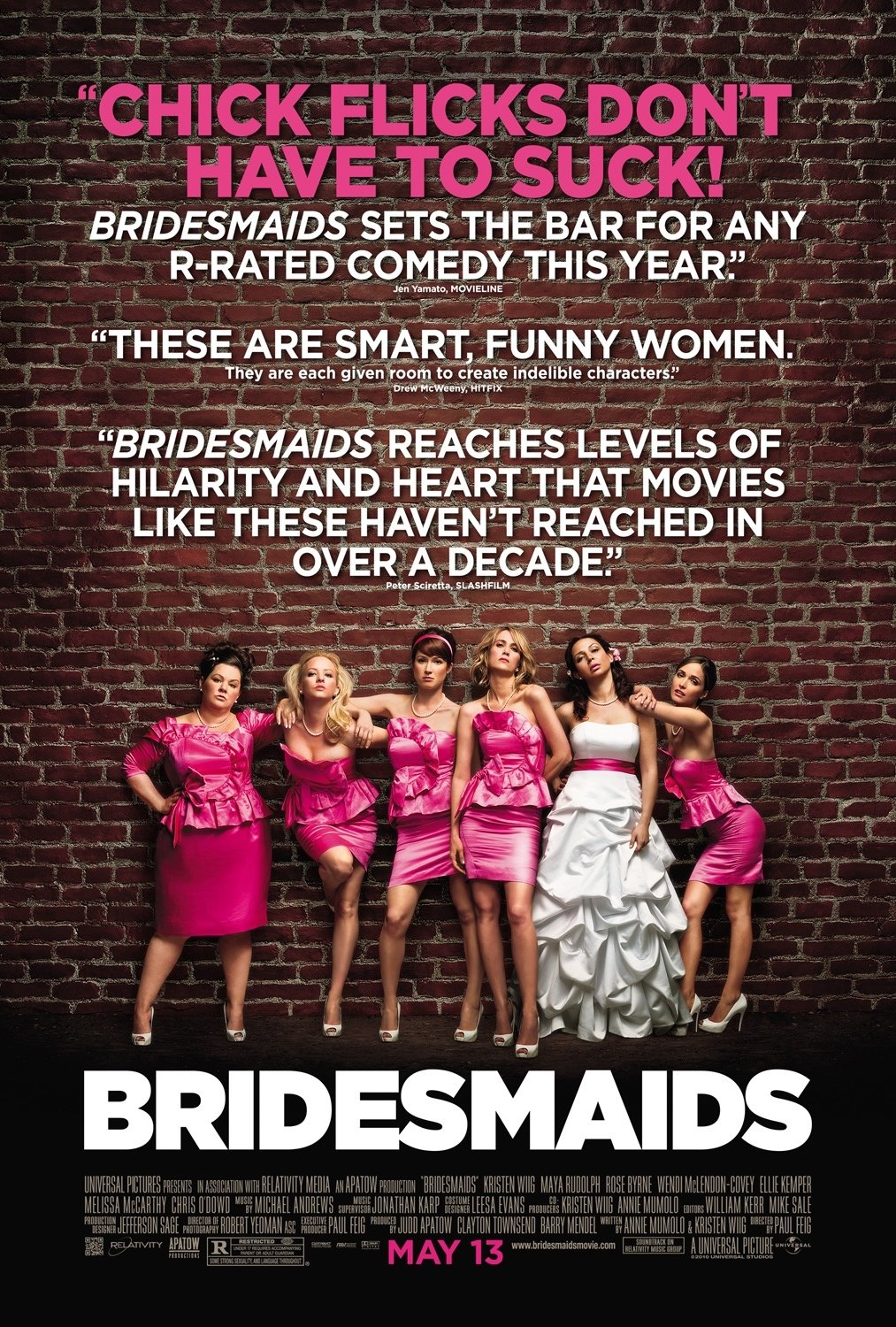
Bridesmaids” looks like it has “chick flick” written all over it to where many, including myself, were not quick to rush out and see this film when it arrived in movie theaters everywhere. But having since watched it, I can confirm this is not your average “chick flick” in the slightest. Moreover, it will appeal to a wider audience than its title might suggest. There is nothing groundbreaking about “Bridesmaids” as it initially comes across as a typical formulaic comedy, but the laughs do come at us fast, many of them gut busters. But seriously, it also has a lot of heart and makes you care about the characters very much to where we can easily relate to their struggles.

Kristen Wiig, one of the most acclaimed alums of “Saturday Night Live”  who co-wrote this film’s screenplay with Annie Mumolo, stars as Annie Walker, a single underachiever whose cake shop went bankrupt due to the recession, and who is currently having sex with Ted (an uncredited John Hamm), a man who sees her as nothing more than a fuck buddy. Then she finds out that her best friend since childhood, Lillian (Maya Rudolph, another “SNL” vet) has gotten engaged, and Lillian asks Annie to be her maid of honor. From there, we know things are going to go south between these two as the road to any marriage is filled with endless speed bumps which lead many to encourage others to elope instead.

Complications arise almost immediately when Annie meets Lillian’s other BFF, Helen Harris (Rose Byrne), a beautiful and wealthy woman who seems to have everything together in her life. The resentment and insecurity between these Annie and Helen are evident on their faces following their first encounter. This is made even clearer when both toast Lillian and then try to top each other in showering their love on her, attempting to prove who is the better best friend.

Things get even more complicated when Lillian selects the rest of her maids of honor. They include Becca (Ellie Kemper) who loves wedding and pities Annie because she is not currently engaged to anyone, Megan (Melissa McCarthy) who is as aggressive as they come, and Rita (Wendi McLendon-Covey) who may very well be the unhappiest wife and mother on the face of the Earth as well as the most consistently drunk of the bunch. With all these different personalities working together, will the road to this wedding be a happy one? Was Donald Trump always faithful to Melania?

What I really loved about “Bridesmaids” was the same thing I also loved about “Knocked Up;” the characters are very down to earth and easy to relate to. Being that Judd Apatow is a producer on both films, this should have been obvious from the start. These characters are real people with real problems which are not far removed from our own, and we come to care deeply about each and every character here. It does not matter if none of you have ever been a bridesmaid. As for you men, being groomsman is enough qualification to understand the headaches in planning matrimony.

“Bridesmaids” also a film where facial expressions at times speak more loudly than words. It certainly does have great dialogue, but the looks on these actresses’ faces is what really cracked me up. They say one thing, but their eyes tell us what is really on their mind. This goes for the men in as well, and they all seem to pale in comparison to the females in terms of inner strength. We see right through each character, and the tension resulting from a possible slip of the tongue is always in the air.

This film proved to be the true cinematic breakthrough for Wiig. When I have seen her in other films, she always seems to be doing a riff on her most deadpan characters from “SNL” whether she is appearing in “Knocked Up” or “MacGruber.” But as Annie Walker, Wiig really inhabits this character and gives her life in a way we did not get to see her do previously. She makes us embrace Annie as a kindred spirit because we have all felt the way she feels; lost in a world she feels betrayed by, and desperately trying to hold on to what means the most to her.

Maya Rudolph is equally wonderful here as the bride to be, Lillian. She previously showed us in Sam Mendes’ “Away We Go” what a great actress she can be, and she vividly reminds us of our best friends from childhood. Lillian runs through a gamut of emotions as her road towards marriage start off wonderfully and then eventually turn into an unmitigated disaster. In a pivotal scene in which Lillian about to leave her apartment for the last time, Rudolph shows us a worry and concern which we all see within ourselves from time to time. Not once does she portray Lillian as your usual clichéd character, and this says so much about what she is capable of.

Rose Byrne proves to be a delight as Helen, and her beautiful face and eyes cannot quite mask the growing resentment she has towards Annie. This character could have easily turned into your typical one-dimensional villainess, but by the end we discover tshe and Annie are not all that different. Byrne makes you like Helen despite her overly meddling ways, and she has since proven to be a strong presence in every motion picture she has appeared in.

But out of all the characters here, the one who stands out the most is Megan who is portrayed in a deservedly Oscar nominated performance by Melissa McCarthy. Overweight and raunchy whenever she wants to be, McCarthy is a trye comedic powerhouse when the camera focuses on her. Seducing airplane passengers and showing no shame in what she is, she makes Megan a strong character and never once digresses into making her a cloyingly sentimental one.

“Bridesmaids” was directed by Paul Feig, Mr. Eugene Pool from “Sabrina, The Teenage Witch” and the creator of “Freaks and Greeks;” a brilliant show that like many other brilliant shows which aired on network television lasted only one season. With this film, he manages to find humor even in the most painful of moments and never makes the comedy too overly broad. Sure, some scenes are broadly played, but Feig remembers comedy can only work if you truly care about the characters.

Looking back, “Bridesmaids” proved to be one of the best comedies to be released back in 2011, and no man out there should dismiss it as a film only women would be interested in. The audience for this one proved to be far more diverse than its promotion may have suggested. Plus, you have Wiig and Rudolph on display here, and they always kick ass! If you liked them on “Saturday Night Live,” you are bound to love them here.

* * * * out of * * * *

WRITER’S NOTE: This film marked the very last screen performance of actress Jill Clayburgh who passed away in November 2010 from leukemia. She is a wonderful presence here as Annie’s mother, Judy Walker. May she rest in peace.

‘Source Code’ – Like ‘Groundhog Day’ But with a Shorter Time Span

The best way to describe “Source Code?” It is “Groundhog Day” crossed with “Quantum Leap.” It stars Jake Gyllenhaal as Captain Colter Stevens, an army helicopter pilot who has been assigned to a mission which has him looking for a bomber who blew up a Chicago bound train and killed everyone onboard. The movie’s title refers to a special program which allows him to enter the body of one of the passengers on that train for the last eight minutes of their life. So, perhaps this film is more like “Groundhog Day,” except that the day is going to be a lot shorter than 24 hours, and I mean a lot shorter.

Now this is a great concept for a film as we all have those moments which can prove to be as painful as they are unforgettable. Whether we admit or not, we keep replaying certain memories in our minds over and over again, often changing the outcome to something far more pleasing to our ego and sense of well-being. Even though it does us no good to dwell on the past, we fall into those patterns when our present is not all that great, and our future is more uncertain than we would prefer it to be. And through the breakthroughs of science here, Captain Colter gets to relive a moment which, while not his own, allows him to manipulate reality whenever the opportunity presents itself.

Of course, we can replay a moment from our lives to where we can no longer remember what was real or what was not. “Source Code” explores this as well, making one believe that if our lives were predestined, they will cease to be thanks to what science can continually do for us.

This film is director Duncan Jones’ follow up to “Moon” which itself was one of the very best movies of 2009. Like “Moon,” its main character is caught up in a situation not entirely of his making, but which becomes clear as the story rolls along. Like Colter, we are making discoveries about who he is along with him, and we eagerly await the answers he comes across even if they do not produce the desired result of stopping the bombing.

From the outset, “Source Code” looks to be a whodunit, but this ceases to be the case before the film reaches its midpoint. Besides, it’s pretty easy to figure out who the bomber is, and it is only a matter of time before Colter confronts said person to learn their true intentions. In actuality, it is about a man caught up in a situation which he has no control over, and of how he gets that control back in a way no one can predict.

Gyllenhaal remains one of the most dependable actors in movies, and he does not let the audience down in this one. In many ways, his performance is not too different from others he has given in recent years, so there is not much new to what he does here. All the same, he is very good, so why complain? Gyllenhaal engages us emotionally in his character’s struggle as, like him, we do not know how we got into this and we are desperate to get answers.

Jones does great work in making each visit to the same eight minutes unique from the last Colter gets unwillingly subjected to. “Source Code” could have been redundant as hell, and certain moments and actions are repeated ad nauseam throughout, but each eight-minute period has a different theme or construction to it. There are various people Colter has to meet, and there are other things for him to take advantage of in the little time he has to work with. Colter also gets to pull the rug out from under us to where, once the bomber is found, he finds there is still work to do.

Aside from Gyllenhaal, “Source Code” features other strong performances like the one from Vera Farmiga who was so great in “The Departed” and “Up in The Air.” Her character of Captain Colleen Goodwin at first looks to be Colter’s embattled conscience, but it is really the other way around. Farmiga is great in taking a typical military stock character and giving them a heart and soul which strongly informs the decisions Colleen later makes.

Also in the film is Jeffrey Wright who plays the creator of Source Code, Dr. Rutledge. This could have been a simple obsessive doctor, one mad with power, or one who is overly cruel. Somehow, Wright succeeds in making Rutledge something of an enigma to where you are not quite sure what to make of him. He may not be a mad scientist, but he is also not the warm kind either.

And, of course, we have the infinitely lovely Michelle Monaghan here as Christina Warren, girlfriend to the man Colter inhabits. Whether it is “Mission: Impossible 3,” “Kiss Kiss Bang Bang” or “Gone Baby Gone,” she always has a wonderful presence about her, and her smile brightens our mood every time we see it. And, like many actresses I tend to have a crush on, she is already married (dammit).

Is “Source Code” an original movie? I do not know nor do I care, but it sure feels like one compared to most movies being released these days. While you could say that there is a bit of “Inception” in this film as it involves searching through the mind of another person, this one feels like its own thing. It is a pointless argument to complain about what Jones borrows from here because not much of anything is original these days. It becomes a quest to take elements from other movies or stories and make them your own, and Jones has succeeded in doing this here.

While “Source Code” is a bit confusing at times, and I did not fully buy the its concluding act, this film is an enthralling mystery with a good dose of exciting action. Hopefully, Hollywood studios will start taking the time in being more openly inventive instead of just regurgitating the blockbuster hits from the recent past.

Still, it would be nice to change some of the more painful moments from our past so that we can look at ourselves in a kinder light, one which will help make our egos rise out of the muck they too often sink into. While it is best to make peace and forgive ourselves for our foolish trespasses, science is always catching up with us. Just you wait!

* * * ½ out of * * * *

‘The Artist’ – Best Picture Winner at the 84th Academy Awards

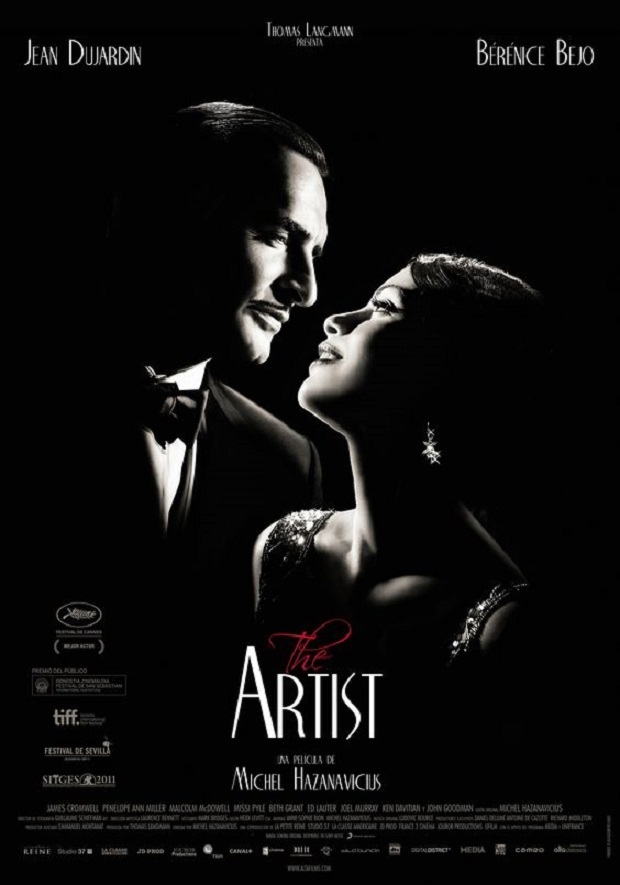
Believe it or not, “The Artist” is only the second silent film in cinematic history to win Best Picture at the Academy Awards. The first was “Wings” which itself was the first film to win this particular award. I figured there were several other silent films which took home this award, but I guess the Oscars came about as the movie business was quickly transitioning to what was once called “talkies” when these awards began.

Looking back at “The Artist,” I have to admit it was nice to see a filmmaker reach back to a time when the movie industry was in its infancy, just like what Martin Scorsese did with “Hugo.” But while “The Artist” does not quite reach the same level of greatness that “Hugo” did, it still proves to be a compelling motion picture with great performances, a powerful story, and it serves as a reminder of how great black and white can be for certain motion pictures.

The story told here is one which has been told a million times before. George Valentin (Jean Dujardin) is a silent film star who sees his great career suddenly crash to the ground when sound is introduced into motion pictures. George initially resists this change, feeling that it is a fad which will pass by quickly before anyone knows it. Of course, we all know this is not going to be the case as change is in the air and there is no stopping it.

As George finds his career ruined by this advancement in film and technology, another actress he once befriended named Peppy Miller (Bérénice Bejo) embraces this technological change and sees her star rise to the heavens as a result. She has gotten great and truly genuine advice from George in how to make her mark as an actress, and she forever holds a special place in her heart for him. So, it comes to deeply hurt her seeing his career fall apart after what he has done for her, and then we see things for him get even more difficult with the 1929 stock-market crash. Will Peppy save George and help him make a comeback?

That the plot of “The Artist” is such an old one ended up taking away from the overall experience for me a bit as I knew where it was heading and that everything would eventually be alright. All I could hope for was that the director and actors would keep things interesting so that I was not thinking about the outcome too much. This is where this movie succeeds because the performances are so rich and the direction is nothing short of excellent to where I was caught up in the moment to where I started watching and stopped thinking so much.

Jean Dujardin looks like he walked right out of a 1920’s silent film here, and he was clearly born to play George Valentin. In doing a movie within a movie, he manages to balance out both Valentin the star and Valentin the man. Much of the acting in silent films involved a lot of mugging, and its great fun to watch Dujardin getting ready to shoot a scene as he makes clear how much he is playing for the camera. But when Valentin is not making a movie, Dujardin’s performance becomes all the more remarkable as he expresses emotions he is not in a position to verbalize onscreen or off of it.

This is the thing about screen acting; the most powerful moments in a movie can come from just one look from an actor. Being able to make clear what a character is thinking without saying it out loud is the biggest challenge, and the actors in “The Artist” have to work even harder because words will not save them, especially even when certain dialogue is put on the screen for all to see. That they do succeed in drawing us in emotionally with little in the way of sound or dialogue is a true testament to their talents.

Matching Dujardin scene for scene is Bejo who plays rising film star Peppy Miller. She is a joy to behold and an infinitely appealing presence here, and that smile of hers lit up my heart in a way few things can. Seeing Peppy rise to the level of a movie star is endless fun, but Bejo also keeps her a likable character even when success threatens to spoil her rotten. This made me like Peppy all the more as a result.

There is a slew of other great performances to be found in “The Artist” which does not have a weak one to be found in its entire cast. John Goodman looks like he’s having a marvelous time channeling his “Matinee” character for the role of studio boss Al Zimmer. James Cromwell is very touching as Valentin’s loyal butler Clifton as he becomes the conscience this fallen movie star needs to hear out. It is also great to see Penelope Ann Miller here as Valentin’s wife, Doris, a character who does not seem to be the least bit satisfied with this marriage.

But the one who upstages everyone here is Uggie who portrays George’s ever so faithful Jack Russell terrier named Jack. Uggie reminded me of Mike the Dog who stole many scenes in “Down and Out in Beverly Hills” from his human co-stars and, like Mike, he becomes as big a character as everyone else here. That he is able to convey certain emotions to where he gets a police officer to save his owner from certain death is amazing. His performance topped off what had been a great year for dogs at the movies along with another named “Beginners.” Isn’t it about time the Academy Awards gave animals special Oscars for their work onscreen?

Director Michel Hazanavicius stays very true to the way silent films were shot back in the day, and his extensive research of them certainly shows from start to finish. He makes “The Artist” look like it really came from the 1920’s as he transports you back in time to this specific cinematic period. He is also served well by a beautiful film score by Ludovic Bource which heightens the already strong emotions to great effect, and by cinematographer Guillaume Schiffman who gives “The Artist” a striking look which does not betray any of today’s technological advances which could have been used here.

Having said all this, “The Artist” would not have been my choice for Best Picture at the 84th Academy Awards (my pick was “The Tree of Life”). Plus, with such a familiar story, it feels like we are getting hit here by a case of deja vu. Regardless, it is still a fantastic piece of filmmaking which you owe it to yourself to watch if you have not already. Along with “Hugo,” many may look at 2011 as the year movies reached back in time to remind us of what a magical experience they were when they first came to exist.

* * * ½ out of * * * *

Underseen Movie: ‘The Beaver’ – A Movie Which Deals Effectively with Depression

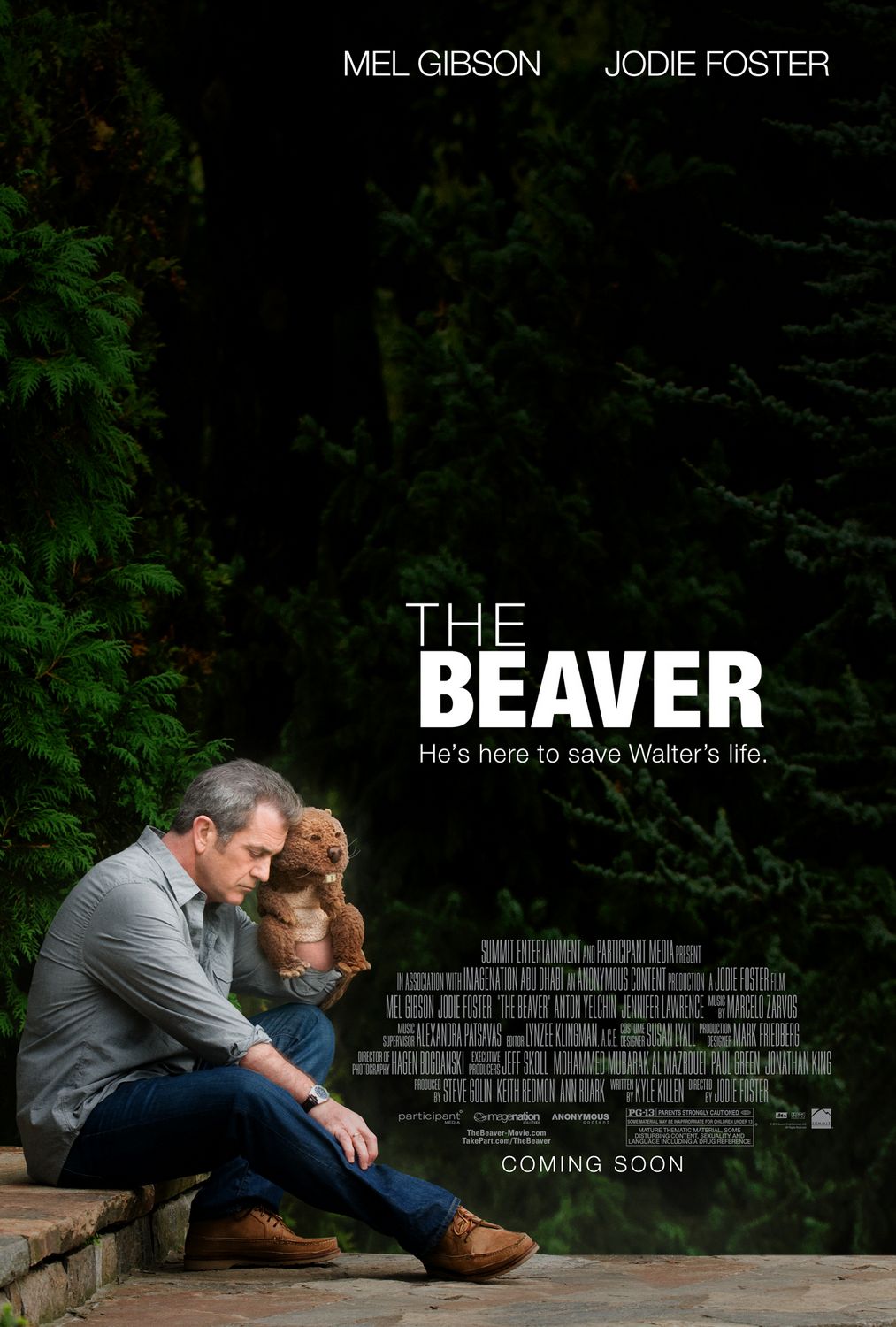
The Beaver” was Jodie Foster’s first feature film directorial effort since “Home for The Holidays” and it starts off with Mel Gibson as Walter Black laying on an inflatable cushion in his pool, looking lifeless as if any direction he’s had in life has been rendered completely non-existent. We quickly learn he is the CEO of a toy company, has a beautiful wife and two sons, and that he is severely depressed. We are meeting him at the point where he has been in this depressive state for quite some time, and it has gotten to where his wife Meredith (played by Foster) doesn’t want him living at home anymore, and his kids don’t know what to make of him.

After a failed suicide attempt, Walter is brought back to the land of the living through a hand puppet of a beaver which develops a life of its own after he puts it on his hand. With a Michael Caine cockney-like accent, the beaver tells him he is going to save Walter’s life. And sure enough, his life gets better very quickly as the beaver begins doing all the talking for him both at home and at work. But as time goes on, this beaver threatens to make Walter hit rock bottom in a way he may never be able to recover from.

“The Beaver” is a black comedy which gets blacker as it rolls along. The trailers made it look like a light affair, but this is most certainly not the case. It does have its funny moments, but it is really a serious examination of depression. This is an important issue because it is not something you can just simply get over regardless of what others will tell you. Depression can seriously debilitate you and affect those who love you the most, but not many fully understand this. The idea that you must go through life and take the punches which come with it can only go so far. Sooner or later, we find we can only take so much until we break. While some may have a great smile on their faces, they may be fighting a battle you know nothing about.

As Walter Black, Gibson reminds us of what a great actor he can be when given the right material. Aside from his work as a director, which really has been truly remarkable, it is easy to forget what a great presence he can be onscreen. Gibson captures Walter’s emotional downfall in a way few actors could, and he makes you care about him even as he heads further downhill emotionally. It is a brave performance that doesn’t hold anything back, and you have to admire the lengths Gibson goes here.

Foster remains an excellent actress as always, and seeing her acting alongside Gibson is a treat as they were so much fun to watch together in “Maverick.” She makes Meredith Black a strong-willed person who holds it together despite Walter’s behavior. It all makes Foster’s work even more fascinating to watch, and you sympathize with her plight throughout.

It is a real shame it took Foster 16 years to direct another movie. Her past efforts of “Little Man Tate” and “Home for The Holidays” showed a great eye for characters isolated from others because of who they are and what they are going through. Her work on “The Beaver” is especially commendable in that it is not an easy script to bring to the silver screen. Finding the balance between the comedy and drama makes this challenging even for the best directors working today. But Foster manages to pull it off like the professional she is, and she shows an incredible sensitivity to the subject of depression.

For me, “The Beaver” is one of the best films made about mental illness. The screenplay by Kyle Killen topped the 2008 Black List, a ranking of the best unproduced screenplays. I can see why as it features wonderful characters which are thankfully down to earth, and the dialogue feels fresh and does not contain an abundance of worn out clichés. Many will find the premise of a man working through mental illness with the aid of a hand puppet to be far-fetched and unbelievable. But this screenplay really takes some chances, and I honestly did not find any of what I saw as being beyond belief.

Besides, is it really that far-fetched for an adult to play around with puppets or stuffed animals? Look at these names: Jim Henson, Frank Oz and Ben Kenber. All these men have become well known for performing with puppets to the joy of many. Yes, I did put my name up there because I still have a love for stuffed animals which I used to make home movies with and sometimes bring to my day job. People may think this is strange, but I like how it sets me apart from the rest of the crowd.

In addition, there are other wonderful performances to be found here. The late Anton Yelchin, who did unforgettable work in the “Star Trek” movies, “Terminator Salvation,”  and “Green Room” among others. He is excellent as the Black’s oldest son, Porter. Throughout, he is terrified of becoming like his dad and implores his mother to divorce him. Yelchin makes what could have been a major brat into a fascinating individual whose endeavors in doing homework for others have long since become quite a profitable venture for him. His relationship with his father never feels contrived, so when we get to the end of the film, the emotions in their climatic meeting feels truly earned.

I also really liked Jennifer Lawrence as Norah, the popular valedictorian cheerleader who hires Porter to write her graduation speech. When this film was released, she was still riding high on the acclaim she received for “Winter’s Bone.” Norah is anything but a cliché, and she surprises us as much as she does Porter with a strong intelligence and a completely welcome lack of snobbery for a popular high school student. At the same time, she also hides a pain deep inside which defines her state of mind, and this presents her with something to overcome. Lawrence is great to watch here, and it was a sign that she had more great performances to give us which we eventually got in films like “Silver Linings Playbook.”

Congrats also goes out to young Riley Thomas Stewart who portrays the Black’s youngest son, Henry. It’s a remarkable performance for an 8- or 9-year-old as he has to convey both the confusion and effect his dad’s depression has on him. The scenes he shares with Foster and especially Gibson are wonderfully realized, and it helps that he has a former child actor directing him who knows how to coax a performance out of such a young human being.

Watching “The Beaver” reminded me of another great movie which had a big effect on me, “Lars And The Real Girl.” Both films featured characters whose pasts damaged them emotionally, and who seek release through unorthodox methods. With Gibson, it’s a hand puppet, and with Ryan Gosling it’s a sex doll he treats as his new girlfriend. Each takes what seems like a completely implausible story and surprises us by making it more than some average comedy which just dumbs everything down.

If you have not already seen “The Beaver,” I do hope you give it a look. Regardless of how you feel about Gibson these days, it’s an incredibly well made movie that takes a great script and visualizes it with respect and empathy to the subject of depression. While it was declared a “flop” after its first week at the box office, this should not define its worth. This film may not be for everyone, but those in the mood for something cinematically unique should find much to admire here. More importantly, I applaud any motion picture which takes the subject of depression seriously. It is not a mental condition that anyone can simply get over.

By the way, I love how Foster got Teri Gross of “Fresh Air” fame to do a cameo. I always wondered what her studio at WHYY in Philadelphia looked like, and we get a brief look at it here. Now how often does that happen?

* * * * out of * * * *

Rachel Weisz on Playing Hester Collyer in ‘The Deep Blue Sea’

WRITER’S NOTE: As the opening sentence hints at, this article was written in 2012.

The 2012 New York Film Critics Circle Awards were recently given out, and one of the big winners was Rachel Weisz who won the Best Actress Award for her performance in “The Deep Blue Sea.” In the film she portrays Hester Collyer, the wife of a High Court judge who ends up having a passionate affair with Royal Air Force pilot Freddie Page (Tom Hiddleston), and we watch as this affair throws her life into utter turmoil. “The Deep Blue Sea” hasn’t yet found the audience in America it deserves, but hopefully Weisz’s win will bring more attention to the film which has earned tremendous critical praise since its release.

“The Deep Blue Sea” was directed by British independent filmmaker, Terence Davies. His resume includes such movies as “Distant Voices Still Lives,” “The Neon Bible” and “The House of Mirth” which featured an extraordinary performance from Gillian Anderson. In an interview with Ara Aquino of Complex, Weisz described Davies as being “very different” and “unusual” compared to most other filmmakers she has worked with. Hearing Weisz talk about Davies makes him sound both rigid and yet full of life:

“He’s probably as passionate as Hester and led by his emotions and his heart. He’s more like her than I am,” Weisz said of Davies. “He gets really carried away both in happiness and sadness and anger. He’s a very emotional person. He likes things to be incredibly controlled in terms of where the camera is; you’re the center of the frame. It’s the opposite of contemporary, hand-held reportage style films that we’re used to seeing now. He’s got real rigor as a filmmaker, but he’s also really passionate.”

Weisz then went on to tell Aquino that what interested her about playing Hester was how the character “really, kind of completely humiliated herself” and has “no pride.” Those who have seen “The Deep Blue Sea” can agree this role is a frightening and challenging one for any actress as it forces them to convincingly portray conflicting emotions and to play a character who is not exactly likable. Still, it was those challenges which made Weisz want to take on the role.

“What I found interesting about her was she just fell so completely, devastatingly, utterly in love with someone who really didn’t even love her back,” Weisz said about Hester. “She just couldn’t control it, and I thought that was really interesting to see someone lose it. She just throws herself at his feet and kind of makes a complete fool out of herself in many ways.”

Actually, one of the most refreshing things I heard Weisz say about the roles she chooses is that she does not worry about whether the character is likable or not. Many actors tend to be very self-conscious about their work and how the public will treat them for playing someone who is far from being universally loved. But they do themselves a disservice thinking like that as they cut themselves off from many interesting opportunities worth taking advantage of. Weisz made this clear in an interview she had with the Awards Line website.

“I think if you ask the audience to like you, it’s all over,” Weisz said. “The most interesting characters are those you’re drawn to, then repelled by, and then come to understand. All that tension – I live that. But I don’t plan the tension. It’s just something that should happen. I don’t judge the character at all. It’s a bit like being someone’s defense lawyer-you have to believe in their innocence in order to defend them. Did I know that Hester was a pain in the ass? Yeah.”

Another interesting story about the making of “The Deep Blue Sea” involved shooting the love scene between Weisz and her co-star Tom Hiddleston. While Weisz has been in her share of sex scenes in movies, this particular one was the first that Davies ever directed. In talking with Michael Ordoña of the Los Angeles Times, it sounded like she spent a lot of time trying to make Davies feel more comfortable about doing it which was amusing because it’s typically the other way around.

“He just said, ‘I want you to lick his shoulder.’ He had never shot a nude scene, or a sex scene,” Weisz said of Davies. “I thought for a while, ‘Maybe I’ll just keep on my slip.’ But then he said ‘Ah, no, I don’t think so …’ He was really embarrassed. He had it in his mind he wanted audiences to see their bodies together.”

“The Deep Blue Sea” may not be the kind of movie that fills up multiplexes around the globe, but it is a must see for those who love complex dramas and great acting. Rachel Weisz continues to deliver one great performance after another, and this film features one of her best yet. If she continues to choose her roles in the way she told Aquino, then we can expect many more unforgettable performances from her in the future.

“You just have to read a script and think, I’d really like to play this character,” Weisz told Aquino. “It doesn’t really matter if it’s a big movie or a small movie. You still have to say the lines and make it sound true. I just need to be intrigued or pulled in. It’s hard for me to put it into words. It’s like reading a book: Some books grab you and some books don’t. It’s the same with a character. Some things you just really connect with. It could be a really silly book or a dark tragedy.”

SOURCES:

Ara Aquino, “Interview: Rachel Weisz Talks “The Deep Blue Sea” & The Madness Of Love,” Complex, March 21, 2012.

Q&A: Rachel Weisz on Deep Blue Sea,” Awards Line, November 21, 2012.

Michael Ordoña, “How Rachel Weisz put depth in ‘Blue Sea’ performance,” Los Angeles Times, November 29, 2012.

Paul Williams and Stephen Kessler Discuss ‘Paul Williams Still Alive’ at the Nuart

WRITER’S NOTE: As the opening paragraph indicates, this article was originally written ten years ago.

On June 27, 2012, singer and songwriter Paul Williams along with filmmaker Stephen Kessler appeared at the Nuart Theatre in support of their documentary “Paul Williams Still Alive.” After its conclusion, both men were greeted by a packed audience that had been deeply moved by what they just witnessed. The documentary follows up with Williams years after his enormous success back in the 1970s, and it finds him experiencing happiness and fulfillment in life he didn’t have back then.

Kessler has described making this documentary as “a labor of love,” but Williams quickly pointed out that it didn’t start that way. Their relationship when filming began was an uncomfortable one, but Williams eventually warmed up to Kessler, and their strong friendship proved to be very authentic as they talked with the audience at the Nuart. Kessler even went out of his way to say the following:

“I’ve never said this in front of people before, but you (Williams) were brave to do this movie.”

No one in the audience disagreed with this assessment. Williams described this as a “warts and all documentary” that shows him at his best and worst. One particular sequence, when he was co-hosting Merv Griffin’s talk show while on drugs, was one he originally wanted to be cut out as he was terribly afraid of what his kids would think about him. His son Cole, however, was in the audience, and when asked about what he thought of the documentary, he said, “It’s great dad!”

Kessler made it clear he had no intention of putting himself in this documentary, and he even said he “can’t stand movies that do that;” directors becoming the subject of their own films. His increased participation in “Paul Williams Still Alive,” however, helped to illuminate the songwriter much more than it would have without him. While Kessler keeps going back to the past, Williams looks to the future instead.

When Williams was asked when he reached his bottom as an alcoholic, he responded it happened when he started looking out the window for what he called the “tree police.” He even joked and said, “You know you’re an alcoholic when you’ve misplaced an entire decade.” What made him say this was the embarrassing truth that he forgot for a time that Ronald Reagan was once President of the United States.

Since becoming sober, Williams says he now knows what it feels like to be around people he feels safe with. He has also entered into what he calls his “Paulie Lama” period of life as he goes out of his way to pull people off of bar stools, and that he would be thrilled to work at the Betty Ford Center if asked.

1992’s “A Muppet Christmas Carol” marked the first project Williams ever did sober, and he remembered going into it feeling very scared. But after he finished working on it, he found he was able to approach his work in a more productive way:

“Success for me has to be about authenticity and honesty. Today I have to trust that I am enough. Never again will I ever let tension and my ego keep me from writing songs.” The emcee of the Nuart told us not to ask either of the two how much “Paul Williams Still Alive” cost to make or when it will come out on DVD. This is because he wants to see it again with as a big an audience in the midst of all these summer blockbusters being thrust at us. It is certainly one of the sweetest documentaries you will ever see, and to see Williams today is to see a man very comfortable with who he is and who does not need another cup of fame to feel better about himself.