“Captain America: The First Avenger” succeeds where “The Green Lantern” utterly failed. It gives us a superhero, one from the Marvel Comics universe, who is distinct from those of his ilk, and he is one we quickly come to care about and root for. Steve Rogers isn’t just some cocky kid from Brooklyn with an overinflated ego. He’s a sickly young man who desperately wants to fight for his country, but who has been rejected by the military countless times. But what he lacks in health and strength he makes up for in spirit. Steve wants to fight for his country not because Uncle Sam wants him to, but because, and he said it himself, he never backs down from a fight.
I liked how this movie didn’t shy from its American roots the way “G.I. Joe: The Rise of Cobra” did. While that movie tried to make you forget the slogan “a real American hero,” “Captain America: The First Avenger” doesn’t do the same. At the same time, it doesn’t beat you over the head with blind American patriotism. It has its share of American pride, but it’s really about the spirit of this unlikely soldier which keeps him sane after he is transformed into a super soldier. The outside may be different, but the inside of this man remains the same to where he sounds like a relation to Robocop.
Playing Steve Rogers/Captain America is Chris Evans who you may remember him from those dopey “Fantastic Four” movies. As for myself, I remember him best for doing a skateboard grind down an icy railing which led to his ultimate demise in “Scott Pilgrim vs. The World.” Evans is perfectly cast and does great work in keeping his character from becoming just another clichéd war hero. His heart shines throughout the entire movie, and he never allows Rogers to become laughable or indulge in behavior which would seem cringe inducing.
Once Steve is turned into Captain America, you root for him to go into battle and defeat the Nazis. But seeing him become a pawn for the United States Government in hawking War Bonds is depressing even when his irrepressible spirit and love for country shines through. We understand his desire to prove himself, and our spirits rise along with his.
Of course, with every superhero movie we get a vicious villain. In this case, this would be Johann Schmidt, Adolf Hitler’s right hand man who is later revealed to be Red Skull. This particular Skull has his own plans for world domination through his organization of HYDRA, and he gets his followers to raise both hands instead of just the one for Hitler. With a stolen tesseract, HYDRA can eliminate their foes faster than those phasers that vaporized all the red shirts on “Star Trek.”
Hugo Weaving portrays Johann Schmidt/Red Skull, and he gives “Captain America” the formidable villain it needs. Still, after being in all “The Matrix” and the “Lord of the Rings” movies, I kept waiting for him to say, “Welcome to Rivendell Mr. Anderson!”
“Captain America: The First Avenger” also has the other requisite characters like the Army drill sergeant and the beautiful woman who dares the most macho men to treat her as just a woman instead of the tough as nails soldier she is. It’s not hard to guess who gets their ass kicked here when other men foolishly hit on her. Still, director Joe Johnston succeeds in getting the best actors available to inhabit these roles and give them life beyond the mere superhero movie stereotypes they could have been.
Tommy Lee Jones is highly entertaining as Col. Chester Phillips, a gruff, no nonsense military leader who expects nothing but the best from his soldiers. Jones, however, gives Phillips a wry sense of humor much like the one Sam Gerard had in “The Fugitive.” Watching him being subtly dismissive of others and later coming around to see Steve Rogers is the man is a hoot, and he never ends up screaming all over the place like R. Lee Emery did in “Full Metal Jacket.”
Then there’s Hayley Atwell who plays Peggy Carter, the female officer who eventually becomes Steve Rogers’ love interest. I really liked how Peggy was drawn out to where she doesn’t just exist for the sake of the movie’s superhero. Atwell sells us completely on her tough demeanor to where it cannot and should not be mistaken as an act, and she travels across the screen with an assured confidence which no one should ever doubt. If they do doubt her, it will say much more about her.
Johnston got the job of directing “Captain America: The First Avenger” based on the period movies he made such as “The Rocketeer” and “October Sky.” There’s a lot of attention paid to detail here (the story takes place 1942 to be exact), but it isn’t held prisoner by it. Heck, many of the tools HYDRA ends up using seem far removed from the 40’s, and they look like they came out of a sci-fi movie made in the 1970’s or 80’s. While Johnston hasn’t made a great movie here, he still has given us an undeniably entertaining one, and it didn’t even need another terrific film score by Alan Silvestri to prove this.
When it comes to the 2011 summer movie season, “Captain America: The First Avenger” isn’t better than “Thor” which for me had far more interesting characters, but it easily outdoes “The Green Lantern” which is one of that year’s biggest disappointments. Thanks to Evans’ performance, Captain America finally gets the cinematic respect this character has long since been denied.
The 2014 version of “Left Behind” received quite the critical smackdown upon its release, and this made me all the more interested in seeing it. How many times do you get the opportunity to say you were one of the handful people who got to see such a god-awful motion picture on the big screen which notoriously flopped at the box office during its incredibly short time in theaters? There were a few people who proudly wore t-shirts signifying they saw “Gigli” while it was in theaters, and some wear it like a badge of honor.
“Left Behind” looks like one of those so bad it’s good movies, but even on that level it is a complete failure. This cinematic version of the best-selling novel by Tim LaHaye and Jerry B. Jenkins is every bit as hideous as its reputation suggests. The acting is amazingly bland and lifeless, the dialogue is unforgivingly bad, and the direction is beyond incompetent. Upon coming out of this movie, one has to wonder if its best sequences were all left behind on the cutting room floor on purpose or by accident.
The movie opens on Chloe Steele (Cassi Thomson) arriving home from college to surprise her father, airline pilot Rayford Steele (Nicolas Cage), for his birthday. Rayford, however, is already set to pilot a flight to London and cannot make it. Also, his marriage to his wife Irene (Lea Thompson) is on the fritz as she has since become a devout Christian, something which drives him and Chloe up the wall. He also has his eye on an infinitely beautiful flight attendant to the point where he doesn’t hesitate to leave his wedding ring in the glove compartment of his car.
Anyway, the family members go their separate ways to do their thing, but then people suddenly vanish into thin air without any explanation, and the world quickly descends into utter chaos. Their clothes and belongings are left behind, but their bodies have apparently disappeared and don’t look to reappear anytime soon. It turns out the end of the world is much nearer than the non-believers ever bothered to realize, and those who believe in Jesus are now under his, or her, protection. As for those back on Earth, they are forced to prepare for the rapture which is certain to kill them off at some point in the not too distant future.
“Left Behind” is actually a remake of the 2000 film that starred Kirk Cameron and which received largely negative reviews upon its release. In a time where every other movie is being remade, this looked like the rare remake which could have easily improved upon the original, but no such luck. For all we know, this remake is even worse than its predecessor, and sitting through it is like pouring salt on an already gaping wound.
Where do we start with a cinematic monstrosity like this? Well, let’s take into account how the story lacks much in the way of drama. Those characters who didn’t go up to heaven are basically condemned to a hellish existence, so where’s the drama? As for what’s going on up in the sky, the characters stuck in the airplane are forced to act stupidly and utter dialogue so silly and inane to where it makes the screenplays of the “Star Wars” prequels sound like they were written by Aaron Sorkin.
The saddest thing about “Left Behind” is watching Nicolas Cage give one of the worst performances of his long career. Granted, Cage has done more bad movies than good ones these past few years, but even he can sometimes elevate a terrible motion picture into something which is, at the very least, entertaining. But here he looks like he is about to fall into a coma like Ben Carson threatens to during his campaign for President as he appears bereft of passion and meaning. What made Cage decide to do this movie anyway? He can underplay a role to great effect in movies like “Joe,” but here he only succeeds in making a terrible movie all the more infinitely pathetic.
The director of this misbegotten disaster is Vic Armstrong who is said to be the world’s most prolific stunt double in movies. He doubled for Harrison Ford in the first three “Indiana Jones” movies, Timothy Dalton in “Flash Gordon” and George Lazenby in “On Her Majesty’s Secret Service.” Whatever lessons he gleaned from the directors he worked with on those projects did not translate to “Left Behind.” He should be forgiven for the lousy special effects he had a budget of only $16 million which, for a movie like this, is not nearly enough to, but my sympathy doesn’t extend much further than that. His direction is so amateurish to where I wondered how he got the directing job at all.
There is only so much time one can waste on a movie like “Left Behind” because there are hundreds upon hundreds of other movies out there so much better than this one. It ends on a note of seeming uncertainty as the apocalypse has only begun, but Cage stares at it so blankly as if to say he won’t be around for the sequel, assuming there will ever be one. It’s depressing to see a number of careers hit rock bottom here, but this is what happens here as movies don’t get much worse than this one. Sitting through a Dinesh D’Souza “documentary” is hard enough, but this one is a real endurance test.
For what it’s worth, it is nice to see Lea Thompson here as she always proves to be a very appealing presence in each movie or television show she appears in. What a shame it is that she disappears from this movie far too soon.
Darren Aronofsky’s “Noah” is a movie I have conflicted feelings about. On one hand it is a deeply flawed effort with moments which belong in another movie, but on the other hand it brings up questions inspired by the actions of the characters which I found endlessly fascinating, and those same questions stayed with me long after the movie ended. With “Noah,” Aronofsky has been handed the biggest budget he has ever had to make a movie with, but what amazes me is how much of his vision ended up on the silver screen. You’d think Paramount Pictures would have the last say on final cut, but Aronofsky has managed to graduate to the big leagues without losing his unique voice as a filmmaker.
The movie gets off to a shaky start as we watch a young Noah being initiated into manhood by his father with what looks like a magical snakeskin, but then his father is brutally murdered in front of him by Tubal-Cain and Noah runs like hell to get away from him and his followers. For a moment, I thought this would turn into a revenge movie with Noah going after Tubal-Cain to where the ark becomes a secondary story. Fortunately, this was not the case.
The story then leaps forward many years later when Noah (now played by Russell Crowe) is a husband to Naameh (Jennifer Connelly) and a father of three boys: Shem, Ham and Japheth. However, it’s not long until Noah begins having frightening dreams about a great flood swallowing up every living and breathing thing on earth. Eventually, he comes to discover he has been giving a mission: to build an enormous ark and fill it up with animals so that when the great flood comes to wipe out the evilness of humanity, the animals will survive to restart civilization anew.
One of the big stumbling blocks of “Noah” comes when we are introduced to fallen angels known as the “Watchers.” They are these enormous stone creatures who tower over all humans, and they kept reminding me of those tree creatures from “The Lord of the Rings: The Two Towers.” Furthermore, the “Watchers” almost took me out of the movie completely and had me thinking about those stone creatures William Shatner wanted to put in “Star Trek V: The Final Frontier.” While watching “Noah,” I kept thinking about what Shatner must have been thinking when he Aronofsky’s film. Shatner was probably thinking, “Damn you Aronofsky! My film had biblical themes in it too! Why didn’t I get to put any stone creatures in my movie?”
When all those animals start making their way to the almost completed ark, you can tell they were all created using CGI effects. Then again, I can’t blame Aronofsky for going this route as directing real life animals must feel next to impossible especially in a movie like this. Plus, if he did get access to real animals, how would he have dealt with all those animal droppings the crew would have spent hours trying to clean up? Imagine the smell that would have created. Yuck!
As “Noah” continued on, the things which bothered me began to make sense, and the film really hit its stride just before the ark sets sail in the flood. I figured the movie would end there, but it goes on to look at how Noah and his family deal with issues like survivor’s guilt and questioning the motivations of “the creator” (the word God is never mentioned). Aronofsky does terrific work in giving all these characters complexities which render them far more fascinating, and the challenges they face come to define who they are. This is not a good guy vs. bad guy story as all the characters inhabit a morally grey area, and it gets to where we’re not sure who to root for.
Since his Oscar winning turn in “Gladiator,” Russell Crowe’s career has been all over the place as he has given terrific performances in “Cinderella Man” and “American Gangster” and suffered through cinematic misfires like “A Good Year” and “The Man with the Iron Fists.” As Noah, Crowe does some of the best work he’s done in a while as he humanizes a character made famous through biblical tales. When Noah threatens a course of action which may very well to his family apart, Crowe still makes us feel for him as he struggles to remain true to what is asked of him.
Jennifer Connelly also gives one of her best performances as Noah’s wife, Naameh, and no, she does not play Joan of Arc (Keanu Reeves got that wrong in “Bill & Ted’s Excellent Adventure”). As Naameh, she plays a character similar to the one she played in “A Beautiful Mind;” a woman very much in love with her husband and yet deeply afraid of what he is capable of doing. Connelly is no stranger to the Aronofsky universe, having given such an earth shattering performance in “Requiem for a Dream,” and she is not afraid to go to emotional extremes. Watching her trying to reach her husband, Connelly sucks you vividly into the fearful state she has been thrust into, and she makes us share in her desperation to protect what is left of humanity.
“Noah” is also well served by a strong supporting cast which includes Ray Winstone, Douglas Booth, Logan Lerman and Emma Watson who shows there is more to her than playing Hermione in the “Harry Potter” movies. In addition, Aronofsky brings along his dedicated team of collaborators such as editor Andrew Weisblum, cinematographer Matthew Libatique and composer Clint Mansell. Speaking of Mansell, he gives us yet another great film score with “Noah.” While it might not be on a par with his work on “Requiem for a Dream,” he gives the movie a great emotional power, and he continues to be one of the more unique film composers working i today.
So again, “Noah” has some glaring flaws I could have done without, but its strengths eventually outweigh its weaknesses to where the movie had a strong impact on me. I’m not sure I will ever forget hearing all those screams from people begging to be rescued while Noah and his family sail away in the ark, and Aronofsky is fearless in questioning the audience as to what they would have done were they in his position. This movie also shows how even biblical characters have dysfunctional families to deal with, so we have no business being surprised when we have to deal with the same thing in life.
When all is said and done, I’m glad that Aronofsky managed to get his vision of “Noah” to the big screen without too much studio interference. All the same, I hope he thinks twice about putting giant stone creatures in his next film.
Just as the found footage movie looked to be taking its final breath, “The Houses October Built’ came along and provided horror fans with a unique angle on it as a group of friends ventured across America in search of the ultimate haunted house attraction. While the movie ended with these friends suffering a fate not all that different from what Gene Bervoets experienced in “The Vanishing,” “The Houses October Built 2” shows them to be alive and also internet superstars thanks to the videos of them being buried alive on YouTube. Vendors are now offering to pay them to visit Halloween haunts, and Zack, Bobby, Mikey and Jeff jump at the opportunity to cash in on their celebrity. Brandy, however, opts out as the trauma she suffered in the first film is something she is still coping with.
But alas, the Blue Skeleton, the group which takes the extreme haunt to another level and who kidnapped the group in the last film, are hot on their tails as they look determined to top everything they pulled off before. The stakes are raised even higher when Brandy changes her mind and decides to join her friends. But as they get closer and closer to the ultimate Halloween haunt known as Hellbent, one has to wonder if these friends will once again survive their haunted house travels, or will they instead meet their doom.
It was a pleasure speaking with “The House October Built 2’s” director, writer and star Bobby Roe recently, and he was joined by his co-star and co-writer Zack Andrews. As the original ended on an ambiguous note, coming up with a sequel must have been a serious challenge for them as you have to wonder what could possibly motivate these same characters to do another round of Halloween haunt exploring after the horrors they previously experienced. Both Bobby and Zack explained how they came up with the sequel, how they managed to find a way to get Brandy to rejoin her friends, and of the kind of Halloween haunts they wanted to explore this time around.
Check out the interview below:
Ben Kenber: This is a sequel I never thought would ever be made considering how the first film ended. With part two, you answered some questions which some may say would have been best left unanswered. When you were making the original, did you have a sequel to it in mind?
Bobby Roe: The haunt world is so huge, and we just wanted to be able to… Expanding is probably the primary goal of a sequel, expanding the world, and hopefully that is done with the Blue Skeleton. I know the ambiguity of the ending of part one is a real pro for some, and then for others, without having a bow on it, it was a real problem. So hopefully this part two services everyone. In some ways, it’s just about, at the end of the day, how extreme can you get.
Zack Andrews: I think the original stands on its own, but Bobby’s and my vision was always to have that kind of as an intermission and then have part two kind of pick up at that place and continue to tell the story and, as he was saying, that world is so big. In the first movie, we go to big businesses but they are more ma and pa operations. And in this film, as you can see, we kind of expand the world and end up at the Zombie Pup Crawl with 30,000 people. Just being able to see Halloween in a bigger scope, we continue to do that in this world.
Ben Kenber: After the first movie, you became celebrities to these Halloween haunts, and we can see this in part two. Did the first movie make going to these haunts easier or more challenging?
Bobby Roe: Sometimes it is more challenging because, if they recognize us, people try to up their game or at least make sure they are extra scary. Sometimes for us, we are thinking how far are people going to go. We received emails weekly since the first film came out which asked us to come and visit.
Zack Andrews: The community is… There are all these little families who come together to put these haunted houses on, and everybody has been really receptive to us through the first movie and the second movie. I think it is a win – win situation because they respect what we are trying to do by making the movie, and we respect their business. We love meeting all these people and coming into their world, and it feels like, so far, they like having us.
Ben Kenber: It certainly looks like they love having you guys around. When you were filming this sequel, did you talk with these Halloween haunt people ahead of time to let them know what you were going to do, or did you proceed incognito and went from there?
Bobby Roe: We had to go the legal route and get permission, but I think a lot of times they let us have free range which is really important because some of the sets were really beg. The owners, there is a lot of gratitude towards them because they have allowed us this blank slate on their haunts, and hopefully in return it brings a lot of business to them as well.
Ben Kenber: It’s amazing how big some of these haunts are, especially the haunted hay ride.
Zack Andrews: Oh yeah. It had thousands and thousands of people every night. That haunted hay ride was pretty awesome.
Ben Kenber: With this sequel, you are clearly moving on to bigger game as these haunts are much bigger than the ones we saw in the original. Were there any criteria you set for yourselves in terms of selecting haunts this time out?
Bobby Roe: It was important for us and to the characters’ story in there because of Brandy’s situation. Her deal for coming along is no haunted houses, so I think the guys try to loophole that by going to these more events until things go awry. So, to make her a little more comfortable, and we know that’s kind of a watermelon to swallow for the audience, why Brandy would come back having gone through the trauma that she did in part one, with her newfound success, with money or with whatever that you would think that character would eventually be brought back would ease her in. With these dark mazes and indoor haunts, as amazing as some of them are, they kind of bleed together on-screen. We thought using the Zombie 5K or the pub crawl would kind of give it a different range, and we made sure that it didn’t feel as episodic or that you were watching the same haunt over and over again. We wanted to make sure that didn’t happen.
Ben Kenber: I really dug the Marilyn Manson quote you opened this movie with: “Times have not become more violent. They have just become more televised.” What made you decide to use that quote?
Bobby Roe: We started part one with a quote that we felt summed up the entire movie really well, and that was the quote “I’m not afraid of werewolves or vampires or haunted houses. I’m afraid of what real human beings do to other real human beings” (Walter Jon Williams). That was what part one was, and I think for part two, this quote summed up everything we talked about, and I just thought it was very interesting on top of it being an influence on us and the macabre horror world as well. We always really liked Marilyn Manson.
Ben Kenber: Considering what the characters, especially Brandy, went through in the first film, it must have been very tricky to come up with a good story line in which they would go through a situation very similar to what they endured before. How long did it take you to come up with a good reason for Brandy to rejoin the group while writing this film?
Zack Andrews: Well we knew this, as Bobby said earlier, would be the biggest watermelon to swallow. Why in the world would she do this again? We show up at her house, and I would think that it’s kind of the roll your eyes moment of okay you are just going to convince her, so it was important to us to try and be as authentic as possible and have Brandy just say no, and then we go out on the road on our own. But when we can’t do what we have set out to do because they are not going to pay us, that felt like an authentic way to call back and do a little begging and pleading because that’s how this would go down in real life (laughs).
Bobby Roe: Exposition in found footage is very tough. If you play by the rules, it’s very hard to give people those side stories where there shouldn’t be a camera. We had early on in the script that she needed money for school, her mom was sick, things like that, and they just become heavy-handed than they would in a normal narrative. So we kind of just went the more organic route and just had her say no, and then when she’s coming around we understand that money comes into play. Hopefully you understand the chemistry and the love for everybody as friends, and I think she’s coming for Zach and I because we need it. She’s coming along and being a good friend, and at the end of the day the simplest answer is sometimes the correct one. So hopefully people understand her journey and why she came along with us.
Ben Kenber: This sequel has a number of different POV’s from the characters, Blue Skeleton, and of course the drone. What was it like balancing out those various POV’s?
Bobby Roe: Well you still have to be conscious of where the camera crew has the camera. If you have seen the movie, you can understand a little bit more, call it our cheats, about certain ones, but for the most part we played by the rules. The drone was a character, and we showed the opening of the drone and that Jeff got it as a present. We thought it would be really cool to have him pilot it in the RV, so all these great wide established shots that you see in every other movie with helicopters, why can’t you do that in found footage while you’re driving? We were able to drive it from inside the RV as long as the drone stays within a certain range from us and follow us and tail us. So that’s very realistic, so why can’t we get those big pretty shots that you can in these giant features? We wanted to make sure that it made sense and that you believe in it as an audience and who’s filming this. As long as you make the drone a character, then hopefully we have a bigger and wider scope in part two as much as we can get. When there were 30,000 zombies in Minneapolis, we wanted to capture that the best that we could, and that was from the sky.
Ben Kenber: Do you see yourselves making a part three?
Bobby Roe: The haunt world is so huge and vast that the story is not done as long as the Blue Skeleton is growing, and hopefully at some point the legend of the Blue Skeleton starts to grow bigger. There’s much more story to tell, and there’s definitely a lot more haunts to show.
Ben Kenber: Have you thought about going outside of America to other countries to explore their Halloween haunts?
Zack Andrews: No comment.
Bobby Roe: We have thought about that. Without saying too much, we went over to ScareCON in London and spoke to a bunch of haunted house owners last year and it was really cool to see their take on a holiday that’s way bigger in America, and they really embrace this culture all year. It’s not just Halloween. We experience some things over there I think people would want to see.
I want to thank Bobby Roe and Zack Andrews for taking the time to talk with me. “The Houses October Built 2” will open in theaters and be available On Demand/Digital HD on September 22, 2017.
Like many, I was raised on the stories of Winnie-the-Pooh and watched the various Disney movies which brought the “silly old bear’s” exploits to a whole new generation of fans. More importantly, I became a die-hard fan of the beloved donkey of these stories, Eeyore, as his depressed demeanor came to resemble my own for a time. The human boy at the center of these books, Christopher Robin, had a wonderful imaginary life which brought him to a place of love, happiness and adventure, so perhaps it’s not a surprise to learn the author of these books, A.A. Milne, did not always lead the happiest life. Yet in the process of trying to confront the horrors life inflicted on him, he found a wonderful way to escape from them, and millions of others joined him in this escape as well.
“Goodbye Christopher Robin” offers the viewer a look into the complex relationship between A.A. Milne and his son Christopher Robin Milne whose collection of stuffed animals came to inspire the stories of Winnie-the-Pooh. I went into it thinking it would be a standard biopic which would recount how this honey-addicted bear and his various friends came into being, but I was stunned to see how the filmmakers covered more ground as the movie went on. Just when I thought the story was about to end, the movie takes another turn as it explores the effects of war, society, growing up, and fame have on both the youngest and oldest members of a family. It’s also a reminder of how no one, whether they have it good or bad, will ever get out of this life unscathed.
When we first meet A.A. Milne (played by Domhnall Gleeson), he is a World War I veteran and a noted playwright, and it doesn’t take long to see the damage war has done to him as he repeatedly suffers from flashbacks every time a loud sound goes off or a balloon pops near him. He and his wife, Daphne (Margot Robbie), have just become the parents of a baby boy, but it is shown to have been a difficult birth which almost killed Daphne. They name their son Christopher Robin Milne, and for a time there is a bit of a distance between father and son. Just watch as Gleeson picks up his baby for the first time. The audience I saw this movie with couldn’t help but laugh at what they saw.
Once the family moves to a house out in the woods, A.A. begins work on an anti-war book as he feels London is still suffering long after “the war to end all wars” was concluded. However, he suffers from writer’s block and finds himself in the same position William Shakespeare was in while he was trying to write “Romeo & Ethel The Pirate’s Daughter” in “Shakespeare in Love.” He is determined to write one kind of story, but he eventually comes to write a completely different one.
Seeing A.A. and Christopher come up with the characters for the Winnie-The-Pooh stories feels wonderfully organic as does their growing relationship. After Daphne disappears from the family for a time, father and son are forced to deal with one another in ways they didn’t anticipate. The porridge Milne makes for Christopher does not look the least big appetizing, but it serves as an ice breaker between the two as the distance between them decreases until they find themselves truly enjoying the imaginary world they have created for themselves.
From there, I figured “Goodbye Christopher Robin” was going to be a simple tale of father and son coming together in a wonderfully unique way, but then the focus shifts. We see the Winnie-The-Pooh books become a literary sensation to where the public cannot separate Christopher Robin Milne from the fictional character of Christopher Robin. As a result, this young boy is suddenly thrust into a spotlight no one can ever easily deal with, and the film almost turns into a horror flick as we know this will do irreparable damage to him. While some may consider him to be the luckiest boy alive, it becomes apparent his life is no longer his. Christopher should be allowed to have a childhood, but his parents don’t realize they have denied him this in time.
What surprised me about “Goodbye Christopher Robin” is how it is a biopic which cannot be boiled down to one sentence. This film is not just about the creation of a literary classic filled with characters who remain very popular to this day, but also one which deals with a multitude of themes, each of which is given a lot of meaning and depth. None of the real-life characters featured here are painted in an easily broad manner, and their evolution throughout was never less than fascinating to me.
Domhnall Gleeson has since created a name for himself outside of his father’s, Brendan Gleeson, success as an actor to where it is easy to separate the two of them. Domhnall has given terrific performances in “About Time” and “Star Wars: The Force Awakens,” and he does superb work here as a famous writer whose creations eventually take on a life of their own. At this movie’s start, he portrays A.A. Milne as a man traumatized by his experiences in war and slow to warm up to his role as a father, and he fully inhabits this man to where you can never catch him acting. Gleeson makes A.A. a wonderfully complex human being as he becomes more receptive to the world Christopher has created for himself, and he shows how this famous author quickly gets caught up in his book’s success to where he feels obligated to make his son a celebrity figure despite his growing concerns of what this will do to him. Although he eventually comes to see the damage he is doing, this realization comes too late, and he is left to pick up the pieces of a broken relationship which may never be fully repaired.
Robbie, who burst into our collective consciousness with her scene-stealing role in “The Wolf of Wall Street,” has an even trickier role to play here as Daphne de Sélincourt is shown to be both a loving mother and a very needful wife. You want to berate her for using her son to get a level of attention she might not otherwise receive, but there is no doubt as to the love she has for him. Daphne also provides the voices for Christopher’s stuffed animals to where A.A.’s cannot compete in the slightest, so her presence in Christopher’s life still has a tremendous amount of influence. Whatever you may think of Daphne, Robbie makes her into an individual who is undeniably flawed but still a loving mother.
One performance worth singling out above others in “Goodbye Christopher Robin” is Kelly Macdonald’s as Olive, Christopher’s beloved nanny. While Christopher’s parents get caught up in the fame these stories have brought about, Macdonald shows how Olive is thankfully objective to where she is never easily seduced by forces which have easily seduced many others away from a normal, ordinary life. She understands better than anyone how Christopher is being subjected to something very unhealthy for him, and she does her best to make his parents see how they need to see to remove them from the public eye.
And yes, Will Tilson makes a wonderful Christopher Robin Milne and shares a lot of great scenes with Gleeson.
As “Goodbye Christopher Robin” came to its conclusion, I came to realize how it was about the long and rough path towards happiness. We all want to be happy in our lives, but happiness is not as easy to come by as we are lead to believe when we were young. While some may complain about the exceptions made to historical fact, I loved how this film built up to an exhilarating point as Christopher comes to make peace with his dad to where he realizes what it means to be a happy person. The path to happiness is never a straight line or an easy road to travel, and the fact this biopic truly understands this fact is something I am very thankful for as its path still remains a torturous one for me after all these years.
Simon Curtis has directed a few biographical films previously (“My Week with Marilyn” and “Woman in Gold”), but he really outdoes himself here. In a time when biopics range from excellent (“Straight Outta Compton,” “Love & Mercy”) to incredibly disappointing (“I Saw the Light”), “Goodbye Christopher Robin” thankfully ends up on the positive side of the critical spectrum.
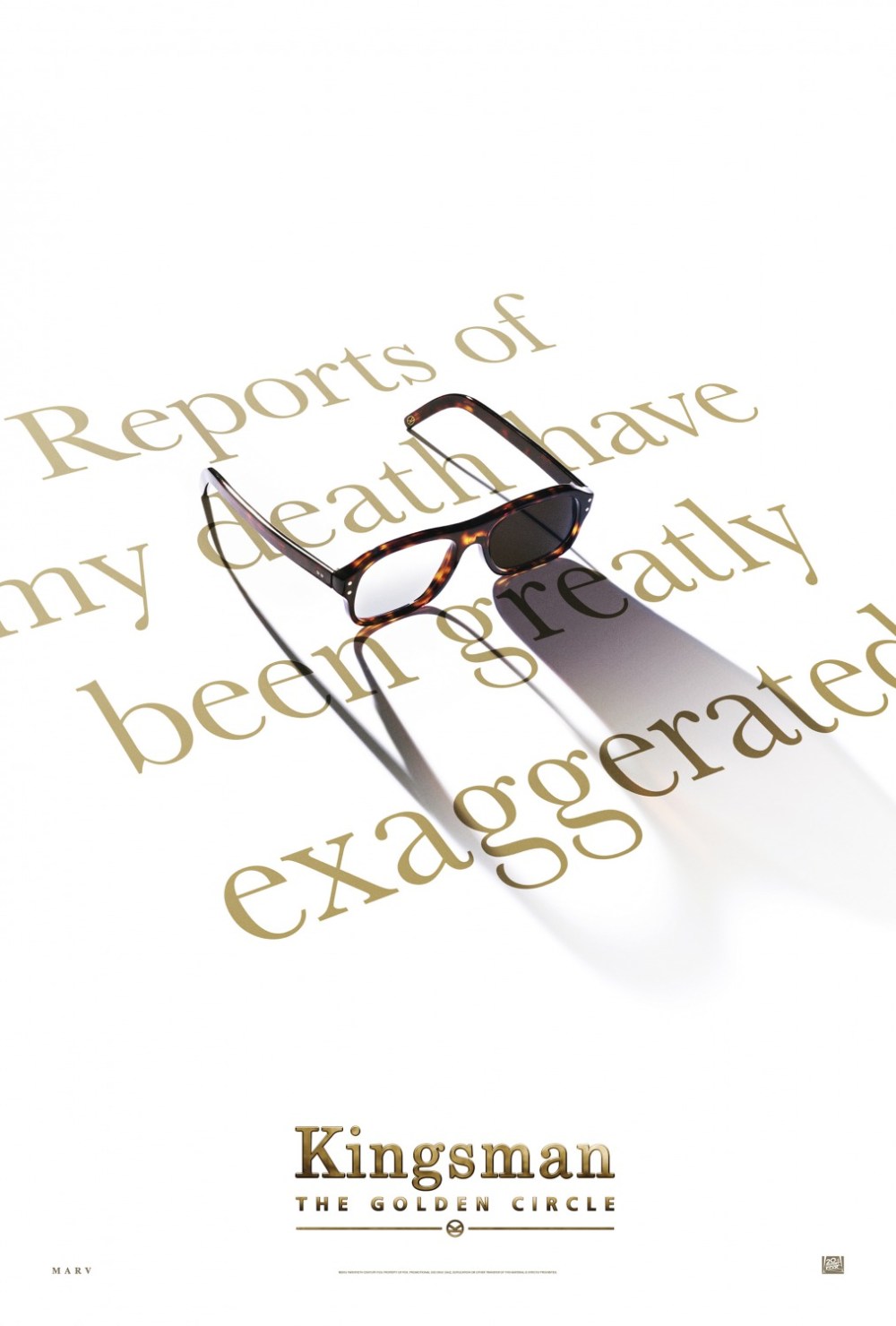
Ever since his directorial debut with “Layer Cake,” filmmaker Matthew Vaughn has done an excellent job of reinvigorating different movie genres to great effect. His “Kick-Ass” was the comic book movie many were too afraid to make, and I like to think it paved the way for “Deadpool.” He brought the “X-Men” franchise back to vibrant life with the prequel “X-Men: First Class,” and it was a prequel which put so many others like it to shame. And then he gave us “Kingsman: The Secret Service” which turned the world of spy movies upside down. In a time where James Bond, Tom Cruise’s “Mission: Impossible” movies and the Jason Bourne franchise ruled the spy genre with an iron fist, Vaughn made “Kingsman” stand out amongst the competition to where it felt fresh and unique as it was filled with invigorating action sequences and characters who were wonderfully realized and as suave as 007 is without being anywhere as cold.
While Vaughn skipped out of doing follow-ups to “X-Men: First Class” and “Kick-Ass,” it was very re-assuring to see him come back to co-write and direct “Kingsman: The Golden Circle.” Now that all the origin stuff is out of the way, we can now watch Eggsy Unwin/a.k.a. Galahad (Taron Egerton) battle the enemies of the world in a beautifully tailored suit without having to prove to us he is worthy of the status he has attained.
Indeed, Vaughn refuses to keep us waiting as “Kingsman: The Golden Circle” opens with a gangbusters action sequence in which Eggsy fights former Kingsman trainee Charlie (Edward Holcroft) in the back of a taxi as it hurtles through the streets of London while Prince’s “Let’s Go Crazy” blasts away on the speakers. It’s a lively introduction to a movie as Vaughn looks to be holding nothing back, and it made me eager to see if he could top what came before.
But just as Eggsy looks to be settling down with the beautiful Princess Tilde (Hanna Alstrom), a sudden attack completely decimates the Kingsman suit shop and its headquarters to where he and his trainer and die-hard John Denver fan Merlin (Mark Strong) are desperate to defeat the nemesis who laid waste to their well-dressed intelligence community. They eventually discover their chief antagonist is the notorious criminal mastermind Poppy Adams (Julianne Moore) who looks to gain worldwide stardom as a drug dealer, and this leads them to join up with their American counterpart, the Statesman, in an effort to exact revenge.
At this point, I should say while “Kingsman: The Golden Circle” proved to be a fun time at the movies for me, it does have flaws impossible to ignore. With a running time of over two hours, I couldn’t help but think a lot of fat could have been trimmed as this sequel feels overstuffed with characters Vaughn can’t give enough attention to as he tries, perhaps too hard, to subvert our expectations as this movie heads towards its unsurprisingly violent climax. Also, while the original was full of anarchic energy, this one settles into a rhythm which might seem more conventional than “Kingsman” fans may care for.
Still, I had a giddy time with this sequel, and one of the main joys I got from it was the casting of Julianne Moore as she gives us one of the most lovely and appealing sociopaths I have ever seen in a movie. Her character of Poppy Adams is the world’s biggest drug dealer, but she suffers from homesickness while hiding away in the undiscovered ruins of Southeast Asia. Poppy ends up curing her homesickness by making her hideout into a 1950’s theme park which evokes memories of “American Graffiti” and the classic television show “Happy Days.” I kept waiting for The Fonz to show up, but Poppy ends up entertaining herself with a certain musician who should remain nameless before you watch this sequel.
Moore is clearly having a great time co-starring in this “Kingsman” movie as she makes Poppy into a villain who is as delightful as she is devious. Even as she entertains prospective applicants wishing to join her evil empire, it doesn’t take much for her to show an ever so subtle psychosis with those who have failed her as they meet a fate as grisly as the one who got put into a wood chipper in the movie “Fargo.” Even as her actions show her to be incredibly vicious, Moore is a hoot throughout to where she makes it hard for us to hate Poppy even though we should despise her from the get go. She also has kidnapped a certain musician who… Well, I will leave you to discover the identity of the superstar she has kidnapped for her own personal entertainment.
While this sequel does tread familiar ground, it allows our protagonists to travel to Kentucky where they meet their American equivalent, the Statesman who have a flair for alcohol as Kingsman does for clothing. It also allows for charming American actors like Channing Tatum, Jeff Bridges and Halle Berry to join the party in a variety of roles which they fit them like a glove. It’s especially nice to see Berry in something good after appearing in the critical debacle released this past summer which was “Kidnap.”
One who stands out in “Kingsman: The Golden Circle” is Chilean-American actor Pedro Pascal, best known for his work in “Game of Thrones” and “Narcos,” as Statesman secret agent Whiskey. Pascal has a wonderful Burt Reynolds vibe going on here, and I don’t just mean his mustache. He also proves to be incredibly effective with a lasso, albeit an electronic one which can decapitate its victims as well as capture them before they can escape.
As for the cast members from the original, Taron Egerton does a wonderful job of taking Gary “Eggsy” Unwin to the next stage in his life as we watch his character continue his journey from leading an aimless life to embracing one filled with purpose. Eggsy still has his friends from the past, but he is open to embracing a future which includes a lifelong commitment to the woman he loves. It’s not often you see a spy movie where a secret agent calls his girlfriend to ask for permission to sleep with the enemy in order to save the world.
Mark Strong also gets to have more fun with his character of Merlin as he gets to be more of a field agent this time out. Strong also makes Merlin’s funniest moments feel genuine to where it feels more emotionally moving than I expected. His rendition of a particular John Denver song carries more meaning these days than when it first became a hit, and it makes for of this sequel’s most unforgettable moments even as the Monty Python bit, “Farwell to John Denver,” kept playing in my head as I watched him.
And yes, it is so great to see Colin Firth back as Harry Hart. While Harry suffered a rather grisly fate in the original, this character had to come back in one way or another. Even as Harry struggles to remember the secret agent he once was, Firth invests him with a dignity and sense of duty which empowers his performance in a very memorable way.
When all is said and done, I did have a lot of fun with “Kingsman: The Golden Circle” regardless of its flaws. At almost 2 hours and 30 minutes, it runs a lot longer than it should, and it does suffer from overkill as Vaughn looks at times to be desperate in topping what came before. The sequel also could have been more anarchic as the original lovingly laid waste to many spy movie clichés. This one threatens to be a little more conventional, but it still embraces its R-rating with a lot of glee.
Rumor has it that Vaughn already has a third “Kingsman” in the works, and it would be great to see this franchise grow even further. But if he is to make another one, my hope is he embraces the anarchic nature of the original more than he did here. As spy movies continue to be made, the genre will always need a swift kick in the butt.
“It” isn’t just one of my favorite Stephen King novels, it’s also one of my favorite books ever. On one hand, it is a terrifying tale of a malevolent force who takes the form of a clown and feeds on the fearful children living in Derry, Maine. On the other, it is a thoughtful and deeply felt examination of kids who are forced to endure a tougher childhood than anyone ever should. I read King’s massive novel (1,138 pages) back when I was a teenager, and it made me realize it was okay to be different than others. Looking back, it also reminded me of a line of dialogue from one of my all-time favorite movies, “Pump Up the Volume:”
“High school is the bottom. Being a teenager sucks, but that’s the point. Surviving it is the whole point.”
For those who have read this novel, you can see how it is more about the kids than it is about Pennywise the Dancing (not to mention incredibly vicious) clown. Thank goodness director Andy Muschietti realized this when he came on to direct the long-awaited film version of “It.” While Muschietti delivers the requisite thrills and chills a horror film like this one demands, he keeps a very observant eye on the kids and the conflicts they are forced to endure, and I don’t just mean Pennywise.
The film focuses on the book’s first half when the members of “The Losers’ Club” were suffering the slings and arrows of daily life at school. But while King set this half in the 1950’s, Muschietti moves things up to the 1980’s, a time of Ronald Reagan, calculator watches, New Kids on the Block, and movies like “Gremlins” and “Beetlejuice” which, like “It,” were released by Warner Brothers. This was a decade defined by greed, but for these kids, it was a time of innocence which would be destroyed for them far too quickly.
“It” was previously made into a wonderfully entertaining television miniseries by Tommy Lee Wallace, but Muschietti lets you know right from the start how the censorship of American television was not going to apply here. Little Georgie Denbrough suffers a most terrible fate when Pennywise bites his arm off and drags his body into the sewer, and even if you know this event is coming, it is still chilling to witness as this is the kind of thing movies typically avoid showing. From there, I couldn’t help but remain in a state of heightened anxiety as while I knew what was going to happen, the safety of network television was not around to reassure me about the horrors I was going to witness.
The misery and sufferings of The Losers’ Club feel much more unnerving on the silver screen than on television. It’s especially galling to see poor Beverly Marsh get wet garbage poured all over her in the bathroom as she has become the victim of unsubstantiated rumors that she is promiscuous. But judging from the moment she when she puts her backpack over her head for protection, she has been dealing with this stigma for a very long time. Or how about Ben Hanscom, the overweight new kid in town who has zero signatures in his yearbook, one of the saddest sights the audience is forced to take in here. While these kids’ sufferings don’t feel as raw as what Sissy Spacek endured in “Carrie,” it’s still easy to feel for these kids who have been cast out of what is perceived to be the realm of normal.
Heck, even their parents prove to be an emotionally distant, and if they are not, they instead prove to be ridiculously overprotective. Beverly’s father seems to care for her a little too much, and this care seems to imply crimes more insidious than our imaginations can ever handle. Eddie Kaspbrak’s mother is determined to keep him safe from any and every germ planet Earth has to offer, and at times she threatens to be as scary as Pennywise due her raising her son as if he is the reincarnation of Howard Hughes. As for William Denbrough, things will never be the same between him and his parents following the death of his brother Georgie.
There’s some passage in the Bible which says God only gives you what you can handle, but the members of The Losers’ Club have far more than anyone should ever be made to handle, and this is made clear before Pennywise begins to disrupt their unfairly depressing lives. As a result, they need each other to get from one day to the next, and the strength they have together allows them to be a formidable force against Pennywise. Muschietti’s attention to these kids’ struggles makes this film very effective as we come to care for them deeply, and this makes their stand against this homicidal clown all the more involving.
Speaking of Pennywise, Bill Skarsgard makes him into the freakiest clown and scarier than any clown Rod Zombie could come up with. Whereas Tim Curry’s Pennywise was at first approachable and then murderous, Skarsgard’s is vicious right from the get go whether the kids realize it or not. Even before those set of jaws come out, Skarsgard more than reminds the audience of how clowns have always been creepy, and he makes Pennywise into the clown who gleefully inhabits all our nightmares.
So where do I rank this particular Stephen King adaptation among the many already unleashed on the public? Hard to say. It is easily one of the best King adaptations in a while, but it is not as scary as “The Shining” or “Carrie.” This is not a motion picture filled with jump scares every 5 minutes as Muschietti is more in creating something which is infinitely chilling and suspenseful. What results is a highly entertaining movie which never feels like a simple remake of the miniseries. He is also blessed with a terrific cast of actors who are not afraid to embrace the depressing natures of their characters. I just hope none of them have to deal with this shit in real life.
I’m also thrilled no one tried to fit the whole book into one movie. There’s no way you could have done that without messing everything up. There was already talk of a sequel long before this movie even opened, and this is a sequel I am more eager to see than any “Star Wars” movie which has yet to be released. It’ll be interesting to see how The Losers’ Club will transition from childhood to adulthood as they attempt to put the past behind them. But as Peter Gabriel once sang, “Nothing fades as fast the future. Nothing clings like the past.”
After watching Darren Aronofsky’s “mother!” at Arclight Cinemas in Hollywood, a special behind the scenes featurette was shown where the filmmaker explained how he wanted to make a movie which would generate different reactions from its audience to where various interpretations could be formed over what they witnessed. Aronofsky has succeeded in doing exactly that as “mother!” does not have him spelling anything out for anyone, perhaps not even for the cast either. Maybe he does have an explanation for all the craziness which ensues in this, one of the freakiest psychological thrillers in some time, but he’s not about to let on what it is, and I am perfectly fine with that as to explain anything about the plot would dilute its power instantly.
The experience of seeing “mother!” was a lot like watching Lars Von Trier’s “Antichrist” as both movies feature a married couple who are nameless and staying in a secluded country home in the woods. Like “Antichrist,” “mother!” has polarized critics and audiences as many are desperate to discover what its director was attempting to accomplish here. The best advice I can give you is to approach Aronofsky’s film by leaving any and expectations you have for it at the door. It has been advertised as an homage to “Rosemary’s Baby,” but the only thing it has in common with Polanski’s classic is it’s also not a movie for new or expectant parents.
We meet Mother (Jennifer Lawrence) on a beautiful and sunny morning as she wakes up in the home she shares with Him (Javier Bardem), a well-regarded poet who is currently suffering from a frustrating bout of writer’s block. The two of them lead a peaceful existence in a home which has been lovingly restored after suffering much damage, but this existence is soon interrupted by an unexpected visitor (played by Ed Harris), an orthopedic surgeon who Him welcomes into their home even though Mother is perturbed that he would welcome a complete stranger in ever so easily.
Things become even more complicated when the unexpected visitor’s wife (played by Michelle Pfeiffer) comes by and becomes infatuated with knowing more about Mother and why she and her husband have no children of their own. Granted, this makes Lawrence’s character’s name of Mother hypocritical as she is not a mother at the movie’s start, but many surprises are in store for the characters and the audience as “mother!” takes a number of twists and turns you cannot see coming.
Revealing more about what happens would be detrimental as “mother!” is best viewed with little knowledge about it. Indeed, promoting this movie must have been a nightmare for Paramount Pictures as you can only say so much about it before you spoil everything. Then again, can you spoil this movie for others? Aronofsky has made something here which cannot be easily explained, but while this will baffle and infuriate many who sit through, it should enthrall those who are in the mood for something cinematically adventurous and a movie which forces you to think about what you just saw.
What I can tell you is things reach a frenzied fever pitch as “mother!” barrels towards a climax which comes close to equaling the frenzy of Ellen Burstyn being terrorized by her refrigerator in “Requiem for a Dream.” Aronofsky has said he applied “dream-logic” to “mother!,” and it certainly helps to know this going in as events keeping going by at a rapid pace to where you can’t help but feel like you are in a nightmare or a dream you are desperate to control, but can’t. It’s like being a car when the brakes have failed you, and the emergency brake ultimately doesn’t work either. You just keep getting thrust into a hellish realm as Lawrence and Bardem become trapped in their once peaceful home as the woods it is located in offers no escape. In fact, it all reminded me of what Charlotte Gainsbourg said in “Antichrist” at one point, “Nature is Satan’s church.” Well, Satan looks to be having even more fun here.
There are said to be a lot of biblical allegories to be discovered here, but the only one I could see was the reference to Cain and Abel as two brothers fight one another bitterly over an inheritance which benefits one more than the other. I am already very eager to see “mother!” as seeing it once is not enough to uncover all which Aronofsky wants us to discover. Now that I have experience this motion picture on an emotionally visceral level, I want to experience in a different way even though Aronofsky has warned us not to analyze “mother!” too deeply.
Jennifer Lawrence remains as luminous an actress as ever, and she looks to be put through the emotional wringer here as her character descends into a realm of inescapable madness. It turns out she even got so into character on set to where she was constantly hyperventilating and even cracked a rib, so there’s no doubt about dedication to playing a role. At this point, I am convinced Lawrence can play any role given to her, and she has this ageless quality to her appearance which matches her up perfectly with actors who are several years older.
Lawrence also shares a number of almost gleefully unsettling scenes opposite Michelle Pfeiffer, an actress we don’t see near enough of these days. As these two circle each other like cats ready to hiss at one another while guarding their precious territory, we are reminded of how brilliant Pfeiffer can be when given material which piques her interest.
As for Javier Bardem and Ed Harris, these are two actors you can never ever go wrong with, and they infuse “mother!” with a passion for acting they have never lost sight of since the start of their careers. Bardem, in particular, gives his character a loving presence as well as an ominous one. The latter is especially the case in a scene where he stares down Lawrence, and it’s a stare which lasts for what feels like an eternity and brings back memories of his Oscar-winning role as Anton Chigurh in “No Country for Old Men.” I kept waiting for him to explode as Bardem sits like a wild animal waiting to strike, and I was desperate for Lawrence not to let her guard down while in front of him.
Aronofsky continues to employ many of his regular colleagues to great effect like cinematographer Matthew Libatique, but what’s surprising is this movie’s lack of a music score. Instead of employing his longtime composer Clint Mansell, Aronofsky instead hired Johann Johannsson to come up with ominous musical themes. However, upon viewing an edit of “mother!,” they both agreed this movie didn’t need a score. It says a lot about “mother!” that it needs no music score to aid in the movie’s mission to generate almost unbearable tension. Few other filmmakers could get away with such a feat, but the intense sound design which, when viewed in the right theater, surrounds you to where you feel every bit as trapped as Lawrence is. As her predicament becomes more and more of a sonic assault, we feel her character’s agitation all too much.
In retrospect, I was tickled to death at the reactions the audience I saw “mother!” had. Several people laughed either out of derision or just plain nervousness as things went from a state of peacefulness to complete Armageddon, and others complained how this scene or another contained the only elements which made the least amount of sense to them. As I walked out of the theater, others said they couldn’t understand why people were laughing at certain moments. Many of my movie friends have said this movie is likely to end up on the lists of both the best and the worst films of 2017, and I couldn’t agree more. You will either love this motion picture, or you will hate it with a passion.
As for myself, I loved the visceral roller coaster ride “mother!” took me on. I never caught myself laughing much at what went on as I was completely gripped in Aronofsky’s vise as he continued to tighten the grip he had on me, and I was thrilled at the levels of “Requiem for a Dream” intensity he was able to generate with this one. Many will say he is simply out to torture his audience, but why can’t we have a torturous cinematic experience every once in a while, or at least one which is torturous in a good way? I show no hesitation in calling “mother!” one of the best movies I have seen so far in 2017 as it provided me with something incredibly unique in a time where the cinematic landscape is overfilled with superheroes.
Yes, the market research firm CinemaScore has given “mother!” an average grade of an F, a rare grade for movie to get from them. Then again, Steven Soderbergh’s “Solaris,” William Friedkin’s “Bug” and Richard Kelly’s “The Box” also received the same grade, and those movies are much better than their reputations suggest. And keep in mind, this is the same firm which gave an A+ to Dinesh D’Souza’s infinitely patriotic but poorly made, not to mention boring, documentary “America: Imagine the World Without Her,” so there’s no accounting for taste.
Seriously, I haven’t had this much fun taking in an audience’s reaction to a motion picture since “The Human Centipede 2.” Of course, “mother!” is much, much better than that one. When the exclamation mark appears a couple of seconds after the title does and then sticks around once the title disappears, you should know you are in for something completely different.
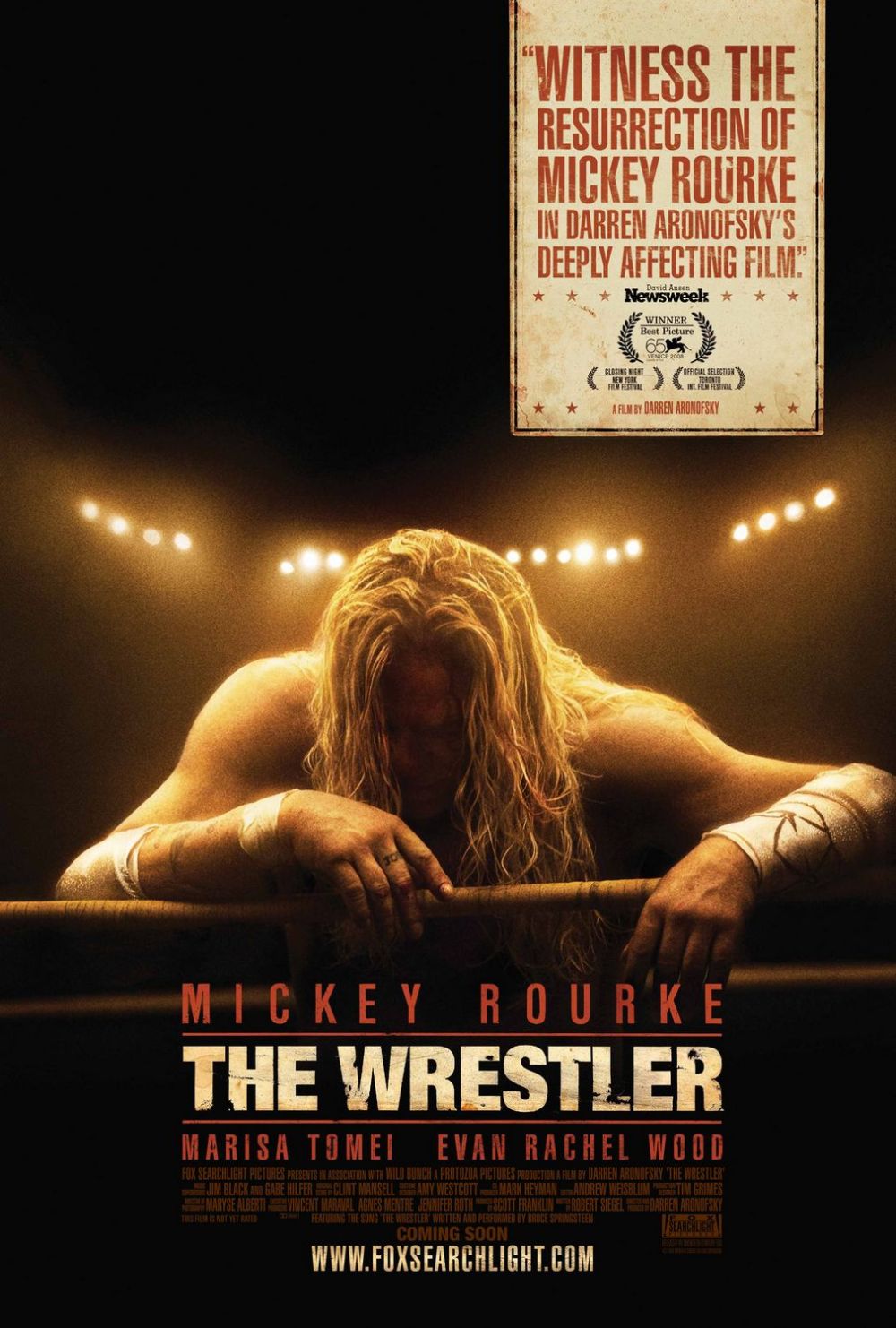
“The Wrestler” is kind of a cross between “Rocky” and “Raging Bull” in that it deals with a man looking to continue making a name for himself long after his five minutes of fame, and who seems to be more at home in the ring than outside of it. Darren Aronofsky films this movie with a rough edge, and he doesn’t hide away from the harsh reality Randy “The Ram” Robinson, played by Mickey Rourke, and the rest of the characters inhabit. It also marks another in a long line of movies with characters hanging on by a little thread to their financial existence.
After one of his more vicious fights involving staple guns and barbed wire among other things (there is no flinching on the details here), Randy suffers a serious heart attack and later finds himself waking up in a hospital bed after an emergency bypass surgery. The doctor tells him that to wrestle again will kill him, and he is forced into retirement and ends up finding work at the deli counter of a local supermarket for whatever hours he can get. Despite his fame and the attention he gets in his trailer park home from the kids who live there, Randy’s life is a lonely one, and he has practically no close personal connections to lean on.
What goes on from there might seem predictable, but this is not your typical redemption story with everything turning rosy at the end. As his mortality looms over him heavily, Randy tries to get closer to those around him with limited success. Marisa Tomei gives a great performance here as Cassidy, a stripper who is very friendly to Randy while working at her club. Like Randy, she is also past her prime in her profession, and she doesn’t draw the big numbers like she used to. The two of them are relics of the 80’s, and their happiest days have been trapped in that time which was brought to an end by the advent of Kurt Cobain and Grunge which all but vanquished the days of long haired heavy metal icons. Ironically, as perfect as they seem together, it is their individual professions which keep them apart. The rules they are sworn to follow are also the ones they struggle with, and in the end these rules define who they are.
Years after her Oscar win for “My Cousin Vinny,” Marisa Tomei remains of the more vastly underrated actresses working today. Since her win, she has given great performances in movies like “In the Bedroom” and “Before the Devil Knows You’re Dead.” She continues to make leaps forward as an actress, and yet she remains at the fringes of fame. Perhaps she feels more comfortable doing independent films as they give her the best roles. All the same, part of me wishes she would get more respect because it doesn’t feel like she ever gets enough of it.
Evan Rachel Wood also co-stars as Randy’s long estranged daughter, Stephanie. They share some of the movie’s most emotionally raw and poignant moments together as Randy tries desperately to salvage any sort of connection he may have left with Stephanie. They share a nice walk together at the New Jersey shoreline where they reminisce about memories long gone, and Randy apologizes for not being there for her at all. Wood’s role is largely a reactive one, and she meets Rourke every step of the way when onscreen with him. Long after her emotionally searing performance in “Thirteen,” she is still not afraid of delving into the raw emotions held on to by the characters she plays.
Aronofsky is still best known for the mother of all anti-drug movies, “Requiem for a Dream” which was filmed with so many extreme camera moves and quick edits to where we were left with whiplash as we exited the theater. “The Wrestler,” however, does not have any of those flourishes. Instead, Aronofsky shoots the movie in a simple hand-held fashion and in 16mm to capture the rough and tumble realm these wrestlers exist in, and he makes you feel all the devastating hits, cuts and bruises these men are made to endure in the ring and when they are thrown outside of it as well. Like Paul Thomas Anderson, Aronofsky makes you experience the movie instead of just watching it passively.
I also loved how Aronofsky captured the camaraderie between these fellow wrestlers when they get together. We see them sharing the moves they will use with one another, and they always have the outcome figured out long in advance. We see the doctors attend to all the inflicted, let alone self-inflicted cuts, they get in the ring, and he makes you feel all the cuts which have long since torn away at their once perfect bodies. Aronofsky has never done things the clean way, and his work in “The Wrestler” continues this tradition unapologetically.
“The Wrestler” is not Aronofsky’s best movie (“Requiem for a Dream” still holds that title), but it is further proof of how he is one of the most exciting filmmakers working in this day and age. Some may have lost sight of this with “The Fountain,” but they shouldn’t after watching this. But in the end, this movie is really all about Rourke and how he and Randy interweave with one another to where you cannot tell if he is just acting or if he is just being the character.
Rourke makes you feel his character’s pain, both physical and emotional, throughout the movie. There is never a moment in this film where he fakes an emotion, and this is a performance coming straight from the heart. With his heartbreaking confession to his daughter, he takes what could have been a clichéd scene and fills it with pure emotion. It’s almost like he the actor is apologizing for not being better as an actor, and for squandering his potential with a lot of crap movies. Rourke has earned my forgiveness ever since he played Marv in “Sin City,” and his performance in “The Wrestler” completes what is a well-deserved comeback.
For those of you who have read my review of Clint Eastwood’s “Gran Torino,” you’ll remember how I talked about how certain parts need an actor whose face and body show a rough and tumble history, and that they have suffered through life’s most intense challenges. Rourke is not the pretty boy he used to be, but this makes him perfect for this role other than the fact he can still be a brilliant actor. Rourke sells the fact his character has a massive heart attack and that his body has been badly beaten (Rourke did briefly take up boxing when his acting career was almost gone). He sells how Randy now wears a hearing aid and glasses to read most things given to him. He also sells the fact he is deserving of another chance as a lead actor, and he knows he better not screw things up this time around.
“The Wrestler” is one of the most exhilarating and exhausting character pieces I have seen in some time. The movie is nothing short of a great triumph for its lead actor and its director, and it is topped off by a great theme song from Bruce Springsteen himself (who else could have done it?). In 2008, it was hard to think of another performance which could have been even more brilliant than Heath Ledger’s in “The Dark Knight,” but Rourke manages to top him here, and that was no easy feat.
More than 30 years after its release, Alex Cox’s cult classic “Repo Man” still holds up with its truly authentic punk attitude and black humor. This was proven to be the case when a special screening of the movie was held at the New Beverly Cinema which brought out many fans eager to see some of the actors who starred in it. Among them was the great character actor Harry Dean Stanton who plays Bud, the Mr. Miyagi or Yoda to Emilio Estevez’s Otto. Also there was Tracey Walter who played the philosopher of mechanics, Miller, Olivia Barash who played Otto’s would-be girlfriend, Leila, and Del Zamora as Lagarto, one of the Rodriguez brothers.
“Repo Man” is so defiantly punk and proudly refuses to fit into the realm of regular mainstream entertainment. Never politically correct, it delves into a highly exaggerated, not to mention intense, depiction of the life of a repossession agent. Watching it makes you realize there are not enough movies like this these playing at the local multiplex. We need something to balance out all these watered-down blockbusters which comes to us like McDonald’s Happy Meals from the world of corporate cinema. This movie was actually intended to be a UCLA student film, but somehow it managed to become something much bigger.
The actors came out immediately after the end credits concluded, and they looked really happy to be at the New Beverly. Stanton, however, looked like he was three sheets to the wind and occasionally spoke about things not really related to “Repo Man.” At one point he even asked, “Can I smoke in here?” The other actors sympathetically told him they weren’t sure the theater would allow him to smoke. “We can’t smoke in here?” Stanton said, “That’s fucking nonsense!” The crowd couldn’t help but laugh as Stanton looked like he was perfectly prepared to keep smoking for the rest of his days.
Stanton said he couldn’t remember exactly how he got involved in “Repo Man,” and added this lack of memory up to being one of his “senile” moments. Walter, however, said he got his role after having previously worked with producer Michael Nesmith on “Timerider.” Barash said she was originally encouraged not to do the movie on the advice of her agents as they didn’t know the people involved in it very well, and they thought it might be dangerous for her to even go to the audition. But Barash was and still is a huge punk rock fan, and she got immediately sold on “Repo Man” upon seeing that bands like Black Flag were going to be involved. She even told us Iggy Pop, who composed the movie’s theme song, was her neighbor in the apartment building she lived in back then.
Zamora didn’t say exactly how he got cast, but he did remember how Cox got Nesmith involved as a producer. Simply put, Nesmith’s car had gotten repossessed, so he could relate to those car owners who were not paying up on what they bought. Zamora also talked about how Cox got both Stanton and Estevez involved in “Repo Man.” Basically, Cox caught up with Estevez and told him Stanton was already connected to the movie even though he wasn’t at that point, and then he went to Stanton and told him Estevez was connected to the film even though he wasn’t. Suffice to say, both actors did become involved.
Stanton then went on to say he and Cox didn’t always get along. During the shooting of “Repo Man,” Cox got so sick and tired of Stanton telling the actors what to do and threatened to fire him on the spot. To this Stanton replied, “Kiss my ass! Fire me so I can get paid!” Later on, Stanton asked Zamora to let Cox, whom Zamora is still in touch with, know he’s not mad at him anymore and that he would welcome him as an honored guest the next time he saw him.
“Repo Man” also had an abundance of generic food and drink items on display, and the audience couldn’t help but laugh at just how openly generic they all were. Product placements are usually reserved for big budget movies which are more likely to be bland and inoffensive. Zamora said they really had no money so they did talk with companies who were willing to do product placements in the movie. And then they read the script… What they ended up using was a generic brand from Ralphs Supermarket, one of the most dominant of supermarket chains in Southern California today. Of course, had “Repo Man” been made today, Ralphs might not have been as inclined to be involved.
In the end, Zamora and Walter said the art directors did the majority of the work and succeeded in creating the world of the movie which was very convincing despite the low budget. Then Stanton spoke up again and asked who Zamora played in “Repo Man,” and Zamora told him he played Lagarto, one of the Rodriguez brothers, to which Stanton replied, “How many brothers were there?”
Speaking of the Rodriguez brothers, Stanton’s character of Bud has this intense confrontation where he wields a baseball bat which he threatens to bash the brothers with. Stanton said Cox gave him a rubber bat to use, but he wanted to work with a real one instead, and this led to a fight between the two of them. Zamora remembered this moment on set and said Stanton was under control, but Stanton, who was starting to remember more of the filming, made it bluntly clear he was really crazy and didn’t have any idea of what he was doing.
Walter was asked about his famous “shrimp monologue” scene, and he said it was originally meant to be just an audition piece. It was never intended to be in the film, but Walter fought for it. Indeed, it makes for one of the most memorable moments in “Repo Man” as his character of Miller describes the way he sees things:
“A lot o’ people don’t realize what’s really going on. They view life as a bunch o’ unconnected incidents ‘n things. They don’t realize that there’s this, like, lattice o’ coincidence that lays on top o’ everything. Give you an example; show you what I mean: suppose you’re thinkin’ about a plate o’ shrimp. Suddenly someone’ll say, like, plate, or shrimp, or plate o’ shrimp out of the blue, no explanation. No point in lookin’ for one, either. It’s all part of a cosmic unconsciousness.”
To this day, Walter says that every once in a while he runs into someone who utters one of his signature lines from “Repo Man” like, “John Wayne was a fag!” But of course, the real signature line of “Repo Man” belongs to Stanton’s character of Bud who says, “The life of a repo man is always intense.”
One audience member asked the actors if they still talk to Estevez after all these years. Zamora and Walter said Estevez still works, but more as a producer and director these days because that’s where his passion lies. Estevez still acts occasionally, but it apparently doesn’t interest him as much as it used to.
Wrapping up the evening, the actors were asked if they knew they were making something special during the filming of “Repo Man.” Some of them believed they were, but Stanton bluntly said, “I didn’t give a shit if it was special while making it.” Despite his apparent demeanor and not being able to remember his entire experience on this particular movie, Stanton still had us laughing hysterically. Not once did he try to ruin the fans’ appreciation of “Repo Man.” Whether he realizes it or not, no one could have played Bud better than him.
Many were in agreement when Stanton said both “Repo Man” and “Sid & Nancy” were truly the peak of Cox’s directing career. We haven’t heard as much from him since then, but Barash said he just finished making a quasi-sequel called “Repo Chick” which she has a cameo in it. However, this has not stopped Universal Pictures from sending Cox cease and desist letters as they insist only they have sequel rights to “Repo Man.” Still, Cox has been showing it at festivals, so it looks like nothing is going to stop him.
Before everyone got up and applauded, another audience member asked a question which brought to mind one of Bud’s great lines from “Repo Man,” “Is there any good place around here to get sushi and not pay?” Stanton left us with his best answer of the evening, “That’s where we’re going right now.”





 The Ultimate Rabbit