La Vie en Rose – Marion Cotillard is Beyond Exquisite

This review is for my friend Cordell as he begged me to watch this movie constantly.

Every once in a while, you witness a performance so utterly brilliant that it leaves you in a state of total awe. It’s the kind of performance which really blurs the line between the actor and the character they are portraying. You don’t see any trace of the actor because they have succeeded in fulling inhabiting a character as opposed to just playing one. Mickey Rourke pulled this off in “The Wrestler” as did Heath Ledger in “The Dark Knight,” and this goes for every role Daniel Day Lewis played in his entire career. An actor’s job is never as easy as it looks (if you are serious about the craft of acting that is), and it involves tearing down all those protective layers we surround ourselves with to protect us emotionally. To do this requires an immeasurable amount of bravery, and if they succeed in what may seem impossible to some, they will leave you believing no other actor could have played such a role as good as they did.

You can add Marion Cotillard to this list after witnessing her extraordinary performance as Edith Piaf in Olivier Dahan’s “La Vie en Rose.” She plays Edith from when she was a teenager to her death at the age of 47, at which point she looked more like she was elderly. It’s surprising to learn Cotillard was in only her early 30’s when she took on this role, and it is a performance which feels flawless from both an emotional and a technical point of view. She gives a performance bursting with emotion, and her portrayal of Piaf at the latter part of her life is never less than believable. Her Oscar win for Best Actress was seen as a surprise by many, but this is probably because they never bothered to watch the movie when it was released.

Watching Cotillard play Edith in the different stages of her life instantly reminded me of the opening shot of Martin Scorsese’s “Raging Bull.” It showed Robert DeNiro as Jake LaMotta in his post-boxing years, overweight and smoking a cigar while he runs through his standup act before going on stage. It then goes from there to when LaMotta was in his fighting prime with DeNiro a lot slimmer and in better shape. I remember watching this transition and almost having to remind myself it was the same actor playing LaMotta. Cotillard accomplishes this feat as well in “La Vie en Rose” as she portrays Edith Piaf from when she was young to where her life was fading all too slowly. This is also in part due to the equally brilliant job by the makeup artists who were also deservedly rewarded with Oscars as well.

“La Vie en Rose” does follow the similar path of biopics as we see Edith Piaf from her lowly beginnings as a child, and of how those experiences end up informing the rest of her life as she grows up to become the singer we were so moved by. Dahan does not try to sugarcoat Edith’s life as it was not exactly an enviable one. We see her as being more or less neglected by her mother, and then later by her father when he leaves her for a time in a brothel which ironically gave her some of her happiest memories as she is cuddled constantly by the prostitutes who work there. When we are presented with a childhood which is absent of parental guidance and neglect, we know this is a life which defines the word “dysfunction.”

Edith as child is played by two young actresses: Manon Chevallier at age 5 and by Pauline Burlet at age 10. Both are wonderful, and their performances are not your average child actor performances that are full of over emoting and forced reactions. I point this out because it is incredibly difficult to pull off performances like these for young actors, and both do great work as they chronicle Edith’s young adventures and her inevitable heartbreaks as reality eventually comes crashing down on her.

Dahan moves the story back and forth in time which, in another movie, might seem distracting, but it helps break up the usual rhythm of your average biopic to where it doesn’t feel so much like others we have seen before. In seeing Edith confined to a hospital after her morphine addiction has long since ravaged her already fragile body, we know full well her story is not going to have a happy ending. Still, it made me wonder how Dahan was going to end the movie. Would it be at Edith’s dying breath, or at some other point in her life? I leave it to you to find this out.

Seriously, I cannot get over just how amazing Cotillard’s performance is. She brilliantly captures the stage fright which threatens to keep Piaf from going onstage, and we see how she slowly overcomes it through her first performance. We then see her move on to bigger houses to sing in, and it’s almost like she is becoming a different person in front of our eyes. From when she becomes an acclaimed star of stage and screen to her tragic demise, Cotillard nails every moment she has in the movie perfectly and never misses a beat. Watching her go from what seems like infinite happiness when she finds who she believes is the love of her life (the look in her eyes is beautiful) to the tragedy which takes it all away is simply enthralling. I am still thinking about her performance long after the movie ended, trying to figure out how she accomplished all of this without falling into the trap of playing a caricature.

Even as we see Edith’s body giving out, and her looking 20 years older than her actual age, Cotillard makes you believe you are seeing someone who has lived and experienced much more than the average human being does. This could have been where her performance would have suffered from overacting, but she keeps us entranced throughout the movie’s two and a half hour running time.

But a lot of credit should also go to Dahan for making one of the best biopics ever, and he surrounds Cotillard with a wonderful cast who does their best to hold their own in the wake of her ultimate tour de force. Gérard Depardieu has a nice supporting role as Louis Leplée, the nightclub owner who discovers Edith singing in the streets and gives her the opportunity to perform in front of a big audience. I also loved Emmanuelle Seigner’s heartbreaking performance as Titine, the prostitute who desperately wants to adopt Edith regardless of the odds never being in her favor.

“La Vie en Rose” may tread the familiar ground of many film biographies, but this one has an immense power all its own, and it stands way above many other films in its genre. Cotillard gives, as Peter Travers of Rolling Stone wrote, “a performance for the ages.” I can’t stop gushing over just how phenomenal she is here. I am so glad she got the Oscar.

* * * * out of * * * *

‘Patty Hearst’ – Based on a True Story, But in a Good Way

I have always been fascinated by the story of Patty Hearst, of how she was kidnapped by the SLA (Symbionese Liberation Army) in an effort to get some of their comrades released from jail. How she later joined the SLA in their fight against what they perceived as a fascist police state fascinated me even more. When I first heard about this event, probably around the same time the movie was released, I couldn’t help but wonder, how can someone who was kidnapped by people with guns suddenly join up with her captors? Can someone be changed into a completely different person in a situation like this? Taking all this into account, I wonder if makes sense we should prosecute someone for crimes they committed after being brainwashed and sexually abused by their captors. It’s such a strange story, and one ripe to be made into a movie. Thank goodness the story of her ordeal ended up in the hands of the great Paul Schrader, famed screenwriter of “Taxi Driver” and director of “Blue Collar,” Affliction” and “First Reformed.”

Yes, “Patty Hearst” is based on a true story, but this movie was made back in 1988 when that term actually meant something. Is this movie factually true to what happened to her in real life? I don’t know and, quite frankly don’t care. Movies based on a true story always have moments which are fictionalized or changed for dramatic effect. It is too easy to brand movies like these as “a lie” or “factually incorrect” to what actually happened. Movies cannot play a real story out the same way it did in real life because there has to be a structured story in place which takes you from point A to point B. In the end, the filmmakers need to be respectful of the facts, but they can’t just do it the same exact way it all happened. Besides, people will accuse the filmmakers of being too faithful to the original material, and this makes it all seem like a no-win situation. People making these kinds of movies are going to get attacked one way or the other, and there is no way around it.

“Patty Hearst” stars Natasha Richardson in her breakthrough performance as the title character, and the movie starts with her walking around the campus of UC Berkeley, giving us our first glimpse of her as a person. In a voiceover, she takes the first opportunity of many to break down preconceptions that may have of Patty Hearst who is the granddaughter of the famous publisher William Randolph Hearst. From the start, she makes it clear Patty was never spoiled and had a happy, normal childhood. These opening moments show how nothing could have prepared her for the kidnapping which would come to define her life.

What makes this movie so effective is the way Schrader manages to tell the whole movie almost entirely from Patty’s point of view. As a result, we end up experiencing what she goes through as she is thrown into the trunk of a car and driven off to a place where she is imprisoned in a tiny closet. Spending most of her time in this claustrophobic space, she becomes completely disoriented. Throughout, she is met by soldiers of the SLA who shout their beliefs at her, and she is made to believe she is the enemy. These moments are presented with the actors acting in front of a blindingly white backdrop which gives us a strong feeling of displacement as even we don’t know where we are. What keeps Patty going through this is her gnawing fear of being buried alive, and of her need to survive.

The fact Patty ends up joining the SLA in their “revolutionary” fight makes sense as it is presented here. Having been cut off from those she loves and being exposed to a whole other set of people and ideas, what choice could she have had? Seriously, it’s not like she had much of a chance to escape. In the end, the SLA is basically a cult, and like all effective cults, they broke down Patty’s spirit until there was nothing left. Everything from her life up to that point was made to seem false, and she had no way of believing otherwise. Her captors offer her a choice of joining them, or to go home. But by going home, Patty interprets this as being killed or even worse, being buried alive.

From there, the movie shows Patty going from terrified hostage to being a soldier for the SLA. The moment where her blindfold is removed and she is finally given a chance to look at her captors is actually a beautiful moment as it is made to seem Patty is now surrounded by people who are more loving than they are threatening to her. It is also a relief for the audience as we too are now out of the claustrophobic state of mind to where our eyes are wide open. From there, we are with Patty every step of the way to even after she is arrested and incarcerated for her involvement.

What really powers “Patty Hearst” is the performance of Natasha Richardson which is nothing short of remarkable. She takes Patty from being a helpless and frightened hostage to a believer, and then she takes her to being a martyr where she is broken down but given a chance to build herself back up again. In spite of all the media coverage this case was given back in the 1970’s, Richardson gives us a Patty Hearst who can be seen as a person with a heart, and not just as a blip on the popular culture landscape. She nails every emotional moment of Patty’s evolution truthfully, and she is utterly fascinating to watch throughout. In the movie’s final shot, it is just her face we see as she seems at peace with herself and of what she needs to do to show the world the truth of what she has been through, and she gives this movie the exact note it needs to end on.

In addition, Richardson is surrounded by remarkable character actors who have since become better known following this movie’s release. Among them is Ving Rhames in a pre-“Pulp Fiction” performance as Cinque, the leader of the SLA. Ving makes Cinque an intimidating force which you believe can hold all his followers at bay with even a little bit of effort. In effect, Cinque is the glue which holds the SLA together.

Also in the movie is William Forsythe, a terrific character actor who plays Teko, a most faithful follower of the SLA who tries to hold the movement together when its leadership suddenly falls apart. Frances Fisher, who would later co-star in “Unforgiven” and “Titanic,” plays Yolanda who ends up in a power struggle with Teko over the direction in which the SLA is poised to take. Through these two performances, we see how easily a group can quickly disintegrate when there is no real leader to keep them focused and together as a whole.

But of my other favorite performances comes from Dana Delany whose role as Gelina is a lovely delight. Gelina’s thinking is clearly warped beyond repair, but she presents Patty with the only real kindness she gets during her captivity. As Gelina, Delany gives us a character as giddy as she is dangerous to those around her.

There is also Jodi Long who plays Wendy Yoshimura, an SLA member who becomes disillusioned with the movement and of what they are trying to accomplish. Seeing the damage done, she is now more prepared to give up rather than face a pointless fire fight with the “pigs.” I really liked Long’s take on the character, and she gives us a strong human being who does not bend easily to the threats made against her.

“Patty Hearst” also features one of the most unique film scores I have ever heard. Composed by Scott Johnson, it is a mixture of both electronic elements and woodwind instruments, and the score helps Schrader in creating a disorienting environment which we and Patty are forced to endure against our will. I cannot think of another film score I can compare this one to. It was Johnson’s first and only movie score ever, and it was out of print for years. In 2007, however, it was finally re-released through Tzadik Records.

This material is perfect ground for Schrader to cover as a filmmaker and a screenwriter. From Robert DeNiro in “Taxi Driver” to George C. Scott in “Hardcore” and to Nick Nolte in “Affliction,” Schrader has long since been endlessly fascinated by individuals who are so alienated from the world around them to where they have long since descended into madness. Patty Hearst, as Schrader shows her here, does not become alienated from the world by choice, but by force, and her dire circumstances of joining a movement she has no business being in makes us wonder what we would do under similar circumstances. We never get to see the world outside of Patty’s point of view, so when she is brought back into reality, we are made to feel as bad as she does when she is made into a martyr in everyone’s eyes.

The movie got a mixed reaction when it was released back in 1988. From watching the movie’s trailer, I imagine moviegoers may have been expecting something more action packed when they walked into the theater. But what “Patty Hearst” really proves to be is a character study, and an endlessly fascinating one as well. While some may find this movie dull, I loved how it got into the inner workings of the SLA, and it made sense of how someone could be forced to join a group they never would have in a sane state of mind. How you view this movie may very well depend on what you are expecting from it.

I really liked what Schrader did with the story and characters. Had this story been in the hands of another director, it may have come across as more exploitive than anything else. Schrader, however, has far more on his mind than playing with all the titillating facts of this case. Throughout, he explores the evolution of a person who goes from being a victim to becoming a participant who later became a pariah, and he gets under the skin of his subject in a way others were unable or unwilling to do.

But what makes “Patty Hearst” work so effectively is the mesmerizing performance of Natasha Richardson. With her entrancing beauty and natural talent, she makes us want to follow Patty to the end of her journey. Whether we agree or disagree with what Patty did, we empathize with her and are forced to look at ourselves and wonder what we would have done in similar circumstances.

Richardson was so great to watch here, and she makes me want to watch this movie again and again. It was so tragic that we lost her at the age of 45, and years later we are still mourning her death. She left us with a great volume of work which deserved even more chapters than it was given.

After all these years, we still miss you very much Natasha.

* * * * out of * * * *

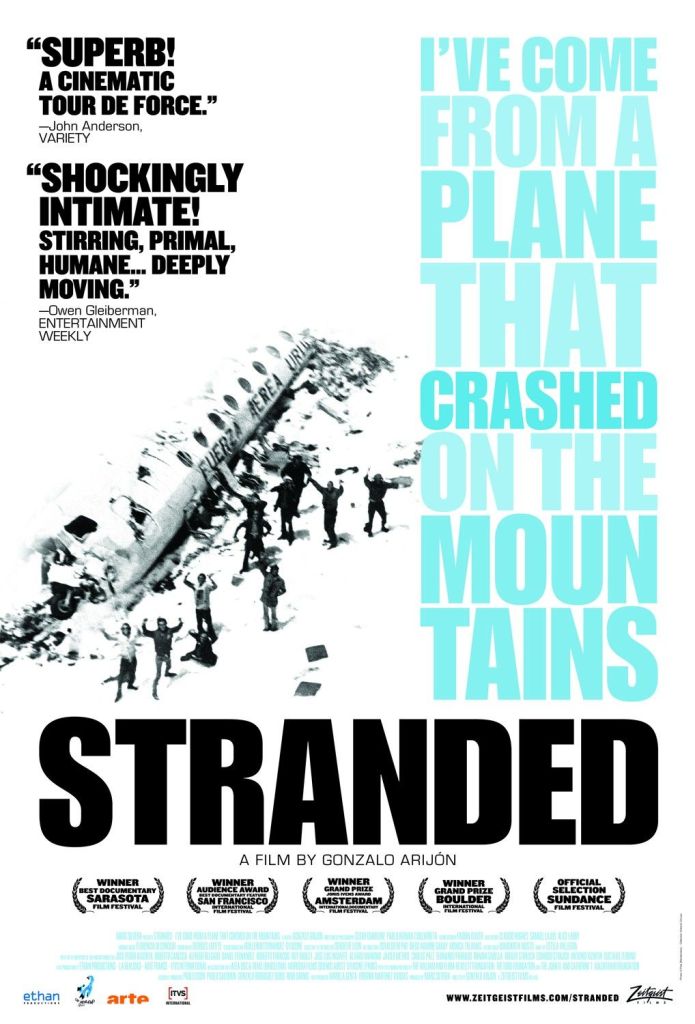
Stranded: I Have Come from a Plane that Crashed on the Mountains is an Unforgettable Documentary

Now I am sure many of you have long since become familiar with this story. On October 13, 1972, a young ruby team from Montevideo, Uruguay, boarded a plane which was going to take them to a match in Chile. Their plane ended up crashing on a remote Andean glacier, its fuselage torn off and wings shorn. Anticipating they would be rescued, they waited in the snowy wreckage for help, but none came. When they ran out of food, they were forced to eat from the bodies of those passengers who had died. Eventually, two passengers managed to breach the treacherous Andes Mountains and brought help to their teammates left stranded in what was left of the plane. Out of the 45 passengers on that plane, only 16 survived. They were stranded on that glacier for 72 days. The fact any of them survived is nothing short of a miracle.

This story caused a sensation when first presented on the news, and many focused more on the sensational aspects of what happened, namely the cannibalism or reports of it. It was later documented in the 1973 bestselling book “Alive” written by Piers Paul Read. I have not read the book, but I did see the movie it was based on back in 1993 which starred Ethan Hawke. I remember watching it with my brother, and we both dug the seriously nasty plane crash which opened it. The movie was okay, but even with a screenplay by John Patrick Shanley of all people, it got weighed down by an endless variety of clichés. There did not seem to be any real tangible way to really get at how those rugby players truly felt while they were stranded on a glacier which they seemed destined to die on. How could they anyway?

Decades after this plane crash occurred, we got a documentary about it entitled “Stranded: I’ve Come from A Plane That Crashed on The Mountains.” This one has the advantage of having all the survivors from the crash participate participating in interviews in which they recount all the horrors they were forced to endure, and it was directed by a documentary filmmaker who also happened to be a childhood friend of theirs, Gonzalo Arijon. Through archival footage, interviews and reenactments of the events, Arijon succeeds in creating a shockingly intimate look at what these people went through in order to survive, and it puts us right into the mindset of the survivors in a way no movie or book, however well written it was, could. It proved to be one of the most astonishing cinematic portraits I have ever seen about survival, and it has stayed with me ever since I first watched more than a decade ago.

A documentary with reenactments almost sounds like an oxymoron. Certain other documentaries like “American Teen,” which came out in the same year, have been accused of restaging events that happened to the people, and it threatened to take away what felt truly real about it. The director of the movie, Nanette Burstein, admitted to restaging one event regarding a text message, and it did make for a good emotional moment, and I really do not blame her for doing so. I bring this up because the reenactments and restaging of events in “Stranded” serve to illustrate how incredibly desolate the circumstances were for these people, and they are necessary to show the way they survived. Plus, there is not a lot of archival footage for Arijon to work with, and without the reenactments, I am not sure he would have had much of a documentary.

The archival footage consists of photographs which were taken before and after the crash, and they are haunting to see as they show who these people were and what they ended up becoming. There are also some interviews shot with the survivors after they are rescued, and the audience reacted strongly when the interviewer asked them how they managed to survive. Their response to this at a later news conference brilliantly spells out why they did what they did.

The issue of cannibalism, if you really want to call it that, is handled very sensitively here. The reactions of the survivors to eating the flesh of those who have died goes through a variety of emotions from revulsion of even thinking about it to determination to survive and see their families again. But in the end, who are we to judge them for what they did? These were people pushed to the brink of madness and did whatever they could to survive, and “Stranded” puts us right in their mindset as they made their decision to eat from the bodies of their teammates. Do not even think you would have done things differently because you have not been through what they had. If you want to get cynical about it, those teammates were already dead, so they did not have a lot of say in the matter.

But the most astonishing moments in “Stranded” come from the survivors themselves. Their recollections of what they went through are still very vivid to them to this very day. The participation they gave to this project was invaluable, and we see them with their spouses and children as they go to revisit the site of the crash and go over what happened with them. What they do here is very brave, and their willingness to talk about what went on is beyond commendable. While this documentary may seem more about death than anything else, it is really more about survival and the power of the human spirit. It is also about the power of friendship and how indestructible it can be even in life’s worst moments.

With the aid of Arijon’s work, we see specifically how the survivors remember all the details of what happened. We see them lose their friends and of how they died, and of the ways they survived which included punching each other constantly so the blood would circulate better in their bodies. The moment we see those three men, which later became two, breach the Andes Mountains, we feel their desperation as well as their dwindling feeling of wanting to survive. All of these elements provide us with the most intimate portrait of this plane crash they could ever hope, or want, to get.

2008, the year in which “Stranded” was released, proved to be a tremendous year for movies set in the coldest of environments. During the summer, we got “Frozen River” which took place in the subzero weather of upstate New York. A few months later, I watched “Let the Right One In” which observed the tender relationship between a young boy and a female vampire in a frigid suburban neighborhood of Sweden. The details of these ferociously cold climates are almost completely dwarfed by the barren coldness which this documentary focuses on. Some of us are spoiled by the elongated summers we have in certain parts of the United States, but nothing we have experienced thus far will ever seem as cold as it is here.

“Stranded” gave me one of the most powerfully absorbing cinematic experiences I back in 2008. It is at turns thrilling and harrowing and, in the end, it is utterly inspiring as some of these passengers just refused to give up and die. Gonzalo Arijon brilliantly succeeds in capturing the events of this situation in a way no other filmmaker could, and it will stay with you long after you have finished watching it.

* * * * out of * * * *

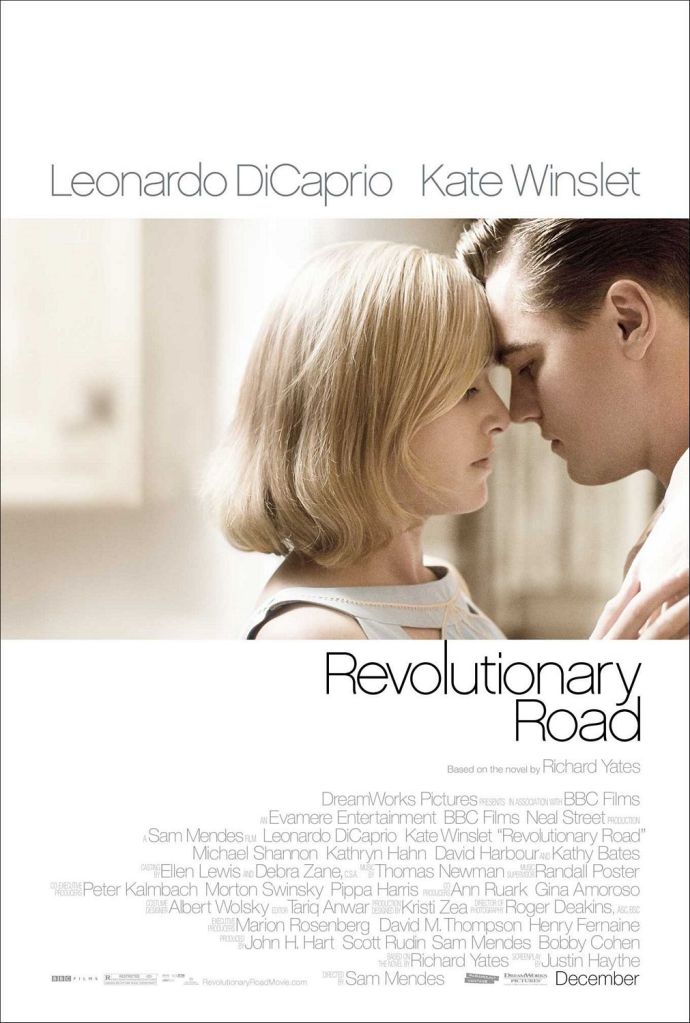
One From Sam Mendes: Revolutionary Road

“Once in a lifetime comes a motion picture that makes you feel like falling in love all over again. This is not that movie.”

– Tagline for “War of The Roses.”

“Revolutionary Road” feels more like a horror movie than a romantic drama. It is brutally honest in the way it depicts the terrible disintegration of a marriage, the kind none of us ever want to get trapped in. Those of you who still think gay marriage is a threat to the sanctity of marriage should take a look at this movie, for it is a much more astute examination of what can really destroy such a prized institution. When the movie starts, we know we are in for a fateful journey of two people who at first look like they belong together, but we know they will eventually tear each other apart limb from limb.

But as tough as “Revolutionary Road” is to watch, it is also an utterly brilliant film which serves as further proof of how Sam Mendes’ Oscar win for his directorial debut of “American Beauty” was no fluke. There is not a single false note to be found here, and it feels practically flawless in its making and design. It has great visuals, a great screenplay and amazing performances from the entire cast. Mendes makes “Revolutionary Road” an enthralling experience into the horrors of conformity, the very thing we all try to fight against.

The movie starts with its two main characters, Frank and April (Leonardo DiCaprio and Kate Winslet), when they first meet at a party where they are instantly attracted to each other. The story then moves forward to years later when April is taking a curtain call for a play she is acting in, and she ends up bowing to a very unenthusiastic response from an indifferent audience. It is clear their relationship has gotten cold, and the utter frustration constantly simmering under the surface seem to be the only thing left for them to deal with. This leads to April to come up with what she sees as the perfect plan: They can sell their house and car and move to Paris where she can support Frank through secretarial work while he figures out what he really wants to do with his life. They both see it as their great chance to escape the confines of normalcy which has been eating away at their fragile little souls. However, reality threatens to take away from their dream one piece at a time.

This was Mendes’ fourth film as a director, and you can see a common thread through all his movies. Mendes seems endlessly fascinated with characters whose lives are at a standstill, and who hope for something incredible to happen to them. They are waiting for that moment where they can change into what they always hoped to be, and yet it never quite arrives. In “American Beauty,” it was the characters’ desire to wake up from their dead and dysfunctional lives. In “Road to Perdition,” it was the desire of Tom Hanks’ character to get his son away from the devious life he was leading as a mob enforcer, and to redeem himself in the eyes of his son. In “Jarhead,” it was the desire of the soldiers to enter a war and fight like men, and to take down their enemies by lethal force.

All of this comes around full circle in “Revolutionary Road” as this film deals with characters eager to escape their suffocatingly conformist suburb to live a life of sheer excitement. But they soon come to find they are not as special as they thought they were, and the desires of Frank and April seem to work in opposition to one another. The characters are complex in their creation, and we see what fuels their individual needs, desires, fears and anxieties which serve to define them and their actions. It’s almost like Frank and April are like George and Lenny from “Of Mice and Men;” they are two people hoping to get something they can never truly have, and they constantly delude themselves into thinking all is within their grasp and that their dreams will soon become a reality. But reality comes to rear its ugly head at them, and you know that it ain’t gonna pretty.

In a sense, “Revolutionary Road” can be seen as kind of a distant cousin to “American Beauty” in how it details the suffocating environment of suburban living, but each film approaches this differently. While “American Beauty” dealt with its characters with a dark sense of humor, the environment in “Revolutionary Road” is much bleaker and more consuming. In fact, “American Beauty” seems like a delightful walk in the park compared to this one.

This movie takes place in 1950’s Connecticut, and yet it feels quite contemporary which shows how frighteningly timeless story is. This is what will make the movie hard for many people to watch as they may end up seeing themselves in these two people; the longing for a more exciting existence, for an escape from the suburban way of living which has drained them almost completely of feeling, and to get another chance to get what they truly want out of life.

Along with cinematographer Roger Deakins (“No Country for Old Men“) and production designer Kristi Zea (“The Silence of The Lambs”), Mendes perfectly captures the look and feel of the 1950’s to where you feel like you are right in it. He also captures the routine of the life in suburbs and manages to capture some unforgettable moments like when April takes the garbage out to the front of the driveway, and she sees everyone else has placed theirs out in front as well. In this moment, he captures April’s realization of how she and Frank have bought into the resigned way of living they both thought they would somehow avoid. It’s a beautiful movie to look at, but the ugliness of its characters’ frazzled emotions come through to make this seem like anything other than a Norman Rockwell portrait.

In addition, Mendes is served very well by his frequent film composing collaborator, Thomas Newman. While his music score may sound like many of his others, Newman captures the longings of both Frank and April as they tumble through their seemingly mundane existence, and soon end up being driven crazy by it and each other. Throughout all his work, Newman seems to work with music so subtle in how it is performed, and yet so powerful in what it ends up conveying. It’s no accident that Newman also scored Mendes’ “American Beauty” and Todd Field’s “In the Bedroom.” Like Mendes, Newman has a strong feel for life in the suburbs no matter what decade a movie takes place in.

“Revolutionary Road” is really a tremendous acting showcase more than anything else, and I don’t just mean from the two main actors. You have the always wonderful Kathy Bates who plays Mrs. Helen Givings, the endlessly talkative real estate agent who sells Frank and April the home they end up living in. The smile on her bright face serves to hide the pain that we see later as we are introduced to her son who has just been released from a mental institution. You also have the terrific Dylan Baker as Frank’s co-worker, Jack Ordway, a man who endlessly waxes philosophically over the craziness of our existence. David Harbour and Kathryn Hahn are also excellent as the next-door neighbors, Shep and Milly Campbell. The excitement April and Frank have over their plan to go to Paris both enthralls and depresses Shep and Milly, and the way they react to it implies how April and Frank are not the only ones leading lives of quiet desperation.

But one of the true standout performances from the supporting cast comes from Michael Shannon as Helen Giving’s mentally unhinged son, John. In an atmosphere where the truth is felt but never verbalized, John finds himself completely incapable of telling a lie. Essentially, he is a Vulcan like Mr. Spock, but with an overabundance of raw emotion. Through his thoughtlessly cruel remarks to everyone around him, he exposes the seemingly perfect couple and their marriage for the sham it has become, and you can clearly feel his betrayal by these two people who had promised to escape the lifestyle they found themselves so hopelessly trapped in. Shannon’s performance is astonishing in its uninhibited nature as he becomes the voice of reason in a world so full of lies.

This of course brings me to the two main actors, Leonardo DiCaprio and Kate Winslet. This is the first film they have appeared in together since “Titanic,” but one is very different. It could almost be seen as a story of what happened to Jack and Rose after the big ship sank, assuming Jack survived the freezing waters. Both DiCaprio and Winslet have an incredible chemistry with onscreen, and it seems crazy it took them over 10 years to do another movie together.

DiCaprio continues to prove why he is one of the best film actors of his generation. Throughout the movie, he lets us look past the egotistical nature of Frank Wheeler which allows him to seduce a naïve young secretary (played by the wonderful Zoe Kazan), and to see the pain and fear which threatens to steer him further in a direction he never planned to go in. The relationship he had with his father always seems to be surrounding him in ways which are never fully explained, but we can see how it enforces the decisions he ends up making. Frank clearly cannot stand the job he has as a salesman, but he is also equally terrified of leaving it as he feels he may let down his family in the process. DiCaprio brilliantly captures the complexity of this character whose needs and desires constantly tangle with one other, and whose anger and frustration with life eventually boils over to the only person he can take it out on, his wife.

But as raw and complex as DiCaprio’s role is, he is almost completely blown away by Winslet’s performance. Watching her here, you might think she was in a Lars Von Trier movie. Whereas Frank may have been desperate to escape his mundane existence, April is ten times as desperate to do the same. Her desire to escape the boring life she sold herself out to is never ending, and she can never hide her pain and feelings of hopelessness from those around her. You have to wonder where she gets the energy to do this emotionally exhausting work, and she has more than earned her place in the ever-growing pantheon of great actresses.

“Revolutionary Road” is not the most enjoyable of movies to sit through, but not all movies are meant to be, and this one is not without purpose. We empathize with Frank and April in spite of the way they treat each other because we know all they go through could easily happen to us.

Sam Mendes is one of the best directors working today, and he created another masterpiece of suburban isolation which stands proudly alongside “American Beauty” and “In the Bedroom” among others. It also shows how the term “civil marriage” can seem like the ultimate oxymoron. It goes back to people saying how love is a four-letter word, or that it is a sentence. Frank and April’s story is a tragic one, and probably not a movie to be watched by those who just got engaged.

* * * * out of * * * *

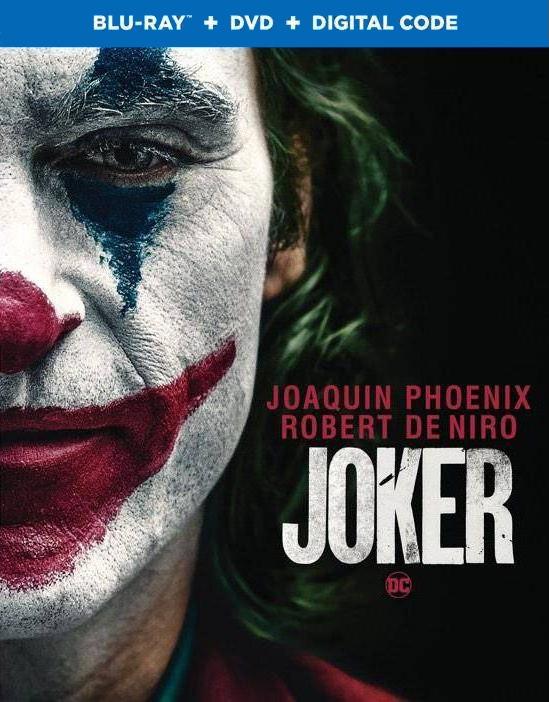
Joker Movie and Blu-ray Review

The following review was written by Ultimate Rabbit Correspondent Tony Farinella.

If you had told me “Joker” would be the best film of 2019, I would have looked at you a little funny.  Truth be told, I’m not the biggest fan of comic book or superhero movies.  I understand I’m in the minority here as they are extremely popular and make billions of dollars.  Personally speaking, I find them hard to get into, and I have difficulty suspending my disbelief in certain cases.

So, what is different about “Joker?”  Well, it does not play like a comic book movie.  Instead, it plays more like a character study and drama as we learn how the Joker became the Joker, and it does so in a way which is unnerving, challenging and brutally blunt.  That is how I like my movies.

Joaquin Phoenix should win an Oscar for his portrayal of Arthur Fleck, and he might be well on his way after winning a Golden Globe.  He lost a lot of weight for this performance, but it’s more than just the physical transformation.  It’s also the looks he gives and the emotional power he brings to the role.  Now a lot of controversy surrounded this film when it was released as people were worried the tone and nature was going to inspire other people to behave in a similar fashion as the Joker.  One interviewer even asked Joaquin Phoenix a question about the film potentially inspiring mass shooters.

Now I understand we live in sensitive times, and I am very aware and respectful of other people’s feelings.  A lot of bad things have happened over the past two decades, and we can’t ignore any of that.  However, when it comes to blaming video games, television or pop culture for these things, I find it is a rather far-reaching theory.  Film can be used in certain instances as a way to entertain, educate and inform us.  “Joker” is merely commenting on what is happening in the world today, and this is even though it is set in 1981.  You can’t help but see the parallels between what is happening in the film and what is happening in the world right now.  After all this time, there is still a marked division between the haves and have-nots.

Arthur is down on his luck in life even though he is trying his best to put on a happy face.  He lives with his sick mother (Frances Conroy), who is obsessed with Thomas Wayne (Brett Cullen).  She used to work for him and keeps writing him letters, hoping he will respond and help them out.  When Arthur is out on the streets twirling signs as a clown, he gets beat up by a group of young punks, and it appears no one has much sympathy for what he endured.

He can’t catch a break with his therapy sessions either as he feels as though his therapist is not really listening to what he has to say. People also judge or feel uncomfortable around him because he has a condition where he has uncontrollable laughter, sometimes in inappropriate moments.   He’s on a number of medications (seven in fact), but none of them seem to be making him very happy.

Every night, he watches the Murray Franklin Show with his mother. Robert De Niro plays Murray Franklin, the wisecracking late-night talk-show host. Arthur hopes to one day be on the show as a famous stand-up comedian.  It is his dream. The film does a great job of showing how someone on that many medications can have severe side effects and difficulty figuring out what is reality and what is fiction.  I enjoyed the fact the film did not spoon-feed everything to the audience.  In many cases, you are not sure what is really happening or what is in Arthur’s head. The film tackles how difficult it is to get the proper funding for mental health treatment.  It is about someone who has been completely ignored and rejected by society.

Arthur is doing his best to put on a happy face, but the world around him is getting more and more out of hand each and every day.  Whenever he turns on the news, there is another gruesome or horrible story.  It makes him wonder what his purpose in life is and what is going to become of him.  How will he survive in this world?  He’s doing everything he believes to be right and fair, but the world is spitting him up and chewing him out.

This is when the real Joker is revealed after Arthur’s had enough and can’t take it anymore.  It’s up to the audience to decide what it all means and what’s the truth of the matter. Even Thomas Wayne can be looked at as a Trump-like figure if you want to go there.  I picked up on certain things I felt director Todd Phillips was sprinkling in throughout the movie, but I don’t know his true intentions.

“Joker” is the best film of 2019 much to my surprise.  It is supremely well made, intense, and it left me wanting more.  The film does leave the audience with more questions than answers, but this is a good thing.  We don’t need everything tied up together at the end of the film.  This is not that type of movie.  A lot of critics have compared it to 1970’s cinema and also “The King of Comedy” and “Taxi Driver.” It is the kind of film which is most definitely worth watching again and again because there is a lot to digest and unravel.  The musical score by Hildur Guðnadóttir, which also won at the Golden Globes, really sets the dark tone and mood of “Joker.”

Joaquin Phoenix is perfect as Arthur Fleck/Joker.  Without him, this film does not work.  I have not seen a performance which stayed with me like this in a long time.  At times, he’s sympathetic, and you feel empathy for him.  At other times, you are disgusted by his actions and his behavior.  This is not a one-dimensional character.  This film took a lot of balls to make, and it also took a lot of balls on the part of Phoenix to make the choices he made in this film.  “Joker” is a masterpiece of cinema, and it is easy to see why it is the first R-rated film to make one billion dollars at the box office.

* * * * out of * * * *

______________________________________________________________________________

Blu-Ray Info: “Joker” is released on a two-disc Blu-ray combo pack from Warner Brothers Home Entertainment.  It has a running time of 122 minutes and is rated R for strong bloody violence, disturbing behavior, language and brief sexual images. It comes with the Blu-ray, DVD and a digital code as well.

Video Info: “Joker” is released on 1080p High-Definition on an aspect ratio of 1.85:1.  The film looks absolutely perfect on Blu-ray.  It has an old-school look to it while also looking crystal clear at the same time, which is exactly what the film needed to look like.

Audio Info: The audio for the film is presented in Dolby Atmos-TrueHD: English, English Descriptive Audio, and Dolby Digital: English, French, and Spanish.  Subtitles are also in English, French, and Spanish.  The audio is superb.  Once again, the score by Guðnadóttir is hauntingly eerie, and spot-on for the film.

Special Features:

Joker: Vision & Fury

Becoming Joker

Please Welcome… Joker!

Joker: A Chronicle of Chaos

Should You Buy It?

In the end, what Todd Phillips and Joaquin Phoenix pulled off in “Joker” is simply stunning and mesmerizing.  This is not hyperbole here.  This film and everyone who participated in it deserves all of the praise they have received.  It is also great to see appearances by Marc Maron, Brian Tyree Henry and Bryan Callen sprinkled into the film along with a very stellar supporting performance by Robert De Niro.  It would have been nice to see more of Zazie Beetz in the film, but she does a lot with her limited screen time. She’s a pivotal part of the movie, especially the more you think about it.

A lot of people can probably relate to how Arthur feels and everything he is going through in life.  Of course, you don’t agree with his actions in the film, but you can understand it in the context of the film and this character’s state of mind.  That is the important thing to remember here—this is a film.  No one should ever go out and do any of this. I have to make that crystal clear.

You should buy this film as soon as you can! This is the kind of film you want to add to your collection because it is only going to get better with age.  It is an adult drama/character piece which is perfectly done.   The special features are a little light in terms of length, but maybe that was done on purpose.  The filmmakers don’t want to show all of their cards.  This film comes highly recommended from yours truly. It blew me away in the cinema, and I had the same reaction watching it at home.

Robert Ben Garant and Thomas Lennon on their Favorite Hollywood Screenwriting Movie, Barton Fink

WRITER’S NOTE: The following article is about a screening which took place in July of 2011.

Robert Ben Garant and Thomas Lennon dropped by New Beverly Cinema to host a double feature of the movies they consider to be the best about screenwriting in Hollywood: “Barton Fink” and “Sunset Boulevard.” Garant and Lennon are known for writing the scripts for the “A Night at the Museum” movies, creating the MTV sketch comedy series “The State,” and starring in Comedy Central’s “Reno 911.” They were invited to screen some of their films, but both flatly refused as they consider only two of them “watchable.”

Much of the evening was spent talking about “Barton Fink,” as they both see it as their life story. Written by Joel and Ethan Coen and directed by Joel, it stars John Turturro as the Barton of the movie’s title, a respected playwright from New York who moves to Los Angeles to write for the movies. While there, he stays in the dilapidated Hotel Earle where he befriends insurance salesman Charlie Meadows (John Goodman), who tells Barton he sells “a piece of mind.” Barton also deals with the overzealous movie boss Jack Lipnick (Michael Lerner, in an Oscar-nominated performance), who tells him he cares deeply about his writing ability but who, in the end, is far more interested in what the audience wants to see.

Garant and Lennon recollected about watching “Barton Fink” back in 1991, the year before they started working on “The State” for MTV. They found it funny and abstract as Jack Lipnick chews out Barton for being “too fruity,” and they both looked at each other and said, “Wouldn’t it be funny if movie studios were really like that?”

But soon after that, they both found those meetings Barton had were exactly like ones they ended up having in Hollywood. They consider this and “Who Framed Roger Rabbit” to be a far more accurate depiction of Hollywood than Robert Altman’s “The Player,” and, as John Travolta said in “Pulp Fiction,” “That’s a bold statement!” Tony Shaloub’s character of movie producer Ben Geisler ends up getting fired without ever reading Barton’s script, and to this the two of them replied, “That’s Hollywood!”

They also joked about how “Barton Fink” acted as the origin story for John Turturro’s character of Jesus in “The Big Lebowski.” John Goodman, who is also in “Lebowski,” ends up giving Turturro a box, and the Coens never say or show us what is in it (very smart on their part). For all we know, it’s Jesus’ bowling ball in there. Either that, or it is the same box featured at the end of David Fincher’s “Seven.”

Garant and Lennon recently released a book they wrote called “Writing Movies for Fun and Profit: How We Made a Billion Dollars at The Box Office and You Can Too!” If you take a good close look at the title, you will see the word “fun” has been crossed out. They were a hilarious delight as they talked about their ups and downs screenwriting in Hollywood. It was as fun to hang out with them for this double feature as it was guessing what their favorite quotes from “Barton Fink” were. They did, however, make it very clear that this was not one of them:

“The writer is king at Capitol Pictures!”

A few years later, I got to interview with Robert Ben Garant and Thomas Lennon about “Hell Baby,” a horror comedy they wrote, directed and starred in. I brought up how I attended their double feature of screenwriting movies and of how “Hell Baby” was made independently without any interference from studio executives. I assumed they enjoyed the immense freedom they had in making this film, and it was the kind of freedom which was denied to them when they wrote the “A Night at the Museum” movies.

Please check out the interview below which I did for We Got This Covered. In addition, to Garant and Lennon, I also got to talk with Keegan Michael Key, Rob Huebel and Rob Corddry.

Amy Heckerling Looks Back at Fast Times at Ridgemont High

WRITER’S NOTE: This article is about a screening which took place back in July of 2011.

It is very scary to realize “Fast Times at Ridgemont High” is now at its 30-year anniversary. Although dated stylistically, what the students went through in this movie still feels very relevant to what today’s generation goes through on a regular basis. Based on the book by Cameron Crowe, who also wrote the screenplay, it follows a group of students during one year at a San Diego high school. Its director, Amy Heckerling, dropped by the Aero Theatre in Santa Monica to talk about the behind the scenes stories, and she was greeted by a sold-out audience.

“Fast Times at Ridgemont” is notable for its frank depiction of teenage sexuality and in dealing with highly sensitive topics like abortion. Heckerling said the movie was shot at a time when things were rapidly changing. The sexual revolution was ending and the era of Ronald Reagan was on the rise along with conservatism. Most teenage comedies deal with situations from the male point of view, but Heckerling was adamant about the audience seeing things from the woman’s perspective. The MPAA, however, forced her to cut scenes like when a girl talks to her mother about blow jobs in order to avoid an X-rating. After all these years, the hypocrisy of the MPAA never ceases to amaze me.

These days, the movie is known for having three future Oscar winners in its cast: Sean Penn, Forest Whitaker and Nicolas Cage, who is credited here as Nicolas Coppola. This is not to mention all the other cast members like Jennifer Jason Leigh and Phoebe Cates, both of whom went on to other successful efforts after this movie’s release.

Heckerling recalled coming into this movie at what she called an “awesome” time. Casting young kids in a movie proved to be tricky, but she loved how there was so much great talent to choose from. When asked if she thought all great actors could do comedy, Heckerling replied some have it in their makeup while others do not. In working with Penn, she said he is wonderful in everything he does, and his smile always lights up whatever room he is in.

In talking about the soundtrack, Heckerling wanted to fill it with 1980’s music and songs by Oingo Boingo and the Go-Go’s. While she got to include the songs she wanted in the movie, she was also forced to add in a lot of 1970’s rock music from bands like The Eagles. This was in large part due to one of the movie’s producers, Irving Azroff, being the personal manager of The Eagles at the time.

One audience member asked Heckerling if the studio proposed any sequels or prequels to “Fast Times at Ridgemont High.” She said when the movie was screened in Westwood, one studio executive suggested, “How about ‘Spicoli Goes to College?'”

There was a television spinoff but, like many of its kind, it proved to be short lived. There was also something of a follow up to “Fast Times” called “The Wild Life,” which was also written by Cameron Crowe and directed by Art Linson, but Heckerling said it was not strictly a sequel.

As unbelievable as it is that we are now at the 30th anniversary of “Fast Times at Ridgemont High,” it only goes to show this particular movie’s staying power. It remains as raunchy and funny as when it first came out, and it is also one of the great time capsules of the 1980’s. This is the kind of movie which really does not need a sequel or a prequel at this point to justify its success or longevity.

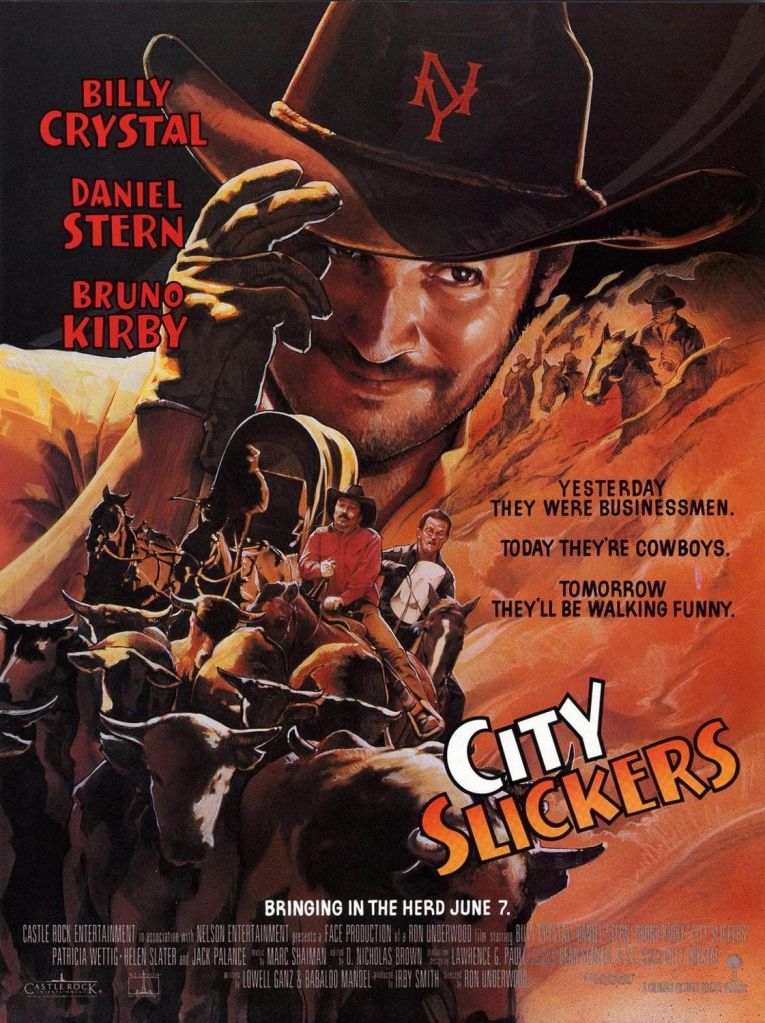
Billy Crystal Looks Back at the Making of City Slickers

Billy Crystal was at the Aero Theatre in Santa Monica, California on August 12, 2011 when American Cinematheque screened “City Slickers” in honor of its 20th anniversary. Unlike other guests, Crystal actually sat through the entire movie with the sold-out audience and a few people involved in its making: director Ron Underwood, director of photography Dean Semler, actors Daniel Stern, Tracey Walter and Bill Henderson, and screenwriters Lowell Ganz and Babaloo Mandel. Afterwards, Crystal did a Q&A with Geoff Boucher of the Los Angeles Times, and he said the last time he saw “City Slickers” was at its premiere in Hollywood.

“City Slickers” was made with the invaluable help of Castle Rock Entertainment. Crystal said he pitched it and “Mr. Saturday Night” to the studio. Unlike “When Harry Met Sally,” which he did before this, “City Slickers” proved to be a logistically difficult film to make. However, the prep time he had with Stern and the late Bruno Kirby was the best ever, and Crystal described the training they had as being so much fun.

Prior to filming, Crystal, the writers and Underwood looked at the classic westerns “Shane” and “Red River” for inspiration. Crystal said it looked like they had 9,000 cows in the shots, and this made him think markets had no beef to sell as a result. Everyone involved felt everything needed to look real, so the production pushed those cows and trained those horses endlessly.

The movie’s opening scene in Pamplona, Spain, was shot there and not on some soundstage. Crystal said Ganz was the one who suggested the bulls running to the studio. An hour after hearing this, the studio had hotel reservations ready for the cast and crew. It was no surprise to hear Crystal say they would never be able to do this scene today as it would all have to be done digitally now.

One audience member asked if Norman the cow was still around. It turns out there were 10 or 11 different cows used as they got old very quickly and had to be replaced. As for Norman’s birth scene, Crystal said it was shot in three different states and that he and Jack Palance, while in the same scene, were not on set together for it. Crystal shot his takes in Colorado while Palance filmed his in New York. Other parts of the scene were shot in California near Simi Valley.

The river crossing scene was the toughest one to shoot in “City Slickers,” Crystal said. The cows kept mounting each other and he, Stern and Kirby were all wearing wetsuits underneath their clothing, as the water was about 50 degrees. This led one of the stunt coordinators to tell Crystal, “Pee in your wetsuit!” Now, as disgusting as this may sound, urine has a temperature of 90 degrees or more, so it sure must have come in handy during filming!

Crystal laments how Hollywood does not make movies like “City Slickers” anymore. While he did not want to sound bitter, he said there was a different sensibility back when it was made, and he hopes movies will come around back to it in the future. Picturing how a studio executive would see it today, Crystal felt they would probably say to him, “Can we get them to the ranch faster? I want those guys there by page nine!”

Still, 20 years later after its release, we were all in agreement with Crystal that “City Slickers” holds up very well and is just as funny and entertaining as it was when it first came out. Seeing it on the big screen where it plays best made this clear to everyone in attendance.

So Bad Its Good: Josh Olson on His Favorite Cult Movie Musicals

WRITER’S NOTE: This article is about a screening which took place back in 2012.

Writer Josh Olson, best known for penning the screenplay to David Cronenberg’s “A History of Violence,” dropped by New Beverly Cinema to introduce two of his favorite cult movie musicals: “The Apple” and “Sgt. Pepper’s Lonely Hearts Club Band.” These films were not well received critically or commercially when first released, but they have since gained a cult following, and the fans have come to appreciate them for reasons the filmmakers did not exactly intend. This was especially the case with “The Apple” which has since become one of the most unique movie musicals ever made.

Olson thanked those who came to this double feature and made clear to us he worships at the altar of “The Apple” and shows it to those unfamiliar with it (a.k.a. virgins) everywhere. He even remarked how two close friends of his, after they saw it, had a baby. The movie tells the story of two young Canadian musicians, Alphie (George Gilmour) and Bibi (Catherine Mary Stewart), who travel to America to participate in an infinitely popular music festival. They are approached by the powerful entertainment agent Mr. Boogalow (Vladek Sheybal) to sign with him, but Alphie sees the dark side of the music industry and refuses to be a part of it. Bibi, however, finds herself caught up in the wild lifestyle this industry has to offer, and it is up to Alfie to rescue her from Boogalow’s evil clutches.

In addition to screenwriting, Olson works for a website run by filmmaker Joe Dante called Trailers from Hell, and he talked about how the trailer for “The Apple” was one of the first he did a commentary track for.

Josh Olson: I stand by almost everything I said on that commentary except at one point I did use the phrase “it’s so bad it’s good,” and I regret that today. This movie has taught me that that phrase is meaningless. Intention does not matter. There are great movies out there that are so much better than the filmmakers intended them to make or had a right to make. Everything is accidental in this business so I don’t think it matters. I think either a movie is great or it is not, and there are movies that people think are wonderful that just won’t entertain you one iota as much as “The Apple” will.

Olson made it clear to the audience he will never again use the phrase “so bad its good” in reference to “The Apple” as he considers it to be one of the greatest movies in the history of the world. Once it was shown, he came back to the front of the audience to introduce the movie version of “Sgt. Pepper’s Lonely Hearts Club Band” and said there was no way to top “The Apple,” so he wasn’t going to even try.

Olson talked briefly about “Sgt. Pepper’s Lonely Hearts Club Band” before it started. It was directed by Michael Schultz who previously made “Car Wash” which Olson described as a “weird, urban Robert Altman film,” and also “Cooley High” which he called one of the most formative films from his childhood. Olson told the audience at the New Beverly how Schultz got involved in making a cinematic adaptation of the Beatles’ classic album.

Josh Olson: Robert Stigwood (one of the most successful movie producers of the 1970’s) came to him and offered him “Grease” to direct, and Schultz looked at it and said, “This is fucking horrible and I don’t want anything to do with it.” So, he passed on “Grease” and it then went on to make a trillion dollars, and Robert Stigwood came back to him with the idea of turning the Beatles’ “Sgt. Pepper’s Lonely Hearts Club Band” into a movie starring the Bee Gees and Peter Frampton. To this, Schultz said, “Wow, this sounds like a worse idea than ‘Grease.’ But what do I know, I passed on ‘Grease.’”

After watching the “Sgt. Pepper” movie, we were all in agreement with Olson that it was one of the most “batshit” ideas for a feature film, and it remains one of the biggest critical disasters in motion picture history. Olson, however, did try to rationalize this particular movie’s existence as it was made back in the 1970’s.

Josh Olson: It was a better time back then, and you have to have the yin to balance out the yang. The really good ones (movies) were almost indistinguishable from the really bad ones. But we had people thinking “Sgt. Pepper” was a good idea for a movie, and we also had people who were making “Apocalypse Now” back then, so it was a small price to pay.

Big thanks to Josh Olson for putting this crazy double feature together. “The Apple” isn’t so much a movie musical as it is an experience, and you won’t find another one quite like it. As for “Sgt. Pepper,” we may never get another opportunity to see it on the big screen again, so those who stayed could not quite say they regretted sitting through it. But yeah, it really was a bad idea for a movie.

Eric Red Talks About the Cast of The Hitcher

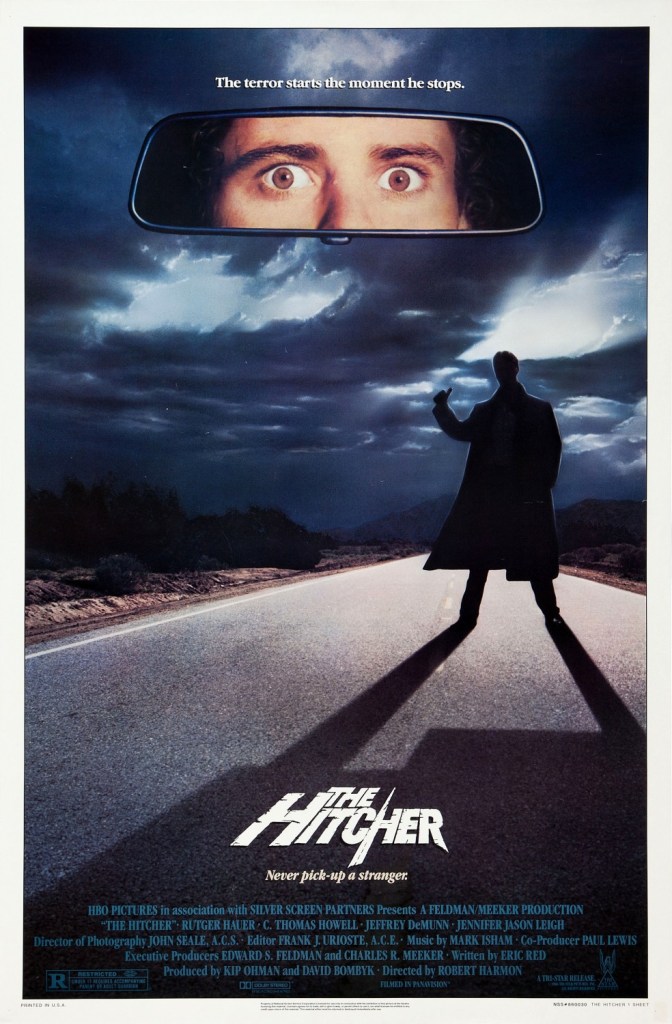
After all these years, “The Hitcher” (the original, not the godforsaken 2007 remake) has lost none of its suspenseful power, and it continues to terrify new generations of horror movie fans. In addition, it also marked a memorable point in the careers of the actors cast in it. Rutger Hauer created one of his most devilish villains ever with John Ryder, C. Thomas Howell gave one of his very best performances as Jim Halsey, and Jennifer Jason Leigh’s performance as Nash proved to be a real stretch for the actress (that pun was most definitely intended).

When the screenwriter of “The Hitcher,” Eric Red, arrived to do a Q&A at the Silent Movie Theatre in Los Angeles on October 9, 2011 where Cinefamily was showing the film, he gave the small but very attentive audience a lot of great stories involving the actors involved in the production, and he had plenty of unforgettable things to say about Hauer.

The audience was very surprised to hear Sam Elliott was originally cast as John Ryder before Hauer came along. Apparently, Elliott’s audition was so terrifying, one of the movie’s producers refused to stay inside the casting office whenever Elliott was around. Somewhere along the line, however, Elliott got cold feet and ended up dropping out of the production.

But even after hearing that, it is still hard to think of another actor who could have played this truly frightening character as memorably as Hauer. As Ryder, Red said Hauer “evoked the character to such a degree” and was always “unpredictable” in what he did. Red described his screenplay as being “sparse” and said it was more about looks than it was about dialogue as there wasn’t much of the latter. Hauer, however, brought so many ideas to the role which were not on the page. During this particularly screening, some of us actually noticed how Ryder was actually wearing a wedding ring. To this, Red simply said, “That’s Hauer!”

Oddly enough, the evening’s funniest story involved the scene where Leigh’s character of Nash was tied between a truck, and Halsey has to keep Ryder from stepping on the gas and ripping her apart. It turns out Hauer did not want to shoot this scene and would not even come out of his trailer when everything was ready to start shooting. The filmmakers talked to him regarding his concerns, and Hauer told them the following:

“I don’t want to shoot the scene because the audience will end up figuring out that my character is the bad guy.”

Hmm … Dismembering the driver who picked up Ryder before Halsey did, murdering a whole family and sticking a human finger in a pile of French fries was not enough to indicate Ryder was the bad guy? How scary it is to learn of this!

When it came to casting Halsey, the filmmakers did not have any particular actors in mind. Red said they all went with Howell as they remembered him from “The Outsiders” and described him as having “the right look.” Ryder is described as being a “father figure” to Halsey, and he wants Halsey to kill him. Howell convincingly portrays his character, who goes from a terrified young man in over his head to one who gains control and becomes almost as cold-blooded as Ryder.

With “The Hitcher,” Red was aiming to create a movie where the audience got an inescapable feeling of claustrophobia in wide open spaces. He said it does not only have to happen in a tiny room or an elevator. Even with the infinite expanse of land on display, no one can escape their pursuers. But the movie also benefits from its memorable performances from a cast who bring more to their characters than what was on the page. Without Hauer, Howell and Leigh, “The Hitcher” would never have been half as effective as what we ended up seeing onscreen.