Exclusive Interview with Melissa Joan Hart on ‘God’s Not Dead 2’
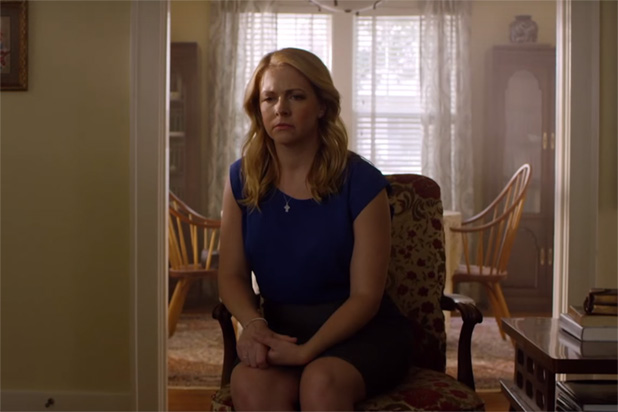
Gods Not Dead Melissa Joan Hart photo

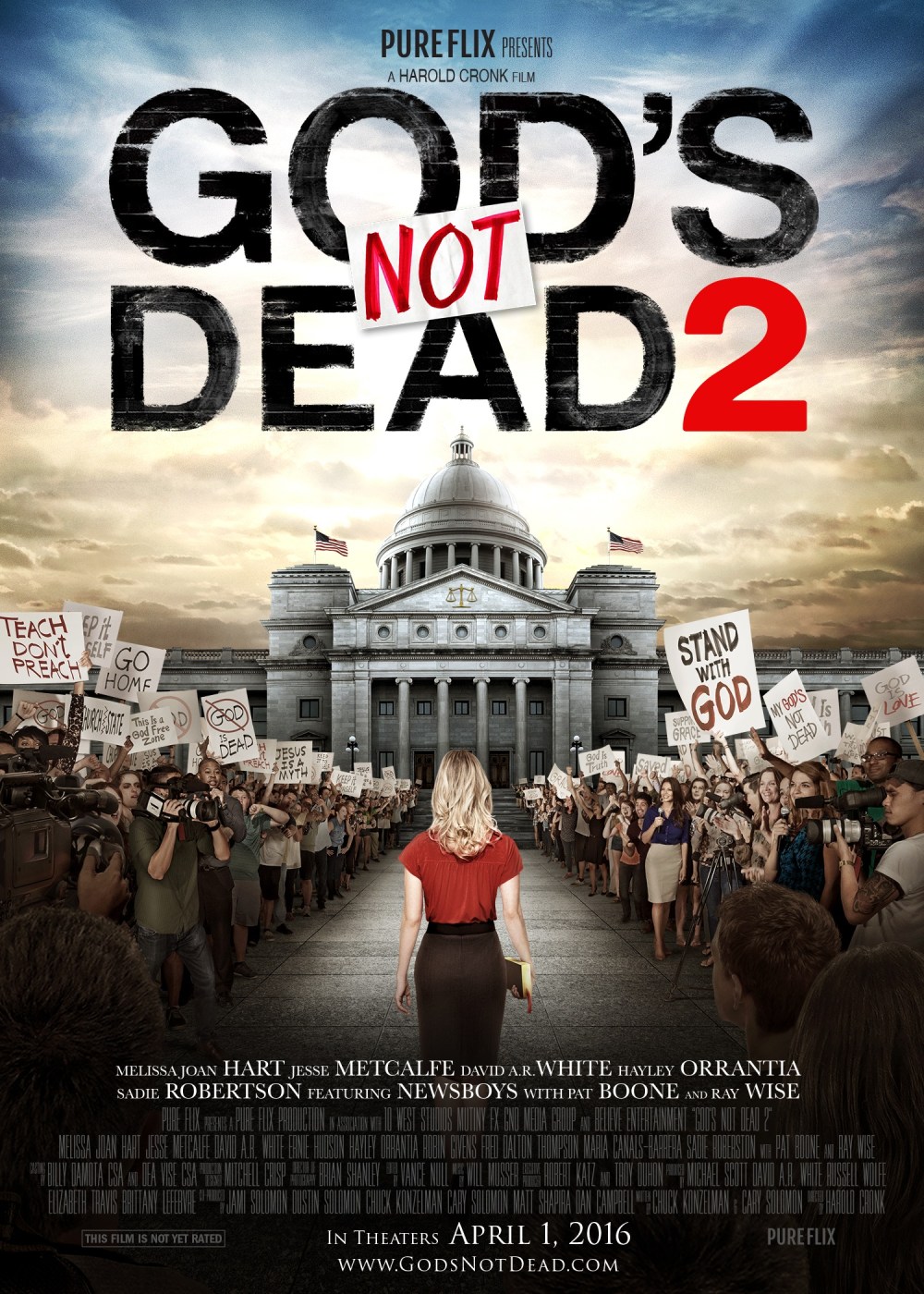
The 2014 movie “God’s Not Dead” only cost $2 million to make, but it went on to gross over $60 million and began a movement to strengthen the faith of Christians everywhere. That movement continues with “God’s Not Dead 2” which reunites director Harold Cronk with screenwriters Chuck Konzelman and Cary Solomon, but it tells a completely different story. This time the action moves to a public high school where teacher Grace Wesley (Melissa Joan Hart) encourages her students to appreciate history. But after Grace gives a reasoned response to a question about Jesus, she becomes the center of an epic court case which could end her career and expel God from the public square once and for all.

We all know Melissa Joan Hart from her popular television shows “Sabrina The Teenage Witch” and “Melissa & Joey,” and she is a veteran of show business having started at the tender age of four. I got to speak with Melissa while she was in Los Angeles, California for the “God’s Not Dead 2” press junket. She talked about joining a sequel which had none of the main cast members from the original returning to it, how social media has both helped and hindered the Christian movement, how she had to do a lot of reacting in this sequel, and why she feels likes an anomaly in today’s Hollywood.
Gods Not Dead 2 movie poster

Ben Kenber: It’s interesting how your character talks about Jesus as a historical figure and not a divine person, and yet it somehow leads to this legal case which dominates the movie.

Melissa Joan Hart: Well someone did ask us today in one of our interviews, “Is Jesus a bad word, and why has Jesus become a bad word?” You say Jesus you make people uncomfortable, especially Christians. I have become very comfortable with talking about things within my religion and within my faith. I have been a faithful person my whole life, but only in the last 5 years have I started bible study and really, really studying the word. It’s a hard thing to feel comfortable in this day and age. It’s weird that it used to be such an easy topic, and now it has become such a difficult, strained topic. You say things like “God bless you” and they look at you sideways. It is a weird situation going on these days, and so I like to make sure when someone sneezes that my kids go “God bless you” or if they see a man in military fatigues to say “thank you for your service.” People find it a little disconcerting, but when you do it they appreciate it. I was telling someone earlier about the ten commandments and someone pointed out to me and said, “Which of the ten commandments doesn’t hold up today?” The only one that seems to be fading out slightly is though shall not take my name in vain, and so I make sure I don’t, in my work, say “oh my god” or “OMG.” It really bothers me when other people do now, but in my house they don’t. My kids’ friends come over there and they are not allowed to say it and I’ll tell them why. If I feel the need to pray on an airplane because I’m terrified of flying, I’m not ashamed of that. I cross myself right there in front of whoever is watching. I had some controversy over a Christmas dinner at my house about whether everyone should go to church, and my stepfather brilliantly pointed out if anyone had gone to a Passover or any other kind of religious ceremony or holiday, you would respect that person’s wishes in their home. If you did accept that invitation to go to that event, you would be a part of it and not mock it. We are PC-ing ourselves to death here, literally. I think that’s why Trump is doing so well because he’s not correcting himself and he’s not being politically correct. He’s being completely politically incorrect, and not that I think he’s the best choice, but I can see the draw.

BK: Trump is definitely not the best choice and the fact that he has gotten as far as he has is frightening.

MJH: It’s disturbing.

BK: This is a sequel which features the same directors and some of the same writers but none of the main stars from the original returned for it. Was that ever a concern for you?

MJH: Actually I thought that was pretty exciting. I can’t recall another situation where that happened where they didn’t try to get the original cast and didn’t. I don’t think I’ve ever seen a sequel where the star didn’t go on. Well, maybe “Bruce Almighty” (laughs).

BK: There have been a few sequels like that such as “Son of the Mask” and “28 Weeks Later.”

MJH: But this is a completely different story. It’s not even the same movie. It’s a different movie with similar undertones and a few recurring characters, but really it’s a different story and so that’s kind of exciting and interesting. It was definitely a blessing to step into a leading role in a film that’s already well-established as a movement. The first movie ignited a movement across the country and I think it rallied together the Christian community, especially the youth, and they took to social media and started a movement.

BK: Speaking of social media, do you feel that it has helped the Christian movement or taken away from it?

MJH: I think it’s done both. I read somewhere that they say cell phones are the cigarette of the twenty-first century. They say that for health reasons but I think it’s toxic to families. I read a study where they were observing parents sitting in restaurants with their kids, and if they were on their phone they were more likely to be more violent towards their children and impatient and have outbursts towards their children than the ones that weren’t on their phones. I do think social media plays a big part in that because we want to be attached, but we’re not attached. I remember being in my house on a Thanksgiving and sitting around with everybody. We were watching TV and I made some comment about what was on the TV and I was like, “Can you believe he said that?” And I looked around and everybody was on their phone, but they justified it by saying, “Well we’re playing Words with Friends with each other.” And I said, “Well then why don’t we just play Scrabble?” So I do think that social media can be completely toxic. We feel like we are connected when we are totally not connected. We worry more about followers than friends. But in that way we have also found a fellowship out there of people across the world that we can relate to on certain subjects and certain topics, and Christianity is definitely a big one. I think the movement behind “God’s Not Dead” is doing amazing things on social media.

BK: You talked about how you had to do a lot of reacting in this movie, and that was great to hear because listening is one of the key things in African do especially when they are in a movie. How tough was that for you?

MJH: It was really a lesson for me. Obviously I’ve done reaction shots before, but usually I’m talking at a fast pace but trying to be funny. Usually when you’re the lead of the movie you just talk endlessly. Every other line is your line. So it was hard for me to sit there and just observe and then react, but it was also a great lesson for me to take a deep breath and enjoy not having to learn lines, but also being a part of the scene without having a voice in it and trust that the filmmaker and producers have you protected. It was a little bit for me to wrap my head around that the first week. I was like, “Well I’m not even saying anything. I barely talk.” I didn’t even realize until I get there and you start really reading the lines and you go, “I don’t have a line all day! I’m in every scene but I don’t have a line or I say three words and that’s it.” Jesse’s got six pages. It was hard for me to switch roles, but I’m excited I got the opportunity to do it obviously. If I get the opportunity to do that sort of thing again I know how to handle it better, and hopefully I’ll improve and hopefully with each project you’ll improve.

BK: The two “God’s Not Dead” movies have very different stories. It’s kind of like what’s going on with the two “Cloverfield” movies in that it deals with the same thematic elements even though they each take place on a different timeline. This makes the “God’s Not Dead” franchise seem more like an anthology than anything else.

MJH: Which is why I’m bummed because I know I won’t be in the third movie (laughs). But that’s exciting too because it gives the audience something else. They can come to the movie have knowing what to expect, but part of the fun of film beginning is not knowing the twists and turns and not knowing these characters and infuse it with some new energy. It’s about opening up the stereotypes because as Christians I feel like a lot of people, when you say Christian or the name Jesus, go oh you’re going to judge me now or I don’t go to church enough for you or I don’t know the verses of the Bible. People are always so afraid to be judged and I feel like a lot of Christian films do a little stereotyping, but I feel like in this case with this movie it’s really evolved to a place where these characters are complex. They are real people and these are real human experiences. People will hopefully relate to it more because they will find someone they identify with in this movie or they will identify with everyone.

BK: A lot of criticism that was directed at the first “God’s Not Dead” movie was that there were a lot of Christian stereotypes, but this one has characters that are a lot more complex which makes it more interesting.

MJH: Yeah, you don’t necessarily have a protagonist and an antagonist. I’m the victim in a sense, but not if you are an atheist. With Robin Givens’ character, we didn’t really know which way her character was going until the re-shoots. So I actually asked the director, “Is she bad or is she good? Is she on my side or are we hinting at that?” They decided to keep her a little bit more on the side of evil, but they do walk this nice line with everybody. It’s just a very realistic view of people, and you can’t put people in boxes and you can’t stereotype. I’m a conservative Hollywood girl, and yet I grew up in New York. I’m a Republican so I don’t really fit in with the liberal views of Hollywood, but I’m also anti-gun and pro-choice so I don’t fit into that spectrum. I feel like I’m an anomaly because people can’t figure out where to put me, you know?

BK: It’s interesting to hear you say that because in this day and age we have reduced so many things down to soundbites to where it’s far too easy to label everybody and anybody so broadly.

MJH: Yes. I said I was voting for Romney on Twitter years ago for the election, and instantly I got people saying you must be anti-gay, you must hate all other races, etc. Instantly it was like I just got pigeonholed into then you must be this way if you vote that way instead of just thinking maybe the other choice wasn’t so great (laughing).

BK: “God’s Not Dead 2” was a low budget movie that was shot in less than a month. Did the speed of that help you at all?

MJH: The speed of a movie never helps. They are trying to make movies faster and faster and faster these days which ends up putting a lot of pressure on the crew. So when you do speed these things up, the process is not helpful to the production. They say it puts more money on the screen but I don’t think it does. I think time really helps especially the performances. It’s hard to rush a performance. It’s hard to be like, “Hurry up! Cry! Okay, next scene!” But I feel like working in television you get used to a very rigid schedule and a very fast pace which also kind of kills a performance because I’m used to trying to make sure I hit my marks so I get my letting right. I don’t bang on my microphone so I don’t ruin sound. But am I really think about my performance when I’m thinking about all these other things as well? Did I hit my mark? Am I in the light? My makeup artist is telling me to keep my eye open and to keep my head up. If we had more time to rehearse it and feel it out and do everything and go through it systematically performances would be better, so I think that’s the main thing that suffers, the creativity behind the film, when you rush through it. They save a lot of money and it does get you back to your family faster, but at the same time it’s like you still can only work 12 hours a day.

I want to thank Melissa Joan Hart for taking the time to talk with me. “God’s Not Dead” is now available to own and rent on DVD and Blu-ray. Please visit the movie’s website (www.godnotdeadthemovie.com) for more information.

Copyright Ben Kenber 2016.

//pagead2.googlesyndication.com/pagead/js/adsbygoogle.js
<!– Ultimate Rabbit –>
<ins class=”adsbygoogle”
style=”display:block”
data-ad-client=”ca-pub-4712728578817385″
data-ad-slot=”1713958158″
data-ad-format=”auto”></ins>

(adsbygoogle = window.adsbygoogle || []).push({});
Tracy Letts Looks Back on ‘Bug’ at New Beverly Cinema

Tracy Letts photo

New Beverly Cinema concluded their month long tribute to Oscar winning filmmaker William Friedkin with a double feature of “Bug” and “Killer Joe,” movies which allowed him to escape the pressures of big budget filmmaking by going the indie route. Both were based on plays written by Pulitzer Prize-winning playwright Tracy Letts who also adapted them to the big screen, and he was the guest of honor at the New Beverly for this final night of Friedkin. Following “Bug,” he participated in a Q&A with Brian J. Quinn, host of the Grindhouse Film Festival. Quinn’s first question was how Letts first came up with “Bug,” and Letts took us back in time to when the play was first conceived and of how Michael Shannon was involved.

Bug movie poster

“Where it came from is what I’m puzzling about myself right now,” Letts said. “I had written ‘Killer Joe’ in 91, it got produced in 93, and that production wound up going to the UK. The Gate Theatre in Notting Hill (where it was put up) asked us for another show. The group for ‘Killer Joe’ were interested in working again, so I wrote quickly and I wrote the role of Peter for Mike (Shannon). Mike had played Chris in my production of ‘Killer Joe’ and was such a great actor. We took it to the Gate Theatre and the play wasn’t worked out. It took a long time and a lot of productions for me to work out some of the problems with it, but Mike played Peter not only in the London production but in the subsequent production in Chicago where I continued to work on it. And then the play went to the Barrow Street Theatre in New York in 2005, and Mike had been with the play for a number of years at that point.”

“Bill Friedkin saw the play in New York and he called me out of the blue,” Letts continued. “I had never met him or spoken to him and I thought it was a prank actually, but he had seen the show. He actually said, ‘I don’t actually think this is a movie. I just wanted to tell you that I am a fan of your writing and I think it’s great.’ And he called the next day and said, ‘Maybe it is a movie. Why don’t you come out here to LA and talk to me’ So I flew to Los Angeles and I met Bill at his home for the first time. He said, ‘I think it is a film. The more I think about it, it seems very cinematic to me.’ I said I would love to work with Bill Friedkin but it’s a claustrophobic piece. It doesn’t really make a lot of sense to open it up and have these disturbed people out in the world. And he said, ‘First, do no harm. I love the play and I have a way to make the play cinematic, so let’s work on the screenplay.’ And we did.”

Bug Michael Shannon and his teeth

Now while Shannon is well known these days for his work in movies like “99 Homes” and “Man of Steel,” he still had yet to make his big cinematic breakthrough. That would come a few years later in Sam Mendes’ “Revolutionary Road” which earned him an Oscar nomination for Best Supporting Actor, but there was no forgetting who he was after watching “Bug.” Of course, getting the actor cast in the movie was a challenge, but Letts explained how Friedkin championed for him.

“Billy fought really hard for him,” Letts said. “The people who were financing the film had no interest in using Mike, but Billy just insisted. He had seen Mike do the play live, he knew how powerful Mike was in the role, and he knew the role was written for Mike. And Billy actually had a lot of experience casting a lot of unknowns in movies: William L. Petersen in ‘To Live and Die in LA’ was his first big break, Linda Blair and Jason Miller in ‘The Exorcist.” I’m really glad he did (fight for Mike) because among the many pleasures of the film is the fact that Mike’s extraordinary stage performance was preserved on film. The freak out scene where he’s flopping and having a seizure on the bed, he used to do that on stage eight times a week.”

“Bug” was not a big hit when it arrived in movie theaters back in 2007. Part of this was due to competition from summer blockbusters, but it was also the result of what Letts called a terrible marketing campaign. While “Bug” looks like a horror movie, it is at its heart a psychological thriller and a character study. Still, studio executives in their infinite wisdom were convinced they knew what they were doing.

“Lionsgate decided that they were going to do a big opening and they were gonna just try and lure the kids into it like it was ‘Saw’ or ‘Hostel,’” Letts said. “They opened us up on 1,600 screens and they opened it in the summer opposite ‘Pirates of the Caribbean: At World’s End’ on Memorial Day weekend. Billy had begged them not to do this. We said please don’t open this movie on 1,600 screens. We said this was a terrible mistake; we should open it small and let it build its audience. But they just insisted and ran these terrible trailers on TV with the announcer going, ‘They live in your blood. They feed on your brain.’ So the horror movie kids came in and they hated it, and the people who would have enjoyed the movie didn’t come because they thought it wasn’t their cup of tea. So it just died a terrible death unfortunately.”

Letts also talked about Friedkin and of how he makes a movie. Because this was a low budget feature, its shooting schedule was very short and Friedkin was in no position to be like Stanley Kubrick or David Fincher and do 70 takes of the same scene. Letts also took the time to demystify Friedkin’s reputation.

“Billy shoots quick,” Letts said of Friedkin. “He starts work early in the morning at four o’clock, he’s done and goes home. He brags about the fact that he only shoots one take. That’s not quite true. He will shoot something else if light falls into the shot. Mike used to ask him for another take and Billy said, ‘What, you got stock in Eastman Kodak?’”

Bug Ashley Judd

“Bug” proved to be an emotionally raw cinematic experience and is almost as unnerving as Darren Aronofsky’s “Requiem for a Dream.” Both Shannon and Ashley Judd give some of their best performances ever, and Friedkin succeeds in stretching this play beyond its claustrophobic staging to give us something which slams us back into our seats and never lets us go for a second. It was a real treat for the New Beverly audience to have Tracy Letts come down and talk with us. In his heart he still feels like a Chicago theatre guy more than anything else, but along with Friedkin he made a pair of movies which fearlessly went against what was mainstream, and we need movies to go against the grain every once in a while.

Bug movie poster 2

Copyright Ben Kenber 2016.


Save

Anthropoid

Anthropoid poster

Anthropoid” is kind of like a cousin to “Valkyrie,” another movie about soldiers looking to take out a high ranking Nazi. Like “Valkyrie,” it will not go down as one of the most memorable World War II movies ever made, but it is an entertaining film which engages us with noble characters, interesting questions about the price of war and a furious climax where resistance fighters make their last stand. More importantly, it deals with a true life event (yes, it is “based on a true story”) many probably don’t know about but should.

The movie starts in 1941 with two Czechoslovak exile soldiers, Jozef Gabčík (Cillian Murphy) and Jan Kubiš (Jamie Dornan), parachuting into their occupied homeland. Upon meeting the resistance fighters and their leader, “Uncle” Jan Zelenka-Hajský (Toby Jones), in Prague, they reveal that they are here to execute Operation Anthropoid which involves the assassination of Reinhard Heydrich, a high ranking Nazi who was one of the architects of the Holocaust and whom Adolf Hitler described as “the man with the iron heart.” Do they succeed in their mission? You’ll have to watch the movie to find out.

“Anthropoid” gets off to a bit of a slow start as Jozef and Jan try to settle in and not stand out among everyone else in town. They even recruit two lovely ladies, Marie Kovárníkovasá (Charlotte Le Bon) and Lenka Fafková (Anna Geislerová), to help them carry out their mission, and they are more than willing to help. Just watch as Lenka makes clear to the men how she can handle a gun.

There’s a subplot where Jan ends up getting engaged to Marie, and it just comes out of nowhere to where this section feels rather awkward. A number of characters are not developed fully enough to where “Anthropoid” threatens to feel like a missed opportunity. But what elevates the material are the performances which are very strong.

You can never go wrong with Cillian Murphy as he has yet to give a bad performance in any film he appears in. As Jozef, Murphy’s steely eyes stare into others with an intensity which wipes the smiles off their faces as he makes clear this is no ordinary mission. He also makes Jozef a most determined soldier who is infinitely determined to carry out this operation, but even he can only take so much before he falls apart emotionally.

Jamie Dornan shows more life here than he ever could have in the dreadful “Fifty Shades of Grey.” This is especially the case when his character suffers a brutal panic attack which has Jozef desperately trying to calm him down from. It’s way too easy to look like a fool when portraying such an emotional moment as the camera never lies, and it says a lot about Dornan that he was able to make this panic attack such a genuinely anxiety ridden moment.

There are also a number of other terrific performances to be found in “Anthropoid” like the one from Toby Jones. Then again, seeing him in a World War II movie these days instantly reminds us of his “Hail Hydra” character from the “Captain America” movies.

“Anthropoid” really kicks into high gear when an assassination attempt is taken and the Nazis come down hard on a particular group of people to where sympathy isn’t much of an option. It gets to where everyone wonders if killing one Nazi will have any effect on the war. With the world closing in on the main characters, the intensity keeps building and building all the way to the very end.

The last half of “Anthropoid” has the protagonists holing up in a church, and they are discovered by the Nazis to where a violent standoff ensues. Director Sean Ellis, who helmed the Oscar nominated short film “Cashback,” stages an impressive standoff which has us completely riveted. While the first half feels routine, the last half really does keep us on the edge of our seats. With “Valkyrie” we had a very good idea of things would turn out, but with “Anthropoid” we don’t. Bullets fly all over the place and emotions are shattered to where we can’t look away, and this is aided by a pounding music score composed by Guy Farley and Robin Foster.

Parts of “Anthropoid” may not stay in the conscious mind long after you have seen it, but the parts which do make it worth the price of admission. Many made tremendous sacrifices which can no longer be swept under the rug, and this movie gives those soldiers the respect they have deserved for the longest time. It also looks at the many costs of war and of how soldiers can only keep their cool for so long until they break under the pressure. It’s a bleak movie in many ways, but it also shows just how far the resistance fighters were determined to end Hitler’s genocidal reign.

* * * out of * * * *

Copyright Ben Kenber 2016.

Fury

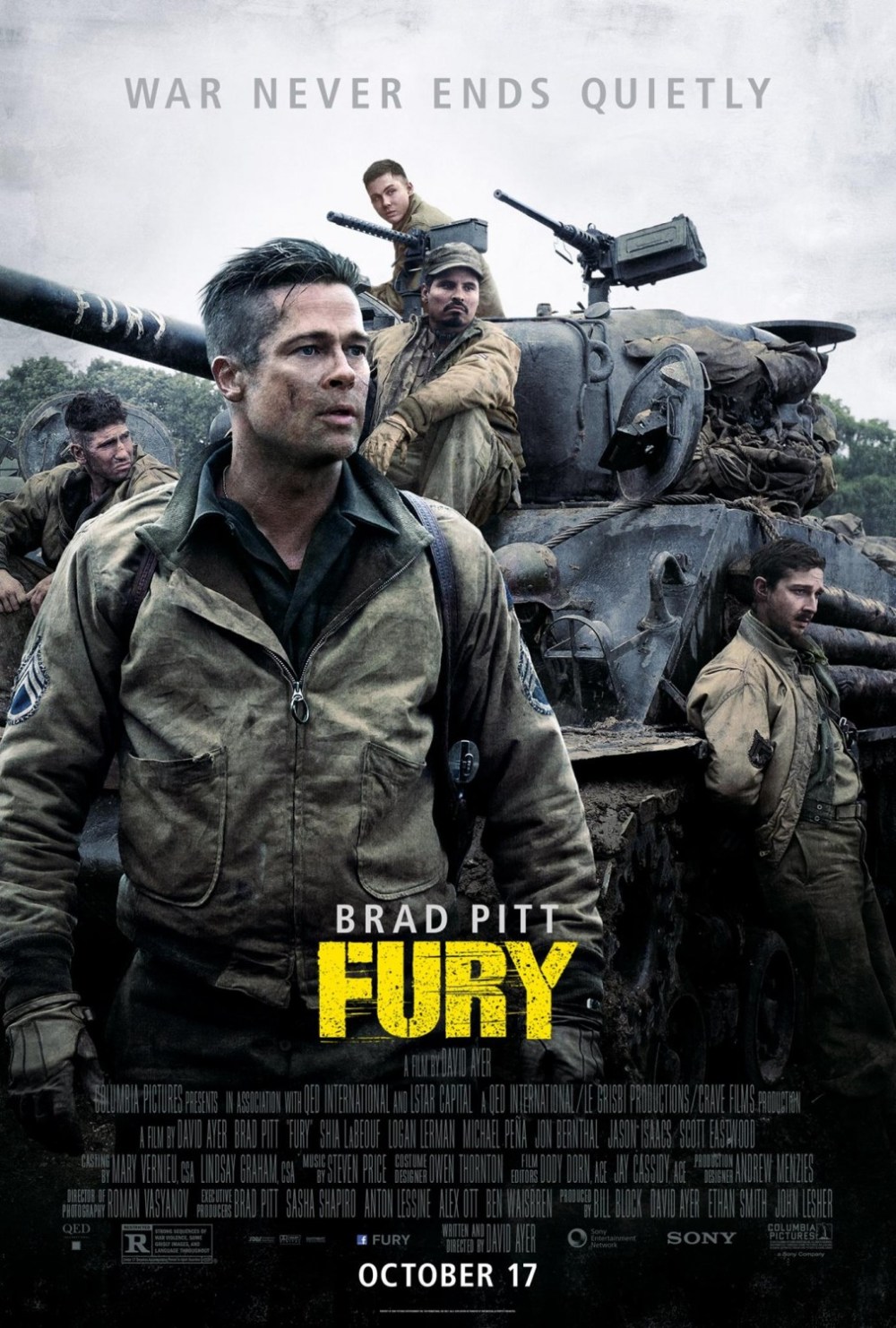
Fury movie poster

When it comes to David Ayer, you know he’s not going to slack off when it comes to researching his movie’s subject matter. His movies like the brilliant “End of Watch” and the underappreciated “Sabotage” had characters dealing with a vicious reality which they are forced to contend with on a regular basis, and Ayer makes us feel how frightening this reality is whether we want to be a part of it or not. That remains the case with “Fury,” a war film which takes us all the way back to the final days of World War II. It features all the usual characters we expect to see in a war film from the hardened Army sergeant to the innocent rookie, but you come out of it knowing what it feels like to be in a tank.

Brad Pitt stars as Don “Wardaddy” Collier, the commander of a five-man tank crew which is ordered to make a final push into Nazi Germany during World War II. Don is saddled with a battle ready crew which includes Boyd “Bible” Swan (Shia LaBeouf), Cpl. Trini “Gordo” Garcia (Michael Pena) and Grady “Coon-Ass” Travis (Jon Bernthal). After losing one of their members, they are suddenly saddled with the most baby-faced rookie imaginable in Army Private Norman Ellison (Logan Lerman). Don doesn’t like Norman’s presence one little bit as he feels it threatens everyone’s safety, but his superiors force him to take him on regardless of his objections. As a result, Don is forced to make Norman grow up a lot sooner than he wants, and it’s all in the name of survival.

For a time, I thought that Norman was going to be like Jeremy Davies’ character from “Saving Private Ryan” in that he would be the wimp who wouldn’t have the nerve to kill the enemy until the very end. Don, however, doesn’t have the patience to wait for Norman to grow a pair and forces him to kill a Nazi prisoner early on. Lerman gives a tremendous performance as Norman, and it’s fascinating to watch him go from being an anxiety ridden soldier to a hardened war veteran who doesn’t hesitate to take out as many Nazis as humanly possible.

There haven’t been many tank movies in the history of cinema. The only ones I can think of are Kevin Reynolds’ “The Beast” which came out in 1988 and the Israeli war film “Lebanon” which depicted warfare as witnessed from inside a tank. It’ll be interesting to see how they compare to Fury which puts you right into these characters’ mindsets as they lay waste to their target without the benefit of ear protection. You come to feel as battered and hardened as the crew does during their patrol through enemy territory where they find themselves outnumbered and outgunned.

It’s hard to watch “Fury” without thinking of Pitt’s performance as Aldo Raine in “Inglorious Basterds,” but he does succeed in making “Wardaddy” distinct from that character whether he is sporting facial hair or not. I always enjoy Pitt’s performances when he’s all dirtied up and free of his movie star looks, and this is one of them. You believe Pitt as a war veteran who has seen countless battles and has long since been worn down by them. But for Don, his main concern is keeping his crew alive, and Pitt is great at making you feel his character’s barely hidden vulnerability which is always on the verge of being exposed for all to see

Pena is an Ayer regular, having worked with him previously on “End of Watch,” and he has yet to disappoint in any role he takes on. As Trini, he gives us a character who was one of the many Latino military officers who fought for America back in the 1940’s. From start to finish, Pena makes Trini a war weary character who is not far from falling apart, and it makes for an intense performance.

I also give applause to Bernthal whose performance as Grady may not get all the recognition it deserves. On one hand Grady is a loathsome character we cannot stand to be around, but on the other he’s just a soldier trying to survive this war anyway he can. It’s rare to see an actor who makes you despise and sympathize with a character simultaneously, and Bernthal succeeds in pulling it off.

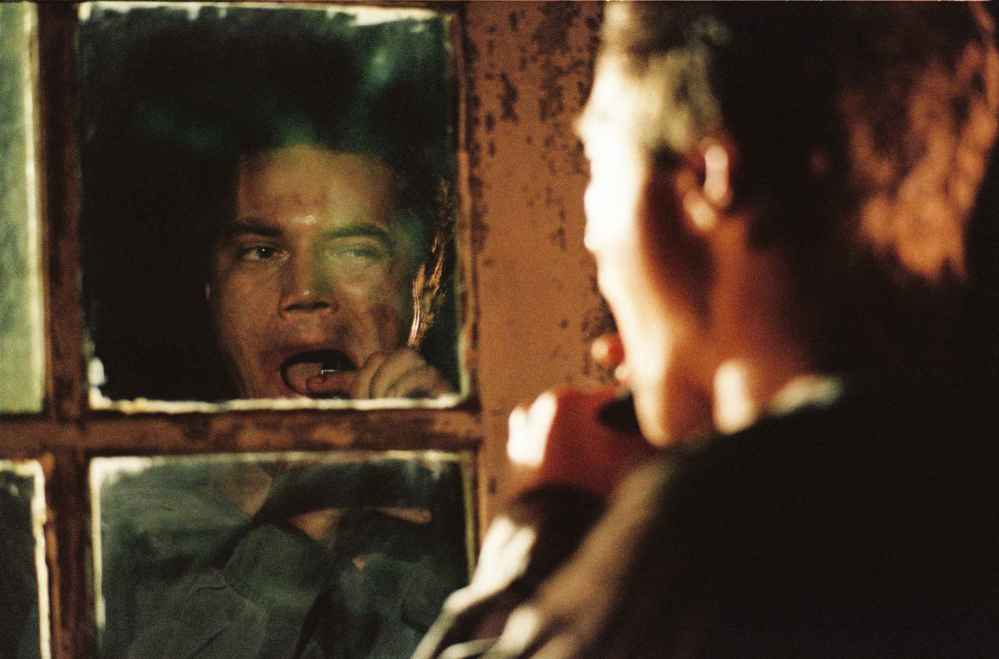
Another impressive performance in “Fury” comes from Shia LaBeouf as Boyd. Like Private Daniel Jackson in “Saving Private Ryan,” this guy is a trained killer but also quick to spout off passages from the Bible. Even after taking out a Nazi tank, he will still quote passages from that book with a great passion. LaBeouf got a lot of press for the method work he did on “Fury” which included pulling out a tooth, but seeing this movie is to be assured that all the work paid off for him.

Whether or not you consider “Fury” to be one of the best World War II movies ever made, it is one of the strongest to come out in the past few years. Ayer makes you feel the anxiety and exhaustion these soldiers go through while in battle, and you come out of this movie feeling as battered as they do. I very much liked what it had to offer, and I liked how Ayer didn’t try to sugarcoat reality for anyone in the slightest. That’s what makes his movies so unique and visceral.

* * * ½ out of * * * *

Copyright Ben Kenber 2014.

America: Imagine the World Without Her

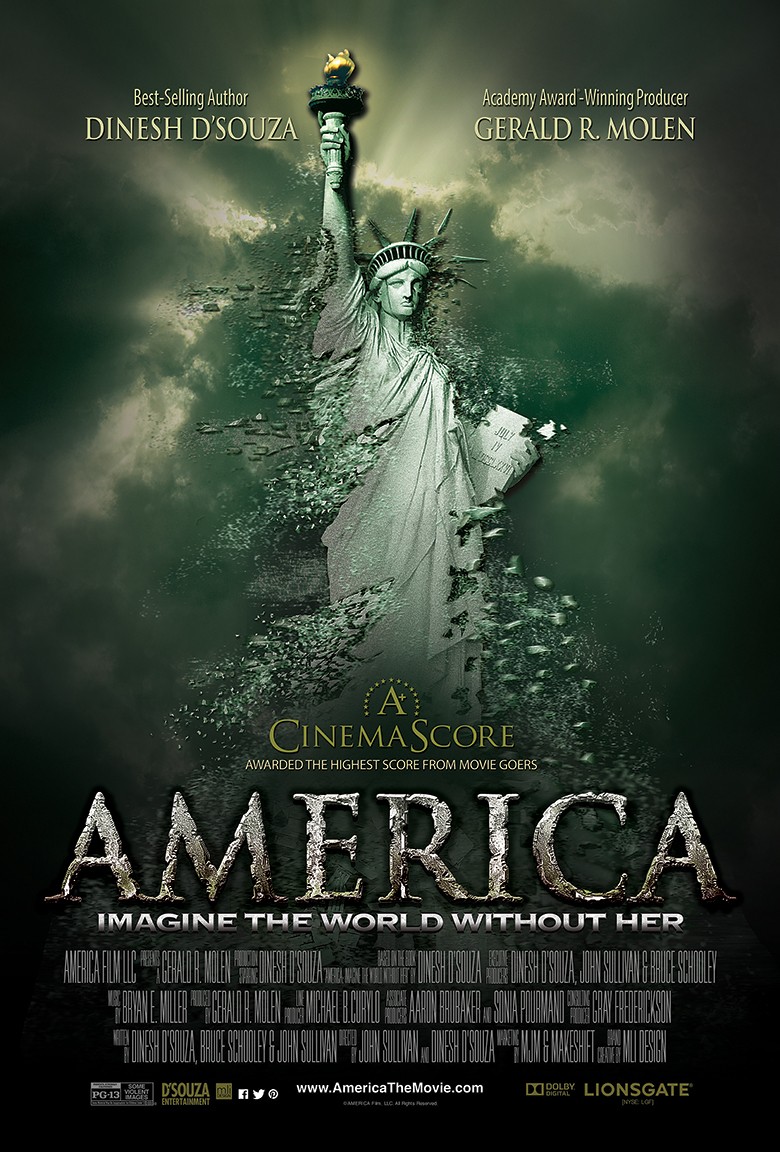
America Imagine the World Without Her poster

Is it even possible to write a review of Dinesh D’Souza’s documentary “America: Imagine the World Without Her” without seeming the least bit biased? Many who have slammed it have been greeted by comments accusing them of being blinded by President Obama’s “socialist” brainwashing, and those who praise it get accused of watching Fox News too much among other criticisms. Is there any way to view this documentary in an objective manner? Moreover, will anyone allow those who have seen it to review it in an objective manner? Well, I’ll give it a shot, but I can already see a number of comments coming my way which are both good and bad.

“America: Imagine the World Without Her” starts off with D’Souza meditating on what this country would have been like had George Washington been killed on the battlefield, and it is followed by images of institutions like Mount Rushmore, the Statue of Liberty and the Lincoln Memorial vanishing into dust. From there, he explores the dark history of America and a number of well-known individuals whom he believes have done nothing more than shame America rather than looking at what makes it one of the best countries on Earth.

“America” gets off to a shaky start because, from its trailers, the movie looked to present an alternate reality of what the country would look like if George Washington died early on, but he all but drops this concept and instead goes on a different path. If that was the case, then why did he bring up this scenario if he never intended to explore it? Maybe he came to the conclusion that a number of different things could have happened as a result, and to narrow it down to one would be difficult if not impossible.

Now D’Souza makes it perfectly clear he loves America, and I have no doubt of that. Furthermore, I would never dream of taking his love of America away from him as it has given him much success. Having said that, there is an overabundance of shots throughout of him staring at various monuments like the White House, the Marine Corps War Memorial (a.k.a. the Iwo Jima Memorial) and Mount Rushmore which we see him looking at as if he is desperate to make his love for the United States absolutely clear and without doubt. But after a while it becomes a self-indulgent nuisance to where we want to yell at the screen, “We get it! You love America! Enough already!”

D’Souza then takes an overview of America’s dark history and uses it to criticize a number of people (particularly on the left side of politics) whom he believes have used these historical events to shame the country and make it look like an evil place. From there, his intent is to refute much of what we have been taught about American history and to demonize those he believes have taken away from this country and empowered others who are a threat to it. He does this by using old news footage, historical reenactments with notable figures like Abraham Lincoln and Frederick Douglas and interviews with experts who tell D’Souza more or less what he wants to hear.

Regarding the historical reenactments, they come across as very bland and boring and are seriously lacking in any depth. The acting is pedestrian, the staging lacks much in the way of excitement, and the special effects are ridiculously cheap. There’s even a scene where we see Christopher Columbus’ three ships, the Nina, the Pinta and the Santa Maria, sailing towards America, and it looks like someone just put three toy boats in a river and filmed them. You’d figure a documentary produced by Gerald R. Molen, a man who produced many of Steven Spielberg’s movies including “Jurassic Park” and “Minority Report,” would have higher production values to work with, but that’s not the case here.

When it comes to the genocide of American Indians, D’Souza claims much of it was the result of different Indian tribes attacking one another over land. Granted, there is some truth to this as we have seen this conflict portrayed in movies like “Dances with Wolves” and “The Last of the Mohicans,” but this argument carries only so much weight and D’Souza only skims the surface. He gives the audience a lot of graphics you would find in a power point presentation, but it all comes off like a copy of Cliff Notes which might give you just enough information, but not everything you need to hear.

On top of this, D’Souza claims the majority of Indians lost their lives because of diseases. It was at this point I started to get confused as to what D’Souza was trying to get across. Was he saying the Indians were more susceptible to diseases than others? What life has taught me is that diseases do not discriminate like humans do. As a result, what D’Souza ends up implying with this assertion feels not only baseless but completely out of line.

As for how he deals with slavery, I have to give D’Souza some credit because even he admits it was not just a problem in America but in other countries as well. But then he goes into how certain blacks, before slavery was abolished, owned slaves as well, and he brings up the story of C.J. Walker who became known as the first female self-made millionaire in America and of how she made her fortune through a successful line of beauty products for black women. On one hand it’s interesting to learn about Ms. Walker, but I wondered what D’Souza was trying to prove here. Is he saying slavery was nowhere as bad in America as it was in other countries? Looking back, I got the impression he really glossed over the barbaric treatment many slaves received. He also describes the abolition of slavery as being “uniquely western,” but considering how it had its roots in European urban culture and that the Atlantic slave trade came to an end before American slavery did, this is not altogether accurate.

Things in “America” get worse as D’Souza defends capitalism by showing a scene where we see multiple versions of him running a fast food joint and cooking hamburgers. This is a moment where he could have had some fun with his own image, but he ends up taking himself too seriously and comes off as unintentionally goofy. Furthermore, he talks about how ordering a hamburger from his faux restaurant is cheaper than making one at home with the same ingredients. This is a weak argument as I have visited many fast food joints and none of the burgers came close to equaling the price D’Souza was offering for his.

D’Souza even says America’s wealth was created and not stolen and that colonial Manhattan was purchased from the Indians for $700. Considering there is much evidence available on how the Indians, a people never to be mistaken as immigrants, were driven from their lands and killed, I can’t help but wonder if they sold this land by choice or under duress. While I was watching this segment, I was reminded of what comedian Bobcat Goldthwait once said:

“America is one of the finest countries anyone ever stole.”

D’Souza then directs his ire at a number of “leftists” such as Saul Alinsky, Hilary Clinton, Matt Damon, Howard Zinn and President Barack Obama. The way he sees it, they are responsible for exploiting the dark moments of American history and for attempting to rewrite it for their own benefit. It is from there that “America” becomes nothing more than a propaganda piece designed to deliver a lot of fear-mongering to the masses.

Look, I have no problem with Americans criticizing President Obama when it’s within reason, but many of D’Souza’s criticisms feel like they are based on deep seated fears rather than actual facts. When “America” begins, he says the three things he feared would happen under an Obama administration did happen, but those things are still open to debate as President Obama did get elected to a second term.

But D’Souza’s sights are set mostly on Hilary Clinton as he sees her as being subverted in her early years by leftists and socialists who forever corrupted her worldview, and the way he presents Hilary in a series of reenactments reeks of shameless manipulation more than anything else.

Another public figure who gets dragged over hot coals is Saul Alinsky, the legendary community organizer and writer. D’Souza portrays him as the devil in disguise and attempts to use his own words against him. He even goes out of his way to say Alinsky learned many things from Lucifer like strategies for demonization and polarization. In retrospect, the way D’Souza portrays Alinsky makes the community organizer come across as a one-dimensional villain in your typical action flick. I imagine there is more to Alinsky than what we see here, but to tell us more might take away from D’Souza’s overall argument which was pretty weak to begin with.

But perhaps the most unintentionally hilarious moment comes when D’Souza brings up how he was indicted for making illegal political contributions to a 2012 United States Senate campaign. He ended up pleading guilty to this and doesn’t deny that he committed a crime, but it all leads to a staged shot of him sitting in a holding cell with handcuffs on. The way D’Souza sees it, he’s a victim of persecution by the government due to the success of his documentary “2016: Obama’s America.” Now whether or not D’Souza was a victim of selective prosecution was up for debate, but this staged moment proves to be so shameless that it comes across as completely self-serving. Considering he knowingly committed a crime which he plead guilty to, does he really have the right to play the victim card?

Looking back at “America: Imagine the World Without Her,” my reaction to it isn’t all that different from how I react to a Michael Moore documentary. Their movies make me want to do a lot of research into the subject matter they deal with to see how accurate they are to the facts and to see what else I could possibly learn about America in the process. Many accuse Moore of playing loose with the facts, but if that’s true then D’Souza isn’t any different.

D’Souza and his co-director John Sullivan came into “America” with a lot of passion which does come across onscreen, but it is still filled with illogical arguments which don’t carry much weight. While he accuses others of trying to rewrite history, he ends pretty much does the same thing here. The movie is also weighed down by poorly directed reenactments which don’t leave much to the imagination, and D’Souza spends his time onscreen implying things rather than proving them. Seriously, if he were to turn all this in as a term paper, he would have ended up with an F or a D- if he was lucky.

I always thought it was incredibly difficult to make a bad documentary, but D’Souza and Sullivan prove it is possible with “America: Imagine the World Without Her.” In the end, the criticisms this movie receives will matter very little as it has been embraced by the crowd it was made for. But none of this changes the fact this is a poorly made film which has little to show for its arguments, and it exists as nothing more than a boring propaganda piece. D’Souza is free to make the movies he wants to make, but next time he’s got to make arguments which stand up to scrutiny and get a better understanding of American history.

* out of * * * *

Copyright Ben Kenber 2014.

Save

Hillary’s America: The Secret History of the Democratic Party

Hillary's America poster

This movie has some of the funniest scenes of any I have seen in 2016, but there’s one slight problem; it was not intended to be a comedy. “Hillary’s America: The Secret History of the Democratic Party” is the latest political screed from Dinesh D’Souza which has him, along with co-director Bruce Schooley, trying to tie the Democrats’ racist past with Hillary Clinton’s campaign for President. In short, he attempts to show how the principles of the Democratic Party have never changed, and instead succeeds in making an even worse documentary (if you want to call this a documentary) than “America: Imagine the World Without Her.

Now while Hillary’s name and face are featured prominently in this film’s poster, D’Souza doesn’t really bother with her until the last half hour. Instead, he gives us a bunch of re-enactments (and this movie is overflowing with them) which chronicle his criminal conviction, the time he spent in a halfway house, the America of the 1800’s and the 1900’s, and of Hillary while she was in college. Perhaps a better name for this would have been “Dinesh’s America” as we are looking at history through his point of view, and his POV combines a selective sprinkling of facts with an overabundance of deluded paranoia.

D’Souza re-enacts his time in a halfway house as a way to continue his ridiculous claim of being made a political martyr. He also portrays himself as a white collar criminal surrounded by vicious street criminals whose actions make his crime pale in comparison. Was this really the kind of halfway house he was sentenced to? Maybe, but he presents the inmates in such a stereotypical way that it’s hard to take much of what he shows us seriously. Plus, there’s a sequence where he befriends a fellow inmate who tells him about an insurance scam he and his friends pulled off. The re-enactment of this scam is so ridiculously directed and poorly acted that I couldn’t help but laugh out loud to where I thought I might get kicked out of the theater.

We later see D’Souza visiting the Democratic Headquarters, and when no one is looking he sneaks into an off-limits room which contains the Democrats version of Pandora’s Box. This allows him to uncover the party’s racist past which had them defending slavery instead of trying to abolish it. Seeing D’Souza, a Republican, infiltrating this “secret” room in the Democratic Headquarters brings to mind another alternate name for this movie: “50 Shades of Watergate.”

It is no secret that the Democratic Party of the 1800’s was much more KKK friendly and were never quick to pass the Thirteenth Amendment which abolished slavery. This was even shown to be the case in Steven Spielberg’s “Lincoln” where Spielberg and screenwriter Tony Kushner never hid the fact that the Republicans were the real heroes when it came to ending this barbaric practice. This gives “Hillary’s America” some weight as this is a part of history worth paying attention to as the Democratic Party of today is much different than the one of the past. But it doesn’t take long for D’Souza to shoot himself in the foot as he bombards us with historical re-enactments so one-sided to where they quickly become boring and cruelly exploitive.

These historical re-enactments are further complicated by D’Souza treating Democrats like Andrew Jackson as one-dimensional villains in a bad 80’s action movie or a supervillain from a James Bond film, albeit ones completely lacking in charisma. It doesn’t matter which era is being re-enacted, he treats every Democrat as being drunk with power or as a vampire on a day pass. D’Souza even includes an especially ludicrous scene where Woodrow Wilson is watching D. W. Griffith’s “The Birth of a Nation” at the White House when a KKK member on a ghost horse comes galloping out of the movie screen. Wilson is made to look like he is transfixed by this sudden emergence, but it’s really just a bizarre fantasy.

In trying to show how the Democratic Party has not changed from its sordid past, D’Souza completely fails to prove this without a shadow of a doubt. He doesn’t so much cherry pick facts as whitewashes and manipulates them to form a thesis which defies all reasonable logic. Anyone with half a brain can see that the Democratic and Republican parties of today are so radically different from what they once were. D’Souza even tries to convince us the big switch between the two parties in terms of their views on civil rights was a flat out lie, and he presents his evidence of this in a way which requires the use of a microscope to fully discover what he is talking about.

When D’Souza finally gets around to dealing with Hillary Clinton, he portrays her as a self-centered and snobby bitch interested in her own ambitions more than anything else. In an article, Alex Shephard described D’Souza’s portrayal of a teenage Hillary as being like Reese Witherspoon’s character of Tracy Flick from “Election” if Tracy “liked to murder small animals,” and that is spot on. D’Souza shows her laughing at one of President Richard Nixon’s speeches on television as if it were a bad thing. But the most jaw-dropping moment comes when D’Souza flat out blames Hillary for her husband Bill’s numerous infidelities. This doesn’t really speak much of Hillary as it does of D’Souza’s criticisms of feminism.

D’Souza presents himself throughout “Hillary’s America” as a truth teller no one should dare question, but he rarely backs up his arguments with much in the way of convincing evidence. In fact, he even dredges up the Benghazi attack which has been beyond thoroughly investigated, Hillary’s emails which just about everyone is sick of hearing about, and he even includes a scene from those completely debunked videos from the Center for Medical Progress. Bringing these subjects up only weakens an already deeply flawed thesis to where it feels like D’Souza is just grasping for anything which might, and I strongly stress the word might, work in his favor. Oh yeah, he also throws in Saul Alinsky for good measure, but Alinsky comes across as a caricature more than anything else.

While there are many unintentionally hilarious scenes to be found here, there are others which are simply infuriating. D’Souza portrays Margaret Sanger, the mother of Planned Parenthood, as an emotionless sociopath. Granted, there is evidence she was a proponent of eugenics, but showing her as wanting to exterminate all black people is a flat out lie. His portrayal of President Lyndon Johnson as openly racist to where he only agrees to civil rights legislation just to quell his political opponents feels deeply insulting. And in portraying America of the past, D’Souza piles on scenes of slaves being whipped and tortured which soon feel cruelly exploitive of a national tragedy.

It’s tempting to call D’Souza stupid after watching “Hillary’s America,” but that may not be altogether fair. As a director, however, he makes one stupid mistake after another as he shamelessly manipulates the audience’s emotions while bashing their heads in with information based more on his distorted worldview than reality. He employs an overly dramatic music score by Stephen Limbaugh which becomes ridiculously bombastic in no time at all. And he concludes the movie with renditions of patriotic songs to show his undying love for America. I do not doubt his fervent patriotism of the United States, but it feels truly annoying that he needs to constantly remind us of this.

It doesn’t bother me that D’Souza has made an anti-Democrat movie as no political party is beyond reproach. What bothers me is how much he believes in what he is telling us as his view of history is more revisionist than it is accurate. Watching him in “Hillary’s America” reminded me of Bill Pullman’s dialogue in “Lost Highway:”

“I like to remember things my own way. How I remembered them. Not necessarily the way they happened.”

In D’Souza’s mind, Republicans have been and still are the heroes of justice and racial equality, but if Lincoln saw the state of the party today, there’s no doubt he would be crying a river over it and not just because Donald Trump (who is barely mentioned in this movie) is their presidential nominee.

Now, this review might be greeted by various internet trolls who claim I am deeply biased or a “libertard” among other things. I’m not going to go into who I am voting for this November here. Instead, I want to leave you with a couple of things to think about. Does it make more sense to base your views on a political party on what it was like when it began or how they treat the American people in the present day? If D’Souza loves being a citizen of America so much, why did he willfully break the law? Did he even realize before committing his crime that it would cost him a right which American citizens should cherish, the right to vote? Say what you will and believe what you want, but nothing will change the fact that “Hillary’s America: The Secret History of the Democratic Party” is one of the worst documentaries ever made.

½* out of * * * *

Copyright Ben Kenber 2016.

Save

Save

Exclusive Interview with Justin Weinstein on ‘An Honest Liar’

Justin Weinstein photo

In 2015 there were many incredibly fascinating documentaries released, and one of them was Justin Weinstein’s and Tyler Measom’s “An Honest Liar.” It looks at James Randi, a world famous magician, escape artist and renowned enemy of deception. Randi started out his career as a stage magician with aspirations to be the next Houdini. After retiring he went on to publically expose famous psychics, faith healers and con artists who were deceiving people for their own benefit. But things take a shocking turn when it is revealed that Randi’s partner of 25 years is not all he appears to be, and it leaves the audience wondering if Randi is the deceiver or the deceived.

“An Honest Liar” is available to rent or own on Blu-ray and DVD, and it offers the documentary’s fans a treasure trove of special features to check out. There are two commentary tracks to listen to: one with the directors and the other with Randi himself. There’s more about Project Alpha, the elaborate hoax Randi orchestrated where two fake psychics were planted in a paranormal research project and who led others to believe they were for real. In addition, there are deleted scenes as well as extended interviews with Penn & Teller, Alice Cooper, Banachek and Ray Hyman.

I got to speak with one of the co-directors of “An Honest Liar,” Justin Weinstein, over the phone, and we had a great talk about this documentary’s making as well as the challenge of making any documentary in this day and age. Weinstein is a Brooklyn-based filmmaker who was the executive producer on “Bronx Obama,” and he was also a writer and editor on “Being Elmo: A Puppeteer’s Journey” which won the Special Jury Prize at the 2011 Sundance Film Festival.

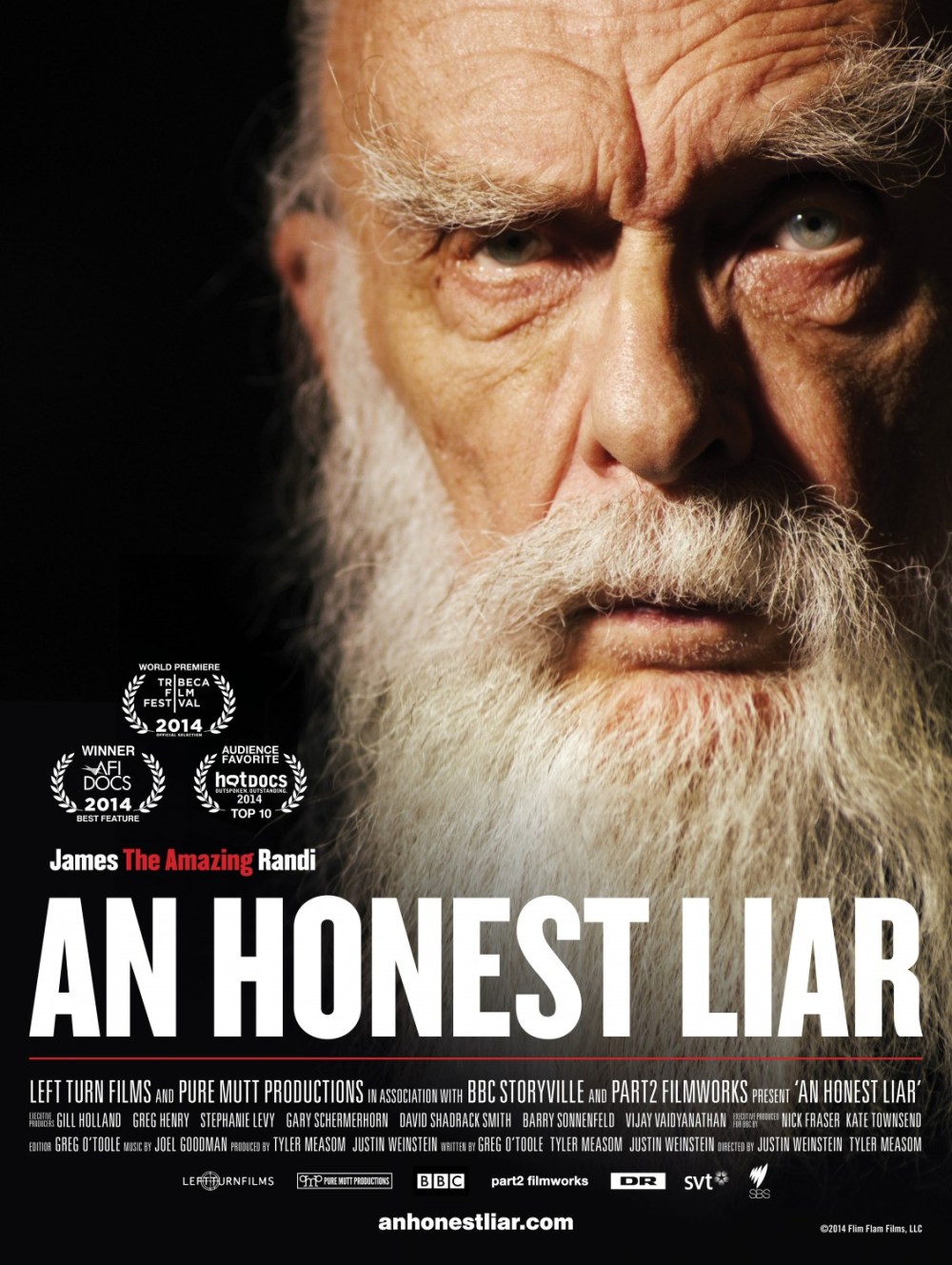
An Honest Liar poster

Ben Kenber: How did “An Honest Liar” change from how you envisioned it before filming to what it eventually became in its finished form?

Justin Weinstein: That’s a great question. We originally started out thinking that the film would be as much about skepticism as it is about Randi. Before we even started filming we thought about what we can do here, and we were interested also in the skeptic movement because there is a very avid movement and active almost religious evangelical group of skeptics with their own charismatic leaders. So we thought that was interesting and our working title began with Skeptic. Of course we were going to deal with Randi’s history, but we were planning to look more at the contemporary skeptic movement as well. But then something happened Randi’s partner got arrested. In doing research and talking to people and going through Randi’s history, there were a lot of interesting disparities. He’s a storyteller and a performer, and when you’re a storyteller and a performer often the best stories are not exactly what happened. And so Randi has kind of bent the truth at times in order to be more effective at what he does, which ironically is being a truth teller (laughs). So we were starting to get interested in the levels of deception, truth, honesty, and a kind of inherent irony with the truth teller bending the facts. Once his partner was arrested, we realized that there is something else bigger thematically here. So we went back and watched Orson Welles’ “F is for Fake” and that really solidified our thinking about the film and that its subject is deception. Above all else that’s the through line. I mean it’s about Randi, but it’s really about truth and deception as well. I knew I wanted to play with the audience and have there be something deceptive in the nature of the film itself. Most people think that documentaries are the truth, and we all know that’s not really the case or rather that they’re one form of the truth. So all these things gelled and helped us focus the film in the direction that it ultimately took.

BK: One of the ad-lines for “An Honest Liar” is if James Randi is the deceiver or the one being deceived. We live in times right now where it feels like we are all being deceived in one way or another, so that’s an interesting way to look at it.

JW: Yeah, and it also working on a couple of levels because it’s not clear right away whether Randi was deceived by Deyvi/Jose, and there’s also a scene in the film where I apparently deceive Randi as a filmmaker. The film came out about the same time I think as “Merchants of Doubt” which is another film about deception actually. (The magician) Jamy Ian Swiss is in that as well. Deception is of fundamental importance in what, to me, forms a lot of the problems that we have today whether it’s political, self-deception or other people pretending something is true when it isn’t.

BK: “Merchants of Doubt” is another terrific documentary and almost as good as “An Honest Liar.” Doubt is a big thing now, and I have had some strong debates with people who are guided more by religion than actual facts.

JW: Well that’s what got Tyler and I interested in this to begin with. I was brought up a secular Jew and was always interested in science and film. When I went to college in Ohio, in my Freshman year I took a genetics class and people stood up and walked out and screamed at the professor, “You’re gonna go to hell for teaching this!” And I was like, “Huh? What?” I remember the first time where I actually spoke to people who believed that dinosaurs didn’t exist and that dinosaur fossils were a plot. I was like, “Wait a minute, what’s going on here?” I transferred to film school and went into doing documentaries, and a lot of my work has been around that subject. I worked on a Peter Jennings doc where I dealt with UFO believers, and it just really fascinates me how people can come to believe things that are demonstrably untrue or just hold onto faith in something for which there is no tangible evidence. Tyler, my co-director, was brought up a Mormon in Salt Lake City. He went on a mission and converted people to Mormonism before he realized that he was being duped and lied to, and he left the church. So that was definitely, as filmmakers, part of what we found fascinating about the subject and wanted to explore.

BK: One of “An Honest Liar’s” most interesting moments is when people start turning against Randi even after he has proven others to be fraudulent in their methods. It seems like many people would rather believe in the illusion rather than face up to reality.

JW: Yeah, I learned this early on when I was debating people in an academic space between creationists they know and evolutionists. At a certain point, and this was when I was 17 or 18, my professor pulled me aside and I said that I couldn’t understand it. There’s evidence. How can they not accept the evidence? What I came to understand was that people create a kind of bubble, a worldview that works for them. If you poke a hole in the bubble no matter small it is, then the whole thing will collapse. So it requires these mental gymnastics to keep the structure of that bubble intact. Over the years making this film people would come up to us, email us and offer us services. Somebody from Paramount Pictures would be like, “Come and finish your film here. I was a born again Christian and I was sucked into all of this, and then I saw one of Randi’s videos on You Tube and someone gave me a book of his and that opened my eyes and changed my life.” He’s had that effect on thousands and thousands of people and it’s always amazing to see how thankful people are. People travel for hours and days to meet him in person to thank him because he changed their lives. It’s really stunning. At the same time there is a whole population of people out there who don’t know him. He’s not the hugest star. He was famous in the 50’s and 60’s and then the 70’s and 80’s with Uri Geller. One of the things we were hoping to do with the film was also to show a fascinating and really important person people deserve to know more about.

BK: Many wonder why a biopic of Randi’s life has not been made, but it makes more sense to tell his story through a documentary because it seems to be a more honest way to introduce this “liar” to a public not familiar with him.

JW: It’s funny because a few of his stories have been stolen. There was a movie with Steve Martin about faith healing called “Leap of Faith,” and then there was something with Robert De Niro where they steal the whole “hello Petey can you hear me” (“Red Lights”), and that’s right out of Randi’s life. There have been other people who had approached him to make a documentary, but I don’t think any of them seemed right. I think both Tyler and I have some films under our belt and we are coming at it from the right angle, so he trusted us.

BK: How open was Randi to doing a documentary? Was he ever hesitant to go into certain areas of his life?

JW: He said at the very beginning, “If we’re going to do this, we’re going to do I warts and all,” and so he was very willing to be open. Right after his partner was arrested it was just unclear what would happen and what was happening. There was a little bit of caution, but as soon as things started coming out both he and his partner just decided that honesty is the best policy. He was very giving with his time. At one point he was upset and you see it in the film, but now he says that he’s glad that we included it because he wants people to see that even he sometimes grapples with the truth that we’re all human.

BK: You also managed to get an interview with Uri Geller which is amazing because he was one of Randi’s chief targets throughout the years. Was it tough getting an interview with Uri, and how open was he to talking with you?

JW: It’s funny. We sent him an email and said we were doing a documentary on Randi and that he has been a big part of Randi’s life and we would love to interview him. We got an email back from his lawyer saying, “Well my client has had a very contentious history with Randi and we want to know exactly how you are going to portray him and the questions you are going to ask.” And Tyler and I looked at each other and we were like, “Screw that!” I never write out a list of questions when I do interviews, I do it conversationally. We have enough of Geller in archive videos. We didn’t need him on camera. So we replied and said we don’t write questions, we got enough in the history to do it without him and he is open to speak for himself. So if he wants to do it great, if not no worries. And then the phone rang and it was Geller who was like, “Oh I’d love to!” So as soon as we threatened to pull the camera away, he ran toward it. Randi said the most dangerous place to be is between Uri Geller and a TV camera. He was very gracious, he was very nice and he was game.

BK: In regards to the Blu-ray/DVD release, what special features are you excited for the fans of the documentary to check out?

JW: There were so many great stories that we couldn’t fit in. With Project Alpha, the two magicians who infiltrated the paranormal study, that went on for two years and they were a couple of high school teenage boys who were away from home and getting into trouble. So there are a few stories from that we couldn’t fit in time wise to the film, but we kept them as bonus scenes. There are a few more Project Alpha tidbits, and the extended interviews are also really great. You can hear Penn and Teller, or rather just Penn, talk about his impressions of Randi because Randi is one of Penn’s biggest heroes. He is very articulate about why Randi deserves the praise that he gets and what is special about his life.

BK: Speaking of Project Alpha, Barry Sonnenfeld now has plans to make a movie about that. What are your thoughts on that?

JW: We’re thrilled. Barry saw the film and loved it, and he immediately recognized Project Alpha as its own great story. We met with him and agreed to work together. He’s a very talented filmmaker who started out as a cinematographer on the Coen brothers’ films but then did “Get Shorty” and “Men in Black.” He’s a great match for the material. It’s kind of a buddy, slightly supernatural period comedy-ish thing, so we’re thrilled to be working with him. We hope to get something up on the big screen with him.

BK: “An Honest Liar” was made with the help of Kickstarter and a lot of grassroots support. Could this documentary have been made without that grassroots support?

JW: That’s a good question. We raised a good amount of money via crowd funding, but our budget was much higher. The money we raised was not enough to make the film on its own by any means so it wouldn’t have been sufficient. However, without it, it would have been much more difficult and I’m not sure it would have been possible without it. In fact, most likely it would not have been possible without crowd funding unless we really cut a lot of corners, and it probably would have been a different film. Documentary funding is always hard to come by especially in the United States. In many other countries there are government funding programs, there’s state money, and in the United States there is no such thing. So you have to do a lot of work applying for grants, but mostly grants that are available tend to be for social issues and ideological films. They are subject oriented about underrepresented populations and minorities, so making a film like this, and it is an issue oriented film, it’s not the kind of issue that grant foundations like. It looks like a biography to most people, so we didn’t have those sources in funding available to us and it’s a shame. I think we made a decent film and I think a lot of foundations which had seen the film after it was made have said, “Oh, well that’s something we could have supported.” They prioritize their money, so crowd funding is almost essential to documentary filmmaking. It’s a shame. It really sucks.

I want to thank Justin Weinstein very much for taking the time to talk with me. Be sure to check out “An Honest Liar” on Blu-ray or DVD as those special features are every bit as entertaining as the documentary itself.

Copyright Ben Kenber 2015.

Exclusive Interview with Jonathan Gold on ‘City of Gold’

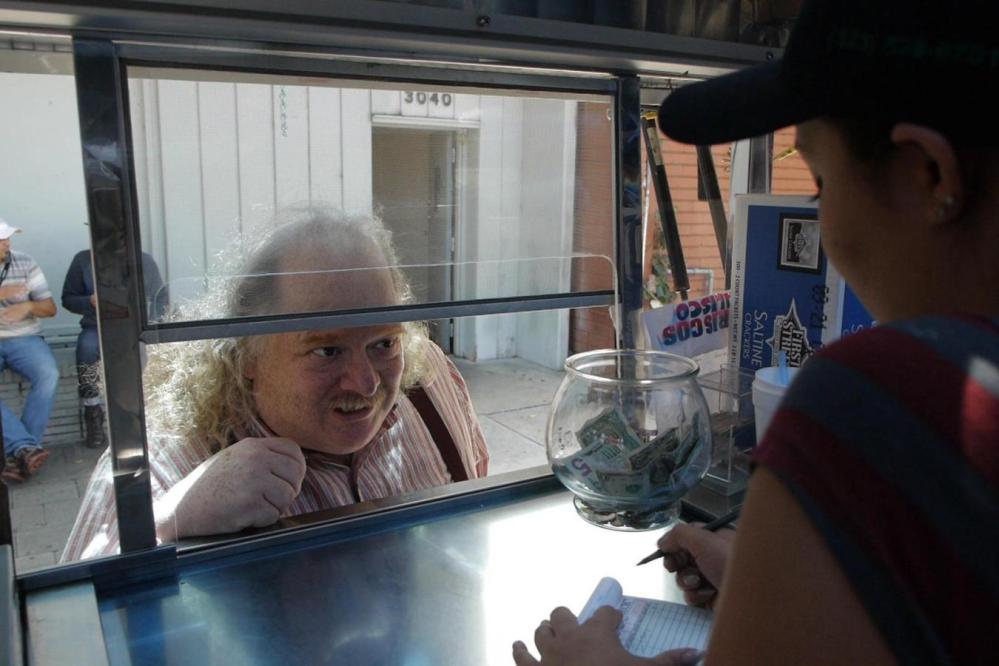
Jonathan Gold photo

For those of you who see Los Angeles as an infinitely shallow and superficial city bereft of culture, try looking at it through the eyes of Jonathan Gold. Food critic for the Los Angeles Times, LA Weekly and winner of the Pulitzer Prize, Gold is known for his robust writings of Los Angeles restaurants, and he has gone out of his way to review small family owned eateries in the city’s ethnic enclaves as well as the trendier eateries in Beverly Hills. In the process, his reviews have changed the lives of many immigrants who continue to cook the food of their countries, and they have provided readers with a deeper understanding of the cultural landscape of Los Angeles which continues to astonish new visitors and longtime locals.

Gold is the subject of the documentary “City of Gold” which was directed by Laura Gabbert whose previous works include “No Impact Man” and “Sunset Story.” It follows the award winning critic around Los Angeles as he checks out restaurants, and we get to meet many of the chefs whose careers really took off after he reviewed their restaurants. In the process, the documentary also comes to reveal Gold’s deep love of this city and of how it has brought many different kinds of people together.

It was a pleasure to speak with Gold during time off from his day job, and he talked at length about the challenges he experienced making this documentary and how it affected him as a food critic.

Ben Kenber: How were you approached to do this documentary? Was it something you were open to doing or were you hesitant about it at first?

Jonathan Gold: Oh I was absolutely not open to doing it. It’s a tradition of anonymous restaurant critics in the United States. I’ve been approached by reality TV a lot, but I always said no. The filmmaker, Laura Gabbert… It’s sort of a weird story. I donated a dinner with a critic to a silent auction at a school a friend’s kid went to and she bought it. We went out to dinner at the first iteration of LudoBites, Ludo Lefebvre’s pop-up restaurant, and she brought it up and I laughed it off, and she called and we had coffee a few times and it was still not going to happen. And then my kid ended up going to that school, and somehow when you see somebody every day at the drop off line it becomes inevitable in a certain way. I had been thinking a lot about anonymity. It had almost been an impossible concept at the moment, restaurant criticism, with the very, very, very few exceptions. The restaurants that really need to know who the critics are know who the critics are, and nobody stays anonymous for more than a couple of months. I had been reviewing restaurants for more than 20 years and I just figured that it was okay to give it up. It was less a question of actually being anonymous then pretending not to notice them pretending not to notice me noticing them and noticing me. Very meta (laughs).

BK: I have heard restaurant workers have a very high mortality rate. Is that a subject you have ever dealt with in your reviews?

JG: No, not so much, but it’s really physically demanding work. You get up really early, you’re on your feet all day, you are around things that are very sharp and are very hot, and you’re breathing in vapors and smoke and things all day. You’re in a place that has a ton of alcohol because that is why it exists. So I admire the people who could do it as much as a sports writer admires athletes. It takes a lot of stamina.

BK: In the documentary we learn early on you were originally a music critic and later became a food critic. What were the differences of being a critic for each?

JG: Well I’ve actually always done both. I would go to dinner on the way to the show, and then I would review the restaurant and I would review the show. That’s how I did it for years and years. I didn’t think they were incompatible at all (laughs). But one of the things I liked about writing about food just as a profession is that when you write about music you deal with layers and layers of publicists, and I remember I did a Rolling Stone cover on Snoop and Dre. I counted at one point because it started to get weird, but there were more than 1100 phone calls to the publicists. When you are dealing with the restaurant you just go to the restaurant, so it was easier that way. It was a good piece but man, it seemed like a full time job dealing with that.

BK: Once filming began, did it take a long time for you to get used to the cameras following you around?

JG: I wouldn’t say that it took me a long time, but it may have actually taken me a long time. It was like one day a week, one day every other week, and Laura Gabbert, the director, would show up with the cinematographer and someone doing sound and they would crowd into the back of my pickup truck and we’d drive around and we’d stop somewhere. I didn’t really know what to do at first. It’s hard to talk freely when you just have a camera pointed at you and a boom microphone like tickling you, but I think over the course of filming it, it became a little less strange and a little more natural. The people I had lunch with and dinner with never got used to it quite as much as I did just because it was an inherently awkward situation. But it must be said that I laid down guidelines at the beginning for filming. I didn’t want her to fill me actually reviewing a restaurant. She would’ve liked that and it would’ve given the movie an arc, but I didn’t want to give her an arc actually because I didn’t want anything dramatic to happen. And I put down for a long time that she couldn’t film my kids because they deserve their privacy, and of course it turned out that they wanted to be in the film so they were. There were probably a few others, but with those boundaries drawn and the fact that I wasn’t actually going to have to interview anybody, I wasn’t going to act as a journalist and I was just going to be a person doing possibly journalistic things.

BK: The movie starts with you sitting in front of your computer and looking pensive, and then you begin to type something. Were you actually writing a review at that moment?

JG: Yeah. Actually I refused to have it staged and they shot it in a lot of different ways, but I was actually always writing a piece when I was doing it. Not necessarily the piece that was coming on the voiceover because… I don’t know if you’ve done it, but pretending to type looks like somebody pretending to type, and it’s always bothersome in movies.

BK: Did you have or want any artistic control over the documentary, or were you content to have Laura just have her way with it?

JG: I had essentially no artistic control over it. I’m the subject in the way that you are interviewing people. The people that you are interviewing don’t have any input into the story you are writing and they shouldn’t, and she was committing an act of journalism and I was the subject. I saw a rough cut of it and I’m not sure there was anything I objected to. Sometimes I wish I had combed my hair (laughs) and sometimes I wish I’d said something in a more articulate fashion, but I talk the way I talk.

BK: Was there anything taken out of the documentary that you wish had stayed in?

JG: There was a scene that I loved where I was giving a presentation at the MAD conference in Copenhagen, and that’s a conference that happens every couple of years. They couldn’t send anybody but they lent my daughter a camera and she took footage and she put it together in a certain way. It’s sort of a beautiful scene, but ultimately it didn’t really fit into the narrative of the film and it was cut. I will always become exercised on behalf of my children (laughs). I think it’s almost demanded.

BK: How would you say you ever evolved as a critic over the years you have done this work?

JG: I think I understand that there’s more and I think I understand that there is less. The more I do this, the more I write, the more it feels like I actually know.

BK: You are so good at describing things in your work to where you give the reader very vivid images of the stuff you are writing about. How do you accomplish that?

JG: Actually that was maybe one thing I worked at pretty hard. I thought that describing food was my one weakness when I first started writing about food. I was good at getting you into the room and I was good at describing the context and telling you why you were there, but sometimes my descriptions of the food were a little bit tough. I actually worked at it and worked at it, and I figure it’s like Kobe Bryant taking 1000 free throws a day. It’s like eventually he’s going to figure out where the basket is.

BK: Has doing this documentary changed the way you write about food at all?

JG: No, not at all.

I want to thank Jonathan Gold for taking the time to talk with me. To find out more about “City of Gold,” be sure to visit the documentary’s website at www.cityofgolddoc.com.

Exclusive Interview with composer Brian McOmber on ‘Krisha’

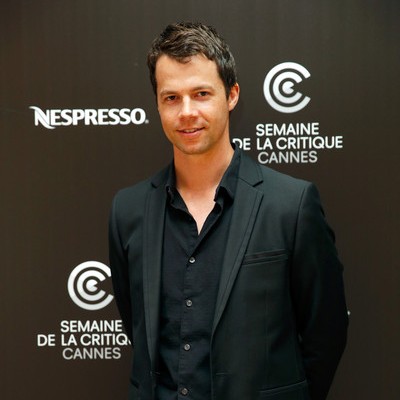
Brian McOmber photo

Trey Edward Shults’ “Krisha” swept through the festival circuit and gained critical acclaim for its brilliant direction and tremendous performances from the cast. But among the many things “Krisha” deserves to be acknowledged is the film score that was composed by Brian McOmber. A former member of the popular band Dirty Projectors, McOmber’s score proves to be a pivotal part of this movie as it succeeds in taking us right into the fragile mental state of its main character. I got to talk with McOmber about his music for “Krisha,” and I invite you to read my interview with him below.

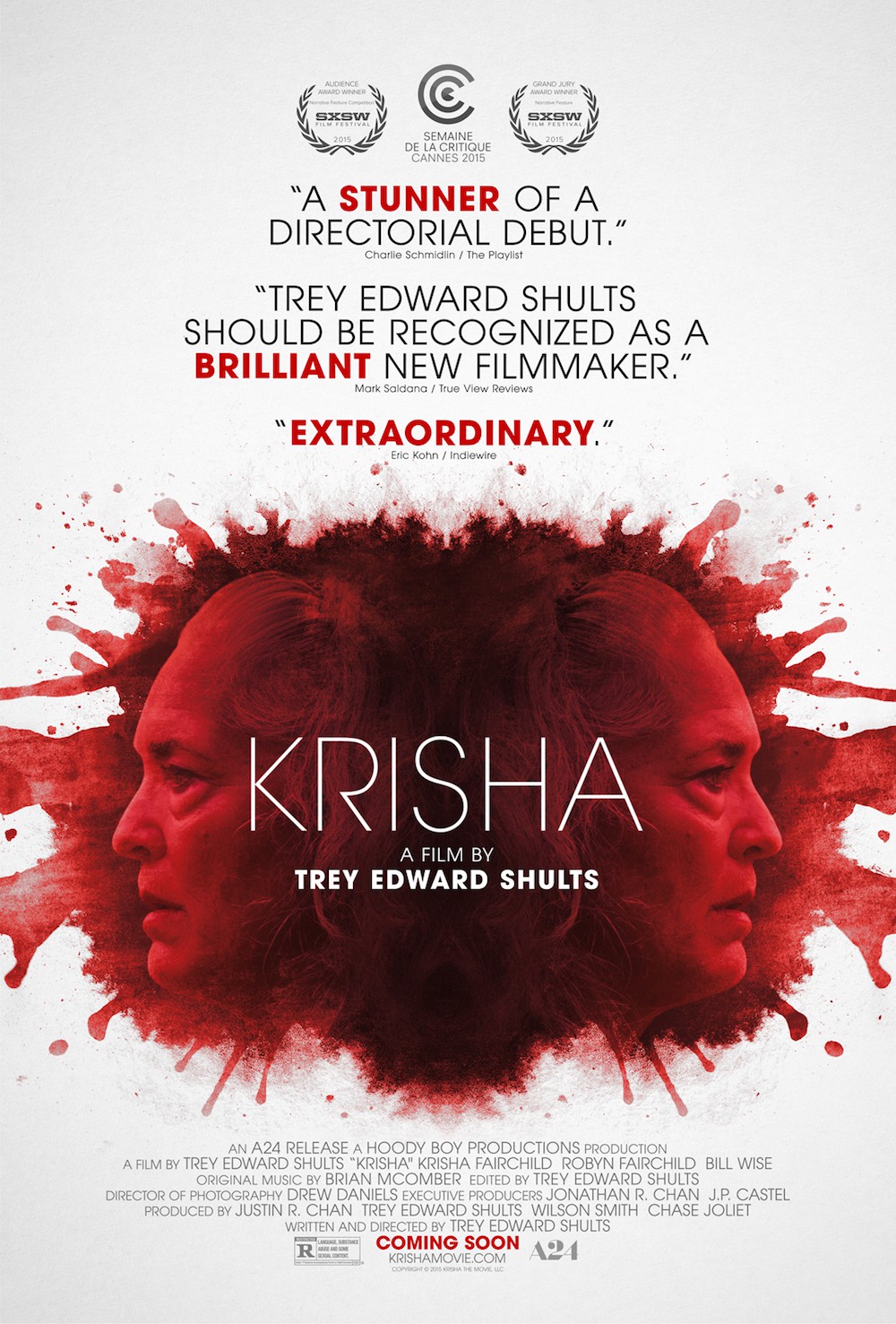
Krisha movie poster

Ben Kenber: Your score for “Krisha” is brilliant and fits perfectly with a movie I would describe as emotionally pulverizing. When it came to creating music for the movie, did you know right away if you wanted it to be an electronic score or an orchestral score or a bit of both?

Brian McOmber: I think we did want it to be a combination of both. The first time I had worked with Trey was on the short version of the film, and with that one you didn’t want something more orchestral. He wanted something that just immediately grabbed our attention because to try to re-create the arc of the feature version in the short, we really just went all out with the music right away. So with that one we had orchestral, percussion, strings, electronics, the whole bag right off the bat, whereas with the feature we wanted to break apart the individual components and try to figure out how they could all work independently and also together because there was so much more music to be made, and the arc needed to be more of a slow burn in the feature. Actually, when Trey made the short version of the movie that was supposed to have been a feature. He tried to make a feature version of the film, and a few days and $7000 later… Trey is obviously a brilliant director, but he was just being a little too ambitious so it became a short film. With the feature version of “Krisha” that’s out there now, that was him going back trying to make the film he always wanted to make.

BK: When it came to going from the short film to the feature version, how would you say the music evolved?

BM: I think that the main order was just unraveling those components, the electronic components and the new orchestral components, and figuring out how we could use those textures and instrumentation and spread it out over the course of 12 cues because it was 12 cues we ended up doing in the end. I think that was the main approach to the feature.

BK: I read in an article that you said that you and Trey tried not to get carried away by ambition. How did you manage to keep that from happening?

BM: The entire film was made for under $100,000 and Trey is a young, really smart and really ambitious director, and he wanted the music to be that way too with the little amount of money that we had. So there’s a few instances where we had to chisel and tone down our expectations of what we wanted to get from the music just because we didn’t have the resources, but I think we did a good job. We were very ambitious with what we had to work with, but hopefully being that ambitious with such a small film didn’t work against us. I think we did a good job trying to balance all of our hopes and dreams for the music and the reality of what we were working with. It was a challenge with this film, more so than maybe any other film that I have worked on.

BK: What’s great about the “Krisha” score is while you might know where the movie is heading, the music itself is unpredictable in that you are not sure which instruments are going to be used to capture the emotions. Did you start with one instrument and then decide to go with another while composing the score?

BM: Yeah, I think that coming from this sort of film again we all knew we wanted to use things like wooden blocks or these kind of natural instruments. I didn’t think about the unpredictable component. That’s an interesting point. The film plays into a lot of archetypes of what film music should be and that’s like the orchestral stuff. The electronic component was more of me bringing these ideas to Trey because I felt like having these glitched electronics or at least taking organic instruments like a prepared piano and running them through electronics and making them glitch out or making errors or things like that. That was part of my effort to try to capture, especially early on in the film, Krisha’s slow unraveling, and especially to help capture that anxiety she’s feeling early on that slowly becomes overwhelming. I thought electronic sounds would do a better job of that. Not that we couldn’t have used orchestral sounds, and maybe we would have if we had more resources and time to work with classical musicians but they get expensive. So a lot of times I would just take a prepared piano and run that through electronics or these other programs where you can make it mess up kind of. In general, we never had a rule of what instruments to use and not to use, but we wanted to have some instruments sort of carryover from cue to cue as the film went on. We wanted all the cues to be different and we wanted different instrumentations to keep you on your toes, but at the same time we wanted to have some sort of thread running through that felt like there was some continuity there. So from one cue to the next you might hear an instrument that was used on a previous cue on the current cue, but we never had a rule about what we couldn’t use. It was more about seeing what works.

BK: The score, like the movie, is a ticking time bomb. Did you ever have to make a list of when things in the movie get more and more intense or do you put a level at which the music should build?

BM: Yeah, for sure. That was one thing we started with of what the music should tell and where it should bring us to and how it should support the scene. Even before we started making sounds we start talking about how music would support individual scenes and where it should go. Where the music brings us to is pretty much in her head almost all the time except maybe for the end. So it was about what Krisha was feeling inside from the beginning, middle and end, and that’s how the music helped out.

BK: Were there any film composers or specific scores that served as an influence on your work on “Krisha?”

BM: Sure. I think it was that prepared piano and the glitched electronics, that was certainly what I first thought of. The prepared piano was kind of a John Cage thing, and even though I’m not a big fan of Cage’s music I do find a lot of inspiration towards his approach to music. In a few instances I worked with particular musicians that I knew had a very unique voice and style and had them improvise quite a lot in the very early process of making “Krisha.” With that raw material they gave me, I would do a lot of heavy editing of their parts and flesh out pieces of music that were largely built around improvisations from key players. So that’s nothing new, but I think Cage definitely inspired me. Trey is a huge film music buff and he’s a huge Paul Thomas Anderson fan, and he was referencing “Punch Drunk Love” and “The Master” and some of these other movies. He’s a big Jonny Greenwood fan as am I.

BK: It’s great that you brought up Jon Brion’s and Jonny Greenwood’s scores for Paul Thomas Anderson’s movies because your score for “Krisha” reminded me of them in that they sound so unique compared to so many other film scores that are out there. Was it your intention to make the score sound unique or was that just something that happened?

BM: Well yeah, of course you wanted it to be unique but I don’t think that was the main goal. The main goal was to simply make music that was in service to the picture and in supporting Krisha’s emotional mindset as she goes through this journey. One thing I thought was interesting, thinking about Jon Brion and Jonny Greenwood, is that maybe we come from similar backgrounds in that we’re not classical composers. My entire background is playing with rock bands and maybe that brings a unique perspective to scoring films. In the past a lot of film composers came more from the classical world whereas I don’t, and I know that Jonny Greenwood doesn’t and I know John Brion doesn’t. But also I have a feeling that Paul Thomas Anderson is to blame for a lot of that music too because in choosing his music collaborators and also just the way he makes films and uses music is, for Trey anyway, absolutely an inspiration. I never really studied them the way Trey has.

BK: Like Brion and Greenwood, you do come from the rock and roll world as well having been a member of the indie band Dirty Projectors. The same also goes for Danny Elfman who was with Oingo Boingo before he began scoring movies for directors like Tim Burton.

BM: Yeah, there’s quite a few. I think when I started doing this I was a little intimidated. I started helping my friends with their movies, and more and more people started to hear of my film score work and I just started to fall into it a few years back. I don’t have any musical training and I can’t really read music, so how am I going to do this? I don’t write notes to the page almost ever. For the most part, I think your musical background influences your approach to making things. Maybe there is a similar thread running through all these film music composers who got their start in a different kind of music making.

BK: Now that “Krisha” has been released and is a huge critical success, has that opened the floodgates for you in terms of offers to score other films?

BM: I don’t quite know yet actually. People are just starting to see it now because it did a lot of festival runs. A lot of my film maker friends have seen it, but so far I’m very busy and I don’t know if that’s because of “Krisha” or not. At the moment I am working on a new film, and the music I am making for it has nothing to do with “Krisha.” In fact, the music is more like genre music in that there is a metal song and there’s a couple of slow songs. It’s more songwriting whereas with “Krisha” it was a score. I hope more people see it. “Krisha” is the kind of film that I would love to score more. It’s not that I don’t like doing other kinds of films, but I really enjoyed the challenge making music for a film where music is so much a part of the film. So I hope to do more films like “Krisha” in the future.

I want to thank Brian McOmber for taking the time to talk with me about his score for “Krisha.” It is now available to download on iTunes.

Krisha

Krisha movie poster

Krisha” is one of those movies which can be best described as emotionally pulverizing. It starts off with a close up of the title character’s face as the sound builds to a feverish crescendo, and this is enough to tell everyone this movie is going to be a psychological endurance test for the audience watching it. It’s a powerful motion picture which is as emotionally cathartic as they come, and it’s one of the best movies of 2016.

Krisha Fairchild stars as the Krisha of the movie’s title, a deeply troubled woman returning home to the family she abandoned years ago for a life of drug addiction and self-destruction. It’s Thanksgiving and everyone welcomes her back with open arms, prepared to forgive her trespasses, but right from the start there is a palpable tension in the air as everything seems off. While her family is happy to see Krisha, they are still unsure of whether or not she can be trusted. As for Krisha herself, we find she is still struggling with her demons and may not make it through the night in one piece. She’s also cooking the Thanksgiving turkey, and the turkey is just a time bomb just waiting to go off.

It should be noted that the movie’s writer and director, Trey Edward Shults, based its story on a similar family situation he experienced when his cousin Nica came home for the holidays. She was in the throes of her own drug addiction which would end her life prematurely two months later. For Shults, making this movie was a way to confront this tragedy, and he cast many of his family members who had been through the same situation as well.

But the one family member who stands out here the most is Shults’ aunt, Krisha Fairchild.  Fairchild is not playing herself here even though she shares the same name of her character, but this makes her performance all the more extraordinary as she plumbs the depths of a drug addict struggling to prove to her son and family everything is okay with her now. As crazy as she gets in this movie, Fairchild still makes Krisha a sympathetic character who we cannot help but feel for. And when she puts on a red dress which looks a lot like the one Ellen Burstyn wore in “Requiem for a Dream,” she goes all out for an emotionally shattering climax.

The rest of the cast does terrific work, and this especially goes for Bill Wise who plays Doyle, the family member who proves to be its biggest personality and asshole. Doyle sees right through Krisha and tells her flat out, “You are an abandoner. You are heartbreak incarnate, lady.” And then there’s Robyn Fairchild who plays Krisha’s sister, the most stable of all the family members. When Robyn breaks down after a protracted argument with Krisha, it’s impossible not to feel her pain and emotional exhaustion as we all know strong family members who eventually reach their breaking point after holding it together for so long.

“Krisha” is Shults’ first feature film, and it is an incredible debut made all the more amazing by the fact he shot it all in just 8 days. He makes the film look like it was shot a lot longer and cost more than it did as he balances many different elements with a director’s masterful touch. Shults is also aided tremendously by the almost dreamlike cinematography by Drew Daniels and the abstract sounding music score by Brian McOmber which illustrates the increasing tension bubbling beneath the surface. This movie is an emotional powder keg just waiting to go off, and Shults never lets anyone off easy.

There have been countless movies made about drug addiction and the effect it has on the family members of the addict, and “Krisha” certainly feels like one of the most effective. It also rightly reminds the viewer that an addict will only seek help when they want to stop. We can’t make them stop. We can only hope for the best and pray for the addict to see the light and make a conscious decision to seek help. Watching this movie makes you want to see Krisha succeed and put her past behind her, but when things begin falling apart for her we can’t look away. Deep down we would like to, but her suffering is all too real to ignore.

“Krisha” shook me in a way very few movies do these days, and it marks the arrival of a gifted feature film director named Trey Edward Shults. Now that we have seen what he can do with the smallest of budgets, it will be interesting to see where he goes from here. As for Krisha Fairchild, she is an actress whose work has been under the radar for years, and here she gives one of the most unforgettable performances the world of movies has seen in some time. All good things to those who wait.

Copyright Ben Kenber 2016

* * * * out of * * * *