Oscar-winning actress Anne Hathaway stars in “Song One,” a drama where she plays a young archaeologist named Franny. At the movie’s start, her brother Henry (Ben Rosenfield) is hit by a car and goes into a coma, and she flies back to New York to be at his side. In the process of going through Henry’s notebooks, she comes into contact with James Forester (Johnny Flynn), a favorite musician of Henry’s. James has had some success in music but is also a shy and private man suffering from writer’s block. From there a romantic relationship between the two begins, and they soon help each other find their way through the darkest of times.
“Song One” was written and directed by Kate Barker-Froyland who had worked as a director’s assistant on one of Hathaway’s biggest hits, “The Devil Wears Prada.” One of her main intentions with this film was to capture the lively music scene of her Brooklyn neighborhood. Indeed, it is a lot of fun listening to the music as you can tell these musicians are playing and singing out of their love for music as opposed to just chasing a record deal (although I’m fairly certain they wouldn’t mind that either). Watching it made me want to take a vacation to Brooklyn just to see this music scene up close.
I got to speak with Hathaway during a “Song One” roundtable interview held at the SLS Hotel in Beverly Hills, California, and I told her how much I enjoyed watching and hearing the musicians featured in the movie. These were musicians playing with all their heart and soul, and I was curious how she and the filmmakers gathered up so many talented ones for this project. It turns out a lot of that was due to the participation of Jonathan Rice and Jenny Lewis who have had tremendous success together on the music scene, but Hathaway said getting the both of them on board was a little tricky.
Anne Hathaway: My husband (Adam Shulman) and I were friends with Jenny Lewis and Jonathan Rice, and when we initially ready the screenplay back in 2011 we just kind of had one of those like dream musicians for this and we both said them. And then we kind of laughed at our audacity and decided that could never possibly happen because we couldn’t get them, and also they were friends and we would have felt awkward. We were worried about it bordering on being opportunistic, so we spent a while pursuing other avenues trying to come up with better ideas. Then Kate came up with a draft that had focused on the James character and we asked Jonathan if we had hit the right tone with the character. He asked who’s doing the music and we were like half-jokingly, ‘Well you if you want to.’ He was like, ‘Okay let me give it to Jenny,’ and she read it and they were open to the process of meeting Kate, and then they met and they really liked each other. The next morning, we opened up our emails and there was this song (from Jonathan and Jenny) and it was Little Yellow Dress and it was incredible. And then Jonathan Demme, our producer, came out. Jonathan Demme has one of the deepest and most beautiful encyclopedias of music in his head, and to watch him and Jenny and Jonathan just kind of talk music and talk about the sound and who James Forrester was, it was a thing of beauty. From then on they were in the movie, and a lot of the musicians wound up being contacts that they knew. They were so integral to the sound of the film.
To read about “Song One’s” making is to see it was a movie made by friends who brought everything they had to this project. In addition, they brought with them a lot of great music which feels authentic to the locales it takes place in, and it’s the kind of music that fills up your spirits when you’re feeling low.
“Song One” is now available to own and rent on Blu-ray, DVD, and Digital.
The “Horns” press conference held at the Four Seasons Hotel in Beverly Hills, California proved to be a lot of fun as stars Daniel Radcliffe, Juno Temple and writer Joe Hill, whose book the movie is based on, shared great memories about the making of this dark fantasy. Radcliffe plays Ig Perrish, a young man madly in love with Merrin Williams (Temple) and who will do anything for her. But as the movie opens, we discover Merrin was brutally murdered, and everyone thinks Ig was the one who killed her.
In addition to scenes where we see Ig and Merrin being intimate with one another, we also get to see a flashback where these two lovers first met. This resulted in two younger actors being hired to play these characters: Mitchell Kummen as Ig and Sabrina Carpenter as Merrin, and both look a lot like Radcliffe and Temple. While watching this sequence, I started thinking of the movie “Contact” in which Jodie Foster plays Eleanor Arroway and Jena Malone plays the same character as a young girl. In her commentary track on the “Contact,” Foster said the following:
“I always love watching actors play me, and actually it’s always the reverse; whenever you hire a child actor to play the adult actor, you just ask the adult actor to copy the kid. That’s certainly what Tom Hanks did in ‘Forest Gump,’ and that’s what I tried to do a little bit in this movie.”
That remark stayed with me long after the first time I heard it, and I wondered if Radcliffe or Temple had the same experience with the actors playing the younger versions of themselves in “Horns.” I asked Radcliffe about that, and his answer led to one of the funniest moments of the day.
Daniel Radcliffe: That’s interesting because we didn’t really see a huge amount of what the kids were doing. I was often, when they would be doing stuff, getting made up or de-made up or something would be going on so they would try and time it like that, so I didn’t really get to see a lot of what they were doing. I got to spend quite a lot of time particularly with Mitchell on the movie, and it was funny because Sabrina lives in L.A. now and she’s 13 going on 21. She’s incredibly mature and well above her years, and Mitchell is like I was when I was like 13. He’s a kid from Winnipeg, and he’s like a kid and he’s incredibly sweet. He’s awesome and I just like the fact that… Obviously, Mitch is blond naturally and he’s got much fairer hair than I do, and they dyed his hair on the first day. He went back to his hotel in Vancouver and nobody knew what he was doing, and then one of the girls just happened to say, ‘Oh you look like Harry Potter.’ That just made his day. He was so happy.
So, while Radcliffe didn’t necessarily take anything specifically from Kummen’s performance, he did illustrate how difficult it can be for casting directors to find an actor to play him as a younger person. Still, both Radcliffe and Kummen took the same character and made it their own in this movie. Thanks to their performances, we succeeded in getting the best of both worlds in “Horns.”
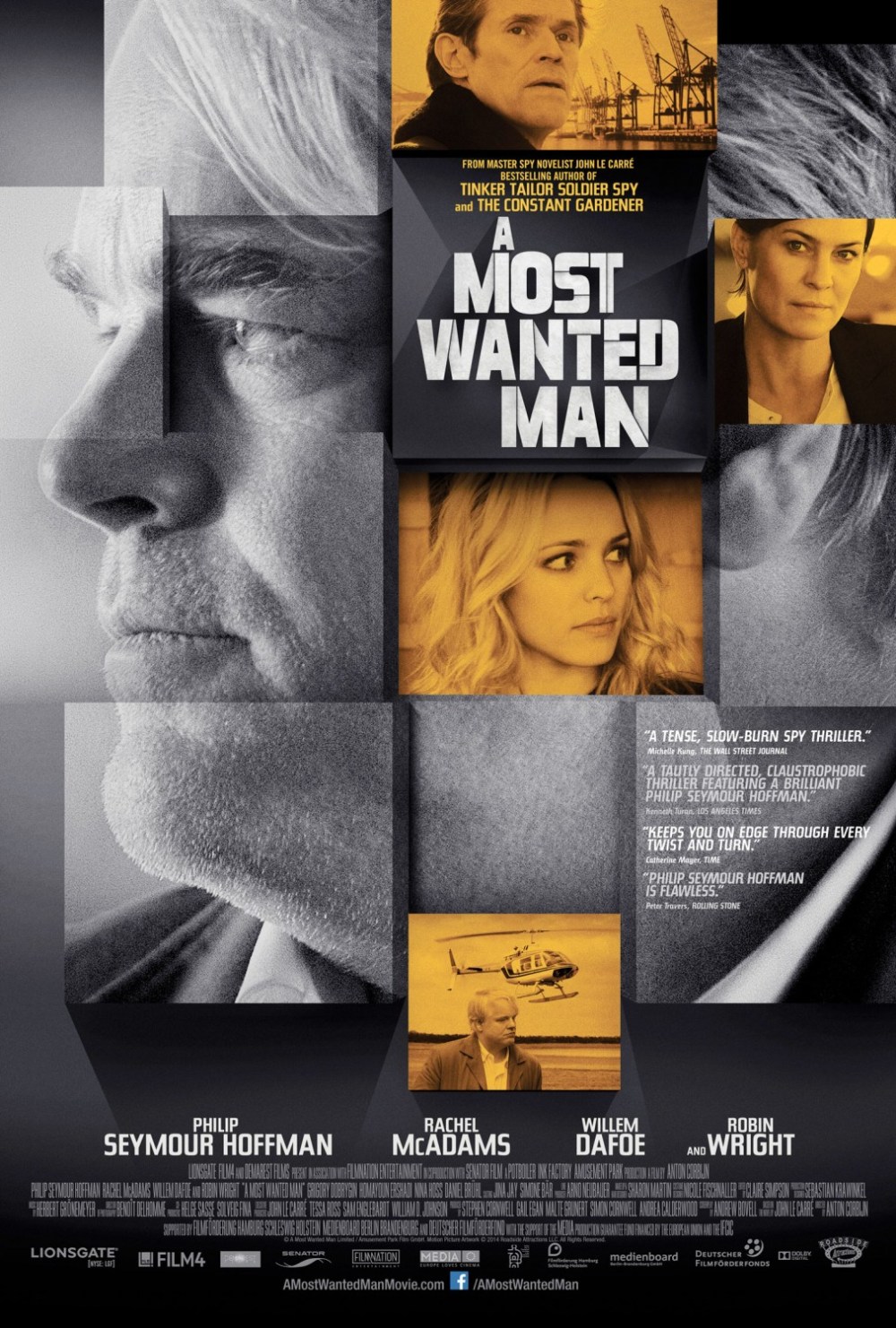
I have not read any John le Carre novels as of yet, but I have seen many movies based on them. Whether it’s “Tinker Tailor Soldier Spy” (be it the miniseries or the film), “The Constant Gardner,” “The Tailor of Panama” or “The Russia House,” all of Carré’s stories deal with people who have seen it all and have long since been burned out by the possibility of changing the way people exist in the world. Since he was once an employee of the British intelligence agency MI6, Carré’s books generally deal with spies who are not like the ones we remember from James Bond or Jason Bourne movies. Instead, these are spies who inhabit a morally duplicitous world they have to struggle in even as it tears away at who they once were. They claim to be doing this work for the sake of peace, but after a while, you begin to wonder how much they believe this as they soon look like they are kidding themselves.
“A Most Wanted Man” is the latest Carré cinematic adaptation, and it is a perfect example of the kind of spies he has become famous for writing about. This film has also taken on an added importance as it features the very last lead performance from the late Phillip Seymour Hoffman who plays Günter Bachmann, the weariest looking spy who has ever walked the face of the earth. Only Hoffman could have inhabited such a worn-out character and make him so endlessly fascinating as Günter goes through this movie looking like he barely has a pulse.
This movie starts off with a note saying the German port city of Hamburg is where Mohammed Atta and his collaborators planned the September 11th attacks. The fact Atta was able to plan the attacks without being caught beforehand was due to failures in intelligence among other things and, as a result, the intelligence operatives continue to work as hard as they can to make sure this never happens again. The story takes place over a decade after 9/11, and it doesn’t take too long to see how these characters still treat the horrific day as if it just happened yesterday.
Günter is the leader of an anti-terrorism team which seeks to develop sources within the Islamic community in the hopes of getting leads on high-profile subjects. His team eventually finds one in Issa Karpov (Grigoriy Dobrygin), a half-Chechen, half-Russian who has just immigrated to Hamburg illegally after suffering torture and imprisonment which has made him look like a walking corpse. At the same time, he is also on the verge of claiming an inheritance worth millions in Euros. The question is, will any of this inheritance go towards funding terrorist groups, or will Issa make sure it goes to who needs it the most?
“A Most Wanted Man” was directed by Anton Corbijn, a Dutch filmmaker who previously directed George Clooney in another spy movie called “The American,” and he is not out to give us the typical spy thriller designed to give the audience a potent adrenaline rush. The spies here are all about playing mind games with their prey as well as with those from another country than they are in getting into gun fights and car chases. This might frustrate some viewers who prefer their spy movies to exhilarate like few other cinematic experiences can, but Corbijn is intent on taking his time with this story at a pace which befits the le Carre novel it is based on. For those of you who have seen “The American,” this should not come as a surprise.
Seriously, not enough can be said about Hoffman’s performance. You never really catch him acting here. Hoffman simply becomes Günter right before our eyes, and he makes you feel his character’s weariness for all it’s worth. Watching Hoffman is heartbreaking because he really does give us a master class in acting here, and this sadly is one of the last times we will ever get to see him do that.
Among the highlights of “A Most Wanted Man” are the scenes Hoffman has with Robin Wright who plays CIA agent Martha Sullivan. Currently on a critical high from her work on the Netflix series “House of Cards,” Wright matches Hoffman scene for scene as these two play a mental game of chess, trying to guess what the other is thinking without revealing too much of themselves in the process. Looking into the eyes of both these actors, you can tell how much fun they have sparring with one another. When they tell one another they are trying to make the world a safer place, you can smell the deceitful sarcasm dripping from their mouths as their jobs now force them to become competitors over nabbing the next big terrorist suspect.
Granted, Hoffman’s German accent is a little off-putting at first, but we do get used to it eventually just as we do with the one Rachel McAdams pulls off. McAdams portrays Annabel Richter, a deeply passionate human rights attorney who does her best to protect Issa from unnecessary prosecution. However, when Annabel is put in a position where she is forced to betray those closest to her, McAdams makes you feel her character’s agony without even having to use words to express it. As for Willem Dafoe who plays bank manager Tommy Brue, you can never really go wrong with him in anything he’s in.
“A Most Wanted Man” is, at times, a little hard to follow to where you may come out of it thinking the plot was a little too convoluted for its own good, but most viewers should be able to get the gist of the story. The pace is also a little too slow at times although things do pick up before the end. Whatever the case, it is definitely worth seeing for the performances, especially the ones given by Hoffman and Wright. It will be hard to escape the bittersweet feeling this movie leaves you with as this is one of Hoffman’s last, and I came out of it wondering if we would ever see an actor like him ever again; one who doesn’t look like a movie star but whose talents have more than earned him the right to be one.
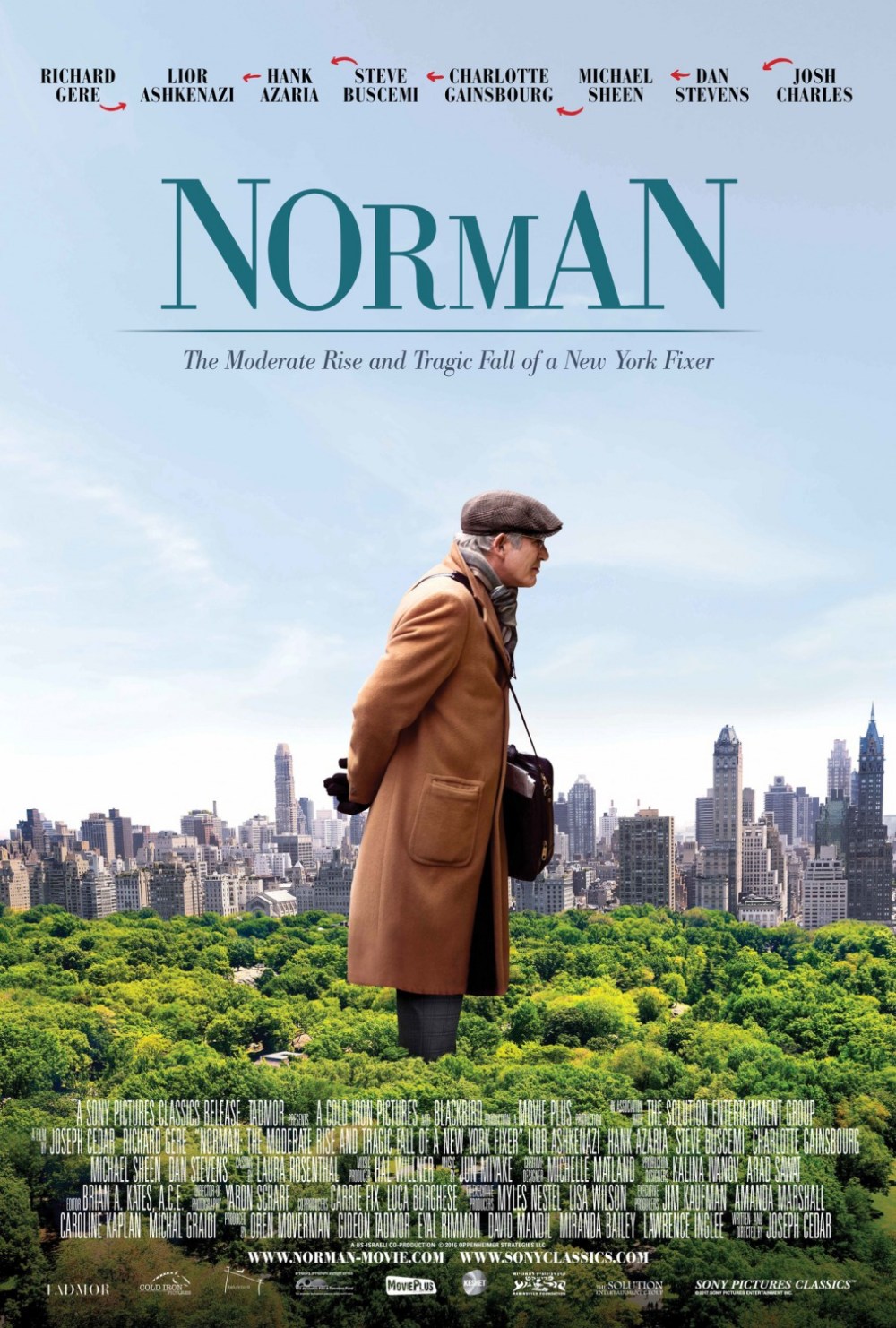
What I love about Richard Gere as an actor is his ability to play morally questionable characters with such a seductive charm to where I cannot help but root for him to succeed despite his morally dubious intentions. Whether he’s playing an infinitely corrupt cop in “Internal Affairs,” a fraudulent hedge fund manager in “Arbitrage” or a publicity-seeking lawyer in both “Primal Fear” and “Chicago,” Gere makes these characters hopelessly charismatic even as they sink deeper into a realm of lies, deception, and things much worse. Some actors are great at making you despise the villains they play, but Gere is brilliant at making you become enamored with the villainous characters he portrays as he makes breaking the law seem so seductive.
I was reminded of this while watching Gere in “Norman: The Moderate Rise and Tragic Fall of a New York Fixer” as he plays a man eager to achieve great success in his lifetime. While his character of Norman Oppenheimer is not as devious as Dennis Peck or Robert Miller, he’s a guy trying to sell everyone on his financial schemes which never seem to become a reality. When things finally start working out for him, they end up leading him down a road which could lead to either great success or tragic consequences.
Norman is a loner who lives in the shadows of New York City power and money, and he works hard, perhaps much too hard, at being everyone’s friend as he offers the elite something he can’t possibly provide on his own. His efforts, however, lead to little in the way of success, and his constant networking threatens to drive people away as people are easily annoyed just by the sound of his voice. Still, he comes across as a nice guy whom you wouldn’t be quick to shoo away because Gere convinces you Norman means well even as he manipulates those around him to his benefit.
But one day he comes across Micha Eshel (Lior Ashkenazi), a charismatic Israeli politician who is alone in New York and at a very vulnerable point in his life. Norman seizes on this vulnerability and befriends Micha in a way few others would dare to, and he cements their budding friendship by buying Micha a pair of shoes. But these are not any ordinary pair of shoes which you would find at your local Payless Shoe Source. The price of this particular pair of shoes is the same as the average one-bedroom apartment in Los Angeles, and while Norman initially hesitates once he sees the price, he buys them anyway to gain Micha’s respect. This pays off big time three years later when Micha becomes Prime Minister of Israel as he quickly remembers what Norman did for him. From there, Norman bathes in the respect he has craved for such a long time, and he uses Micha’s name to achieve his biggest deal ever.
When we look into Gere’s eyes, we can see when Norman is lying and when he is being honest with those around him. While other actors would have played this character in a more stereotypical or annoying fashion, Gere makes him into a genuinely well-meaning person whom you find yourself rooting for even when he doesn’t have much to back up his promises with. We also come to see what motivates him: he has a desperate need to matter. He wants his existence to be a necessary part of other peoples’ lives, and this should give you an idea of just how lonely a soul he is.
Writer and director Joseph Cedar, who previously gave us the acclaimed movies “Beaufort” and “Footnote,” leaves parts of Norman’s life ambiguous to the viewer. Norman claims he has a wife and child, but we never see them. Do they actually exist? In the end, it doesn’t matter because Norman truly believes they do, and this belief empowers him to persist in achieving what would seem out of reach to everyone else. Even when he is manipulating others, he never comes across as less than genuine, and we can’t help but root for him.
Cedar made this movie as a re-imaging of an archetypal tale about the Court Jew. Those who, like me, were unfamiliar with this tale, it involves the Court Jew meeting a man of power at a point in his life where his resistance is low, and the Jew gives this man a gift or a favor which the man remembers once he rises in stature. To say more would give a good portion of “Norman” away, but learning of this tale makes one realize why the Jewish people are often closely associating with banking as the job of a banker was one of the very few career paths available to Jews in the past. So, the next time people out there say Jews are greedy with money, remind them we narrowed down their career goals for no good reason.
In addition to Gere, there are other terrific performances worth noting in “Norman.” Charlotte Gainsbourg, looking almost unrecognizable from her tour of duty with Lars Von Trier, co-stars as Alex, one of Norman’s many marks who somehow sees right through his ways to where she is empathetic to his struggles. Steve Buscemi also shows up as Rabbi Blumenthal whose synagogue Norman is trying to save from developers. It feels weird to see Buscemi in a role like this as he plays a decent man who wants the best for others as we are so used to seeing him play unsavory characters in “Reservoir Dogs,” “Con Air,” “Fargo,” and “The Sopranos.” Either that, or there are still movies of his I need to watch.
In a lot of ways, Norman Oppenheimer is a different kind of character from the ones Gere has played in the past, but it also isn’t. He has been great at portraying people who are not easily likable, but he makes us like them as he is infinitely clever at getting us over to his side. After all these years, Gere remains an excellent actor on top of a movie star, and we are past due in realizing this. He has never been just a pretty face, and “Norman” has him giving one of his best performances to date. I have no doubt there are many more great performances from him we have yet to see.
It’s been over a week now since I saw the latest cinematic provocation from Danish film director Lars Von Trier. What I witnessed in “Antichrist” is still on my mind, and it took me a long time to process all I saw. I found myself talking to complete strangers about it as we each tried to interpret the movie on our own terms. Some found it too long which had me wondering if they ever saw Von Trier’s “Dogville” which was three hours long (“Antichrist” is only 109 minutes). Some just didn’t get the story. Either way you look at it, “Antichrist” is to 2009 what Michael Haneke’s remake of “Funny Games” was to 2008; an immensely polarizing film people will have passionate disagreements on. I found it to be a completely mesmerizing experience which had me transfixed throughout its entire length.
“Antichrist” stars Willem Dafoe and Charlotte Gainsbourg in performances which don’t deserve Oscars as much as they do Purple Hearts. They play a married couple who are referred to as He and She, and the movie opens with them making love while their baby boy plays in his room. There is even a hardcore insertion added to the sex scene which may seem inappropriate to some, but it adds a raw carnality to a moment which makes it all the more immediate. Their lovemaking becomes equated with death as their son goes up to an open window, fascinated with the falling snowflakes, and ends up plummeting to his death. From there, “Antichrist” follows them as they cope with their son’s tragic death, but things get even worse. And just when you think they have hit rock bottom, things getting even worse than that. Yup, it’s that kind of movie.
It really helps to go into “Antichrist” with no expectations and an open mind because it will not be anything you predict it will be. So much attention has been paid to the unnervingly graphic moments to where you think Von Trier is trying to court fans of “Saw” and “Hostel.” But anyone expecting this will walk out of this movie horribly disappointed. “Antichrist” does not exist merely to shock viewers with copious amounts of blood and gore. Instead, Von Trier seeks to challenge the things you believe in, and he dares you to look beyond the darkness of our own human natures to get a glimpse of what he implies.
An ominous hum runs throughout this movie in the same way it runs through many of David Lynch’s films (“Lost Highway” and “Blue Velvet” among others). Dafoe’s character is a therapist, and his conflict of interest is clear from the start as he questions how his wife’s psychiatrist is treating her. The wife disagrees, telling him he shouldn’t get involved, but his love for her overrules everything else, including common sense. Almost immediately, he makes her flush her medication down the toilet, causing her a frightening amount of emotional upheaval. He then takes his wife to a cabin in the woods, which is ironically called “Eden” (it’s anything but). She finds this is the place which scares her the most, and he decides it will be the perfect place to try exposure therapy. By facing her greatest fears, he feels this will get her past the tragic loss of their son.
You would think Dafoe’s character has his wife’s best interests at heart, but the exposure therapy only exacerbates her grief and despair. We later discover her hold on reality is tenuous at best when He finds She has been working on a thesis regarding gynocide, which itself is a take on the word gendercide; referring to the systematic killings of a specific sex, in this case, women. He comes to see She has embraced the witchcraft of women and that they are seen as evil beings, something he quickly tries to disprove to her. But having made her emotional state even worse than it already is, He sees her grief has made her justify the punishment She inflicts on herself as She lets herself believe it is her fault their son died.
Von Trier has long been accused of rampant misogyny in his films, and yes, he does seem to put his actresses through an emotional wringer most of the time. But while “Antichrist” deals with misogynistic themes, it is not a misogynistic movie. I’m sure many will make a good that it is, but the film could also be interpreted as empowering in some respects. “Antichrist” does call into question how the female sex is viewed as nurturing and caring while the male sex is seen as stronger. But for the last half of the movie, even though She has gone completely mad, She seems to have all the power and proves to be anything but weak and helpless.
All of this led me to a big question when I walked out of the movie theater in my emotionally shaken state; who is the antichrist of the story? Many may see it as the Gainsbourg character in how She embraces the sexist teachings which She has been studying, and of how the stick figure in the movie’s title seems to look like a woman. But I felt this illustration was not gender specific in its design, so this makes it subject to interpretation. Neither character is of sound mind throughout the movie, and both deal with their soul-sucking grief in very unhealthy ways.
Nature itself is a huge character in this movie, and the majority of the action takes place there. The house which sits upon “Eden” is much like the one we have seen from the “Evil Dead” movies so you can see in advance how bad things will happen there. Maybe nature is the antichrist of because out there, the laws we live under don’t exist in the same way, and there is no order to be found in anything. “Antichrist” almost ends up being like “Deliverance” but without the demented hillbillies. No one is put in cages. This all leads to the moment where Dafoe encounters the fox who takes the time from disemboweling itself to utter the words which define the film, “Chaos reigns!”
This scene apparently led to much laughter in the audience at Cannes when “Antichrist” was shown there, but it is the most truthful and frightening of moments in the entire film. Whether or not you believe Gainsbourg’s character when She says “nature is Satan’s church,” it is clear the relationship between these two, let alone their state of minds, are descending into total chaos. Many movies show how nature can force us to discover the animalistic parts of ourselves, the parts we would rather not know about, and “Antichrist” is no exception.
I took some time to look at the definition of the word antichrist and what it really meant. According to Christianity, the antichrist is one who fulfills Biblical prophecies concerning an adversary of Christ while resembling him in a deceptive manner. Clearly, someone of sin, he or she opposes against anything that is worshiped, claiming divine authority. Most notably, this person also works all kinds of counterfeit miracles and signs. With this in mind, I can’t help but think Dafoe’s character is the antichrist of this movie, for he has taken his wife’s well-being into his hands thinking his experience trumps that of a younger doctor. He rails against all which is medically sound, and he subjects his wife to unnecessary torment despite his intent to help her. If he really thinks exposure therapy is the way to handle things, I wonder how it worked with his other patients who were not family related.
Much of what we see in “Antichrist” is open to interpretation. Von Trier has not gone out of his way to try and justify what he has shown us. There is a story at work here, but its meanings will be different for those who dare to see it. Watching this movie reminded me of when I was a student at UC Irvine and saw a production of David Mamet’s “Oleanna.” It was a play which focused on a meeting between a male professor and one of his female students whom he gave a bad grade to. At the end of it, no one could decide who was more at fault. It frustrated many because the play seemed to be devoid of a straight answer, but this was the point. One made the play so great was how thought provoking it was. It made you think about what you just saw, and it expanded how you saw certain things and maybe gave you a deeper understanding of the world around you more than ever before.
“Antichrist” gave me this same kind of experience, and I can’t remember the last time I had one like it. Most movies today don’t challenge you out of fear of offending too many paying customers they depend on, so as emotionally draining as this film is, it still feels s like a victory something this artful actually got made. It is meant to shake you, and that it did to me. Many will hate the film, but for those filmgoers who are far more adventurous in what they watch, I think there is much they can appreciate.
Is there anything audiences can come to agreement on with “Antichrist”? Well, one thing’s sure; you cannot deny the astonishing beauty of the cinematography on display. The director of photography is Anthony Dod Mantle, the same cinematographer who shot “Slumdog Millionaire.” The opening prologue stands out as one of the most beautiful pieces of film I have ever seen. The juxtaposition of He and She making love while their son ends up falling from his bedroom window is as lovely as it is horrifically tragic. Mantle also gives us some incredible dreamlike shots which capture the beauty of nature while hinting at the inescapable darkness lingering beneath the surface. I somehow doubt that I will see more beautiful imagery in any other movie I see for the rest of 2009.
What else can we agree on about “Antichrist”? Ah yes, the performances! Both Dafoe and Gainsbourg rise up to the unthinkable challenges Von Trier lays at their feet. What they both do here almost seems criminal were they not such willing participants. Both actors are known for taking big risks, so this makes them well suited to take on material so emotionally naked.
Gainsbourg won the Best Actress award at the Cannes Film Festival, and she clearly deserved it. Ironically enough, she also appeared in a production of David Mamet’s “Oleanna,” and she played the title character in the 1996 version of “Jane Eyre.” Her opening intro from “The Cement Garden” was used in one of my all-time favorite Madonna songs, “What It Feels Like for A Girl.” Throughout her career, she has disappeared into her characters with an abandon you don’t find in many other actors. Her performance in “Antichrist” shows her at the peak of her powers, but I’m sure there is greater work we will see from her in the future.
But let us not leave out Dafoe who can add his role here to the many great ones he has played. His character is a witness to an unspeakable despair, and he does not hide the fact his character deals with this despair in ways which are selfish more than anything else. Dafoe’s career has spanned several decades, and it includes controversial movies like “Mississippi Burning” and “The Last Temptation of Christ.” Dafoe’s mission and intent as an actor has never been to simply get under your skin, but to explore the darker parts of humanity so we can better understand them. He is unhindered by the trappings of stardom and glamor, and he continues to take chances with movies like this one.
Von Trier may not be “the greatest director in the world” as he proclaims whenever given the opportunity, but he is certainly one of the best directors working today. Watching his movies, you can understand why there is actually a benefit to people booing his material. Were a film like this were not generating strong emotions such as booing, this film would have been a failure for him. Art, be it in film or in paintings, serves to challenge the things we believe in, and that is what Von Trier has done here.
“Antichrist” is a movie which takes its time in getting to where it’s going as opposed to going for a quick payoff like most movies do. If you can keep up with its slow pace, you will be in for a movie as mesmerizing as it is psychologically draining. Many will it intensely, but I count myself as one of its defenders. For me, this is far and away one of the best movies of 2009. But like both sides, I will warn you this is not a movie for everybody. If you are easily offended or not in the mood for something deeply disturbing, then don’t see “Antichrist.”
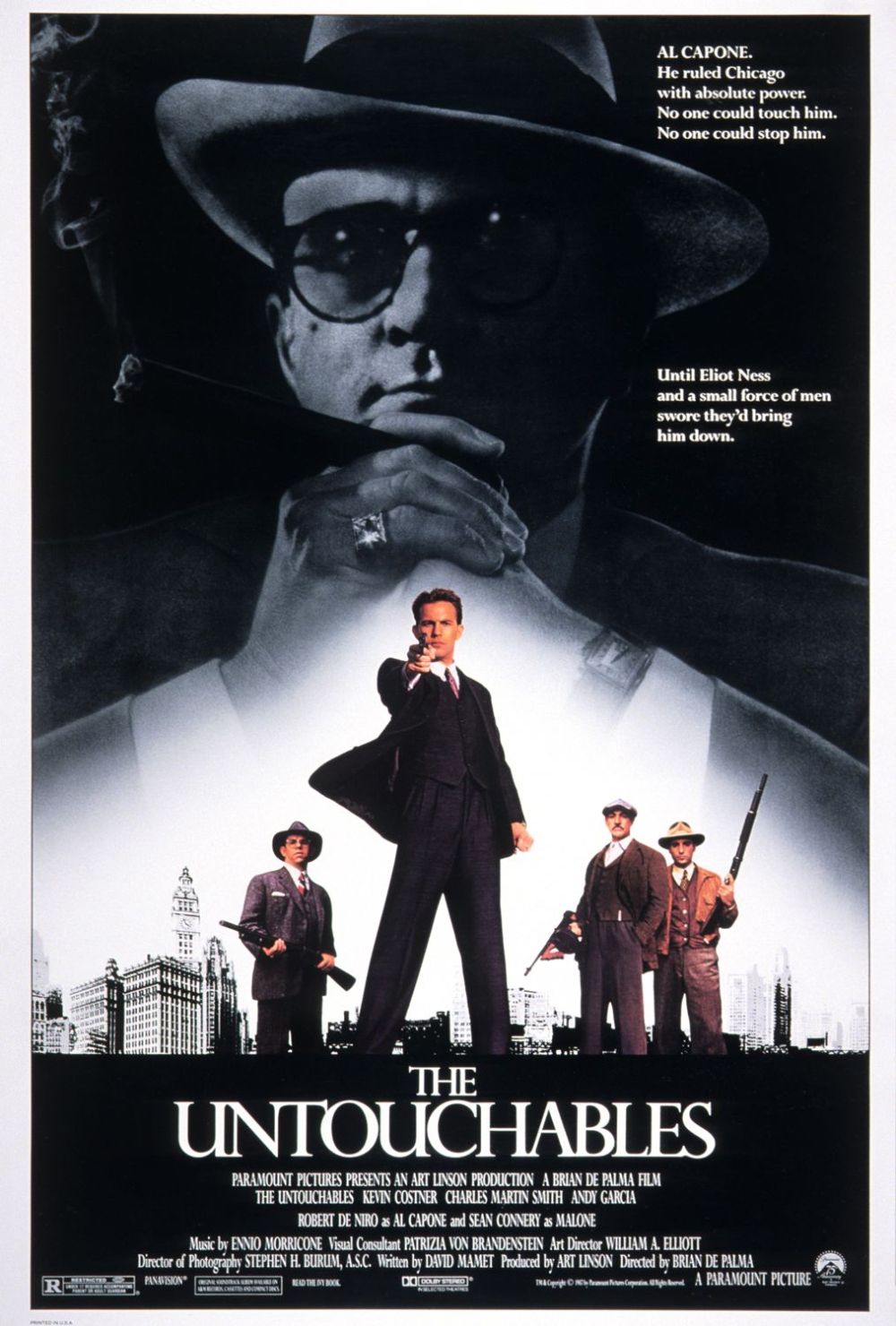
There were more than enough film buffs who filed their tax returns, or applied for an extension, on April 15, 2010, in the nick of time to check out a special screening of Brian De Palma’s 1987 classic “The Untouchables” at the Aero Theatre in Santa Monica. Following the story of how Elliot Ness and his select group of men who worked to bring down infamous crime boss Al Capone on tax evasion charges seemed like the perfect way to celebrate Tax Day. Finally seeing it on the big screen in glorious 70 mm was great after first watching it on VHS years ago.
But I do have to admit though that this movie really screwed me up for a time after I first saw it. It was one of the few times my parents let me watch an R-rated movie with them when they rented it on video. Having seen it reviewed on so many different shows like “At The Movies,” “Sneak Previews” and of course “Siskel & Ebert” (which had both hosts clashing over it passionately) had me excited about watching it eventually, and this was back in the day when I rarely, if ever, went out to the movies. But it was one of the first times where I realized the good guys didn’t always make it to the finish line. To see them get killed off in a most gruesome way was painful for a 12-year-old to take in as I always believed the good guys, those who work for justice would be the ones left standing. Back then, I was starting to learn how unfair the world can be.
Anyway, this evening had a special reason for us to come out other than seeing the film in 70 mm as David Mamet, who wrote the screenplay for “The Untouchables,” was also in attendance to engage in a Q&A. Instantly recognizable in his beret and those huge yellow glasses of his, Mamet had many stories to tell regarding the making of De Palma’s film, writing the script for it and his thoughts on writing and Hollywood in general.
The first question asked was how Mamet got hired to write the script, and he replied that he got the job by default. Apparently, the job was first given to the late playwright Wendy Wasserstein who had won a Pulitzer for “The Heidi Chronicles.” She must have done quite a bit of work on it because Mamet said the Writer’s Guild of America still wanted to give her a credit. But he never hid the fact that what attracted him to writing the script was, as he said, “a lot of money.” The way Mamet described it, writing for someone else is known as “whoring.”
Being one of America’s most acclaimed playwrights and having grown up in Chicago where “The Untouchables” takes place should have made Mamet the most obvious choice for this motion picture. Mamet talked about how he grew up there with gangsters all around him and of how everyone lived and breathed the same air as them. As for the cops, he got to know them better while working as a cab driver. He also went on to say several of his family members kept telling him stories about Capone from time to time.
For years, Chicago has been known to be a city engulfed by corruption, and Mamet did nothing to hide the fact it is full of crooks. He described it as a machine that is run downstate and remarked the mayors occasionally go to jail. He also remembered a saying once told to him when he asked someone in politics what the difference was in running for one office or the other. The politician told him, “the girls get prettier.”
It seems many natives of this city have the same romantic view of Chicago as Mamet did, and he said it best, “In Chicago, we love our crooks!”
A lot of Mamet’s inspiration for “The Untouchables” came from all of Chicago, he said. He tried to include as many famous landmarks such as The Anchors Restaurant and The Lake. Much of downtown Chicago was used to great effect throughout, and I wonder if there has been a movie since which is as superb in the way it brings Prohibition-era Chicago to life.
With De Palma directing “The Untouchables,” Mamet said he just hoped the director would stick to the script he wrote. Looking back, he said De Palma did actually stay true to his script to a certain extent, but that there were moments where he felt aliens had come down and sucked the brains out of those making the film. In terms of differences from his original script, Mamet said they took out the crawl he put at the end of what happened after the Prohibition Era ended and of how gangsters are still with us today. Mamet also said De Palma was the one who added the “cockamamie baby carriage” sequence.
During the making of “The Untouchables,” Mamet said he was never on the set. He was actually quite happy he wasn’t there which was surprising to here as you’d figure any writer would want to be there even if it annoys the hell out of the director. But while most writers want the opportunity to be on a film set, Mamet said he feels better off staying out of the way.
One of the main sources behind the screenplay was Elliot Ness’ autobiography which Ness wrote with Oscar Fraley. When an audience member asked Mamet if he believed what Ness wrote about, Mamet replied quite simply, “I don’t believe anything anymore.”
At its essence, Mamet described “The Untouchables” as a melodrama. Lest people see this as him looking down on the way De Palma shot this now classic movie, he was quick to quote from Stanislavski, “Tragedy is just heightened melodrama.” Looking at the movie as a melodramatic piece actually makes perfect sense as audiences got so swept up in the story to where it affected them more emotionally than they could have anticipated.
Other tidbits Mamet shared included that aside from Robert DeNiro’s method preparation in playing Al Capone, he ended up saying just what was in the script. The line uttered by Sean Connery’s Malone character of “here endeth the lesson” came from the book of common prayers. But the one which really stood out was what Mamet said Connery first told the producers when he came to make this movie, “Broccoli never paid me a dime to play James Bond!” As for “the Chicago way,” Mamet said it was something he just came up with. The philosophy behind it was when you take something, burn it down to the ground and then build it back up again.
Many in the audience were also eager to hear Mamet talk about the art of writing, and he had much to say on the subject. As a dramatist, he said his job is to take out the narration and go with the plot and characters. Watching the plot for him is where the enjoyment comes from. The problem is actors and directors end up wanting to put all the narration back in. They want to spell out everything for the audience, but dramatists make you want to know more about what’s going on. The way Mamet sees it, you just need a plot and an actor to get the ball rolling. A play or a movie cannot start from an ongoing situation. Of course, writing a plot can be very hard. In terms of plots, he views “Wag The Dog” as his “Casablanca” in that it was the easiest plot for him to write. Once he was finished, Barry Levinson started shooting the movie a month later, and the shoot went very quickly. As for all the other plots he has worked on, they were nightmares.
In talking about some of his other projects, Mamet said the coffee’s for closers speech with Alec Baldwin from “Glengarry Glen Ross” might have come from sitting in an office where he once worked. There was also some talk of how he wrote the script for “Ronin,” which was directed by the late John Frankenheimer, and never got credit for it. Mamet said he had always wanted to write something anonymously, and “Ronin” became that something because he was not originally hired to write it. What happened was Robert De Niro pleaded with him to do a rewrite as he felt the script was not up to speed. Mamet said he eventually caved in and rewrote the whole script in a week.
In addition to being a writer, Mamet is also a director of film and stage. When asked about his approach to directing, he said he wants to know what the story is about and how each beat contributes to the action. From there, everything comes together along with some unforeseen difficulties. When asked if movies would ever become an art form again, Mamet said, “Movies were never an art form, they were entertainment. It just evolved into an art form from there, and it’s still evolving in different ways.”
Mamet was up onstage for almost an hour at the Aero Theatre, and it still didn’t feel like he was there long enough. This writer, who grew up a working-class man and went to Kaminsky Park on a regular basis (yes, he is a Cubs fan) was full of anecdotal moments which made us want to learn more. When it comes to “The Untouchables,” he gives all the credit for its success to De Palma as he made all the elements work perfectly. He said almost everything good that happens is an accident, so it’s safe to say “The Untouchables” is a glorious accident and one which invites repeat viewing.
I personally want to thank David Mamet for saying something he once heard from a judge; that being quoted out of context is “the definition of a quote.” This makes writing articles like these so much easier! As for his line about critics being “illiterate swine taking the bread from my children,” I won’t take that one personally. Oh yeah, he also said the lizards in Hollywood will be the last ones to die, and he believes their last words will be, “I want to know more…”
So here we are again in the land of fast cars and unabashedly mindless entertainment. We all know what to expect when we walk into a “Fast & Furious” movie, so we should only complain so much, right? “The Fate of the Furious” is the eighth film in this now 16-year-old franchise, and the filmmakers bring most of our favorites back including Vin Diesel, Michelle Rodriguez, Dwayne Johnson, Tyrese Gibson, Chris “Ludacris” Bridges and Nathalie Emmanuel, and “Furious 7” co-stars Kurt Russell and Jason Statham are back to do more damage as well. And yes, there are fast cars aplenty on display here, and you can gleefully expect Gibson to pick the sexiest one even if it is not well-equipped for where he is taking it.
Still, I came out of “The Fate of the Furious” feeling surprisingly underwhelmed. What we have here is not a bad movie, but one which barely rises to the level of being okay. I didn’t get the same rush I typically get as this family of characters drive through one city after another at breakneck speeds while giving every insurance company a lot of grief. Part of me wants to blame the fact that the franchise’s last entry, “Furious 7,” was one of the best and most emotionally of the bunch, but perhaps these films are now drifting on fumes as it feels like we have finally gone too many laps around the same track.
Anyway, Dominic Toretto and Letty Ortiz are on their honeymoon in Havana, Cuba when Dom comes across the alluring Cipher (Charlize Theron), a criminal mastermind and cyberterrorist who makes him an offer he can’t refuse, and it involves betraying those closest to him. Why does Dom go out of his way to betray family? You have to watch the movie to find out, but it involves him stealing an EMP device and some nuclear codes which Cipher wants for her own nefarious purposes.
Having been betrayed by Dom, Luke Hobbs somehow ends up in prison despite all his years of service to law enforcement, and he ends up in a cell right across from his nemesis, Deckard Shaw. After an over the top prison fight which has them both escaping, they run into Frank Petty who informs him and the team they will be working together to bring Dom to justice. Yes, there is only so much plot to be found in “The Fate of the Furious,” but there is still much to take in here. In retrospect, maybe there’s too much.
When it comes to these “Fast & Furious” movies, you are obligated to suspend disbelief, and they usually move at a pace which keeps you from thinking too much about what’s going on. But with this one clocking in at over two hours, my brain was thinking a lot more about the crazy scenarios than usual to where I was taken out of the movie more than twice. For starters, having Statham become a good guy seems far-fetched considering how evil and dangerous he was in “Furious 7.” Granted, his scenes opposite Johnson make for the best moments in this entry as they bait and insult each other as they constantly threaten to beat one another to a bloody pulp. Still, the change in loyalties can only go so far even in this series.
Also, the majority of the car chases on display feel more like special effects than the real deal. There are some cool moments like when Cipher manages to hack into dozens of cars to where they rain on everything and everybody. Still, it felt more like I was watching a video game instead of a movie as the filmmakers stretch credibility beyond its limits from start to finish. In the end, they can only get away with so much.
Directing “The Fate of the Furious” is F. Gary Gray who gave us “Friday,” “The Negotiator,” “Set It Off” and one of the best biopics in recent memory, “Straight Outta Compton.” There’s only so much he can bring to the table as this franchise thrives on familiarity and cars to an infinite degree, but he lets certain scenes drag out when the pedal should be put to the metal. And when that submarine jumps out from under the ice, I couldn’t help but wonder if perhaps this franchise had finally jumped the shark as it tried to outdo itself in terms of stunts. For all I know, the next installment will have this family teaming up with aliens from Mars as they battle another nemesis who’s even worse than the previous one.
This sequel does have the invigorating appearance of Charlize Theron who portrays perhaps the coldest and cruelest villain Dom and company have ever faced. Theron gives us a deliciously evil antagonist in Cipher, and her strength comes from never having to overplay the character. She keeps a cool demeanor throughout as she makes us see Cipher is always one step ahead of her opponents without even having to show us why. Those beautiful eyes reveal to us a corrupted soul who has those in her command under in her complete control. Theron has always been great at playing a badass whether it’s in a movie like this, “Mad Max: Fury Road” or the upcoming “Atomic Blonde,” and she is a memorable addition to this franchise.
Aside from that, a lot of what I saw in “The Fate of the Furious” felt kind of worn out compared to what came before. Diesel delivers his usual stoic performance as Dom, but his veiled threats to Cipher could have felt more threatening. Even the banter between Gibson and Bridges, who can always be counted on to provide comic relief, feels tired as they constantly yell at one another as if they were in the latest Michael Bay movie. As for bad characters switching alliances, it’s a little difficult to believe Deckard Shaw would help Dom so easily after he killed off one of Dom’s best friends. People like these don’t just forgive each other easily.
Regardless, there will be a ninth “Fast & Furious” movie in the near future as this franchise shows no signs of slowing down. I just hope the filmmakers bring a fresh energy to the next installment as “The Fate of the Furious” lacks it more than I could have anticipated. Instead of trying to outdo the stunts which came before, maybe everyone can bring renewed focus to the characters and give us real stunts instead of ones generated by CGI. This isn’t a terrible movie, but it could have and should have been much better than it was.
For the record, there is no post-credits sequence, so feel free to take care of your urine ache sooner rather than later.
After all these years, I think Richard Gere is one of the most underappreciated actors working in movies today. Sure, he’s been a movie star for years, having appeared in such classics as “An Officer and a Gentleman” and “Pretty Woman,” but I wonder if people in general see him as more than just another pretty face after all this time. Seriously, he has pulled off a number of unforgettable turns in “Primal Fear,” “Chicago” and “Arbitrage” which had him portraying morally duplicitous characters whom you cannot help but root for. The fact he has never been nominated for an Academy Award is baffling as he has more than earned his place among the best, and it seems like he still has to keep reminding us of how good an actor he is.
The latest example of this is “Norman” in which Gere plays Norman Oppenheimer, a humble New York fixer who lives a lonely life in the margins of power and money. He is a would-be operator who dreams up financial schemes, and he strives to be everyone’s friend as he networks with anyone who can elevate him in society. In the process, he gains the attention of Micha Eshel (Lior Ashkwnazi), an Israeli politician who has yet to fully advance in his career, by buying him a super expensive pair of shoes. When Micha becomes Prime Minister of Israel, he remembers Norman’s generous gift and brings him into his inner circle. This gets Norman to set up the biggest deal of his career, but it all threatens to end in an international crisis no one can walk away from in one piece.
“Norman” was directed by Joseph Cedar. His previous films include “Campfire” which earned him Ophir awards for Best Director and Best Screenplay, “Beaufort” which won him the Silver Bear award for Best Director at the Berlin International Film Festival, and “Footnote” which earned an Academy Award nomination for Best Foreign Language Film. “Norman” was inspired by the archetypal tale of the Court Jew which involves a Jew meeting a man with power when his resistance is very low. The Jew gives the man an incredible gift, and the man remembers him when he ends rising in stature. The Jew then becomes a consultant to the man, but when the man becomes subjected to endless antagonism, he has no choice but to get rid of the Jew because the Jew is far too easy to get rid of.
The tale of the Court Jew is one I was not familiar with, and it was fascinating to hear Cedar talk about it when he joined Gere for an interview at the Beverly Wilshire Hotel. Yes, this was the same hotel Gere romanced Julia Roberts in “Pretty Woman,” and the irony of this fact was not lost on any of us. Anyway, Cedar got more specific about this tale with us.
Joseph Cedar: Aside from the type of personality that the Court Jew has to do what a Court Jew does, which is a combination of brilliance because otherwise he is not essential to whoever has power, and a flexibility which allows him to sell out. These are complicated characters that are in the gray area of many moral questions, and it’s part of what allows them to be of influence. But there’s another aspect to it that I think is extremely interesting me. I think all of modern progress is the result of some Court Jew, or at least in Europe. If you look at the great European monuments, none of them would have been possible without that relationship between a king, a duke, a prince or someone in power, and a Jew is able to finance things that the township or the common person, the farmers of whatever area they were in, would have never agreed to do. So rulers needed that function in order to do things that, in retrospect, we are all enjoying right now: art, culture in general, architecture. And then there are some things that are considered negative but are also important: armies, bridges. But it’s a combination of things which are objectively good together with things that are questionable. There are many taxes that Jews convinced their rulers to put up, so those taxes were seen as something bad for the people who have to pay them. But 500 years later, those taxes created beautiful cities.
Ben Kenber: Was there anything specific about the Court Jew tale which you really wanted to get across in this screenplay? It sounds like a tale many other writers are familiar with, and it has been told a number of times, but was there something specific you wanted to address?
Joseph Cedar: I don’t know. It was something I was attracted to in a very sincere way. It’s not that I was looking for this tale.
Richard Gere: Is it the fact that the Court Jew who would be sacrificed in the end and the easiest one to let go?
Joseph Cedar: I think that’s what makes this tale, this journey, this narrative so involving.
Watching Gere as Norman Oppenheimer reminded me of his great work in “Arbitrage,” “Primal Fear” and “Internal Affairs” as he is so good at playing immoral characters who somehow manage to bring you over to their side despite their duplicitous ways. But while Norman is trying to get the upper hand in a way which benefits him, we see he is a desperately lonely man who longs to be accepted by others. Deep down, we want to see Norman succeed, and you can see his lonely desperation in his eyes. This is what I asked Gere about.
Ben Kenber: The thing I love about your performance Richard is we can tell when your character is playing with peoples’ emotions and trying to get what he wants, and then there are other moments where you can see in his eyes that he is being truly honest with others. How challenging is that for you as an actor to pull off?
Richard Gere: Not so hard because he believes it every time. When he’s lying, he believes it. When he’s telling the truth, he believes it. As soon as he starts or if something happens, he has got to fix it. Someone confronts him and he’s got to make it sound like, “Well my wife babysat him…” Whatever the story is, but once he starts it, his fantasy life is so vivid to him that he totally believes it. Totally. So, to him there’s no difference.
Joseph Cedar: I believed you believing it.
Richard Gere: Well that was important.
I want to thank Richard Gere and Joseph Cedar for taking the time to talk with me. “Norman” opens in theaters on April 14, and it is a very good movie worth checking out.
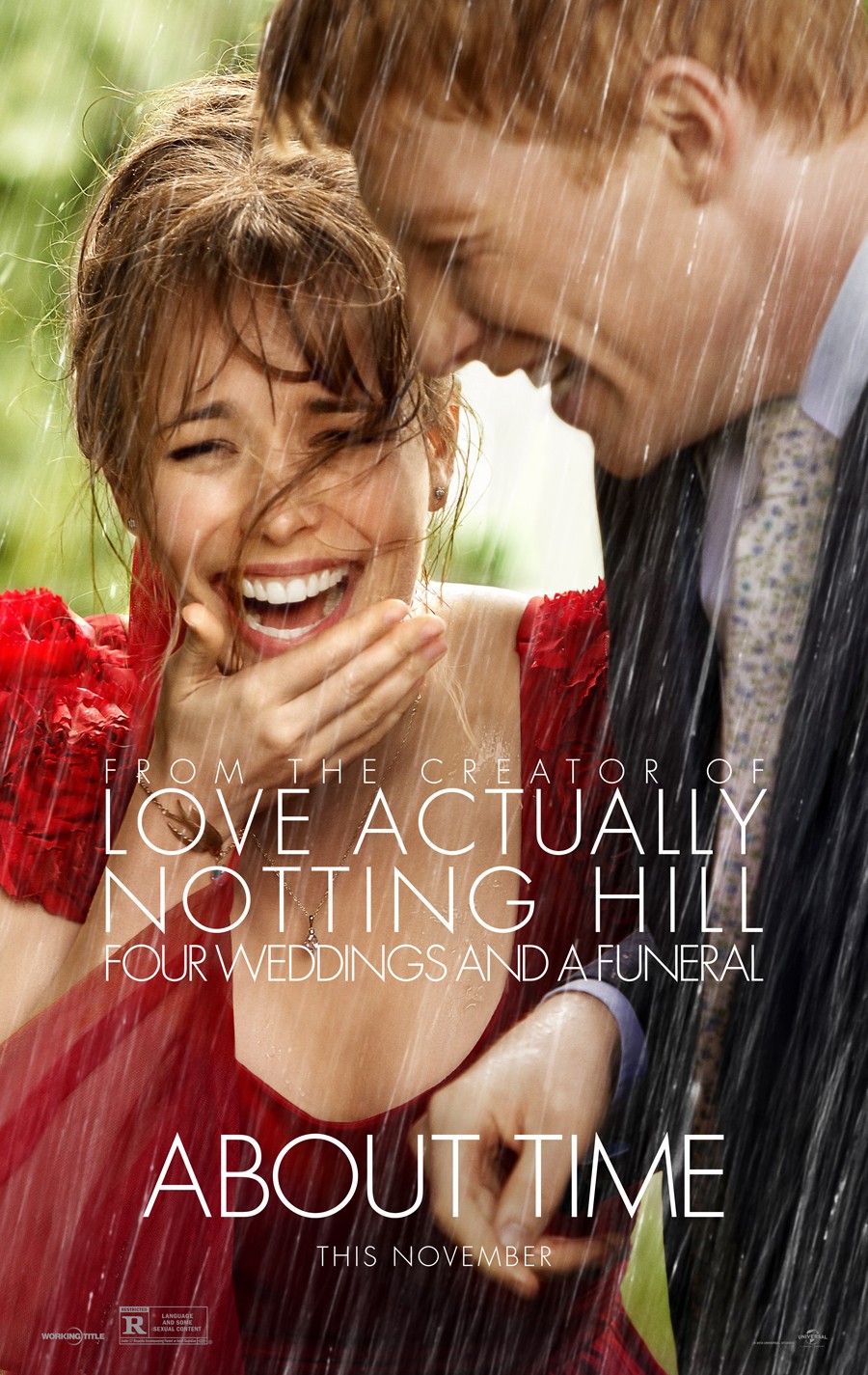
Those who know me best know I typically cannot tolerate romance movies. Sure, there are exceptions like “When Harry Met Sally” and “(500) Days of Summer,” but I usually find most of them to be unforgivably manipulative, inherently cheesy and full of cringe inducing dialogue. As a genre, I typically avoid it whenever possible, so my enthusiasm for “About Time” was not at an all-time high. But then I noticed a familiar name on the movie’s poster, Richard Curtis. This is the same man who wrote the screenplay for “Four Weddings and a Funeral,” one of the few romance movies which actually had me on the edge of my seat, and he also wrote and directed “Love Actually” which has become my dad’s favorite film to watch on Christmas Eve. As a result, my excitement for this movie suddenly went up to an unexpected height.
“About Time,” on the surface looks, like the kind of romantic comedy where a man and woman get together, fall in love and then break up only to become a couple again by the movie’s end. But the fact is its trailer doesn’t do the movie any justice. The story ends up becoming more than the usual romance, and it ended up go in directions I didn’t expect it to. Curtis is obviously aware of the trappings inherent in this genre, and he succeeds in avoiding them and gives yet another film which is genuinely moving and full of characters who are relatable and refreshingly down to earth.
The main character of this romantic tale is Tim Lake (Domhnall Gleeson), a 21-year-old desperate to have a girlfriend in this lifetime. His attempts at getting a kiss on New Year’s Eve don’t work out as planned, and it only adds to his self-deprecating attitude which he has clearly spent years perfecting. He can’t even capture the heart of his sister’s best friend Charlotte (Margot Robbie) who is quite the looker.
Before he heads off to London to become a lawyer, Tim’s dad (played by Bill Nighy) lets his son in on a little secret: the men in his family have the power to time travel. All Tim has to do is go inside a closet, clench his fists tightly and think about a place he wants to go to, and suddenly he’s there. He immediately tests this time travel power out and goes back to New Year’s Eve to get the kiss he missed out on, and from there he uses it to benefit himself and those closest to him whenever possible.
Now on the surface this seems like a silly plot for a movie, and the Bill Murray comedy “Groundhog Day” quickly came to mind as I watched “About Time,” but Curtis has not given us the typical time travel movie here. In fact, the time travel aspect gets pushed more and more into the background as Curtis aims to focus on not one but two love stories.
Tim ends up meeting an American woman at a blind dating restaurant where everyone is served food in the dark, and through their conversations they form a connection which becomes unbreakable. Once he gets outside and back into the light, he discovers the person he spoke with is the beautiful but insecure Mary (Rachel McAdams), and their moment on that quiet London street had me rooting for them to make this relationship work.
The other love story in “About Time” is between Tim and his dad, and I found it to be the most moving part of this movie. At first it looks like they have the usual father-son relationship where the father gives his son life advice and the son takes it with a grain of salt, but their relationship feels a lot more real than those I have seen in recent movies. Once Tim learns his dad is headed for a certain fate he can’t escape from, their relationship becomes even deeper and you dread the moment these two people will have their last ever conversation.
Are there some logistic problems with the time travel aspect of this movie? Probably, but I didn’t care. It serves as an interesting plot device as Tim accidentally erases his initial encounter with Mary after helping a friend, and he ends up having to make her fall in love with him all over again. It’s also amusing to watch Tim try to improve on certain moments in his life with Mary like when they have sex or when he proposes marriage. Heck, we’d all love to have the power to undo the more embarrassing moments in our lives, and I got a huge kick out of Tim undoing his.
But the time travel device does serves to illuminate one of the movie’s main themes which is to not be overly concerned with the past or the future, but to instead stay in the present and take pleasure in every moment. This is what I love about Curtis’ movies, how he takes the most mundane, ordinary things and turns them into a thing of beauty. They are the things in life we take for granted and don’t always take the time to appreciate. By the movie’s end, Curtis makes us realize this, and we come out of “About Time” with an upbeat look on life we don’t always have.
The other thing I’ve come to love about Curtis is how populates his films with multi-dimensional characters we can relate to. The thing that drives me nuts about a lot of movies, especially ones from the romantic genre, is how they give us characters that are doing so much better than the rest of us, and it gets to where we just believe that all these problems with love only happen to successful white people. Curtis, however, continues to give us the most memorable characters we could ever hope to meet in our lifetime.
It also helps that Curtis has quite the cast to work with. Domhnall Gleeson, whom you might remember as Bill Weasley in “Harry Potter and the Deathly Hallows,” is terrific in the way he radiates that Hugh Grant awkwardness as his character goes from being unlucky in love to being very lucky in life. As for Rachel McAdams, I’m trying to remember the last time I found her to be so radiant in a movie. McAdams does some of her best work here as Mary, and every time she smiles it just fills your heart with joy. There’s also some nice performances from Lydia Wilson as Tim’s wayward sister Kit Kat (yup, that’s her name), Lindsay Duncan as Tim’s mom, and the late Richard Griffiths has a wonderfully memorable moment as an actor who doesn’t need help memorizing his lines and will bluntly let you know this.
But the best performance in “About Time” comes from Bill Nighy who portrays Tim’s dad (we never learn his character’s real name). It’s the simplicity of his performance which really gets to you as he never overplays or underplays the character. He never tries to go for that “Oscar moment” which the Academy easily goes crazy over for all the wrong reasons. Nighy doesn’t give us an extraordinary man or a boring father. Instead, he just gives us a man and a dad who is no different from the one we’ve grown up with, and he makes it so, when we watch him, we can’t help but think of our own dad.
Seriously, “About Time” moved me to tears. The only other movie this year I’ve cried after was Terrence Malick’s “To the Wonder,” but that’s mainly because he just had to use Henryk Gorecki’s “Symphony of Sorrowful Songs” which remains the saddest piece of music I have ever heard. With this film, Curtis reminds you of how the simple pleasures in life can often be the greatest, and of how you need pain in order to better appreciate happiness. There are a lot of movies out there which try and make you see this, but few filmmakers these days can make us appreciate this as much as Curtis does.
It’s a bummer to hear Curtis say “About Time” will be his last film as a director. He’s not leaving the movie business, but he is going to spend more time on the charities he works for. Still, it’s hard to think of any director, other than Mike Newell, who can better convey Curtis’ views on life as well as Curtis. Here’s hoping he changes his mind at some point in the future.
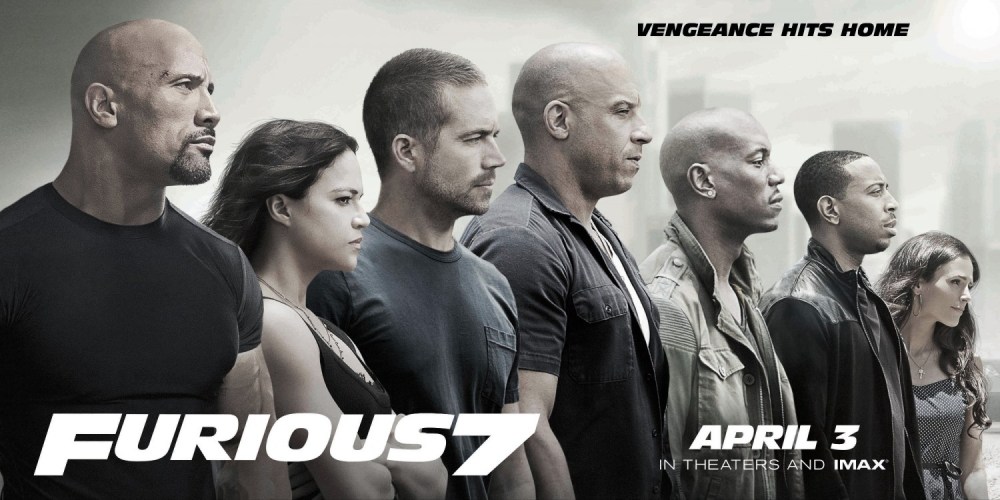
Some franchises really overstay their welcome, but that’s never been the case with “The Fast and The Furious.” While it looked like this series was running on fumes by the time “Tokyo Drift” came around, the main characters from the original came back for the fourth entry which re-energized everything to a major extent. Now we arrive at “Furious 7” where the action remains top notch even as the filmmakers defy logic more than ever before, but there’s also a lot of emotion and poignancy as we are reminded of what brings us back to these films more than anything else: the characters. Deep down, we care a lot about Dom Toretto and his family and of what happens to them.
After vanquishing Owen Shaw in “Fast & Furious 6,” Toretto and company now have a new nemesis to deal with in Owen’s older brother, Deckard Shaw. Played with villainous relish by Jason Statham, Deckard vows vengeance against Dom and his crew for what they did to his brother, and he starts off by eliminating Han Seoul-oh (Sung Kang) and then obliterating the Toretto family home. This disrupts their lives as Brian O’Connor (the late Paul Walker) tries to settle down into a regular suburban life with Mia (Jordana Brewster), bur the death of one of their gang forces them to take matters into their own hands.
There’s actually something quite nice about calling “Furious 7” a sequel instead of a prequel or intra-sequel. The three previous entries took place before “Tokyo Drift,” but now we have a “Fast & Furious” film which actually takes place after “Tokyo Drift.” As a result, the fates of these characters are now up in the air more than ever, and we can’t be sure of what will happen next.
The presence of the late Paul Walker casts a heavy shadow over “Furious 7” as there is no way we can watch this film without being reminded of the fiery car crash which claimed his and Roger Rodas’ life in November 2013. It’s nice to see Walker play his star-making role one last time, and his entrance into it is very inspired. Walker died halfway through filming this movie, so the filmmakers had to use stunt doubles and CGI effects to fill in the missing blanks. Honestly, the results look seamless, and I couldn’t tell how exactly they pulled it off. Just like Brandon Lee in “The Crow,” Walker gets one last ride which is more than worth the trip.
It’s also fun to see Vin Diesel back in action even as his dialogue becomes rather cringe-inducing at times. There’s certainly no replacing him as Dom Toretto, and he has a number of nice moments with Michelle Rodriguez whose character of Letty is still struggling to remember who she once was. It’s also nice to see Jordana Brewster and Dwayne Johnson back as well, and this is even though we don’t see enough of them this time around. As for Johnson, he looks more massive than ever and has a nice little Incredible Hulk moment which will have the audiences cheering. And yes, he sure can wield an enormous machine gun just like the one Jesse Ventura wielded in “Predator.”
Among the new additions to the franchise in “Furious 7” include Kurt Russell, and it’s always great to see him in anything. Russell plays Frank Petty, a.k.a. Mr. Nobody, who heads an ultra-secret covert ops group which comes to help Dom and his crew take down Deckard. After all the law-breaking Toretto and his gang did, it only makes sense they team up with a group which bends the law as well. The “Escape from New York” star remains as cool as ever, and if they do decide to make another film in this franchise, I hope they bring him back for more.
Djimon Honsou also shows up as a bad guy named Mose Jakande, a character whose last name reminded my friend Courtney of some lyrics from the song “Iko Iko.” The “Gladiator” actor lends another strong villainous presence to a movie which already has one with Statham. Ronda Rousey, one of the few bright spots in “The Expendables 3,” makes a cameo as a character who tries to beat the crap out of Letty. And of course, you can always count on Tyrese Gibson and Chris Bridges (a.k.a. Ludacris) to keep chewing each other out with infinite glee as Roman and Tej.
“Furious 7” employs a number of stunts which defy the laws of gravity and logic among other things, but it’s our love of the characters which keep us from being bothered about that too much. This is especially the case when Dom and Brian drive an incredibly fast car from one high-rise building to another in Abu Dhabi. This moment almost tops Tom Cruise climbing up another building in the same country in “Mission: Impossible – Ghost Protocol.”
Also, as I’m sure you’ve seen in the trailer, the gang parachutes out of a plane in their cars, and they manage to land on the ground below with relative ease (their shock absorbers may need some work though). Lord knows how you can steer a car while it is skydiving to the ground, but these drivers are all about the impossible, and they make us want to buy into their craziness.
I do have to give Diesel some extra credit here. His character of Dom Toretto ends up surviving so many car crashes and head-on collisions in this sequel, not to mention driving out of a parking garage as it collapses around him, to where I’m not sure how many other actors could pull this off and make you believe they would come out with only a few cuts and scratches (at least, until the movie’s last half). Only an actor like Diesel can sell this kind of survival to an audience these days, so it should be no surprise we are willing to accept all he endures here no matter how improbable it all gets.
With Justin Lin out of the director’s chair for this installment, James Wan of “Saw” and “Insidious” fame steps behind the camera to direct this, his first mega-budget blockbuster. This is kind of a hard franchise to bring anything new to at this point, but Wan does bring an unexpected amount of emotion to the material. Granted, a lot of this emotion comes from Walker’s tragic demise, but even Wan understands the need for the audience to be emotionally invested in these characters for a movie like this to work at all. Jumping from small budget films to a studio tent pole franchise is no easy feat, but Wan makes “Furious 7” work as a go for broke action extravaganza which never ever lets up. He is also backed up by another kick ass music score by Brian Tyler who returns to the franchise after sitting out “Fast & Furious 6.”
I have to believe there’s an eighth “Fast & Furious” movie coming our way, but if this is to be the last one, then the franchise is certainly going out on as high a note as any franchise could ever hope to. Still, I’ve got to believe there’s still some life left in this series as I am very much impressed at how long it has lasted.
At the very least, Walker gets a better and more heartfelt sendoff here than he did in “Brick Mansions.” Even the toughest guy in the audience is likely to shed a few tears at the dedication made to the actor’s memory at the movie’s conclusion. He’ll tell you he didn’t get choked up, but you will be able to tell if he’s lying to you.






 The Ultimate Rabbit