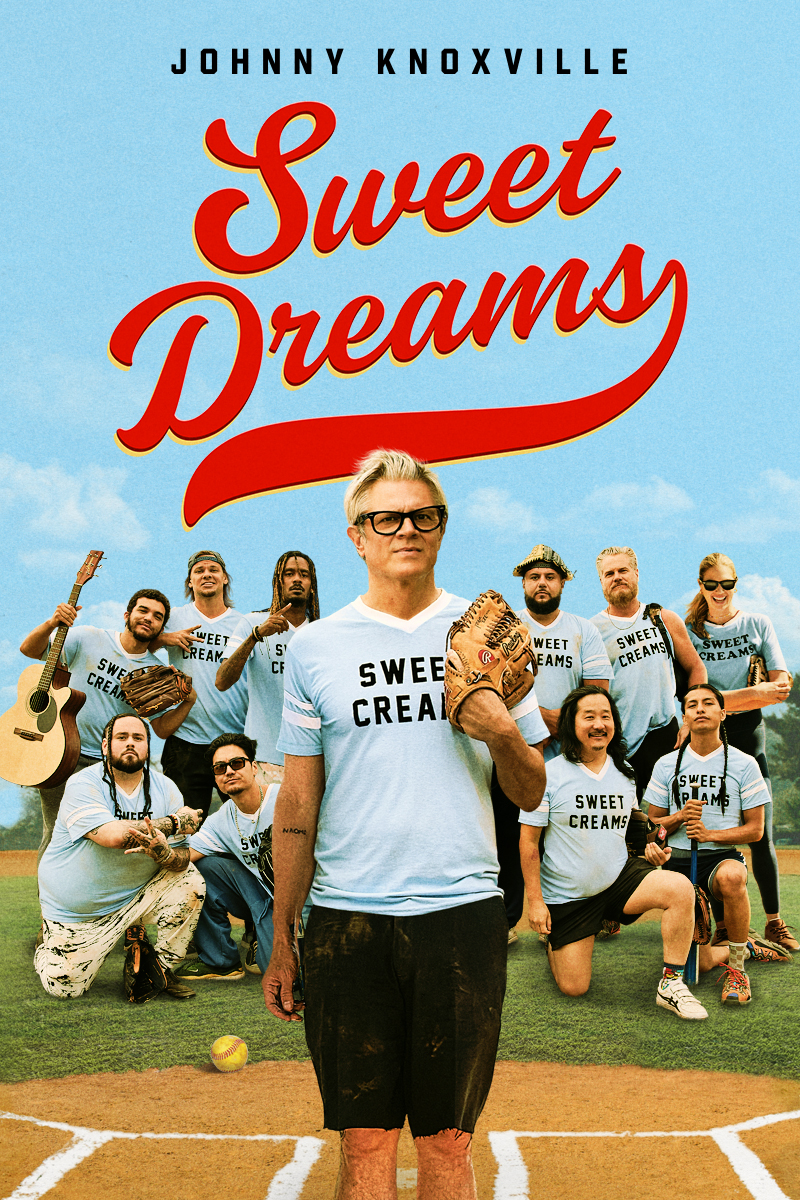
“Sweet Dreams” is one of those movies coming out underneath the radar, and it deserves more attention than it is currently getting. Johnny Knoxville stars as Morris, a music video director who, as the movie opens, has hit rock bottom and wakes up in a park almost completely nude and with a bloody face. Next day, he enrolls at Sweet Dreams, a recovery center which cannot be mistaken for Promises or the Betty Ford Center, where he meets up with a group of misfits struggling to maintain their sobriety. In the process, Morris becomes the coach of the center’s softball team, and he gets another chance at life as well as the opportunity to be the dad his daughter deserves.
I got to talk with two of the stars of “Sweet Dreams,” Bobby Lee and Davionte Ganter, better known professionally as GaTa. Both play fellow patients who quickly bond with Morris and share their pasts and philosophies on life to him. Bobby is a stand-up comedian, actor and podcaster who was a cast member of “MADtv” and co-hosts the podcasts “Bad Friends” and “TigerBelly.” GaTa is an actor and rapper best known for playing a fictional version of himself on the FXX series “Dave.”
I was especially interested in talking to Lee and GaTa about their own experiences with drug addiction and mental health issues and how they informed their roles as Cruise and Jake in this film. Lee was introduced to drugs when he was just 12 years old, and it took him several trips through drug rehab before he got sober. GaTa has been diagnosed with bipolar disorder, and he has become a big mental health advocate.
I really want to thank them for being so open about their struggles as it proves how “Sweet Dreams” has such a big heart, and that, for these two, doing this movie felt like an extension of the things they work hard for in life. Anyone with addiction issues may very well benefit from watching this movie.
“Sweet Dreams” opens in theaters on April 12, and will be available on digital platforms on April 16. Check out the interview below.
Honestly, I did not laugh once during “21 and Over.” Maybe I chuckled a bit at one or two scenes, but that really doesn’t qualify as a laugh. This film is essentially a rip-off of “The Hangover” with elements of “Superbad” thrown in for good measure. It aspires to be a classic comedy like those films and even “Animal House” and “Adventures in Babysitting” among others, but it does not come even close to their hilarity or greatness. Regardless of the strong comic energy put forth by the cast here, this film is a complete waste of time and is honestly, at times, quite offensive.
Lifelong friends Miller (Miles Teller) and Casey (Skylar Astin) are in town to pick up their friend Jeff Chang (Justin Chon) and take him out for the time of his life. Yes, the main reason for this is that his twenty-first birthday has arrived, and they are not about to let him celebrate it alone. But wouldn’t you know it, he has a very important medical school interview the following morning, and his dad, who is played by François Chau (yes, Shredder from the “Teenage Mutant Ninja Turtles” movies), is deadly serious about his son living up to the family name. Regardless, Miller and Casey are determined to take him out to celebrate, and Jeff agrees to go out as long as he is restricted to only one drink.
But of course, this would not be a motion picture without disaster courting these characters. Realizing he can now go to all these college bars he was once denied entrance to, Jeff goes insane and drinks every single bit of alcohol he can get his hands on at all of them. Things come to a gross climax when he rides a mechanical bull similar to one at the Saddle Ranch Chop House off of Sunset Boulevard, and it is very unsurprising when he vomits all over the place. The filmmakers go out of their way to show this character vomiting in slow motion, but it proves to be far more disgusting than it is amusing. Heck, Linda Blair vomiting pea soup at Jason Miller in “The Exorcist” was far more amusing than this, and that was a horror movie!
From there, Miller and Casey have to get Jeff home and ready for his big interview, but they soon discover they do not remember his address. Never mind how they were there earlier in the day; these douchebags do not even have Jeff’s address on them! Great, wonderful. So, from there, these three go through a lot of crazy adventures as Miller and Casey try to get Jeff’s address from different people, and you know they are not going to get the answer they are looking for until it is almost too late to do so.
Everything in “21 and Over” feels so very recycled from all those comedies we loved watching growing up. When Miller and Casey end up breaking into a female Latino sorority, in the process of trying to get Jeff’s address, they get two girls to make out with each other just because they can. Then there is a character who mistakes a tampon for a candy bar, an obnoxious jock looking to beat up anybody just because he can, and we of course get an obligatory scene of Miller and Casey being forced to make out with one another. That particular scene has been done to death in just about every Adam Sandler comedy ever made as well as “American Pie “2, and the fact the filmmakers still use this device is just tiresome because the audience’s reaction to it says more about them than anyone else.
Our main characters are also forced to go nude in several scenes with nothing but a tube sock or a teddy bear to cover their privates. Now I have seen far too many comedies to find this bit the least bit amusing anymore. Besides the Red Hot Chili Peppers did this same gag to greater effect years ago when these actors we see here were just babies. By the time this came up, I was very ready to leave the theater because the odds of anything original happening after this felt completely moot.
Furthermore, these characters end up saying some of the most asinine dialogue I have heard any character say in a long time. While it may be designed to make them sound hip and cool, they instead come across as homophobic and borderline racist. Miller, in particular, keeps making statements about different races and nationalities which need to be heard to be believed. I think the writers wanted Miller to be like Zach Galifianakis’ character from “The Hangover,” but while the latter was so funny because he never fully understood what was coming out of his mouth, Miller is clearly someone who should know better about what he is saying.
There is even another scene where Casey, while making small talk with the lovely coed Nicole (Sarah Wright), explains why he isn’t interested in joining a fraternity. Now I’m not going to repeat exactly what Casey said, but I can say that the audience I saw it with reacted in shock to what they heard. If it was intended to be funny, it failed miserably.
“21 and Over” marks the directorial debut of Jon Lucas and Scott Moore who, coincidentally, are the same two people who wrote the screenplay for “The Hangover.” They have said that “21 and Over” is not meant to be a copy of “The Hangover,” but I that they are just fooling themselves. This movie more or less has the same setup, and the only real difference is that none of the characters are trying to figure out what they did the night before because they know all the gory details which led them to where they are at. While Lucas and Moore are nice guys, they cannot hide how there is nothing here to set this movie apart from so many other comedies which came before it.
Still, I do have to give the actors some credit. While they are stuck with a script which clearly needed more work, they throw themselves into their performances with sheer comic abandon. Teller, whom we have gotten to know very well from the “Footloose” remake, “Whiplash” and “Top Gun: Maverick” does not is hold anything back as Miller, and he is a very talented actor. Astin, whom you might remember from “Pitch Perfect,” does have a very charming quality about him. Then there is Chon who managed to free himself from all those “Twilight” movies before this one, and he does pull off making Jeff look believably drunk. But in the end, their efforts do not matter much because this motion picture still sucks to an infinite degree.
When I turned 21 years old, my birthday celebration was nothing like the one portrayed here. In retrospect, I am thankful for that as what everyone goes through in “21 and Over” is more horrific than funny. There are few things more depressing in life than a comedy which does not make you laugh, and this is one of them.
½* out of * * * *
WRITER’S NOTE: Back in 2013 when “21 and Over” was released, the website VeryAware.com, in an article written by Courtney Howard, said there will be a very different version of it shown in China. It turns out Chinese companies put a lot of money into the making of this film and, as a result, it is being re-cut for their more conservative audiences. What they will end up seeing is a movie about how Jeff Chang leaves China to study in the United States and ends up being corrupted by “Western partying ways.” Apparently, it starts with Jeff at a Chinese college, and scenes for the movie were shot in the city of Linyi, Shandong province to reflect this. It will end with Jeff returning to China and realizing that his time in the U.S. was just a bad idea.
Will we ever get to see this version in America? Odds are it will be far more interesting than what we got here.
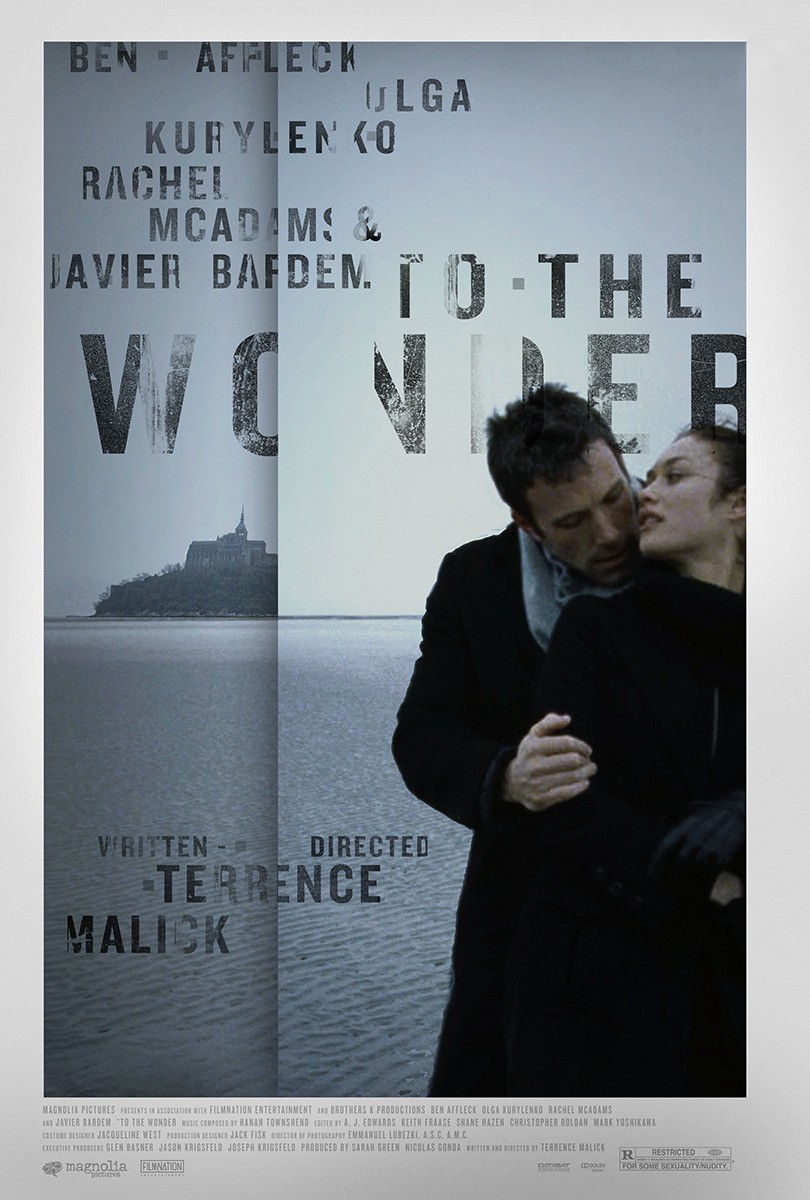
Terrence Malick’s “To the Wonder” is, in many ways, a mixed bag of a film. Not all of its parts go together in a way which feels entirely cohesive. It focuses on a couple played by Ben Affleck and Olga Kurylenko who fall in love and come to America to start a new life, but they eventually find themselves falling out of love, and they constantly struggle to understand how something so wonderful can go so awry. And then we have Father Quintana (Javier Bardem), a Catholic priest who is struggling to keep his faith even as he feels the presence of God eluding him at a time when he is desperate to believe in an afterlife. The balancing act between these characters is wobbly at best, but Malick still gives us many beautiful and wondrous images which are very powerful, and these images quickly remind me of how brilliant he is at capturing nature on film.
“To the Wonder” starts off in Europe where Marina (Kurylenko) finds herself completely enamored by her American boyfriend, Neil (Affleck), as they take a tour around town. Along with them is Marina’s daughter, Tatiana (Tatiana Chiline), who is thrilled when Neil asks her if she and her mom would like to move with him to the United States to live. After briefly viewing the European sights, the film then heads over to Neil’s home state of Oklahoma where the flatlands appear to stretch out as far as the eye can see. Heck, it almost looks like hardly anybody lives there, so it is a huge relief when we see t Neil and Marina actually have neighbors.
As with “The Tree of Life,” “To the Wonder” functions mostly as a silent film as the majority of the dialogue we hear is as a voiceover. Malick is far more interested in the inner thoughts of his characters than anything else as they struggle with the things they want and which are constantly outside of their grasp. We feel their passion for one another, and we also feel their pain and disappointment when their love eventually fades away.
Having read up on Malick as a filmmaker and as a person, it is clear to me how this film and “The Tree of Life” are his most autobiographical works overall. What the characters go through is not much different from what he has experienced in his own life, and with these films, it looks as though he is still trying to pick up the pieces of what went wrong.
Kurylenko first came to my attention in “Quantum of Solace,” and she has made the most of being a Bond woman as her performance here shows. It is thrilling to watch her dancing around the streets of Europe as well as in a corporate drug store which typically sucks the life out of everyone who shops at one. In many ways, Kurylenko is the best thing about this film as she takes us through Marina’s transcendent highs and her emotionally draining lows with complete conviction throughout.
Back in 20123, people had serious issues with Affleck as an actor, and this is even after his film “Argo” won the Academy Award for Best Picture. I myself have never had any issues with his acting abilities, and he gives a strong, understated performance as Neil, and it is never his fault we come to know less about this character than the others we are introduced to here. I really wish Malick had given Neil as much attention as he did to Marina as this would have made Neil’s journey in this story all the more illuminating. Nonetheless, Affleck is still very good in here.
Rachel McAdams is inescapably luminous as Jane; a childhood sweetheart of Neil’s who shows up after Marina has gone away. Malick makes Jane look beyond beautiful as he frames her against fields of wheat, and it is emotionally draining to watch Jane bear her soul to Neil and try to melt his heart in the process. McAdams ends up disappearing from “To the Wonder” a little bit too soon, but she is a vision to watch throughout.
Bardem’s character of Father Quintana at first feels a little out of place as much of the focus seems to be on the relationship between Marina and Neil, but his presence makes more sense as this film goes on. With this character, Malick seems to be saying how our loss of love for one another may have to do with our relationship to God, or lack thereof. Bardem does some of his subtlest work as he portrays a man struggling to hold onto whatever faith he has left, and it results in some of this film’s most emotionally draining scenes.
When we watch Quintana visit the sick, the elderly and the dying, I found myself being reduced to tears as these moments ring so emotionally true in a way I would rather not realize as death is becoming all too common for me to deal with. Plus, Malick just had to use Henryk Górecki’s third symphony entitled the “Symphony of Sorrowful Songs” which Peter Weir used to such great effect in “Fearless.” It remains a piece of music which is as beautiful as it is infinitely sad, and it always reduces me to a weeping wreck whenever I listen to it. I also have to admit I was very angry at Malick for using this piece of music here as it felt so unfair that he reduced me to a complete wreck in an inescapably manipulative way. Then again, I was in the midst of a very deep depression at the time, so that did not help matters.
But as mournful as “To the Wonder” is, there are still many beautiful moments to watch for as Malick remains a master of capturing the unpredictability of nature and animals on film. This includes moments like when Affleck and McAdams are suddenly surrounded by more buffalo than Kevin Costner dealt with in “Dances with Wolves,” the sunlight piercing through the colored glass in a church, or watching Kurylenko walking across the beach as the water covers the sand. These are moments which still will not fade away from my memory anytime soon. Working again with his “Tree of Life” cinematographer, Emmanuel Lubezki, Malick still captures moments of visual poetry in ways few other filmmakers can ever hope to equal.
It is those incredible visual moments which make me want to forgive how meandering “To the Wonder” is as it unfolds before us. I have learned Malick actually shot this movie without a screenplay, and this made me wonder how the actors dealt with this style of filmmaking. Considering that Jessica Chastain, Rachel Weisz, Amanda Peet, Barry Pepper and Michael Sheen all had roles in this film which were eventually removed from the final cut has me believing there was a whole lot more to this film than what ended up onscreen. While “The Tree of Life” had several different story lines going on, Malick was able to rein them all in to where everything seemed to fit perfectly. With “To the Wonder,” he has a little too much going on, and the film ends up losing focus more often than it does not.
Still, if you are willing to tolerate those flaws, “To the Wonder” is still a profound experience filled with great performances and beautiful images which will stay with you long after this film has concluded. I really wish the audience I saw it with all those years ago felt the same way I did. I bring this up as one audience member remarked at how the lives of these characters proved to be far more boring than anyone else’s. Well hell, some people enjoy the simple pleasures in life more than others, but many are still insistent about how theirs are better than the average human being, and that is even though there is plenty of evidence to prove otherwise.
Seriously, it seems very fitting that “To the Wonder” was the last film Roger Ebert reviewed and gave to the Chicago Sun Times before he passed away in April of 2013. Rest in peace, Roger.
WRITER’S NOTE: This movie review was written in 2012. I present it now as the latest baseball season has now begun.
“Moneyball” is, for my money, the best baseball movie since “Bull Durham” as, like Ron Shelton’s 1988 classic, it takes a very unique look at this American pastime and the players who inhabit it. Whereas most baseball movies are about rising to the occasion and winning the big game, this one is more interested in the mechanics and statistics as the characters, all based on real life people, work to see if the current state of this sport can be improved. This is not about winning mind you, but of recapturing a love for the game which has long since passed so many people by.
Brad Pitt stars as Billy Beane, general manager of the Oakland Athletics (a.k.a. the Oakland A’s) who has just witnessed his team’s tough postseason lost to the New York Yankees. In its aftermath, he watches as the team’s key players of Johnny Damon, Jason Giambi and Jason Isringhausen leave for more lucrative deals with other more desirable franchises. From there, the team’s management becomes obsessed about finding the best players to fill their spots. What stands in their way, however, is they have a budget of $40 million to work with which, in any other case, would sound like a lot, but it’s pitiful compared to the Yankees’ overall budget of $100 million.
While visiting a coach from a rival team, Beane comes across Peter Brand (Jonah Hill), a Yale economics graduate who has new and radical ideas of how to assess a baseball player’s value. After hearing Brand’s theories, Beane hires him to join the Oakland A’s, and they both put his unusual theories to the test. This quickly upsets the team’s scouts who cannot, and do not, want to see the validity of these chances being taken. Regardless of the objections, Beane is insistent everyone go in this new direction. But as “Moneyball” goes on, it becomes clear that Beane is not just doing this because of a lack of money, but to find a new way to fall in love with baseball as it ended up betrayed him years before he became a manager.
There are a number of things at work in this film; the need to change the game, the disadvantage some teams have compared to others, and the demons that keep fighting certain baseball players who continue playing this game even when they are long past their prime. In flashbacks, we discover how Beane was an exceptional baseball player in high school, and that scouts for the big teams were serious about signing him up for the major leagues before he could even consider college. His baseball playing career, however, turned out to be a stunning disappointment, and it is this failure which haunts him to this day.
Brad Pitt gives one of his best performances ever as Billy Beane, and he finds a balance to where he inhabits the character more than acts. He draws us emotionally into this movie even more than some might expect, and he brings a realism to Beane which makes his acting never less than compelling.
Jonah Hill, best known for “Superbad,” “Funny People” and “Get Him to The Greek” among other films, gets to go against type here with this dramatic role. He does an excellent job of playing Brand as so fresh-faced to this job and becomes our eyes to the realities of baseball which many people may not be aware of. Seeing Hill imbue Brand with a strong intelligence and a big heart proves he has a lot more to offer than just hilarious performances in comedy movies, and it marks an important change of pace for him as a result.
Another great performance comes from Philip Seymour Hoffman as Art Howe. You never catch Hoffman acting as he portrays Howe as an individual being worn down by endless contract negotiations and is constantly questioning the control he has over his own team. Howe is adamant that he is the one to manage the players above everyone else, but he eventually finds he does not have the energy for a prolonged argument with Beane or Brand as they have their own plans. It is the weariness of Howe which Hoffman so perfectly captures, and he remains one of the best actors working today.
“Moneyball” is based on Michael Lewis’ non-fiction novel of the same name, and it has been adapted by two of Hollywood’s best screenwriters: Steven Zaillian and Aaron Sorkin. Neither of them ever tries to spell out everything for the audience because they are smart enough to give them enough information to where we can all come to very understandable conclusions. And on top of everything, their dialogue remains as brilliant as ever.
In a year which has seen more remakes or recycled ideas as opposed to anything resembling originality, “Moneyball” succeeds in giving us a story which feels so fresh and highly innovative. In dramatizing real-life events, the movie makes you want to see people go against the grain because it does not help to keep things the same as they have always been. It also makes us remember what is so great about the game of baseball in a time where headlines about steroids and other performance enhancing drugs and the constant abuse of them make it all seem like a sick joke. Surely there is plenty of innocence left to this American pastime, right?
For my money, both Sir Ridley Scott’s “Prometheus” and “Alien: Covenant” were worth the price of admission as the famed director dared to take this franchise he began back in 1979 in a different direction as they both dealt what happened before the events of the original. But regardless of Scott’s intentions, audiences were very critical of both films as many were expecting something along the lines of what they got before. After watching the teaser trailer for the upcoming “Alien: Romulus,” I get the feeling they will get what they want, but are we also charting our way back into familiar territory?
The start of this trailer features familiar visuals as we visit a spaceship which looks very much like the Nostromo. From there, we see a couple of capsules which I assume the humans hibernated in, and one is quite the bloody sight. From there, we see characters running through corridors, we see a female getting something very long and possibly deadly being pulled out of her throat and mouth. It all culminates with Caliee Spaeny wielding an “Aliens” looking weapon as she carefully traverses the corridor, terrified of what might be waiting for her around the corridor. Looking at the way she is dressed and the weapon she has in her hands, it is very clear Spaeny is being introduced as the Ellen Ripley of this franchise installment.
Looking at this first trailer, it has me wondering if 20th Century Studios (formerly 20th Century Fox) was adamant that it look like something which stoked the nostalgia of the “Alien” franchise’s most die-hard fans. Clearly, they feel the need to give the fans something they want after the commercial under-performance of “Alien: Covenant.” But if that is the studio executives’ intention, can they succeed in doing so as nothing can ever compare to the original? Moreover, there is no guarantee that the fans will be accepting of the same old thing when they get it.
For what it is worth, however, the image of those numerous facehuggers galloping out of a certain room to land on the faces of the unsuspecting is quite the sight. It gives new meaning to the term, “I want some head.”
What really gets me excited about this particular “Alien” installment is what I have read about it thus far. It is directed by Fede Alvarez who directed the “Evil Dead” remake which I was lukewarm about, but he also made the 2016 film “Don’t Breathe” which proved to be an excellent thriller and a great exercise in handling suspense in a motion picture. If Alvarez can make “Alien: Romulus” every bit as unnerving as “Don’t Breathe,” then we are in for quite the cinematic ride.
Also, this film is a interquel, a sidequel and a prequel as it takes place between the events portrayed in “Alien” and “Aliens.” Furthermore, it has the sincere approval of the directors of those two classic movies, Ridley Scott and James Cameron. Scott has been quoted as saying the rough cut he has seen is “fucking great,” and Cameron has praised the same cut as well. If that is not the best endorsement a filmmaker can get, what is?
While I am obligated to keep any expectations I have for “Alien: Romulus” in check as I do with most movies, I do look forward to checking it out when it arrives in theaters on August 16, 2024. Please feel free to check out the trailer below.
While “Ghostbusters: Afterlife” may have trafficked a bit too much in nostalgia and fan service, but it still proved to be a fun ride which introduced us to some fun new characters, and it reunited us with old friends we yearned to see again for many years. “Ghostbusters: Frozen Empire,” however, is not burdened as heavily with those things as it hits the ground running with characters and situations which have since been introduced to us. What results is a follow-up which I very much enjoyed, and while there is an inevitable amount of nostalgia on display, it is not submerged by it.
Two years have passed since “Afterlife,” and the Spengler clan of Callie (Carrie Coon), 18-year-old Trevor (Finn Wolfhard) and the infinitely intelligent Phoebe (McKenna Grace) have since moved from Summerville, Oklahoma to the old Ghostbusters headquarters in New York City along with Gary Grooberson (Paul Rudd). They are busy busting ghosts, but as usual, they are making a lot of insurance companies go bankrupt. Whether or not they catch the latest paranormal entity running amuck in the Big Apple, there is a lot of collateral damage left in their wake. This brings about the endless ire of Walter Peck (William Atherton), who remains embittered about the Ghostbusters even after several decades, and regardless of how they did save the world back in 1984.
Peck seeks to curtail the activities of this new group of Ghostbusters, and the one who gets hurt the most from this is Phoebe as she is underage and not even getting paid for a job which deserves at least a healthy salary. As a result, she is benched by her mom and Gary to where she feels unfairly robbed of what she sees as her calling, and she ends up alone in Central Park where she befriends a teenage ghost named Phoebe (Emily Alyn Lind) who perished tragically in a fire to where you can still little flames coming off of her. But despite these two having their differences, one being alive and the other dead, they find a friendship which is clearly not an easy one for them to form.
When it comes to the myriad of characters we see in “Ghostbusters: Frozen Empire,” the one I liked the most was Phoebe. Seeing her struggling through her teenage years and being denied to be a Ghostbuster gives this film the emotional grounding it needs and which the other characters build off of. McKenna Grace was perhaps the best new addition to this franchise, and she is terrific here as she makes Phoebe into a teenager who is incredibly bright but suffers through the pangs of adolescence like any other.
Speaking of ghostly spirits, the main one threatening our heroes and the world at large is an ancient one, and it is always an ancient one, isn’t it? Basically, it involves a golden orb which Ray Stanz (Dan Aykroyd) buys off of Nadeem Razmaadi (Kumail Nanjiani) for a mere fifty bucks. It turns out to be a centuries old artifact which has the power to bring about a second Ice Age where everything and anything can be frozen ever so quickly, and humans can be rendered into ice sculptures before any of them can cry out, “What’s this got to do with global warming?”
Gil Kenan takes over directing duties from Jason Reitman, but both also return to write the screenplay as they did on the previous installment. The two of them have a bit of a challenge here as they are forced to juggle many characters, old and new, and some actors make more of a cameo appearance here than anything else. Still, it is great to see so many familiar faces such as Aykroyd, Ernie Hudson who gets much more to do here as Winston Zeddemore than in the previous installments combined, Annie Potts who, as Janine Melnitz, finally gets to where one of the famous suits, and Bill Murray whom, as always, gets some of the best lines.
One actor I do have to single out is Dan Aykroyd who gives Ray Stanz a strong poignancy even as he tries to navigate the current world of podcasts, something which is not completely up to date on. When Aykroyd is not spouting an endless array of scientific or paranormal information, his face speaks volumes as he shows, just with a look, of how proud he is that the Ghostbusters are back in business, and of how much he misses being one.
All of this builds to a truly exciting and emotional climax as our heroes battle a “horny little devil,” as Jack Nicholson once uttered in “The Witches of Eastwick,” only this devil is not so little and proves to be the most fearsome nemesis the Ghostbusters have faced in a long time. Along the way, there are some nice little jabs made at the franchise and of how immensely popular it became back in the 1980’s. They even talk about the debacle the original team made with the Statue of Liberty back in 1989, a subtle little jab at the critical reception “Ghostbusters II” received back then.
And plus, you do have Paul Rudd on hand, and he is always fun to watch in everything and anything he does, and his character of Gary is forced to navigate some new personal territory as he becomes a parent of sorts to both Sophie and Trevor. I imagine Rudd is already busy promoting this film with clips from “Mac and Me,” and he makes such famous lines like “busting makes me feel good” sound so wonderfully goofy and fresh.
I know I will eventually revisit “Ghostbusters: Frozen Empire” in the future, and perhaps its flaws will become more glaringly apparent with each viewing. But whatever flaws it may have did not take away from my enjoyment of it. I came into this installment with no real expectations as expectations in general can be impossible to fulfill, and it is far too easy to be disappointed by this and that. What I can tell you is I had a really good time watching it, and I left the theater with a big smile on my face and found myself applauding once the end credits began. And when Ray Parker Jr.’s theme song started playing over the end credits, I honestly felt like a kid again.
The ”Ghostbusters” franchise has sputtered throughout the decades as sequels and reboots did not, and could not, capture the power of the original. After watching “Frozen Empire,” I can honestly say this franchise is now much stronger than ever, and I am excited to see where it can go from here.
WRITER’S NOTE: This article was originally written in 2013.
Ever since she first found recognition for her character of Sookie St. James on “Gilmore Girls,” Melissa McCarthy has left an indelible impression on us all. After watching her breakthrough role as the abrasive and shamelessly raunchy Megan in “Bridesmaids,” a role which earned her a deserved Oscar nomination for Best Supporting Actress, there was no forgetting who she was. McCarthy wasn’t just funny in the role, she also made Megan a complex character with wants and needs we could easily relate to, and this made her performance all the more wonderfully memorable.
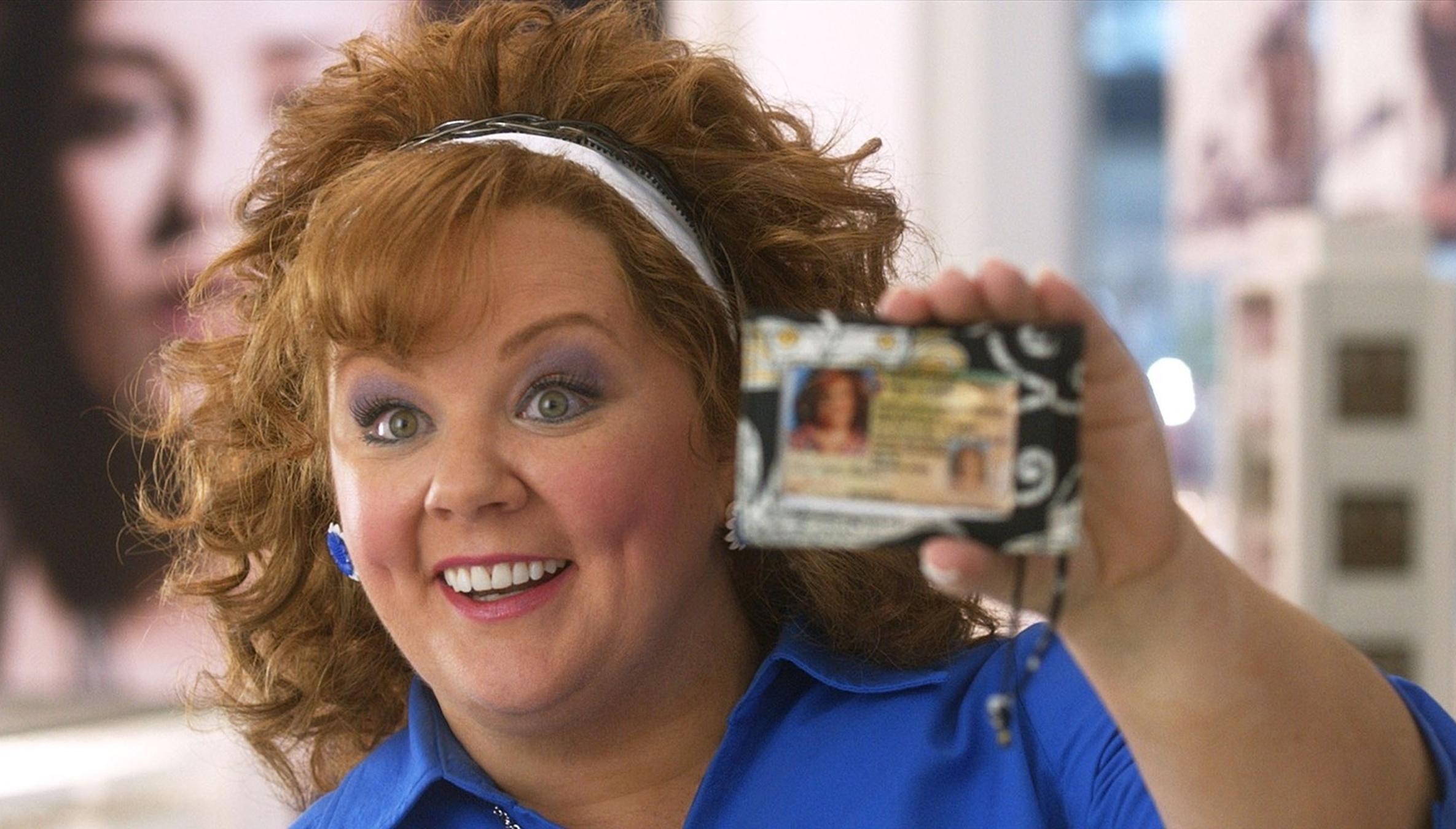
Now she gets the opportunity to put her comedic skills to solid use again in “Identity Thief” as Diana, a con artist who steals the identity of Sandy Bigelow Patterson (played by Jason Bateman) for her own benefit. This actually marks McCarthy’s first lead role in a motion picture, and it came as the result of Bateman loving her performance in “Bridesmaids.” The role of Diana was originally written as a man, but Bateman had the character’s gender changed to a woman just so he could get her cast in the movie.
Now the role of a con artist is a challenging one to make the least bit sympathetic, but McCarthy proved to be up to the challenge. She got her start at The Groundlings which is an improvisational and sketch comedy troupe located in Los Angeles, but while this character would have made for a hilarious five-minute sketch, McCarthy realized she had to do things differently in a feature length motion picture. She made this clear in her interview with Amy Longsdorf of Delaware Online.
“I wanted to make sure Diana wasn’t just a one-dimensional, mustache-twirling villain because I thought that while that’s kind of interesting for a scene, I don’t know how to play that for a whole movie,” McCarthy told Longsdorf. “I love the thought of someone doing criminal acts but not doing them to be menacing. She does them because she’s lonely and doesn’t have anyone. She kind of steals identities so she can go out to a store and pretend to have these lives. She can pretend to have a husband and a family, pretend to be engaged.”
Whether it is film or television she is doing, McCarthy is a comic force of nature and she appears fearless in what she will do to get a laugh. This was especially the case when she hosted an episode of “Saturday Night Live” and came close to swallowing a whole bottle of ranch salad dressing. I was lucky enough to attend the “Identity Thief” press conference which I covered for the website We Got This Covered, and I asked her if there ever is a limit to how far she will go for a laugh, or if she is willing to do anything to get one.
“For me, I think as long as it makes sense for the character,” McCarthy said. “I like to see if you can, on the worst day or the most extreme circumstance, I like to see how far you can push it. But to me it’s not funny anymore if it doesn’t make sense. And I don’t like to do anything that’s mean-spirited just because I don’t find it funny. I’d rather be the jackass than make fun of somebody else because that just seems too cheap and easy. So those are my only limits.”
The one thing, however, that McCarthy was more fearless about than getting laughs was doing her own stunts. It turns out that she tried to do as many of them as possible on the set of “Identity Thief,” and Bateman was stunned at just how far she was willing to go. She even volunteered to do the stunt where Diana gets hit by a car, and it does look very painful when you watch it onscreen. McCarthy ended up admitting to Kevin P. Sullivan of MTV News that she and Bateman did a lot of hand-to-hand combat in order to make their fight scenes look more believable.
“We hurt each other the most, for real, and the most exhausting,” McCarthy said. “You’re just covered in bruises and muscles are ripped.”
Many also wonder where McCarthy comes up with the inspirations for each character she portrays. It is said most actors base their characters on people they grew up with or whom they remember from their hometowns. McCarthy herself was raised on a farm in Plainfield, Illinois, and during the press conference she realized that her upbringing still plays a big part in the roles she chooses.
“In terms of the characters I think are really fun to play, a lot of times it’s someone in my head saying I know that woman,” McCarthy said. “There are women like that in my hometown and there’s one like that the Midwest. I guess I do kind of always go back to that them and draw from there because I really love them. I find them great and interesting and quirky and eccentric. I think everything that any actor does, I would assume, is shaped by how and where they grew up. I steal a lot from a lot of Midwestern women that I weirdly watch, that’s what I should say.”
We are going to be seeing a lot more of Melissa McCarthy in the near future as her star continues to rise in Hollywood. In addition to her television show, “Mike & Molly,” she has a number of starring roles in movies coming up like “The Heat” with Sandra Bullock. No matter what that thoughtless snob Rex Reed may think of her, McCarthy is a superb comedic actress who has many unforgettably hilarious performances left to give the world.
SOURCES:
Amy Longsdorf, “Melissa McCarthy morphs into ‘Identity Thief,'” Delaware Online, February 9, 2013.
What really happens to us when we die? It almost seems like a foolish question to ask because we will only get to find out when we depart this mortal coil, and we won’t be able to tell anyone what it’s like. The only thing people can seem to agree on is that they move towards a “bright light,” but this only tells us so much. Nevertheless, we still look for an answer to this question mainly because we hope it will confirm the things we are led to believe. At the same time, thinking about the future this deeply is not much different from being stuck in the past.
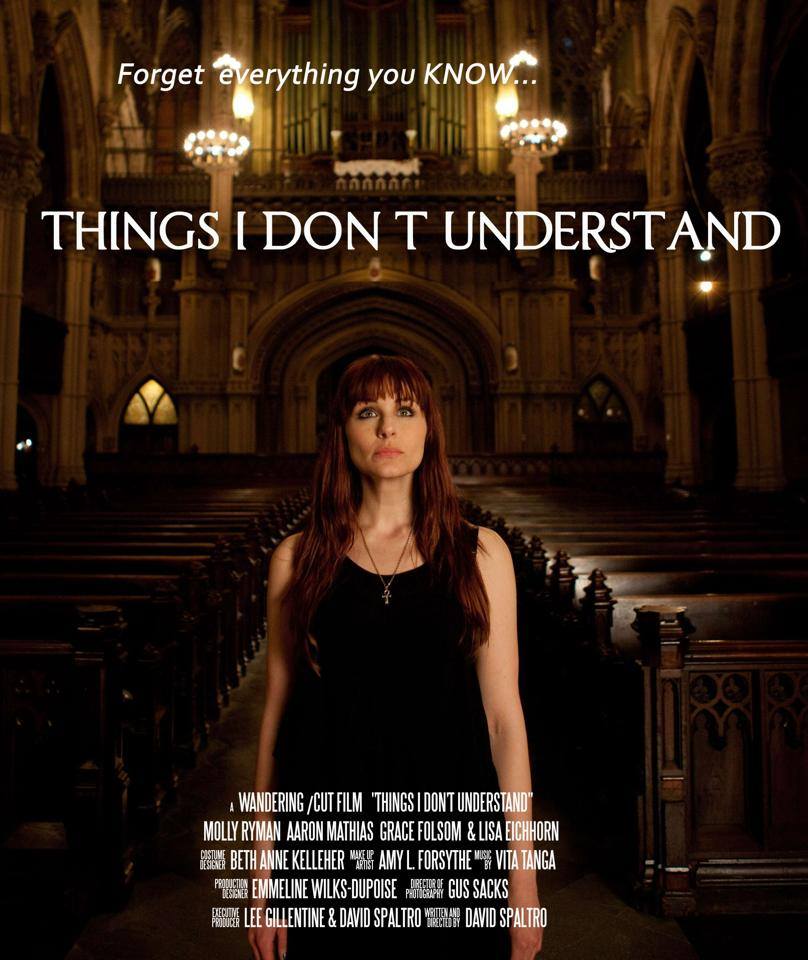
Movies like “Flatliners,” “The Sixth Sense” and even “Heaven Can Wait” have explored this subject in various ways, but David Spaltro’s “Things I Don’t Understand” is one of the more thoughtful I have seen on it in recent years. It’s not interested in coming up with some supernatural answer to this question, but instead in how our curiosity can somehow rob us of what meaning our lives have. Here we meet a variety of characters whose mind and thoughts are broken as their present lives seem unfulfilling because of physical and emotional scars, and their futures all seem relentlessly bleak as a result.
Molly Ryman stars as Violet Kubelick, a graduate student working on a thesis of what becomes of us after death. Over time, Violet has emotionally detached from the world and those around her after surviving a failed suicide attempt, and she has since developed a pessimistic attitude about life and what it has to offer. She lives to avoid every customer who enters the bookstore she works at and freely embraces a life of drugs, alcohol and promiscuous sex as though she is daring death to take her away from this ever so cruel world.
Things come to a head for Violet as she and her obsessively artistic roommates, bi-sexual musician Remy (Hugo Dillon) and hypersensitive artist Gabby (Melissa Hampton), face eviction from their home in Brooklyn and have to quickly come up with the money to save it. As this is happening, Violent comes to interview Sara (Grace Folsom), a girl with end stage cancer who approaches the end with a sardonic sense of humor, and she forms a friendship with lonely bartender Parker McNeil (Aaron Mathias) who is trapped by a tragic past that won’t leave him be. All these relationships bring about a much needed catharsis for everyone as they need to break free of what holds them back.
What I really liked about “Things I Don’t Understand” is how it doesn’t come to us with easy answers about the afterlife as it is far more interested in raising questions about life after death. To define what happens when you die in a movie is tricky because you threaten to lose half your audience with your own interpretation. Spaltro avoids this trap and examines how our questions about life after death come to define how we live life day by day. For these characters, it has seemingly robbed them of a positive outlook on life and has frozen their emotions at a moment in time to where they may never fully thaw.
The acting all around is very good, and Spaltro has given each actor a challenging role regardless of how big or small it is. Ryman has the tough job of portraying a character who is not altogether likable, and she simultaneously (and without words mind you) has to indicate the psychological trauma which has come to define her life. As Spaltro has us guessing as to what that is, Ryman gives us a deeply felt complex portrait of an individual we might easily, and thoughtlessly, dismiss as damaged goods, but who is fighting a battle within herself to find a reason to keep on living.
The best performance in “Things I Don’t Understand,” however, belongs to Grace Folsom as Sara. The role of a terminally ill person can be a thankless one as we have seen it so many times to where it often feels like a shamelessly manipulative device filmmakers use to lay waste to our emotions for no really good reason. But Folsom fully inhabits this character with a hard-won dignity and a biting sense of humor that keeps what is left of her spirits up. Everything Folsom does here feels genuine and real, and her emotions never ever appear faked in the slightest.
Aaron Mathias also has a tough role of someone whose happiness came to an abrupt stop years ago, and the shadow of his past hovers over everything he does. As Parker, he comes across as genuinely nice but still struggling with guilt he cannot put to rest. Mathias succeeds in capturing the complexities of his role in giving us a good-natured guy whose eyes betray a deep sadness which still overwhelms him. I could have done without his line of how being a bartender is like being a psychiatrist spiel, but that is only because I have heard it so many times before.
As for the supporting performances, they at first seem too broad for a movie like this, but in retrospect, they feel just about right. Hugo Dillon and Melissa Hampton play artists so dedicated to their art that they have foolishly denied other outlets which could very well add to it. Their characters strive not just for artistic truth but for acceptance from others, something they feel completely lacking in. In a world which can be so cold and unfeeling to their desires, they have forgotten to respect themselves. As much as Dillon and Hampton go over the top, they both inhabit their characters fully and are more than willing to experience their longings and horrific embarrassments (just wait until you see Gaby’s play) in order to reach a new level of understanding about themselves.
Other performances worth noting include Eleanor Wilson’s as Darla, the new to town actress who looks and sounds dumb, but who turns out to have a positive view of life by choice to where she cannot be mistaken as a victim of blissful ignorance. Lisa Eichhorn takes what could have been a throwaway roll as Violet’s psychiatrist, Anne Blankenship, and gives it a nice edge you don’t always see in characters like this one. And let’s not forget Mike Britt who gives great comic support as Parker’s good friend, Big Felix.
“Things I Don’t Understand” is one of those movies wandering around in the overcrowded world of independent cinema which I hope finds the audience it deserves. While it looks like yet another movie wondering about what happens when we die, it takes this question and uses it to define how we can live for today. The more I think about this film, the more it reminds me of the lyrics of one of my favorite Pearl Jam songs:
“You can spend your time alone, redigesting past regrets, or you can come to terms and realize you’re the only one who can’t forgive yourself. Makes much more sense to live in the present tense.”
WRITER’S NOTE: This article was originally written in 2012.
Don’t get me wrong, Richard Gere has played many likable characters in movies like “Pretty Woman” and “An Officer and a Gentleman,” but it’s when he plays despicable ones that he truly excels as an actor. The latest example of this is his brilliant performance as Robert Miller in “Arbitrage,” the movie which marks the directorial debut of writer Nicholas Jarecki. Robert is a hedge fund magnate who is desperately trying to cover up his instances of fraud, cheats on his wife, and willfully deceives his children. On paper this character is a jerk, but the beauty of Gere’s performance is how he keeps us rooting for him regardless of this fact.
So, how does Gere manage to make such an unlikable person so fascinating and relatable on screen? Audie Cornish of NPR’s “All Things Considered” asked him this question as she couldn’t get past the fact that Robert Miller is a “monster” and yet still wanted him to get away with what he did.
“Isn’t that funny? I mean, that’s one of the uniform things and kind of mystifying things,” Gere said. “And the comments I’ve gotten back, even from very close friends, that they’re very angry with me, that they care about this guy and want him to get out of trouble, although they’re well aware the guy is a jerk, as you say, and makes some very bad decisions in his life and has a kind of a mindset that you go, huh?”
“But look, that’s my job, is to make characters human, to make them knowable on some level,” Gere continued. “I think it had root in when you spend time with even supposed monsters, there’s a human being there. And in storytelling, you’ve got to find that human being.”
This humanity certainly shows up in the scene between Robert and his daughter, Brooke (played by Brit Marling), where he has to break her heart by telling her the truth of his fraudulent activities. What he is doing to her is terrible, and yet you still feel for him as he tries to explain how his business really works. Regardless of all the bad things Robert has done, there’s no doubt as to just how much he loves his family.
“That was a scene we (Gere and Marling) worked on a lot, and in the end, it came out of an improvisation actually, that she’s not my partner, that she works for me,” Gere said. “And I found myself almost in an animal growl saying everyone works for me. And I think that was the truest moment with this character, that that’s his mentality – horrifying but true. I mean, he’s naked in that moment.”
Another great scene in “Arbitrage” has Robert to do the right thing only to see him look for another way out. Being the reckless gambler that Robert is, he always seems to find another angle which can keep him up and running for yet another day. Gere remarked about how his sister, who is a psychiatrist, found this moment in the film especially fascinating.
“That mentality of I’m always going to find a way out, always find a way out. I think it’s that kind of a gambler’s thing,” Gere said. “Well, I’m down to my last penny, but I’m going to turn that penny into two pennies, and I’m going to get out of this. It’s a really interesting kind of person that never truly gives in. Now, if you’d imagine they were in the service of something extraordinary on the planet, what they could achieve, I guess the hope for me is, is that the people who are so effective in the world and can do this stuff, which is just ultimately pretty silly, just the accumulation of wealth, if they were putting their minds and their talents and their skill towards being of service and responsible on this planet, man, this will be a garden.”
Whether or not he is playing good or bad guys, Richard Gere always comes across in his performances as someone we want to support. Regardless of whether he plays a self-serving defense attorney in “Primal Fear” or “Chicago” or portraying an infinitely corrupt cop in “Internal Affairs,” there is something about this actor which is always alluring. Just don’t expect him to explain what it is because even he’s not sure:
“I don’t know. I don’t know what that is. I suppose it’s some peculiar thing I’m able to do. I don’t know. It’s certainly nothing I work at or particularly aware of in the process.”
Perhaps it’s best he does not find out because we want to see him giving more great performances like this one in the near future.
The following review was written by Ultimate Rabbit correspondent, Tony Farinella.
I’ve never quite understood the appeal of Jason Momoa as an actor. I’ve never walked away from a movie of his and been impressed or blown away by his performance. He has the look of a movie star, but he doesn’t really stand out in his film roles. He’s merely just a buff dude on screen. Of course, we have seen jacked up actors in the past such as Dwayne Johnson, John Cena and Dave Bautista, but they have charisma, personality and charm. Momoa, on the other hand, strikes me as someone who is trying way too hard to be funny. He’s not a very natural actor. He has screen presence, but when he’s asked to dive deep into a character, it falls flat.
I have not seen 2018’s “Aquaman,” which was also directed by James Wan, the man behind such films as “Saw,” “Insidious,” “The Conjuring,” “Furious 7” and “Malignant.” I’m a big fan of his directorial style, and I think he brings a lot to the table from a visual perspective. Because of this, I went into “Aquaman and the Lost Kingdom” with some hope he would be able to make an interesting, unique and outside-the-box superhero film. Sadly, he can’t even save this clunker. I really don’t think it would have mattered if I had seen the original or not.
This sequel takes place four years after the first film, and we see that Aquaman (Jason Momoa) has become the king of the Atlantis. He’s now married to Mera (Amber Heard) and has a child with her as well. He’s struggling to adapt to parenthood while also dealing with the responsibilities of being king. There are some truly cringe-worthy gags where their child is constantly peeing in the mouth of Aquaman. Even worse, Momoa sells it with these weird and contrived faces which only makes it even more unfunny. He also must contend with David Kane /Black Manta (Yahya Abdul-Mateen II) who is looking to avenge the death of his father. David Kane’s scientist sidekick is played by Randall Park in a thankless and one-note role. He’s basically a scared geek.
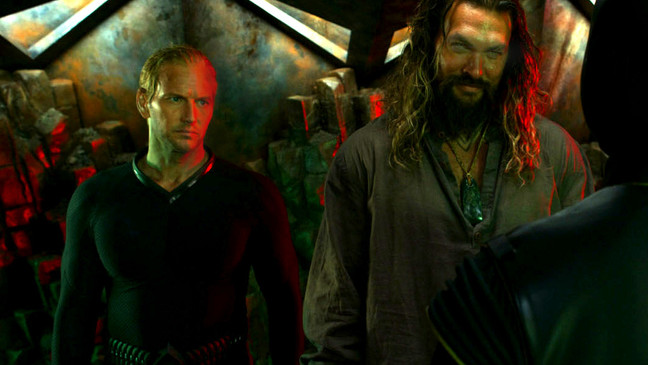
In order to make sure that David Kane doesn’t cause any further damage, Aquaman must enlist the help of his brother, Orm, played by Patrick Wilson. From here, the film turns into a bromance action flick with Wilson and Momoa bouncing one-liners off one another. At times, the film is too silly and stupid with its attempts at humor. During other scenes, it is deadly serious. This is a film in search of a tone, and it never really finds one. Wilson is great and dependable as usual, but even he can’t make it work with the uninteresting and bland Momoa. Overall, this film was a complete mess from the word go.
I know there has been a lot of drama surrounding the film’s production and the usage of Amber Heard in the story. She’s barely in the film, and it seems odd at times that Aquaman’s wife would have such a minor role in his life, especially considering they share a child together. I understand they wanted to focus on the two brothers and their whacky relationship together, but it would have been nice to have a bit of an emotional tone to the proceedings. When Heard does appear, it feels forced and out of place because the writing doesn’t give her a whole to do.
The stakes just don’t seem very high in “Aquaman and the Lost Kingdom.” The film is also doomed because it doesn’t have a charming or engaging leading man. The story feels very, very thin. This feels like a sequel which was only made for the money based on the fact they made very little attempt to really do anything out of the ordinary with Aquaman. I understand they couldn’t change actors as Momoa was in the first film, but I did leave this sequel wondering what it would have been like if Wilson was paired with someone other than Momoa who is not a natural comedic actor. While Momoa seems quite pleased with himself, his jokes fall flatter than four o’ clock.
I want to go back to the story of this movie again, as this is where the majority of the issues are in addition to Momoa’s dead on arrival performance. There is an outline for a good movie here. I would have liked to have seen more of with Aquaman attempting to juggle life at home and also life at sea. There is too much time spent at sea, and it turns into a full-blown action film. The action scenes would have been effective if the story took its time to really build up the relationship between Aquaman and Mera. They rush through all of that, and they go straight to the comedic relationship between Aquaman and Orm. When the jokes on the page are not funny, the actors are doomed.
I did like the film’s message about everyone doing their part and sticking together to make the world a better place. However, it doesn’t really resonate or land on screen when we have been dealing with bad comedy, mindless action scenes and a plot which moves at a glacial pace. This is a prime example of a movie that really did not need to be made in the first place. I understand it made money, but from a quality perspective, this film was what I call a “watch movie.” I kept checking my watch over and over again, and I couldn’t wait for it to be over.
* out of * * * *
4K Info: “Aquaman and the Lost Kingdom” is released on a single-disc 4K from Warner Brothers Home Entertainment. It has a running time of 124 minutes and is rated PG-13 for some language and sci-fi violence. There is a digital copy of the film included with this release as well.
Video Info: The Dolby Vision transfer on this film is simply breathtaking. It’s a visual feast for the eyes. I only wish the film was as good as its Dolby Vision transfer.
Audio Info: The same can be said for the Dolby Atmos audio track. It’s sharp, vivid and very impressive.
Special Features:
Atlantean Blood Is Thicker Than Water
Should You Buy It?
Unless you are a completist and enjoyed the first “Aquaman,” I don’t see any reason why you should add this film to your collection. It really was a disappointment, especially considering the director behind it. That being said, when he doesn’t have a great leading man or a great screenplay in front of him, there is only so much he can do. The 4K transfer looks out of this world, and it was the only thing that kept me glued to the screen. After a certain point, I was more immersed in the visuals than the story or the action, which says a lot about the final product. This film is really a dumpster fire. I’m glad I watched it, as I had interest in checking out what James Wan would do in this universe, but I have zero interest in revisiting it or checking out the first film. This film is strictly for people who enjoyed the first film. It will not win over any new fans, and it will probably even frustrate fans of the original.
**Disclaimer** I received a copy of this film from Warner Brothers to review for free. The opinions and statements in the review are mine and mine alone.







 The Ultimate Rabbit