Exclusive Interview with Zoe Bell on ‘Raze’

raze-zoe-bell-photo

New Zealand native Zoë Bell has long since made a name for herself as a stunt performer having doubled for Lucy Lawless on “Xena: Warrior Princess” and Uma Thurman in the “Kill Bill” movies. But once we saw her play herself in Quentin Tarantino’s “Death Proof,” we saw she was a very entertaining personality to watch onscreen as well. Since then, Bell has been balancing stunt work with acting in films like “Whip It,” “Django Unchained” and “Oblivion.” Now she gets to combine those two talents in the viciously intense “Raze.”

In “Raze,” Bell plays Sabrina who is one of 50 women which have been abducted and imprisoned in a concrete bunker. She soon realizes this bunker is a modern day coliseum of sorts as the women are forced to fight one another to the death. If she doesn’t fight than her daughter will be murdered, so her choices are extremely limited to say the least. From start to finish, Bell is a riveting presence as she is driven to emotional extremes to do things she doesn’t want to do in order to protect the one she loves.

I was lucky enough to talk with Bell when she was doing press for “Raze,” and she proved to be as cool as she was in “Death Proof.” On the surface, “Raze” looks like your typical women-in-prison exploitation flick, but its director Josh C. Waller ends up taking this material much more seriously than you might expect. I talked with Bell about how she got involved in this movie, what kind of fighting styles were used in it and if she was instrumental in choreographing the brutal fight scenes. She also talked about what it’s like to be a stunt performer in show business today as opposed to years before, and she gave us an update on “The ExpendaBelles.”

raze-movie-poster

Ben Kenber: “Raze” was different from what I expected it to be.

Zoë Bell: Well what were you expecting? I hope you weren’t expecting a romantic comedy.

BK: Oh no, I usually avoid those (Bell laughs). With so many different fighting styles around the world, was there any specific style of fighting you used in this movie?

ZB: There are all these action movies out there with samurais and stuff, but we didn’t want to have those kinds of fights at all. We wanted it to be real characters that were plucked from their lives and put in this really shitty situation. But as far as the characters are concerned, Sabrina comes from a military background, Teresa (Tracie Thoms) comes from a boxing background, Phoebe (Rebecca Marshall) is just street, and Cody (Bailey Anne Borders) is just the young girl who has to fight for her life. So the characters’ individual fight styles were less about the styles they were trained in and more about the life experience that they have, and it was really important for us that that come through. That’s what makes the fights different.

BK: What do you want audiences to get out of “Raze?”

ZB: I wanted the audience to have an experience of female fights that they maybe haven’t experienced before. I was looking to get more experience. I wanted to do female fights and stuff in a way that I’ve not done before. We wanted to take everything sort of heightened and strip all of that away. It was more just sort of like an experience I wanted to put out there for people. Ironically what’s ended up coming out of it is the joy that women audiences who have watched this movie have. It’s like they’re living vicariously through this womanhood and these actors, but also the characters and for all the right reasons, obviously the crazy ones, it’s satisfying. All the actors were just like, “This is so fucking cool that we are doing this film!” And that means the world to me because I’ve spent my life doing these kinds of films and I’ve gotten benefits from it as long as I can remember. It’s cool to be able to share that around a bit.

BK: How did the role of Sabrina come to you?

ZB: Sabrina came to me through the project really that was sort of… Kenny (Gage), Andy (Pagana, the producer) and Josh (C. Waller, the director) had also worked together on this project before I came aboard. Josh and I have known each other for a long time and when he threw my name in the mix, Kenny and Andy were excited about it and they brought me in. We all kind of vibed and jived and they asked me if I wanted to come on as a producer, and I got really excited and I said yes. At that stage it was still in a short format, and the role of Sabrina was really… I was just going to work on staging the fights basically. I worked with this woman named Christy and I created this whole story and at some level put a lot of preparations on her (Sabrina) for the short. But as it turned into a feature, a lot of the stuff I worked on before carried over to her in the feature script which was really cool. It’s a really fun way to go about it. It’s kind of an ass backwards way of going about it. We had problems doing it the way we did, but it was still pretty exciting.

BK: Did you work closely with director Josh C. Waller on the fight scenes in “Raze?”

ZB: Everything on this movie was pretty collaborative, but the fight scenes in particular because I have experience in that world and therefore I basically have a convenience when it comes to that stuff. We had a fight choreographer called James Young, and so basically we had James Young and we had me who was never going to be quiet about it. My forte is female action and what works well for women. There’s something about a female character in the way that she moves in the kind of choices that she makes in a fight situation, and Josh was very much about bringing emotional truth to those fights and these women. Kenny, having been a boxer for years and a real ring fighter, was one of the biggest cheerleaders for having female fights that were real that haven’t been seen before, so we had a lot of people that the fights were very important to on the creative side. So fortunately we all worked quite collaboratively together and I think we all ended up getting the fights we wanted. They are pretty cool.

BK: Did you do all your own stunts in this movie or were there some done by a stunt double?

ZB: Oh no, no, no, no. No one had a stunt double. There was one stunt that ended up not even making it into the movie which we brought in a stunt double for. We didn’t have time or the money, so the girls are all bringing it.

BK: Having been a stunt person for quite some time, what kind of changes have you experienced for stunt performers in the industry? Have things gotten better or worse?

ZB: I think work conditions for stunt people across the board have technically improved. There are more challenges in regards to safety and, having said that, when you get more technology it also enables you to push the limits. We’re always trying to do something new and bigger. Work conditions are what they were. As for work opportunities, now compared to 22 or 30 years ago, women were not really allowed to be stunt people. Guys would put on wigs and cover their hairy legs and double for women. As far as female action, it almost feels to me like it kind of goes back to where you’ve got “Xena” and “Alias” and all these… There is more female driven stuff now to where I feel like then there was for a long time. I think the type of action that’s acceptable for what females are doing now has probably shifted too. “Charlie Angel’s” was technically action and it was all females, and the action of the “Wonder Woman” to be done now, the type of action you’d see your committing would be far different to what was in the day.

BK: “Death Proof” really opened doors for you as an actress. At this point, does doing acting appeal to you more than stunts, or are you equally passionate about both?

ZB: “Death Proof” was definitely the catapult for me. It feels like it’s probably a good time to naturally progress over. If I’m being given these opportunities and I’ve worked hard enough to make that change, then that’s the next stage of wherever my career is taking me. I’ve had to be very conscious about not being in the industry as a stunt woman as much as an actress because, for myself certainly, I would very easily kind of slide back into the comfort zone of what I know well which is being a stunt girl and shy away from maybe what’s a little more challenging which has been acting. But also the intention of being seen as an actor and taken seriously by the industry, I think it was sort of important to me to sever ties from one so that I could fully commit to the other. It’s a shame but it’s part of the process, you know?

BK: Yes, it is. What was the budget for “Raze?”

ZB: Well I’m not sure that’s something I am allowed to say. We think it was $600,000 or $700,000. It was definitely well below $1 million.

BK: I was just curious because it looks like it cost a lot more than that.

ZB: Yeah, and it’s very important for us, I think, for people to know that the budget was incredibly low but that we are so proud of what we managed to do with well below $1 million. We are just in the process of doing a general audit just to double check the numbers, so I don’t want to put a number out there because I would be making it up, but I can basically say that it was well below $1 million.

BK: That’s interesting because what I’ve learned from most filmmakers is that working with less money forces you to be more creative. It certainly looks like you got a lot of creative stuff out of the budget that you had.

ZB: Yeah definitely, and we also got really lucky with the people that we had on board.

BK: Regarding the other actresses, did they have any fight training when they came onto this movie or did you help them out with that?

ZB: A lot of the girls had taken themselves and… I know Rebecca has been doing some kickboxing on her own time. Rachel Nichols has done a bunch of action films before. The girls are not meant to be… We didn’t need Rachel Nichols to walk in there and look like she had a black belt. We did a lot of work on the fights together before we shot it. James has done a lot with the choreography, Kenny worked on a lot of boxing with bags, and I just worked with them doing everything and anything they could when I had a minute. And most of when I was of use to the other women was just as a girl in how I approach it. So I spoke their language and that’s the gift I had to give. Everyone was just super dedicated and it was really touching to see these women always so dedicated to their roles.

BK: One last question, is there anything you can tell us about “The ExpendaBelles?” (This is an offshoot of “The Expendables,” and it was reported that Bell had been talking to the filmmakers about being in it.)

ZB: No, absolutely nothing. I have met with those guys. I don’t know if it was specific to… Well here’s what I can tell you about “The ExpendaBelles” and why I’m excited for that movie to be in existence whether I’m a part of it or not: I would love to be a part of it. That’s all I can tell you.

BK: Okay no problem. Well thank you very much for your time Zoë. This has been a lot of fun and you were terrific in “Raze.”

ZB: Thank you!

Exclusive Interview with Jane Weinstock on ‘The Moment’

MCDEASY EC007

Jane Weinstock, 2003

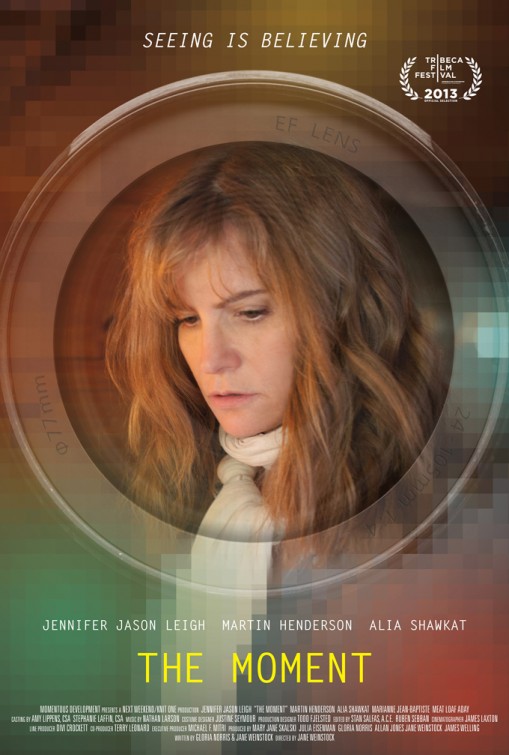
Filmmaker Jane Weinstock follows up her directorial debut of “Easy” with “The Moment,” a compelling psychological thriller starring Jennifer Jason Leigh, Martin Henderson and Alia Shawkat. In the movie, Leigh plays Lee, a photojournalist who has just ended a tumultuous affair with troubled writer John (Henderson). But when she goes to John’s place to get her things, she discovers he has disappeared and is nowhere to be found. The stress of not knowing his whereabouts causes Lee to have a nervous breakdown, which in turn lands her in a mental hospital. During her recuperation, Lee reconnects with her estranged daughter, Jessie (Shawkat), and ends up meeting Peter, a fellow patient who somehow looks a lot like John. As Lee struggles to get a grip on reality and learn the truth behind John’s disappearance, the clues she is given lead her to the most unexpected of places.

Just as with “Easy,” “The Moment” has Weinstock dealing with the contradictions of human nature and psychological realism. It was fascinating talking to her about this movie, and we discussed the challenges of writing a highly complex screenplay, what it was like working with Leigh who is very serious in her approach to playing a character, and how her studies in psychoanalytic theory and semiotics came to inform this film.

the-moment-movie-poster

Ben Kenber: Regarding the screenplay, how difficult was it for you and your co-writer Gloria Norris to write it?

Jane Weinstock: Well our starting point oddly enough was the Edith Wharton novel “The Mother’s Recompense,” but we weren’t able to get to the rights to that. We didn’t want to do a period piece, but we wanted to sort of take the basic structure of this extremely complicated mother/daughter relationship and make a movie out of it. So once we realized that we couldn’t even get the rights, we just kept that relationship as our starting point and then we went on to write this piece. We decided quite early on to make the character of Lee a photojournalist because we have a fascination with danger, and at the same time a kind of ethical commitment to try to do good in the world. We both love Hitchcock, so I think there were Hitchcockian elements that we gravitated towards, and it also changed in various rewrites. We worked on it for a very long time so we rewrote it a number of times.

BK: When it came to the subject matter, did you do a lot of research on photography as well as depression, anxiety and posttraumatic stress disorder?

JW: Yes, I definitely thought of researching PTSD first. We actually showed it (the movie) in New York to a posttraumatic stress disorder specialist at Hunter College, and she felt that we really got it right so that was very gratifying.

BK: There’s a scene in the movie where Martin Henderson’s character is eating sardines which he says are good for those suffering from depression. Is that true?

JW: No, not really (laughs). They are good for your brain and they don’t have a lot of mercury.

BK: Jennifer Jason Leigh is well known for her method approach to the characters she plays. How did she approach the role of Lee in this movie?

JW: Well I did a lot of research and I gave her my research and she looked through that, and she’s known photographers before and she just was her many ways. During rehearsal we worked on the script together. We made some changes as we were rehearsing, and she’s a writer/director so she’s very, very good at that. She also looked at different cuts of the movie and made suggestions, so she was very involved creatively and not just as an actress.

BK: There is a moment in the movie where Peter is standing in front of his place of work and Lee is taking pictures of him, and he is covering up part of the word “storage” to where only “rage” can be seen. What was your reasoning for shooting the scene like that?

JW: It was just a little reference that I thought not many people would get, but you got it. He is a character who was filled with rage. He was imprisoned for five years for a crime that he didn’t commit, so he’s got a lot of rage that he turns against himself and feels towards the world as well.

BK: Alia Shawkat is fantastic as Lee’s daughter, Jessie. How did she get cast in the film?

JW: Well Jennifer had already been cast, so we had her read with several actresses. They were all great, but when I asked myself, ‘could this actress be capable of murdering somebody,’ I always came up with the answer no except for Alia. I really wanted her to feel like someone who is capable of murder, and I also really liked the fact that she looks like she’s part Iranian, and she is part Iranian, so we could give her an Iraqi father.

BK: How much time did you have to shoot this movie?

JW: We shot it in 22 days, and then we had two days for re-shoots.

BK: With movies like these, the shooting schedule always seems to get shorter and shorter.

JW: I know. It’s crazy.

BK: I read how while you were at New York University you focused on psychoanalytic theory and semiotics. Did any of those studies factor into the making of this movie?

JW: You know it must have especially in terms of the writing and having a psychoanalyst be in the movie. But there’s also a way in which I had to drop a lot of my theoretical knowledge and just make it more organic, and at other times I could get very heady.

BK: In some ways “The Moment” is timely because our reality keeps getting distorted by technology and in other ways as well. By the movie’s end we’re not entirely sure if Lee is even dealing fully with reality. With technology today we are getting closer to the truth, yet at the same time we’re being taken further away from it. Was that something you thought about during the making of this movie?

JW: I guess something I thought about most in terms of that kind of general theme of the movie is that we live precariously in an uncertain world which is partly a function of technology but also a function of the times and all the wars we’ve been living through. The last 20 years has been a very, very uncertain time, and then the reaction to this kind of need for certainty comes up in the form of the Tea Party and other kinds of very fundamentalist types of positions. I thought about it in terms of that more than in just technology specifically.

BK: It seems like these days people are not fighting for the truth necessarily, but more for the truth as they see it. “The Moment” reminded me a bit of David Lynch’s “Lost Highway.” It’s a very different movie, but like with Bill Pullman’s character, Lee is trying to get a grip on all that is happened to her. Still, we’re not entirely sure she has succeeded in doing so.

JW: Yeah, people have compared the film to David Lynch’s work. He’s not somebody who I respond that strongly to. I’m much more of a Hitchcock person, but I can see that. Another big theme in the movie which is definitely Hitchcockian is guilt, and even if none of these people actually killed John, is that really the end of it? Can people carry guilt with them, or for the moments that they have created that may or may not have led to John’s death? For example, the moment where Lee kisses John, at that point there’s no turning back. This has to end badly, right?

Thanks to Jane Weinstock for taking the time to talk with me about “The Moment,” a film that constantly challenges your perception of reality throughout its running time.

No, I Haven’t Seen It Until Now: Citizenfour

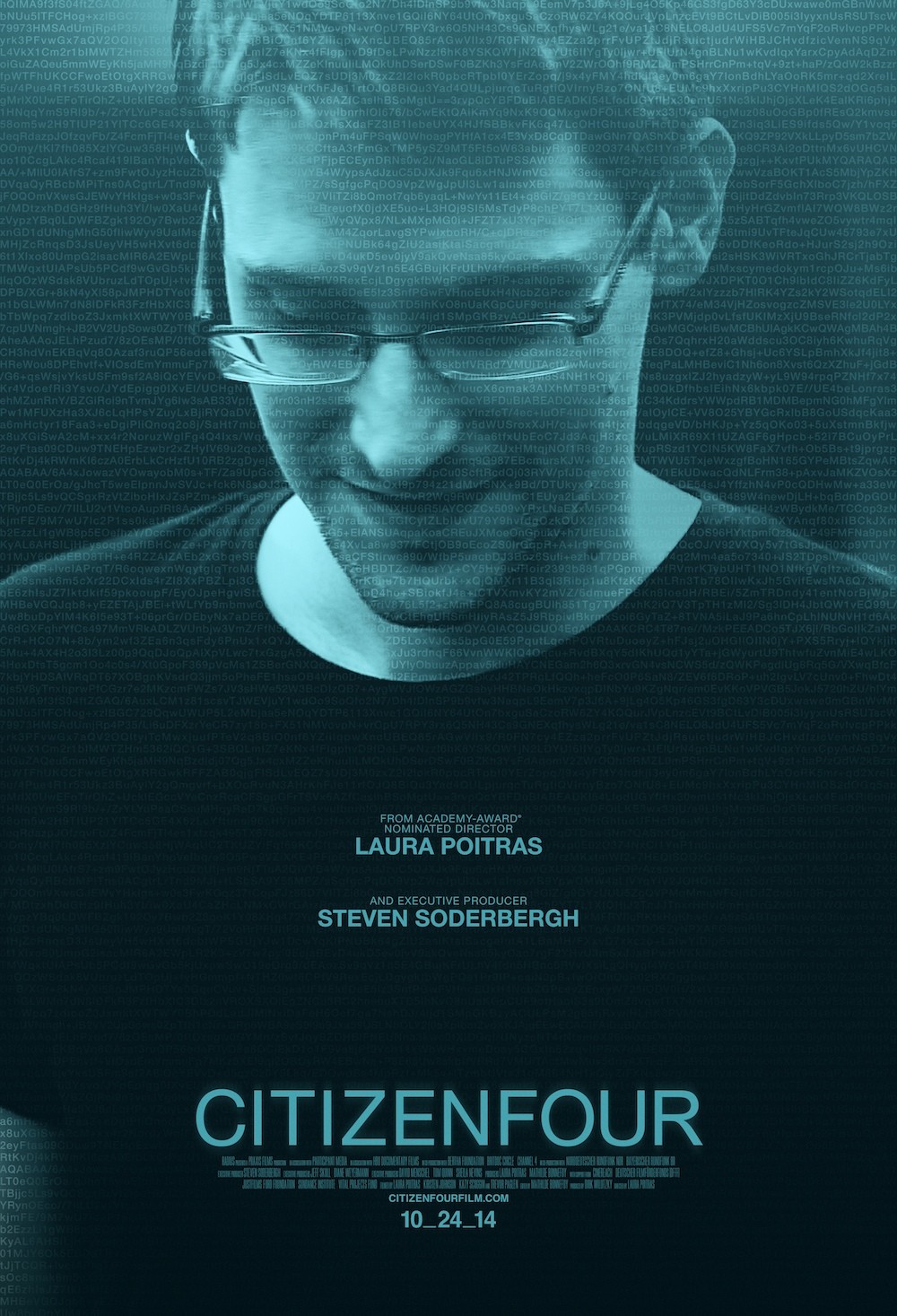
citizenfour-movie-poster

Citizenfour” is a documentary I should have taken the time watch when it first came out in theaters back in 2014. For one reason or another, I just never got the chance to check it out and life got busier for me as it always does. As a result, my view on Edward Snowden, its chief subject, has remained neutral as I never knew what to make of him when the news of his revelations about the National Security Administration’s (NSA) illegal wiretapping were brought to the public. But with Oliver Stone’s “Snowden” now playing in theaters, the time had come to check out “Citizenfour” as it likely provides audiences with the most objective and unbiased view we could ever hope to have about this particular whistleblower.

Technically, “Citizenfour” is a documentary, but it also works as a nail-biting thriller as we watch Snowden and others doing interviews in secret, but we always wonder why the phone keeps ringing and why the fire alarm keeps going off. Is everyone in the hotel room under surveillance? Are there CIA or NSA agents ready to storm it? Might there be a government assassin prepared to take everyone out from a building across the way? In the movie “Strange Days,” Tom Sizemore told Ralph Fiennes the issue isn’t whether you’re paranoid, the issue is whether you’re paranoid enough. These days, that piece of dialogue is an amazing understatement.

This documentary was directed by Laura Poitras who knows all about being under intense government surveillance. She declares “Citizenfour” to be the final part of her post-9/11 trilogy which includes “My Country, My Country” about the U.S. invasion of Iraq, and “The Oath” which focused on Guantanamo and the “war on terror.” Since 2006, she has been placed on a secret watch list by the U.S. government and was constantly interrogated by border agents every time she traveled internationally. It got to where she had no choice but to move to Berlin in an effort to protect her footage from being confiscated. Suffice to say, “Citizenfour” is a documentary which would never have seen the light of day were these secret interviews conducted in America.

The title refers to the name Snowden used when he attempted to make contact with Poitras and journalist Glenn Greenwald. Eventually, the three meet in a Hong Kong hotel room where Snowden tells them, as well as The Guardian’s intelligence reporter Ewen MacAskill, all he knows about the U.S. government’s illegal wiretapping activities, and it is frightening to see just how far it goes.

What’s fascinating about “Citizenfour” is how calm and collected Snowden appears here as he divulges information which will eventually render him a traitor to many and a hero to others. It’s almost like a ticking time bomb as we are viewing his very last hours of anonymity as he will soon be revealed to the world as a whistleblower, and many will manipulate his image any way they can. But in this day and age, when everyone is so hooked on their cell phones and Facebook, aren’t we a little too quick to give up certain parts of our privacy? We have always felt something or somebody keeping an eye on us to where we accept the fact we are being watched, but we reveal more about ourselves now than we ever did in the past.

Poitras deserves a lot of credit for keeping a firm hand on the subject matter here as she gives “Citizenfour” a dark and ominous tone as we know how much Snowden’s revelations will rock the world. She is also aided by the use of Nine Inch Nails’ instrumental music from the “Ghosts” album which provides an electronic hum which keeps getting louder and louder as the truth is revealed and identities will be forever burned in our conscious minds.

By the time “Citizenfour” ends, the cat has been let out of the bag and Snowden finds himself living in Russia along with his girlfriend. The fact Poitras was able to get him back into the documentary before the end credits started rolling feels remarkable in hindsight. At this point, only he and Greenwald can communicate certain bits of information through pieces of paper which they later rip up. The battle to restore privacy has only just begun, and it will be a long time before it will be resolved. Whether it will be resolved fully is another story.

Poitras makes us see the reach of the U.S. government both through her own struggles and former NSA intelligence official William Binney whose own whistleblowing efforts had people bursting through his door with guns. President Barack Obama is shown in footage saying Snowden should have gone through legal channels and share his information legally, but when you take into account how other government whistleblowers have been treated, even he can’t guarantee Snowden can be brought in safely.

What is particularly frightening about “Citizenfour” is how the different parts of government are constantly watching one another to where it feels like trust in one another can seem like a rare commodity. It all brings us back to the “Watchmen” question, who watches the watchers? Everybody is watching each other, and in many ways it doesn’t matter who the President is because the NSA appears to run by their own rules and no government oversight can easily stop them in their tracks.

Opinions on Snowden still differ as some see him as a hero and others as a traitor. “Citizenfour,” however, shows him to be a selfless man eager to right the wrongs made by people who have betrayed the public’s trust. The fact that Poitras was able to get this documentary made let alone released is astounding, and it should be required viewing for all Americans. At the very least, she, Snowden and Greenwald deserve credit for bringing this wiretapping issue to light as there needs to be more discussion about it. We are still feeling the aftereffects of these revelations, and the dominoes keep on falling. While it helps to have all kinds of information to combat those who threaten our livelihood, you eventually have to wonder if it is worth the price.

* * * * out of * * * *

Copyright Ben Kenber 2016.

Paul Verhoeven’s ‘Elle’ Gets a New Trailer and an ‘Empty Stare’ Clip

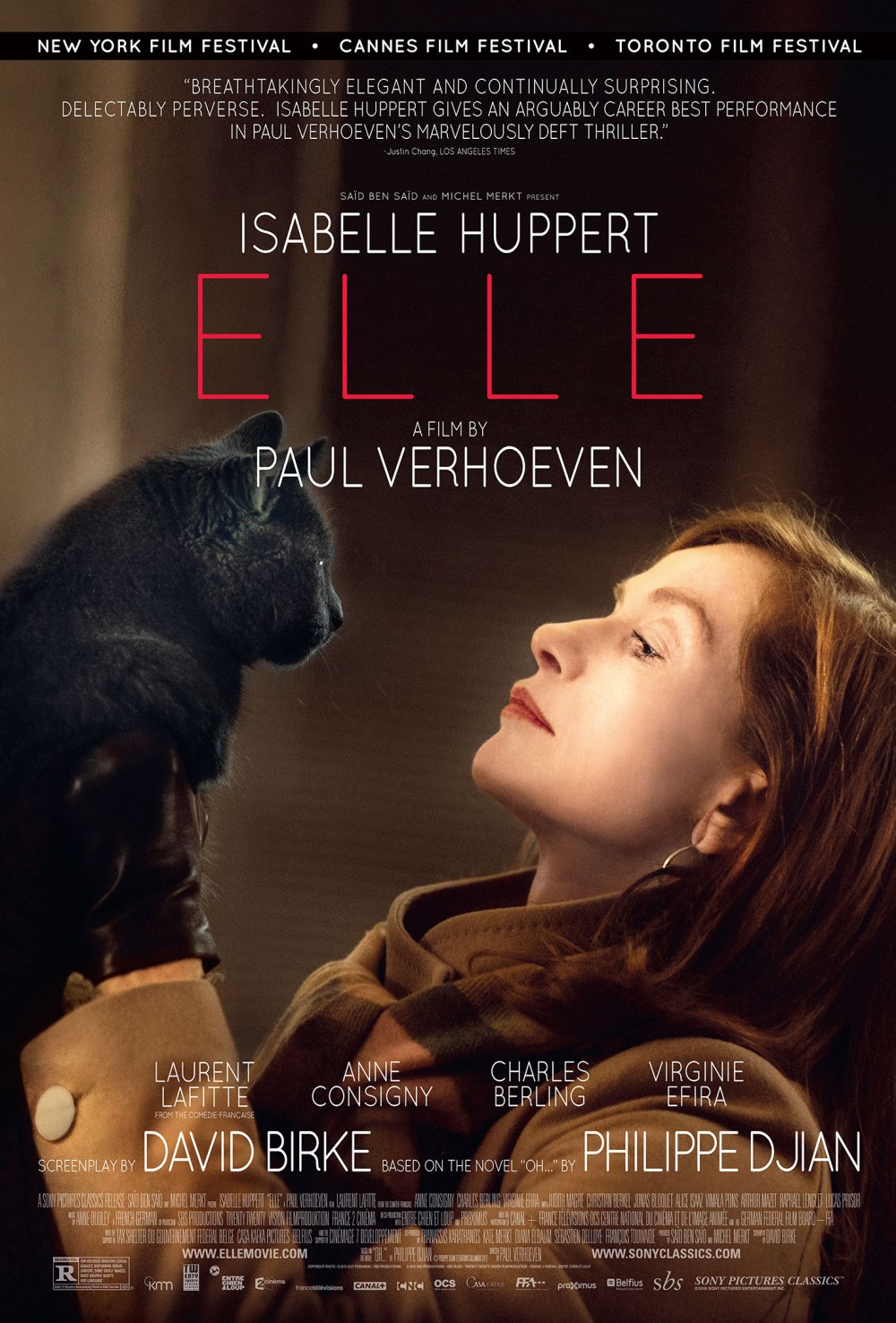
elle_usposter

Dutch filmmaker Paul Verhoeven has given us unforgettable movies like “Robocop,” “Total Recall” and “Basic Instinct,” and he had gleeful fun satirizing the war propaganda machine with “Starship Troopers.” Now he returns with his first movie in ten years, his last being the excellent “Black Book,” the psychological thriller “Elle” which stars the brilliant (and not to mention brave) French actress Isabelle Huppert. From watching the trailer, it looks like Verhoeven is up to his usual button-pushing tricks, but the viewer should not go into this expecting “Basic Instinct” redux.

Based on the novel “Oh…” by Philippe Djian, Huppert plays Michèle Leblanc, the head of a leading video game company, and the plot synopsis describes her as seemingly “indestructible” as she “brings the same ruthless attitude to her love life as to business.” As the movie’s trailer begins, Michèle is at a dinner party where she tells a group of friends she was sexually assaulted, and she presents this confession in a calm and collected manner. Whereas you might expect a scene where a rape victim has a nervous breakdown as she accepts the reality of what she’s been through, Michèle doesn’t even blink an eye. Her friends, however, are shocked at this news to where they encourage the waiter, who has just brought a lovely bottle of wine, to come back in a few minutes.

Throughout the trailer, we see Michèle go about her work and life as if nothing has changed, but it becomes clear the attack has forever left a huge psychological scar on her which cannot be wiped away. Her need for revenge is understandable, and Verhoeven’s movies are well known for their characters getting vicious revenge on their attackers, and the trailer shows her as a ticking bomb waiting to go off. In the end, one can remain cool for only so long.

“Elle” is being released by Sony Pictures Classics, and they recently unveiled a clip from the movie titled “Empty Stare.” Watching this clip, there’s no doubt Verhoeven picked the right actress to star here. Huppert has taken on challenging roles in Michael Haneke’s “The Piano Teacher,” Christophe Honoré’s “Ma Mère” and Claude Chabrol’s “La Cérémonie,” and she looks to have risen to the challenges Verhoeven has put in front of her here. As Michèle tells an unsettling story about her father to a male friend, Huppert makes you wonder if she is telling the truth or simply playing around with someone who doesn’t know her very well. The beauty of watching Huppert is how she creates such vivid and frightening imagery with just words. Other directors would add flashbacks to give this scene more emotional power, but Verhoeven doesn’t need to do this when he has Huppert to work with.

“Elle” was shown at the 2016 Cannes Film Festival where it received critical acclaim and a seven-minute standing ovation. Guy Lodge of Variety proclaimed on Twitter that “Isabelle Huppert might be our best living actor, and ‘Elle’ might be Paul Verhoeven’s best film.” Verhoeven has said the movie is not to be mistaken for an “erotic thriller” in the vein of “Basic Instinct,” and that anyone who goes into it thinking it is will be “disillusioned.”

Adventurous moviegoers look to be in for a dark treat when “Elle” opens in New York and Los Angeles on November 11. Please be sure to check out the movie’s trailer and the “Empty Stare” clip below.

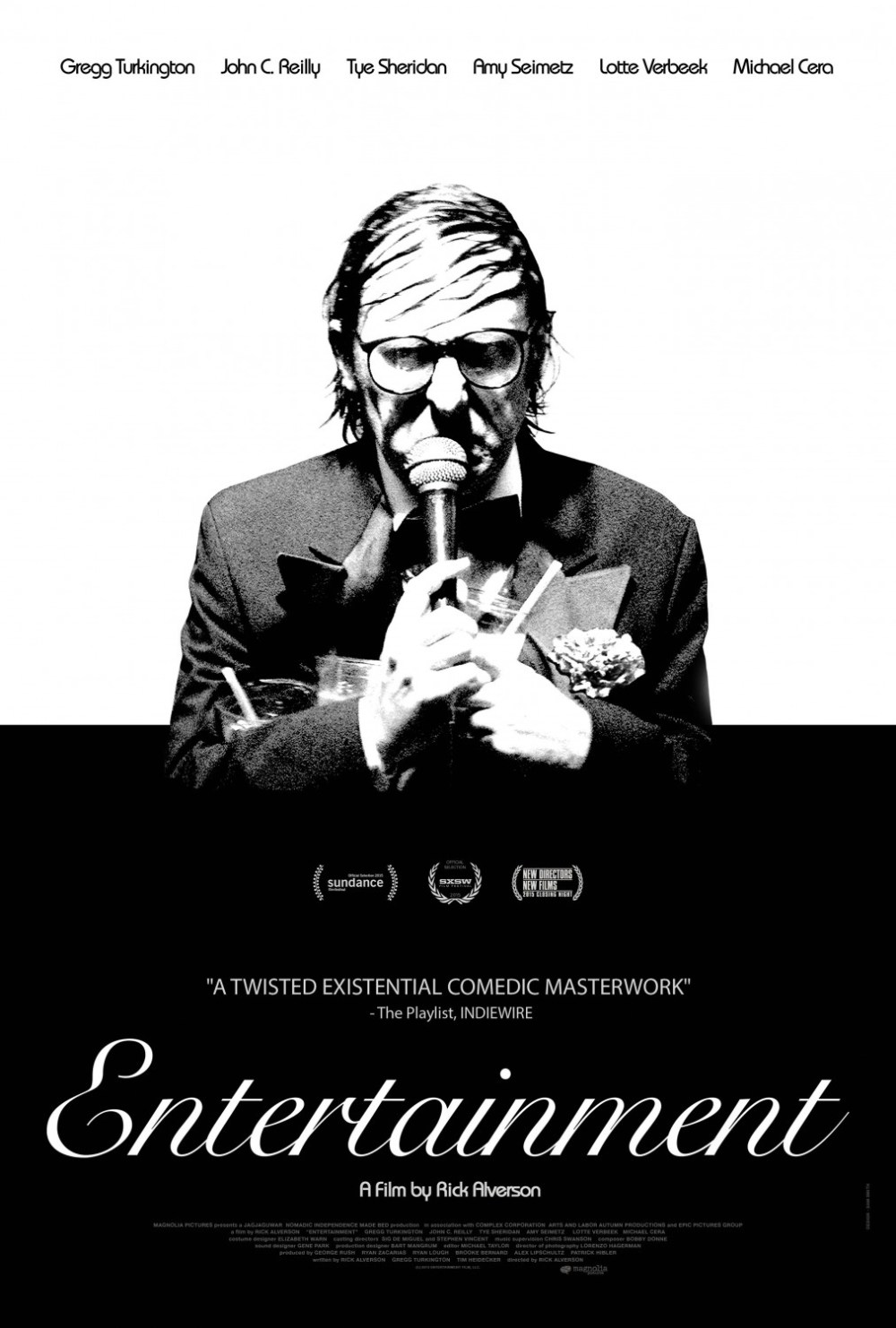
Exclusive Interview with Rick Alverson and Gregg Turkington about ‘Entertainment’

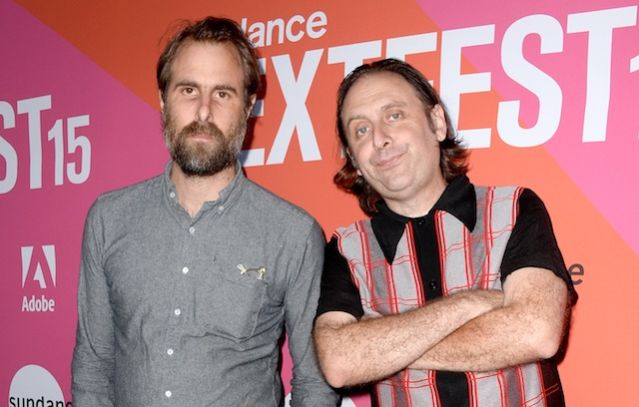
entertainment-gregg-and-rick

Entertainment” is probably the most ironically named movie to be released in 2015 as it is not entirely fun to sit through, but to dismiss it as bad because it is not enjoyable would be missing the point. It proves to be an experience more than anything else as we watch a stand-up comic named The Comedian (played by Gregg Turkington) travel through the California desert while performing at a string of third-rate venues in front of audiences who couldn’t be less excited to watch him. During this time, he tries to get in touch with his estranged daughter and eagerly awaits a lucrative Hollywood engagement which just might revive his sagging career. But first, he has to travel through what seems like the equivalent of Dante’s Inferno in order to find any hope of salvation.

“Entertainment” was directed by Rick Alverson who previously gave us “The Comedy,” another ironically named motion picture which starred Tim Heidecker as an aging New Yorker who is indifferent to inheriting his father’s estate and passes time with friends playing games of mock sincerity and irreverence. Turkington is a noted stand-up comic best known for his alter-ego of Neil Hamburger, a persona which he brings to “Entertainment” but who is not the same character as The Comedian.

I got to speak with Alverson and Turkington while they were at Cinefamily in Los Angeles where “Entertainment” was being shown. When I told that them this interview was for Examiner.com, they joking replied how someone on the website gave them their movie the worst review imaginable and described it as anything but entertaining. We started with that review and went from there.

entertainment-movie-poster

Ben Kenber: How do you feel about reviews like that?

Rick Alverson: Well it’s weird. Obviously the movie isn’t a romp through a good time, so if somebody says it’s a failure for doing that they are right, but that’s not even engaging with the movie (laughs). It’s like you’re not even walking into the room.

Gregg Turkington: They got the details wrong, that’s what I don’t like. They seem to have thought he was trying to do something else and that he failed in trying to do that, but he was trying to do that so he didn’t fail so fuck yourself (laughs). But I like the bad reviews if sometimes it feels like the person’s taking it so personally that the review, when you are reading it, you can tell that I don’t like this person and they don’t like this and this sounds interesting to me, I’m gonna go see the movie. I’ve gone to a lot of movies with scathing reviews because I could tell we are not on the same page, and what you hate is what I like. That’s fine with me.

BK: I saw “Entertainment” a couple of weeks ago and it has stayed with me ever since. Some movies are meant to be experienced more than enjoyed, and this movie is an example of that. Not all movies are meant to be enjoyed.

RA: Great. That’s very good to hear.

BK: We’re looking at a comedian who is at the end of his rope psychologically, and you can’t turn away from his suffering.

RA: Yeah, I would say it’s even more than just psychological. I think it’s a holistic disaster biologically, psychologically, spiritually…

GT: Environmentally (laughs). Although we did win an award in Switzerland at this film Festival we went to.

RA: Environment is Quality of Life Award from the junior jury at Locarno in Switzerland.

GT: Pick the film that best sums up the environment is quality of life (laughs).

RA: It’s true, we won.

GT: Environment is low quality of life, and that environment is low quality (laughs).

BK: I can see why it won. Greg, your character of The Comedian was inspired by your character of Neil Hamburger. When you brought that character to this movie, did you have to change anything about the way you perform?

GT: The live stage show is similar to the real live stage show although me lashing out at somebody for no good reason is not something I would do in a live stage show. That was more the character. But yeah, there were a lot of things that had to be planned out and thought about and addressed. Ultimately I don’t think it is the Neil Hamburger story. It’s a very similar character and certainly it helps to have that character up our sleeves when we need it, but we had to be free to start from scratch.

BK: Rick, I read in the production notes that you had mentioned how you found failure as being very liberating. What specifically about failure do you find so liberating?

RA: Well it describes the boundaries and limitations of the world and experience, and there’s something beautiful to what we can and can’t do and understanding them. It’s like understanding what your feet are for, and your feet have a certain function. I think functionality is beautiful, and we are increasingly a society that’s divorced from form in every way and ignores the limitations which are the actual architecture of life. So we are just ignoring the shape of things and instead are wrapped up in what things could be in this idealized ephemeral flight of fancy. There is a neglecting the beauty of facts on the ground.

GT: A lot of peoples’ failures are to me successes. There’s a purity often to them that you don’t find with things that are successful.

RA: Yeah, because the idea of success is that so few can achieve it in any discipline and any particular way, whether it’s the success of becoming incredibly rich or the success of perfectly achieving the discipline. The majority of people are in some sort of muddy approximation of that. I don’t use traditionally scripted dialogue in any of my movies, so there’s improvisation and other methods of achieving tonal exchanges or content. I really like when things fall flat or there is that absence of chiseled, airtight exchange that we see in so much of popular cinema.

BK: Regardless of how people view “Entertainment,” I have a feeling it will endure over the years as it offers a different and specific view of things.

GT: I’m surprised at how people’s perceptions of things is all based on something like an opening weekend or with music too. It’s like some record comes out and it doesn’t do well, but the music is still valid at any point. The time that it comes out shouldn’t determine the value of it. It’s crazy.

RA: There are these sort of free market metrics especially in an age where we don’t even know who’s buying this stuff. Netflix isn’t releasing their numbers or whatever company. Digital platforms don’t need to release their numbers, so we really don’t know where this stuff’s going and who it’s being imbibed by. To think that our metrics for an opening weekend at the box office have any sort of say about a work is silly.

GT: It’s also replaced for a lot of people film criticism. I hear people in airports or on the street talking about box office numbers and really that should only be of interest to the investors, not to the moviegoers. What do you care if it made 30 million or 60 million? That’s nothing to do with you.

RA: Increasingly we want context for everything. We need context for our own experience. We need to understand how other people are viewing something so that we know how to view it, which is a bit of a shame. Where’s discovery?

BK: I imagine there was a lot of improvisation involved in the making of this movie.

GT: For the dialogue. The rest of it is pretty scripted out very carefully scripted out. It’s not improvised like, what will we talk about now. It’s written there what the topic is, what the town he is in and what’s being communicated. It’s just up to the actors to use the actual words.

RA: We were talking about the other day how there’s, in a tent pole blockbuster movie, a general sense that people were improvising. Because of the prowess of the spectacle, everybody is saying that they know that they (the actors) are riffing on lines in a popular sense. But I think when people talk about independent films and say that they are improvised, it’s just like you turn on the camera and everybody’s doing whatever the fuck they want. It’s so many different things for so many different people. You think you are communicating one thing by saying it, but language is useless sometimes. This was fun because we worked with different people in different ways. I was improvising lines and writing lines on the spot and feeding them to certain people. Others like John (C. Reilly) and Gregg, they have a chemistry and they are very good improvisers so the dialogue exchanges between them were in that world. For me, watching that thing sort of come apart or the attempt at it, honestly half the time if I know we are covering whatever little narrative ground we need, I’m just listening to the voices. We don’t do more than three takes, and some of that is economic. If it’s not achieved by the casting or by the sort of conditions that you’re setting up, then what are you aiming for? I like things falling kind of flat too.

GT: But it’s also true that people think it’s a big free-for-all, improvising. They should see a scene that we might do where we do the first take, me talking to somebody or whatever making up the dialogue, and Rick says, “Alright for this one I need you to move half a millimeter to your right.” That’s not a free-for-all, being told to move half a millimeter to the right. That would probably be the direction over we need you to use this line and to say this specific thing. A lot of times it was stuff like that which is really the opposite of a free-for-all.

BK: Gregg, your character gets booked at a lot of second-rate venues or places that are the worst for comedians to be stuck at. Is that something you’ve experienced in your own career, or is that something you just been a witness to?

GT: I experienced it when I’ve gone out of my way to make sure that it was happening by booking shows that I knew what have that sort of outcome. And then sometimes you go into a show with the best of intentions and it just doesn’t pan out. Things get awful and ugly. But I like a variety of responses and so I like to have shows that are successes on the traditional level, success in the failures on the traditional level. To me they are probably both successes because they gave me a different experience.

RA: I feel that way about movies. It’s strange increasingly for me to recognize how similar me and Gregg are and what we want out of the thing whether it’s comedy or drama or film or stand up. We’re kind of curious about the off-kilter event (laughs).

BK: There are some amazing shots of the California desert in this movie. On one hand they are beautiful, but on the other they illustrate how vacant and empty The Comedian’s life is. Was it challenging to get those shots with the budget you had?

RA: We stretched our budget really, really far, and that speaks to the dedication of everybody involved; the crew and the producers and the cast. So yeah, of course it’s challenging. It’s 112° outside and Lorenzo Hagerman, our cameraman, is carrying a 50-pound camera kit on his shoulder up a rocky cliff to get those wide vista shots 400 yards from something. Gregg’s shoes are melting and it’s dangerous out there. Don’t go to the desert! (Laughs)

GT: Don’t shoot in the desert is right!

RA: Me and Gregg talked about how we liked in the 70’s you see a lot of films of people just sweating and nobody’s dabbing them. They are just covered in sweat and look greasy and wrong. You started to see that becoming the sterilization of, “No that’s not quite right. We can do better than that.” So you had to sterilize the representation down to its most idealized form, but we were hoping for some more sweat actually.

BK: Tye Sheridan’s role in this movie is interesting because he basically plays a clown who doesn’t have much of an act. He just basically panders to the audience’s basest instincts. How did you work with him on that role?

RA: I showed him an idiot dance and he brought it to life. I’d ask him to do sort of these mime-ish things at events, and he stepped up on that stage and animated it in a way that shocked all of us. It was electrifying. He sort of plays the apocalypse in the movie. He definitely is the end of the spectacle. He’s reduced down to the rawest of the raw materials. He is the smut in the pig sty, the character I mean. Tye is one of the kindest, gentlest, most respectful young men that you could ever meet.

BK: What do you hope people get the most out of “Entertainment” and the experience of watching it?

RA: I hope they do what you’ve done. You can watch a film and be activated by it and be engaged with it and have an experience like you’re saying. It doesn’t necessarily in a typical sort of way expect for it to do to you what the majority of films do. There can be an outlier that doesn’t operate by those principal, and the spectrum of art is much larger than a particular metric like if you enjoyed it or if you didn’t enjoy it. It’s so much more broad.

I want to thank Rick Alverson and Gregg Turkington for taking the time to talk with me. “Entertainment” is now available to watch on DVD, Blu-ray and Digital.

The Guest

the-guest-movie-poster

I went into “The Guest” knowing almost nothing about it. I was expecting something very artistic and the kind of movie Hollywood studios wouldn’t have the guts to finance these days, but what I got instead was the kind of thriller similar to those from the 1980’s like “The Hitcher.” I kept wondering why the Sundance Next Festival would allow something so formulaic to play at this festival, but when the filmmakers came out after a screening to talk about “The Guest,” it then became clear it was actually meant to be an homage to those thrillers we all grew up on. As a result, I quickly saw the movie in a different light.

But even before this revelation, I had to admit “The Guest” is a thriller which packs a mighty punch and left me on the edge of my seat throughout. It grabs you by the throat and holds you tightly within its grasp, and a lot of that is due to the infinitely charismatic performance by Dan Stevens who portrays the guest of the movie’s title.

“The Guest” starts off with an introduction to the Peterson family who are still grieving over the loss of Caleb who was killed in Afghanistan. Then a man knocks at their door and politely introduces himself as David (Dan Stevens), a friend of Caleb’s from the military, and he is here to fulfill a promise to his fallen comrade. David tells Laura (Sheila Kelley) and her husband Spencer (Leland Orser) he has no wish to overstay his welcome, but they become insistent he stay at their house to where he quickly becomes the best houseguest anyone could ever hope to have as he helps out wherever and whenever he can. But just as in life, we can’t help but think no one can be this nice without being somewhat psychotic.

Some of “The Guest’s” best moments come when David looks out for the Peterson children, Anna (Maika Monroe) and Luke (Brendan Meyer). Luke is having some major problems at school as he is the target of bullies who beat him up at any given opportunity. Now I have seen this scenario played out in many movies, and it used to tug at my emotions in a very strong way. But watching it in “The Guest” gave me that primal beat up the bullies feeling I haven’t felt in the longest time. It doesn’t take a rocket scientist to see David is going to give these jerks a taste of their own medicine, and watching him do so is a perverse thrill.

Anna is less quick to warm up to David even after he goes out of his way to get a keg of beer for her high school friends. From the start she is suspicious of who he really is, and those suspicions are confirmed when a number of strange events start happening around town. Of course, her dad can’t see him doing anything bad and chides his daughter for even thinking such a thing. After all these years, teenagers are still forced to deal with their parents’ hypocrisy, and that’s even with actors like Leland Orser playing the father.

As you can see, “The Guest” travels down the road of familiar genre conventions and delivers them to the audience in a way which feels both potent and fresh. The violence in the movie is more brutal than in others I’ve seen recently, and there are several scenes which shocked me I haven’t been shocked in a while. No character is on safe ground here, and anyone is expendable in a way those actors in “The Expendables” movies ever are. At the same time, the movie has a sharp sense of humor which shows just how much fun its filmmakers were having with the material.

“The Guest” comes to us from director Adam Wingard and writer Simon Barrett, the same two who gave us “You’re Next.” I came out of this movie wondering if they had as much playing around with the slasher genre in “You’re Next” as they did with the thriller genre here. Having interviewed them both the following day for the website We Got This Covered, I can tell you they absolutely did as they talked about combining elements from “The Terminator” and John Carpenter’s “Halloween” to make this movie a reality.

Furthermore, “The Guest” comes equipped with a terrific electronic score courtesy of Steve Moore which recalls the great 80’s electronic film scores like Mark Isham’s “The Hitcher” and the “Halloween” scores of John Carpenter and Alan Howarth, particularly the one they did for “Halloween III: Season of the Witch.” Anyone who knows me best knows how much of a sucker I am for this kind of movie music, and I was digging’ Moore’s score right from the first note as it adds the ominous atmosphere we will be venturing through when David makes his entrance into town.

Seriously, this movie really does belong to Stevens who is best known for playing Matthew Crawley on “Downton Abbey,” the TV show everyone seems to be watching except me. He exudes endless charisma and makes you believe how lethal David can be when you look right into those beautifully steely eyes of his. I’m not kidding when I say he has a stare which can cut through you with a laser from a mile away. Stevens also infuses a number of his scenes with a twisted sense of humor, and this is especially the case when he coolly manipulates Luke’s principal to where he realizes suspending this young man from school might actually be hazardous to his health.

“The Guest” falters a little towards the end as the filmmakers get too enamored of the foolishness of their character’s decisions. It also has one of those horror movie endings which imply how evil can never die, and it feels a little soft compared to what we have seen in other films of its ilk. At the same time, it could mean that Wingard and Barrett will reteam for “The Guest 2,” and it would be fun to see how they would play around with the conventions of a sequel.

Seriously, “No Good Deed” could only dream of being as thrilling as this movie, and it starred Idris Elba for crying out loud. “The Guest” gleefully plays around with all the things we remember from the ultra-violent movies from our past, and I found myself enjoying it a lot even as things got increasingly nasty. Just when I thought I knew how this movie would play out, it quickly shifted gears and took me for a loop.

Now if you’ll excuse me, I have to buy this movie’s soundtrack.

* * * ½ out of * * * *


Here Comes The New ‘Blair Witch,’ Same As The Old ‘Blair Witch’

blair-witch-poster

While watching “Blair Witch,” I kept hearing these lines of dialogue between Richard Attenborough and Jeff Goldblum from “The Lost World: Jurassic Park” in my head:

“Don’t worry, I’m not making the same mistakes again.”

“No, you’re making all new ones.”

This particular “Blair Witch” movie came out of nowhere as it was filmed in secret under the title “The Woods,” but over this past summer it was revealed to actually be a direct sequel to “The Blair Witch Project.” With a couple of talented filmmakers at the helm and a cast of unknown actors in front of the camera(s), this third “Blair Witch” movie showed a lot of promise as the memories of watching the original all those years ago remain very vivid to me. But what we end up with here has me paraphrasing the lyrics of a song by The Who: Here comes the new Blair Witch, same as the old Blair Witch.

The movie opens up on James Donoghue (James Allen McCune), the brother of Heather Donoghue, viewing some grainy footage which leads him to believe his sister might still be alive. As a result, he forms an expedition to venture into the Black Hills woods in Burkittsville, Maryland to search for her, and he is joined by Lisa Arlington (Callie Hernandez), an aspiring film student who wants to make a documentary on James’ search, and their friends Peter (Brandon Scott) and Ashley (Corbin Reid). Also along for the ride are Talia (Valorie Curry) and Lane (Wes Robinson), local residents responsible for uploading the grainy footage James watched and who have forever been interested in the legend of the Blair Witch as they do not live far from the events of the original movie.

Once these characters leave their cars behind, we are pretty confident they will never be seen again. Still, we are intrigued at the possibility of James meeting up with Heather as her body, nor Michael’s or Joshua’s, was never found. As expected, this expedition starts with everyone having fun by the campfire, but we all know what will happen from there. Once again, Goldblum’s dialogue from “The Lost World: Jurassic Park” was playing loudly in my head:

“Oh, yeah. Oooh, ahhh, that’s how it always starts. Then later there’s running and um, screaming.”

If there’s anything different about this “Blair Witch” movie, it is the technology. Whereas the trio from the original had video and film cameras at their disposal, these characters have GPS, walkie talkies, digital and DAT cameras, cell phones and a drone which can give them a wider view of the woods. But of course, they are in an area where their cell phones don’t get very good, if any, reception. As for the rest of their gear, it will only do them so much good as they venture deeper into the woods. I mean, we all know what curiosity did to the cat, right?

The beauty of “The Blair Witch Project” was that it never felt like a movie. Instead, it felt more like a unique experience we were not used to having. We were there in the woods with the characters as their situation became increasingly perilous and more terrifying as time went on. Unlike most horror movies, we were not inflicted with cheap scares every five minutes. We were creeped out by the ambiguity of the situation as our imagination ran riot over the things we could not see. This is not to mention the movie’s brilliant marketing campaign which included the fake documentary “Curse of the Blair Witch” and missing photos of the three filmmakers posted at theaters. I’m surprised the studio didn’t put their faces on milk cartons as well.

But “Blair Witch” is unable to match the original’s “you are there” feeling, and I could not escape the fact that I was watching a horror movie. Furthermore, it was a weak horror movie which takes us down a road we have traveled far too often. This time the filmmakers resort to jump scares, and only a few of them work. Also, the characters here are stereotypical ones we usually expect to see in movies like these, and they are none too bright to put it mildly. Then again, horror movies usually thrive on stupid characters because otherwise nothing interesting would ever happen. One character pleads for everyone to head back home, but no one is about to. Just as when Jon Voight suggested to Burt Reynolds in “Deliverance” that they go back home and play golf, we are presented with good advice which is not taken.

After a time, it felt like I was watching a mashup of a “Blair Witch” and a “Paranormal Activity” movie as the soundtrack gets overtaken by dark ominous sound and tents start flying up in the air which has our intrepid characters running for their lives while filming the action any which way they can. I mean heaven forbid they don’t get anything on camera because otherwise there would be no movie.

Let’s face it folks, the found footage genre has long since been beaten to death. It thrived for a time after “The Blair Witch Project,” and it was reignited to very terrifying effect with “Paranormal Activity” and a few of its sequel. But like anything Hollywood gets its hands on, it has been beaten to death to where we are left with diminishing returns in the form of “Paranormal Activity: The Ghost Dimension” and “The Hollows.” There’s nothing new to be found in this genre with “Blair Witch.” Nothing.

When Artisan Entertainment, which later became Lionsgate, decided to make “Book of Shadows: Blair Witch 2,” they hired “Paradise Lost” director Joe Berlinger to co-write and direct it. What resulted was a mess of a movie with bad acting and a poorly conceived story. Either that, or Artisan kept messing around with the movie and recut it behind Berlinger’s back as he has constantly accused them of doing.

This time around, they hired Adam Wingard to direct and Simon Barrett to write this movie, and this had me believing audiences were in for a treat. This is the same duo who gave us the black comedy slasher “You’re Next” and the highly underrated action thriller “The Guest.” Both movies show how familiar they were with the genres they cheerfully exploited, and they succeeded in bringing a freshness to those genres which appeared to have long since reached their peak. With them behind the camera(s) for “Blair Witch,” I felt they could bring something unique and fresh to the found footage genre, but even they can’t help but fall back on tried and true tricks, many of which we can see coming from a mile away.

For what it’s worth, Wingard and Barrett do give us a thrilling climax as the characters run through that creepy house we remember from the original, and we keep guessing as to how long they can last before they are pulled away with only their cameras left behind, recording the floor from an obtuse angle. But this sequence is not enough to save the movie, and what we are left with is, if you’ll excuse the expression, the same old shit.

The directors of the original, Daniel Myrick and Eduardo Sanchez, had often talked about doing a prequel which would show how the legend of the Blair Witch came about. That would be an interesting movie to see. Or perhaps we could get one where we see things from the point of view of the Blair Witch herself as she toys with the foolish humans by scaring them silly before eventually doing them in. One thing is for sure; unlike Donald Trump supporters, she does not discriminate.

* * out of * * * *

Copyright Ben Kenber 2016.

Save

Sully

sully-movie-poster

Tom Hanks has been the go to guy for playing American heroes and for good reason; he never plays characters as people gunning to become heroes at any given opportunity. Whether it is Captain Miller in “Saving Private Ryan,” Jim Lovell in “Apollo 13,” Andrew Beckett in “Philadelphia,” Forrest Gump or even Jimmy Dugan in “A League of Their Own,” Hanks has long been the master of playing ordinary Americans who are just trying to get by in the rough and tumble real world the best way they know how. None of these characters set out for the adulation of others, but for a sense of purpose and justice in a world which at times seems devoid of it.

Now we can add Chesley Sullenberger to Hanks’ list of noble American characters with his excellent performance in “Sully,” Clint Eastwood’s dramatization of the airline pilot’s dramatic landing of US Airways Flight 1549 in the Hudson River. We all know this story of how the flight suffered dual engine failure shortly after takeoff due to a flock of Canadian geese flying straight at them, but Eastwood and Hanks dig deeper into what went on as Sullenberger and his First Officer Jeffery Skiles (Aaron Eckhart) are soon drilled by the National Transportation Safety Board as tests imply the left engine on the plane did not fail, meaning they still could have landed at LaGuardia Airport or one in New Jersey instead of on the water.

Sullenberger was quickly hailed a national hero for successfully landing the plane and saving all the lives aboard it, but this movie shows him more troubled by what he did than proud. He becomes plagued with nightmares and PTSD over how the flight could have ended in a catastrophic way. Also, with him and Skiles being thrown into instant stardom for their actions, Sullenberger ends up feeling isolated from everyone around him as people are eager to hug him or shake his hand in congratulating him for what he accomplished.

What I especially liked about “Sully” is how it shows the damaging effect sudden fame can have on an individual. While some might be super excited about appearing on “Late Night with David Letterman” or being interviewed by Katie Couric (who plays herself in this movie), Sullenberger finds him retreating from all the media attention as he never asked for it. While he constantly reaches out to his wife Lorraine (Laura Linney), they are separated by thousands of miles as she resides on the other side of the country. Even as they talk on the phone, the space between them feels quite profound and loneliness soon becomes his best friend.

Hanks’ performance as Sullenberger reminds us of why we look to him to play those people we see as American heroes; they are people not quick to jump into the spotlight and appear unsure as to what to do once they are thrust into it. Hanks never sets out to impersonate Sullenberger, but instead seeks to capture his state of mind following this unforgettable incident. The Oscar winning actor does excellent work in showing how Sullenberger is beset by tremendous self-doubt as he is forced to wonder if he made the right decision in light of all the computer generated evidence presented to him.

Hanks is also supported by a strong supporting cast of actors whom can never be expected to let him or Eastwood down at any second. Eckhart is the definition of strong support as his character of First Officer Jeff Skiles stands by Sullenberger every step of the way. There’s also Laura Linney who plays Sully’s wife, Lorraine, who does her best to support her husband over the phone any chance she gets. While in some ways Linney has a thankless role to play here, she justifies Lorraine’s presence in the film as the character is the support Sully needs through the most trying of times.

One of the key things Eastwood gets across here as a director is how the human element has to take precedence of the technological one as not everything can be solved or reasoned out completely by computers. This is especially interesting as Eastwood is best known for directing movies which deal heavily in human nature and its ever-growing complexity, but this time he has some nifty tools to work with. Eastwood got to shoot much of “Sully” with IMAX cameras, and seeing this movie on the nearest IMAX screen is a must.

The plane crash sequence is masterfully directed as we see pilots and flight attendants at their most professional during a moment of crisis. While we all know how things will turn out here, it is still a pulse pounding scene as we are with everyone on this plane from when they take off to when they land on the Hudson. The sound of the engines dying down and of silence in midair is unnerving, and it’s not every day you see a commercial jet land in the water.

Eastwood also makes us remember how the human element plays as big part in movies as do visual effects. He has not set out to give us a biopic on Sullenberger, and that’s even though there are moments sprinkled throughout which show his beginnings as a pilot and other significant experiences which molded him into the pilot he became. Instead, he is far more interested in the impact this one miraculous moment can have on a person’s life and of the obstacles it places in front of them.

Thank goodness Eastwood did not put the term “based on a true story” at the beginning of “Sully.” We all know this happened. Does Eastwood and screenwriter Todd Komarnicki play loose with the facts? Sure, but most movies like this do. The NTSB has objected to the way they have been portrayed here, and they do come across as overly villainous at times. But in terms of the story’s dramatic arc, it makes sense why they were portrayed as such here. To his credit, Sullenberger requested that the names of the real-life NTSB investigators, which were featured in the original draft, be changed as he felt it would be unfair to associate them with the changes in the story. Whatever the case, “Sully” is still a very compelling and gripping motion picture to sit through.

Some still question whether Chesley Sullenberger deserves to be called a hero as they believe he still could have landed at an airport. Others I know personally have accused him of using his pulpit to trash professional pilots for no good reason. But neither Eastwood or Hanks made this movie to deify Sullenberger as to do so would seriously cheapen the story for no good reason. They simply show us an ordinary man who was forced to make a quick decision in order to save the lives of many, and he was not out to call himself more heroic than others for his actions.

But also, “Sully” shows how an entire life can too often be boiled down, often unfairly so, to a single moment which renders all other accomplishments moot. In today’s media and technology saturated culture, people are never defined too broadly anymore but instead by specific actions more than anything else. The Buddha once said the merit of a whole life can be undone in a single moment. This could have been the fate Sullenberger would have been forced to accept, but he rose to the occasion and saved many lives in the process. As this movie shows, he was never out to be a hero. He was simply a human being doing his job.

And if nothing else, the movie shows Americans, especially those in New York, rising to the occasion and helping the passengers get to the shore safely. However which way you want to look at the story of US Airways Flight 1549, it did provide us with a happy ending we desperately wanted to have.

* * * ½ out of * * * *

Copyright Ben Kenber 2016.


Universal Pictures Unveils First Trailer for ‘Fifty Shades Darker’

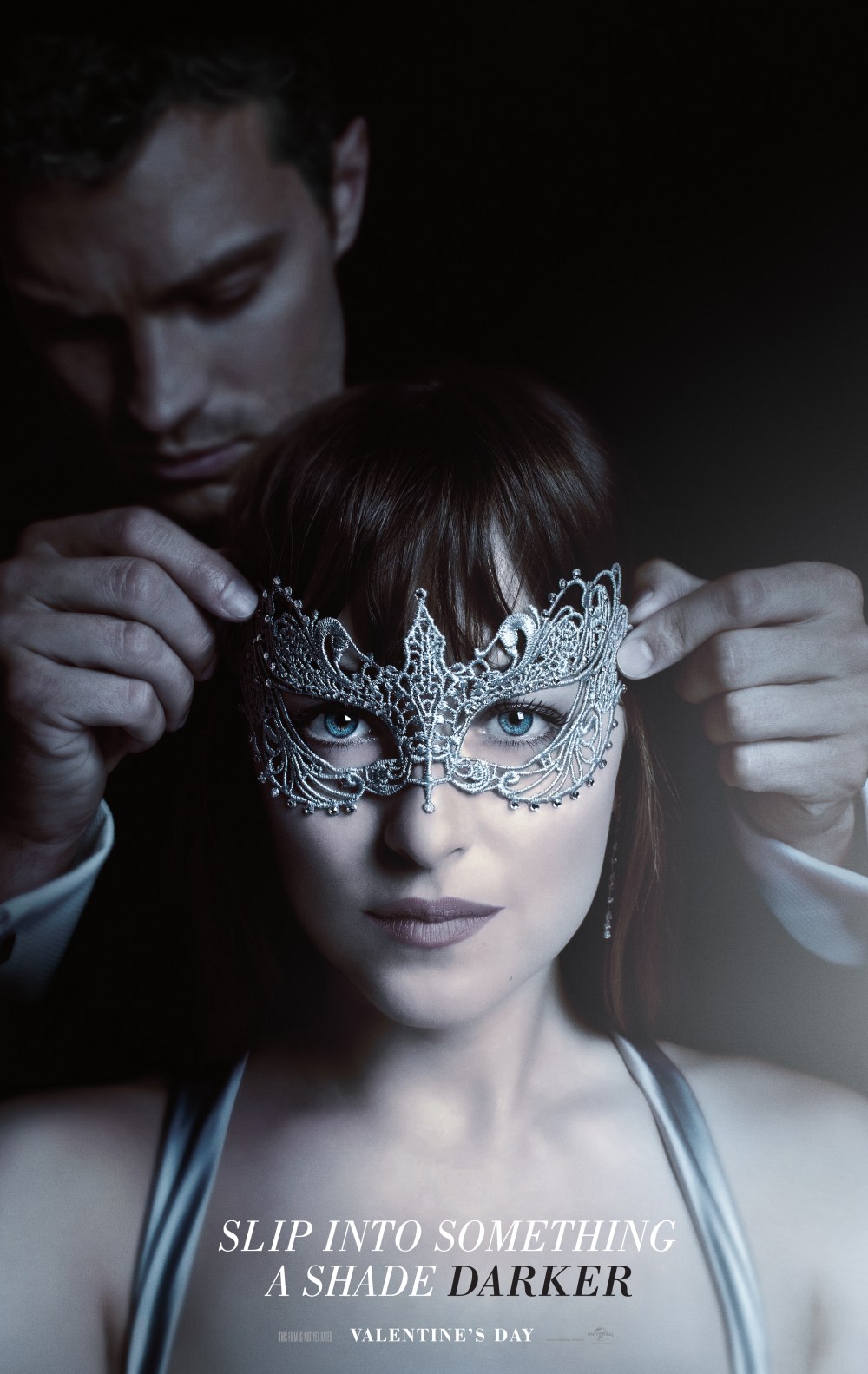
Just when you thought it was safe to go back to the movie theater on Valentine’s Day, another E.L. James novel is about to make its way to the silver screen. The cinematic adaptation of “Fifty Shades of Grey” was not well-received critically and was a big winner at the 36th Golden Raspberry Awards, but it still made over $500 million dollars worldwide, so a sequel was destined. Now Universal Pictures has unveiled the first trailer for “Fifty Shades Darker,” and it promises to be more of a thriller as well as something sexier and more obsessive than its predecessor.

Despite Anastasia Steele (Dakota Johnson) leaving Christian Grey (Jamie Dornan) at the end of the first movie, this trailer shows neither have yet to call it quits on their relationship. Anastasia, a picture of youthful innocence previously, looks much more mature this time around while Christian, as usual, remains engulfed by demons. We see them go to a masquerade party which makes one wonder if the filmmakers are looking to outdo a similar sequence in Stanley Kubrick’s “Eyes Wide Shut” as that movie almost earned an NC-17 rating.

The passion between Anastasia and Christian appears a little healthier this time around as she makes clear there are to be no more rules or secrets between them. As the trailer reaches its midpoint, they certainly look to be having more fun than ever before. But soon Anastasia starts seeing other women looking back at her menacingly even while she sleeps in bed, and it becomes clear there are still many things Christian has to talk to her about.

The “Fifty Shades Darker” trailer is dominated by Miguel’s version of the song “Crazy in Love,” but while Beyoncé sang it to where her uncontainable joy was more than infectious, Miguel makes his interpretation of the song dark and very obsessive as if this love affair is heading to a very dangerous place. Indeed, Miguel’s song may be the most memorable thing about this trailer as he succeeds in making this song his own, and the result is haunting. As we watch Anastasia and Christian come together and fall apart in rapid succession, the song illustrates just how crazy their love affair is and how much crazier it is going to get.

Stepping into the director’s chair for this “Grey” movie is James Foley, the same man who directed one of greatest acting ensembles ever in the cinematic adaptation of David Mamet’s play “Glengarry Glen Ross.” Writing the screenplay is Niall Leonard, husband of E.L. James. Is Leonard a better writer than his wife? Well, here’s hoping. Among Johnson’s and Dornan’s co-stars here is Kim Basinger who plays Elena Lincoln, Grey’s business partner and former lover, and while we don’t see much of Basinger in the trailer, she has its last line which hangs over everything we have seen like the ominous of shadows. Keep in mind, Basinger’s character is also referred to as Mrs. Robinson (hint, hint).

Well, for better or for worse, “Fifty Shades Darker” will be arriving in theaters on February 14, 2017. Check out the trailer above.

fifty-shades-darker-fsd_tsr1sheet_rgb_0907_5_rgb

I Saw The Light

I Saw the Light movie poster

Watching “I Saw the Light” reminded me of when I saw Oliver Stone’s “The Doors.” Both movies have a great cast, a lead actor who perfectly embodies an iconic singer, and scenes which vividly bring to life the classic songs of the artists. At the same time, both movies keep their main subjects, in this case country singer Hank Williams, at arm’s length to where we come out feeling like we never really got to know them. Considering the talent involved, this particular music biopic proves to be a major disappointment.

Writer and director Marc Abraham, whose previous film was “Flash of Genius,” eschews Hank’s childhood and goes straight to when he married Audrey Sheppard, a divorcee and single mother. They look like the perfect couple, and this is especially the case when you consider the palpable chemistry between stars Tom Hiddleston and Elizabeth Olsen. But like many biopics, we know everything is heading downhill for these two, and Hank’s life got cut short by alcoholism and a painful medical condition. He was only 29 years old when he died, but he looked much, much older.

The movie gets off to a wonderful start as we see Williams singing one of his most famous songs in a sequence which is beautifully lit by the brilliant cinematographer Dante Spinotti. We are instantly hooked as the country icon’s lyrics capture our attention right away, and it makes us look like we’re in for quite the biopic. Unfortunately, this proves to be its high point as nothing else ever measures up.

One of the big problems with “I Saw the Light” is it is so sloppily edited to where it’s hard to tell what part of Hank’s life we are looking at. It goes from one section of his life to another before we can ever fully digest what is going on. This makes the movie very confusing, and it keeps us from getting to know Hank and the other people in his life more intimately. I felt like I never really understood what fueled his music, and he became the kind of person who is not at all fun to hang out with.

Also, the movie feels undercooked to where Abraham has his cast of actors underplay every single scene they appear in. Nothing ever comes to life in the way it should, and everything in “I Saw the Light” eventually becomes an exercise in tedium. It’s bad enough we never get deeper into Hank’s psyche, but to see this story portrayed in such a passionless way makes this whole project come across as an unforgivably missed opportunity.

“I Saw the Light” does, however, have Hiddleston as Hank Williams, and his performance is in some respects amazing. We all know him for playing Loki in the “Thor” and “The Avengers” movies, and at first he seems like an odd choice to play the man who made “Lovesick Blues” such an unforgettable song. But he succeeds not only in mastering Hank’s accent, but in getting the audience to feel the songs as much as he does when he sings them. That’s right, Hiddleston does his own singing here, and this makes his work here all the more admirable.

I was also impressed with Olsen’s performance as she makes Audrey perhaps the only human being who could possibly deal with Hank’s alcoholism and womanizing. Watching her here makes one realize what a powerful actress she can be, and she brings this movie to life in a way others are unable to.

As for the supporting characters, they are given short shrift and serve little purpose other than to further Hank and Audrey’s exploits. Cherry Jones, a tremendous actress, is wasted here as Hank’s mother Lillie as she has almost nothing to do other than sneer at any woman who grabs her son’s immediate affection. Bradley Whitford makes a bit of an impact as Fred Rose, the man who helped Hank rise to stardom, but Fred’s contributions to Hank’s career are made to feel smaller than they were. Maddie Hasson fares better as Billie Jean, the young woman who eventually becomes Hank’s second wife, and it’s a shame we didn’t get to see more of her here.

For what it’s worth, “I Saw the Light” did give me a good appreciation of Hank Williams’ songs. I have never been much of a country music fan, but the movie made me see why his music struck such a strong chord in so many people. Hank understood the pain of love in a way others didn’t want to experience firsthand, and it was not hard to connect with the feelings he so deeply expressed through music.

Still, the movie never digs deep enough into his life, and what results is a inescapably frustrating cinematic experience. This could have been one of the best biopics of recent years, but the filmmakers treat their main subject with kids’ gloves to where he feels like a complete stranger from start to finish. Coming out of “I Saw the Light,” I wanted to read more about Hank Williams on Wikipedia among other places on the internet as there’s got to be much more information on him there than what we got here.

Copyright Ben Kenber 2016

* ½ out of * * * *