The 5th Wave

the-5th-wave-poster

The 5th Wave” comes to us not long after the conclusion of “The Hungers Games,” and it is the latest in a seemingly endless line of young adult book to film adaptations. As a result, I came into this movie feeling worn out even before it started. While the novel it is based on, written by Rick Yancey, might be an interesting read, what unfolds onscreen feels like the same old thing. Only the names and places have been changed to protect the filmmakers from potential lawsuits.

Chloe Grace Moretz stars as Cassie Sullivan, a young teenager (is there any other kind?) who lives a normal life with her family, attends high school where she’s a cheerleader and constantly deals with unrequited love like any other child held prisoner by adolescence. But suddenly an alien ship, which looks like something out of “District 9,” appears in the sky, and the Earth goes through four waves which leave it decimated and on the verge of extinction. All Cassie has left is her brother whom she ends up getting separated from, and from there she is determined to save him from a fate many others have suffered.

This movie does not get off to a good start as the visual effects used to convey the various waves are shoddy CGI, and some scenes end up looking like outtakes from “Independence Day” or any other Roland Emmerich production. When the plot finally gains momentum, Cassie finds herself on the run and forced to defend herself in ways she never planned. She’s also looking for her brother whom she is very close to. Doesn’t this sound like something we just saw?

It’s a shame because the movie does have Moretz who makes this mess more bearable than it should be. Her breakthrough performance in “Kick-Ass” was no fluke and she continues to do strong work in each film she appears in, regardless of whether they are good or bad. She makes Cassie a strong heroine and one whom kids around the same age will easily relate to as she fends for herself in the dangerous world everyone has been thrust into, and Moretz makes you root for her throughout. But even she can’t save this routine young adult movie which has come out way too late.

Actually, what’s especially interesting about “The 5th Wave” is how the female characters are far more interesting than the male ones. It also helps they have such terrific actresses inhabiting those characters, and each of them clearly relishes the opportunity to bring them to life. Maria Bello, sporting a very funky hairdo, makes Sergeant Reznik a slyly manipulative soldier as she forces the children to see the alien threat her way to where getting them to fight for the human race is easy as cake. Maika Monroe, so good in “The Guest” and “It Follows,” makes her character of Ringer a wonderfully tough warrior, and she also skillfully unveils the other layers of Ringer to show us a person who is deeply broken. Along with Moretz, they keep “The 5th Wave” from becoming a complete bore.

The male actors, however, don’t have much to work with and their performances suffer as a result. Nick Robinson plays Ben Parish, the high school football hero who, when he is forced to enlist in the military, is nicknamed Zombie. Zombie proves to be an appropriate name as Robinson has little choice but to give a one-note performance as much of the emotion Ben has experienced in life has long since been drained from his psyche. Then there’s Alex Roe who plays Evan Walker, a man who may not be all that he appears to be. It seems like the screenwriters had some trouble in trying to figure out what to do with this character, and that leaves Roe with little choice but to make Evan far more enigmatic than the character has any right to be.

And let’s not leave out the great Liev Schreiber, wonderfully understated in “Spotlight,” as the movie’s main antagonist Colonel Vosch. It’s no surprise Schreiber can give us such a menacing villain, but there really isn’t much of a character for him to play here. Vosch is merely here as an obstacle for Cassie to overcome, and as a result the actor is wasted in a role which is too unworthy of his talents.

Then there is the love triangle between Moretz, Robinson, and Roe, and after having been subjected to a very similar one between Jennifer Lawrence, Josh Hutcherson and Liam Hemsworth in “The Hunger Games,” I could have cared less about it. I imagine it will give audiences much to swoon over, but it’s a romance that is bland as the male characters in this movie.

“The 5th Wave” was directed by J Blakeson who previously gave us “The Disappearance of Alice Creed,” a neo-noir thriller about the kidnapping of a woman by two ex-convicts. His direction on that film was much lauded by the press, and it makes me wonder just how much control he had over this project. Clearly, the studio is setting this up to be another franchise of movies for young adults to become obsessed over as a sequel to “The 5th Wave” has already been published and a third book is on the way. But it all depends of course on how this one does at the box office and considering how we are all still getting over the end of “The Hunger Games” movies, I’m not sure everybody is in a rush for yet another franchise like it.

Perhaps the target audience for “The 5th Wave” will enjoy it the most, but even they have to be outgrowing these kinds of movies at this point. Sooner or later we have to realize kids grow up and become adults, and even adults can save the world and their little brothers too.

* ½ out of * * * *
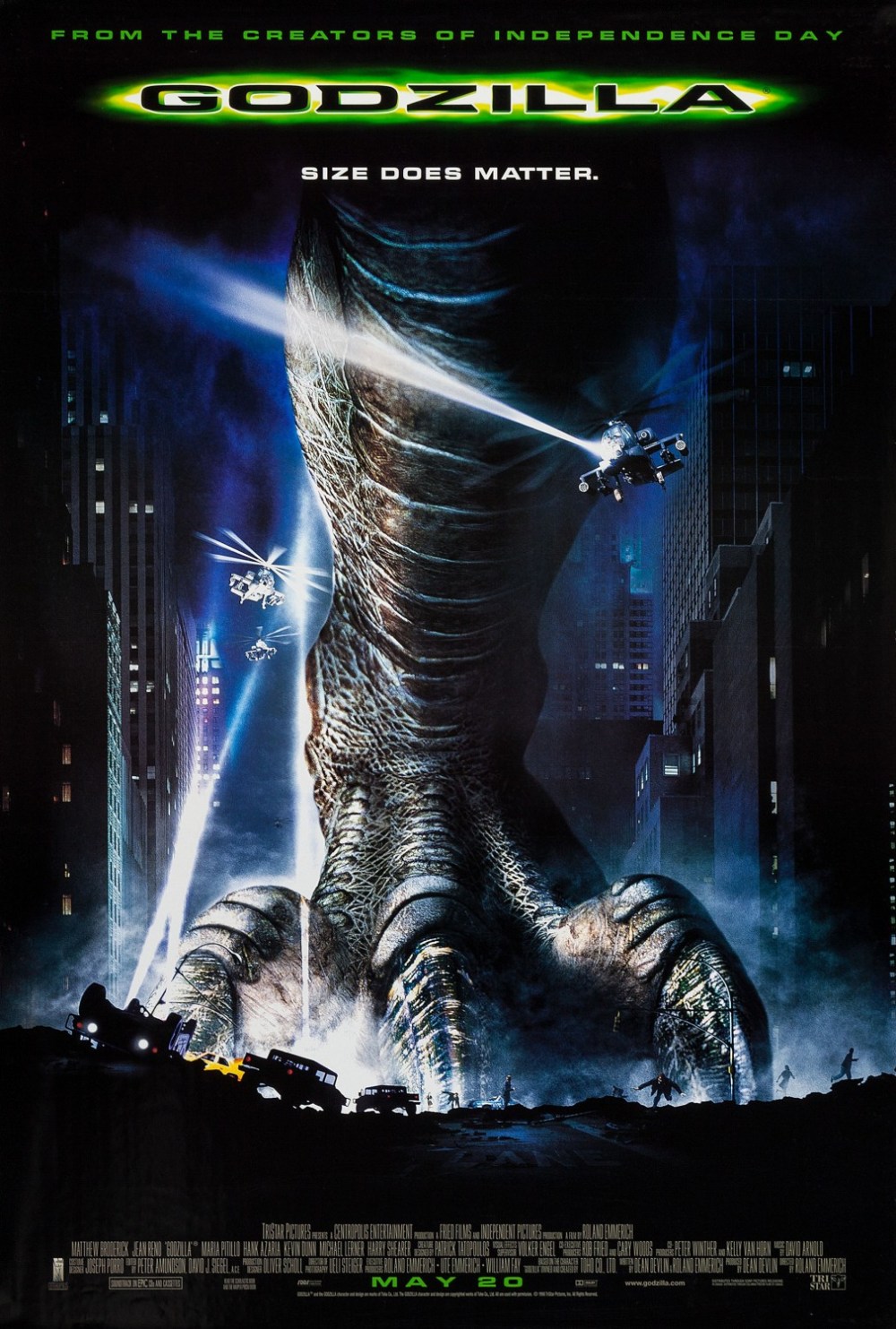
 

Godzilla (1998)

godzilla-1998-poster

I originally wrote this review on May 20, 1998, not long after I watched this “summer blockbuster.”

The momentous day has finally arrived! Roland Emmerich’s “Godzilla” has finally hit the big screen in all of its reptilian glory. Trailers for this movie have been up and running for over a year now, and the past few weeks have had us bombarded with television commercials from Taco Bell with the Chihuahua, hoping to cash in on this film’s predicted box office success. But now the wait is over and the film has finally hit the big screen. Everyone is waiting to see if the movie will suck in the biggest opening in box office history and outdo “Titanic” as the highest-grossing movie of all time…

What can I tell you? “Godzilla” sucks! I even wrote it up on the dry erase board in the main hall of my college dorm for everyone to see:

GODZILLA SUCKS!!!

People need to be warned because, unlike “Titanic,” this was not worth the wait. For me, this was a very depressing cinematic experience and one of those movies where the trailers for coming attractions, in this case “X-Files – Fight the Future,” “Lethal Weapon 4” and “The Mask of Zorro,” were far more entering than the main event. I read a review somewhere which quoted one patron as saying it made “Jurassic Park: The Lost World” look like “Citizen Kane.” I couldn’t agree more, and I liked “Jurassic Park: The Lost World,” a movie many consider to be one of the worst Steven Spielberg has ever directed.

Where do I start? The characters were all clichés, barely registering as humans. Kevin Dunn plays the military commander who is always in a bad mood and barking out orders, Michael Lerner is your typically clueless mayor, and Matthew Broderick portrays the nerdy scientist who is the polar opposite of Ferris Bueller. Maria Pitillo, who looks a lot like Heather Graham, was cute, but her television reporter character really belongs in a sitcom instead of a movie like this.

I blame this all on the direction of Roland Emmerich, a director who never seems to understand just how cheesy his movies are. “Independence Day” tried to be the next “Star Wars,” but it ended up being an overproduced B-movie. Still, it’s a classic of American cinema when you compare it to this overhyped mess.

There’s a scene in the beginning of the movie where three fishing boats are pulled backward underwater into the water – a direct rip off of “Jaws.” Now on one hand, I liked how Emmerich was never quick to show the giant mutated lizard, but on the other the “Jaws” reference came to illustrate all the things that “Godzilla” unforgivably lacks: great actors, strong characters, and a good storyline. Special effects by themselves can’t save a movie, especially one as crappy as this one.

Furthermore, the music score by David Arnold was way too much, and less could have been a lot more. In fact, everything about this movie was overblown, robbing it of whatever suspense it could ever have hoped to generate. There were moments where things did quiet down, and that was a relief and also showed some promise this movie might actually become exciting to watch. But then the screen became overwhelmed with countless explosions and massive destruction which we have seen in far too many movies to keep track of. Heck, the special effects in those movies are infinitely better than any in “Godzilla.” Trust me; the money is not up there on the screen.

Producer Dean Devlin and Emmerich appear to be big New York haters as they again lay waste to the city’s most famous monuments just like they did in “Independence Day.” But then again, New York seems to be the target of destruction this summer judging from the trailers I have seen for “Deep Impact” and “Armageddon.”

Now for Godzilla himself (or herself if you are not sure). When we do finally get to see the big lizard, it really proves to be nothing more than a big special effect. The more you are aware of this, the less threatening Godzilla becomes, and the action sequences end up lacking a lot of friction. I really loathe digital imaging and effects because they are too obvious on the big screen. In retrospect, I would have preferred seeing a guy in a suit instead.

There’s one moment where Godzilla jumps into the ocean, and it looks like it was lifted directly from a scene in “Alien Resurrection.” Originality is not in existence in films these days, but what else is new? I did not go in expecting a great movie, but I was at least hoping it would be exciting and intense. It was neither.

Furthermore, the look of Godzilla was nothing particularly impressive or horrifying. It looked like a cross between a Tyrannosaurus Rex that had an amazing growth spurt and the kind of lizard I saw crawling all over the place in Ibiza. Once again, originality is nonexistent and we have “Jurassic Park” all over again.

The only part that really scared me some was when the main characters discovered all the eggs Godzilla had lain in Madison Square Garden. What could we expect to see when they hatched? But hatched they did, and they all came out looking like Velociraptors or Velociraptor wannabes.

You’d think after a film like “Independence Day,” which was a huge hit worldwide but not exactly a critical success, that the filmmakers would learn from their mistakes and make a better movie. But no! We get one which is even worse and yet is still bound to make tons of money. But having seen “Godzilla,” I am more than confident that it will not dethrone “Titanic” as the all-time box office champ. Hey Tri-Star Pictures! Don’t count your chickens before they hatch!

A lot of people say that James Cameron is a big egomaniac and a jerk to his cast and crew on each movie he has directed. Maybe he is, claiming he can make these kinds of movies better than everyone else. But after “Godzilla” ended, I think Cameron can brag all he wants until he makes a tremendously crappy movie like this one. I don’t care how bad you thought the dialogue was in “Titanic;” “Godzilla” is the bottom of the barrel in the screenplay department. How many writers did it take to come up with this script anyway?

And, of course, we have the obligatory ending where Madison Square Garden is destroyed, but for some bizarre and unexplained reason there’s an egg which was somehow undamaged (go figure). The baby burst out of the egg just as the movie faded to black, and I imagined a lot of audience members probably thought the following when they saw it:

“Oh no! It’s a baby!!!”

But I just stared at the screen and thought to myself:

“Oh no! It’s a set up for a sequel!! SAVE US NOW!!!”

Just how many times can you destroy New York in the movies anyway?

½* out of * * * *

Gareth Edwards and Thomas Tull Talk About Making ‘Godzilla’

godzilla-2014-poster

I was invited to attend a special press screening of the 2014 “Godzilla” at Grauman’s Chinese Theatre (it’s now called TCL Chinese Theatres, but I prefer to call it Grauman’s), and it proved to be a huge improvement over Roland Emmerich’s 1998 debacle. Following the screening, we were treated to a Q&A with the movie’s director Gareth Edwards and the CEO of Legendary Pictures, Thomas Tull. The two of them discussed how they saw this version of the giant monster, the first time they became aware of who or what Godzilla was, and of how their film mirrors the current events of today.

There have been dozens and dozens of “Godzilla” movies made since 1954, most of them made in Japan by Toho Company Limited. There have been a couple of American movies made about this enormous monster as well, but they didn’t fare well to say the least. “Godzilla 1985” was universally panned by film critics and died a quick death at the box office. As for Roland Emmerich’s “Godzilla” which came out in 1998, I still cringe at the thought of its existence as it was amazingly awful. But when it came to making the 2014 version, Edwards made clear he was not about to let fans or critics down.

“We were trying to put more into it than just a simple monster movie because the original was definitely a metaphor for Hiroshima and Nagasaki and a very serious film. So we were inspired to try and reflect that,” Edwards said. “We police the world and go, ‘You can’t have nuclear power. You can’t have it. But we can have it, and we have nuclear weapons.’ And what if there were a creature that existed, creatures that were attracted to radiation? Suddenly the tables would be turned, and we’d be desperately trying to get rid of that stuff.”

From there, both Edwards and Tull described the first time they saw Godzilla. Hearing Tull talk about his first exposure to the Japanese monster came to illustrate just how big of an effect monster movies had on him when he was growing up. As for Edwards, he ended up describing his first exposure as being embarrassing.

“First time I saw it, it was the ’54 version,” Tull said. “I was probably around 7 years old. Where I grew up in upstate New York, what I looked forward to every year was the Friday after Thanksgiving when the local TV station would play ‘Godzilla’ marathons all day. That was my favorite thing of the year. I had the incredible fortune of making movies out of all the stuff I loved as a kid: ‘Batman,’ ‘Superman,’ Watchmen’ and now ‘Godzilla.’ Somehow the magic genie made it happen. This is really special to me.”

“In the U.K. when we were kids growing up, they had the Hanna Barbara cartoon. Not many people know that in America. I thought it was a worldwide thing,” Edwards said. “But it was basically Godzilla and I guess his son, Godzuki, and it would fly; it was all very cute. When you’re a kid it was great. I got offered this amazing opportunity. People in the U.K, they like to take the piss out of their friends, so just to mock me they would always refer to it as Godzuki. They’d be like, ‘How’s Godzuki going? Have you been to any Godzuki meetings?’ And I used to play along with it to the point where my phone learned how to spell Godzuki more than Godzilla. So when we used to have regular emails about the film, I’d type Godzilla and it would automatically change it to Godzuki. And for a while, I thought I might get fired.”

Edwards said while he and Tull were in the process of putting the movie together, the Tōhoku earthquake and tsunami, also known as the Great East Japan Earthquake, occurred which decimated much of Fukushima and caused serious accidents at nuclear power plants. Now when horrific events like this occur, Hollywood is quick to distance itself from them for fear of appearing like they are profiting from them. But considering the genres “Godzilla” covers, there was enough of a reason not to ignore the serious events happening around the world.

“There was a point where it felt like, well, maybe we shouldn’t set it in Japan. Maybe we shouldn’t deal with radiation or anything like this,” Edwards said. “We had genuine conversations for quite a while and we talked to a lot of people, and knew a lot of people, who were Japanese obviously working with Toho. And after a while the general consensus was that the 1954 version, the whole point of that movie, and science fiction and fantasy in general I think, they have this opportunity to reflect the period that they’re made in, and so it was thought as long as we did it respectively and the city and the events in our film are not about anything that happened in Japan. So, we felt it kind of appropriate to acknowledge some of these issues as we were figuring out the storyline.”

“When I was a kid, my dad used to have an encyclopedia on the twentieth Century, and on the front cover was Hiroshima, JFK’s assassination, Hitler, all the major events of the twentieth century,” Edwards continued. “I used to look at it and think none of that happened in my lifetime. Nothing significant like that has happened in my lifetime. Maybe nothing like that ever will. And then in the last ten years with the obvious things, it’s nearly impossible to genuinely sit down and say, ‘OK, I want to do a monster movie. I want to try and treat this like it really happened. What would it look like? How would people react and not be infected by the imagery over the last ten years, whether it be the natural disasters or even some of the terrorism?’ So that kind of infected the film a little bit. But we tried to do it in a way that, first and foremost, it’s entertainment. You’re here to see a Godzilla. But I personally like a little meat on my bone, so within that there’s obviously this other imagery and meaning that you can pull from as much as you want or as little as you want.”

Before this, Edwards had only one directorial effort to his name, the 2010 film “Monsters.” It had a budget of only $500,000 and, in addition to directing it, he also worked as writer, cinematographer and the visual effects artist which may explain why it didn’t cost much to make. With “Godzilla,” he had the backing of a major studio and an estimated budget of $160 million. Talk about one heck of a promotion! This has got to put the fear of God into any filmmaker making this kind of transition, but Edwards sounded like he has handled big budget moviemaking very well.

“It’s a massive, massive deal,” Edwards said. “It’s not just a once in a lifetime opportunity; it’s a once in a million-lifetime opportunity to be able to get to do this. The way I dealt with it was to forget we were doing it and just convince ourselves, which was kind of very easy to do, that we’re just in this bubble; it’s just us, and we’re just making a movie that we want to sit and watch, something that will give us goose bumps. And it’s kind of this selfish passion project in the way you kind of approach every day. Because I’d get paralyzed if I really thought about the number of people who would end up seeing the film and all the publicity and press that would come from it.”

“But it’s such a great opportunity,” Edwards continued. “I grew up since I was a little kid desperate to be a film director, and the second they mentioned it I was just like, I could never live with myself if I ever turned this down. I mean, I love monster movies. My first film was a monster movie. This is the ultimate monster movie. So how could you live with yourself having not made ‘Godzilla’ when you had that opportunity?”

Even before its release, “Godzilla” had already sparked conversations about a sequel or a potential franchise. This is not a surprise as movie studios are always looking for the next big movie trilogy to thrust at movie fans eager to pay their hard-earned money for. Edwards, however, said it was his intention to make a stand-alone movie, something I was very pleased to hear. As for Tull, with Legendary Pictures having been purchased by Universal Pictures, he was asked if a sequel would be released by either Universal Pictures or Warner Brothers, the latter which is distributing this movie. In the end, Tull could only say the following:

“We have a little rule: we can’t talk about anything else until this comes out and works,” Tull said. “It’s a little superstition I have. All I can say is, we’re passionate fans of the universe and we love Godzilla and some of those other folks do too, so if this comes out and works we’ll figure it out.”

Save

A Merry Friggin’ Christmas

a-merry-friggin-christmas-poster

The worst Christmas memories we have tend to become the funniest and most memorable moments of our lives, and I went into “A Merry Friggin’ Christmas” thinking it would reflect this fact. With a cast which includes such tremendously talented actors like Joel McHale, Lauren Graham, Candice Bergen, Clark Duke and Robin Williams, in what sadly turned out to be one of his last roles before his tragic death, this seemed to be a surefire winner and quite possibly one of the most subversive Christmas comedies ever, right?

Nope, no such luck. “A Merry Friggin’ Christmas” turns out to be a tremendous disappointment as it strands its wonderful cast in a far too typical Christmas movie with very little in the way of laughs. In fact, I never got much in the way of gut-busting laughs like I hoped I would. When actors like these can’t make this holiday comedy rise above its formulaic conventions, you know something is seriously wrong in the state of Denmark.

McHale stars as Boyd Mitchler, and the movie starts with him as a boy hiding under the Christmas tree waiting for Santa Claus to appear. But instead of Santa Claus, Boyd is greeted by his drunken father Mitch (Robin Williams) who quickly tells him that, like the Easter Bunny, Santa doesn’t exist. Move to a number of years later, and Boyd is now happily married to Luann (Lauren Graham) and the father of two adorable children. Unlike his father, Boyd is determined to keep the magic of Christmas going for his kids as long as he can before the reality of the cruel world they live in forever robs them of it.

It’s interesting how Boyd’s daughter already knows Santa doesn’t exist as kids these days are getting increasingly harder to trick or fool. Still, Boyd is determined to keep his son Douglas (Pierce Gagnon from “Looper”) believing the jolly fat man from the North Pole is real even if he has to fly at 20,000 mph in order to deliver all those presents in a timely fashion. Of course, with climate change melting away much of the ice on this planet, Santa will most likely be living in a submarine at this point.

But then Boyd gets word from his brother Nelson (Clark Duke) that his baby is going to be baptized on Christmas Eve, and this means the whole Mitchler family is going to be reunited under one roof for the first time in years. We all know what happens when such a dysfunctional family gets together; tempers flare and old resentments quickly rise to the surface. Clearly, things are going to get worse before they can finally get better, and it doesn’t take a genius to see how predictable this “comedy” is going to end up being.

What’s even more unsurprising is how we see early on that Boyd is going to completely forget to bring Douglas’ presents along with him, and this results in him going on an 8-hour round trip to get them and preserve his son’s belief in Christmas. Coming along with Boyd on this ride is father who uses his truck which has a couple of portable toilets stowed in the back. Will one of them fall off the truck and create a disgusting mess? Does a bear shit in the woods?

Holiday movies are a dime a dozen, and I’m always waiting for one which messes around with the formula to give us something different. “A Merry Friggin’ Christmas” had the potential to be such a movie, but it ends up falling apart as soon as it starts. The performances and the comedy are played much too broadly, and everything comes off as uninspired. It’s such a shame because you have an actor like Graham, who starred in one of the greatest Christmas movies ever made, “Bad Santa,” and even she can’t save this movie with her priceless expressions (and they really are priceless).

“A Merry Friggin’ Christmas” has taken on a special meaning in light of Williams’ tragic death, and it’s sad his career had to end with a movie like this one. Having said that, he does have some moments where he doesn’t say a word but his face speaks volumes about what Mitch is feeling and going through in his head. He makes you feel Mitch’s pain when he discovers he has been photo-shopped out of a family photo, and while his character is mostly a one-dimensional jerk, Williams gives him a depth many other actors would not have been able to achieve. It’s a shame his talents ended up being wasted on such a half-baked screenplay.

For me, there are few things worse than a comedy that doesn’t make you laugh, and “A Merry Friggin’ Christmas” sadly turns out to be one of them. Those looking for the perfect Christmas movie for the whole family will be better off renting “National Lampoon’s Christmas Vacation,” “Love Actually” or “Bad Santa.” This one is not going to keep you entertained.

* out of * * * *

On the upside, the existence of this misbegotten Christmas movie did allow me the opportunity to talk with two of its stars, Joel McHale and Lauren Graham, about its making. Please check out the interview below:


Movies My Parents Wanted Me To See: Love Actually

love-actually-movie-poster

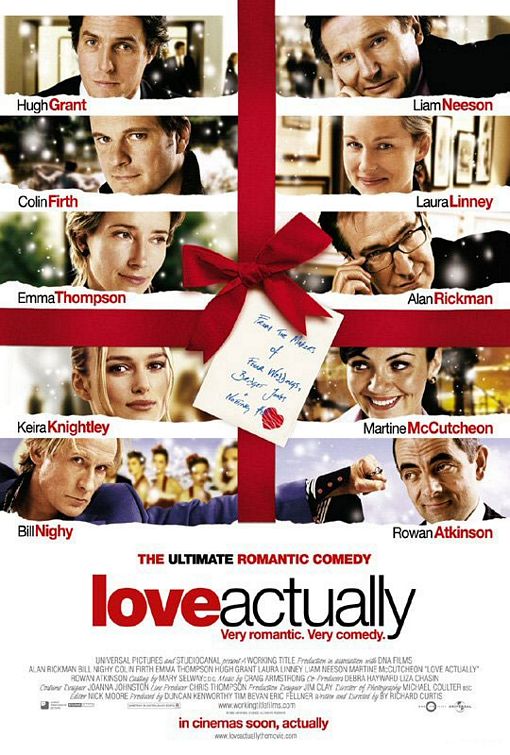
Around Christmas, most families watch “A Christmas Carol” as an annual holiday tradition. Others watch “It’s A Wonderful Life” which I still haven’t seen (don’t ask me why). For my family, their annual tradition is not “National Lampoon’s Christmas Vacation,” but a British romantic comedy called “Love Actually.” I myself prefer “Bad Santa” with Billy Bob Thornton, but I’m in the minority of those in my family who want to see it at Christmas time. Now when it comes to romantic comedies, I usually can’t stand them because they all look the same. But my parents kept begging me to watch it just like they did with “The Big Lebowski,” so I gave in and sat on one of those comfy leather chairs they have. It took me no time to be won over by what was shown onscreen, and it got off to a perfect start with Hugh Grant’s character of Prime Minister David saying:

“Whenever I get gloomy with the state of the world, I think about the arrivals gate at Heathrow Airport. General opinion is starting to make out that we live in a world of hatred and greed, but I don’t see that. It seems to me that love is everywThere. Often it’s not particularly dignified or newsworthy, but it’s always there – fathers and sons, mothers and daughters, husbands and wives, boyfriends, girlfriends, old friends. When the planes hit the Twin Towers, as far as I know none of the phone calls from the people on board weren’t messages of hate or revenge, they were all messages of love. If you look for it, I’ve got a sneaky feeling you’ll find that love actually is all around.”

Now whereas your average romantic comedy focuses on one relationship which goes from its wonderful beginning to its horrific breakup only for those same two people getting back together again, “Love Actually” instead focuses on relationships between eight couples. So basically, we get to view love in all its various stages from where it is just starting for some, become uncertain for others, remains unrequited for the unlucky few, and young love which is typically fret with wonder and the first of many heartaches. You have no clear idea where the movie is going, and this is what makes it so good. You become so enamored of these characters and what they go through, and you feel all the various emotions they are forced to deal with.

“Love Actually” was directed by Richard Curtis who brought to the screen one of the all-time great romantic comedies with “Four Weddings and a Funeral.” Like that one, he keeps a sweet and mostly innocent tone which never becomes overly manipulative as it does in American movies. Plus, he gets nothing but genuine emotions from the actors, and this is a big help to say the least. With a cast as great as this, you can always expect them to make their characters appear as real as they can be.

In describing the various stories, I think it’ll be easier to talk about my favorite moments from the film. One which comes immediately to mind is the story of Juliet (Keira Knightley) who has just married Peter (Chiwetel Ejiofor) whose best man Mark (Andrew Lincoln) videotapes their wedding. There’s one problem, all the footage Mark gets is of her. Watching Keira pick up on this and realize what it means is powerful, and Mark’s reaction to her is perfectly complemented by Dido’s “Here with Me.” Hence the pain of unrequited love comes up again, dammit.

Then you have Alan Rickman, so sublime in every role he plays, as Harry who works as a managing director of a design agency whose secretary Mia is not so subtly hitting on him. However, he is happily married, or so it seems, to Karen (Emma Thompson). Karen’s reaction to the present she didn’t expect to get is a painful one to witness. Thompson, dare we ever forget, is still an amazing actress who can move you without using words. The things people can tell about others without having to spell it out represents how good the screenplay is.

The hardest actor to watch in “Love Actually,” however, is Liam Neeson as we see his character trying to move on after the sudden death of his wife. You can’t help but think of what happened to his real-life wife Natasha Richardson when Neeson delivers a touching eulogy here to his movie wife. But getting past that, it’s fun to watch the wonderful relationship he has with his stepson Sam (Thomas Sangster) as he convinces him to chase after the girl he pines for. This might seem foolish in hindsight because we don’t want to see our kids get their hearts shattered at such a young age, but it doesn’t make sense to bottle up your feelings forever, does it?

Now while this movie has a wealth of fantastic British actors like any “Harry Potter” movie, a few Americans do find their way into the mix. The most prominent one is the always fantastic Laura Linney who portrays Sarah, a woman tending to her mentally ill brother Michael while harboring an insatiable crush on the devastatingly handsome Karl (Rodrigo Santoro). For such a well-trained stage actress, Linney has such emotionally honest moments which she handles with such delicate subtlety. Seriously, it gets to where you don’t even realize she is acting.

As for Grant, you can always count on him to bring the befuddled nervousness from “Four Weddings and a Funeral” and perform it to sheer comic perfection in a movie like this. I also loved the scene in which he puts the American President (Billy Bob Thornton) back in his place. You’d figure he would be stumbling about, but he plays the Prime Minister after all, and this is a Prime Minister who is not looking for a Bush/Blair relationship. Also, seeing him go door to door looking for the girl who strikes his fancy leads to a comic highpoint where he is forced to sing carols for young kids, and they react as if they were at a Justin Bieber concert.

But the one actor who steals the show in “Love Actually” is the hilarious Bill Nighy who plays the aging rock and roll legend Billy Mack. He is a gift for those who do not want their Christmas movie characters to be overly, if at all, sentimental. The contempt Billy has for himself as he promotes his “festering turd of a record” is somewhat softened by his inescapable sense of humor even when he blatantly acts inappropriately:

“Hiya kids. Here is an important message from your Uncle Bill. Don’t buy drugs. Become a pop star, and they give you them to you for free!”

Colin Firth’s performance as broken-hearted writer Jamie Bennett serves as a reminder of why women still swoon over him ever since he was in “Pride & Prejudice.” Watching him as he professes his love for his housemaid Aurélia (Lúcia Moniz) shows how disarmingly polite he can even while he is clearly scared to death. It’s all funny and touching at the same time. It’s also fun watching him trying to master the Portuguese language which he has the same amount of luck with as Lieutenant Uhura had trying to speak Klingon in “Star Trek VI: The Undiscovered Country.”

There are several other cute stories in “Love Actually” worth taking in like the budding relationship which builds up between John (Martin Freeman) and Judy (Joanna Page). It’s great seeing John talk about how nice it is to have someone to chat with while he and Judy are working buck naked as stand-ins for a sex scene in a movie. It gives new meaning to the term “skip the foreplay.”

Granted, some stories in “Love Actually” get shorter shrift than others, but everything seems to balance out just right. Movies these days tend to be better when they are condensed in structure, but the mix of stories on display here serves to show how powerful love can be to lift us up and tear us down in a heartbeat. I’m so glad this romantic comedy is anything but conventional. There are so many of them out there, several of them starring Katherine Heigel, that it drives me up the wall.

I do have to mention something in particular about the film; when we watch all the characters meeting up at the airport, it is interspersed with images of people meeting their family and loved ones at Heathrow Airport, so happy to see each other. It blends perfectly into the movie and makes you realize just how true to the heart “Love Actually” is in what it portrays. Having written this, I now understand and appreciate why my parents have made watching this movie an annual Christmas tradition.

I still like “Bad Santa” better though…

* * * * out of * * * *

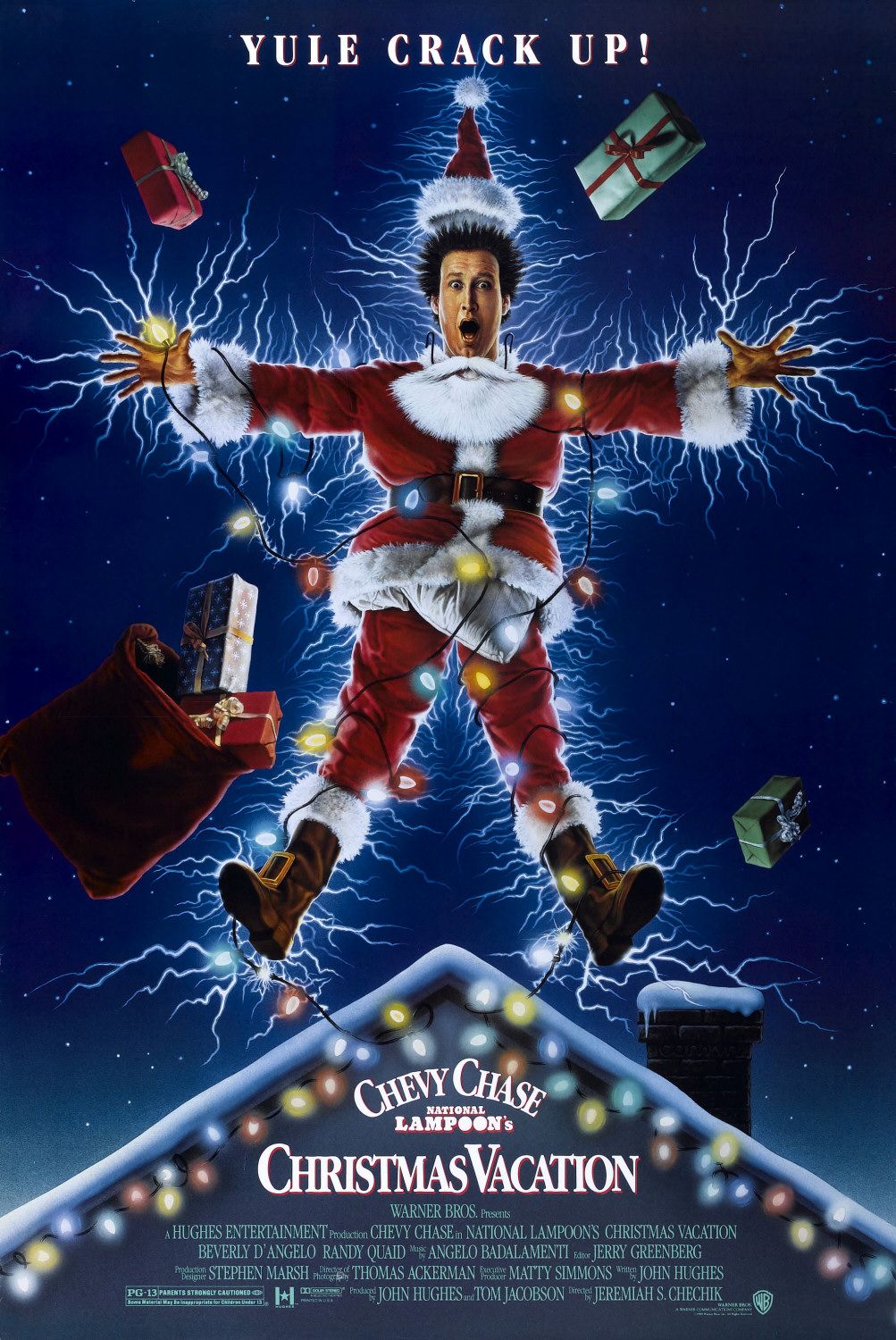
Jeremiah S. Chechik Looks Back at Making ‘National Lampoon’s Christmas Vacation’

christmas-vacation-movie-poster

Jeremiah S. Chechik was the special guest at Arclight Studios in Hollywood a few years ago when they hosted a screening of his directorial debut, “National Lampoon’s Christmas Vacation.” The third and most beloved in the “Vacation” franchise has long since become a holiday classic, and it is the Christmas film many families watch during the holiday season instead of “A Christmas Carol” and “It’s a Wonderful Life.” After the movie was over and the end credits were all done, Chechik quickly came up to the front of the audience before anyone could introduce him and said, ”I haven’t seen it since the day it opened!”

The screenplay was written by the late John Hughes and was inspired by an article he wrote for the National Lampoon Magazine called “Christmas ’59.” Chechik tipped his hand to Hughes’ wonderful writing and went on to say it was originally written as a stand-alone movie. Warner Brothers, however, read it and immediately wanted to integrate it into the “Vacation” franchise.

When asked how he got the job to direct, Chechik explained he was directing what he described as “high profile” commercials back in a time when it was unusual to go from doing commercials to directing feature films. His work eventually got him discovered by Steven Spielberg who ended up giving him an office at Amblin Entertainment. This brought a lot of awareness to his visual style, and both Chase and Hughes soon became adamant he would be the one to direct the next “Vacation” movie.

With this being his first film, Chechik said he was determined not to back down on actors who wanted to exert their power over him. While it’s tempting to think he and Chase didn’t get along as Chase’s reputation for being hard to work will never disappear, Chechik said they actually had a great working relationship on set. This came after he admitted to not being a big fan of Chase’s comedy as he described it as being “very broad.” Chechik described Chase as having a very strong point of view, a very clear intention of what the movie is about, and they worked together to find things which worked.

Chechik did say, however, that he and Beverly D’Angelo had many arguments, some of which he described as being “very heated,” on set. Still, he said all the bad blood between them is now water under the bridge.

“Christmas Vacation’s” budget was $27 million, and its shooting schedule lasted for 60 days. Much of the movie was shot in Breckinridge, Colorado while other scenes were shot the following summer at Warner Brothers in Burbank, California. Chechik was happy to say Hughes had his back throughout the whole production. When the movie went through previews, the studio heads pressured him to cut the scene where the cat got electrocuted. Chechik claimed he resisted the pressure and kept it in because he thought it was funny (and it was) and that he was more of a dog person anyway. The test audiences also loved the scene, and the studio heads didn’t bother keeping this moment out of the movie’s trailer.

Chechik said “Christmas Vacation” worked so well because we truly cared about Clark Griswold and what he went through. The mood of certain scenes was very important to him, especially the one with Chase in the attic where he watched home movies of past Christmases with tears filling his eyes. Looking at this made Chechik point out the way comedy should be done in movies:

“Funny beats funny,” he said. “If everyone thought the set pieces were funny but they didn’t care about the main character, then the movie won’t work.”

With the squirrel scene, he said a trained squirrel was brought onto the set and there was also a trainer there for the dog featured in it as well. Chechik said the filmmakers “storyboarded the hell out of it” and were eager to start filming it, but when he arrived on set that day he was confronted with the grim faces of the trainers and line producers. After shuffling around for a bit, they informed him the squirrel had died. The squirrel trainer went on to say they don’t live for very long anyway as if that could have possibly softened the blow.

So, they went out and got another squirrel for the scene which they ended up drawing out onto the set with food. From this, Chechik said he learned how to roll with things and use improvisation. About every scene in “Christmas Vacation” had a certain amount of improvisation in it, he pointed out.

As for the most difficult scene to shoot, Chechik said it was the dinner table scene where the whole family begins their Christmas Eve celebration. He did not hesitate in telling everyone that having 9 to 11 actors in a scene is a really bad idea. The blocking proved to be very complicated, and it became such a nightmare as it took days and days for him to get the scene right.

Here are some other “Christmas Vacation” trivia Chechik let us know about:

  • In the scene with the two granddads snoring in front of the television, the actors playing those roles really were fast asleep.
  • Mae Questal, who played Aunt Bethany, was the voice of Betty Boop.
  • Chevy’s angry rant on his boss was done exactly as it was written in the screenplay.

It was really nice of Chechik to come out and talk with us about “Christmas Vacation,” a movie he succeeded in making a timeless classic and, as he put it, “very postcardy.” When asked why he hasn’t seen the film since it first came out, he said he just wanted to let it go and let it live. It certainly has had a long life since 1989, and the series continued on with “Vegas Vacation” and “Vacation” which starred Ed Helms and Christina Applegate. In response to one audience member who said his family watches it every year, Chechik replied, “I like your family!”

Save

Godzilla (2014)

godzilla-2014-poster

The stench which emanated from the sheer awfulness of Roland Emmerich’s “Godzilla” has haunted me ever since I saw it on the big screen in 1998. For a time, it dampened my spirits in terms of where movies were headed as I was afraid many more of them would be dumbed down like Emmerich’s movie was. Had it been an even bigger hit, I feared more summer blockbusters would look exactly like it; filled with lame one-dimensional characters and special effects which look no different from the video games we play at home. But in the end, it was so critically reviled that even Toho, the company that owns Godzilla, looked at Emmerich’s version of the monster as a separate, stand-alone character whom they renamed Zilla. It was if they were saying, “Oh no, that was so not Godzilla. That was a cousin or a step child or maybe the product of a one-night stand.”

But now that stench has vanished as Gareth Edwards has given us his version of “Godzilla,” and it makes for one of the most entertaining movies of the 2014 summer movie season. Instead of having this enormous Japanese monster chase after characters who look like they were part of a rejected sitcom pilot, he stays true to the style of the Toho series of Godzilla films and manages to weave in some commentary about nuclear power. Just as the original “Godzilla” served as a metaphor for Hiroshima, this one doesn’t dare hide away from what happened in Fukushima where nuclear accidents occurred after the massive earthquake and tsunami which occurred there.

The movie starts off with the terrifying destruction of a nuclear power plant, one which ends up dividing a father and his son. We then move to several years later when Ford Brody (Aaron Taylor-Johnson), an explosive ordnance disposal technician in the US Navy, comes home to his wife Elle (Elizabeth Olsen) and their son after a long tour of duty. Their reunion, however, is cut short as Ford gets word his father, nuclear physicist Joe Brody (Bryan Cranston), has once again been arrested in Japan for trespassing into areas blocked off to the general public as the area surrounding the power plant isn’t all that different from Chernobyl when it suffered a meltdown.

Joe is still convinced the power plant accident was really a cover up for something, and he and Ford come to discover what’s left of it has been converted into a laboratory of sorts. Scientists led by Dr. Ishiro Serizawa (Ken Watanabe) and Dr. Vivienne Graham (Sally Hawkins) reveal they have been housing a MUTO (Massive Unidentified Terrestrial Organism) and are trying to keep it contained by giving it doses of radiation. But, of course, all hell breaks loose when the MUTO breaks free of its captivity and heads out to sea, and it is then we learn another MUTO (this one a female) has been held in the United States and has also escaped and quickly laid waste to Las Vegas. Like Natasha Henstridge’s character in “Species,” she is looking to start a big family with offspring which will surely destroy all of humanity, and it’s only a matter of time before she finds her MUTO mate. Clearly, safe sex is not on their agenda.

This is where the iconic Godzilla comes in. Now in the past, this gigantic creature has been portrayed as an enemy to all of humanity and as an antihero who looks to take down any other monster who foolishly thinks it can defeat him. But in Edwards’ movie, Godzilla is really the good guy who, as Dr. Serizawa puts it, is here to “restore balance” to the world, and he doesn’t even bother the battleships which sail alongside him as he swims from one country to the next. We all know Godzilla will end up destroying a lot of expensive real estate which will cause many insurance companies to go bankrupt, but we’re still on the monster’s side as we know the military won’t have enough firepower to bring down the MUTOs.

Edwards takes his sweet time in revealing Godzilla to the audience, and we don’t really get a good look at him until almost an hour into the movie. When he does finally appear onscreen and let out the biggest of roars anyone has ever heard, the audience I saw this movie with broke into a tremendous applause. This is the fiercest Godzilla has looked in many years, and the way he towers over the tallest of buildings had me in awe. This is the way Godzilla should look and feel.

One of the many problems I had with the 1998 “Godzilla” is it never felt like I was watching a real monster on the big screen. It felt more like I was watching a big special effect to where the creature didn’t even fill the least bit threatening. But in 2014’s “Godzilla,” the creature looks and feels real to where I kept praying the human characters would keep themselves from standing underneath its feet. The thought of being crushed by a creature that big is horrifying.

As for “Godzilla’s” human element, it’s not altogether strong, but I still liked how the characters came across as relatable even if they were at times clichéd. I also have to give the screenwriters credit as the movie starts as one thing but surprisingly turns into something else. Just when I thought I knew what kind of movie this “Godzilla” was going to be, it continued to surprise me as it went along. Yes, we all know how things will end, but getting there proved to be more fun than I expected.

It also helps there is a terrific cast of actors to keep us emotionally involved in the characters before and after Godzilla makes his grand entrance. You can never go wrong with Bryan Cranston whether it’s “Breaking Bad” or anything else, and he makes his character very empathetic when he could have been easily laughable. As for Aaron Taylor-Johnson, I almost didn’t recognize him after getting so used to how he looked in those “Kick Ass” movies, and he does good work portraying the typical heroic military character we always see in “Godzilla” movies. Ken Watanabe remains a tremendously gifted actor, and even though I thought stared in horror one too many times in this movie, he is a very welcome addition to this cast. And then there’s David Strathairn who plays Admiral William Stenz, and he can always be counted on to give the military leader the gravitas and humanity a character like this deserves.

As for the female characters, their roles are a bit underwritten and I didn’t get to see as much of them as I would have liked. Still, you have actresses like Elizabeth Olsen, Juliette Binoche and Sally Hawkins making them into memorable characters when they could have been ones who were easily forgettable.

This “Godzilla” does have its problems, and there are times I wished Edwards and company had injected just a little more humor into the proceedings. Also, the big fight between Godzilla and the MUTOs never seems to come soon enough. There’s a moment where it looks like the fight will begin, but then a door closes on the characters and on our view of the monsters, and that was really frustrating. The human characters may have wanted the door shut, but everyone in the audience was clamoring for it stay open so we could see one enormous mutated creature beat the crap out of another. And yes, there probably are some plot holes and gaps in logic in the story, but I really didn’t care. You don’t always go to these movies expecting a whole lot of logic anyway.

What makes this “Godzilla” work is how it is clearly made by filmmakers who have a great love of monster movies. Edwards, whose previous directorial effort was British science fiction film “Monsters,” has talked about just how much he loves those kinds of movies, and he does an excellent job of making Godzilla a truly terrifying force of nature. After being absent from the big screen for over a decade, it is great to see this iconic monster make such a tremendous comeback.

I also got to say watching “Godzilla” makes me really happy that I do not work for an insurance company. Seeing all those destroyed buildings and roads, I can see claim adjustors going nuts as they field one phone call after another regarding totaled Hondas, decimated condos and bridges which now really lead to nowhere because they’ve been destroyed. You can bet no one’s going to take any guff from someone who tells them their insurance policy doesn’t cover attacks from giant mutated monsters!

* * * out of * * * *

Save

The People vs. George Lucas

the-people-vs-george-lucas-poster

It’s fascinating to see the trajectory George Lucas’ career has taken in the arena of public opinion. Here is a man who for years was beloved by everyone on the planet for creating “Star Wars,” who beat the Hollywood studios at their own game and opened us up to a world of tremendous and endless imagination. Then came the “special editions” of the original “Star Wars” trilogy which served to fund the prequels, and then the prequels followed shortly afterward, and he went from being seen as a demigod to being treated like a pariah of the worst kind. Our love for Lucas has long since turned into a vicious hatred which had us out for blood, but has he really become just another greedy CEO, or are we all just being a bunch of ungrateful bastards?

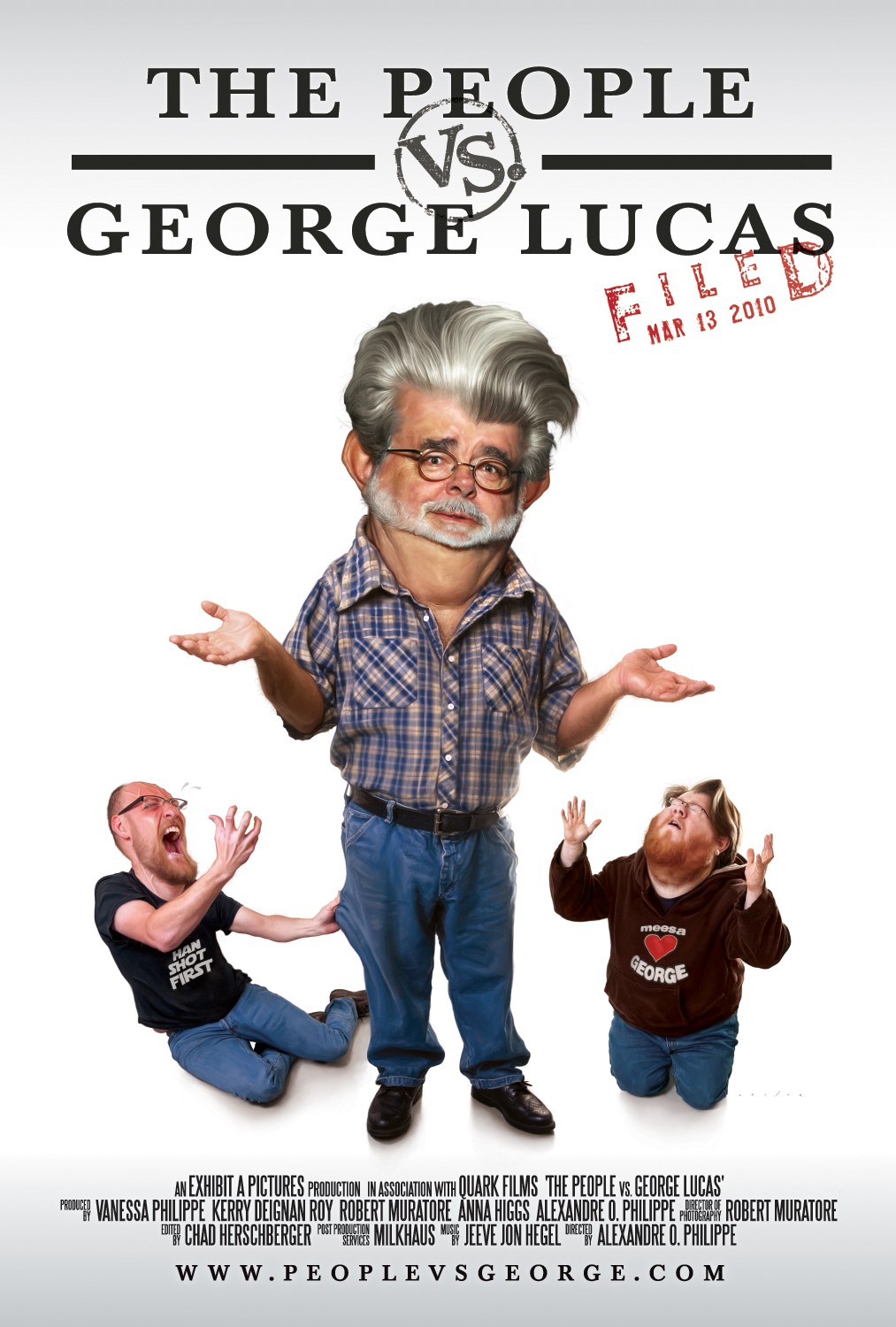
Those issues are examined in Alexandre O. Philippe’s highly entertaining documentary, “The People vs. George Lucas.” After all these years we finally get to see the filmmaker have his day in court. Granted, he only appears in past footage of interviews and behind the scenes stuff, but Philippe does make it seem like he’s giving his side of the story here.

This could have been just a one-sided portrait of Lucas and the venom he has inadvertently inspired in the most devoted fans, but what’s great about this documentary is how it gives us a multi-faceted view of him. We see Lucas’ humble beginnings and how he developed a love for film and a deep hatred for the corporations which took over Hollywood. We feel for him when he talks about how upset he was at film executives who re-cut “THX-1138” and “American Graffiti,” and we find ourselves rooting for him to gain his independence from the studio system forever. The fact he accomplished this through getting exclusive merchandise rights on “Star Wars” was a kick because no studio will ever let another filmmaker get away with such a thing ever again.

Then we see how Lucas, through gaining his independence, became the very thing he fought against. There’s a great interview with Francis Ford Coppola who talks about the filmmaker Lucas could have been and of how many great films he had inside of him, but the success of “Star Wars” ended up enslaving him for life. Lucas has said, with the conclusion of the prequel trilogy, he was going to make the smaller and more experimental films he always wanted to make, but he soon found himself drawn back to the galaxy far, far away when it became possible to do 3D versions of each “Star Wars” movie.

Philippe also shows us how Lucas is full of contradictions. On one hand, this is a filmmaker who fought against the colorization of black-and-white movies, and yet he will do nothing to save the original versions of the first “Star Wars” trilogy. Many feel like he totally ignored the fans who helped build “Star Wars” into a mighty franchise by giving them “The Phantom Menace” and Jar Jar Binks, but even he agreed with them that “The Star Wars Christmas Special” was a huge mistake.

By presenting all the different sides of Lucas, we don’t come out of this documentary loving or hating him. In the end, he’s human like the rest of us, prone to making inescapable mistakes like anybody else. While many despise him for how the “Star Wars” prequels turned out or for what he did to “Indiana Jones and the Kingdom of the Crystal Skull,” his never-ending imagination has created splendid worlds we would all love to be a part of.

One of the great things about “The People vs. George Lucas” is watching the fan made films and parodies which “Star Wars” inspired. Seeing filmmakers use stop motion animation, anime and other methods is a lot of fun to take in. Among the best bits were “Troops” which is a spoof of the TV show “Cops” but with Storm Troopers, and the “Misery” parody which has Annie Wilkes making the injured George Lucas rewrite “Revenge of the Sith” the way she wants to see it. Why she didn’t make him rewrite “The Phantom Menace” remains a mystery.

In many ways, the “Star Wars” prequels and even the last “Indiana Jones” movie were victims of our intense anticipation for them. They represented a way to once again experience the things in our childhood which made us so happy to be alive, and we would give anything to feel like a kid again when it comes to movies. But in the end, our excitement for these movies was undone not because we expected more from them, but because our anticipation proved to be more exciting than the finished product. To put it in another way, here’s a quote from Lewis Black:

“There is no better moment than this moment when we’re anticipating the actual moment itself. All of the moments that lead up to the actual moment are truly the best moments. Those are the moments that are filled with good times. Those are the moments in which you are able to think that it is going to be perfect when the moment actually happens. But, the moment is reality and reality always kind of sucks!”

The anticipation for “The Phantom Menace” was higher than any other movie before it, and there was no way it could have completely satisfied everyone. In retrospect, our excitement for the prequels proved to be far more enthralling than what ended up on the silver screen because we wanted them to be one thing, and Lucas ended up going against our expectations whether he intended to or not.

What “The People vs. George Lucas” seems to suggest in the end is that we should be thankful he continued with “Star Wars” at all. It also suggests that, despite our utter disappointment at the prequels, he still gave us a wealth of imagination we can still be deeply inspired by. Had this been just a documentary dedicated to bashing Lucas to within an inch of his life, it would have become tiresome and boring very quickly. But “The People vs. George Lucas” is great because it gives us the different dimensions of the man and shows us how the ways he fought the system ended up working against him in later years. This is a great documentary that will appeal to fans and non-fans of “Star Wars,” and that’s assuming there are any non-“Star Wars” fans on this planet or others.

* * * * out of * * * *


<p><a href=”https://vimeo.com/14623364″>The People vs. George Lucas – Trailer #3</a> from <a href=”https://vimeo.com/user2655015″>The People vs. George Lucas</a> on <a href=”https://vimeo.com”>Vimeo</a&gt;.</p>

Elstree 1976

elstree-1976-poster

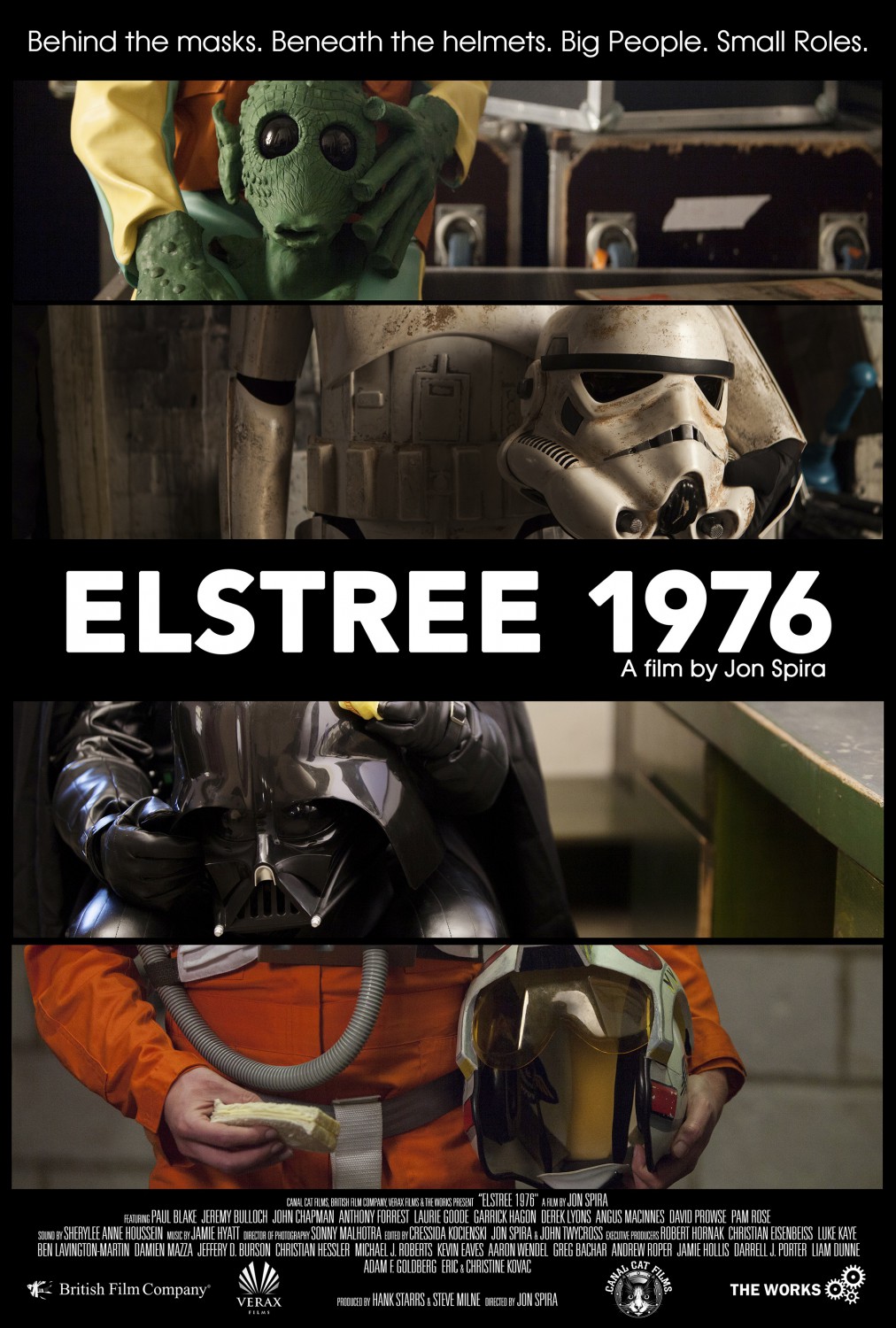
There have been countless documentaries on the “Star Wars” movies, most of which feature interviews with actors who will forever be associated with the famous characters they first brought to the screen many years ago in a galaxy far, far away. But with Jon Spira’s documentary, “Elstree 1976,” we finally get to meet the supporting actors who were either hiding behind a stormtrooper mask or were on the screen for only mere seconds. Regardless of how small their roles were, they got to be part of a movie phenomenon which remains as popular as ever, and this documentary allows them to tell their stories and get out of the shadows for a change.

The documentary’s title refers to Elstree Studios where “Star Wars Episode IV: A New Hope” was filmed back in 1976. Spira takes his time to talk with 10 actors who were cast in various roles in the classic movie, and any fan of George Lucas’ space opera will find their conversations fascinating. Some of these actors played characters who are fan favorites, but we never got to see them with their masks off. Others played roles where, if you blinked, you will miss them, but Spira does take the time to capture their moments in a near-freeze frame to show their big moments for everyone to see.

Perhaps the best way to approach “Elstree 1976” is to not go in expecting a “Star Wars” documentary. Yes, “Star Wars” plays a big part here, but it’s not really the point. It’s about working class actors who don’t have the same name recognition as Harrison Ford, Carrie Fisher or Mark Hamill, and of how they managed to carve a career for themselves in a business where only a tiny few can possibly make a living. The fact they were in a “Star Wars” movie, however, has come to define their careers in more ways than one. There are scenes from “A New Hope” here as well as ones from other movies, but John Williams’ classic music is never heard.

One of the most fascinating moments comes early on as each actor discusses how they got cast in “A New Hope” and of how none of them had any idea of what they were about to be a part of. For all they knew, they were acting in some TV film or Grade Z science fiction movie which would be lucky to get any kind of distribution. While any of us would have killed to be on the set of this movie like these actors were, their reactions are easy to understand as they had yet to see the impact this one movie would have on generations of moviegoers. David Prowse, who inhabited the costume of Darth Vader, even remarked, “Maybe it won’t be as terrible as it promised to be.”

Prowse is one of the better-known actors featured here, and we learn of how he started off his career as a bodybuilder but was told he wouldn’t win any competitions because of his “ugly feet.” He would later go on to work with filmmakers like Stanley Kubrick who cast him as a bodyguard in “A Clockwork Orange,” and he played the Black Knight in Terry Gilliam’s “Jabberwocky.” But the role he is proudest of, even more so than Darth Vader, is that of the Green Cross Code man, a character used in British road safety television commercials. At least you got to see his face in those.

If there’s anything disappointing about “Elstree 1976,” it’s that I came out of it wanting to know more about what went on during the making of “A New Hope.” Again, this is not meant to be a “Star Wars” documentary, but the fan inside of me was eager to hear more behind the scenes stories of what went on. Indeed, there are a few told here such as from one actor who didn’t realize he had just asked Lucas to get him a cup of coffee, and of how the stormtroopers kept falling over one another on the set. In terms of introducing the actors to us, their names are shown next to the action figures of the characters they played, but it is hard to keep up with who is who after a while.

The last half deals with these actors’ lives after “Star Wars” as some went on to act in other movies while others found another career path for themselves. Whatever the case, many of them have gone on the convention circuit to talk with fans who want to know every single detail about the making of one of their all-time favorite movies. Just being in any “Star Wars” movie has had a major impact on their lives, but while some fans love meeting these people, others see them as nothing more than “bit part actors” which is a bit dispiriting.

But the real strength of “Elstree 1976” comes in how Spira shows us what the life of a working-class actor is like, and it’s a nice gesture how he brings these 10 people out of the shadows to give them the recognition they have long deserved. Whether they had big scenes, small scenes or scenes which sadly got left on the cutting room floor, “Star Wars” impacted their lives and for the better in many ways. They may never get the fanfare of the bigger name actors, but they still get to put this movie on their resumes which must have made a big difference.

Coming out of “Elstree 1976,” I felt like the documentary could have gone deeper in certain areas and revealed more, but we have here is still entertaining and a must for “Star Wars” fans as they will want to know about everything connected to this cinematic universe. And this is regardless of the fact it does commit the one unforgivable sin no “Star Wars” related movie has any right to make: it shows Greedo shooting first. Damn you Lucas!

* * * out of * * * *


Rogue One: A Star Wars Story

rogue-one-a-star-wars-story-poster

I went into “Rogue One: A Star Wars Story” with the hope it would be a true spinoff and not just a “Star Wars” sequel in disguise. This is the first in a series of “Star Wars” anthology movies which are meant to exist outside the main saga we have all grown up on. While “The Force Awakens” was heavy with nostalgia, this can’t be the case with “Rogue One.” Otherwise, what would be the point of making this one other than to make a gazillion dollars and sell a lot of toys?

Well, “Rogue One” proves to be an excellent “Star Wars” movie as it breaks new ground in the infinitely popular franchise. Set before the events of “Episode IV: A New Hope,” it follows a band of rebels as they attempt to steal the design plans for the just-completed Death Star, something which might be mistaken for a moon but is actually a space station capable of destroying planets. While we go into this movie knowing they will succeed in getting these plans to the Rebel Alliance, we have yet to see how they will pull this off and how bad the odds are, something our heroes never want to be told about.

The main character of “Rogue One” is Jyn Erso (Felicity Jones), and we meet her as a child when she is separated from her mother and father. Her father, research scientist Galen Erso (Mads Mikkelsen), is one of the main designers of the Death Star, and as we catch up with Jyn years later when this deadly space station has finally reached its final stage of completion. Along with a ragged platoon which includes intelligence officer Cassian Andor (Diego Luna), blind warrior and die hard believer in the Force Chirrut Îmwe (Donnie Yen), warrior and mercenary Baze Malbus (Jiang Wen), and a Rebel-owned Imperial enforcer droid named K-2SO (voiced by Alan Tudyk) whose sarcasm knows no bounds.

One thing which really struck me about this “Star Wars” spin-off is how many Jedis it has in its character roster, which is just one. Darth Vader shows up for a spell, but he is too enamored with the dark side to help our heroes in any way, shape or form. Essentially, this group of rebels are on their own. The force is strong with them, but they are not as desirable to the Rebel Alliance as Luke Skywalker or Princess Leia. For the Rebels, they are basically a means to an end.

I liked how “Rogue One” focused on the power struggles which take place within the Empire and the Rebel Alliance. Both factions deal with inner turmoil as they do what is necessary to gain the upper hand in a galactic war bound to have many casualties. Even the Rebels come across as dubious as they are willing to sacrifice their own to achieve victory. With the Empire, the power struggle is all the more intense as Director of Advanced Weapons Research Orson Krennic (Ben Mendelsohn) looks to claim all the credit for the Death Star even as Grand Moff Tarkin (Peter Cushing, brought back to life through some incredible CGI) is not about to let that happen.

The movie also deals strongly with the themes of sacrifice and courage as our main characters fight for a cause so much bigger than themselves. Seeing them do what is necessary to achieve peace in the galaxy actually hit me harder on an emotional level than I expected, and it made “Rogue One” all the more exciting and invigorating to sit through. Granted, seeing what happens to these characters might make it seem like an emotional endurance test for the youngest audience members, but many “Star Wars” fans will be quick to appreciate what Jyn Erso and company are willing to do for the sake of so many others.

Directing “Rogue One” is Gareth Edwards who previously gave us “Godzilla,” the good one, a few years back. His direction of this spin-off feels very confident as he gives fans a good dose of what they expect from a “Star Wars” movie, but he also gives it a gritty feel none of the other episodes had. There are many sweeping shots of grandeur throughout “Rogue One,” thanks to Director of Photography Greig Fraser, as we go from one planet to the next, but this feels a lot more down and dirty as these characters do not live in a world of glamour and never will.

It’s also refreshing to see a “Star Wars” movie with a female lead as comic book movies have yet to offer the same thing. Felicity Jones, so good in “The Theory of Everything,” turns in a strong performance as Jyn Erso, and she makes the character a formidable warrior even as she sneaks around dozens of stormtroopers who would be quick to take her down if they ever discover her true identity. There are also some nice supporting turns by Diego Luna whose Cassian Andor finds his conscience getting in the way of his orders, Mads Mikkelsen who plays a scientist caught between duty and family, Ben Mendelsohn whose villainous character is ever so ruthless and eager to climb up the Empire food chain of power, and Donnie Yen is especially good as a blind warrior whose faith in the force is never misplaced.

It’s also great to see Forest Whitaker on board here as Saw Gerrera, a Clone Wars veteran who raised Jyn from a girl into a fighter. I do have to say, however, that watching him breathe through his oxygen mask quickly reminded me of Dennis Hopper’s character from “Blue Velvet.” I don’t know if it was the intention of the director or screenwriters to draw inspiration from Frank Booth, but it definitely crossed my mind every time I saw Whitaker onscreen.

“Rogue One” also contains some eerily effective CGI which allowed the filmmakers to bring actors like Peter Cushing back to life in a way which feels all too real. Cushing has been dead for two decades, but here he looks like he just rose from the grave. On top of Jon Favreau’s “The Jungle Book” which also contained a number of photorealistic characters, it makes me worry how soon actors could be replaced with CGI creations. Here’s hoping it’s not for a very, very, very long time.

“Rogue One” is by no means perfect as the movie rushes us from one planet to the next to where we have a hard time keeping up with all the places we have been to, but I admired what the filmmakers were able to accomplish. They have succeeded in giving us a fresh take on a franchise which has lived on from one decade to the next, and it bodes well for future installments like “Episode VIII” and the Han Solo movie as well. I very much enjoyed it, and I have no doubt the fans will as well as there are many easter eggs to discover. Plus, with us all living in such a volatile political climate which begs for a rebellion of some sort, this movie could not have come out at a better time. Timing is everything, and the time to rebel against our oppressors is at hand.

“Rogue One” definitely ensures that the “Star Wars” franchise will live long and prosper. Yes, that’s a saying from “Star Trek,” but it feels very appropriate to use here.

* * * ½ out of * * * *