WRITER’S NOTE: This article was written back in 2010 when this controversy occurred. I am publishing it here because I loved writing it, and I thought I had lost this article forever until recently.
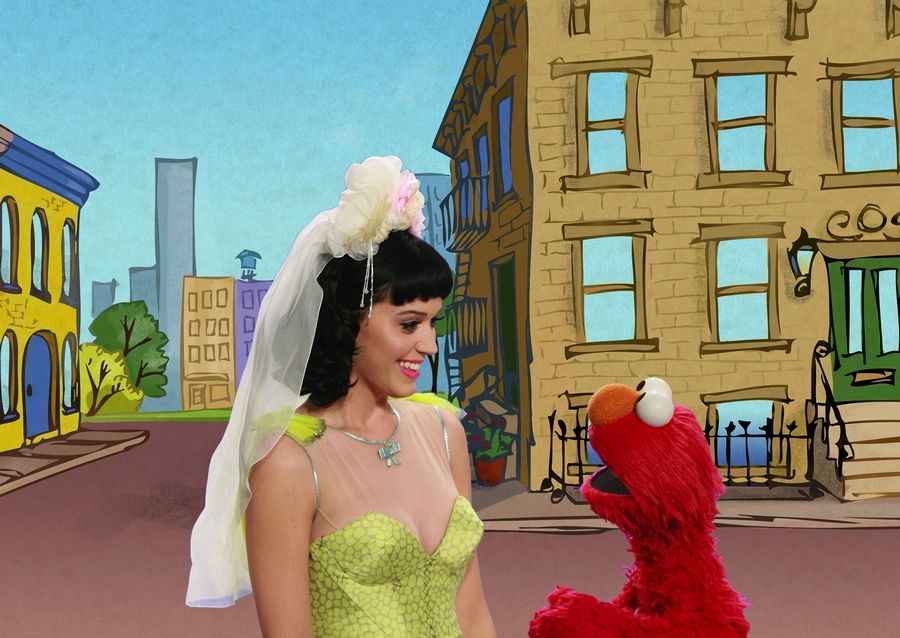
This past week, the producers at “Sesame Street” decided to cut out Katy Perry’s scene with Elmo where she sang a version of her song “Hot N Cold” which was easily more family friendly than the original. However, it appears a number of parents spent more time looking at Katy’s cleavage than they did looking at her playing sweet with Elmo. As a result, they thought their kids would be staring at her breasts for far too long as well, and they demanded Katy be censored for the show.
Now I did take the time to watch the “Sesame Street” clip with Katy and Elmo on YouTube where it has found an even wider audience than it would have on PBS. By taking the segment out, it got more attention than it would have received had it stayed in. Parents may think they are protecting their kids, but I honestly think they are overreacting to this. Their demands to have Ms. Perry censored on “Sesame Street” has them pouring gasoline on an already raging fire without even realizing it. It was a sweet moment and a tolerable one for those who can stand Katy Perry’s music.
What she wore in her scene with Elmo was nowhere as risqué as some of the stuff she wore for her Rolling Stone photo shoot. Now those photos were very hot, and I enjoyed those in ways I’d rather not get too in depth about here.
When I was four or five years old watching “Sesame Street” and reveling in the antics of Kermit the Frog along with Ernie and Bert among others, I was never really focused on women’s’ breasts. I mean, if you ever saw a female celebrity making out with Kermit or perhaps Big Bird at that age, you would be saying, “EEEEEWWWWWWW!!!!!!!” Not only that, you would be saying it way too loudly.
It would take a lot to corrupt our fragile little minds back then. In our preschool days, kissing was just gross! We were not in a hurry to discover the opposite sex, and we stayed away from them and hung out with our own gender. No woman with breasts the size of basketballs was going to fill us with thoughts of sex back then. We all had to wait for puberty for that to take effect, and by then we weren’t even watching “Sesame Street!”
Seriously, this could have been much worse; Katy could have been wearing more than a bra and panties while chasing after Elmo. She could have taught this red creature who likes to be tickled endlessly the joys of masturbation, but no one involved with one of Jim Henson’s many creations would have dared to allow such a thing to happen. Last I checked, they went to Katy instead of her fiancé Russell Brand of “Forgetting Sarah Marshall” and “Get Him to The Greek” fame. How horrifying would it have been to watch Russell teaching Elmo, or perhaps Grover or Cookie Monster, how to shoot heroin into their veins? Granted, they are hand puppets, but even they could get some rubber tubing to wrap around their furry little arms!
What did parents really think Elmo would do with Katy Perry? Did they think she would teach Elmo the joys of breast feeding?! Can you imagine that high pitched voiced character singing a slightly altered version of the song we all heard from Kelis?
“Oh, Elmo loves Katy’s milkshake!
Damn right, it’s better than Ernie’s!
Damn right, it’s better than Bert’s!
Damn right, it’s better than Big Bird’s!
I could teach you, but…”
Even if Elmo loves his milkshake as much as he loves being tickled, I somehow doubt he will be sharing this with your children. Was anyone ever making complaints when Dolly Parton appeared on “Sesame Street?”
So far, Perry has taken this all-in stride as she has tweeted on Twitter how she can “totally tell you how to get to Sesame Street,” and she knows no one can deny that she and Elmo did hang out in front of television cameras. Of course, she made light of the moment on the season premiere of “Saturday Night Live” when she appeared on the “Bronx Beat” sketch with Amy Poehler and Maya Rudolph while wearing a very tight shirt with Elmo’s face on it which made her breasts all the more noticeable. Somewhere, Mr. Roger’s is indulging in a good dose of black humor he could never practice on PBS by asking his audience:
“Can you say double-D? I knew you could!”
Look folks, Katy Perry has a pair of breasts just like all other women. Stop trying to hide it because your kids have gotten to experience what they offer not too long after they appeared out of the womb. Whether or not they remember if they were breast fed or not is a whole other story. There are so many other things you could worry about instead of this. What about Newt Gingrich coming on “The Muppet Show” to tell Sam the American Eagle of how important the Bush Tax Cuts are, especially for the wealthy? Do you think you would ever see Marilyn Manson singing his version of “Rubber Ducky” or “The Itsy-Bitsy Spider” to Ernie or Oscar the Grouch? How about Nine Inch Nails singing “Closer” with Big Bird and Mr. Snuffleupagus? Kids are too busy learning the alphabet than in observing what Katy wore, so stop worrying, okay?! Elmo wants her back on the show, and are you going to deny him the chance to laugh happily with Ms. Perry the way he does when you tickle him mercilessly?
What life has taught me is that doing a series finale to an acclaimed television show, let alone any television show, can be a truly thankless task. Wrapping up everything in a nice bow after years of following a group of characters throughout their lives typically leaves fans infinitely frustrated as they always expect something far more epic than they are given. Seriously, just ask the fans of “Game of Thrones” and “Dexter,” as the utter disappointment from those finales remains never ending. With “Breaking Bad,” however, Vince Gilligan managed to wrap up Walter White’s (Bryan Cranston) criminal saga in a way which seemed perfect and totally fulfilling to everyone. No need to go any further with the story, right?
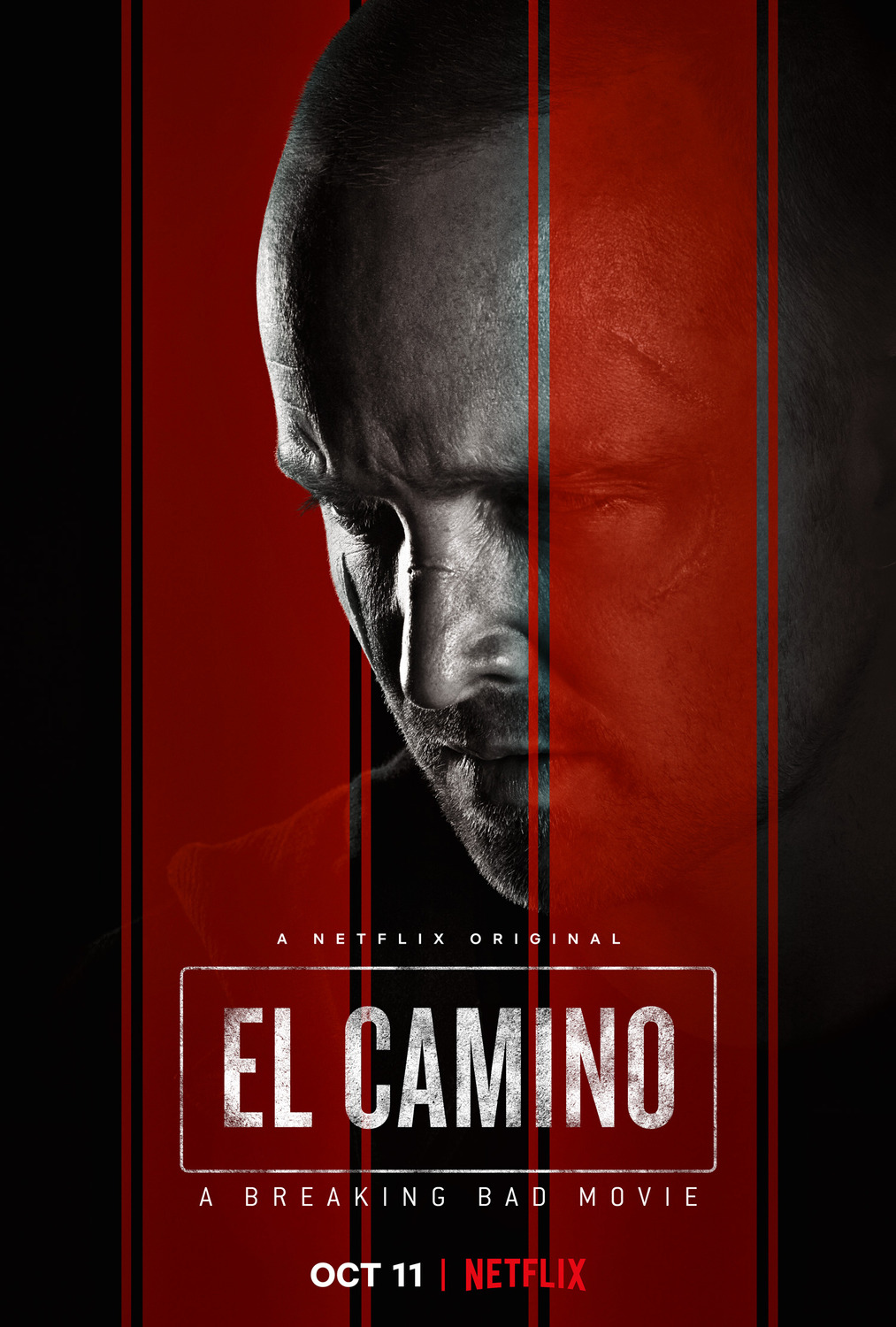
Well, Gilligan has continued to tap into the “Breaking Bad” well with “Better Call Saul” which started off as a prequel, but which may eventually turn into a sequel. And now Netflix has just dropped “El Camino: A Breaking Bad Movie” which follows the show’s other main character, Jesse Pinkman, who is once again played by Aaron Paul. It turns out there is a bit more story than what we were led to believe, and while the end result might seem unnecessary to some, it results in an exciting motion picture which proves to be as good as the average “Breaking Bad” episode.
“El Camino” starts at the exact point “Breaking Bad” ended, with Jesse driving like hell in the car this movie takes its title from. While reveling in having escaped from his cruel and sadistic Neo-Nazi captors, he also realizes he is not out of the woods just yet as the police are looking for him here, there and everywhere. After meeting up with his friends Skinny Pete (Charles Baker) and Badger (Matt Jones) to get some rest and gather his thoughts, he plots his next move which will hopefully lead him away from the long arm of the law.
The movie’s opening scene serves as a flashback to what is about to transpire, and it sets down the gauntlet Jesse wonders if he can pull off. During a friendly conversation with Mike Ehrmantraut (Jonathan Banks), Jesse asks him where he will go once he gets out of the drug dealing business. Mike says he will go to Alaska as he sees it as “the final frontier” and a place where one can do anything. Jesse sees the appeal to Mike’s plan, but he also wonders if he can get out of the drug game and manage to make things right for those he has hurt or wronged. Mike tells him he can never make things right, but with this scene, Gilligan leaves us wondering if Jesse can do both as the look on his face shows a wealth of guilt which needs to be dealt with.
There have been countless movies which deal with characters who are caught up in the drug trade and looking to retire from it, or they are trying to atone for a brutal past which continues to hover over them despite their best efforts to go straight. The ones which quickly come to mind include “Carlito’s Way” and “Light Sleeper,” and those two had their main characters facing consequences which karma was not done with them yet. Gilligan plays around with our knowledge of these movies as we wonder if Jesse will ever be able to escape his crimes and atone for them in some way, or if karma has something in store for him which he cannot see coming.
Having a “Breaking Bad” movie centered around Jesse Pinkman feels more than appropriate as Paul has proven to be every bit the actor Cranston had been on the show. Jesse was not even supposed to survive the first season, and it is a testament to Paul’s portrayal that he made it all the way to the end as he gave us a character who was not necessarily a bad person, but one who had made foolish decisions in life and was now being thrust into devilish situations he never intended to get into. When we meet up with Jesse again in “El Camino,” he is a broken man, picking up the pieces of a life which has been forever shattered while living in fear of being apprehended by the law. And in today’s technologically driven society, one can only hide from the law for so long, if at all.
Paul is outstanding as always as he continues to take Jesse from one extreme to the next. His attempts to escape his scary predicament result in him enduring a tremendous level of unease and anxiety as he puts in Jesse’s shoes to where we feel as helpless as he does. The world is on his tail, and one can only be so lucky in escaping their past deeds. Paul is superb in portraying Jesse’s mindset without ever having to overdo it, and his performance is another example of an actor who inhabits their character instead of acting it.
Gilligan returns to write and direct “El Camino,” and he has melded it into a non-linear journey as it shifts from past to present. What results adds more weight to what we have already seen previously, and it makes Jesse’s predicament all the rawer and more unsettling. He also reminds you of how, when it comes to “Breaking Bad,” you need to expect the unexpected. The show was always about playing with your expectations to where you had no idea of what would come next. This movie keeps this tradition going as Jesse tries various methods to make it out of New Mexico in one piece even as some nasty road bumps are constantly being placed in his path.
Now I am writing this review of “El Camino” some time after its release, so many of you may already know about the various cameos by “Breaking Bad” characters who appear here. All the same, I will not spoil any of them for you as audiences deserve to discover them on their own. Still, I have to point out the one made by Robert Forster as the actor, in a sad and cruel irony, passed away on the day this movie was released. Forster returns as Ed Galbraith, the vacuum cleaner salesman who also relocates people who are running from the law and gives them new identities, and his performance is a reminder of what a priceless character actor he was. His inscrutable poker face shows how close Ed keeps his cards to his chest as he is not about to expose himself to outsiders. Forster was always great at taking every character he ever played and gave them an added dimension which may or may not have been in the screenplay. The same goes with his performance here as he shows Ed to have just a bit of vulnerability in him to give the character a conscience we were never sure he had.
Does Jesse escape his fate and make things right? Well, “El Camino” keeps you wondering about this all the way up to its closing credits, and it proves to be an engrossing ride for “Breaking Bad” fans who still get enough of what Gilligan has up in that head of his. While seeing Jesse burn rubber in the series finale as he escaped his imprisonment served as an excellent end for the character, there were still many who wondered where he could have gone from there. Whether or not you believe “El Camino” ranks alongside “Breaking Bad’s” best episodes, it is a thrilling ride which kept me engaged right to its final moments, and it is a fitting epilogue for a character who proved to be more complex than we initially realized.
Paul Katami and Jeff Zarrillo are two of the people at the center of “The Case Against 8,” Ben Cotner and Ryan White’s documentary which takes a behind the scenes look at the historic federal lawsuit filed in an effort to overturn California’s discriminatory ban on gay marriage known as Proposition 8. These two have been together since 1998, and Katami is a fitness expert and small business owner while Zarrillo is the general manager of a theater exhibition company. We watch as they make their case about why they deserve the same rights as anyone else who wants to get married, and we revel in their victory which makes for a genuinely happy Hollywood ending of sorts.
I had a great time talking with Katami and Zarrillo when they were in Los Angeles to talk about their involvement in “The Case Against 8” back in 2014. For the two of them, this was a case which was supposed to last at least a year, but it ended up going on for five.
Ben Kenber: When this project started this project started, obviously you had no idea of what kind of documentary this would turn out to be. What was your reaction to having these documentary filmmakers, Ben Cotner and Ryan White, follow you around all the time?
Jeff Zarrillo: We knew that it was really important the story get told because our story, and Kris (Perry) and Sandy (Stier’s) story, is the same story of thousands and thousands of people around California and beyond. So, Ben and Ryan coming on board to memorialize it was a great way to make sure we could put a film together that would help inspire people and help educate people who might be on the fence. Or it might inspire the young kid who is sitting in his room watching this movie, and his parents are out in the living room and they don’t know if he or she is gay, and he looks at this film and says, “Wow! I can do this too! It’s going to be okay.” I think the young people that have yet to fall in love will watch this movie and become inspired to fall in love regardless of their sexuality. So, I think with Ben and Ryan coming aboard to do all this, to put a period on the sentences, they have a stake in the outcome too. They are two gay men living in California who would love the opportunity to get married, so I think we always knew that they would take good care of the story, protect the story and tell the truth of our lives and also the lives of so many other people.
Paul Katami: I echo what Jeff said. I mean you go walking into the world of the unknowns. Our focus was the case and no one could’ve ever imagined the twists and turns that it took. But at the time it’s a testament to Ben and Ryan, and they said that this is an important venture. This could be a landmark case, this could be a teachable moment for people, this could help other states and potentially people around the world understand that when there’s an injustice like Proposition 8 you must fight it. You must be at the front end of it because we were on the back end of it when we got into this case. So, it was a testament to them to say that we are going to be putting forth the time and the effort and the commitment for however long it takes, not knowing what the third act is and not knowing how this is going to end. I think it’s a true testament to them in saying regardless of win or lose, it’s an important story to tell because it will get people talking about the truth of the matter. I think that’s the goal of a good documentary which is to just represent the truth. No angle, no hard-hitting, this is just telling the truth of what happened. And much to what Jeff said, I believe that that person who may be in the middle of this subject matter, we preach to the choir all the time, but we want to find that unexpected ally. So maybe that person is going to sit in their home in their living room, and they don’t have to publicly affirm or deny anything. They can just sit and understand what the truth of the subject matter is based on this case. To us that’s a benefit beyond anything we ever dreamt about when they first approached us.
BK: Is there anything you wish was included in this documentary that wasn’t?
JZ: That’s a good question. I think the movie is so well done and well edited that there are moments where you think, “Wow! I really would have loved to have seen that” like the moment where we get the decision. But I think that Ben and Ryan have done such a good job of using the footage they had, and Kate (Amend) did such a great job editing it that you almost feel like you’re in the room with us. You can imagine Ted (Olson) sitting there with this tie over his shoulder, or you can think of Paul sitting in the courtroom and his knee going up and down and me telling him you need to stop. You almost feel like you were there with us. So, there were parts that we wish were there, but they are typically the parts where the cameras weren’t allowed to be. So, everything else was told very well, and to have 600 hours of footage and filter it down to an hour and 45 minutes and still have a really strong progression in narrative from beginning to end I think is really a testament to their abilities as filmmakers and Kate’s ability as a really strong editor.
BK: Did the thought of being surrounded by cameras make you hesitant to be in the documentary?
PK: A lot, but ultimately, I think in the back of our minds we knew the most important camera that was following us was the one that was going to tell the story. And so many times you have a private moment, just a totally private moment, and you look up and there would be Ben or Ryan behind a camera and you’re like, “Wow I didn’t even know you were in the room,” which is also the testament of a good filmmaker that they are going to capture the truth that way. You don’t ever feel like you have to be on. You can be yourself so they made us feel very, very comfortable along the way with the process. They funded this completely on their own. These filmmakers were behind the cameras, and there might have been just one camera on you, one person in a corner of the room for five hours, and at the end of the day you’d look up and be like, “Wow, we just went through deposition in preparation and Ryan’s been standing there the entire time with the camera on the shoulder or making sure focus and sound was right.” So, talk about being dedicated to the film (laughs) because some of that testimony prep is just not exciting. So, you’re aware but you’re not aware in a way, and I think that was the beauty of it because you see sometimes people dealing with the media who are in their face. They need a response in the moment, and sometimes that’s not the most genuine thing because you are reacting to what you feel you need to say or need to do. Their (Ben’s and Ryan’s) cameras were the most important ones, but they were not always in our faces. They were always capturing the truth of the moment.
BK: What I like about this documentary is forces you to look at the specifics of the case and the people involved. When Ted Olson was announced as the lead attorney in the case against Proposition 8, there were a lot of objections as he is considered a conservative and also represented George W. Bush in the “Bush v. Gore” case. What was your initial reaction when you heard that Ted Olson would be representing you in this lawsuit?
JZ: Well it’s very funny. Again, we’ve had these coincidences throughout this whole process, but I (swear to God) had just watched “Recount.” I had never seen it, and for some reason I had seen a pop up on HBO and I TiVoed it and watched it, and within the month we were a part of this lawsuit. So, I knew that I could probably sit down at the dinner table and have a great conversation with David Boies (who represented Al Gore in “Bush v. Gore” and was also representing the couples in this case) about everything we agreed on, but with Ted Olson there were probably very few things we would agree on. That really underscores how important it was to have both of them there because it stripped away all of that. This has always been a partisan issue, so the fact that they became involved stripped all that away regardless of the reactions that Ted got from his conservative friends and colleagues. But I really just love the fact that it really just underscores that this is more about equality and it’s more about being an American than being a Democrat or a Republican. And Ted is one of the sweetest grandpas you will ever meet.
BK: What kind of effect has the documentary had on your life so far?
PK: For us it’s kind of an out of body experience. During the case, it was really about work. It was about making sure that we worked to do what we needed to do for the case to be our best to make that goal happen, and then going right back to our everyday lives and work as well. So, there’s really no ego attached to it, but when you see the film at a festival and someone comes up to you afterwards and says I’ve been affected this way by this film, and it’s always been positive, you think of the power that you have in your own life and with your own voice. Because five years ago it was just Jeff and Paul in Burbank speaking on the couch about what we could do to speak out and do something and make it different. And five years later we are watching it in a documentary film after a legal battle at the Supreme Court of the United States. So, to me, I think in terms of how it affects us is that it affects us by saying you don’t need a legal battle to make a difference. You don’t need to have this major platform or media or a documentary. You can make a difference by just making a decision to saying yes to something in your own home or community, to stand up and protect yourself and present yourself and people like you because that’s all that we did, and we got lucky. We merged with an effort with people who put their lives on the line to start this movie way back when, and it’s a much easier time for us to do it now. We feel very lucky and blessed, but we also hope that the film can then inspire someone else to do the same. Continue taking the torch forward.
BK: This lawsuit took five years to come to a full conclusion. But when you began it, how long can the lawyers say it was going to take?
JZ: 18 to 24 months.
PK: Yeah, and no testimony (laughs). Don’t worry about it; you won’t even take the stand.
JZ: No trial, it’ll all be a series of motions that will be filed. You’ll have to stand there and make a few appearances, but that would be it. But then Judge Walker decided to have a trial, and we really understood what having a trial meant and how important it would be to have a thorough record and presentation of evidence and experts. And really, how much that trial showed the way that the evidence being on our side versus on their side, it made all the other things worth it.
BK: When the defendants presented their evidence which argued for Proposition 8, a lot of it became kind of comical…
PK: There was no evidence (laughs).
BK: Oh right, sorry about that. There was one point that was brought up called gender disorientation pathology, and I literally started laughing.
PK: But this just goes to show you that that is a perfect example of why we had to bring the Proposition 8 campaign to court. Can you imagine that you could just write this and then disseminate it and say this is the truth? And that’s not even the worst of it. That’s actually mild. Junk science was made up and then purported as truth, and then people vote based on that. So, you take that to the court of law and you say “prove it.” Where did you find this? And the answer is that “we found it on the internet.” It’s laughable, right? But it’s also so angering because good people were swayed into believing something that was untrue for your benefit and to the damage of other peoples’ lives. Its embarrassing is what it is. People laugh at it because it’s ridiculous, but then talk to the people who lost partners of 30 or 40 years during this process before they were able to legally marry and how their lives have been destroyed because of the prohibitions to federal law and federal protections and to state laws and state protections. To them it’s not funny at all. We laughed too (at the defense’s arguments). We were like, are you kidding? It’s a funny part of the movie, but that’s how idiotic it is. You sit there and go, oh my God! Of course, you laugh and you laugh at David Blankenhorn and you laugh at these moments where you’re like, really? It’s responsible procreation? Jeff’s sister-in-law said, “I was really offended by that,” because she had to artificially inseminate. And she’s like, “Well does that mean that I’m not responsible? That I’m not a responsible person? I’m married, I want to have a family, and I want to be responsible to this institution.” So, it’s laughable, but at the same time it’s angering.
BK: I remember watching that Proposition 8 commercial on television where the little girl comes home and tells her mother that she got told a story about how she can be a princess and that she can marry a princess too, and I remember thinking “are you kidding me?”
JZ: People live in this world of sound bites and instant information because with working families and moms coming home late and dads coming home late and you’re helping them (the children) with homework and you’re getting them fed, this is how you are getting your information; on bumper stickers and 30-second campaign ads, and that’s why they work.
BK: The documentary really covers your side of the case more than the other side. Did you want to see more of the other side presented, or are you happy with how it all turned out?
JZ: We’ve had that conversation with Ben and Ryan too, and I think we are all in agreement that this is really, at the heart of it, a love story. It’s a story of two couples. The other side didn’t have any arguments anyway, and it would just take away from why this is such a strong argument on our side. I think just by adding David Blankenhorn and his evolvement, I think that certainly helps. By the time the documentary was made, we didn’t know about Chuck Cooper’s evolvement with his daughter being a lesbian and he’s planning her wedding now. That may have been interesting to have in the movie, but it came out well after the documentary was already done.
PK: David Blankenhorn has this really awesome evolution afterwards. Believe it or not, the case that he went into to try to support the proponents of Prop 8, he came out understanding better what it was about. He went through the process quite publicly. The film doesn’t say this is right and this is wrong. The film says this is what happened and this is how it ended because of what’s right.
BK: It’s astonishing that Proposition 8 ever made it onto the California ballot, but it’s even more astonishing that it took so long for it to get overturned.
JZ: Judge Walker actually admonished the lawyer for the Attorney General at one of the hearings early on before we even had a case. He asked, “How does this get on the ballot with this language?”
BK: The movie ends on a great note with you and Jeff getting married, and it’s a wonderful moment because you see all the joy in the room. That is what it’s all about.
PK: That’s exactly right. We say that all the time. Getting married to Jeff doesn’t change the institution of marriage and it doesn’t harm any kids anywhere. It only benefits our lives and the people that we touch with our lives, and when you see that joy and you see that much relief after being damaged for so long like a second-class citizen, I think it’s hard for anyone to say you don’t deserve that. Believe what you want to believe in your home, I guess, but you don’t go try to enact a law because of it to help prohibit other people from the same rights that you have.
I very much want to thank Paul Katami and Jeff Zarrillo for taking the time to talk with me. “The Case Against 8” is now available to own, rent and stream on DVD, Blu-ray and Digital.
“The Case Against 8” is a highly in-depth documentary about the historic federal lawsuit filed to overturn the discriminatory (and completely unnecessary) ban on marriages for gay couples. This fight for marriage equality went on for five years, and filmmakers Ben Cotner and Ryan White were there for it all as they went behind the scenes with the legal team of David Boies and Ted Olson (the same two lawyers from the “Bush v. Gore” case) and the four plaintiffs named in the suit. HBO aired the documentary on June 23, 2014 which coincided with the first anniversary of the Supreme Court rulings which restored marriage equality to California and ended federal discrimination against gay couples under the Defense of Marriage Act (DOMA).
I was very excited to talk with Kris Perry and Sandy Stier, two of the plaintiffs in the case, when they arrived in Los Angeles in 2014 to talk about “The Case Against 8.” We see them both getting married at the documentary’s beginning, and it’s a wonderful ceremony to watch. But then came the passage of Proposition 8 which defined marriage as exclusively between a man and a woman, and their marriage was soon declared void. After five years of fighting for marriage equality, Kris and Sandy succeed in getting married again and they are still trying to adjust to the reality of that.
Ben Kenber: When the idea of the documentary came about, was it something you were initially open to or were you hesitant to participate in it?
Kris Perry: Well we were a little hesitant about media in general at the beginning of the process. We didn’t know how it would turn out, we didn’t know what was going to happen, and we knew people would be opposed to marriage equality and they might direct it at us personally. So we were pretty reticent about media, but the filmmakers were sort of in a different category. They obviously were supportive of Sandy and I and everybody on the team. The obviously had good intent, they were incredibly trustworthy and thoughtful and supportive, so we always felt like they were different and they did something different than what a lot of people did which was just cover a minute or two here and there. They lived through it all with everybody and I think that sets them apart and made them special for us, so we were really happy they were around actually.
Sandy Stier: They became invisible very early on which is kind of interesting. They were very quiet so they set up the cameras quietly everywhere and they were such sweet guys. It was easy to accept them being there, and they also seemed protective of us in some really nice ways. I always felt like they wouldn’t include anything that we didn’t feel comfortable with, and they were very open to our perspective and what we felt okay with being in it or not. And also, on some level, I don’t really believe they would make a documentary or that it would really even happen because we had no idea what would happen with the case. We didn’t expect it to be as big a deal as it was, and I thought these nice guys are here filming and that’s great. They might make a documentary, but it’s probably kind of a long shot that it’ll be something that’s that big of a deal. So I know that sounds kind of crazy but I thought that they were so sweet and I hope that this works out okay for them, but I kind of thought that they were wasting their time.
BK: Is there anything that you wish was included in this documentary but wasn’t for one reason or another, or are you perfectly happy with the way it turned out?
KP: We’re very happy with it. We were just on a panel with the editor (Kate Amend) the other night, and somebody asked her that question because she looked at all 600 hours and was the one with the job of deciding what was in or out and had to fight with Ben and Ryan about what they wanted in. Her answer I thought was beautiful as she said, “Now that I’ve seen it this many times, I think I wouldn’t change one bit of it. I wouldn’t put anything in that I took out, and what’s in is what should have been in.” I was happy to hear her say it because she saw everything and we never did and yet I think it couldn’t be longer, it couldn’t have more in it, and I think they made some beautiful decisions.
SS: I think they did certainly a fantastic job, and we will never really know about all the footage that they have. I’m sure we would be kind of blown away by some of what they have that we will probably never see. The one thing is when I watch our wedding, I loved the way they captured it but hoped so much that are four boys would’ve been there that day we got married, and they couldn’t be there. It’s always a reminder of how we had only one out of the four and that was just painful, but they could not have done a better job putting it together and making it make sense. It’s a complicated case to make sense of and they did a great job of weaving it together.
BK: The voice of love speaks louder in this documentary than any other voice that’s featured in it. What was it like watching your wedding as it is presented here?
KP: It’s great. I mean who gets to see their wedding on a full screen in a movie theater with Dolby? That’s like a really lucky thing. I like seeing Sandy’s face again because it really was such a blur that day and there was so much happening and there were so many people including the Attorney General and all the people standing there all of a sudden. To be able to focus just on the person I was marrying was like, “Oh right, that was what was happening too.” There were the two of us and then there was everybody else, but you get pulled into that everybody else part. So I like how easy it is to focus on the two of us in the way that they included it in the film, but you can see everybody else too. But they are not the point of the wedding.
SS: To see all the people that were there supporting us at our wedding, it’s a rare wedding where you don’t know most of the people. But that’s how it happened. It’s kind of fun to see all those faces again.
BK: Now that the documentary is finished, what effect do you think it has had on your life so far?
SS: So far I think it has been a wonderful gift to us to go back and see people and see how it comes together and relive it. Every time we get to relive it slightly differently and focus on a different part of the film. It’s been a very positive impact on us so far. I think it that what will honestly be a little weird is that once it’s on TV on HBO, there are all these people we don’t know who will see it and they peer into your lives. People are in your kitchen with you and at your child’s graduation, and it’s just an odd thing knowing that so many people we don’t know will have been viewing our lives. But it’s okay.
KP: Yeah, I really think it’s been positive so far. The people who have seen it like you who have come in and say, “Wow, I didn’t realize how much was going on because I didn’t track it every day,” I’m really glad for someone like you that’s open to looking at the bigger story. It gets interesting again, and now when you hear about Utah or you hear about Pennsylvania or Illinois you’ll go, “Wow! Now I know what it takes to fight something in court. Now I know what it takes to be a plaintiff.” It gives you new perspective.
BK: What was your first reaction when you found out that Ted Olson, the lawyer who essentially gave us George W. Bush as President, would be representing you in this case?
KP: Skepticism maybe a little bit. But the people that found him and wanted him to do it and hired him are some of the people I respect the most. The political efforts of Chad Griffin and Rob Reiner and Bruce Cohen and Dustin Lance Black, I just thought these are guys who have seen so many battles and have tried to win so many rights that, if they think Ted’s the guy, who am I to question their wisdom? And they were right; he ended up being a terrific champion and still is and will continue to be. So I just was relying on the jury of peers that we had before we met.
BK: We’re so quick to judge people based on political beliefs, and I’m really getting sick of that. One of the great things about “The Case Against 8” is that it strips away partisan politics and forces us to get beyond our own biased beliefs to fight for what’s right.
SS: Yeah, and I think on some level that highlights the fact that we have politicized almost every argument in our country as though they are political arguments and they aren’t. Issues of marriage equality, why is that a political argument? Why are so many other issues… Why do they need to be political arguments also? So the more we can get out of that realm, the more we can actually make progress.
BK: The lawyers representing you at one point talk about how they’re getting more grief from the gay and lesbian groups than the conservative groups, and it shows how the mob mentality can take over on either side of the political spectrum. The documentary aims to be saying that need to be open to people and what they have to offer, and that’s even if you don’t agree with their belief system.
KP: Yeah. I think getting away from the ballot box and raising money for political campaigns and people saying things in political campaigns that aren’t even true and winning is necessary. I think it was the right time to go on to a new path and try to create a new way to solve that problem, and I think it was a better path. It’s harder on some levels as it takes forever. Campaigns are over in a year, and this was a five-year effort so everybody can’t do it but maybe everybody won’t have to.
BK: What are your plans for the future?
SS: Well when we were in the case it was always that and doing that in addition to our lives. Back then we were raising kids and working, and now the kids have launched basically. They take a lot less time. The youngest kids are in college and the older kids are grown-ups so we’re no longer actively parenting on a day-to-day basis, but we both have very big and busy careers that need a lot of attention and a lot of focus. So that’s our immediate thing to just get back to work and make work a huge priority, and we both in our work do a certain amount of advocacy as well. Kris still works in early childhood education advocacy at the federal level now. I work on public health and systems and policy so we want to get refocused on that, but in terms of the issue of marriage equality, the fight’s not over. We don’t have marriage equality in 50 states, so there is a lot more work to be done to the degree that we can help advance that cause in those states. We are absolutely happy and very motivated to participate, and beyond that there are so many other issues. There is employment discrimination, there are still a lot of issues around LGBT rights and, beyond rights, quality of life. It’s just something that I think Kris had a great a-ha moment when she talks about the quality of life as an LGBT kid and what it does to you to feel like you don’t have the same options and that your life is less than others. There’s a lot of work to do.
BK: Do you still encounter a lot of obstacles in life or do you feel like you are on a good path now?
KP: I think because it matters so much to get married and stay married, you have to work at it. You have to work really hard at being grateful that you have that, and you have to keep making it work because circumstances are changing all the time. Even having a situation where we had kids or we don’t, that’s an obstacle. And we don’t know what the future holds. There could be some hard things and you have to keep the bond strong, and we’re just lucky we got married. We are still trying to believe that, you know? That took so long and we’re still digesting the fact that we actually got married.
It was a real pleasure to talk with Kris Perry and Sandy Stier, and I wish them the best in life. “The Case Against 8” is now available to own and rent on DVD, Blu-ray and Digital.
Among the talented actors to be found in the new Starz series “Vida” are Puerto Rican actress Maria Elena Laas and Latinx actor and playwright Ser Anzoategui. The two portray characters caught up in the vibrant and changing area of East Los Angeles, and their lives are suddenly disrupted by the appearance of two estranged sisters who have come back home for their mother’s funeral. Anzoategui plays Eddy, a sensitive and trustworthy person who was married to the sisters’ mother and who proves to be the heart of the community as well as an intimidating presence upon first glance. Laas stars as Cruz, and enigmatic lesbian who was a mentor to one of the sisters, Emma (Mishel Prada), before she left Los Angeles for Chicago. Now that Emma is back in town, she and Cruz will come to terms with the things left unspoken between them for far too long.
Laas has appeared in the movies “The Hot Chick,” “Suffering Man’s Charity” and “Airplane Disasters,” and she has appeared on the television shows “Chicago PD,” “How to Get Away with Murder” and TNT’s “Dallas.”
Anzoategui has had a gained a strong recognition due to her success in the theatre, and this led to Anzoategui being cast as a recurring character on the Hulu show “East Lost High.” In addition, Anzoategui has appeared on “Crazy Ex-Girlfriend,” “The Fosters” and “Shameless.”
While talking with Laas and Anzoategui at the “Vida” press day in Los Angeles, they spoke enthusiastically of how lucky they are to be a part of a show which blows away the stereotypes Hollywood has typically had of Latinos.
Please be sure to check out the interview below. “Vida” is now available to watch and stream on Starz, and the show proves to be an excellent case study in authenticity.
While at the press day for the new Starz show “Vida,” I got to talk with two of its stars, Chelsea Rendon and Carlos Miranda. Rendon plays Marisol, a young woman who is passionate about her politics and determined to fight against any and every injustice thrown into her path. Miranda stars as Johnny, a well-meaning guy who is busy running his dad’s auto shop and is on the verge of getting married to his pregnant girlfriend. However, when Johnny’s ex-girlfriend, Lyn (Melissa Barrera), arrives back in town, his plans for being a good husband and dad are challenged to a large degree. Both characters reside in East Los Angeles and in a community filled with pride and passion, and while they are certain of the paths in life they are meant to take, everything gets turned upside down for them.
Rendon began acting at the tender age of six years old, and she has won numerous awards for her role as Cristina on “No Turning Back.” She was featured on the shows “The Bridge,” “Major Crimes” and “Code Black,” and she also has a recurring role on “The Fosters.”
Miranda was born in raised in San Francisco, California, and he has appeared in such movies as “Warrior,” Sofia Coppola’s “The Bling Ring” and “Grandma” which starred Lily Tomlin. On television, his credits include “Chicago PD,” “How to Get Away with Murder” and on the TNT revival series “Dallas.”
Please check out the interview below and be sure to watch “Vida” when it debuts on the Starz network on May 6th.
She has served as a writer on “How to Get Away with Murder” and on the HBO TV series “Girls” and “Looking.” And now, playwright Tanya Saracho presents us with her very own television series, “Vida.” Set in East Los Angeles, it follows a pair of estranged sisters who reunite for their mother’s funeral. Their hometown is a vibrant area and features a strong Latinx community with residents who find an empowerment in this place they cannot easily find anywhere else. As “Vida” goes on, we discover just how much history this part of Los Angeles contains and of the changes others threaten to make which can erase a past which needs to be preserved.
In addition to her work on television, Saracho has had her plays produced at New York City’s Primary Stages and 2nd Stage, Steppenwolf Theater, The Denver Theatre Center, and the Oregon Shakespeare Festival. She was named one of nine national Latino Luminarios by Café Magazine and was given the first Revolucionario Award in Theater by the National Museum of Mexican Art. In addition, she is the founder of the Alliance of Latino Theatre Artists (ALTA).
I got to speak with Saracho while she was in Los Angeles to promote “Vida.” She talked of how she went about creating such complex characters, how she likes to give her cast only so much information before they receive the next episode’s script, and of how excited she is about filming the show in East Los Angeles. I often say there is always something new to discover about Los Angeles no matter how long you have lived there, and Saracho agreed as she is still learning of how far back the history of this particular community extends.
Please check out the interview below and be sure to watch “Vida” when it premieres on Starz May 6th.
Melissa Barrera and Mishel Prada play long-estranged sisters, Lyn and Emma, who reunite for their mother’s funeral on the new Starz television series, “Vida.” These two could not be more different than the other, and both are forced to deal with the building their mother, Vidalia, owned and the bar she ran. What they thought would be a short trip turns into a homecoming where they reassess where their lives are at and come to terms with their mother’s sexuality after meeting her wife and now widow, Eddy (Ser Anzoátegui). From there, we come to learn more about Lyn and Emma with each successive episode as both Barrera and Prada create complex characters who are not all they appear to be on the surface.
Barrera plays Lyn, a care-free party girl who has taken her good lucks and used them to her advantage to get a wealthy boyfriend and live a fabulous life in San Francisco. Barrera previously appeared in the third season of Netflix’s “Club de Cuervos,” and she has acted on popular telenovelas back in Mexico including “Siempre Tuya Acapulco” and “Tanto Amor.” Having trained in musical theater at New York University, she has starred in the musicals “Spring Awakening” and “Young Frankenstein.”
Prada portrays Emma, a smart and very driven woman who has created a strong career for herself in Chicago. She starred as Gabi in the AMC short form series “Fear the Walking Dead: Passage” and is one of the founding members of Damarosa, a female art collective which celebrates the significant role of women have played in art, literature, and politics.
It was a real treat to speak with Barrera and Prada while they were in Los Angeles for the “Vida” press day held at the Four Seasons Hotel. Both described how wonderfully flawed and complex their characters are on the show, how rare it is to find roles like these, and of the joy they had in filming these episodes on the streets of East LA.
Please check out the interview below and be sure to watch “Vida” when it debuts on the Starz network on May 6.


 The Ultimate Rabbit