Underseen Movie: ‘Let Me In’ – A Better Than Expected Remake

Let The Right One In” did not need a remake. The 2008 Swedish film was a brilliant atmospheric piece of cinema, and I find it endlessly frustrating when American audiences can’t embrace foreign movies more often. Do subtitles really have to be an impediment when they come across so much better than dopey English dubbing?

Regardless, its American remake “Let Me In” turns out to be a big surprise. Just when I was convinced Hollywood studios would simply dumb the story down to attract a youthful demographic, Matt Reeves’ take on John Ajvide Lindqvist’s novel, which in turn inspired Tomas Alfredson’s movie, is amazingly respectful to its source material. Moreover, you can see throughout how the story deeply affected Reeves and how he personalized the actions of the characters on screen.

The story remains the same, but the characters’ names have been changed to protect the original. The setting has been moved to Los Alamos, New Mexico which, amazingly enough, appears to be as snowy as Sweden. The year is 1983 and Ronald Reagan is President of the United States, talking about the “evil empire” on television. The advantage of this film being set in the 1980’s, however, is that the characters don’t have to worry about not getting any cell phone reception because they don’t own cell phones. This makes it especially lucky for the filmmakers because they won’t have to make any stupid excuses for cell phones not working.

Owen (Kodi Smit-McPhee) is a 12-year-old boy who lives with his alcoholic mother (we never get a clear view of her face) and has no real friends to speak of. At school, he is constantly harassed by bullies who thoughtlessly subject him to even more humiliating tortures than what Oskar dealt with in “Let The Right One In.” Eventually, he comes in contact with Abby (Chloë Grace Moretz), a girl who looks to be around his age, who has moved into his apartment building next door to him. Although she tells Owen they can’t be friends, a strong bond soon forms once he gives her his Rubik’s Cube to play with. She ends up solving it in a way which doesn’t involve cheating. My brother would have just taken the stickers off the cube and put them back on with the colors altogether.

I really do mean it when I say the humiliations Owen endures here are even worse than what Oskar went through to where I came out of this remake believing Oskar had it easy. Reeves, who has directed “Cloverfield,” “Dawn of the Planet of the Apes” and “War of the Planet of the Apes,” really captures how kids can be utterly cruel to one another, and it will bring back memories for those of us who were humiliated in ways which left a wealth of psychological scars. Seeing him practice his revenge on the bullies all by his lonesome makes made me sadder as what we imagine doesn’t always jive with reality. While the kids at times put up a tough façade, their vulnerability is clearly evident in their eyes.

As the movie goes on, the fact Abby is a vampire, or a bloodsucker if you want to call her that, becomes a side issue. She and Owen are just two kids, one whom is older than they appear, who are struggling through the painful awkwardness of growing up. When they come in contact, they for once have someone they can relate to. Both Kodi Smit-McPhee and Chloë Grace Moretz are perfectly cast, and each has moments where their faces say more than words ever could.

McPhee previously starred in for “The Road” where he played Viggo Mortensen’s’ son, and he inhabits Owen with all the isolation and helplessness the role has to offer. Chloë Grace Moretz did this after her amazing breakout performance in “Kick Ass,” and as Abby shows a strong maturity beyond her years. But I really have to applaud the adult actors who, while they don’t have as much screen time as their younger colleagues, give depth to characters that could have just been simple clichés. Richard Jenkins, still one of the most dependable character actors, plays Abby’s guardian, Thomas. Through his scenes with Moretz, he shows a caring man whose relationship with this girl has lasted longer than we could ever imagine. Jenkins makes us sympathize with this man even as he commits horrible acts for the sake of Abby’s survival. When we first meet Thomas, he has become wearier with the passing of time and the dark deeds which have weigh heavy on his soul.

Equally impressive is Elias Koteas who plays a police detective whose name never gets mentioned. The beauty of his acting here is how incredibly subtle he is to where he fully inhabits his character with what seems like relative ease. This could just have been the typical policeman whom the audience is manipulated into despising, doing all the stupid things cops do in movies. But Koteas instead gives the character a deep humanity to where you respect him even as you fear what he will do this Romeo & Juliet couple in the making. This is just a regular guy doing his job, and this makes his eventual fate all the more tragic.

“Let Me In” is not your typical jump-out-of-your-seat horror movie. There are a few jump scares, but the horror comes out of what cruelty people are subjected to, be it on the playground or anywhere else in town where you get your blood drained (and not by the Red Cross mind you). It also comes from where the line between what’s right and wrong becomes blurred as we ask ourselves if we can pull away from the people we love so much just to set things straight. What would we give up in the process?

As an American remake of a foreign film, I figured Hollywood would just change the story to where the good guys get the bad guys and justice wins out in the end. You know, the typical kind of plot designed to make us all feel good. To my astonishment, Reeves never veers in that direction once, and he has made a film whose climax is left up to the viewer to interpret. Nothing is ever easily spelled out for the audience, and I admired him for staying true to the source material.

If there is a drawback to “Let Me In,” it’s that in being respectful to “Let The Right One In,” not much has changed. For those who loved the 2008 movie as much as I did, there is much to admire but few surprises to be had. Many of the situations remain the same as before while certain characters in the background get more or less depth than they previously did. And there is all that snow like before, but it looks very beautiful and it’s a character of sorts in this movie. While Reeves doesn’t break new ground with this interpretation, we can see how deeply he relates to Lindqvist’s novel and its characters. In the end, “Let Me In”’ is not a vampire movie as much as it is one about childhood and how rocky a road it is for some more than others, especially for those who don’t grow old. It’s Reeves’ depth of feeling which informs this film, and it gives this remake a power I never expected it to have.

Oh yeah, there is 1980’s music to be heard throughout, but I kind of wished they put some more of it in here. I still love listening to music from that crazy decade, and it would have been cool to see some bloodletting done to the music of REO Speedwagon, Hall & Oates, or even Journey. How about something by Air Supply or Chicago? Oh well…

* * * ½ out of * * * *
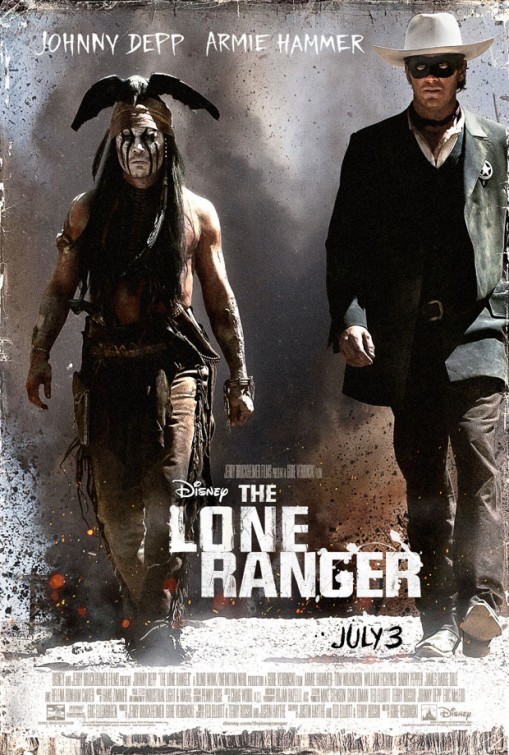
‘The Lone Ranger’ – Hi-yo Silver, What the Heck?

Like so many, I grew up watching “The Lone Ranger” on television and listening to the old-time radio show as well. John Reid, whether he was wearing a mask or not, was a paragon of justice, and seeing him and his faithful sidekick Tonto defeat the bad guys was always deeply satisfying. I was reminded of how much I liked this character while watching Gore Verbinski’s “The Lone Ranger” because I kept asking myself, who is this buffoon that has no business being around a horse during this movie?

Hollywood has had little luck in getting a respectful version of “The Lone Ranger” up on the silver screen, and this supposed 2013 summer blockbuster is the latest example. At two and a half hours, this film is a bloated mess which could have easily been shortened. It sticks its talented cast with a bland story, an uninteresting villain, and it can never seem to figure out if it wants to be a lighthearted adventure or a deadly serious film. Sadly, it is not until the last half hour when this “Lone Ranger” finally comes to life.

This “Lone Ranger” is yet another origin story about how this iconic character and Tonto first met and joined forces to bring justice to the American Old West. John Reid (Armie Hammer) is a lawyer and former Texas Ranger who joins up with his brother, Dan (James Badge Dale), to recapture the ruthless outlaw Butch Cavendish (William Fichtner) who has just escaped. In the process of tracking Butch down, John and Dan are ambushed by him and his law-breaking friends, and he mercilessly takes Dan’s life as well as another part of his body from him. John is assumed to be dead, but Tonto (Johnny Depp) finds his body and nurses him back to health so they can avenge Dan’s life and defeat Butch before he does more harm.

Look, I try to enjoy movies for what they are as opposed to what I want them to be, but I found myself wanting to see a much different version of “The Lone Ranger” because the iconic character is not given the respect he deserves here. I came out of this film feeling sorry for Hammer who is a very good actor and was terrific as the Winklevoss twins in “The Social Network,” but he is forced to portray John Reid as a buffoon and wimp who has no business trying to bring any bad guys to justice. Hammer has some funny moments, but the screenplay by Justin Haythe, Ted Elliott and Terry Rossio robs his character of many of the heroic qualities we love the Lone Ranger for having.

Come on, this is a movie about the Lone Ranger, so why not make it about the character we know him to be? Just like “The Green Hornet” which Seth Rogen and company really messed up, this is a film that blatantly forgets what makes its well-known characters so special. Regardless of the current controversies Hammer is currently enduring, his acting career has fared much better than Klinton Spilsbury’s did after he starred in ill-fated “The Legend of the Lone Ranger.”

As expected, Johnny Depp gets top billing even though he is playing the sidekick in this film because, well, he’s Johnny Depp. While he may be the best thing about “The Lone Ranger,” his performance is a bit problematic. Depp said he chose to play Tonto so he could right the wrongs of the past in terms of how Native Americans are portrayed in the media. While I really want to say he succeeded, I’m not sure he did. He is clearly having a lot of fun playing Tonto, but the character threatens to come off as a comical caricature than a believable Indian. I have no doubt that Depp has Native American blood in him, but it would have made much more sense to get a full-blooded Native American to play Tonto instead.

But in the midst of such comical mischief between the Lone Ranger and Tonto, we get to learn about Tonto’s backstory which involves tragedy and Native American genocide. It is at this point when the movie’s tone becomes completely erratic as it can’t seem to decide whether it wants to be funny or serious. While I would never dare to gloss over the damage we did to Native Americans, this grim history belongs in another movie and not this.

“The Lone Ranger” also starts off with another side story which has a young boy named Will (Mason Cook) visiting a San Francisco county fair where he runs into an elderly Tonto who proceeds to tell him about his adventures. The movie keeps coming back to these two time and time again, and this ends up slowing its already sluggish pace down to a grinding halt. These scenes could easily been cut out of the film because they really serve no good purpose and only make us wish this was much shorter.

William Fichtner remains one of the most dependable character actors working today, but he is unfortunately saddled with portraying a bore of a villain in Butch Cavendish. The character’s makeup basically spells out how this is one very bad dude who never visits the dentist, and it’s almost like Fichtner is letting the makeup do all the work. There’s really not much to this character other than he’s just another evil outlaw, and this gives Fichtner no real opportunities to make him the least bit interesting.

As for the other actors, Ruth Wilson gets to play Dan Reid’s obligatory love interest, Rebecca, and she is given little to do other than be in constant danger. Tom Wilkinson is a welcome presence as railroad tycoon Latham Cole, but it’s no surprise to see what his character ends up becoming. And while it is cool to see Barry Pepper as U.S. Calvary Officer Jay Fuller, his character is just another one of those clichéd corrupt military characters who is just asking to get beaten up. As for Helena Bonham Carter, she is wasted in a bit part as brothel madam Red Harrington. While I love seeing Carter pop up in one role after another, this movie does not deserve her.

Verbinski runs into many of the same problems which undid “Pirates of the Caribbean: At World’s End” as it goes on for far too long, contains characters we never fully care about, and it doesn’t take long for us to give up on trying to understand the plot. While he is indeed a talented filmmaker, and the first “Pirates of the Caribbean” movie really was fantastic entertainment, I thought after “At World’s End” he would rein things in more than he tried previously. That he did not accomplish this makes this cinematic experience all the more frustrating.  

Regardless, I have to admit that I loved the movie’s last half hour where Verbinski executes a number of brilliantly staged action sequences. Once the “William Tell Overture” music started blasting through the speakers, I found myself being immensely entertained. This was “The Lone Ranger” movie I wanted to see, the one where I was genuinely thrilled by this masked man’s crime fighting ways. This proved to be so much fun, but while this spectacle went on, I could not help but ask myself why the rest of this motion picture could not be this entertaining.

“The Lone Ranger” was not the worst movie of 2013, but it was still pretty close to being the biggest stinker of all. While it was not as boring as “The Great Gatsby” nor as abysmally bad as “The Hangover Part III,” this should have delivered far more bang for the buck. Westerns have taken a big hit over the years with poorly received duds like “Wild Wild West” and “Jonah Hex,” and this film is not going to help matters any. This was the first Lone Ranger movie in over 30 years, and now it looks like we’ll have to wait twice than long for the next one to be made.

Hi-Yo, Silver! Away from Hollywood!

* * out of * * * *

Underseen Movie: ‘JCVD’ – The Muscles From Brussels Lays Himself Bare

I have never really been a fan of Jean-Claude Van Damme. He has the moves, but he has never been much of an actor. I still vividly remember watching “Cyborg” with my brother and a friend of his on the family VCR years ago. My dad even watched it with us, and he could not stop bagging on Van Damme throughout the whole monstrosity which was made by those creative geniuses from Cannon Pictures. This is some of what he said:

“This is the single worst actor I have ever seen in my life! His face is completely immobile! He’s like Stonehenge!”

Oh, the memories! You’d figure after us seeing “Cyborg” that none of us would ever bother watching a Van Damme movie ever again, but he was everywhere for much of the late 80’s and early 90’s. “Bloodsport” was nothing extraordinary, but those fight scenes were pretty awesome.

“Death Warrant” was one I only saw because my best friend from high school wanted to check it out. It was alright, but this is probably being generous. I got a little pissed when that nerdy kid with glasses wanted to watch “Star Trek,” but the hot lady played by Cynthia Gibb did not want to bother. She would rather be screwing Van Damme’s character while he was taking a break from working undercover in a prison to catch a killer. Seriously, not all “Star Trek” fans are this geeky!

But following the commercial failure of “Universal Soldier: The Return,” Van Damme went from being a Hollywood star to being thrown into the hard to escape realm of straight to video movies, and he also went through drug problems and several divorces. I always wondered how people like him or Steven Seagal deal with going from big Hollywood action movies to direct to video crap which continues to define their careers to this day. I imagine they are not happy being in this movie star limbo. On one hand, they are still making a living, but at the same time I keep thinking they must miss where they were before Hollywood abandoned them in the wake of several box office disappointments.

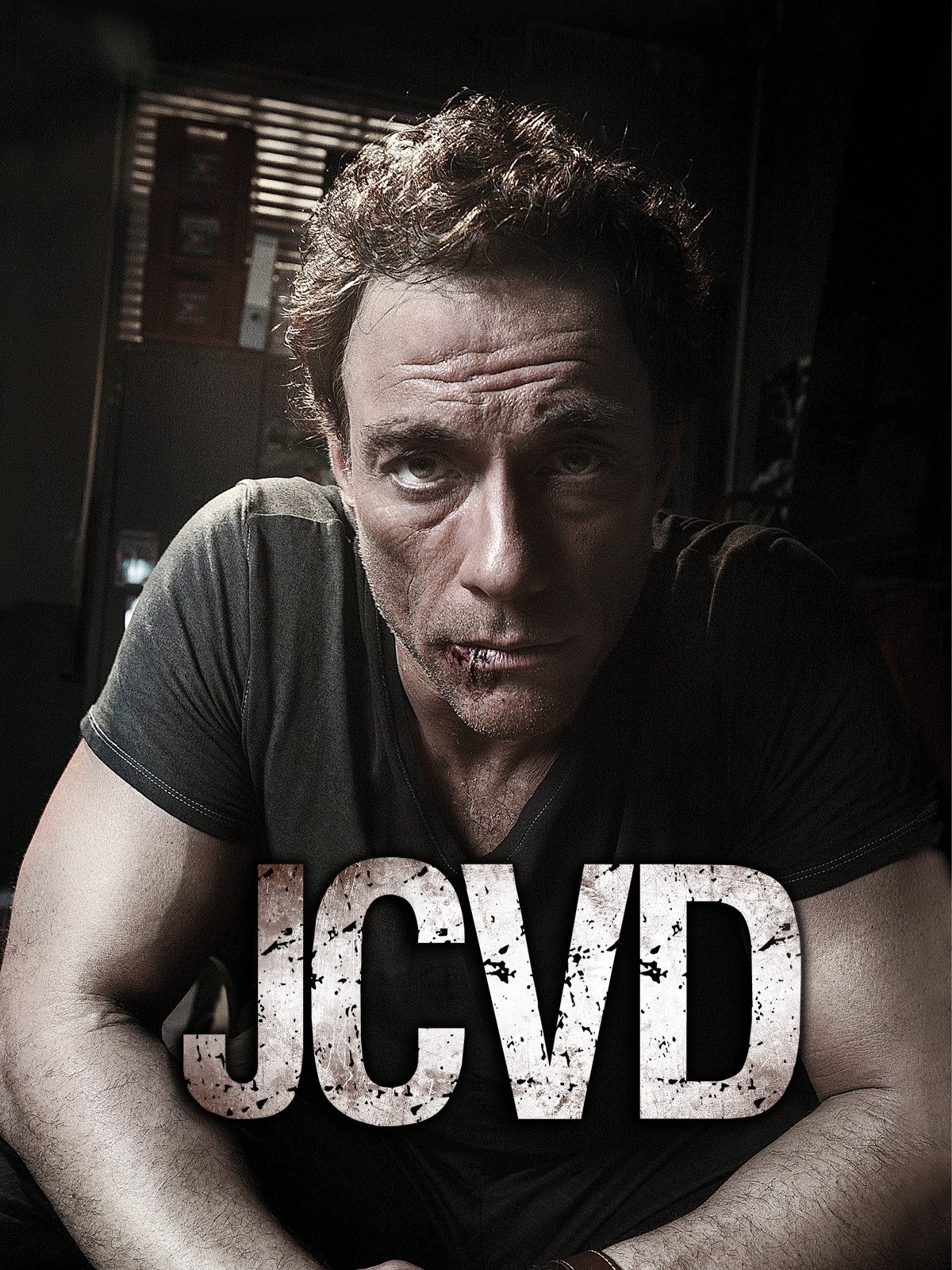
JCVD” is a fictionalized answer to this question, and is not your typical martial arts ass kicking epic. Van Damme plays himself, and we can what years of drugs, court battles, and many B movies, most of them lousy, have done to him and his face. As the movie opens, we see him arguing with the director of his latest movie, but the director is more interested in throwing darts at a postcard with the Hollywood sign on it then in listening to a man whose only distinction is getting John Woo to come to America and make “Hard Target.”

We see Van Damme at court fighting for custody of his daughter (played by Saskia Flanders), and his ex-wife’s attorney presents his movies as arguments against him as a person. They pile up so high to where he excuses himself to go to the bathroom while the titles are still being read off. His problems keep mounting as he can’t get cash out of the ATM, and his lawyer calls saying he still owes him money. Then his custody suit hits an impasse when his daughter says she doesn’t want to live with him because, whenever a movie of his is on television, she gets picked on by all the kids at school. Even worse, he just lost a film role to Seagal just because he offered to cut off his ponytail.

So, Van Damme heads back to Belgium to reconnect with his roots and where he came from (hence his nickname “The Muscles from Brussels”). He is still treated as a big star and a hero back home, and as a man who helped put the country and its people on the Hollywood map. But soon after, a hostage situation erupts at a nearby post office and, yes, all hell breaks loose. At first, it looks like he is robbing the post office, but events are seen from different perspectives, and it turns out he has arrived at the wrong place at the wrong time. This time, he can’t rely on his martial arts moves to get him out of this situation. Van Damme is not seen as an action hero here, but as a regular man who is caught up in a situation not of his making.

“JCVD” is presented as a comedy/drama hybrid, and while the tone is a bit uneven, there are some very funny moments. We see one of the robbers buddy up with Van Damme and talk to him about his movies, and he even gets him to show off one of his classic moves. While the other robbers couldn’t care less, this one wants his autograph. In the meantime, the townspeople have come out in force to support the fallen celebrity for what he is doing. In many ways, the movie is a look at the crazy nature of fame and a celebrity is forever trapped in a prison because of it.

The big question I had when I went out to see “JCVD” was this; has he gotten any better as an actor. Even Los Angeles Times film critic Sam Adams in his review of this movie said that “most of the acting in Van Damme’s films takes place below the neck.” Surprisingly, the answer is yes, he has. In fact, in “JCVD” he is really good playing a fictionalized version of himself. My dad’s description of him as “Stonehenge” does not apply to him here, and while he will never be Laurence Olivier or Sean Penn, this movie is a big step up for him creatively speaking.

The movie has one tremendous moment of pure raw emotion from Van Damme when he suddenly rises above the film set and starts talking directly to the audience. His monologue lasts for several minutes, and he talks about how he always wanted to be a movie star. All these years later, he feels as though he is being punished for it. Granted, he admits to his mistakes like taking drugs, and I felt like he is still paying a price for his usage even while he is staying clean. The star never fakes a moment during this scene, and the scene is alone worth the price of admission. Van Damme has said doing this movie was like therapy for him, and I have no doubt about that.

The concept of “JCVD” is by no means original. We have seen many movie stars play themselves and have jokes played at their own expense to show they have a healthy sense of humor about their image. But while we have them take this route like John Malkovich did in “Being John Malkovich,” I can’t think of any others who have put themselves on the line like this. I can’t see Chuck Norris doing this as I am certain he would rather do an action movie where Mike Huckabee is President and he has to rescue him from being held hostage by pro-evolution terrorists.

If there was one big problem I had with “JCVD,” it’s that its subtitles were at times almost impossible to read. The movie, directed by Mabrouk El Mechri, is shot in a grungy style which is very close to black and white but not quite. As a result, the subtitles which are presented in white lettering almost blend completely into the background, and I had to keep leaning forward to better see what was being said. Considering how many of my friends hate subtitles and would rather watch movies dubbed in English, this certainly does not help.

You really have to give Van Damme a lot of credit here. Not many action stars would even risk being seen like he is shown in “JCVD.” Here, he lays himself bare to show us the man he has become through many mistakes and bad movies. I came out of it with a renewed respect for him, and it makes me want to see him get better. “JCVD” is not a great movie, but it is fun and kept me enthralled throughout its running time. Where he goes from here remains to be seen, but hopefully some good will come out of his performance here.

* * * out of * * * *

Underseen Movie: ‘Killer Joe’ – The WTF Movie of 2011

WARNING: DO NOT EAT FRIED CHICKEN BEFORE OR WHILE WATCHING THIS MOVIE.

William Friedkin’s “Killer Joe” got my vote for the WTF movie of 2012. It wallows in the sheer depravity of its deliberately idiotic characters without apology, and it is one of the most darkly hilarious movies I have seen in some time. Seriously, I would put this film on a par with “Bad Lieutenant: Port of Call New Orleans” and “Observe and Report” as they are equally fearless in the places they dare to take us. “Killer Joe” also marks the second collaboration between Friedkin and playwright Tracy Letts whose play “Bug” Friedkin previously adapted into a motion picture. With this film, neither is out to show the audience any mercy as they challenge them in a way most filmmakers don’t bother to these days, and it wears its NC-17 rating with pride.

The movie takes place in Texas and features some of the dumbest or, to be polite, the most dimwitted characters on the face of the earth. Chris Smith (Emile Hirsch) is a drug dealer who is in debt to his suppliers by several thousand dollars, and his solution is to have someone murder his mother as she has a $50,000 insurance policy. His father, Ansel (Thomas Haden Church), shows only the slightest moral opposition to this plan as he divorced Chris’ mother a long time ago and has since gotten married to the conniving Sharla (Gina Gershon), and Chris already has one person in mind to carry out this cold-hearted assassination.

That person is Joe Copper (Matthew McConaughey), a police detective who works as a hired killer on the side. Now Joe demands an upfront payment of $25,000 for his services, but Chris and Ansel can only pay him after receiving the insurance payout. As a result, Joe ends up taking a retainer to make up for that: Ansel’s daughter and Chris’ sister, Dottie (Juno Temple). As with all crimes based on greed, all the careful preparation cannot keep these characters from falling into the nasty realm of disaster. But long before the movie’s end, you will agree they have all earned the fate they ever so thoughtlessly brought on themselves.

If this seems like an unusual movie for Oscar winning director Friedkin to make, it shouldn’t. Friedkin’s movies in general, with the exception of “The Exorcist,” have never contained characters easily deserving of redemption. “Killer Joe” will be seen by many as a bold motion picture of his, but his movies show he has never passed judgment on any of the characters inhabiting his movies. He is also a brilliant filmmaker as he surrounds himself with a cast of actors who don’t easily judge their characters either.

McConaughey has been on a roll ever since he gave up making those dopey romantic comedies for movies like “The Lincoln Lawyer” and “Dallas Buyers Club.” With “Killer Joe,” he ends up giving one of the bravest and boldest performances of his career as Joe Copper is as immoral as characters can get. We never learn why he decided to get into this line of work while being employed as an officer of the law, but it doesn’t matter. McConaughey gives us a mesmerizing portrait of a character who is more than aware of how evil he is, and he is not about to apologize for it.

The other actors like Emile Hirsch and Thomas Haden Church deserve a lot of credit as they portray the dimwitted characters perfectly without ever just playing it for laughs. They play each character as being serious in what they say and do, and this makes us laugh uncontrollably at certain moments because we almost won’t believe how badly they screw things up. They also invest their characters with a history which shows on their faces and doesn’t need to be spelled out for the audience.

A special badge of courage, however, needs to go to Gina Gershon who plays Sharla as “Killer Joe” shows just how deep into a role she is willing to go. Her character thinks nothing of opening the front door without wearing anything from the waist down, and this is not to mention what McConaughey ends up making her do with a piece of fried chicken. Even as Sharla wears too much makeup to where her mascara runs down her face, making her look like the Joker from “The Dark Knight,” Gershon gives a truly fearless performance as someone who thinks she’s better than the people around her. But of course, Sharla finds out in the worst way possible that she is not.

The one person who really caught my eye though was Juno Temple who portrays the youngest child of the Smith family, Dottie. You may remember Temple as Selina Kyle’s street-smart friend from “The Dark Knight Rises,” and she makes Dottie a fascinating enigma. Her character is at times willfully innocent, seemingly naïve, but she actually becomes the only member of this trailer park family with anything resembling intelligence. Temple is utterly beguiling in “Killer Joe,” and I look forward to seeing more of her in the future.

“Killer Joe” was already earning infamy before its release with the MPAA giving it the dreaded NC-17. Did it earn this rating? Well, yes and no; this is certainly no movie to take your kids or impressionable teenagers to see. Then again, if “Killer Joe” were released by a major movie studio, it would have somehow gotten an R despite its content. Whatever you think this movie deserves the NC-17 rating or not, the hypocrisy of the MPAA remains maddening and never ending.

Friedkin has been leaving in the shadow of his most famous work for years as if no one would ever let him get past “The Exorcist,” “The French Connection” or even “Sorcerer” which is now being seen as the masterpiece it always was. The truth however is he has not lost his talent in setting up scenes which contain tremendous suspenseful impact. This is especially the case whenever McConaughey is onscreen because when he appears you know things are going to get really bad. Friedkin also is well served by his collaborators such as cinematographer Caleb Deschanel who finds a twisted beauty in such utter depravity, and composer Tyler Bates gives the most suspenseful and horrifying moments a strong atmospheric quality which makes the story all the more claustrophobic.

It’s hard to say where exactly “Killer Joe” ranks on William Friedkin’s long resume of work, but it is safe to say it is far more accomplished than his other works like “Deal of the Century,” “The Guardian” and “Jade.” With this film he gives willing audience members an experience they will not easily forget, and he directs Matthew McConaughey to one of the best and most explosive performances of his career. Those in the mood for the most disturbing of black comedies should not pass up “Killer Joe.” Just remember, it may be a while before you find yourself eating fried chicken again after you watch it.

* * * ½ out of * * * *

John Carpenter’s ‘The Ward’ – His First Film in a Decade, and Maybe His Last

Master John Carpenter described “The Ward,” his first feature length movie in ten years, best through a video message at the Toronto International Film Festival:

“’The Ward’ is an old school horror movie made by an old school director.”

It’s good to know this going in as Carpenter is not trying to reinvent the wheel or outdo all other horror releases out now. The plot of “The Ward” is as old fashioned as they come, and it allows Mr. Carpenter to exercise the skills he has perfected for many years. It’s not on a par with “The Thing” or “Halloween,” but in the end I didn’t care. For me it was an absorbing movie which kept me entertained throughout its running time, and it was far more entertaining than those summer blockbusters duds “Green Lantern” or “Bad Teacher.”

“The Ward” stars Amber Heard as Kristen, a young woman whom we first see her indulging in a little pyromania, and not the kind Def Leppard made an album about. The police pick Kristen up after she burns down an abandoned farmhouse, and she gets sent straight to the ward of the movie’s title. Her fellow patients are not necessarily the “Girl, Interrupted” type, and Angelina Jolie is nowhere to be found. The intentions of Dr. Stringer (Jared Harris) appear ambiguous at best, and dealing with the chief orderly and Nurse Lundt, both who are deadly serious, is no picnic.

Actually, let me segue here for a moment; Nurse Lundt’s name seems to rhyme with a certain derogatory word. Which one you say? Well… You can just figure that out on your own. I wonder if this was intentional on the part of screenwriters Michael and Shawn Rasmussen, or perhaps it is just the name of someone they knew from way back. Well, whatever the case, Lundt certainly gives Nurse Ratched a run for her money in the seriously mean category, but her voice is not as lovely as Louise Fletcher’s was.

Now this being a psychiatric ward, it is mandatory that a ghost is roaming the halls. Kristen first sees it while taking a shower and, of course, everyone says she’s a nut which is redundant considering she’s staying in a mental institution. Then again, the patients may know more about what’s going on than they initially admit. I hate to think they’ve spent all their time there without seeing at least one ghost, you know? Anyway, patients start to disappear one by one, and Kristen aims to find out what happened to them on top of escaping the ward before it claims her as its next victim.

Now whatever you think of Carpenter’s directorial skills these days, his efforts in generating suspense are still strong. Carpenter is smart to not reveal all the important plot details right away, and he holds you within his grasp throughout as he leaves you guessing or imagining what’s really going on. Even if you see the ending coming from a mile away, the journey to it was an entertaining one for me.

I was skimming through another review of “The Ward” online which said Heard was as believable a mental patient as Charlize Theron was a mine worker in “North Country.” Now what is that supposed to mean? That she’s too good looking to be in a psychiatric ward? Give me a break! Heard does good work here portraying a strong-willed protagonist you want to root for. She’s engaging and believable, and while others may see her as being miscast, I did not. By the way, I thought Theron was great in “North Country” and I utterly accepted her as a mine worker. And in case that one reviewer didn’t notice, both actresses were in “North Country” and played different versions of the same character.

Lyndsy Fonseca is very good as Iris, the first girl to befriend Kristen. She appears to be the most emotionally balanced of the patients, and Fonseca makes her character’s awareness all the more convincing. Mamie Gummer gives a good performance as Emily, and she gives Emily a complexity she might otherwise not have had. Danielle Panabaker makes her character Sarah the epitome of Carly Simon’s classic tune “You’re So Vain,” and she’s a kick to watch. And Laura Leigh rounds out this strong group of actresses by making Zoey a convincingly traumatized person whose escape from reality consists of her acting like a little girl.

In terms of horror, Carpenter still makes effective use of cheap scares. While they have been used to death by dozens of filmmakers, he always makes them count. This is especially the case with “The Ward’s” final scene which truly took me by surprise. I should warn you though that the movie has one of those pull out the rug from under you kind of endings which I am really sick of. However, Carpenter doesn’t telegraph the ending to us like others typically do, so I’m willing to let it pass this time.

If there’s anything missing from “The Ward,” it’s Carpenter’s music which I am a big fan of, and his unique sounds were missed. Not that I want to knock Mark Kilian’s work here as he gives the film an appropriately atmospheric score which works very well, and it does have a bit of that Carpenter sound to it. Still, I yearn for a new score from Carpenter or even his son Cody who did amazing work on “Masters of Horror.”

Am I being too forgiving to “The Ward?” Perhaps. I’ve always been a big admirer of Carpenter’s work, and I even have good things to say about “Ghosts of Mars.” Many have expressed their big disappointment with “The Ward” as they want it to be on a par with “Halloween” and “The Thing.” Others found it not gory enough, but then again Carpenter’s strongest films don’t always rely on it like the “Saw” movies do. Personally, I don’t want to spend time comparing “The Ward” to his best movies because to do so would just be asking us to hate it before the opening credits even begin. You can only let an artist remain in the shadow of their past work for so long until you realize your spoiling the experience for yourself.

With “The Ward,” Carpenter was looking for a movie with a tight schedule and a limited location which didn’t require him to stay for a long time or get completely exhausted after shooting only half of it. With the limited resources he had, he made “The Ward” worth watching, and I got very involved in the plights of the characters. There’s nothing original on display here, and it may very well remind you of a gazillion other movies like it, but I’m glad the master finally directed a feature film again after so long. I just hope we don’t have to wait another ten years for Carpenter’s next film. And if there’s anyway Kurt Russell can star in it, you can sure bet I will be watching it on opening day!

* * * out of * * * *

‘Belushi’ Documentary is an Intimate Portrait of a Hilarious ‘SNL’ Icon

One of the opening scenes of the documentary “Belushi” features a packed audience at the Hollywood Bowl, waiting for the Blues Brothers to make their grand entrance. There was something about the size of this crowd which blew me away, and their excitement at seeing John Belushi and Dan Aykroyd come onto the stage as Joliet Jake and Elwood Blues was very palpable. When they do finally appear, it’s an exhilarating moment as Belushi in particular looks as though he was on top of the world, and back in 1978 he certainly was. But then we hear a voiceover from the late Harold Ramis who says about Belushi, “Knowing his appetites, I don’t think he’ll survive this.” As we all know, he didn’t.

Like another documentary about another “Saturday Night Live” star who left us way too soon, “Love, Gilda,” “Belushi” is at a disadvantage as we all know what happened to this beloved comedy icon and of how he died of a drug overdose at the Chateau Marmont in Los Angeles on March 5, 1982. Several books have been written and several movies were made which detailed his life and death, and Aykroyd once said how many of them were written by “unfeeling, unqualified personnel.” But with “Belushi,” writer and director R.J. Cutler takes the time to look at him not so much as a comedy icon, but as a man who had his passions and loves which deserve more of our attention than his excesses ever did.

Among the most interesting parts of “Belushi” come at the beginning as animation is used to illustrate his life as a young boy in the west side of Chicago. It was a kick to learn how he would sometimes go to homes of his neighbors to tell stories or do performances. Seriously, John was the kind of person William Shakespeare wrote about, and this is summed up perfectly in his line of “all the world’s a stage.”

To learn of John’s troubled relationship with his father, an Albanian immigrant named Adam Anastos Belushi, was a revelation of sorts as I am tempted to think this played a large role in his development not just as an artist, but as a person as well. Adam expected John to take over the family business which was the Fair Oaks Restaurant, but John was determined to become an actor. There is something about the last meeting between these two which seems to linger throughout the documentary to where I could not help but wonder how deeply this affected John throughout his life. Of course, I have to remember I am not a psychotherapist.

One of the benefits of “Belushi” is it contains interviews which are featured as voiceovers throughout. These interviews were conducted by Tanner Colby for his book “Belushi: A Biography,” and in this documentary we get to hear these interviews for the first time. Whether or not the thoughts of Aykroyd, Lorne Michaels, Carrie Fisher or John Landis surprise you in the slightest, I am thankful we get to hear their most specific thoughts about John as they help to fully describe a man who would have truly done anything to get a laugh from everyone and anyone.

But perhaps the most telling addition to “Belushi” is the participation of John’s widow, Judith Belushi-Pisano who shares, among other things, the letters John wrote to her over the years. In those letters, we see how John was hungry for success, that he did not want to be like his father, and how even he knew he was on a path to self-destruction. The one letter which stood out to me the most was when John confessed to Judith of how he didn’t know how to be comfortable with himself in life. This is a man who yearned to connect with other people, and the one thing he craved, success, kept him from do so.

There was a point where John was in the number one movie in America (“Animal House”), had the number one album in the country (the Blues Brothers’ “Briefcase Full of Blues”), and was starring on the television phenomenon “SNL.” While this may have seemed like a tremendous accomplishment, it is almost treated as though it were a death knell for John as he had nowhere to go but down. Lorne Michaels once said drugs did not kill John, fame did. After watching this documentary, I could not agree more.

Watching “Belushi” quickly reminded of other documentaries about other tremendous talents whose lives were cut far too short. There was Asif Kapadia’s “Amy” which gave Amy Winehouse the eulogy she never would have received from any other filmmaker, and we watched as she walked up to the stage in one scene to accept an award, and the applause from the audience kept getting louder and louder to where any cries for help were forever washed away from our collective consciousness. And then there was also “Kurt Cobain: Montage of Heck” which chronicled the life of the Nirvana front man, and the interview with his mother when she realized just how famous Kurt was going to end up being still haunts me as she quickly realizes he will not be able to handle in a healthy way. Like John Belushi, these are talented artists who the song “Shooting Star” by Bad Company was all about, and their lives were quickly swept up in the tsunami of fame.

Granted, there are some problems with “Belushi” as I was hoping this documentary would go a little deeper in certain areas. When it comes to movies like “Animal House” and “The Blues Brothers,” they deserve their own documentaries as their reputations remain very enthralling, but I would have loved to see Cutler examine John’s performance in “Continental Divide” a bit more as this was a movie in which he dared to go in a more serious direction. And yes, there is the issue of Cathy Smith being omitted from here. Cathy gave John the controlled substances which ended his life at the far too young age of 33. I am not saying Cathy deserves to be crucified, but her role in John’s death does deserve some more insight as it may allude to how certain people treat celebrities who are at their most vulnerable.

Regardless, “Belushi” represents the kind of documentary which digs deeper than the average showbiz expose ever does. So many movies on famous people like this one typically just skim the surface and focus on the most controversial moments at the expense of everything else, and this one does not. For that, I am very thankful as I have always been a big fan of John Belushi, and until Cutler’s film, I truly felt I never got to see him as an individual. Regardless of how you feel about him, John Belushi was a human being like the rest of us who craved love and respect, and he should still be with us all these years later.

* * * ½ out of * * * *

‘Tenet’ Movie and Blu-ray Review

The following review was written by Ultimate Rabbit correspondent Tony Farinella.

Tenet,” written and directed by acclaimed filmmaker Christopher Nolan, is one of the rare films to get a big release in theaters when it came out in early September during the COVID pandemic. While watching it on Blu-ray was an enjoyable experience, I can only imagine what it was like to see it on IMAX.  It probably enhanced the experience quite a bit for moviegoers.  That being said, I’ve always subscribed to the idea that a good movie is good on any platform be it Blu-ray, 4K or the big screen.  I understand why this was released on the big screen, though, as it is a big screen movie with big ambitions.  Nolan has always been a filmmaker with a specific vision, and he likes to give his audience a lot to chew on when they watch his films.  He also likes to let them come up with their own interpretations of them as well.

“Tenet” is a film I watched for the most part on my own with my wife checking in with me near the end of it.  She asked me what was happening and if I liked the movie.  While the idea of trying to explain the film to her was daunting, and I was still processing the film as it was happening, I realized Nolan had me exactly where he wanted me.  Even though “Tenet” has a running time of two hours and thirty minutes, it’s pretty damn exciting when you take in all that is happening on the screen, the details, both big and little.  As far as trying to describe the plot and what happens to her or to anyone reading this review, I will do my best without spoiling the film or making it sound too convoluted.

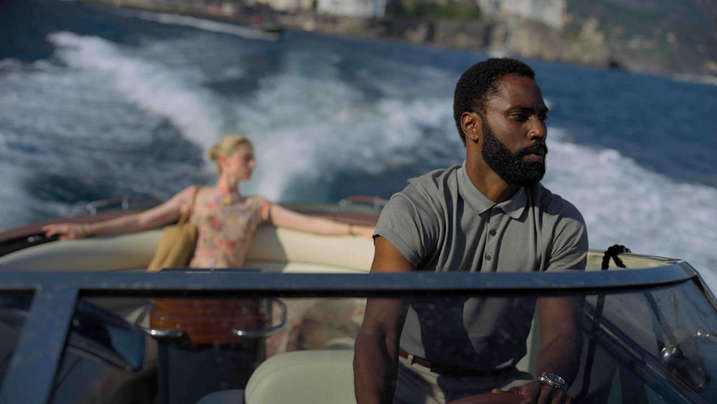
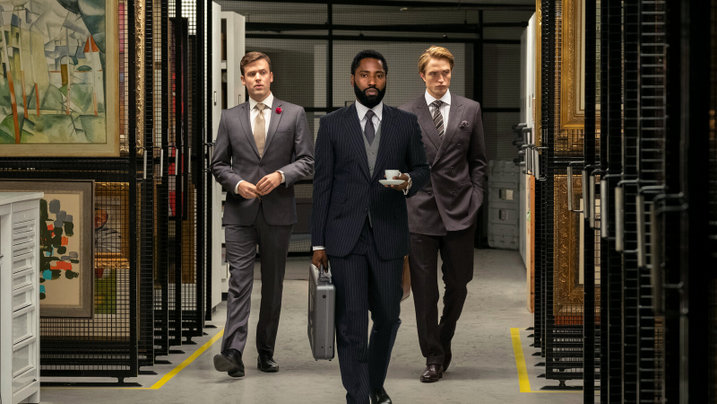
John David Washington, who has quickly turned into one of our finest working actors today, is simply known as Protagonist. He is a secret agent who is put through a number of grueling tasks in order to see if he’s up for the task of trying to stop World War III through influencing time. We don’t know much about him, his backstory, or why he’s decided to take on this mission in the first place. Washington, however, comes across as calm, cool and collected in each and every scene, whether he’s negotiating or in battle.  His natural charisma is evident throughout.

He’s part of an organization called Tenet, and this is a word which comes up a lot in the film as it is “inverted” and deals with the concept of moving backwards in time.  This is put on display a number of times with simply stunning visuals which will leave your jaw hanging on the floor.  If you are looking for an emotional core, it comes in the form of Kat (Elizabeth Debicki) and her working relationship with the Protagonist. While we clearly root for and spend a great deal of time with the Protagonist, Kat’s story is the emotional core of the film.  There is also great work here from Kenneth Branagh as the villain.  He’s very easy to dislike, and his performance is menacing and a little over-the-top, but it works in the world of this film.

The world of the film created by Nolan is not always easy to follow.  There were times where I was lost even as Robert Pattinson’s character was explaining things to me with his Master’s degree in physics.  I understand Nolan wants to keep us guessing and to question what is happening.  I also know there are a ton of fan theories out there.  It is always a good thing when a film can create discussion and debate among movie buffs.  As a hardcore movie lover myself, I’m always looking to talk shop with individuals that look at movies as more than just movies.  They live, breathe and sleep with the movie long after the credits have rolled.  With “Tenet,” it is a film I look forward to revisiting a few more times to fully grasp and comprehend all it is about.

Let’s focus on the positives, first.  Even though the film was not scored by Nolan’s usual composer, Hans Zimmer, the use of sound and music to enhance the movie is truly awe-inspiring. As a matter of fact, I didn’t even realize Zimmer didn’t compose the score until I saw the name Ludwig Göransson in the end credits.  This is not to discredit the fantastic work by Göransson, it is just to say it is clear there is a certain style of sound and music Nolan is looking for with his movies, and he picked a great composer with a very impressive resume. I talked about the performances earlier, and they are universally good across the board with the standouts being Washington and Debicki. A few Nolan favorites pop up as well in cameos.  Visually, Nolan takes his work to a whole new level with “Tenet.” It is a big screen movie all the way.

As far as the negatives, even though it is a good movie and doesn’t feel like two hours and thirty minutes, I don’t know if it necessarily had to be this long. I think they could have shaved fifteen to twenty minutes, and it wouldn’t have harmed the overall film.  We all know Nolan likes to do everything big with his movies from the sound to the visual effects to the running time, but sometimes things can be scaled back a little bit.  Another issue with the film is the fact it can be a little cold and distant at times.  His films would be even more powerful with all of the sound and fury if they came with a bit more emotion, heart and more fleshed out characters.  If you have great actors, you should use them more within the framework instead of letting the plot take center stage.

In the end, there is quite a bit to like about “Tenet.”  I’m going to recommend you buy the film, and I know it will be one I’ll be watching a few more times in the future.  However, my favorite Nolan film is still “Insomnia.”   As mentioned in the previous paragraph, Nolan sometimes completely abandons character development and the heart of his films which can sometimes leave me feeling like I’m watching robots in the story.  He also needs to understand that sometimes less is more.  While I don’t necessarily see him changing his ways, there is always the hope of him evolving with his next project. “Tenet” is a good yet flawed flick.

* * * out of * * * *

Blu-Ray Info: “Tenet” is released on a three-disc Blu-ray/DVD/Digital Combo Pack from Warner Brothers Home Entertainment. One disc is the Blu-ray, another disc is the Blu-ray special features, and the final disc is a DVD version of the film.  The film has a running time of 151 minutes.  It is rated PG-13 for intense sequences of violence and action, some suggestive references and brief strong language.

Video Info: “Tenet” is shown on 1080p High-Definition 16×9 Variable 2.2:1 and 1.78:1 (IMAX sequences). The film is gorgeous looking with a transfer that is impossible to beat! I couldn’t take my eyes off the visuals of this film.

Audio Info: The Blu-ray comes on the following audio tracks: DTS-HD MA: English 5.1, English Descriptive Audio and Dolby Digital: French and Spanish. Subtitles are in English, Spanish and French.

Special Features:

Looking at the World in A New Way: The Making of Tenet: This special feature is broken up into thirteen featurettes which go into great detail on the filmmaking process.  This is why I love physical media.  It is for the special features and the amount of behind the scenes details we get here. This special feature is over an hour long!

Should You Buy It?

Considering the fact that you are going to want to watch this film a few times and that it is directed by Christopher Nolan, I think this is most certainly a film worth adding to your collection.  There is also the fact it comes with over an hour of special features on a separate disc.  There was a lot of time, thought and effort put into this film as well as its Blu-ray release.  While this is far from a perfect film, there is enough really good stuff in here to make it a wise investment.  As I’ve said a few times in this review now, I want to watch it again and piece together even more of this elaborate puzzle.

**Disclaimer** I received a Blu-Ray copy of this film from Warner Brothers to review for free.  The opinions and statements in the review are mine and mine alone.

‘The Wolf of Snow Hollow’ Movie and Blu-ray Review

The following review was written by Ultimate Rabbit correspondent Tony Farinella.

Good horror is hard to find these days in Hollywood. Between the endless number of sequels, remakes and jump scare flicks, it can be quite difficult to find a horror flick truly worth of your time.  However, the beauty with cinema are the little gems like “The Wolf of Snow Hollow.”  This film is also notable for being one of the last to feature the late, great Robert Forster.  It was written and directed by its star Jim Cummings.  Thankfully for the audience, he’s up to the task of being the lead, and he has terrific comedic timing.  He knows how to balance the quirky tone of the flick, which is why it’s such a beauty to watch from beginning to end.  The film is 80 minutes when you take out the credits, but it makes the most of each and every scene and character.

“The Wolf of Snow Hollow” is set in Snow Hollow, Utah where not much of anything happens on a day-to-day basis for local police officer John Marshall (Jim Cummings). In John’s personal life, there is a lot going on as he’s trying to raise a 17-year-old daughter on her way to college despite the fact he and his ex-wife don’t get along at all.  There is also the fact his father, played by the late Robert Forster, is having health issues and struggling to stay retired from his job as Sheriff.  It also doesn’t help that some of the individuals working with him aren’t the brightest and most ambitious bunch of police officers out there.  However, there is one bright spot in Officer Julia Robson (Riki Lindhome) as she takes her job seriously and is there to help out John Marshall whenever he needs her.

In addition to these issues, John is also struggling to stay sober. He’s three years sober after being in AA for six years, but the urge to drink starts to increase when local women are showing up dead left and right in Snow Hollow.  He’s having a hard time solving the case, which is causing increased stress and an inability to sleep until he finds the killer. He also wants to prove to himself, his daughter, his father, and everyone else that he is Sheriff material.  The longer this case goes on, the more blame he is facing from the locals. There are theories out there that it’s a werewolf because of the work of the killer, and he’s not sure if he believes in werewolves or if his mind is playing tricks on him.

However, with each full moon another woman is gruesomely torn to shreds.  The stress and anxiety of the job and John’s day-to-day life is getting to him.  On paper, this might not sound like the type of material which would produce a comedy or a solid horror film.  It’s all in the tone and delivery by the actors and what I would imagine was a very specific script. The deadpan comedic moments are executed flawlessly. The beauty comes in the little moments of the film where the characters are interacting with each other.  John also has an anger problem, which produces some clever and offbeat moments.  It reminded me a lot of “Fargo” if it had werewolves.

“The Wolf of Snow Hollow” is gorgeously shot as well, and this really stands out when taking the film in as an audience member.  There are a number of overhead shots which are breathtaking. Near the end, Cummings decides to switch tones a bit, and this is a smart move because he transitions to a heartfelt conclusion that is satisfying on many levels. This is a prime example of a film with a $2 million dollar which makes the most of its script, actors and scenery.  It was a film I was not familiar with until its Blu-ray release, but I was pleasantly surprised with it.

This is the perfect cult movie which is going to find an audience as it ages and more people check it out.  With its Blu-ray release, now is the perfect time for you to discover and enjoy it.  I enjoyed the hell out of it, and I look forward to more projects from Cummings in the future.  He has shown a lot of talent and ability here as a writer, director and actor.  I had never seen anything from him before, but I’m very curious to check out his feature film debut from 2018, “Thunder Road.” He’s the kind of talent who likes to do things on his own, but he has proven it is a task not too big for him.  I highly recommend you seek out “The Wolf of Snow Hollow.” You will not be disappointed.

* * * ½ out of * * * * __________________________________________________

Blu-Ray Info: “The Wolf of Snow Hollow” is released on a single-disc Blu-ray with a digital code from Warner Brothers Home Entertainment. It has a running time of 85 minutes and is rated R for violence, bloody images, language throughoutand some drug use.

Video Info:  The film is presented in 1080p high definition. It looks outstanding, and I loved the snowy overhead shots.  For a $2 million dollar budget, as mentioned, it surely stands out on screen and there is a lot to enjoy from a visual perspective.

Audio Info: The Blu-Ray comes with a DTS-HD MA: English 5.1 audio track along with an English Descriptive Audio track. Subtitles are in English and Spanish.

Special Features:

·         The Story and the Genre

·         The Impetus

·         Working with Jim Cummings

·         The Design of the Werewolf

·         The Story and The Genre

Should You Buy It?

Yes! You need to support independent cinema which is daring, takes risks and has something unique to offer to the film world.  I have a feeling I’m going to be hearing a lot about Jim Cummings in the future.  The film also comes with some solid special features as well.  The Blu-ray looks outstanding and really adds to the atmosphere of the movie.  The more removed I was from this film and the more I thought about it, the more I liked it.  It’s also only $14.99 at most major retailers.  If you know someone who is a horror fan, this is the perfect Christmas gift to surprise them with this upcoming holiday season.  “The Wolf of Snow Hollow” is a delightful surprise. I really enjoyed every minute of this film.

**Disclaimer** I received a Blu-ray copy of this film from Warner Brothers to review for free.  The opinions and statements in the review are mine and mine alone.

‘Borat Subsequent Moviefilm’ is Almost as Funny as the Original

Sacha Baron Cohen has long since proven to have balls of steel in doing the things he does, and you have to admire the fearlessness he exhibits from one crazy moment to the next. But when it comes to him bringing back his most famous character, Kazakh news reporter Borat Margaret Sagdiyev, there is a special daring on display here as Cohen has every reason not to. He announced his decision to retire the Borat persona some time ago as the character had become too recognizable for him to prank others successfully, but now he’s back 14 years later in “Borat Subsequent Movefilm,” a sequel which lays waste to the most ignorant parts of America, and one which proves to be almost as good as the original.

As the film begins, we discover Borat was sentenced a life of hard labor after embarrassing his home country of Kazakhstan all those years ago. In addition to failing to marry Pamela Anderson and, in his own words, “make love explosion on her stomach,” the townspeople in his village now infinitely despise him. He even discovers one his sons, Huey Lewis, now hates him so much to where he has legally changed his name to Jeffrey Epstein. If this is not spitting in a father’s face, I don’t know what is.

One day, however, he is released from the gulag by the country’s Premier Nursultan Nazarbayev (Dani Popescu, playing a fictionalized version of the leader) to deliver a gift to Donald Trump in an effort to redeem himself in his nation’s eyes. Along with him for the ride is the daughter he never knew he had, Tutar (Maria Bakalova), whom he eventually decides to gift to Vice-President Mike Pence even if Pence’s mother or wife does not approve.

“Borat Subsequent Movefilm” makes it clear as soon as it can of how its title character can no longer prey on unsuspecting targets without being recognized. As he tries to walk down the street like any other person, onlookers are quick to greet him despite his best attempts to remain invisible to them. To deal with this inescapable situation, he retreats to a nearby costume shop where he acquires as many disguises as Inspector Clouseau did in all those “Pink Panther” motion pictures, and it is amazing to see what he gets away with.

I would like to believe it is easier to spot Cohen these days as few actors have his height (he is 6 feet, 3 inches tall), and those eyes of his have a unique look to them. Nevertheless, he still manages to trick those who were so unsuspecting to where we wonder if they have any contact with social media or the rest of the world in the slightest. While watching this “Borat” sequel, I kept thinking about “In the Line of Fire” in which John Malkovich played a government-trained assassin who employs a number of different disguises during his attempt to assassinate the President of the United States. Like Malkovich’s character, Cohen manages to fool so many into believing he is the real deal when they should know better. Like Clint Eastwood, I wanted to tell everyone here to look at the eyes as they reveal more than anything else on the surface can.

But as brilliant as Cohen is here, special credit needs to be given to Maria Bakalova as she proves to be as equally fearless in exposing the prejudices of others as Cohen is. Right from the start, she dives right into the deep end as Tutar and appears unafraid to place herself in embarrassing situations others would never be caught dead in. Her commitment to her performance is equal to Cohen’s, and the two make quite the team as they skewer the most unsuspecting people in America. Many of my friends believe Bakalova should be considered for an Oscar nomination for her work here, and I am in complete agreement.

As I watched “Borat Subsequent Film,” I wondered if certain people in America were ignorant either in a willful way or due to a poor education they were subjected to. Borat and Tutar come across those citizens who are not quite up to date on what is going in the world. When Borat asks a tanning salon employee what is the best color for a racist, the employee quickly answers without batting an eye. When Tutar swallows a plastic baby on top of the cupcake she vicariously eats, she and Borat head to a nearby crisis pregnancy center (not to be mistaken for a Planned Parenthood) to have it removed, but Pastor Jonathan Bright thinks these two are involved in an incestuous relationship. Still, he is not eager to terminate what he believes to be an actual pregnancy even if it was conceived in an unsubtle way. As for the debutante ball, I am amazed at those who choose to participate in such a bizarre event, especially the adults who prove to be far too admiring of the teenage girls being put out on display.

But of course, the most talked about moment in this “Borat” sequel comes when Tutar gets to interview Rudy Giuliani, the one-time mayor of New York City. Much has been said about how Rudy acted following the interview, but it does look like he was simply straightening out his pants. Then again, some might describe what he did as being the equivalent of “the Picard Maneuver.” Regardless, when Giuliani asked Tutar for her address and phone number, the average viewer had to be disturbed.

One of the few people who comes off unscathed here and rightfully so is Tutar’s babysitter, Jeanise Jones. Granted, she is being duped like the others, but at least she is able to offer Tutar some much needed advice such as women do not need to be put in cages, and she also convinces her not to get that breast enhancement surgery because, of course, she does not need it. It’s nice to see that, even when an individual is being pranked, they still can seem intelligent simply because they are more in touch with the world than anybody else here.

“Borat Subsequent Film” is in many ways a hit-and-miss affair. Not all the jokes work, but the ones which do work had me laughing harder than at any other movie I watched this year. That it is not the equal of “Borat” should not be a surprise as the first film came at us out of nowhere, and we did not see its comedic firestorm coming at us. With this sequel, we have an idea of what to expect, but this still did not deter Cohen or director Jason Woliner from taking another stab at American culture. In the end, we got a sequel which defied heightened expectations and delivered some much-needed hysterics during the clusterfuck of a year which has been 2020.

As politically incorrect as Borat and Tutar are, it is fun to watch them evolve throughout as they reach a new place of understanding. Of course, as the ending shows, and to quote a lyric from a Paula Abdul song, they have taken two steps forward and two steps back.

As for Giuliani, his career was circling the drain even before he represented Trump. If he ends up getting a Presidential pardon, it will not be for his work here.

* * * ½ out of * * * *

‘A Charlie Brown Thanksgiving’ Still Deserves To Be a Holiday Tradition

Wow! This brings back so many memories! I still vividly remember watching these Peanuts specials when I was a kid. Sitting in front of the old Zenith television set in my pajamas, because I had to go straight to bed immediately after they ended, it was always a major event when Charlie Brown, Snoopy and the rest of the Peanuts gang made an appearance in their latest animated special. Of course, you could always count on Snoopy to steal the show from everybody no matter what holiday was being celebrated.

Sadly, we can only dream of ever having a dog as cool as Snoopy in our lifetime. Can you think of another dog that can cook dinner, be as enraged as John McEnroe during a tennis match, drive a motorcycle, or fly a doghouse in pursuit of the nefarious Red Baron? Cujo comes to mind, but he would be too busy terrorizing humans.

A Charlie Brown Thanksgiving” is one of those specials I had not seen in the longest time, but on Thanksgiving evening in 2008, the show was passed on to another generation as my brother and I got his daughter to watch it in all its animated glory. She was originally more interested in watching some show on Nickelodeon which looked infinitely lame if you ask me, but we successfully managed to wrestle the remote control from her and turned it to ABC. She got a big kick out of the episode, especially when Snoopy and Woodstock are fighting with each other over preparing for Thanksgiving dinner. Then again, the three of us were in utter hysterics when a certain wooden chair began to attack Snoopy with a vengeance. It’s always great when people of all ages can appreciate the same material at the same level.

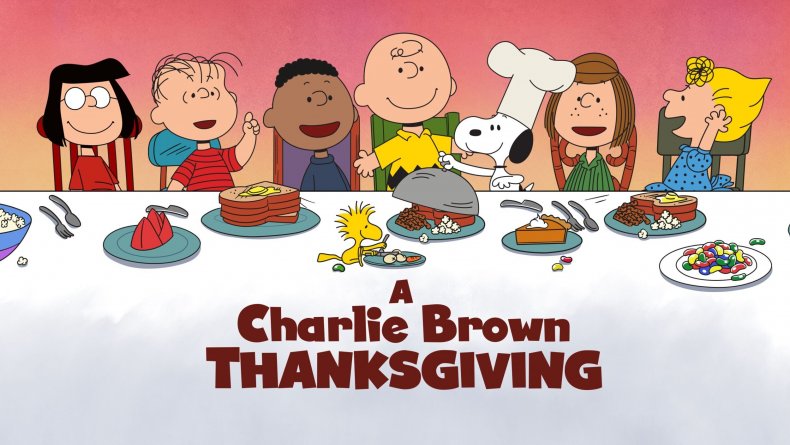
“A Charlie Brown Thanksgiving” is sandwiched between two of the most famous Peanuts specials, “It’s The Great Pumpkin Charlie Brown” and “A Charlie Brown Christmas.” As a result, it tends to get lost in the shuffle of other specials, but is still somewhat easier to find on television than “It’s The Easter Beagle Charlie Brown” (until 2020 anyway). This special revolves around Charlie Brown having to prepare a Thanksgiving dinner of sorts for his friends before he has to go to his grandmother’s place to have a more traditional Thanksgiving dinner. Peppermint Patty has somehow invited herself and her friends, Marcie and Franklin (the lone African-American character in the Peanuts universe), over to Charlie’s place, expecting a huge Thanksgiving dinner in the space of about an hour or so, as if such a thing were even remotely possible! My dad spent at least eight hours preparing our most recent Thanksgiving feast. Who does Peppermint Patty think she is anyway?

It’s interesting to reflect on how I viewed this special as a kid, and of how I view it now as an adult. I remember feeling sorry for Charlie Brown because I thought he was doing the best he could under terribly difficult the circumstances. Besides, he had Snoopy to back him up, and Snoopy buttered the toast as if he were a blackjack dealer opening a fresh pack of playing cards (the sound effects pretty much gave that one away). These days, he reminds me of myself when I was a teenager. Self-pitying and often quite hopeless, Charlie Brown is his own worst enemy. Watching him give in to Peppermint Patty’s demands makes me want to shake him and tell him to grow some balls. Stand up to Peppermint Patty. She may kick your bald ass at baseball, but not in the kitchen. But when it comes to Peppermint Patty, I think Charlie said it best:

“You can’t explain anything to Peppermint Patty!”

Indeed, Peppermint Patty has a one-track mind and cannot be easily reasoned with if at all. When she wants something, she seems to get it no matter what. At the same time, she can be so rude and oblivious to things she like good manners. Where does she get off inviting herself to other people’s houses? Why does she expect everyone to serve her needs? Doesn’t she have a clue? Inviting yourself to someone else’s house threatens to be rude and inexcusably imposing among other things… Actually, the more I think about it, the more I realize I was kind of like that as a kid. I did invite myself over to a friend’s house when I was 7 or 8. I wasn’t really thinking about how my friend might think. It’s kind of embarrassing to think about now. Well, judge not lest ye be judged!

Of course, you can always count on Linus to make everyone see the true meaning of the holidays. As in “A Charlie Brown Christmas,” he tells everyone how Thanksgiving Day came about when the Pilgrims and the Indians came together for a feast, and of how thankful they were for the strong friendship which formed between them. You have to be impressed with the amount of knowledge Linus had at his age. Maybe he had some sort of cheat sheet in that blue blanket he always carried with him. You don’t actually see his blanket here in this episode, but maybe Thanksgiving was one of his most favorite holidays to where he needed no reminding of what it was all about. Linus was always a great friend to Charlie Brown, and it was nice to see Charlie always had him as a friend who could help him through those tough times.

But you have got to love Snoopy in this animated special. He saves the day by making a Thanksgiving dinner of popcorn, buttered toast and pretzel sticks among other things. He also inhabits the funniest scenes as he and Woodstock have to get a table and chairs together for all the guests, and they get caught up in playing table tennis, something Snoopy fares much better in than real tennis, until Linus reminds them they have work to do. Then Snoopy ends up getting into a fight with a rouge folding chair which seems to have a life of its own. They fight each other over which way the chair should be set, and the fact that the chair wins is not a surprise.

There’s one other thing I have to point out in this special. At the end, Snoopy and Woodstock are left alone at Charlie Brown’s house as everyone else goes to grandma’s house, and this is despite the fact Snoopy seemed every bit as excited about going as well. Snoopy goes into his doghouse and constructs a wooden table and chairs for him and Woodstock, and he manages to cook a Thanksgiving turkey (why he didn’t do this earlier is best left unanswered) for the two of them, and they both sit down to eat it and even break a wishbone. Now here’s the thing; a turkey is a bird, and Woodstock is a bird as well. So, by eating the turkey, doesn’t this in fact make Woodstock a cannibal? I mean, he is eating his own kind! Doesn’t Woodstock even take this into account? What would his parents think? Plus, how does he get the better half of the wishbone? How can a little bird manage to overpower a beagle’s strength when he does not have as much to work with? This is the world of animation for you! Making the impossible seem possible even if it defies reasonable logic.

As I write this in 2020, the networks decided not to air “A Charlie Brown Thanksgiving” or “A Charlie Brown Christmas” for the first time in decades. This seemed sacrilegious to many, and after a major uproar from millions of people, both specials are now being aired on Apple TV and PBS. It would be unthinkable for either of these animated specials to not be broadcast for all to see. Then again, they are available on DVD, Blu-ray and assorted digital formats, so they are never easily out of our reach.

With “A Charlie Brown Thanksgiving,” I remembered of how certain things from childhood can remain ever so innocent from one generation to the next. Even if the Thanksgiving holiday is now seen much differently than before as people believe the Pilgrims laid waste to the Indians or instead observe this holiday as one where Native Americans (the Indians, mind you) fed a group of undocumented illegal aliens (the Pilgrims), this is still a celebrated time when families come together for a great feast. It’s all about togetherness, and this is one of the many things “A Charlie Brown Thanksgiving” preaches to great effect. Be sure to give this animated special another look when you get the chance. I don’t care how many times you have watched it because it is always worth watching again.