WRITER’S NOTE: This article was originally written back in 2012.
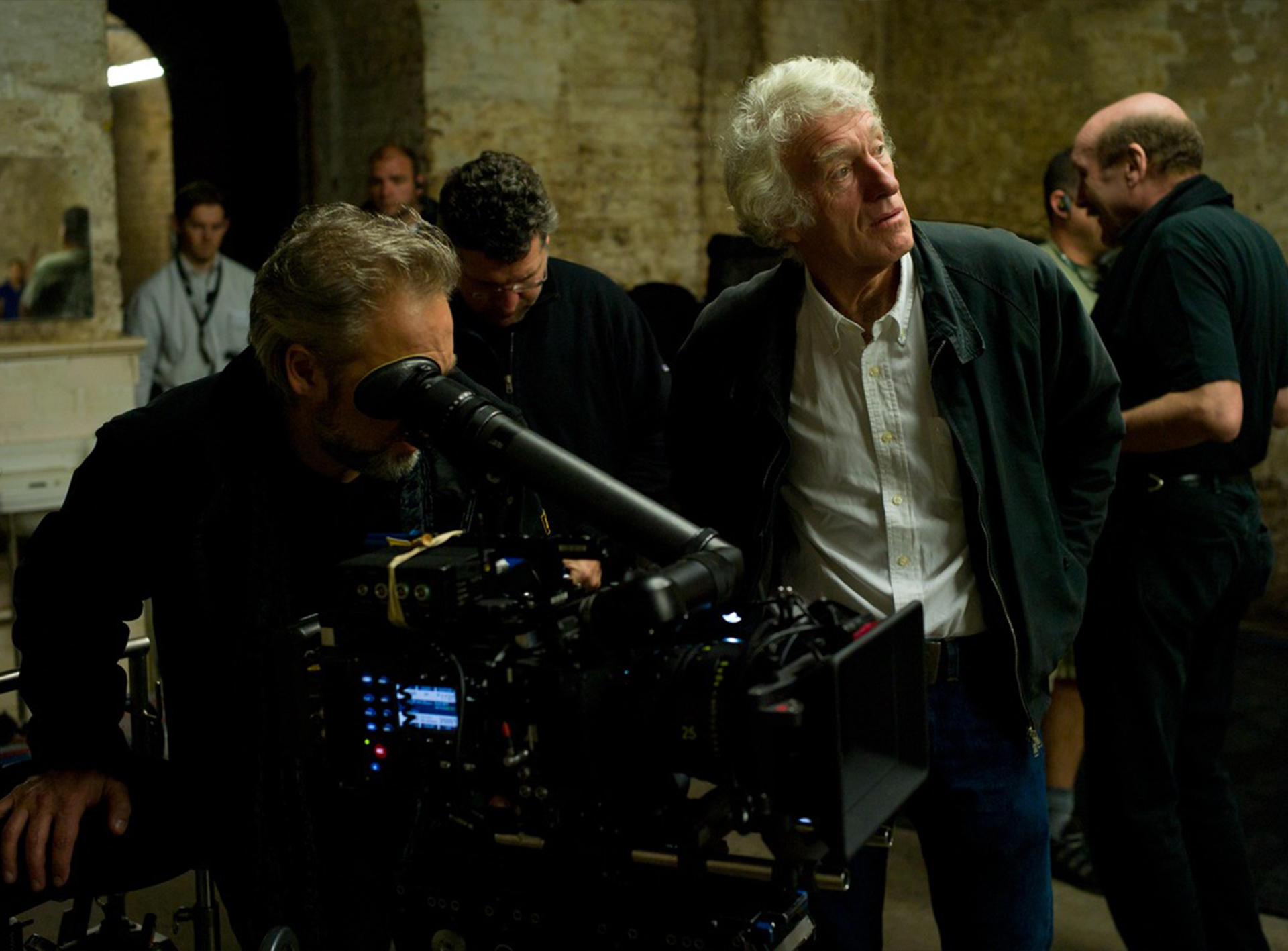
“Skyfall” has earned the respect of both critics and audiences around the world as they rightfully hail it as one of the best James Bond movies ever made. But while Daniel Craig and Sam Mendes have received tremendous praise for their terrific work, there is another man working behind the scenes who is equally deserving: Roger Deakins. Thanks to him, “Skyfall” features such unforgettably beautiful images like the assassination scene in Shanghai and the cold and barren landscape of Scotland. None of this is lost on the cast and crew as they spoke highly of Deakins’ work at the film’s press conference in Beverly Hills.
Deakins is best known for his work on many of the Coen Brothers’ movies such as “True Grit” and “No Country for Old Men.” He had previously worked with Mendes on “Revolutionary Road” and “Jarhead,” and the director attributes the look of “Skyfall” solely to Deakins.
Sam Mendes: He contributes what a great cinematographer contributes which is an unbelievable eye, an extraordinary skill in lighting, and for doing an immense amount of work in prep. (He showed) huge care and dedication from day minus 100 to the last day of timing which was only a few weeks ago. He’s a very shy man and he expresses himself through his work, and you just put a camera in front of Roger’s eye and point him in the direction of something interesting and he’s a very happy man. He’s one of the greats and it’s a privilege to have him on the movie.
Daniel Craig: There is an incredibly consistency in his work. He has a surety and you feel like it’s a Sam Mendes movie but it’s also a Roger Deakins movie as well. He has put his stamp on it, it’s not intrusive and it’s very magical.
Bérénice Marlohe, who plays the mysterious Bond girl Sévérine in “Skyfall,” spoke lovingly of Deakins and his work on this film.
Bérénice Marlohe:I have this concept that I’ve always believed in that hugely talented people are hugely humble. When I was on that set, I saw that with Sam, Daniel and him. He’s such a pure, beautiful man and just very focused on his work, and then when I got to see the movie, I would never expect that. The first thing that struck me was that mix of reality, a real story with real human beings, and with each picture it felt like you were having a journey in a dream. It was all so surprising and beautiful.
Naomie Harris, who portrays Eve, also described Deakins as being shy, humble and also added that he was quite “self-effacing.” This made him much different compared to the cinematographers she has worked with in the past.
Naomie Harris: It was a very different experience for me than working with most DPs because they can be very strong characters who really make their presence known on sets, and he’s the complete opposite. He’s really quiet and doesn’t interfere with your process at all, and he’s very respectful of actors’ spaces. For me it was an amazing pleasure to work with him.
To hear all this said about Roger Deakins makes him seem highly unique among the cinematographers of the world. I couldn’t agree more with everyone’s individual assessments of his work as the look of “Skyfall” is indeed gorgeous especially for an action movie. The greatest directors of photography have a look which is all their own and the kind you can notice right away, and Deakins has earned his place among them. Hopefully the Academy Awards will recognize his work here with an Oscar nomination when the time comes around.
French actress Bérénice Marlohe leaves quite the impression with her performance as Sévérine in the James Bond movie “Skyfall.” Like many “Bond girls” (or “Bond women” as many would prefer to call them), Sévérine is beautiful and glamorous, but she also proves to be very enigmatic as she shows a sleek confidence which soon becomes undone at the mention of her employer Raoul Silva (Javier Bardem). Marlohe is a knockout in the role, and she makes Sévérine one of the more unique and mysterious of Bond girls in this franchise’s history.
Marlohe appeared at the “Skyfall” press conference held at the Four Seasons Hotel in Beverly Hills, California to answer questions regarding her role as Sévérine. When asked what the notion of being a Bond girl meant to her, Marlohe responded about how what excited her was the mix of “male attitude of power and danger” and “a very glamorous feminine figure” this particular one had to offer.
Bérénice Marlohe:They are theatrical characters, bigger and more colorful than in life like any of the Bond characters. I sensed that I would have a lot of freedom on set, and after the experience I was happy that I could be in those iconic scenes in the casino (where she and Bond meet over a shaken martini) that you find a lot of the time in Bond movies. For me, they are very meaningful in the history of the series so I was very happy to get to be in one of them.
When asked about the audition process, Marlohe said she heard about a friend who encouraged her to go after the role, which she did.
BéréniceMarlohe:I felt so connected with the Bond universe that I spent two days in front of my computer trying to find the contact information of anyone I could possibly find who was involved with the movie. I even found Sam Mendes’ agent Facebook account! And then I found Debbie McWilliams’ (the movie’s casting director) email, and I was so happy that she saw and liked my reel. They auditioned me in Paris on two scenes from “Skyfall,” and they called me back in London and I auditioned again with Sam Mendes. And then I did the third audition with Daniel (Craig) and Sam as well as Barbara Broccoli and Michael G. Wilson, and then Sam told me I was chosen. I felt extremely peaceful and had a huge feeling of happiness in my stomach over getting the part because I felt very connected with the Bond universe. I called my father and family, and they were very happy for me.
Upon getting cast, Marlohe was determined to create “a real human being” out of the character of Sévérine. It involved a lot of digging inside herself to see what moves her as a human being, and also questioning herself about her own ancestors whom she never got to know. Being in “Skyfall” has also allowed her to speak out for causes she truly believes in as well
Bérénice Marlohe:Researching that character just had me become even more aware of the condition of the world and mainly of what happened in Cambodia years ago. I always wanted to be a voice to fight against the injustice, but I could never do that before. Now I have this ability to be heard, and I just learned that there is a very important trial going on in Cambodia where leaders of Pol Pot’s genocide 37 years ago are being judged. This is what I connected with. I wanted to be a voice for that. This is the incredible advantage I got from doing this movie; the connections I had as a human being and the revelations I had on the set.
Marlohe described her preparation as being very serious, but it was especially important to her that she be relaxed when on set. She also recalled joking around a lot with Craig on a daily basis.
Bérénice Marlohe:You have to be very relaxed and build your connections to the other actors so that it shows onscreen. The shower scene for instance, we (Daniel and I) were so relaxed that I would sing in the shower and he would be like, what? Daniel was doing some impersonations and other stuff in between takes, and the six months we worked together were like that so it was fabulous.
When it comes to Bond’s relationship with women, many still debate if he is still the love them or leave them type, or if 007 has evolved in this three movies Craig has starred in. Marlohe herself hopes that it her character’s destiny were different in “Skyfall,” a huge love story would have come about between Bond and Sévérine. Still, she describes Craig as succeeding in making Bond seem like a real human being.
Bérénice Marlohe:You can see that through his relationship with M (Judi Dench) that he has a sensitivity. They have a very beautiful and pure relationship that is very human and moving.
Some Bond girls develop a great career after they have appeared in a 007 movie while others have somehow vanished without much of a trace. Watching Bérénice Marlohe in “Skyfall” makes me believe we will be seeing a lot more of this French actress in the near future.
She thrilled us as a hardened survivor in “28 Days Later” and wowed us with mystical powers in the “Pirates of the Caribbean” movies, so it was only a matter of time before English actress Naomie Harris got the chance to play a Bond girl. She finally gets the opportunity in the 007 adventure “Skyfall” where she plays Eve, an MI6 field agent who works hard at being Bond’s equal. She shares a sizzling chemistry with actor Daniel Craig in certain scenes, and it’s the kind of chemistry you want to see last for more than one Bond film.
Harris appeared at the “Skyfall” press conference held at the Four Seasons Hotel in Beverly Hills, California where she talked about her role as Eve. Being a Bond girl carries with it a weight of expectations, and some still consider a character like this to be sexist in its design. Harris was asked what being a Bond girl meant to her and she said it meant being alluring and beautiful, and she initially found it to be constraining as a result.
Naomie Harris:I usually don’t play roles like that. In fact, I don’t know if I have ever played a role like that before, so I felt confined by all those set ideals. But then a friend of mine gave me a great piece of advice which was, just forget about all of that and imagine you are a part of a low budget movie where you can do whatever you want with this role and just make it your own. And that ultimately is how I come to see Bond girls. In terms of Bond girl terminology, I think we’re just women in Bond movies and women now in Bond movies can be anything so you’re totally free to create. That’s what makes it an interesting role.
Now Bond has a reputation of loving women and leaving them, and this has made being a Bond girl seem less appealing to many people. For Harris, however, playing Eve in “Skyfall” represented an opportunity to portray a new generation of them, and it’s just as well as the Bond franchise is now celebrating its 50th anniversary.
Naomie Harris: They certainly said that to me when I auditioned. They said, we want you to create a modern woman that women can respect and admire and look up to, and this is something we’re creating that’s new and different. That was one of the reasons why I was so excited about taking on the challenge of this role.
When asked if people should say Bond girl or Bond woman, Harris replied we can call it whatever we want.
Harris was asked to audition for the role of Eve after director Sam Mendes and casting director Debbie McWilliams saw her in a production of “Frankenstein” directed by Danny Boyle. She had no idea they were in the audience, and her agent later told Harris they wanted to meet with her about being in “Skyfall.”
Naomie Harris: I had two auditions and I didn’t really take it seriously because I never ever saw myself as a Bond girl. I wasn’t really very nervous at all because I know they auditioned hundreds of girls all around the world, and I thought this is right at the beginning of their casting process so they’re not going to cast me. It wasn’t until the third audition when Sam said, “It’s down between you and just two others” that I realized this is actually serious and could actually really happen. That was the first time I got really nervous. Thankfully I got the role and largely because of Boyle because Mendes called him and asked what I was like to work with, and he gave me a glowing report.
Doing “Skyfall” gave Harris a great respect for action heroes because before this she had no idea of the amount of training which goes into getting prepared for a film like this one. Harris even said Craig would do a 15-hour day and then train for 2 hours afterwards, and she doesn’t know of anybody else who works as hard or has that dedication to a particular role.
Naomie Harris: Movies like these are emotionally and hugely physically demanding. For someone like me who’s incredibly lazy and doesn’t exercise at all, it was a big change for me to be exercising for two months before doing the movie. I was out five days a week with a personal trainer, I was on the gun range three days a week, and I was even doing stunt driving and developing all these other skills that I didn’t have before. I really got in touch with my body in a way that I never had before.
When it came to talking about working with Craig, Harris couldn’t have spoken of him more highly.
Naomie Harris: Daniel definitely remembers what it was like coming into this franchise and how intimidating and overwhelming it was for him. It’s amazing that in his third Bond movie he remembers that and he really goes out of his way to make sure that you don’t feel that weight of pressure and that it is shared. He kind of holds your hand and says ‘we’ll get through this together’ throughout the whole thing, and he is an incredibly generous man.
Talking about Craig also let Harris to tell one of the most memorable stories from that press conference.
Naomie Harris: For me the story that sums up Daniel was the first time that I met him. He was having a costume fitting and I was being walked down the hallway and I was asked whether I wanted to meet him. I was very intimidated and I thought I don’t want to bother him while he’s having a costume fitting as that wouldn’t be a great first time to meet him. So, I kept on walking down the hall and he saw me walk past, and as he ran out of his costume fitting, he hit me over the head and said, “Where are you going stupid?” And then he gave me this massive hug and said, “Welcome aboard,” and that for me really sums up Daniel because he’s incredibly down to earth and incredibly warm and also quite silly as well.
In closing, Harris leaves an everlasting impression as Eve in “Skyfall,” and this will become clearer to audiences around the world once they have seen this 007 movie. She is not your average Bond girl who pales in comparison to him, but instead one who can say she’s in many ways his equal.
Naomie Harris: Eve is very capable in the field. She is a very competent field agent but she’s working on this mission with the ultimate field agent who is Bond. She’s never going to be able to live up to him, and no man and no woman can. That’s why he is Bond and so it’s understandable that she needs a bit of help, but I was not happy about having to shoot him. I thought I really wanted to be a better shot than that.
WRITER’S NOTE: This article was originally written back in 2012.
As Raoul Silva, Javier Bardem gives us one of the most unforgettable and nastiest of Bond villains in the 007 movie “Skyfall.” But unlike other Bond villains who are bent on world domination, Silva is far more interested in seeking revenge on one of this series’ regular characters. It should be no surprise at how Bardem can play such an unnerving character to a great extent as he won an Oscar for playing Anton Chigurh in “No Country for Old Men,” but it’s the actor’s attention to character which makes his performance as Silva especially riveting.
For Bardem, it doesn’t matter whether the characters he plays are good or bad. What matters to him is if he is able to portray a character as a full-blooded human being with flaws and all.
“As long as there’s a human being behind the character, with some kind of conflict, as we all have, then it’s interesting to play anyone, whether it’s a villain, good guy, bald, long hair, tall or short,” says Bardem.
“Here there is a broken person,” Bardem continued. “What I like the most is there is a clear motive to kill. We understand he is very human and this is powerful. I was attracted to the villain because I thought he was a nice guy. I could see it in his eyes.”
In talking with “Skyfall’s” director, Sam Mendes, Bardem was told the key word regarding Silva was this one, uncomfortableness. This is a character who lives to make the skins of his opponents’ crawl, and Bardem portrays this ever so brilliantly here.
“I don’t want him to be someone that threatens somebody that’s threatening to someone. It’s about creating a very uncomfortable situation every time he talks to somebody else,” Bardem said.
There has also been a lot of talk regarding Silva’s sexuality as many wonder if this is the Bond’s franchise first homosexual villain. In a perfect world, this question would be completely irrelevant as good and bad comes in all forms, but many still cannot help but be curious. Bardem ended up using Silva’s ambiguity to his advantage.
“The character’s sexuality was part of the game,” Bardem said. “Sexuality was there as something important to create the behavior of being uncomfortable. From uncomfortableness, we brought the sense of humor.”
Bardem went on to describe Silva as being “really confident about himself in a weird way,” and that this character thinks of himself as “the most beautiful man in the world.” The actor also explained that while he wanted to make this particular Bond villain unique, he was also fully aware of how these movies were made with the fans in mind.
“You have to work on two different levels,” Bardem said. “One is to make him as real as possible. And the other is to fly a little bit higher than the rest of the characters. You are allowed to do that. Because that is what people are expecting to see when you play a Bond villain, especially since the films are turning 50 years old.”
Mendes himself went on to talk about how playing a Bond villain allows actors to create unusual kinds of characters.
“Doing a Bond movie affords you that kind of flamboyance that you can’t get in purely naturalistic movies,” said Mendes. “As an actor, you get an opportunity to do things that, frankly, are hovering a foot above the ground. They’re not rooted in reality. Javier always has a slight theatricality about him, which we just tweaked in this movie.”
The James Bond movie franchise is now fifty years old, but “Skyfall” makes it feel like it has been reborn. A lot of this is thanks to Mendes and the actors, and it says a lot about Javier Bardem and of how he has created one of the most memorable villains this series has ever seen. Raoul Silva is far from your usual one-dimensional bad guy and who is instead one who has been wronged and is actually justified in seeking revenge against those who abandoned him. As a result, Silva has more layers to him than your usual Bond villain, and Bardem more than rises to the challenge in making him one of the more complex bad guys you will ever see in this or any other motion picture.
“Skyfall” marks Dame Judi Dench’s seventh appearance as MI6 spy master M, and it gives the Oscar winning actress her biggest role yet in the James Bond franchise. Ever since her first appearance in “Goldeneye,” the same film which introduced Pierce Brosnan as 007, Dench has made the character a no-nonsense leader who considers the famous secret agent “a sexist, misogynist dinosaur” and “a relic of the Cold War.” M also shows no hesitation about sending Bond to his death if the situation calls for it, and this made the role all the more exciting for Dench to play.
“A man saying that to Bond is one thing, but a woman saying that to him was quite another,” says Dench.
Whereas M has typically remained on the periphery of the Bond movies, “Skyfall” has her playing a significant part in the film’s story. We come to learn more about M’s past as it catches up with her in the form of one of the nastiest Bond villains ever, Raoul Silva (played by Javier Bardem). Dench was understandably excited about her enlarged role in this particular 007 film as Bond struggles to protect M against Silva who has a very personal vendetta to settle with her.
“It’s very nice to be out from behind the desk,” Dench said. “It’s extremely nice to get a go in the field, as it were, and get a bit of the action. It made me feel very grown-up. It’s not just the fellas who are spinning about and shooting guns – I get a go.”
In talking about M’s backstory, Dench talked about the need for actors to create one for themselves even if it is not there in the script.
“You always have to make a backstory for yourself in order to know how to react to certain things,” Dench said. “I’ve had this backstory with two grown up daughters and everything. I knew her capabilities and I knew that she must have been through all sorts of things in order to get where she was and hold this job over a lot of chaps at MI6. So I knew her capabilities but I’m very glad they came to the fore.”
As for how she prepares for a role, especially this one which she has held onto for 18 years, Dench said it is no different from when she plays a character in the theatre.
“With M, she’s always slightly changed in each film,” Dench said. “In the first one (“Goldeneye”) naturally I would have thought out why and how this woman has gotten to this part and why she’s head of MI6. Each time you come to do it you actually learn a little bit more about her, and you supply a little bit more about her. So there’s a lot more of the relationship between her and Bond beforehand that goes into this one, but it adds a bit more because there’s more to tell.”
There’s a lot more which could be said about Dench’s role in “Skyfall,” but doing so would give away many of this film’s surprises (and there are several to discover throughout). What can be said about Dench is she will always be a tremendous acting talent we should all feel privileged to watch in anything she appears in. Perhaps the person who can sum Dench up best would be “Skyfall’s” director Sam Mendes who also had the fortune of directing her in a production of “The Cherry Orchard.”
“She was the first bona fide great actor I had ever worked with,” said Mendes. “I learned more from watching her, the way she worked, than I ever had before. She would never think of herself as a teacher. She has too much humility and too much grace to consider herself to be knowledgeable. But in fact, it wasn’t about what she said, it was about how she conducted herself, how she rehearsed, how she thought about the play, her dedication to the play and the audience, her work ethic.”
WRITER’S NOTE: This article was originally written back in 2012.
They say third time’s the charm, and this could not be truer for actor Daniel Craig’s third go around as James Bond in “Skyfall.” Many are calling this latest 007 adventure one of the best ever, and by now there should be no doubt that Craig is the best actor to play Bond since Sean Connery. Craig goes on record about how he prepared to portray the iconic British spy this time around, and of the rules he and the filmmakers broke in this franchise.
At a recent press conference, Naomie Harris, who plays agent Eve, said Craig worked a 15-hour day on set, and then he spends another two hours doing physical training. Craig talked about how he trained for “Skyfall.”
“I’m not a fighter. I pretend to be one. It’s bullshit boxing,” Craig said. “I had to do a lot of running in this movie, which I hate. I did a lot of sprinting and running. Bond doesn’t usually walk through a room. … On paper it looks very easy: it says Bond goes from A to B and he goes from B to C. But he goes from A to B at a lick. He runs down the stairs, he runs up the stairs, and you have to do 10 takes at a time.”
One big question people had for Craig was how many of his own stunts he did for “Skyfall.” He wasn’t about to fool anyone with his answer.
“I get a kick out of it,” Daniel said of the action scenes. “I don’t do all my stunts. I’d be lying if I said that. But I like the fact that occasionally that you’ll see on screen that it’s my face and it’s me. And I think audiences hopefully appreciate that. At least, I really hope they do.”
Craig, however, did participate in one hair raising stunt which takes place during the movie’s prologue which takes place in Turkey.
“My first day on the train was just about learning how to stand up. The train was going about 25 mph, but it’s not the speed that matters, it’s the side-to-side motion,” Craig said. “Then when we get over the bridge, it’s a 300-foot drop over this ravine. They all said, ‘Don’t look down!’ And I tried not to.”
With this particular 007 movie, Craig was determined this time to bring Bond back to the basics. In other words, it was time to bring back the gags and the gadgets audiences had been missing in the previous installments.
“I always had a plan in my head, however tenuous it was, that when we did ‘Casino Royale’ – that was the beginning – we had to set a tone. Then we finished the story in ‘Quantum of Solace’ and wrapped it all up. The third one would always be about bringing in the classic Bond,” Craig said. “The characters, the people that really make a Bond movie a Bond movie. That was my only desire.”
But there is one rule which Craig freely breaks in “Skyfall,” and it is showing Bond crying. Some will say it is an unbreakable commandment for 007 to shed tears over anybody, but ever since “Casino Royale,” the rules for how to make a Bond movie have been broken out of sheer necessity. Things needed to be reinvented in order for Ian Fleming’s famous secret agent to remain relevant in this day and age. Even when Craig jokes how Bond is seen sweating, he makes it clear how he and the filmmakers are looking to break the rules of the fifty-year-old franchise.
“Of course we did, that’s what we’re supposed to do. We’re supposed to mess around with it,” Craig said. “It’s interesting: You said he cries, other people I know said he doesn’t cry, it’s open. But it’s an emotional scene.”
There’s also no forgetting Mr. Fleming whose books gave life to this long series. As time goes on, the filmmakers and whoever plays Bond remain dedicated to portraying the character as closely to the books as they possibly can. At the same time, Bond is a complicated kind of secret agent.
“We always go back to Fleming when we sit and discuss, and if you look at the novels, he’s so conflicted,” Craig said. “Fleming tries to kill him off. He gets really pissed at him. And he’s a killer. He kills for a living. It’s a very dark place he goes to.”
Daniel Craig is contracted to do at least two more movies as James Bond, and he is not about to part with the role. Here’s hoping he lasts even longer as he is the best actor to inhabit this iconic role since Connery.
Actor Matthew Lillard appeared at the Silent Movie Theater in Los Angeles on September 12, 2012 where Cinefamily presented a sneak preview of his directorial debut, “Fat Kid Rules the World.” Based on the award-winning book of the same name by K.L. Going, it has already won the Narrative Feature Spotlight Audience Award at the 2012 SXSW Film Festival, and the audience at the Silent Movie Theater sounded just as enthusiastic as those festival-goers did over what Lillard brought to the silver screen.
One audience member asked Lillard what the budget was on “Fat Kid Rules the World,” and to hear him answer the question gives you an idea of how tight everything has become in the realm of independent film.
Matthew Lillard: We are well under a million dollars. We are a $750,000 dollar movie. We raised $158,000 dollars on Kickstarter (the audience applauded this), and we shot in 23 days in Seattle, Washington.
After winning the audience award at the SXSW Film Festival, Lillard thought “Fat Kid Rules the World” had it made because people loved it, and the reviews were really great. But then came the time to try and sell it to Hollywood studios.
Matthew Lillard: When the offers came in, they were all pretty terrible. I mean, they were all VOD (Video on Demand), and it gave us very little opportunity for our low budget movie to make its money back.
Granted, making an independent film has never been easy, but the way they are made these days show how much this industry has changed so much since the 1990’s. Eventually, Lillard decided he and his backers should bypass the typical route filmmakers take to sell their movies and create a new opportunity for themselves.
Matthew Lillard: With the $158,000 dollars (from Kickstarter), we put the movie on the Vans Warped tour all summer long. We made a deal with Tugg (a website for movies) so any kid anywhere in America can set up a screening of our film in their local cinema. If a kid lives in Fairbanks, Alaska, he can go to tuggthefatkid.com and request a screening of our film in his local cinema. They will set a threshold and the theater will say they’ll do it for forty people, and if forty people pre-buy a $10 dollar ticket then they will set it up at that time at that date in your theater.
Lillard went on to say that the highest requested movie before “Fat Kid Rules the World” got 330 requests, and his has already gotten over 1,000.
And when it comes to the life of this movie, Lillard made it abundantly clear how it is in the hands of the people who end up seeing it. It’s always great to hear stories like this as there are many different avenues available to filmmakers today, and we are not always sure of what they are.
Lillard then finished the evening by explaining to the audience why he made “Fat Kid Rules the World.”
Matthew Lillard: We made this movie for kids that are lost in the world. It’s an underdog story about an obese kid who finds punk rock music. For me, I wanted to make the movie because I found acting in my life when I was thirteen and it changed my life, and I think that there are kids out there that need this fucking movie. I did a movie called “SLC Punk,” and kids needed that movie. If I walk down the street in Austin, Texas people will come out to me and say, “Dude, SLC Punk changed my life!” And my goal, as lame as it is, is to help a kid out there who needs the movie finds the movie and it speaks to him and it changes his life or he finds himself. And that’s our goal, and you can help us do that.
“Fat Kid Rules the World” is available to own and rent on DVD, Blu-ray, and Digital.
With Andy Summers having released his latest book, a collection of his many short stories entitled “Fretted and Moaning,” I am quickly reminded of when I met him back in 2015. The documentary “Can’t Stand Losing You: Surviving The Police” had just been released, and I got to attend its press day in Los Angeles, California. Based on Summers’ memoir “One Train Later,” it follows him from his early days as a musician where he performed with The Animals during the 1960’s to meeting Stewart Copeland and Sting which led to the formation of The Police, one of the most infinitely popular bands of the 1980’s. We also get to look at Summers’ personal life and his photography, another art form he is quite gifted at, and we get reminded of how important a guitarist is to a band even when the bassist gets the most attention.
It was a real honor and privilege to meet Summers, talk to him, and have him autograph my personal Police box set of “Message in a Box: The Complete Recordings.” During our time together, we talked about how the internal conflicts and strong egos helped make the band more creative even as those same things eventually tore this trio apart. I also asked him about his song “Mother,” his solo contribution to The Police’s album, “Synchronicity.”
Joining him in this interview is one of the documentary’s producers, Norman Golightly, who has several decades of experience in movies, television and social media. Moreover, he remains committed to promoting positive social change. Golightly talked about the obstacles in getting this documentary made, and they seem surprising as a this one is about a band which had Sting as its most unforgettable member.
“Can’t Stand Losing You: Surviving The Police” is available to own and rent on DVD, Blu-ray and Digital. For fans of The Police, I could not recommend this documentary more highly.
Below is my exclusive interview with Summers and Golightly, the press conference with them, and the documentary’s trailer.
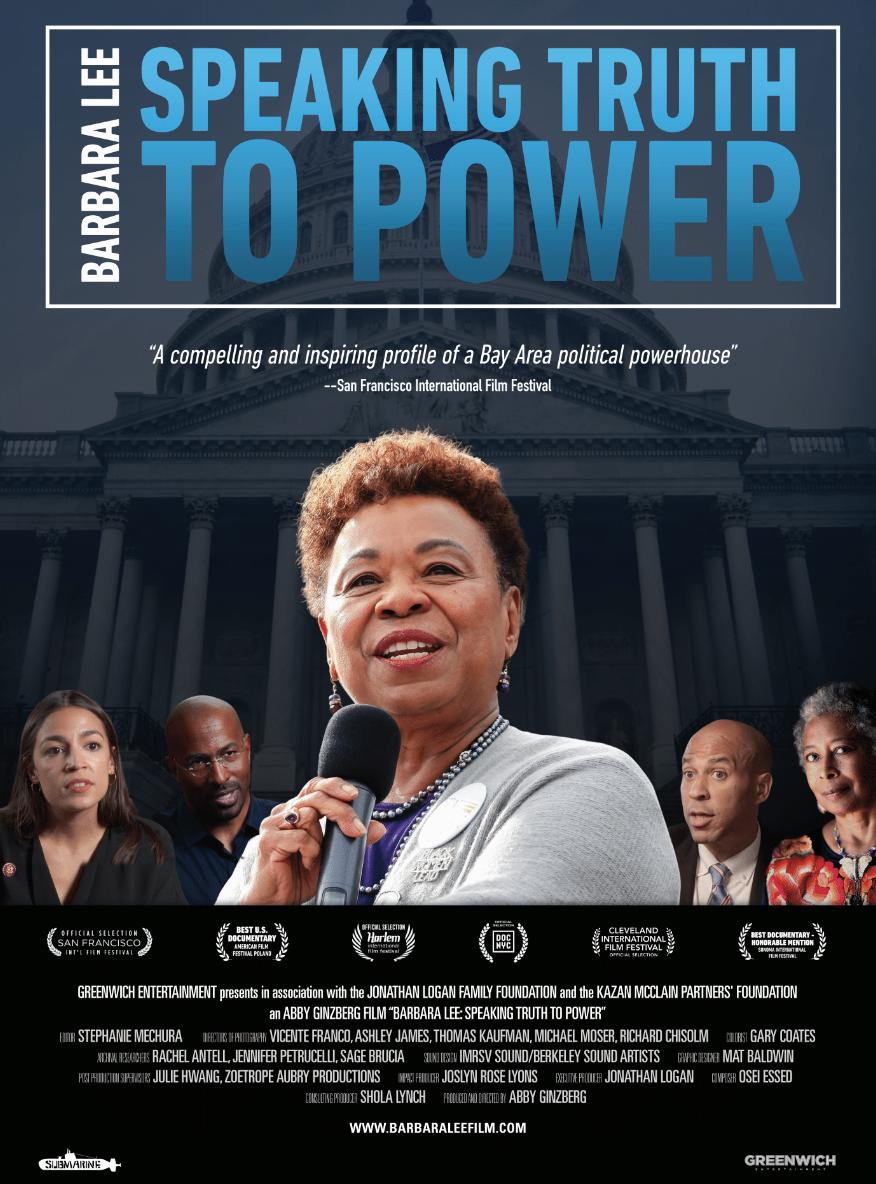
With “Barbara Lee: Speaking Truth to Power,” filmmaker Abby Ginzberg has given us one of the most memorable feature length documentaries of 2021. It introduces us to American politician and social worker Barbara Lee who currently serves as a United States Representative for California’s 13th congressional district, and this is someone we should now about. She has served in Congress for many years now and remains a strong voice for human rights, peace, and economic and racial justice in America and around the world. As Barbara’s story unfolds, we learn of her many experiences which shaped her life and beliefs such as volunteering for the Black Panther Party and escaping an abusive relationship. We also get testimonials from various politicians, journalists and other well-known individuals such as Cory Booker, the late John Lewis, Alexandria Ocasio-Cortez, Van Jones, Danny Glover and Alice Walker, all of whom cite her as a tremendous inspiration to them and others.
More importantly, Ginzberg shows how Lee has remained steadfast and true to her beliefs to where she is not worried about popularity. While politicians mostly vote along party lines and are more concerned with their corporate donors instead of their constituents, Lee is not one to merely obey those in power. This is made especially clear when we see her oppose George W. Bush’s resolution granting the President unlimited war-making authority as it did not include much in the way of specifics and was, as she put it, “too broad.” In addition, she was the only representative in Congress to vote against this resolution. While everyone else was beating the war drum, Lee did not succumb to the cries for vengeance as she issued this stern warning to her colleagues: “Let us not become the evil we deplore.”
I got to speak with Ginzberg and Lee recently about the making of this documentary. Ginzberg herself has been a filmmaker for over 30 years, and her movies are about tackling discrimination and the legal profession. Her works include “Soul of Justice” which is about federal district judge Thelton Henderson, “And Then They Came for Us” about the forced incarceration of Japanese Americans during World War II, and “Soft Vengeance” which documents the life of anti-apartheid freedom fighter Albie Sachs. With “Speaking Truth to Power,” she is keen in making Barbara Lee’s existence known to the world at large.
During this interview, the two discussed why this is not meant to be a chronological or linear documentary, Lee expressed her thoughts on President Joe Biden’s recent extension on the moratorium for renters, and they talked about what needs to be done about homelessness and the war on drugs in America.
“Barbara Lee: Speaking Truth to Power” will arrive in theaters on August 20, 2021. In Los Angeles, it will be playing at Laemmle’s Royal Theater in West Los Angeles, and there will be a Q&A with Lee and her son following the 4:30 pm showing on August 21st. In Northern California, it will be showing at Shattuck Cinemas in Berkeley, and at the Roxie in San Francisco. Barbara will appear at the Roxie after the Thursday showing on August 26th. It will play in theaters for one week, after which it will be available to stream on Amazon and iTunes.
Please feel free to check out the interview below as well as the trailer for the documentary. And remember, stay woke!
WRITER’S NOTE: This is from a press day which took place in 2013.
With “About Time,” writer/director Richard Curtis once again proves that he is the master of making romantic movies. While romantic films are currently a dying breed in America, Curtis gives the genre a much-needed re-invigoration. This is the same man who wrote the screenplays for “Four Weddings and a Funeral,” “Notting Hill” and “Bridget Jones’s Diary,” and he also wrote and directed “Love Actually” which has become everyone’s favorite movie to watch at Christmastime. Curtis populates his films with characters we can all relate to, and he shows us how the simplest things in life can be so wonderful.
I got to meet up with Curtis when he appeared for the “About Time” press conference at the Four Seasons Hotel in Los Angeles, California, and he proved to be as charming and funny as many of the characters who inhabit his films. During the roundtable interview he talked about “About Time” differs from other romantic films, how he came to cast Domhnall Gleeson and Rachel McAdams, and why this will be his last movie as a director.
While these questions came from several reporters, I did take the time to put my name to the questions I asked Richard. You will find them eventually.
Question: Why did you not tear Tim (Domhnall Gleeson) and Mary (Rachel McAdams) apart in the middle of the movie only to bring them back together?
Richard Curtis: Well, I quite liked the idea in the film. There is a kind of habit in romantic films of getting people who hate each other when they meet; he’s a Nazi and she’s a member of the Socialist Worker’s Party (laughs), however will they fall in love? But most of us, when we bump into the people we are going to spend the rest of our life with, quite like them when we first meet them. I quite liked the idea that you could do something where people like each other, and then there was the time travel and then they liked each other again. I’m interested in if you can do it. I was writing about sort of a happiness in a funny way and writing about the interesting business of how things work rather than being really interested in the way things don’t work.
Q: Speaking of the time travel aspect, it’s something that people keep watching these movies for. They’re always keeping an eye out for the loophole or plot holes. Did that make it harder writing the script?
Richard Curtis: Look, you know you’re gonna fail, that’s the thing. I know where I failed in this so you just do your best and the people and the production keep you up to it, and anybody who spots anything that’s wrong will always say it to you because it’s a fun thing to spot when they’re reading the script. So, you know you’re getting closer to true without actually getting there, and it was fun to play with it. It’s also a thing where when you decide you’re going to do a time travel movie, it is something that is in your head as you’re walking around. The thing about not being able to go past the birth of your child was definitely the result of another conversation I was having with someone about how weird it is that you commit your entire life to people who you have no ability to choose, and then I thought that’s so true. And not only that, if I had sex four seconds later, I’d have a different child and then immediately I thought that would become a key plot point.
Q: This movie has two love stories in it. It has the father and son and it has the man and the woman. How were you able to find the balance so that one didn’t overshadow the other?
Richard Curtis: On the whole you try and rig films to make sure they turn out as you want them to turn out, but I think it seems as though perhaps the strength of the Bill Nighy story is more than I expected. It’s turned out to be more emotional than I expected, and I think that’s all down to the way Bill chose to play it. He chose to play it in such a sort of gentle way that I think, when you see the film, you can insert your own father into the space that Bill creates. Oddly enough, this film is in some ways less manipulative. If you’re doing a movie that ends in a big kiss and a romance, your kind of playing the cards all the way through to try and get the maximum emotion at the end. In this one I always knew that I was always aiming for this bizarrely simple final moment which was just gonna be a guy doing the most banal things in the course of an ordinary day. So, I didn’t think so much about the dynamics of the film, perhaps I have in others. But one of the ways of doing it was by getting them to get married halfway through, so that film’s done and there’s another film to rely on.
Q: Has it affected sort of the carpe diem qualities, or is that something you practiced before you started writing the script?
Richard Curtis: No. Oddly enough I think, and Bill and I talk about, because I’ve done the movie, I am thinking about that a lot more, I really am. My girlfriend, who never makes any concessions to me, says I always work far too hard and I always think that I’m not working as hard as I used to and always am. But even she is saying that she’s noticed that I seem to be creating more space and enjoying things a little bit more and making more time for normal things. So that’s why I have said I am not going to direct another film because I think that directing a movie is not a good way to have a happy life.
Q: Is that a Steven Soderbergh promise or are you just gonna keep coming back?
Richard Curtis: Anyone who says that, Steven is their hero because it means you can change your mind. It is becoming a great tradition; the great heroes like Jay-Z, doesn’t he resign? If I come back, I’m part of a noble tradition, but that is my intention at the moment.
Q: Can you talk about Comic Relief and how that came to you at a young age?
Richard Curtis: Wow, do other people know about that side of my life? Well, it started off by an almost comical mistake in that a girl I know asked if I would like to go with her to Africa, and I just said I would go to keep her company and then the charities decided to send us to different countries. They said we would cover more ground, so that was a mistake. So, I was in Ethiopia at a very bad time and that could not but change my life. That’s something I have to carry. We did a stage show and then we did a TV show, and the TV show made so much more money than was expected that I couldn’t not do it again, and I have just gone on doing it. Every time we do it, we make more money than I will earn in my entire career. I think of it as my difficult child, it takes exactly half my time, it changes its nature so I now, and after doing it now for 25 years I got a feeling that the money we’ve raised might be less important than the education or part of it. Kids in England have always grown up knowing a lot about poverty in Africa and problems at home, and that educational thing may have actually turned out to be the function of it. The next thing I’m doing is doing a year and a half trying to be part of making the new declaration by the United Nations in 2015 to end poverty, so it’s a never-ending big subject. I think the way it’s bounced off on my career is that I haven’t written my seven bad films. I do think a lot of times when people, when they finish the thing, say have I got any other ideas whereas I’m always a year behind. I thought of this film in 2005, and then I chose to do the pirate movie (“Pirate Radio”) because I wanted to be a bit older by the time I made it. It’s actually given me breathing time and let things stew longer, so I always believe quite a lot in the projects I do by the time I get to them.
Q: Fighting poverty seems like an even bigger challenge now with the gap between the rich and poor growing bigger and bigger. Do you feel sometimes like it’s a never-ending battle and how we are going to do this?
Richard Curtis: Well, you have to be realistic about that. Actually, statistically speaking, the lives of the very poorest people on the planet have never gotten better quicker than in the last 15 years. It’s been extraordinary so I’m paying more attention to that. But the rich and poor inside countries, I’d just think it increases your responsibility to try and make sure that people like me who do live in the bubble of comfort are really aware of how peoples’ lives are at the other end of the scale. I made all my children watch a documentary called “Poor Kids” the other day. It’s just a really brilliant, very sweet-natured documentary about four really poor kids in the UK, and they literally could not believe what they saw and that increases the desire to communicate this.
Q: You also focus a lot on the joy of real people like with the Heathrow Airport scenes in “Love Actually,” and then there are scenes in “About Time” that look like they had regular people in them. Where did you find those people?
Richard Curtis: Well with “Love Actually” we put up a little black box with curtains in Heathrow and just filmed and then sent assistants rushing around and saying do you mind signing this release. It’s very weird, you haven’t seen your mom for 17 years and somebody’s saying we’ve just filmed you crying embarrassingly. The strange thing is when we edited that, over half of what I wanted in that sequence I couldn’t use because it turned out we hadn’t got the permissions. The bit at the end of this one was sort of the same thing. Quite a lot of it was sort of staged. There are some things that weren’t. Most of that was directed by my girlfriend. That was the weird thing. It was the final day of the shoot. I woke up and I was in the most astonishing pain. I thought I had kidney stones or whatever, and she leapt out of bed in the highest of spirits and said she would ring a doctor on the way to the set (laughs). Some of the loveliest images there were got by her which I think sort of shows because she is full of an energy and joy about her. It was interesting how ordinary those images had to be. I didn’t shoot them at the beginning, so I didn’t quite know how it was going to end. When I thought that I would end with a series of just normal images, I took a film by a friend of mine called Kevin McDonald called “Life in a Day” which is a movie he made about YouTube, and I cut like ten favorite images from that in and showed that to friends and it was a disaster because they were good. They were so definitive, so beautiful, so picturesque, and everyone said the movie’s all been about ordinariness and you can’t then say that every day is a beautiful sunset and every day is an astonishing child framed perfectly in a window in Milan. So, I did try and keep those end bits as sort of banal as they could be, but still joyful.
Ben Kenber: “Love Actually” is my family’s favorite movie to watch every Christmas Eve. I love it too but I’m always hoping we can add “Bad Santa” as a double feature though.
Richard Curtis: Lauren Graham’s in “Bad Santa!” I love her!
Ben Kenber: I’m not usually a big fan of romantic movies, but what I love about your movies is that the people and what they go through feels so real and relatable. A lot of American romantic films are manipulative but your films never feel like they are. Your movies touch on issues that most other filmmakers don’t really take seriously.
Richard Curtis: Well, thank you very much. I don’t have an answer for that, but don’t down American filmmakers because I think there’s a kind of feeling that romantic films may not be in a good place at the moment. “(500) Days of Summer” I thought was an incredible movie, “Like Crazy” is an amazing movie about love, and “Lost in Translation” is the greatest ever romantic comedy even though it’s not a romantic comedy. I’ve been looking back because I’m thinking about finishing and thinking why did I write all these films on this subject and then suddenly realizing it is because it is the context of my life and what matters to me. How your family treats you, who you love, how you get on with your kids and your friends are what fills most of your emotional time, and I’m just trying to hang on to that and write about normal things because I never, never bump into serial killers.
Q: A lot of people don’t seem to realize that “Love Actually” is a Christmas movie because the holiday gets so pushed into the background.
Richard Curtis: I think the funny thing about “Love Actually” is the casting is now out of whack. Originally it was 50% well known and 50% not, and now the naked guy is in “The Hobbit,” January Jones is Betty Draper on “Mad Men,” and even the boy is now in “Game of Thrones.” Liam Neeson is the greatest action hero in the world and Andrew Lincoln is on “The Walking Dead,” so it’s a hell of a cast now.
Q: You are obviously a believer in love. Do you have thoughts on marriage?
Richard Curtis: Well in a way “Four Weddings and a Funeral” was a long way of explaining to my mum why I wasn’t married. She always found it hard to accept. I haven’t gotten married for particular, peculiar reasons, but I’m sure that marriage is a wonderful thing.
Q: You make great use of music and songs in your movies. Can you give us an insight into what your playlists are?
Richard Curtis: Well, the insight I would say is that I really do have to use music in order to get through the process of writing. It really is part of me learning what I’m trying to do, and sometimes that takes very specific forms. When I handed this movie in, it said on the front cover “About Time” or “The Luckiest” or “Golden Lapels.” I thought about those two so much and was so sure I was going to use them, and I thought I might even name the movie after them. So, in this movie, all the cues were there as I was writing and helped me write the right scenes and work out what I wanted to say. There’s a version of “Downtown Train,” a Tom Waits song, by Everything But The Girl, an English group which was all I listened to while I was writing “Notting Hill.” That was all I was trying to do in the whole of that movie was reproduce the emotional temperature of that song which I knew could not be in the movie, but it was my sort of guide. And then I just use pop music to cheer me up, so I got different playlists on my computer. I’m trying to make my tastes more modern. My sons are pushing me hard in that direction. My 16-year-old says he can’t listen to traditional pop music anymore because the lyrics of the songs he listens to by people like Jay-Z are so much better than normal pop songs. Normal pop songs are so thin and so repetitive, he says, that he can’t listen to them anymore.
Q: The scene in the underground subway station is one of the best in this movie. Your use of music in all your movies is great.
Richard Curtis: Well, thank you. That was a really interesting day because sometimes you hope something works but you don’t know how. I couldn’t work out as I was shooting it how it was going to be possible to edit it because he’s always going to be singing the wrong words of the song. It was never going to be correctly timed so I just shot all night and hoped the editor could work it out, and the editor said there was no problem when we got to it.
Q: Can you talk about casting the two main parts? How did that come about?
Richard Curtis: There are completely different ways that casting works. My friend, Mike Newell, said to me, “When the movie is cast, the movie is made.” He was extraordinary when we were casting Vicar #3 in “Four Weddings and a Funeral.” The guy came in and Mike said, “So tell him about Vicar #3,” and I said, “Well the leading character is trying to decide whether to get married and the vicar comes in and…” And Mike said, “No, no, tell me why did he join the church” (laughs). That level of detail and three dimensionality, I think that casting is hugely important. Rachel, having always loved her work and having picked up a sort of vibe about her as a human being and being very interested in this part about sort of contentment and in the idea of going from someone you meet on the first date and, by the end of the film, she is the mother of three, was based on trust and faith and things that she had seen and things I had also heard about her from the people who had worked with her. Domhnall on the other hand was seen as one of the top 25 young actors in the country, and I saw lots of them as often happens when I audition. Unless it’s the right actor, there doesn’t seem to be anything there at all. That was very much the case with the sister’s part until we found Lydia Wilson. It seemed as though there wasn’t anything there, and then we got Lydia with all her complicated emotions and Domhnall instantly made it funny which is absolutely key because he’s actually interested in comedy. So many young actors, you know, aren’t. They’re actually trying not to be funny and they’re trying to make people take them more seriously and think them cool or attractive, and he was really happy to be stupid and loving. He’s a lovely actor and a very sweet man. It was complicated because he was wearing his “Anna Karenina” beard so he looked like he’d stumbled out of the woods in “Deliverance” (laughs). The beard looked great if you’re wearing a military uniform, but if you’re wearing a t-shirt and jeans you look like you’re too fond of farmyard animals. It was a real act of faith, and then I made him do a whole day on camera, still with the beard, actually acting out the part and stuff. So, he worked very hard for it and was then sort of perfect.
Q: There’s a lot of Hugh Grant in Domhnall’s role, sort of like the younger version of him in “Notting Hill.” Was there any kind of connection made there?
Richard Curtis: I wasn’t aiming for Hugh at all. It’s obviously a voice that comes out when I write that part. I actually voted against Hugh in “Four Weddings and a Funeral” when it came down to it and I was, thank God, defeated 2 to 1 because Hugh was brilliant. But I think there’s something about Domhnall that’s much closer to my original inspiration when I started writing films. I was really inspired by “Gregory’s Girl,” “Breaking Away,” “Diner” and the guys in that except Mickey Rourke, and Woody Allen really. I was always looking for awkward, normal people, and I think when you first sit down with him at the party you don’t think that he’s the guy. You think he’ll be lucky to ever get a girlfriend. I like that side of him whereas with Hugh, girls would like him.
“About Time” is available to own and rent on DVD, Blu-ray and Digital. Please feel free to check out some other “About Time” interviews I covered for the website We Got This Covered by clicking on the names below:




 The Ultimate Rabbit