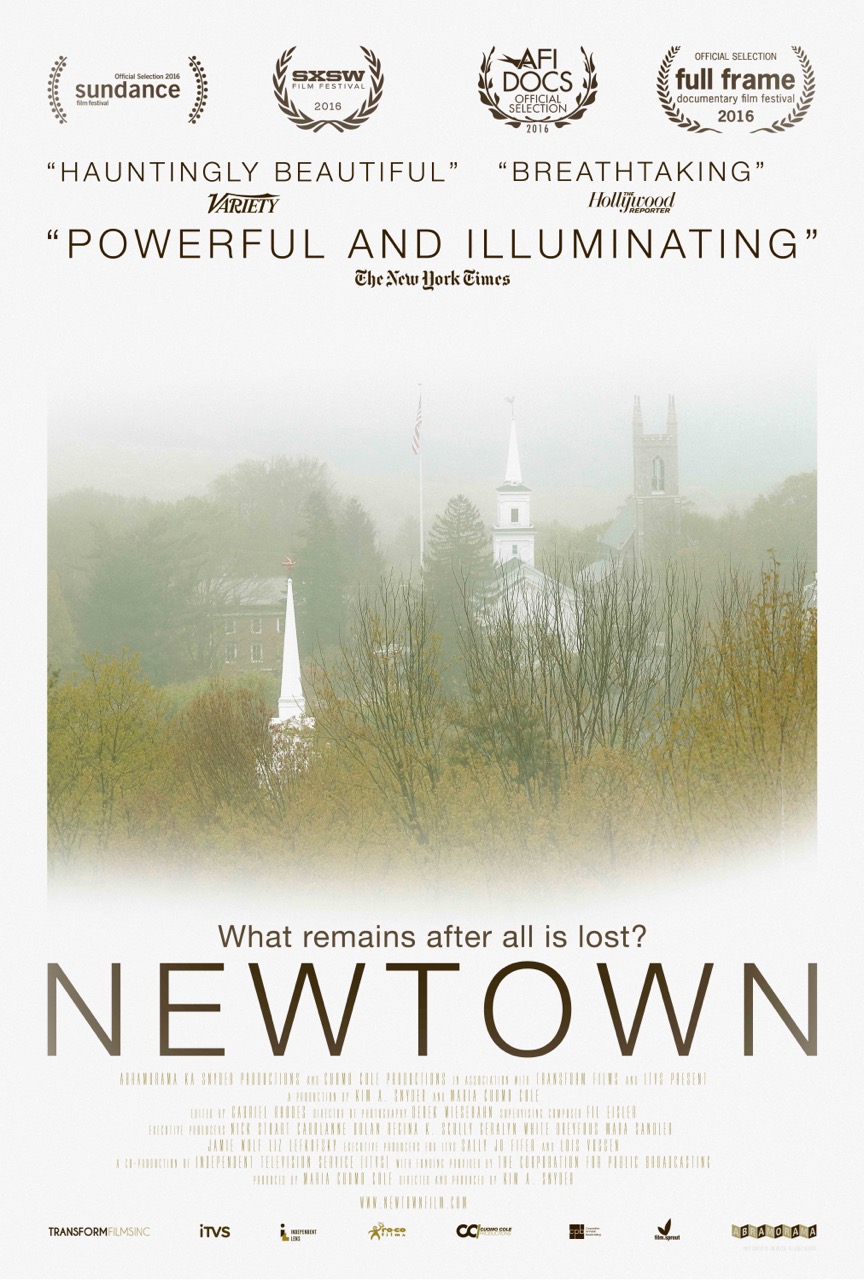
I got to speak with Kim A. Snyder recently while was in Los Angeles to discuss her documentary “Newtown.” The documentary looks at the aftermath of the largest mass shooting of school children in American history which took place at Sandy Hook Elementary School on December 14, 2012. The school was located in Newtown, Connecticut, and we watch as the adults who tragically lost their children attempt to move on with their lives. But since this tragedy, these adults look to be stuck in a moment they may never get past. What they are left with is profound grief and memories which will now be forever tinged with sadness.
“Newtown” is certainly one of the most emotionally devastating documentaries to come out in some time, but it is not without hope. Not once is the killer’s name mentioned or his face shown as Snyder’s real interest is in the townspeople who struggle to move on despite all they have lost. As painful as their stories are, these are the stories which need to be heard as the media often tends to focus on the shooter more than anything else.
Snyder is an award-winning filmmaker and producer, and for a time she was a contributor to Variety Magazine. She made her directorial debut in 2000 with “I Remember Me” which chronicled her struggles with Chronic Fatigue Syndrome (CFS). She also directed “Welcome to Shelbyville” which documented the intersection between race and religion in America’s Heartland. Her other works include the short films “Alone No Love,” “One Bridge to the Next” and “Crossing Midnight.”
While talking with Snyder, she explained why the shooter’s name was never mentioned in “Newtown,” why the term “gun control” was never used, of how Atom Egoyan’s “The Sweet Hereafter” proved to be a major influence on this documentary, and of how she managed to find hope in a story filled with infinite grief.
Check out the interview above, and be sure to catch “Newtown” when it opens in Los Angeles on October 14. Also, be sure to visit the documentary’s website at www.newtownfilm.com.
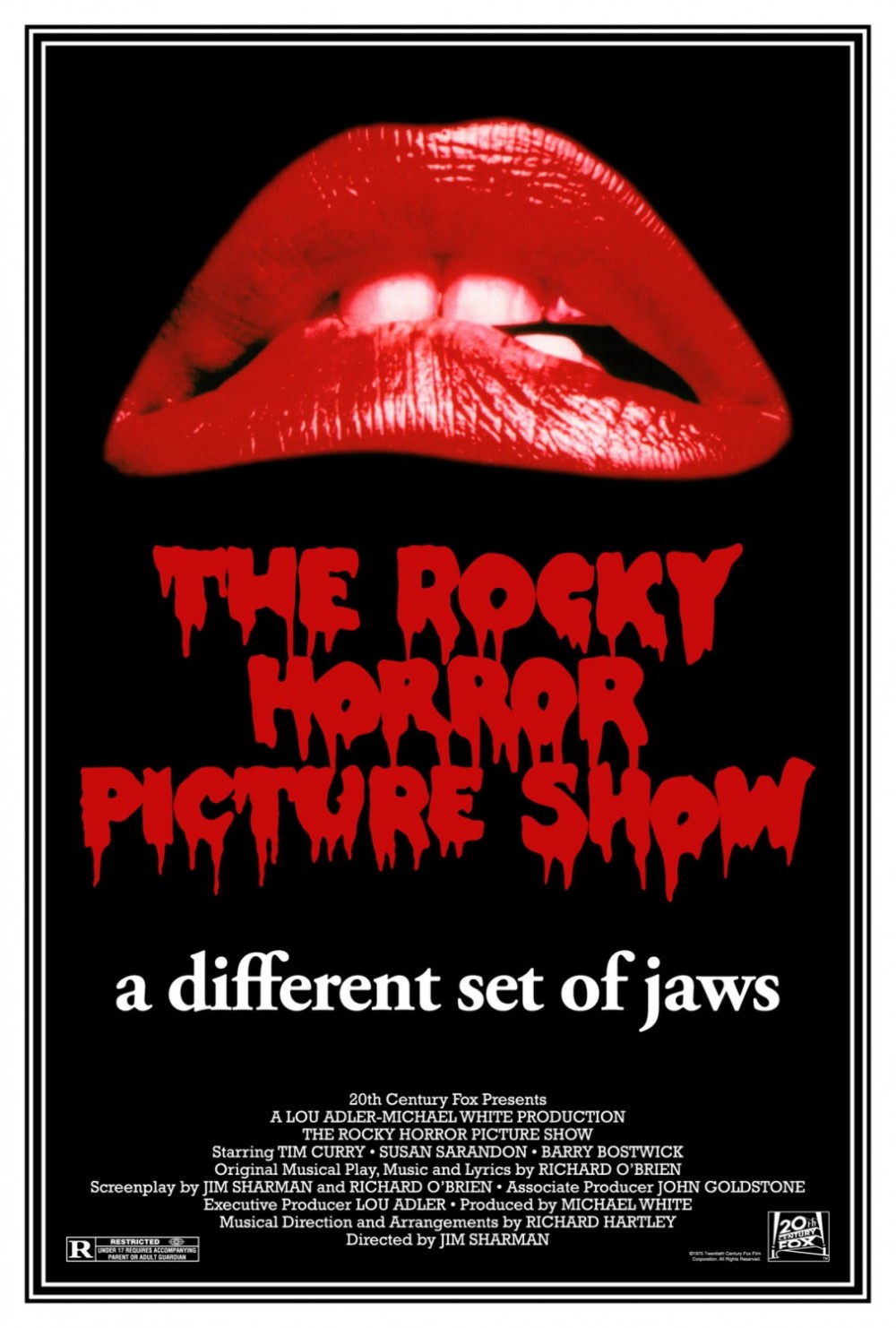
Few cult classics have had such a strong and everlasting cultural impact than “The Rocky Horror Picture Show,” and it always gains a new set of fans from one generation to the next. Based on the musical “The Rocky Horror Show” written by Richard O’Brien, the movie was a critical and commercial disappointment upon its release in 1975, but it went on to become a motion picture which made talking during the movie seem like not such a bad thing. Once it was introduced into the realm of midnight screenings in theaters everywhere, its influence became widespread, and it achieved a popularity many movies only dream of attaining.
“The Rocky Horror Picture Show” celebrated its 40th anniversary on October 30, 2015 outside of the building formerly known as the Mann Festival Theater in Westwood, California where it made its Los Angeles debut. Of all the cinemas the movie premiered in, it did the best business there when it was originally released. The theater closed down a number of years ago, but this wasn’t about to stop anyone from making the world remember that this location was where “The Rocky Horror Picture Show” got its start.
In attendance for this celebration, which was held on a ridiculously hot October day, were Tim Curry who originated the role of Dr. Frank N. Furter, Lou Adler who produced the movie, Sal Piro who is the President of the “Rocky Horror Picture Show” fan club and Los Angeles City Councilmember Paul Koretz. Joining them were a number of die-hard fans who did not hesitate to dress up as their favorite characters and the cast of Sins O’ The Flesh, a group of actors who perform at Saturday midnight screenings of “Rocky Horror Picture Show” at the Nuart Theater in Santa Monica.
Koretz declared October 30, 2015 “Rocky Horror Picture Show” Day in Los Angeles, and he remarked that while its fans may not know the capitol of every state in America, the movie continues to offer “solace, unity and friendship over the years to disenfranchised” and to anyone who feels like an outsider. The movie remains a very important one for LGBT people, and it has long since opened the doors for those who may not feel like they are part of the “mainstream.”
Adler remarked how there were almost as many people at this celebration as there were at the movie’s opening back in 1975, and he thanked what he called the “true fans” for showing up here as well as at every screening of this movie from one year to the next. Adler also remarked how Curry should have won the Academy Award for Best Actor back in 1975, and those in attendance were very much in agreement.
But make no mistake, the big star of the day was Curry, and the fans were ecstatic to see him appear at this celebration. The actor suffered a major stroke in 2013 which has left him confined to a wheelchair, but he was in good spirits as he greeted the fans and encouraged them not to fry as it was very hot outside. The fans in turn thanked him for coming to this event to which he responded, “Did you think I would miss this?”
Piro at how he and others put out the word about “Rocky Horror” midnight screenings in a time before there was social media or the internet. The fans came to see this movie over and over again through pure word of mouth, and it was the same group of people who came which showed how much it meant to them.
The ceremony concluded with the presentation of a plaque made to commemorate the movie theater in Westwood where “The Rocky Horror Picture Show” premiered all those years ago. Following this, Koretz quoted the words of Dr. Frank N. Furter and said to “give yourselves over to absolute pleasure and to don’t dream it, be it.”
I myself had the fortunate opportunity to talk with Curry following the ceremony. In addition to “The Rocky Horror Picture Show,” he also appeared in another cult classic movie called “Clue.” I asked him what the secret was to making a cult classic like this, and he replied that if he knew he would have done another one.
Be sure to check out the video of the anniversary celebration above. “The Rocky Horror Picture Show” is now available to watch on Blu-ray in honor of its 40th anniversary, but nothing will compare to seeing it on the big screen along with its many devoted followers.
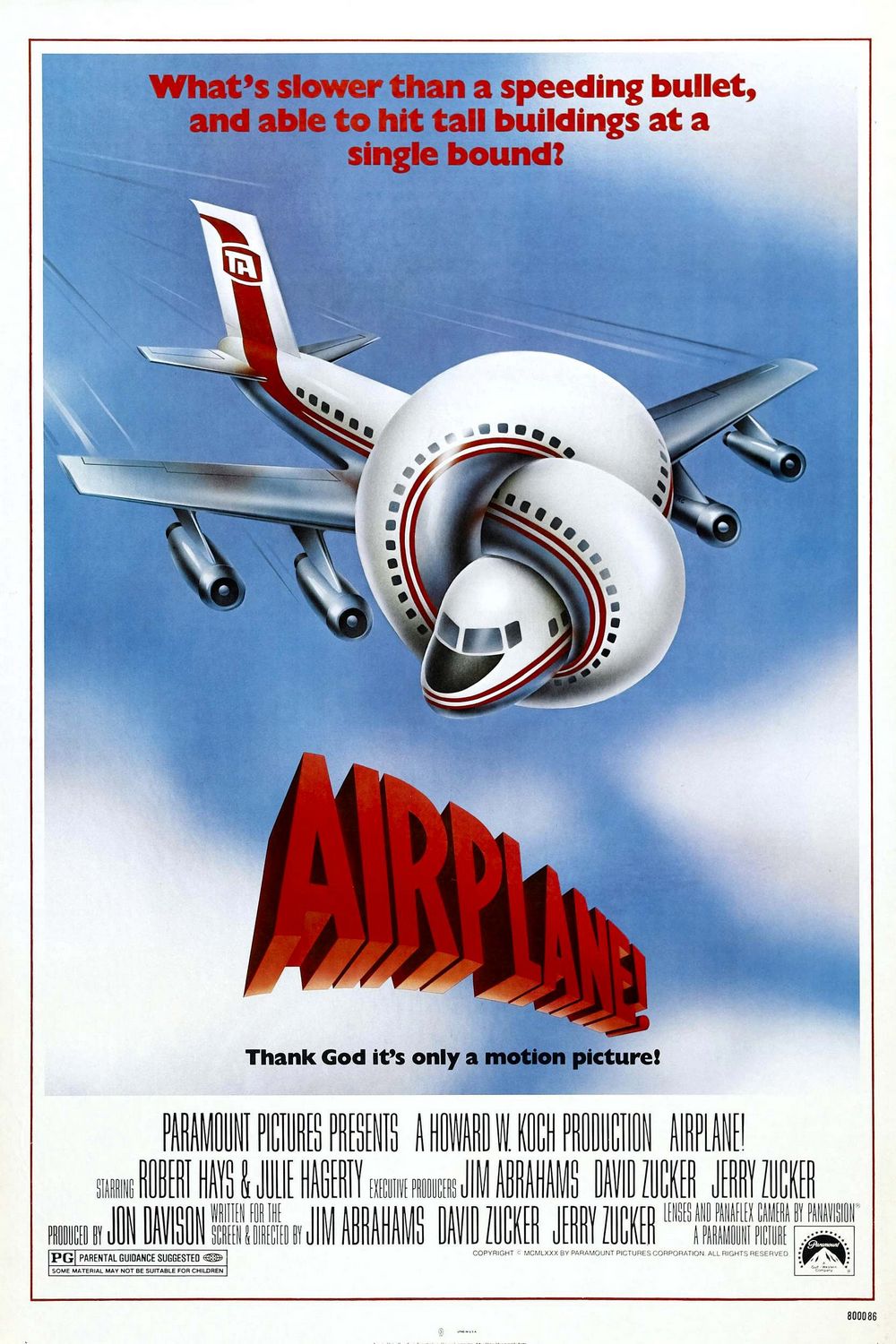
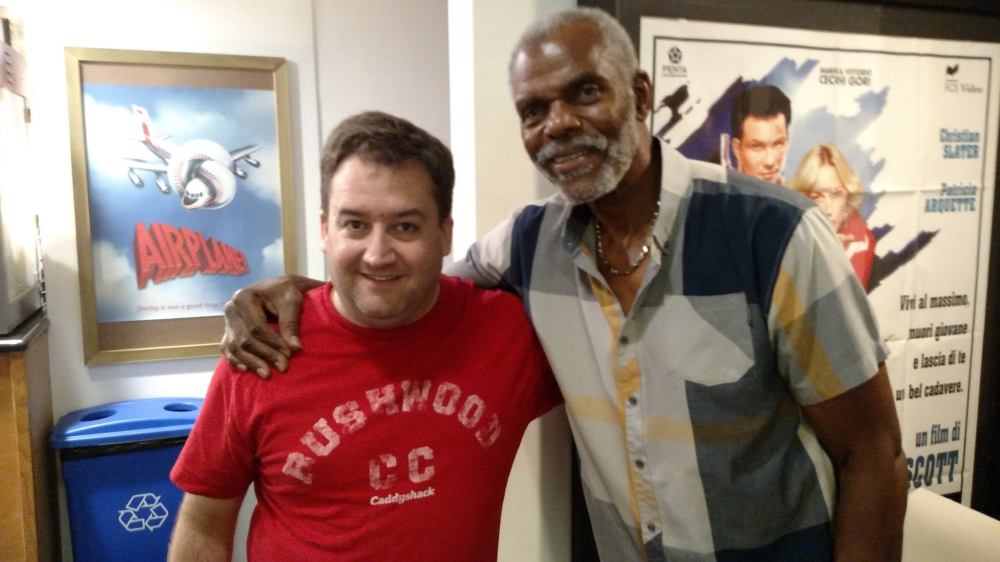
New Beverly Cinema was packed more than usual when the revival theater screened one of the funniest comedies ever made, “Airplane,” in honor of its 35th anniversary. After the movie was over, the audience got treated to a special appearance by Al White, the actor who played one of the jive talking passengers in the satirical comedy (to be more specific, he was the one with the beard). He ran up to the front of the theater to a thunderous applause and remarked how the movie still holds up after all these years, and the only thing which has changed about it is the color of his hair.
White was born in Houston, Texas but was raised mostly in San Francisco, California, and he decided to pursue an acting career after working as a janitor at Golden Gate Park for eight years. In addition to his role as the jive talking dude in “Airplane,” a role he would reprise in “Airplane II: The Sequel,” he also had a memorable role in “Back to the Future Part II” as an angry homeowner who tries to beat up Michael J. Fox with a baseball bat. He was also a member of the American Conservatory Theater for several years and originated the role of the military officer in the Tennessee Williams play “This is an Entertainment.”
White told the New Beverly audience that making “Airplane” proved to be a lot of fun. While the movie was distributed by Paramount Pictures, much of its filming took place in Culver City, California.
Acting opposite White as the other jive-talking man in the movie was Norman Alexander Gibbs whom has since moved back to the east coast of the United States. White remarked at how Gibbs talked so much to where he didn’t want to compete with him, so he tried to fill in the blanks when Gibbs wasn’t saying anything. That made for one wonderful scene after another in this comedy classic.
Many in the audience were curious about the jive language White, Gibbs and Barbara Billingsley, who played the elderly white woman who understood what they were saying, said throughout and if it was a real language. White said it was something he and Gibbs worked on throughout shooting. The movie’s writers and directors, Jim Abrahams, David Zucker and Jerry Zucker, apparently got the idea for the jive talking guys while they were in a restaurant and sitting next to some black men who spoke in a language they couldn’t understand.
Jeff Zucker, the one who worked with the actors on set the most, gave the actors free range to come up with dialogue, and White described how a line of dialogue like “each of us faces a moral choice” turned into “that gray matter backlot perform us DOWN, I take TCB-in’, man!”
Following the screening of “Airplane,” White hung out in the lobby to sign autographs and talk with the fans. I thanked him for coming down to the New Beverly and told him how I always wondered if the jive language was real or if it was gibberish. He replied, “It’s gibberish to those who don’t understand it, but it makes perfect sense to those that do understand it.”
The genius of “Airplane” is that all the actors never played their roles as if they were in on the joke, and that’s a lesson lost on many filmmakers today when they make satires. These days, filmmakers seem far more concerned about the jokes than anything else, and the movies they make suffer as a result. To this White replied, “The old stuff is better.”
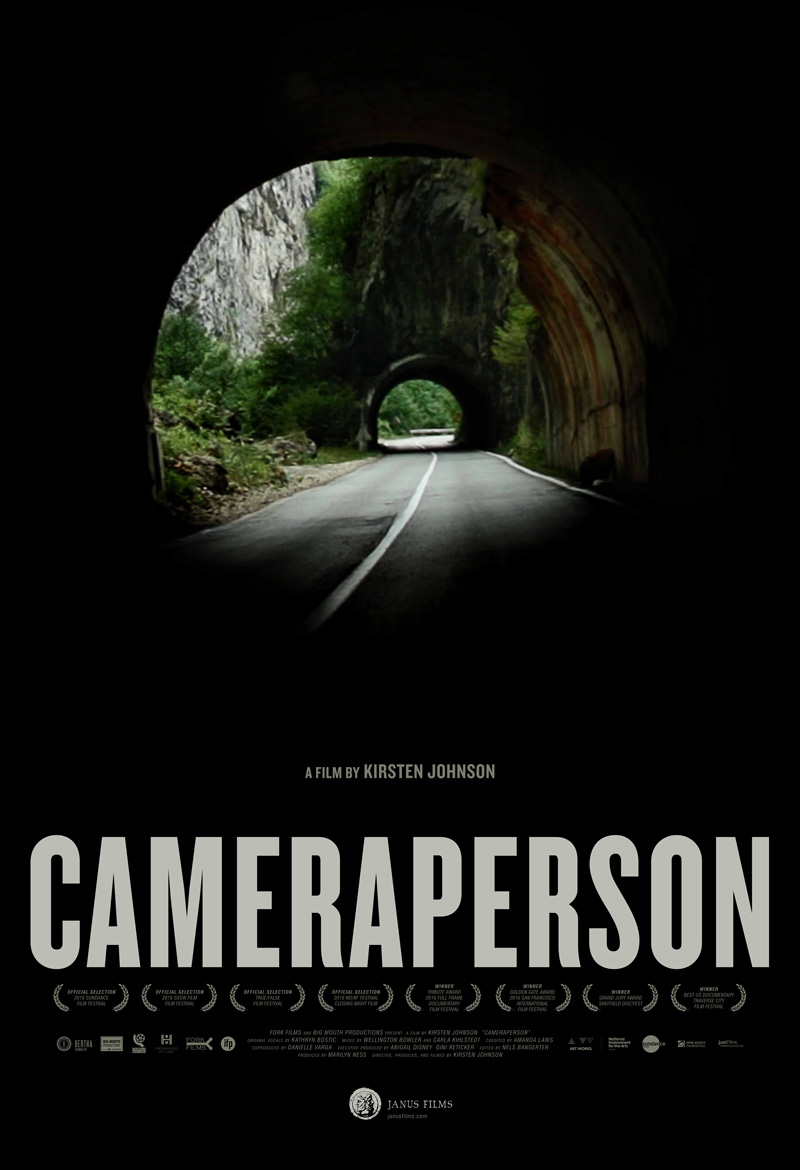
2016 has been a superb year for documentaries, and the latest example of this is “Cameraperson.” Directed by documentary filmmaker and cinematographer Kirsten Johnson, it is a series of images taken from her 20-plus year filmmaking career which she treats as a memoir of her life behind the camera. Among the visuals we get to see are of Brooklyn, a boxing match, postwar Bosnia and Herzegovina, a Nigerian midwife delivering babies as well as moments taken from Johnson’s own life as well. There is even a moment where she shoots footage of the entrance to an Iraqi prison which has a “you are there” feel to it, and it gets to where you are as eager to escape the area as they are. She presents these images to us in a movie without any narration as all these pictures tell a story all their own, and it is impossible to take your eyes off the screen. “Cameraperson” allows us to step into Johnson’s worldview as she takes us on a personal journey, and she acknowledges how complex it is to film and be filmed.
It was a real pleasure talking with Johnson while she was in Los Angeles to promote “Cameraperson,” and it resulted in one of the most fascinating interviews I have conducted this year. I was very eager to learn about how she went about constructing her documentary and of how it evolved from start to finish. This could have just been a movie with a bunch of images thrown together randomly, but there was clearly a lot of thought put into this one. Johnson also explained how she resisted the urge to put narration in her documentary, and she even shared some behind the scenes stories about “Citizenfour” which she was one of the camera people on.
Please check out the interview above, and be sure to watch “Cameraperson” which is now playing in Los Angeles at the Laemmle Royal thru September 29th.
Filmmaker Josh C. Waller has led a very interesting life so far. Born in 1974 to a cattle rancher/businessman and an actress mother, he spent his youth going to theatre rehearsals and watching movies on the weekends where his interest in filmmaking began to peak. After graduating high school, he joined the Marines and eventually worked for a private educational center which dealt with children afflicted with learning disabilities. This job ended up taking through different parts of the United States before he finally settled down in Los Angeles where his career as a filmmaker started to take off.
Waller’s film “Raze” stars Zoë Bell (“Death Proof”) as Sabrina, an abducted woman who wakes up to find herself imprisoned in a bunker where she and other imprisoned women are forced to fight one another to the death. On the surface it looks like another exploitation movie, but it soon becomes clear Waller had a lot more on his mind than that as he takes the characters and their story more seriously than you might expect.
I got to talk with Waller about “Raze” and what it was like to make the movie. Considering it was done on a very low budget, I was curious to see how he managed to pull off all he did with the little he had to work with. We also talked about what fighting styles were used in the movie, how his time in the Marines has influenced his work as a filmmaker, and he told a great story about how he managed to get all the sets for “Raze” built in just one day.
Ben Kenber: From the poster “Raze” looks like a typical exploitation movie, but it ends up going a lot deeper than that. What inspired you to make this film?
Josh C. Waller: To be honest, I had been working for years on another film completely different that I directed called “McCanick” with David Morse and Cory Montieth. That was something that I had been developing for about nine years with my producing partner who also wrote it, Daniel Noah, and it’s a tough project. It’s a drama with some very heavy subject matter and it was a bit of a bitch to get made, but it finally got green lit. But about the same time my friend Kenny Gage, he wrote a little short film called “Raze” which was like maybe seven or eight pages, I can’t remember exactly. He just asked me if I would take it home and he was just like, “Hey man, take a look at this thing and I’d love to hear your thoughts.” It wasn’t like, hey take this home, I think you should produce it, I think you should direct it. He was just like, hey take a look at this, I’d love to hear what you think, and I did. So I took it home that night and checked it out, and I thought there was something there. It was essentially the first fight between Jamie (Rachel Nichols) and Sabrina (Zoë Bell), then that was the short. It was a tad more exploitative of what the film ended up eventually being. Women were wearing a bit more revealing clothes and I think it mentioned something about it being particularly busty, and I brought it back to Kenny the next day and I was like, “Dude, there’s something here. I don’t know if I’m down with all the exploitative stuff, but there’s something here.” It got my mind going, so Kenny and I just started like bouncing things back and forth immediately, and the way that he and I were working together was so organic. The ideas just kept flowing and flowing and flowing, and I think that I really was interested in being a part of it and directing it because it’s not the kind of film that I would normally gravitate to nor is it the type of film that I would normally direct. I didn’t really watch the women-in-prison exploitations films from the 70’s and 80’s stuff, not at all. In fact, I was never really a fan of any of the exploitation films like “Faster, Pussycat! Kill! Kill!” It just wasn’t my thing, the Roger Corman films. So I was like okay, if I am going to do a film that kind of fits within that world, I’m going to have to take it as seriously as I would take “McCanick” or any other film, you know? I think that that was in my mind, then and still now, the only way we could possibly deal with something like this. And also it was incredibly exciting for Kenny and I. Kenny, before he got in the industry, was an undefeated professional boxer, and it was important for him and I and Zoë to try to show the most visceral, intense female fights that we had ever seen on the screen. And because every time you see women in a movie in some kind of fight, it seems to be all over the place in the trades and everything like that. That fight scene from “Mission Impossible: Ghost Protocol” (between Paula Patton and Léa Seydoux), people were like, “There’s the biggest catfight of all time in it!” And I saw it and I was like, “They what?! Man, you guys could have gone like so much further on this!” So we were like let’s see how far we can push this, and trust me when I say that we have so much more footage that we could’ve put in the movie.
BK: Regarding the fight scenes, Zoë said there were different fighting styles used in the movie. Were you looking to employ any particular fighting style or were you just open to whatever worked?
JCW: No, in fact we wanted to avoid looking for fighting styles. But what was interesting to me was to try to use the action… It was a little bit of like an experiment to see how much we could use the action to propel the narrative forward as opposed to dialogue or like emotional sequences. That said, the fight sequences themselves are pretty damn emotional, so being able to use those fights to like propel the movie forward emotionally and the narrative, that was something that was super interesting. So it wasn’t so much about looking for specific fighting styles in terms of like, this girl does Muay Thai and then this girl does Brazilian jiu-jitsu. That didn’t really work. We just needed to make sure that their fighting styles, however their fighting styles were, were a physical representation of who they were as women and what they were going through because they’re supposed to be normal women plucked from society. So occasionally you’ll have like one of the characters that knows how to fight. In the case of Sabrina, she has a military background and is well versed in hand to hand combat, so that’s the way that she fights. She fights very efficiently and she fights like a soldier. But if you start putting different martial arts styles on it… We didn’t want it to be like the female edition of “Best of the Best” or something like that like “Bloodsport” or “Mortal Kombat.”
BK: I read that you served in the Marines for a time, and thank you for your service by the way.
JCW: You’re welcome.
BK: Did any of what you learned in the Marines influence the making of this movie for you?
JCW: The guards down below I definitely fashioned after Marines. They’re most obvious trait are their Marine haircuts. All of those haircuts I maintained. I was the one who was like, “No, no, no,” and then I’d run outside with clippers and be like, “Sit down, sit down while I cut your hair!” Their uniforms, making sure their boots were polished, making sure that their haircuts were clean and not like all nappy and plain looking. Bruce Thomas who plays Kurtz, he and I had a lot of talks about his performance and how he could mimic the sound and the essence of a Marine drill instructor, so we would talk about a lot of stuff like that. I would put all the guards through a little closed quarter drill or boot camp over in a parking lot outside the set. In terms of fighting styles, not really; the military thing didn’t inform too much of that stuff. I can definitely say that, in terms of being a filmmaker, I would not be the filmmaker that I am today without it. Whether people think that’s good or bad, I would not be who I am as a man without the Marines. Almost every day, so many aspects of my life are informed because of my choice to join the corp.
BK: Absolutely. I bring that up because I have a family friend who was in the marines, and it has definitely influenced him in how he lives life today, and I think in a very good way.
JCW: It becomes one of those things because the Marine Corps is so daunting, and you end up graduating from boot camp and when you earn that title, you are filled with such an immense sense of price and accomplishment for earning that title. You feel a little bit like, “Well if I can do this, I can do anything.” So when you look at other tasks throughout your life, you’re kind of like, “This is lame. This is easy!”
BK: Zoë said that the total budget on “Raze” was less than a million dollars, but it looks like it cost more than that. The thing I continually find fascinating about low budget filmmaking is how it forces you to be more creative as a result. Would you say that was the case on this film?
JCW: Absolutely. I mean a perfect example of like how you’re forced to be creative is that like… Zoë was right, the budget was below a million, and if we had 19 action sequences, the shooting ratio on action to straight drama is like 10 to 1. It’s so drastically different. So to say that the shoot was an ambitious shoot is like stating something stupidly obvious. I think in terms of getting creative, there was one time where I was trying to figure out how the hell we were going to be able to afford… Because all of our sets were built, we shot everything on a soundstage, everything. We didn’t know how we were going to be able to pull that off with the money that we had, and I went home one night and I was sitting with my younger brother, and the flipside is as a youth I was the product of a divorce. On the father’s side, I was raised by a Marine cowboy father, and on the other side my mom and stepdad were into theater and dance and jazz and all of that stuff. I would go with my mom to movies on the weekend and I would watch movies like “Arthur” and “Zorro the Gay Blade” and stuff like that. I went home and I was hanging out with my little brother, and we were watching “Seven Brides for Seven Brothers,” and there’s a big musical number in the movie where all the brothers get together and with people in the neighborhood, and like an Amish community they have a big barn raising, dance and a big party, and I was like, “Holy shit man! That’s it! We’ll basically do a barn raising for all of our sets!” So I told the guys, “Look, all we have to do is throw a party, we’ll invite our friends, we’ll make teams of four people each and our production designer will be our foreman. And we’ll give a cash prize to whoever finishes their part of the build the fastest.” We had a DJ, we had food and beer and all that kind of stuff, and we built all of the flats for all of the sets in three hours on a beautiful Sunday afternoon. We all drank beer and barbecued. We never would have been able to do it (the regular way). It would have cost us 2 to 3 weeks of labor costs, so that was one of the creative ways. It was fun.
BK: That’s amazing! IFC Midnight is promoting this movie. How does it feel to have them promoting it, and what can you tell us about IFC Midnight?
JCW: IFC has been amazing. The person that I’ve been particularly involved with at IFC Midnight has been Mike Winton, and I have to say that it’s been an absolute pleasure. IFC Midnight also put up “Maniac” which my producing partner Elijah Wood was in, and they function within the same world that I function and we function in. Working with them is like working with our friends. It’s been a pleasure. I love it and I can’t wait to work with them again.
I thank Josh C. Waller for taking the time to talk with me, and I again want to thank him for his service to our country.
New Zealand native Zoë Bell has long since made a name for herself as a stunt performer having doubled for Lucy Lawless on “Xena: Warrior Princess” and Uma Thurman in the “Kill Bill” movies. But once we saw her play herself in Quentin Tarantino’s “Death Proof,” we saw she was a very entertaining personality to watch onscreen as well. Since then, Bell has been balancing stunt work with acting in films like “Whip It,” “Django Unchained” and “Oblivion.” Now she gets to combine those two talents in the viciously intense “Raze.”
In “Raze,” Bell plays Sabrina who is one of 50 women which have been abducted and imprisoned in a concrete bunker. She soon realizes this bunker is a modern day coliseum of sorts as the women are forced to fight one another to the death. If she doesn’t fight than her daughter will be murdered, so her choices are extremely limited to say the least. From start to finish, Bell is a riveting presence as she is driven to emotional extremes to do things she doesn’t want to do in order to protect the one she loves.
I was lucky enough to talk with Bell when she was doing press for “Raze,” and she proved to be as cool as she was in “Death Proof.” On the surface, “Raze” looks like your typical women-in-prison exploitation flick, but its director Josh C. Waller ends up taking this material much more seriously than you might expect. I talked with Bell about how she got involved in this movie, what kind of fighting styles were used in it and if she was instrumental in choreographing the brutal fight scenes. She also talked about what it’s like to be a stunt performer in show business today as opposed to years before, and she gave us an update on “The ExpendaBelles.”
Ben Kenber: “Raze” was different from what I expected it to be.
Zoë Bell: Well what were you expecting? I hope you weren’t expecting a romantic comedy.
BK: Oh no, I usually avoid those (Bell laughs). With so many different fighting styles around the world, was there any specific style of fighting you used in this movie?
ZB: There are all these action movies out there with samurais and stuff, but we didn’t want to have those kinds of fights at all. We wanted it to be real characters that were plucked from their lives and put in this really shitty situation. But as far as the characters are concerned, Sabrina comes from a military background, Teresa (Tracie Thoms) comes from a boxing background, Phoebe (Rebecca Marshall) is just street, and Cody (Bailey Anne Borders) is just the young girl who has to fight for her life. So the characters’ individual fight styles were less about the styles they were trained in and more about the life experience that they have, and it was really important for us that that come through. That’s what makes the fights different.
BK: What do you want audiences to get out of “Raze?”
ZB: I wanted the audience to have an experience of female fights that they maybe haven’t experienced before. I was looking to get more experience. I wanted to do female fights and stuff in a way that I’ve not done before. We wanted to take everything sort of heightened and strip all of that away. It was more just sort of like an experience I wanted to put out there for people. Ironically what’s ended up coming out of it is the joy that women audiences who have watched this movie have. It’s like they’re living vicariously through this womanhood and these actors, but also the characters and for all the right reasons, obviously the crazy ones, it’s satisfying. All the actors were just like, “This is so fucking cool that we are doing this film!” And that means the world to me because I’ve spent my life doing these kinds of films and I’ve gotten benefits from it as long as I can remember. It’s cool to be able to share that around a bit.
BK: How did the role of Sabrina come to you?
ZB: Sabrina came to me through the project really that was sort of… Kenny (Gage), Andy (Pagana, the producer) and Josh (C. Waller, the director) had also worked together on this project before I came aboard. Josh and I have known each other for a long time and when he threw my name in the mix, Kenny and Andy were excited about it and they brought me in. We all kind of vibed and jived and they asked me if I wanted to come on as a producer, and I got really excited and I said yes. At that stage it was still in a short format, and the role of Sabrina was really… I was just going to work on staging the fights basically. I worked with this woman named Christy and I created this whole story and at some level put a lot of preparations on her (Sabrina) for the short. But as it turned into a feature, a lot of the stuff I worked on before carried over to her in the feature script which was really cool. It’s a really fun way to go about it. It’s kind of an ass backwards way of going about it. We had problems doing it the way we did, but it was still pretty exciting.
BK: Did you work closely with director Josh C. Waller on the fight scenes in “Raze?”
ZB: Everything on this movie was pretty collaborative, but the fight scenes in particular because I have experience in that world and therefore I basically have a convenience when it comes to that stuff. We had a fight choreographer called James Young, and so basically we had James Young and we had me who was never going to be quiet about it. My forte is female action and what works well for women. There’s something about a female character in the way that she moves in the kind of choices that she makes in a fight situation, and Josh was very much about bringing emotional truth to those fights and these women. Kenny, having been a boxer for years and a real ring fighter, was one of the biggest cheerleaders for having female fights that were real that haven’t been seen before, so we had a lot of people that the fights were very important to on the creative side. So fortunately we all worked quite collaboratively together and I think we all ended up getting the fights we wanted. They are pretty cool.
BK: Did you do all your own stunts in this movie or were there some done by a stunt double?
ZB: Oh no, no, no, no. No one had a stunt double. There was one stunt that ended up not even making it into the movie which we brought in a stunt double for. We didn’t have time or the money, so the girls are all bringing it.
BK: Having been a stunt person for quite some time, what kind of changes have you experienced for stunt performers in the industry? Have things gotten better or worse?
ZB: I think work conditions for stunt people across the board have technically improved. There are more challenges in regards to safety and, having said that, when you get more technology it also enables you to push the limits. We’re always trying to do something new and bigger. Work conditions are what they were. As for work opportunities, now compared to 22 or 30 years ago, women were not really allowed to be stunt people. Guys would put on wigs and cover their hairy legs and double for women. As far as female action, it almost feels to me like it kind of goes back to where you’ve got “Xena” and “Alias” and all these… There is more female driven stuff now to where I feel like then there was for a long time. I think the type of action that’s acceptable for what females are doing now has probably shifted too. “Charlie Angel’s” was technically action and it was all females, and the action of the “Wonder Woman” to be done now, the type of action you’d see your committing would be far different to what was in the day.
BK: “Death Proof” really opened doors for you as an actress. At this point, does doing acting appeal to you more than stunts, or are you equally passionate about both?
ZB: “Death Proof” was definitely the catapult for me. It feels like it’s probably a good time to naturally progress over. If I’m being given these opportunities and I’ve worked hard enough to make that change, then that’s the next stage of wherever my career is taking me. I’ve had to be very conscious about not being in the industry as a stunt woman as much as an actress because, for myself certainly, I would very easily kind of slide back into the comfort zone of what I know well which is being a stunt girl and shy away from maybe what’s a little more challenging which has been acting. But also the intention of being seen as an actor and taken seriously by the industry, I think it was sort of important to me to sever ties from one so that I could fully commit to the other. It’s a shame but it’s part of the process, you know?
BK: Yes, it is. What was the budget for “Raze?”
ZB: Well I’m not sure that’s something I am allowed to say. We think it was $600,000 or $700,000. It was definitely well below $1 million.
BK: I was just curious because it looks like it cost a lot more than that.
ZB: Yeah, and it’s very important for us, I think, for people to know that the budget was incredibly low but that we are so proud of what we managed to do with well below $1 million. We are just in the process of doing a general audit just to double check the numbers, so I don’t want to put a number out there because I would be making it up, but I can basically say that it was well below $1 million.
BK: That’s interesting because what I’ve learned from most filmmakers is that working with less money forces you to be more creative. It certainly looks like you got a lot of creative stuff out of the budget that you had.
ZB: Yeah definitely, and we also got really lucky with the people that we had on board.
BK: Regarding the other actresses, did they have any fight training when they came onto this movie or did you help them out with that?
ZB: A lot of the girls had taken themselves and… I know Rebecca has been doing some kickboxing on her own time. Rachel Nichols has done a bunch of action films before. The girls are not meant to be… We didn’t need Rachel Nichols to walk in there and look like she had a black belt. We did a lot of work on the fights together before we shot it. James has done a lot with the choreography, Kenny worked on a lot of boxing with bags, and I just worked with them doing everything and anything they could when I had a minute. And most of when I was of use to the other women was just as a girl in how I approach it. So I spoke their language and that’s the gift I had to give. Everyone was just super dedicated and it was really touching to see these women always so dedicated to their roles.
BK: One last question, is there anything you can tell us about “The ExpendaBelles?” (This is an offshoot of “The Expendables,” and it was reported that Bell had been talking to the filmmakers about being in it.)
ZB: No, absolutely nothing. I have met with those guys. I don’t know if it was specific to… Well here’s what I can tell you about “The ExpendaBelles” and why I’m excited for that movie to be in existence whether I’m a part of it or not: I would love to be a part of it. That’s all I can tell you.
BK: Okay no problem. Well thank you very much for your time Zoë. This has been a lot of fun and you were terrific in “Raze.”
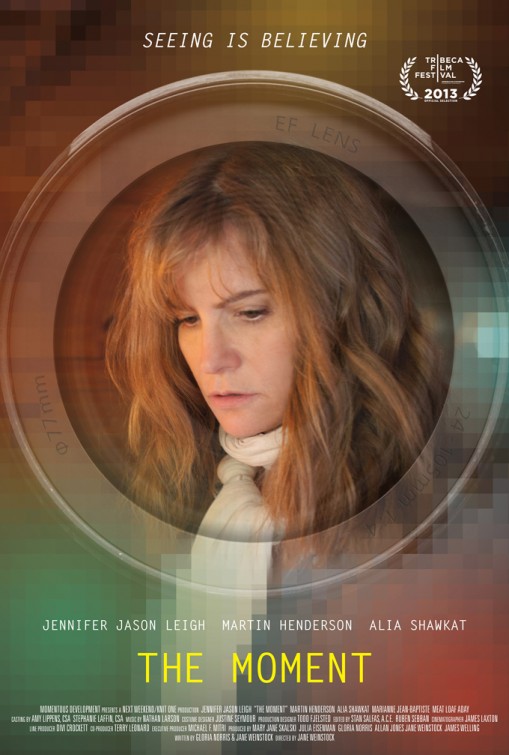
Filmmaker Jane Weinstock follows up her directorial debut of “Easy” with “The Moment,” a compelling psychological thriller starring Jennifer Jason Leigh, Martin Henderson and Alia Shawkat. In the movie, Leigh plays Lee, a photojournalist who has just ended a tumultuous affair with troubled writer John (Henderson). But when she goes to John’s place to get her things, she discovers he has disappeared and is nowhere to be found. The stress of not knowing his whereabouts causes Lee to have a nervous breakdown, which in turn lands her in a mental hospital. During her recuperation, Lee reconnects with her estranged daughter, Jessie (Shawkat), and ends up meeting Peter, a fellow patient who somehow looks a lot like John. As Lee struggles to get a grip on reality and learn the truth behind John’s disappearance, the clues she is given lead her to the most unexpected of places.
Just as with “Easy,” “The Moment” has Weinstock dealing with the contradictions of human nature and psychological realism. It was fascinating talking to her about this movie, and we discussed the challenges of writing a highly complex screenplay, what it was like working with Leigh who is very serious in her approach to playing a character, and how her studies in psychoanalytic theory and semiotics came to inform this film.
Ben Kenber: Regarding the screenplay, how difficult was it for you and your co-writer Gloria Norris to write it?
Jane Weinstock: Well our starting point oddly enough was the Edith Wharton novel “The Mother’s Recompense,” but we weren’t able to get to the rights to that. We didn’t want to do a period piece, but we wanted to sort of take the basic structure of this extremely complicated mother/daughter relationship and make a movie out of it. So once we realized that we couldn’t even get the rights, we just kept that relationship as our starting point and then we went on to write this piece. We decided quite early on to make the character of Lee a photojournalist because we have a fascination with danger, and at the same time a kind of ethical commitment to try to do good in the world. We both love Hitchcock, so I think there were Hitchcockian elements that we gravitated towards, and it also changed in various rewrites. We worked on it for a very long time so we rewrote it a number of times.
BK: When it came to the subject matter, did you do a lot of research on photography as well as depression, anxiety and posttraumatic stress disorder?
JW: Yes, I definitely thought of researching PTSD first. We actually showed it (the movie) in New York to a posttraumatic stress disorder specialist at Hunter College, and she felt that we really got it right so that was very gratifying.
BK: There’s a scene in the movie where Martin Henderson’s character is eating sardines which he says are good for those suffering from depression. Is that true?
JW: No, not really (laughs). They are good for your brain and they don’t have a lot of mercury.
BK: Jennifer Jason Leigh is well known for her method approach to the characters she plays. How did she approach the role of Lee in this movie?
JW: Well I did a lot of research and I gave her my research and she looked through that, and she’s known photographers before and she just was her many ways. During rehearsal we worked on the script together. We made some changes as we were rehearsing, and she’s a writer/director so she’s very, very good at that. She also looked at different cuts of the movie and made suggestions, so she was very involved creatively and not just as an actress.
BK: There is a moment in the movie where Peter is standing in front of his place of work and Lee is taking pictures of him, and he is covering up part of the word “storage” to where only “rage” can be seen. What was your reasoning for shooting the scene like that?
JW: It was just a little reference that I thought not many people would get, but you got it. He is a character who was filled with rage. He was imprisoned for five years for a crime that he didn’t commit, so he’s got a lot of rage that he turns against himself and feels towards the world as well.
BK: Alia Shawkat is fantastic as Lee’s daughter, Jessie. How did she get cast in the film?
JW: Well Jennifer had already been cast, so we had her read with several actresses. They were all great, but when I asked myself, ‘could this actress be capable of murdering somebody,’ I always came up with the answer no except for Alia. I really wanted her to feel like someone who is capable of murder, and I also really liked the fact that she looks like she’s part Iranian, and she is part Iranian, so we could give her an Iraqi father.
BK: How much time did you have to shoot this movie?
JW: We shot it in 22 days, and then we had two days for re-shoots.
BK: With movies like these, the shooting schedule always seems to get shorter and shorter.
JW: I know. It’s crazy.
BK: I read how while you were at New York University you focused on psychoanalytic theory and semiotics. Did any of those studies factor into the making of this movie?
JW: You know it must have especially in terms of the writing and having a psychoanalyst be in the movie. But there’s also a way in which I had to drop a lot of my theoretical knowledge and just make it more organic, and at other times I could get very heady.
BK: In some ways “The Moment” is timely because our reality keeps getting distorted by technology and in other ways as well. By the movie’s end we’re not entirely sure if Lee is even dealing fully with reality. With technology today we are getting closer to the truth, yet at the same time we’re being taken further away from it. Was that something you thought about during the making of this movie?
JW: I guess something I thought about most in terms of that kind of general theme of the movie is that we live precariously in an uncertain world which is partly a function of technology but also a function of the times and all the wars we’ve been living through. The last 20 years has been a very, very uncertain time, and then the reaction to this kind of need for certainty comes up in the form of the Tea Party and other kinds of very fundamentalist types of positions. I thought about it in terms of that more than in just technology specifically.
BK: It seems like these days people are not fighting for the truth necessarily, but more for the truth as they see it. “The Moment” reminded me a bit of David Lynch’s “Lost Highway.” It’s a very different movie, but like with Bill Pullman’s character, Lee is trying to get a grip on all that is happened to her. Still, we’re not entirely sure she has succeeded in doing so.
JW: Yeah, people have compared the film to David Lynch’s work. He’s not somebody who I respond that strongly to. I’m much more of a Hitchcock person, but I can see that. Another big theme in the movie which is definitely Hitchcockian is guilt, and even if none of these people actually killed John, is that really the end of it? Can people carry guilt with them, or for the moments that they have created that may or may not have led to John’s death? For example, the moment where Lee kisses John, at that point there’s no turning back. This has to end badly, right?
Thanks to Jane Weinstock for taking the time to talk with me about “The Moment,” a film that constantly challenges your perception of reality throughout its running time.
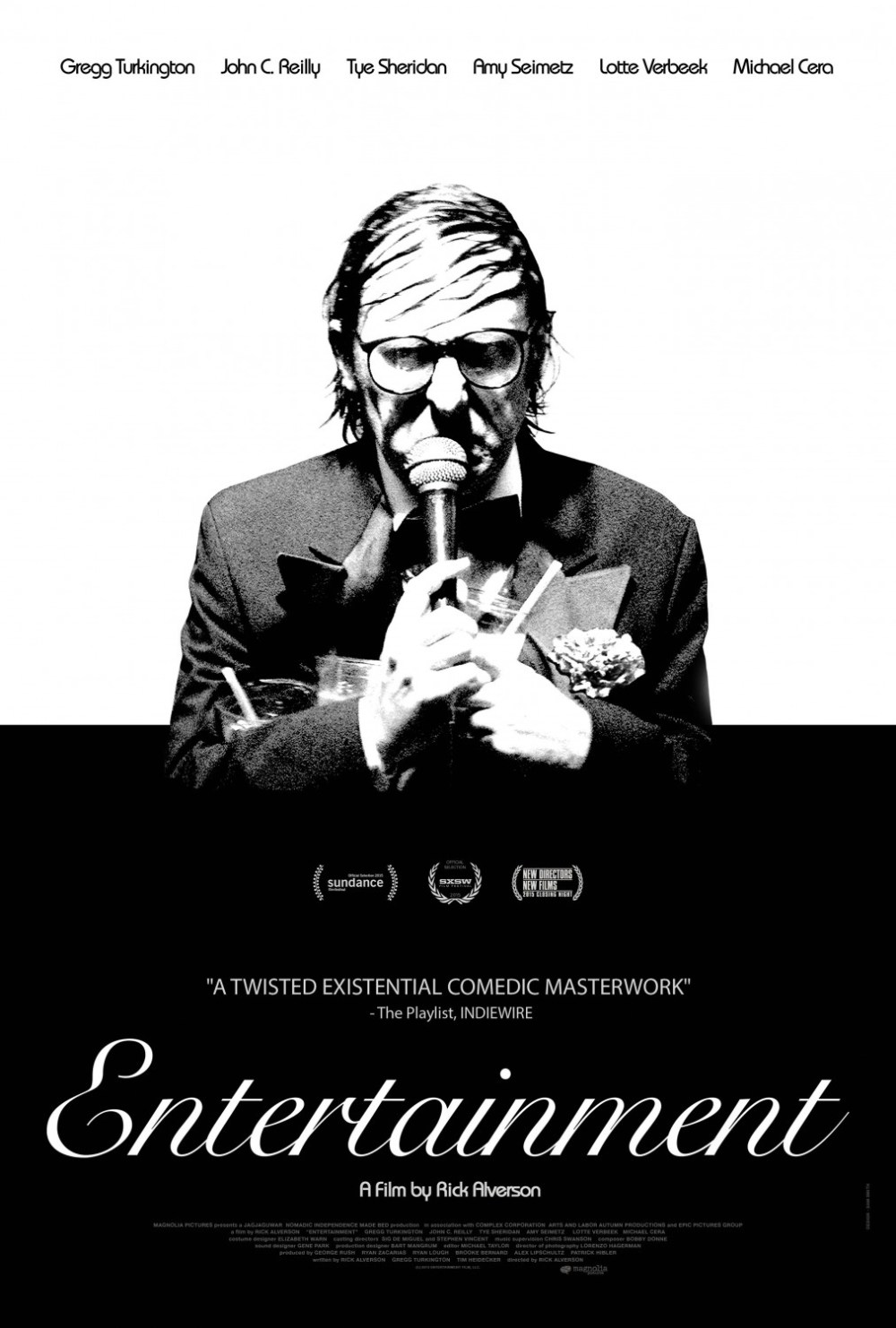
“Entertainment” is probably the most ironically named movie to be released in 2015 as it is not entirely fun to sit through, but to dismiss it as bad because it is not enjoyable would be missing the point. It proves to be an experience more than anything else as we watch a stand-up comic named The Comedian (played by Gregg Turkington) travel through the California desert while performing at a string of third-rate venues in front of audiences who couldn’t be less excited to watch him. During this time, he tries to get in touch with his estranged daughter and eagerly awaits a lucrative Hollywood engagement which just might revive his sagging career. But first, he has to travel through what seems like the equivalent of Dante’s Inferno in order to find any hope of salvation.
“Entertainment” was directed by Rick Alverson who previously gave us “The Comedy,” another ironically named motion picture which starred Tim Heidecker as an aging New Yorker who is indifferent to inheriting his father’s estate and passes time with friends playing games of mock sincerity and irreverence. Turkington is a noted stand-up comic best known for his alter-ego of Neil Hamburger, a persona which he brings to “Entertainment” but who is not the same character as The Comedian.
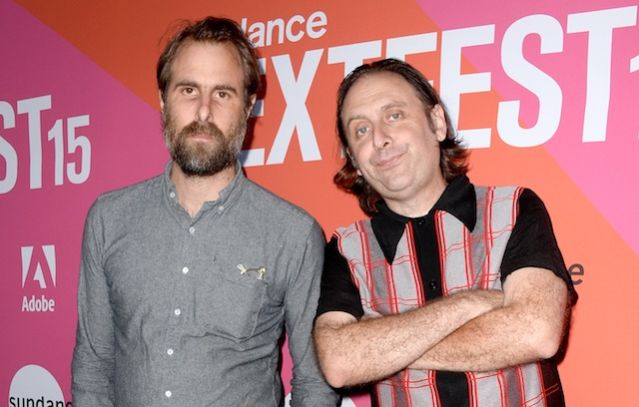
I got to speak with Alverson and Turkington while they were at Cinefamily in Los Angeles where “Entertainment” was being shown. When I told that them this interview was for Examiner.com, they joking replied how someone on the website gave them their movie the worst review imaginable and described it as anything but entertaining. We started with that review and went from there.
Ben Kenber: How do you feel about reviews like that?
Rick Alverson: Well it’s weird. Obviously the movie isn’t a romp through a good time, so if somebody says it’s a failure for doing that they are right, but that’s not even engaging with the movie (laughs). It’s like you’re not even walking into the room.
Gregg Turkington: They got the details wrong, that’s what I don’t like. They seem to have thought he was trying to do something else and that he failed in trying to do that, but he was trying to do that so he didn’t fail so fuck yourself (laughs). But I like the bad reviews if sometimes it feels like the person’s taking it so personally that the review, when you are reading it, you can tell that I don’t like this person and they don’t like this and this sounds interesting to me, I’m gonna go see the movie. I’ve gone to a lot of movies with scathing reviews because I could tell we are not on the same page, and what you hate is what I like. That’s fine with me.
BK: I saw “Entertainment” a couple of weeks ago and it has stayed with me ever since. Some movies are meant to be experienced more than enjoyed, and this movie is an example of that. Not all movies are meant to be enjoyed.
RA: Great. That’s very good to hear.
BK: We’re looking at a comedian who is at the end of his rope psychologically, and you can’t turn away from his suffering.
RA: Yeah, I would say it’s even more than just psychological. I think it’s a holistic disaster biologically, psychologically, spiritually…
GT: Environmentally (laughs). Although we did win an award in Switzerland at this film Festival we went to.
RA: Environment is Quality of Life Award from the junior jury at Locarno in Switzerland.
GT: Pick the film that best sums up the environment is quality of life (laughs).
RA: It’s true, we won.
GT: Environment is low quality of life, and that environment is low quality (laughs).
BK: I can see why it won. Greg, your character of The Comedian was inspired by your character of Neil Hamburger. When you brought that character to this movie, did you have to change anything about the way you perform?
GT: The live stage show is similar to the real live stage show although me lashing out at somebody for no good reason is not something I would do in a live stage show. That was more the character. But yeah, there were a lot of things that had to be planned out and thought about and addressed. Ultimately I don’t think it is the Neil Hamburger story. It’s a very similar character and certainly it helps to have that character up our sleeves when we need it, but we had to be free to start from scratch.
BK: Rick, I read in the production notes that you had mentioned how you found failure as being very liberating. What specifically about failure do you find so liberating?
RA: Well it describes the boundaries and limitations of the world and experience, and there’s something beautiful to what we can and can’t do and understanding them. It’s like understanding what your feet are for, and your feet have a certain function. I think functionality is beautiful, and we are increasingly a society that’s divorced from form in every way and ignores the limitations which are the actual architecture of life. So we are just ignoring the shape of things and instead are wrapped up in what things could be in this idealized ephemeral flight of fancy. There is a neglecting the beauty of facts on the ground.
GT: A lot of peoples’ failures are to me successes. There’s a purity often to them that you don’t find with things that are successful.
RA: Yeah, because the idea of success is that so few can achieve it in any discipline and any particular way, whether it’s the success of becoming incredibly rich or the success of perfectly achieving the discipline. The majority of people are in some sort of muddy approximation of that. I don’t use traditionally scripted dialogue in any of my movies, so there’s improvisation and other methods of achieving tonal exchanges or content. I really like when things fall flat or there is that absence of chiseled, airtight exchange that we see in so much of popular cinema.
BK: Regardless of how people view “Entertainment,” I have a feeling it will endure over the years as it offers a different and specific view of things.
GT: I’m surprised at how people’s perceptions of things is all based on something like an opening weekend or with music too. It’s like some record comes out and it doesn’t do well, but the music is still valid at any point. The time that it comes out shouldn’t determine the value of it. It’s crazy.
RA: There are these sort of free market metrics especially in an age where we don’t even know who’s buying this stuff. Netflix isn’t releasing their numbers or whatever company. Digital platforms don’t need to release their numbers, so we really don’t know where this stuff’s going and who it’s being imbibed by. To think that our metrics for an opening weekend at the box office have any sort of say about a work is silly.
GT: It’s also replaced for a lot of people film criticism. I hear people in airports or on the street talking about box office numbers and really that should only be of interest to the investors, not to the moviegoers. What do you care if it made 30 million or 60 million? That’s nothing to do with you.
RA: Increasingly we want context for everything. We need context for our own experience. We need to understand how other people are viewing something so that we know how to view it, which is a bit of a shame. Where’s discovery?
BK: I imagine there was a lot of improvisation involved in the making of this movie.
GT: For the dialogue. The rest of it is pretty scripted out very carefully scripted out. It’s not improvised like, what will we talk about now. It’s written there what the topic is, what the town he is in and what’s being communicated. It’s just up to the actors to use the actual words.
RA: We were talking about the other day how there’s, in a tent pole blockbuster movie, a general sense that people were improvising. Because of the prowess of the spectacle, everybody is saying that they know that they (the actors) are riffing on lines in a popular sense. But I think when people talk about independent films and say that they are improvised, it’s just like you turn on the camera and everybody’s doing whatever the fuck they want. It’s so many different things for so many different people. You think you are communicating one thing by saying it, but language is useless sometimes. This was fun because we worked with different people in different ways. I was improvising lines and writing lines on the spot and feeding them to certain people. Others like John (C. Reilly) and Gregg, they have a chemistry and they are very good improvisers so the dialogue exchanges between them were in that world. For me, watching that thing sort of come apart or the attempt at it, honestly half the time if I know we are covering whatever little narrative ground we need, I’m just listening to the voices. We don’t do more than three takes, and some of that is economic. If it’s not achieved by the casting or by the sort of conditions that you’re setting up, then what are you aiming for? I like things falling kind of flat too.
GT: But it’s also true that people think it’s a big free-for-all, improvising. They should see a scene that we might do where we do the first take, me talking to somebody or whatever making up the dialogue, and Rick says, “Alright for this one I need you to move half a millimeter to your right.” That’s not a free-for-all, being told to move half a millimeter to the right. That would probably be the direction over we need you to use this line and to say this specific thing. A lot of times it was stuff like that which is really the opposite of a free-for-all.
BK: Gregg, your character gets booked at a lot of second-rate venues or places that are the worst for comedians to be stuck at. Is that something you’ve experienced in your own career, or is that something you just been a witness to?
GT: I experienced it when I’ve gone out of my way to make sure that it was happening by booking shows that I knew what have that sort of outcome. And then sometimes you go into a show with the best of intentions and it just doesn’t pan out. Things get awful and ugly. But I like a variety of responses and so I like to have shows that are successes on the traditional level, success in the failures on the traditional level. To me they are probably both successes because they gave me a different experience.
RA: I feel that way about movies. It’s strange increasingly for me to recognize how similar me and Gregg are and what we want out of the thing whether it’s comedy or drama or film or stand up. We’re kind of curious about the off-kilter event (laughs).
BK: There are some amazing shots of the California desert in this movie. On one hand they are beautiful, but on the other they illustrate how vacant and empty The Comedian’s life is. Was it challenging to get those shots with the budget you had?
RA: We stretched our budget really, really far, and that speaks to the dedication of everybody involved; the crew and the producers and the cast. So yeah, of course it’s challenging. It’s 112° outside and Lorenzo Hagerman, our cameraman, is carrying a 50-pound camera kit on his shoulder up a rocky cliff to get those wide vista shots 400 yards from something. Gregg’s shoes are melting and it’s dangerous out there. Don’t go to the desert! (Laughs)
GT: Don’t shoot in the desert is right!
RA: Me and Gregg talked about how we liked in the 70’s you see a lot of films of people just sweating and nobody’s dabbing them. They are just covered in sweat and look greasy and wrong. You started to see that becoming the sterilization of, “No that’s not quite right. We can do better than that.” So you had to sterilize the representation down to its most idealized form, but we were hoping for some more sweat actually.
BK: Tye Sheridan’s role in this movie is interesting because he basically plays a clown who doesn’t have much of an act. He just basically panders to the audience’s basest instincts. How did you work with him on that role?
RA: I showed him an idiot dance and he brought it to life. I’d ask him to do sort of these mime-ish things at events, and he stepped up on that stage and animated it in a way that shocked all of us. It was electrifying. He sort of plays the apocalypse in the movie. He definitely is the end of the spectacle. He’s reduced down to the rawest of the raw materials. He is the smut in the pig sty, the character I mean. Tye is one of the kindest, gentlest, most respectful young men that you could ever meet.
BK: What do you hope people get the most out of “Entertainment” and the experience of watching it?
RA: I hope they do what you’ve done. You can watch a film and be activated by it and be engaged with it and have an experience like you’re saying. It doesn’t necessarily in a typical sort of way expect for it to do to you what the majority of films do. There can be an outlier that doesn’t operate by those principal, and the spectrum of art is much larger than a particular metric like if you enjoyed it or if you didn’t enjoy it. It’s so much more broad.
I want to thank Rick Alverson and Gregg Turkington for taking the time to talk with me. “Entertainment” is now available to watch on DVD, Blu-ray and Digital.
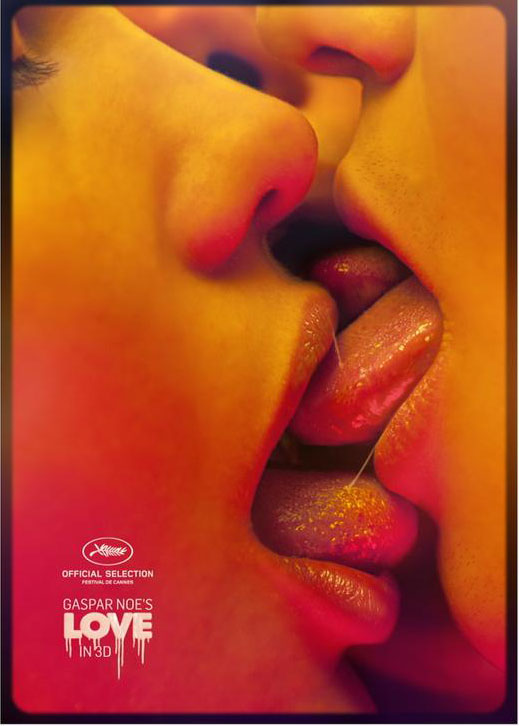
As many will expect, Gaspar Noe’s film “Love” is full of nudity and sex, much of it unsimulated. However, it is also his most personal film as he explores the power love can have over people and how it can be mesmerizing and yet so painful at the same time. Karl Glusman stars as Murphy, a young film student who is in a deeply romantic and sexual relationship with Electra (Aomi Muyock). Then one day they invite another young woman, Omi (Klara Kristin), to their bed to fulfill a sexual fantasy, and soon after everything falls apart. Murphy ends up having sex with Omi which leads to an unplanned pregnancy, and Electra ends their relationship as a result. In the process of trying to get her back, Murphy reflects on the highs and lows of his time with Electra as he sinks into a deep depression.
I got to talk with Glusman over the phone about what it was like to work on “Love.” It marks his debut in a live-action film, and he has since been cast in Nicolas Winding Refn’s “The Neon Demon” and Tom Ford’s “Nocturnal Animals.” Many have asked Glusman about what it was like to be fully naked throughout “Love,” but I was more interested in finding out what it was like for him to give such an emotionally naked performance. He also described in detail the way Noe makes his movies, and he shared his experience of working with Refn on “The Neon Demon.”
Ben Kenber: “Love” is a very hypnotic movie as most Gaspar Noe movies are. The thing I admired most about your performance is how it is more emotionally naked than physically naked, and that’s something I hope people will realize when they watch it. Just how emotionally taxing was the role of Murphy for you?
Karl Glusman: You are the first person to ask me that because the focus is always kind of on the flesh. It was tough. Gaspar liked to surprise us a lot. He wouldn’t tell us what we were going to shoot the day we were shooting. He would kind of put us into position and let us run for 45 minutes at a time and then change the cameras around. There would be screaming at each other and spitting on each other. In Paris I was alone and I didn’t really know anybody, and I don’t really speak very good French at all. I could understand a little more by the end than when we started shooting, but when you are doing stuff like this you become part of a smaller group of people that really understands the work you are doing. It’s hard to talk to friends back home about it because they don’t really know what you’re going through. You feel a little isolated. It’s hard to talk to people about it when they have no concept of what you’re doing. There were definitely times where I felt kind of crazy. I felt like Gaspar was really having a laugh like he was sort of manic and he’s like the master manipulator. I had a nightmare before I went over to France and before he even hired me. In my dream I was in sort of a spherical compartment. The walls were lined with cameras from every angle, and I was being shaken and tossed around. That sort of in a nutshell was what the experience was like at times because he really asked a lot of his actors. He wanted you to cry, he wanted you to strip down naked, he wanted you to scream and spit on each other, and he tried to charm you constantly and get you to fall in love with each other and didn’t really allow you to prepare for it because there is no script. How do you prepare for something like that? You kind of just have to take a breath and jump off a cliff and hope that the parachute is going to open at some point.
BK: I read that you and the actresses didn’t have any dialogue to work with. How would you go about preparing to do a scene with Gaspar?
KG: I’ll take you through one day of shooting. Without giving any of the plot away, there was one day where I got up, I had my little coffee in the morning, I’m waiting for the car to pick me up to take me to set and I get a call from Gaspar and he’s like, “Hey I’m at a café not too far from you. Can you come over and meet me here?” I said, “Yeah but the car is coming to pick me up like right now.” And he’s like, “Oh no, no, no, I called them and I told them not to get you. Just come over to the café which is a couple of blocks down on the left and meet me there. There is somebody I want you to meet.” Okay, so I walk over to the café and there is a young guy there whose name is Juan and he’s actually in the movie. Juan didn’t know it, but Gaspar wanted to put him in the movie so he has me meet him to see if he can play my best friend. So I meet that guy and he’s like nice and we talked for a minute. He had done this with a couple of other actors and I tried to give him the thumbs up. And he turns to Juan says, “So can you come by to the set today for a little screen test? Would you be cool with that?” The guy was like, “Sure, cool.” Gaspar then said, “Cool, just make sure you’re not late.” So then we go to set and a couple hours later Juan shows up and he thinks that he’s just doing a little audition or something, and both the cameras are set up. I don’t know what the shot’s going to be, neither does Gaspar, neither does Benoît Debie (the director of photography). They (Gaspar and Benoît) play with the lights for 45 minutes before they find a shot that they like, and that’s literally how they work. He just knew that if he put me in this position or if he put her in that position, then maybe he could match cut it with a different scene. He is giving himself options in the editing room. And then before Juan knows it he’s signing his NDA and he’s cast in the movie, and like 10 minutes later I’m like screaming at him that I’m going to kill him for like fucking my girlfriend and this and that. It was like that the whole time. We wouldn’t have an actor cast and he’d say we gotta go find an actor, and we would go out that night and go trolling the bars looking for someone who might be able to play the police commissioner and then we would run it through Vincent Maraval, our producer at Wild Bunch. Gaspar would tell them, “Hey you should be in the movie” and they were like “nah, nah, nah.” And Gaspar was like, “No, no, no, you should show up tomorrow.” And that’s how it was. Gaspar would have friends show up on set and make cameos, and it was all very, very improvised, very in the moment, very immediate. The whole nature of the movie and in terms of his process is surprising himself, surprising everybody around him and kind of not planning. That’s kind of the way it was with him. It was just like go, go, go and you never knew what you were going to get that day. His whole mantra was every day is Christmas. What do you want for Christmas today? And I think that he kind of lives by that; that life is short and that the only promise that God ever made to man is that you’re going to die and you might as well enjoy it now because you don’t know what dreams may come.
BK: I imagine many people, especially in America, will be quick to dismiss “Love” as just a porno, but it really isn’t. What’s fascinating is how it portrays sex in its different forms.
KG: Yeah, sex is a necessary component to love. Let’s get real here; real love requires that. You can love someone without having sex with them, but if you are in love with someone, especially when you are young, you’d probably, I think, would want to have sex with them. The whole porno conversation is a bit of a joke and a bit of a marketing thing. I’ve talked to a lot of people who have gotten a lot out of this. They had an experience, and I think those who are patient with the film will see something much bigger than what they might assume is some raunchy porno. I would be hard-pressed to think that Pierre Rissient who runs the Cannes Film Festival would let some piece of trash into his festival. He has high standards usually.
BK: Your character of Murphy is very self-absorbed.
KG: Definitely (laughs).
BK: But that reminded me of how self-absorbed we can get when we are young or when we are in love. It’s like the outside world almost doesn’t exist and the movie does a very good job of making us remember a time like that in our own lives?
KG: He’s a bit of a bitter loser, not making films. He’s a young filmmaker guided by passion.
BK: While Murphy may not be altogether likable, we are still compelled to follow him throughout this movie. How did you approach this character?
KG: I went to school, I studied seriously and I had incredible teachers that I admire. I admire talented and great actors and I have no interest in just being in a porno. Gaspar Noe is someone who I consider to be a brilliant filmmaker and someone I always wanted to work with, and it was all about trusting him and his vision and being part of that. When we talked about the characters I was asking all these questions. Who is this guy? What is he like? What does he want? He’s so secretive and he’s always kind of withholding information. Gaspar was like, “Well he’s kind of like sort of a funny guy, kind of clever at this and that.” At one point he said, “Maybe is kind of like my friend Harmony Korine when he was younger but not so drugged out. He’s just kind of funny in that way.” Gaspar was always complaining that I was too sweet to the girls and said, “I want you to ravage them. I want you to do this.” And I always thought that since we were making what some people might think of as sort of a dirty movie that I should be really sweet and really kinder. I always would try to insert jokes. I was always trying to make the crew laugh as much as possible while we were rolling. It’s kind of my fantasy that 10 years down the line maybe Gaspar will let me have a crack at editing my own version so that I could release a 3-D comedy because I think there is an alternate version where there’s a very sweet, a very funny Murphy which was what I was trying to do. But in the end he didn’t want it to be too funny. He didn’t want Rock Hudson. He wanted someone who was more bitter and had a lot of contradictions and would say one thing and like and then go do something else just like real people, he said. At one point, Murphy has sex with another girl at a party while his girlfriend Electra is in the other room and I was like, what was that? That makes me a total liar and he said, “Yeah, just like real life. People lie and people cheat on each other.” And I really had a moment where I was like, “Yeah you’re right.” We’re really just trying to make something that really felt honest. It’s not the smoothest, most cinematic piece where someone turns to their close-up mark perfectly so that the lover turns their collar and walks off into the rain. It’s not like that. It’s messy and it’s meant to feel much more like an honest depiction of what he or I or our friends relate to.
BK: I kept thinking that your character was more or less based on Gaspar especially in the moment where Murphy says his favorite movie is “2001.”
KG: There’s definitely a lot of that. I’m wearing Gaspar’s clothes in many of the scenes like T-shirts that he didn’t even wash. I would smell like his armpits. And sometimes he wouldn’t like the color of my pants and he would just pull his pants off and we would switch right there. He decided keep my belt because we had slightly different waist sizes. A lot of the story came from his own experiences. Not everything. There are certain things like I don’t think Gaspar ever impregnated the wrong woman, the woman he wasn’t in love with. He drew from some of his friends’ experiences and took them apart and put them together to create this portrait of a love story and tried to hit all aspects of it that he could think of. But as you see, a lot of the characters’ names are… Noe is the gallery owner, Gaspar is the child, and Murphy is actually Gaspar’s mother’s maiden name. He wanted to make what he felt was his most personal film, so there are little tombstones there to his loved ones and friends with the characters’ names. But obviously there’s also visual inside jokes. You can see the model of the Love Hotel from “Enter the Void” somewhere in the movie. I even tried to do little things that I think he kind of got a kick out of. I would change the time on the clocks to Gaspar’s birthday. I pulled out the DVD case of “I Stand Alone” at one point. It’s nice to have those Easter eggs there.
BK: There are a lot of easter eggs throughout this movie. He has all these posters of movies he really likes and which had an effect on him as a filmmaker like “Taxi Driver.”
KG: He’s got a pretty amazing poster collection. He keeps them all sort of rolled up or laid flat. He doesn’t hang them up, but he’s got some really rare ones. That “M” poster that you see at one point in my room is one of four existing “M” posters in the world. I think the Nazis destroyed most of them, and that one is one of four and I think it’s like one the nicest condition ones. I think he goes and does a commercial and get a bunch of money and then blows it all on old movie posters.
BK: I imagine a lot of people tried to dissuade you from doing this movie because of the nudity involved and the potentially negative effect it could have on your career. But you have since been cast in movies directed by Tom Ford and Nicolas Winding Refn.
KG: Nic is awesome.
BK: Working with Nic was fun?
KG: Yeah I would love to plug Nic right now. He, like Gaspar, is an auteur. He has final cut, he works from a script too, and he’s just one of these interesting guys who can paint his own picture. You’re not gonna tell him like, “No I need more green on this. I don’t like that. You need to change that.” He is someone who doesn’t like to be told what to do but however, like Gaspar, he is a collaborator and he’s very inclusive. When I was cast, I had this sort of blank canvas. I told him anyone can do this part and he said, “Karl if we cast you then you and I will build this character together and we will make it something.” And he was bringing me over to his house for meetings along with the other actors. He always asked everybody, what do you think of this? How do you think this should happen? What do you think you should do in the scene? Where should you be from, or how do you feel about that? And Nicolas shoots chronologically which is cool because then you can change where the story goes. I think the ending of the movie is completely different now than the draft I read initially before auditioning for it. He doesn’t know where he’s going, he doesn’t know what’s going to be, so that’s what’s exciting. So in a way I guess in a way he is similar to Gaspar like that in the sense of he wants to surprise himself. I think that’s pretty fun. I think Hitchcock was once quoted as saying “shooting a movie is the least exciting part of making a movie” because he already knew what everything was going to look like whereas I think these two filmmakers were talking about how that in a way they had no idea where they were going. They both want to see how deep the rabbit hole goes. I think Gaspar was really happy with the end product. He said it came out much better than he ever thought, and I think that was in big part because of hiring Aomi who I think is just lovely and just fantastic in the movie and Klara who’s just so brave as well. I think these girls were just so generous and so joyful on set, and we got something much better than what he ever anticipated. And Nic and I have stayed in touch. He needled me a little bit saying that just a hang tight and that we were going to make another movie together, and I told him he can’t fuck with me like that. If we’re going to bed and we’re gonna fuck then we better fuck. Let’s not talk about it. He once said that making a movie with an actor is like going to bed with them because you make this baby with a big movie.
BK: It sounds like “Love” has had a very positive effect on your career so far. How would you describe the overall effect it has had?
KG: Well I mean it’s just kind of like a more immediate and obvious level. I met Tom Ford at Cannes, and so I happened to be in the same venue as him and talked to him about his movie. A couple of months went by before he hired me, but that meeting led to a job. Gaspar actually called Nic Refn personally in front of me and sold him the movie and told him to hire me. He gave me this ridiculous pitch which sounded better than any agent saying “he is the most daring and most professional actor in the world!” I don’t know if he went out on a limb but he didn’t have to do that, and his recommendation meant a lot to Nicolas because Nicolas has a lot of respect for Gaspar. And the movie resonates with certain filmmakers and certain actors who I admire and would love to work with some day. The movie has had nothing but a positive effect. My mother, she cried when I told her that we were going to go to Cannes. That was a big deal for her that her son might get to go to a big international film festival like that. I always wanted to do things that made my mother proud of me and cheer her up. When I was a little kid actually I think that was kind of the first thing that got me into acting is when my parents split up. I used to entertain my mom in the kitchen cleaning pots and pans and putting a chef’s hat on my head and pretending to have a cooking show. I called it Thor’s Kitchen because my mom was really into Norse mythology and I would make imaginary recipes in front of her and try to make her laugh. I think she has always been the driving force for me. So although she hasn’t seen this movie yet, and it will probably be some time before she does, she’s very proud of it and I think my dad kind of understands it better than some people too that there is a theory to cinema. Not every movie is just entertainment. Some movies have political messages or social messages. Some movies have an ambition to do a little bit more than just entertaining for an hour and a half while you’re chewing on popcorn.
BK: And some movies are meant to be an experience more than anything else
KG: Exactly, and this is one of them. It is not an experience for everybody, but some people will like it a lot hopefully.
I want to thank Karl Glusman for taking the time to talk with me. Special thanks also goes to WooJae Chung for the use of his photo at the top of Glusman which comes from his film “Consilience.” Gaspar Noe’s “Love” is now available to own, watch and rent on DVD, Blu-ray, and Digital.
It was very sad to learn of Polish director Marcin Wrona’s passing on September 18, 2015. He committed suicide before a screening of his latest film, “Demon,” the last in a trilogy which began with “My Flesh, My Blood” and “The Christening.” Like those two films, “Demon” deals with the nature of evil and a fate the protagonist is forced to deal with. Itay Tiran stars as Piotr (a.k.a. Python) who is on the verge of getting married to the beautiful Zaneta (Agnieszka Zulewska) and moving into a family home which has survived from one generation to the next. But on the day of his wedding, Piotr suddenly becomes possessed by a spirit which will no longer remain silent, and what should be a joyous day soon turns into the wedding from hell as the past will no longer remain buried.
While Wrona is no longer with us, his “Demon” is a tremendously well-made horror film which allowed him to leave his mark on the world of cinema, and it provides us with an interesting take on the Jewish legend of the dybbuk. It is a beautifully filmed movie with incredible vistas and an all-encompassing darkness as a bad situation gets even worse, and that’s not just because the wedding guests have drunk far too much vodka. Watching “Demon” also reminds us of the power of ambiguity as not all questions are answered here, and this forces the viewer to think more deeply about what they have just witnessed.
I got to speak with Olga Szymanska, the producer of “Demon” and Wrona’s widow, while she was in Los Angeles to promote the film. I applaud her for supporting her late husband’s work while dealing with a loss which is still hard for many to accept. She talked about what went into the making of “Demon,” how it relates to Wrona’s previous two films, if she was ever worried about people not understanding the legend of the dybbuk, and of how Wrona and his cinematographer Pawell Flis gave the film such a striking look.
Please check out the interview above, and be sure to check out “Demon” which is playing at the Nuart Theatre through September 15.
AN ULTIMATE RABBIT NOTE: This video interview was updated in 2023 to add certain visual elements and to avoid copyright issues which never intended or inferred.






 The Ultimate Rabbit