WRITER’S NOTE: This article is about a screening which took place back in 2012.
“Every day of my life for the last twenty years, people come up to me, look me in the eyes and say ‘Buddy Revell!'”
That’s what actor Richard Tyson told the audience at New Beverly Cinema in Los Angeles where the theater was showing “Three O’Clock High” in honor of its 25th anniversary. The 1987 high school comedy marked Tyson’s film debut, and his character of Buddy Revell was the school bully who threatens the meek Jerry Mitchell (Casey Siemaszko) to a fight after Jerry touches him on his leather jacket. From that point on, it is clear you never ever touch Buddy Revell at any time.
Around the time the movie was headed into pre-production, Tyson had just graduated with a Master of Theater Arts degree from Cornell University and was living out of his truck when he heard about it. Apparently, he went through about 14 callbacks before he got cast as Buddy, but the film’s director Phil Joanou was always convinced Tyson was the only one for the role.
Phil Joanou: While Jerry is so manic and nervous and flopping like a fish on the deck, Buddy is like an iceberg floating across. Just cool, he sits in the class, he just looks over at Jerry then he looks back. Buddy’s almost expressionless, and so many other actors would have been expressionless, but what was so cool about what Richard did is that he’s doing nothing but he’s doing something. That’s really hard to do, but you can see that there’s something going on behind this guy’s eyes.
In talking about how he established Buddy Revell’s physicality, Tyson brought up the scene where Buddy gets in a fight with the jock in the library. Joanou asked Tyson what he would do if someone came up and poked him in you the chest the way Buddy gets poked, and Tyson responded he would “break his fucking finger” and then showed him how he would do so. Once he was convinced, Joanou asked Tyson if he could throw a right cross punch after breaking the finger and Tyson had no problem doing so.
It’s important to note that the screenwriters of “Three O’Clock High,” Richard Christian Matheson and Thomas Szollosi, were on set the day the library scene was being shot. Matheson and Szollosi had their doubts about Tyson at first, but after watching him in action, they were convinced the filmmakers got the right guy to play Buddy.
In comparison to all the bullies we see and hear about on school campuses these days, Tyson said he didn’t think Buddy was really a bully.
Richard Tyson: I think the system, the school and the environment were worse than him. It’s not just the guy in the leather jacket. The leather jacket guys are usually left alone. Just don’t touch them in the bathroom!
What was great about Tyson’s performance in “Three O’Clock High,” and Joanou pointed this out, was in showing how Buddy was always in control and of what happened when he loses control. When Jerry manages to punch Buddy in the nose, you suddenly see the rage in his face as he registers this is the first time he has ever been hit and drawn blood. Seeing that look of rage which crosses his face shows what makes Tyson’s performance so damn good: he shows you the character’s emotions without ever having to spell it out for you.
Richard Tyson went from “Three O’Clock High” to starring in such movies as “Two Moon Junction,” “Kindergarten Cop” where he played Arnold Schwarzenegger’s nemesis, and “There’s Something About Mary” in which he banged Ben Stiller’s head on a table several times. Tyson’s still got a lot of great work ahead of him, but we will never ever forget his performance as Buddy Revell.
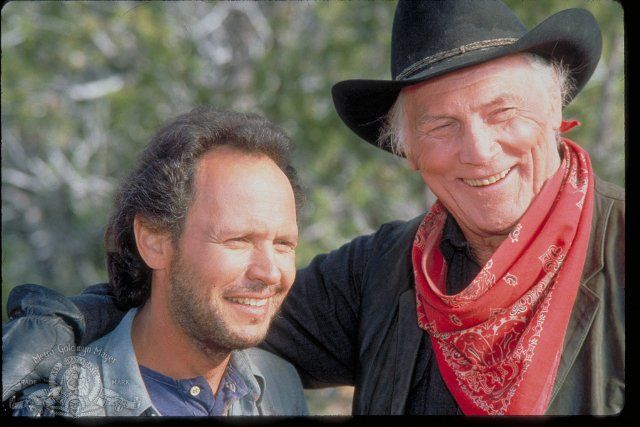
While at the twentieth anniversary screening of “City Slickers” which was held at the Aero Theatre in Santa Monica on August 12, 2011, Billy Crystal talked about working with the late Jack Palance in that film. Palance co-starred as Curly Washburn, the most authentic of cowboys, and it was a role which earned him the Oscar for Best Supporting Actor. In addition, it provided Crystal with one of the best setups in his Oscar hosting history; Palance’s one-armed push-ups which proved he was not too old to ever act in a motion picture.
One movie the “City Slickers” filmmakers viewed before they started shooting was “Shane,” the 1953 western starring Alan Ladd as the title character and Palance as Jack Wilson, and Crystal said this was the first movie he ever saw on the silver screen. When it came to casting Curly, he said they considered no one but Palance for the role. “Shane” marked the last time Palance got an Oscar nomination until he did “City Slickers,” and that’s a difference of 38 years!
Palance worked on “City Slickers” for a total of 10 days. Before he arrived on set, the crew kept saying, “the big cat is coming.” The director of the movie, Ron Underwood, was described by Crystal as the “sweetest guy” and a “puppeteer.” But when it came to the first day of shooting, Palance told Crystal he always got “nervous.” When Underwood asked him to do that “glare” of his one more time, Palance replied, “What glare?!”
After this, Palance put up a fit which had Underwood’s hair standing on end. No one was expecting this kind of tantrum from the former host of “Ripley’s Believe It or Not.” But after the first day, things got better even though Palance was never thrilled about being on a horse. Both he and Crystal continually ran lines with one another, and Crystal described the two weeks they worked together as feeling like nine months.
Crystal described Palance as a “real movie actor” in how he understood the size of his head. Palance owned the camera and his appearance in a way few actors can ever hope to. His role as Curly capped off a long and memorable acting career. While he sadly passed away in 2006, his legacy continues to live on from one generation to the next.
WRITER’S NOTE: This article was written back in 2011 when this screening took place.
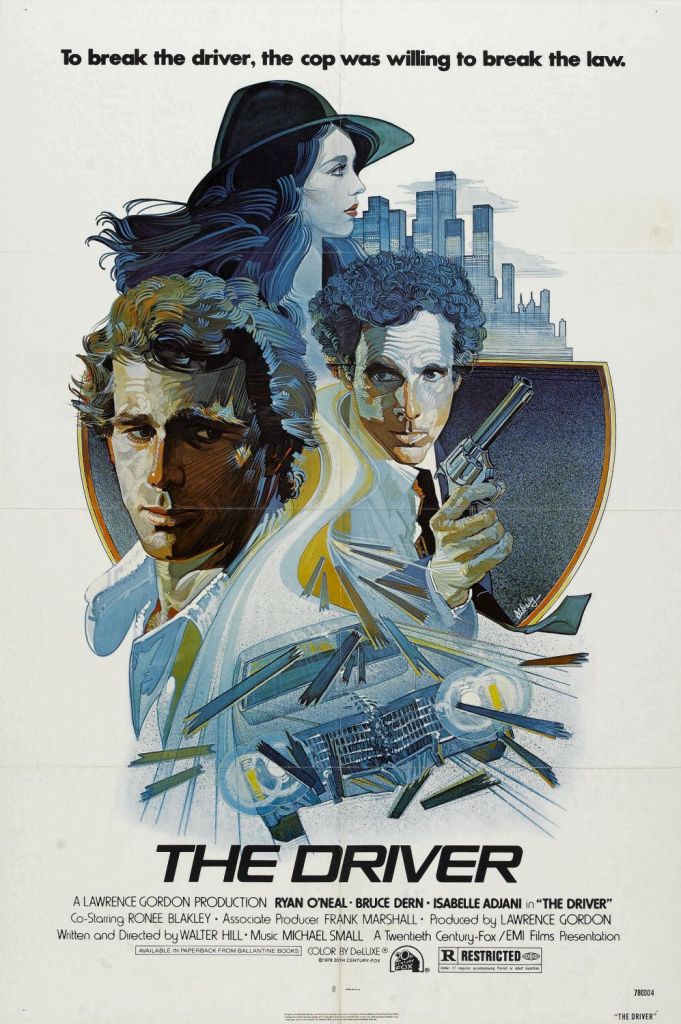
Continuing with his film programming at New Beverly Cinema which he entitled The Wright Stuff II, filmmaker Edgar Wright gave us a vehicular double feature with “The Driver” and “Duel.” The main attraction of the evening, however, was “The Driver,” a 1978 movie directed by Walter Hill, and Wright gleefully told the audience it was more for him than us as it was his first time seeing it on the big screen, and that it made him want to become a getaway driver. Joining him for this screening was the film’s director Walter Hill, actors Bruce Dern and Ronee Blakley, and producer Frank Marshall.
Upon seeing the sold-out audience at the New Beverly, Hill remarked, “This is the largest crowd in the United States that has ever seen this movie. It didn’t do all that well when it was first released.”
Indeed, “The Driver” is not as well-known as some of Hill’s other movies like “48 Hours” or “Southern Comfort.” When it came out, it was criticized as not being fun and for being “too real.” Hill remarked how depressing it can be when a movie you make does no business and gets bad reviews. Later though, another filmmaker contacted Hill about the reception “The Driver” got and told him, “Pay no attention to reviews. The movie’s marvelous, life is hard.”
“The Driver” marked the first time Hill worked with Dern, and Dern praised Hill endlessly throughout the evening and said he would go anywhere in the world for him. Dern said he found Hill to be “full of surprises,” and he came to work thinking they would do something which had never done before. Hill in turn described Dern as “a very special actor” who always jumped out at him with quality and personality in each of his performances, and that he gave each role an unusual quality of psychological density to even the most mundane characters.
Marshall, best known for producing the Jason Bourne movies and “Raiders of the Lost Ark,” originally turned the movie down because it was being shot at night in downtown Los Angeles. Back in the 1970’s, he was worried about shooting there as it had a very brutal atmosphere. Somehow though, he got sucked into doing this one and ended up trading a summer in Malibu as a result. “The Driver” later led Hill to make another film called “The Warriors” which was also shot at night.
While Dern has most of the movie’s dialogue, the main star of “The Driver” is Ryan O’Neal. His character is noted for having only 350 words in the entire script, and Wright remarked how nice it was to have an action movie where the hero has no good lines. O’Neal was known as a heartthrob at the time, but he was eager to do something different in his career when this role came along. However, many didn’t accept O’Neal as this character when the movie came out as people had a different image of him at the time. Years later though, it is clear just how good he is here, and it served him well in his growth as an actor.
When it comes to the car chases in “The Driver,” it is clear the actors really were driving those cars instead of their stunt doubles. This film was released not long after “The French Connection” which did everything for real, and everyone was really tearing around at crazy speeds. Hill said he and his fellow filmmakers were “young and reckless” back then, and he gleefully pointed out there indeed was “a real man in that car that flipped.”
But what’s great about the car chases in “The Driver,” as Marshall pointed out, is how Hill uses them to tell a story. These are not car chases for the sake of car chases, but ones which are an integral part to the movie as a whole. Watching it at New Beverly Cinema, it made me yearn for the kind Hollywood doesn’t do any more unless CGI is heavily involved. In the end, there is not much which is even better than the real thing.
One audience member asked if there were any police experts on set during the making of “The Driver.” Hill said there were not, and he made clear how the movie is really “pure fantasy” in what it portrays and is the “opposite of law enforcement.” It’s hard to think of any police force wanting to be involved with a movie like this as it appears to show the bad guys getting away without any real repercussions. In the end, Hill saw it as an extension of the “dark sides of personalities.” Indeed, this is not a film inhabited by easily redeemable characters, and Hill was correct in describing as a “very unreal movie.”
Hill also took the time to talk about his style of directing, and this something I was eager to know more about. His films typically don’t get much rehearsal time, but he found this actually works in the director’s favor. He told the audience that two-thirds of directing is casting, and he never gets any rehearsal until take one. Dern added how Hill is not very good at rehearsal, and this made him and Walter seem like a perfect match for one another.
Hill even talked about how he originally wanted Robert Mitchum for Dern’s role, and that he talked with him for six hours straight about it. In the end, however, Mitchum told Hill there was “too much car stuff” and that he didn’t have the energy for it. This clearly benefited Dern who got the role instead, and he admitted Mitchum would have been a “handful” for Hill to deal with.
In the end, this screening “The Driver” really turned out to be a gift for everyone at New Beverly Cinema. It was a gift for Hill and the other guests as it brought back so many memories they would have otherwise forgotten. It was also a gift for Wright as he would never have seen it on the big screen otherwise. But it was an especially big gift for the audience because many of would not have seen it otherwise. I probably would not have rushed out to see “The Driver” if Wright did not feature it in his festival of movies, and for me it turned out to be a special treat.
“The Driver” is one of the many movies which show how Walter Hill is still a vastly underappreciated filmmaker at times. After watching it at New Beverly Cinema, I am reminded of how effective a director he can be when given the right material.
ADDITIONAL WRITER’S NOTE: This movie has become a cult classic in recent years and has proven to be very influential on many filmmakers. Nicolas Winding Refn has cited it as an inspiration on his brilliant movie “Drive,” and you can see its influence all over Edgar Wright’s 2017 action film “Baby Driver.”
WRITER’S NOTE: The following article is about a screening which took place in July of 2011.
Robert Ben Garant and Thomas Lennon dropped by New Beverly Cinema to host a double feature of the movies they consider to be the best about screenwriting in Hollywood: “Barton Fink” and “Sunset Boulevard.” Garant and Lennon are known for writing the scripts for the “A Night at the Museum” movies, creating the MTV sketch comedy series “The State,” and starring in Comedy Central’s “Reno 911.” They were invited to screen some of their films, but both flatly refused as they consider only two of them “watchable.”
Much of the evening was spent talking about “Barton Fink,” as they both see it as their life story. Written by Joel and Ethan Coen and directed by Joel, it stars John Turturro as the Barton of the movie’s title, a respected playwright from New York who moves to Los Angeles to write for the movies. While there, he stays in the dilapidated Hotel Earle where he befriends insurance salesman Charlie Meadows (John Goodman), who tells Barton he sells “a piece of mind.” Barton also deals with the overzealous movie boss Jack Lipnick (Michael Lerner, in an Oscar-nominated performance), who tells him he cares deeply about his writing ability but who, in the end, is far more interested in what the audience wants to see.
Garant and Lennon recollected about watching “Barton Fink” back in 1991, the year before they started working on “The State” for MTV. They found it funny and abstract as Jack Lipnick chews out Barton for being “too fruity,” and they both looked at each other and said, “Wouldn’t it be funny if movie studios were really like that?”
But soon after that, they both found those meetings Barton had were exactly like ones they ended up having in Hollywood. They consider this and “Who Framed Roger Rabbit” to be a far more accurate depiction of Hollywood than Robert Altman’s “The Player,” and, as John Travolta said in “Pulp Fiction,” “That’s a bold statement!” Tony Shaloub’s character of movie producer Ben Geisler ends up getting fired without ever reading Barton’s script, and to this the two of them replied, “That’s Hollywood!”
They also joked about how “Barton Fink” acted as the origin story for John Turturro’s character of Jesus in “The Big Lebowski.” John Goodman, who is also in “Lebowski,” ends up giving Turturro a box, and the Coens never say or show us what is in it (very smart on their part). For all we know, it’s Jesus’ bowling ball in there. Either that, or it is the same box featured at the end of David Fincher’s “Seven.”
Garant and Lennon recently released a book they wrote called “Writing Movies for Fun and Profit: How We Made a Billion Dollars at The Box Office and You Can Too!” If you take a good close look at the title, you will see the word “fun” has been crossed out. They were a hilarious delight as they talked about their ups and downs screenwriting in Hollywood. It was as fun to hang out with them for this double feature as it was guessing what their favorite quotes from “Barton Fink” were. They did, however, make it very clear that this was not one of them:
“The writer is king at Capitol Pictures!”
A few years later, I got to interview with Robert Ben Garant and Thomas Lennon about “Hell Baby,” a horror comedy they wrote, directed and starred in. I brought up how I attended their double feature of screenwriting movies and of how “Hell Baby” was made independently without any interference from studio executives. I assumed they enjoyed the immense freedom they had in making this film, and it was the kind of freedom which was denied to them when they wrote the “A Night at the Museum” movies.
Please check out the interview below which I did for We Got This Covered. In addition, to Garant and Lennon, I also got to talk with Keegan Michael Key, Rob Huebel and Rob Corddry.
WRITER’S NOTE: This article is about a screening which took place back in July of 2011.
It is very scary to realize “Fast Times at Ridgemont High” is now at its 30-year anniversary. Although dated stylistically, what the students went through in this movie still feels very relevant to what today’s generation goes through on a regular basis. Based on the book by Cameron Crowe, who also wrote the screenplay, it follows a group of students during one year at a San Diego high school. Its director, Amy Heckerling, dropped by the Aero Theatre in Santa Monica to talk about the behind the scenes stories, and she was greeted by a sold-out audience.
“Fast Times at Ridgemont” is notable for its frank depiction of teenage sexuality and in dealing with highly sensitive topics like abortion. Heckerling said the movie was shot at a time when things were rapidly changing. The sexual revolution was ending and the era of Ronald Reagan was on the rise along with conservatism. Most teenage comedies deal with situations from the male point of view, but Heckerling was adamant about the audience seeing things from the woman’s perspective. The MPAA, however, forced her to cut scenes like when a girl talks to her mother about blow jobs in order to avoid an X-rating. After all these years, the hypocrisy of the MPAA never ceases to amaze me.
These days, the movie is known for having three future Oscar winners in its cast: Sean Penn, Forest Whitaker and Nicolas Cage, who is credited here as Nicolas Coppola. This is not to mention all the other cast members like Jennifer Jason Leigh and Phoebe Cates, both of whom went on to other successful efforts after this movie’s release.
Heckerling recalled coming into this movie at what she called an “awesome” time. Casting young kids in a movie proved to be tricky, but she loved how there was so much great talent to choose from. When asked if she thought all great actors could do comedy, Heckerling replied some have it in their makeup while others do not. In working with Penn, she said he is wonderful in everything he does, and his smile always lights up whatever room he is in.
In talking about the soundtrack, Heckerling wanted to fill it with 1980’s music and songs by Oingo Boingo and the Go-Go’s. While she got to include the songs she wanted in the movie, she was also forced to add in a lot of 1970’s rock music from bands like The Eagles. This was in large part due to one of the movie’s producers, Irving Azroff, being the personal manager of The Eagles at the time.
One audience member asked Heckerling if the studio proposed any sequels or prequels to “Fast Times at Ridgemont High.” She said when the movie was screened in Westwood, one studio executive suggested, “How about ‘Spicoli Goes to College?'”
There was a television spinoff but, like many of its kind, it proved to be short lived. There was also something of a follow up to “Fast Times” called “The Wild Life,” which was also written by Cameron Crowe and directed by Art Linson, but Heckerling said it was not strictly a sequel.
As unbelievable as it is that we are now at the 30th anniversary of “Fast Times at Ridgemont High,” it only goes to show this particular movie’s staying power. It remains as raunchy and funny as when it first came out, and it is also one of the great time capsules of the 1980’s. This is the kind of movie which really does not need a sequel or a prequel at this point to justify its success or longevity.
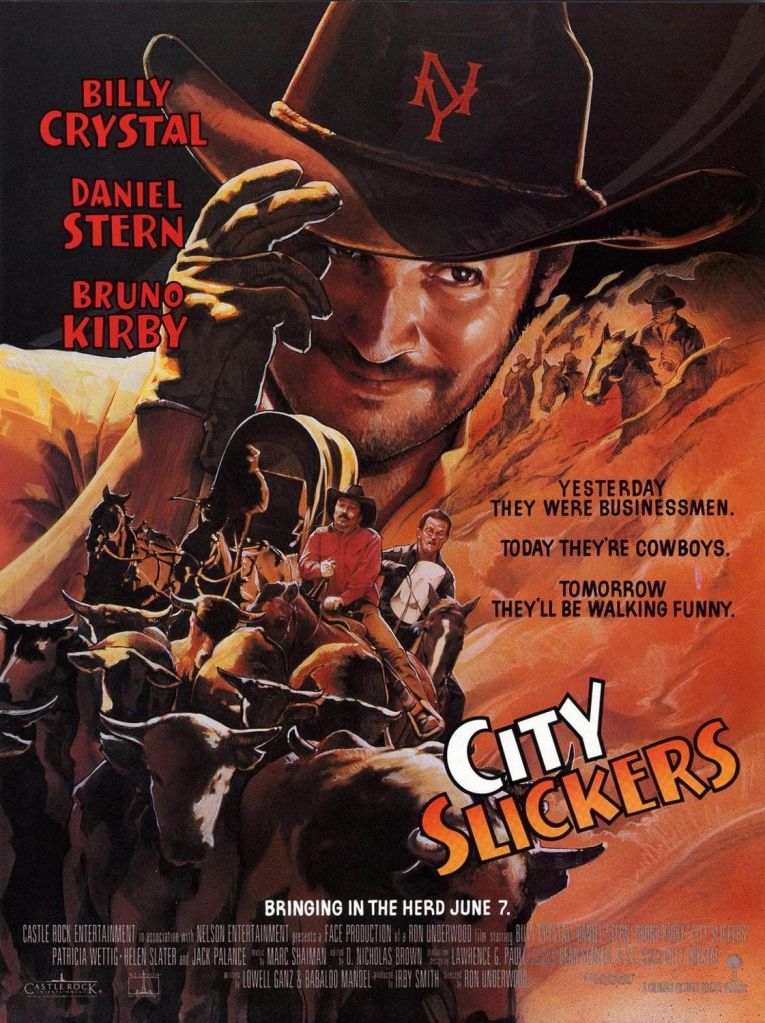
Billy Crystal was at the Aero Theatre in Santa Monica, California on August 12, 2011 when American Cinematheque screened “City Slickers” in honor of its 20th anniversary. Unlike other guests, Crystal actually sat through the entire movie with the sold-out audience and a few people involved in its making: director Ron Underwood, director of photography Dean Semler, actors Daniel Stern, Tracey Walter and Bill Henderson, and screenwriters Lowell Ganz and Babaloo Mandel. Afterwards, Crystal did a Q&A with Geoff Boucher of the Los Angeles Times, and he said the last time he saw “City Slickers” was at its premiere in Hollywood.
“City Slickers” was made with the invaluable help of Castle Rock Entertainment. Crystal said he pitched it and “Mr. Saturday Night” to the studio. Unlike “When Harry Met Sally,” which he did before this, “City Slickers” proved to be a logistically difficult film to make. However, the prep time he had with Stern and the late Bruno Kirby was the best ever, and Crystal described the training they had as being so much fun.
Prior to filming, Crystal, the writers and Underwood looked at the classic westerns “Shane” and “Red River” for inspiration. Crystal said it looked like they had 9,000 cows in the shots, and this made him think markets had no beef to sell as a result. Everyone involved felt everything needed to look real, so the production pushed those cows and trained those horses endlessly.
The movie’s opening scene in Pamplona, Spain, was shot there and not on some soundstage. Crystal said Ganz was the one who suggested the bulls running to the studio. An hour after hearing this, the studio had hotel reservations ready for the cast and crew. It was no surprise to hear Crystal say they would never be able to do this scene today as it would all have to be done digitally now.
One audience member asked if Norman the cow was still around. It turns out there were 10 or 11 different cows used as they got old very quickly and had to be replaced. As for Norman’s birth scene, Crystal said it was shot in three different states and that he and Jack Palance, while in the same scene, were not on set together for it. Crystal shot his takes in Colorado while Palance filmed his in New York. Other parts of the scene were shot in California near Simi Valley.
The river crossing scene was the toughest one to shoot in “City Slickers,” Crystal said. The cows kept mounting each other and he, Stern and Kirby were all wearing wetsuits underneath their clothing, as the water was about 50 degrees. This led one of the stunt coordinators to tell Crystal, “Pee in your wetsuit!” Now, as disgusting as this may sound, urine has a temperature of 90 degrees or more, so it sure must have come in handy during filming!
Crystal laments how Hollywood does not make movies like “City Slickers” anymore. While he did not want to sound bitter, he said there was a different sensibility back when it was made, and he hopes movies will come around back to it in the future. Picturing how a studio executive would see it today, Crystal felt they would probably say to him, “Can we get them to the ranch faster? I want those guys there by page nine!”
Still, 20 years later after its release, we were all in agreement with Crystal that “City Slickers” holds up very well and is just as funny and entertaining as it was when it first came out. Seeing it on the big screen where it plays best made this clear to everyone in attendance.
WRITER’S NOTE: This article is about a screening which took place back in 2012.
Writer Josh Olson, best known for penning the screenplay to David Cronenberg’s “A History of Violence,” dropped by New Beverly Cinema to introduce two of his favorite cult movie musicals: “The Apple” and “Sgt. Pepper’s Lonely Hearts Club Band.” These films were not well received critically or commercially when first released, but they have since gained a cult following, and the fans have come to appreciate them for reasons the filmmakers did not exactly intend. This was especially the case with “The Apple” which has since become one of the most unique movie musicals ever made.
Olson thanked those who came to this double feature and made clear to us he worships at the altar of “The Apple” and shows it to those unfamiliar with it (a.k.a. virgins) everywhere. He even remarked how two close friends of his, after they saw it, had a baby. The movie tells the story of two young Canadian musicians, Alphie (George Gilmour) and Bibi (Catherine Mary Stewart), who travel to America to participate in an infinitely popular music festival. They are approached by the powerful entertainment agent Mr. Boogalow (Vladek Sheybal) to sign with him, but Alphie sees the dark side of the music industry and refuses to be a part of it. Bibi, however, finds herself caught up in the wild lifestyle this industry has to offer, and it is up to Alfie to rescue her from Boogalow’s evil clutches.
In addition to screenwriting, Olson works for a website run by filmmaker Joe Dante called Trailers from Hell, and he talked about how the trailer for “The Apple” was one of the first he did a commentary track for.
Josh Olson: I stand by almost everything I said on that commentary except at one point I did use the phrase “it’s so bad it’s good,” and I regret that today. This movie has taught me that that phrase is meaningless. Intention does not matter. There are great movies out there that are so much better than the filmmakers intended them to make or had a right to make. Everything is accidental in this business so I don’t think it matters. I think either a movie is great or it is not, and there are movies that people think are wonderful that just won’t entertain you one iota as much as “The Apple” will.
Olson made it clear to the audience he will never again use the phrase “so bad its good” in reference to “The Apple” as he considers it to be one of the greatest movies in the history of the world. Once it was shown, he came back to the front of the audience to introduce the movie version of “Sgt. Pepper’s Lonely Hearts Club Band” and said there was no way to top “The Apple,” so he wasn’t going to even try.
Olson talked briefly about “Sgt. Pepper’s Lonely Hearts Club Band” before it started. It was directed by Michael Schultz who previously made “Car Wash” which Olson described as a “weird, urban Robert Altman film,” and also “Cooley High” which he called one of the most formative films from his childhood. Olson told the audience at the New Beverly how Schultz got involved in making a cinematic adaptation of the Beatles’ classic album.
Josh Olson: Robert Stigwood (one of the most successful movie producers of the 1970’s) came to him and offered him “Grease” to direct, and Schultz looked at it and said, “This is fucking horrible and I don’t want anything to do with it.” So, he passed on “Grease” and it then went on to make a trillion dollars, and Robert Stigwood came back to him with the idea of turning the Beatles’ “Sgt. Pepper’s Lonely Hearts Club Band” into a movie starring the Bee Gees and Peter Frampton. To this, Schultz said, “Wow, this sounds like a worse idea than ‘Grease.’ But what do I know, I passed on ‘Grease.’”
After watching the “Sgt. Pepper” movie, we were all in agreement with Olson that it was one of the most “batshit” ideas for a feature film, and it remains one of the biggest critical disasters in motion picture history. Olson, however, did try to rationalize this particular movie’s existence as it was made back in the 1970’s.
Josh Olson: It was a better time back then, and you have to have the yin to balance out the yang. The really good ones (movies) were almost indistinguishable from the really bad ones. But we had people thinking “Sgt. Pepper” was a good idea for a movie, and we also had people who were making “Apocalypse Now” back then, so it was a small price to pay.
Big thanks to Josh Olson for putting this crazy double feature together. “The Apple” isn’t so much a movie musical as it is an experience, and you won’t find another one quite like it. As for “Sgt. Pepper,” we may never get another opportunity to see it on the big screen again, so those who stayed could not quite say they regretted sitting through it. But yeah, it really was a bad idea for a movie.
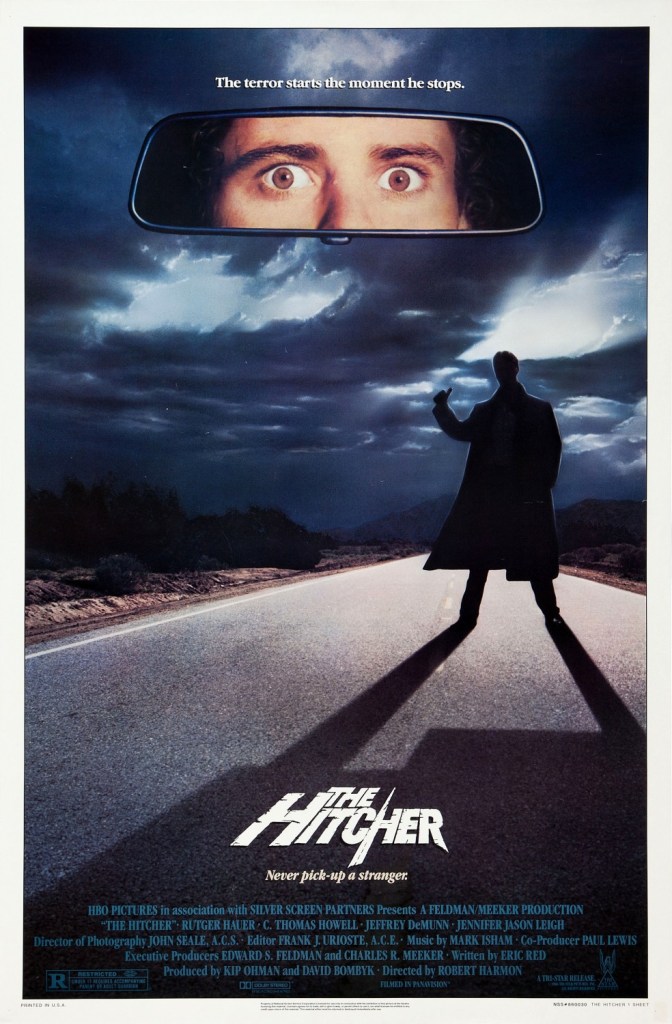
After all these years, “The Hitcher” (the original, not the godforsaken 2007 remake) has lost none of its suspenseful power, and it continues to terrify new generations of horror movie fans. In addition, it also marked a memorable point in the careers of the actors cast in it. Rutger Hauer created one of his most devilish villains ever with John Ryder, C. Thomas Howell gave one of his very best performances as Jim Halsey, and Jennifer Jason Leigh’s performance as Nash proved to be a real stretch for the actress (that pun was most definitely intended).
When the screenwriter of “The Hitcher,” Eric Red, arrived to do a Q&A at the Silent Movie Theatre in Los Angeles on October 9, 2011 where Cinefamily was showing the film, he gave the small but very attentive audience a lot of great stories involving the actors involved in the production, and he had plenty of unforgettable things to say about Hauer.
The audience was very surprised to hear Sam Elliott was originally cast as John Ryder before Hauer came along. Apparently, Elliott’s audition was so terrifying, one of the movie’s producers refused to stay inside the casting office whenever Elliott was around. Somewhere along the line, however, Elliott got cold feet and ended up dropping out of the production.
But even after hearing that, it is still hard to think of another actor who could have played this truly frightening character as memorably as Hauer. As Ryder, Red said Hauer “evoked the character to such a degree” and was always “unpredictable” in what he did. Red described his screenplay as being “sparse” and said it was more about looks than it was about dialogue as there wasn’t much of the latter. Hauer, however, brought so many ideas to the role which were not on the page. During this particularly screening, some of us actually noticed how Ryder was actually wearing a wedding ring. To this, Red simply said, “That’s Hauer!”
Oddly enough, the evening’s funniest story involved the scene where Leigh’s character of Nash was tied between a truck, and Halsey has to keep Ryder from stepping on the gas and ripping her apart. It turns out Hauer did not want to shoot this scene and would not even come out of his trailer when everything was ready to start shooting. The filmmakers talked to him regarding his concerns, and Hauer told them the following:
“I don’t want to shoot the scene because the audience will end up figuring out that my character is the bad guy.”
Hmm … Dismembering the driver who picked up Ryder before Halsey did, murdering a whole family and sticking a human finger in a pile of French fries was not enough to indicate Ryder was the bad guy? How scary it is to learn of this!
When it came to casting Halsey, the filmmakers did not have any particular actors in mind. Red said they all went with Howell as they remembered him from “The Outsiders” and described him as having “the right look.” Ryder is described as being a “father figure” to Halsey, and he wants Halsey to kill him. Howell convincingly portrays his character, who goes from a terrified young man in over his head to one who gains control and becomes almost as cold-blooded as Ryder.
With “The Hitcher,” Red was aiming to create a movie where the audience got an inescapable feeling of claustrophobia in wide open spaces. He said it does not only have to happen in a tiny room or an elevator. Even with the infinite expanse of land on display, no one can escape their pursuers. But the movie also benefits from its memorable performances from a cast who bring more to their characters than what was on the page. Without Hauer, Howell and Leigh, “The Hitcher” would never have been half as effective as what we ended up seeing onscreen.
WRITER’S NOTE: This article was originally written back in 2011 when this screening took place.
Edgar Wright continued his film festival he named The Wright Stuff II at New Beverly Cinema with “Animal House,” and joining him for this screening was special guest John Landis who directed it and succeeded in making what Wright called the first “adult gross out comedy ever.” Landis said director Todd Phillips had already made three movies where he did several shot for shot steals from “Animal House,” and even Wright had to admit he may have subconsciously stolen the taking coat gag for “Scott Pilgrim Vs. The World” from it as well.
“Animal House” was Landis’ third film, and he made it soon after finishing “Kentucky Fried Movie.” However, he was not the first choice to direct as it was initially offered to John Schlesinger (“Midnight Cowboy”), then later to Richard Fleischer (“20,000 Leagues Under the Sea”) and Mike Nichols (“The Graduate”) who all turned it down. Landis said they all passed on it saying, “Are you fucking kidding me?”
Landis was drawn to this project by what he called “a very smart script” written by Doug Kenney, Harold Ramis and Chris Miller. Landis gave a lot of the credit to Kenney who had come to this from the Harvard Lampoon where he was described as being “consistently brilliant.” Kenney wrote scripts called “Laser Orgy Girls” and “Charles Manson In High School,” but then he did “High School Yearbook” which eventually evolved into “Animal House.” The thought was there were so many off-color elements to where it made more sense to set it in college.
“Animal House” marked the film debut of many young actors who would soon become big stars in their own right. It was John Belushi’s first movie, and he was already an established star thanks to “Saturday Night Live.” Tom Hulce was doing the play “Equis” on Broadway when cast, and Bruce McGill was discovered doing Shakespeare’s “Richard III.” As for Karen Allen, she originally drove her friend to audition for it, but she never planned to audition herself. But Landis took one look and told her, “First off, you just lost a friend. Second, we want you in the movie!”
Others from “Saturday Night Live” were considered, but Lorne Michaels was getting pissed about losing more of his cast. While Landis got Belushi despite a crazy schedule which had him available for only three days a week, Michaels refused to let Dan Aykroyd be in it. Then there was Chevy Chase, the show’s first breakout star, who was getting offered everything and decided to do “Foul Play” with Goldie Hawn instead.
The only veterans in “Animal House” were Tim Matheson who started off as a child actor, and Donald Sutherland who was already a big star. All of Sutherland’s scenes were shot in two days, and he was offered $35,000 plus gross points. Sutherland, however, instead took an offer of a flat $50,000 which turned out later to be a mistake as the movie made over $140 million. Everyone else was paid scale except for Belushi, and the horse got $150,000. This led Landis to admit, “I got paid less than the horse!”
The late John Vernon who played Dean Wormer was talked about quite a bit. Vernon played his role so deadly straight, and Landis said Vernon got exactly what the movie was all about. Vernon was also the only one involved with “Animal House” who knew it would be a success as Landis remarked at how he said, “No one realizes what an important movie this will be.”
“Animal House” had a budget of $2.1 million, was shot in 32 days and averaged about 43 setups each day of shooting. Landis said the studio left them alone during the making of it, but they later complained about certain things. They did not like the actors who were chosen and even said, “Why’d you hire John Vernon?! He’s a television actor, a villain in a Clint Eastwood movie!”
The studio also voiced concern over the scene where some of the characters visit a black bar. They feared, Landis quoted them as saying, that “black people will riot” and would “tear up the screen.” But Landis and the producers were adamant of how the scene was told from a white person’s perspective and that it was meant to be subjective. Landis even got Richard Pryor’s take on it, and Pryor said, “I think it’s funny and white people are crazy!”
Studio executives also had an issue with the girls never being shown going home after the party. This led one of them to ask, “How do we know those girls weren’t raped?”
Test screening “Animal House” was an interesting story. The filmmakers took it to Denver where it had audiences screaming with laughter. Landis even taped the audience’s reaction and played it for Belushi over the phone. As a result, Belushi jumped at the chance to attend another screening of it in Atlanta where it ended up being shown to a bunch of what Landis called “drunken booksellers” who sat in stone cold silence throughout. Landis said Belushi came out of it saying the movie needed to be recut, but he was told to shut up by the producers who reminded him he wasn’t around for the Denver preview.
In the end, audiences found “Animal House” to be extremely funny and filled with many laugh-out loud moments, and that’s even if not everybody got the Belushi erection joke. That there was a sold-out audience at the New Beverly is proof of how it continues to stand the test of time. Landis thanked everyone for coming out and said the movie will soon be debuting on Blu-ray, and that all the grain which was taken out while being remastered has been put right back in.
WRITER’S NOTE: This article is based on an interview which took place back in 2013.
It has been over a decade since “The Best Man” came out in theaters, and now Nia Long returns to play Jordan Armstrong in the eagerly awaited sequel “The Best Man Holiday.” Whereas in the original she was a producer for the BET network, we now find Jordan working as the director of programming at MSNBC. She remains as work obsessed as ever, but she has found time to snag a boyfriend named Brian who is played by Eddie Cibrian. But while she is completely smitten with him, can Jordan find the power to pull herself away from her job enough to fully commit to a relationship? Also, will Jordan’s friends have an issue with Brian being white?
Long is best known for her work on the television shows “The Fresh Prince of Bel-Air” and “Third Watch,” and she has appeared in the movies “Boyz n The Hood,” “Love Jones” and “Big Momma’s House.” Cibrian also appeared on “Third Watch,” and many still remember him best as Cole Deschanel on “Sunset Beach.”
We got to catch up with Long and Cibrian when they appeared at the Four Seasons Hotel in Los Angeles, California for “The Best Man Holiday” press junket. Long talked about what it was like playing Jordan Armstrong for the first time in 14 years, and of how she has managed to have such a long career. Cibrian discussed what it was like joining this closely knit cast, and of how he came to deliver one of the best lines in this sequel.
Question: Nia, 14 years ago you played this role. Was it easy or difficult to pick the character up again 14 years later?
Nia Long: Getting back into character wasn’t so difficult. What was difficult was determining what her journey has been like for the last 14 years and making sure that I maintained certain things about Jordan in this film. But also, we just really needed to be clear about what her emotional journey was. For me that was pretty much the motivation and the most important thing.
Question: What was the deciding moment for you to sign onto this sequel?
Nia Long: We all decided that before Malcolm really finished the script. He kind of came to each one of us and said, “Would you guys be interested in doing the sequel?” We all just decided that if the script is great and the story is there and the characters have grown, why not? So that’s basically what happened and it was pretty easy.
Question: Eddie, you are the new kid on the block here so you are essentially joining the cast that already has a chemistry. Was it daunting for you coming on knowing that these guys have a connection?
Eddie Cibrian: You know, I think what Malcolm was looking for was someone who could feel at ease in the environment, and I’m kind of that way personally as well. For me, I’ve worked with a handful of them before so I already knew them and it wasn’t like I was meeting this team for the first time. Nia and I worked together while we were doing a show called “Third Watch” in New York, Morris (Chestnut) I’ve worked with a handful of times so I already knew some people which made it easier for me. But I think what Malcolm wanted was someone who didn’t feel intimidated in this situation, and I hope that came across that he (my character) is somebody who’s just at ease with himself and the environment.
Question: The female characters are all so strong and so diverse. Why is it important that we see these types of images in the media?
Nia Long: I’m all about girl power…
Eddie Cibrian: She is!
Nia Long: I am, right? I love my girlfriends; I think sisterhood is so important. I think learning from one another culturally is really important no matter where you are from or what you look like. If we can come together as women, I think we are just so much more powerful when we stand in a group. I’m not afraid to say I am a bit of a feminist. I think that we are incredible. What’s so great about Malcolm’s writing is that he does give each character a very specific voice, and the reason why we have so many women who actually love the “Best Man” brand is because they can look at the film and almost point themselves out or at least say I’m a combination between Jordan and Shelby or Robin and Nia or whatever it is. As an actor you don’t get those opportunities to really work alongside other great women, and that’s such a blessing. I mean when’s the last time you’ve seen a film where there were four African American women that are actually all in the same movie? It doesn’t happen all the time so you’ve got to take the ball and run when you get it and get that touchdown.
Question: It is 14 years later and you still look amazing. What are some of your beauty secrets?
Nia Long: Oh my gosh! Should I tell them?
Eddie Cibrian: I don’t know.
Nia Long: He saw everything that goes on in the trailer.
Eddie Cibrian: She’s got some beauty secrets. She’s naturally beautiful, that’s her secret and that’s the truth.
Nia Long: Thank you. You know what it is? I just take care of myself, and when I’m not working, I’m with my kids. In mommy mode you are in sneakers with no makeup and my hair is really combed, so that’s what it is. You guys just don’t see me out there all the time, so when I do come out there it’s like, oh okay, you’re back.
Question: Nia, can you describe what it was like coming back to this cast 14 years later?
Nia Long: We would have to these roundtable discussions where they would always put our chairs altogether. The girls would be kind of grouped together and the guys would be grouped together, and we would have some pretty intense conversations about everything and we would get into debates on love and relationships. I don’t want to be inappropriate but we were like college kids at times (laughs).
Eddie Cibrian: This was in between takes.
Nia Long: Yes. We were like bad children. That’s what we were like, but we got it done.
Question: Nia, when it comes to your career, your longevity is something many actors and actresses continually strive for. What has been the key to remaining relevant after so long?
Nia Long: Dealing with my life and truth, dealing with my career and truth, saying no and I’m never really motivated by money. I am motivated more by the creative (aspects)… Well that’s not true. Let’s not get too carried away (laughs). I have bills to pay. Sometimes money is okay. I think just staying true to myself. My dear brother who I miss every single day, Heavy D, said to me, “This is not a race, it’s a marathon.” Whenever I get frustrated or unsure about what to do next, I always think about him saying that to me because it’s very true. Don’t you feel that when one door closes something else opens and you’re like, whoa, I didn’t expect that? You just go with it if it’s right in your heart.
Eddie Cibrian: Plus, you’re very good at what you do. That helps.
Nia Long: Thank you!
Question: Eddie, you delivered one of the most memorable lines in the movie when you said, “You have to be a bitch to be concerned about your woman’s past.” How did that scene play out for you and how did you go about delivering that line?
Eddie Cibrian: Well you have to think Malcolm for that because it was written. I wasn’t clever enough to come up with that line. I think what Malcolm’s intention was that everyone has a past, everyone has made stupid mistakes, everyone has done things that they are probably not proud of, but that’s in the past and that’s made them who they are now. They are a different person, and if you fell in love with them for who they are now and what their truth is now, then who cares what their past is? They weren’t just born. They have had life experiences to get them to where they are.
Nia Long: And who wants a virgin? (laughs)
Question: Who are some of your mentors and the people that have kept you going this whole time?
Nia Long: I was doing a film called “Made in America” with Whoopi Goldberg, and I didn’t have any idea what I was doing. I was just like a little deer in the headlights and Whoopi Goldberg said to me, “This business is tough and you are going to have to develop a second layer of skin.” And now when I think back on that, I know exactly what she means because as an actor you want to keep your heart open so you can do good work. The only place that good work comes from is by being vulnerable. But in the business side of this, you can’t really be vulnerable. You have to separate the two and it took a long time for me to understand that because naturally I’m just an emotional being. That’s just kind of who I am. So, I would say Whoopi, Heavy D who I think about almost every day, my brother and my grandmother who said, “You know when they stop talking about you, that’s when you need to worry.”
Eddie Cibrian: My dad really. When I was first getting into this business, he would take me around to auditions. I was doing commercials and stuff like that and I was an athlete and I just wanted to play sports, but he was like “no, you can do this.” And I was like, “I don’t really wanna do this” and he was like, “You can do this.” And so we would go to 100 to 200 auditions in a year and I would get four or five of those, but every single time I would go I was like, “Why am I not getting these? I don’t understand.” He said, “Well look, you don’t have to get a yes every single time. You just got to get the right yes.” That’s the way it is. We go out on a bunch of different things and we wish we could get a bunch of different things. We wish we could get everything that we go out on, but we don’t because there are thousands of people out there. But the ones that you do get and they say yes to, those are the ones where you have to make something of, and those are the important ones. I thank my dad for that.
Nia Long: I like your dad. Where is he?
Eddie Cibrian: He’s at home sleeping (laughs).
“The Best Man Holiday” is available to own and rent on DVD, Blu-ray and various streaming services.







 The Ultimate Rabbit