Michael Stuhlbarg on Managing an Unstable Genius in ‘Pawn Sacrifice’

WRITER’S NOTE: This interview took place back in 2014.

Ever since he made his cinematic breakthrough in the Coen brothers’ “A Serious Man,” actor Michael Stuhlbarg has presented us with an array of characters he completely disappears into in movies like “Men in Black 3,” “Lincoln,” “Seven Psychopaths,” “Blue Jasmine,” “Cut Bank” and “Steve Jobs.” In “Pawn Sacrifice,” the Julliard trained actor portrays Paul Marshall, the manager and attorney to chess prodigy Bobby Fischer (played by Tobey Maguire). Bobby proves to be a hard man to get control of, and Stuhlbarg makes you see how exhausting it was for Paul as he was determined not to lose his most famous client even as the chess genius descended into madness

Stuhlbarg was at the Four Seasons Hotel in Los Angeles, California for the “Pawn Sacrifice” press day, and he talked in depth about he prepared to play a character who is based on a real-life person. Always a daunting task for any actor, Stuhlbarg appeared to handle this task with what seems like relative ease.

Ben Kenber: Your character of Paul Marshall reminded me a bit of Paul Giamatti’s character of Jerry Heller in “Straight Outta Compton” as both men are managers and forced to manage their clients under increasingly difficult circumstances. In your research, did you look a lot at different managers and how they worked with their clients?

Michael Stuhlbarg: Not so much. I stuck primarily with who Mr. Marshall was. It seemed to be enough. And also, particularly with what the script was asking of the dramatic situation, I just sort of threw myself into it and sort of said how can I get him into the next room if I need to get him there. And how can I please him as much as I can? Because it behooves all of us that he gets where he needs to go and he gets what he asks for. I tried to reason with him and just sort of placed myself in that dramatic context, so that was the dramatic result.

BK: Like Edward G. Robinson (whom he plays “Trumbo”), your character is based on a real-life person, but it’s a person most people don’t know as well as Bobby Fischer. Did this make your job as an actor harder or easier?

MS: The job is the same either way. I imagine I didn’t have to necessarily push myself to behave too much like Paul Marshall because not too many people, I believe, out there would have known him or perhaps fewer people would have known someone like him, Bobby Fischer or Edward G. Robinson. So I didn’t worry about that too much, but on the flipside of that is I tried to get as much video on him as I could so that I knew who he was, and I could listen to his rhythms and hear where he came from and try to embody it is truthfully as I could. At the same time, I was trying to be truthful to the situation.

BK: As an actor, would you say it’s more like working from the inside out or the outside in?

MS: I guess it has to be a marriage of both honestly. You ask questions enough about what you would do in a particular situation that a character finds himself in and you go from there. If he wore a particular pair of glasses which Paul did, it’s then let’s put on those glasses and how does it make me behave. Does it make me behave differently? Perhaps it does. Perhaps I hold my head a little differently. There are the outside influences that will change the way I behave, and there are questions that I could ask that he may have had to ask in his life that may also change me internally. So, I guess it’s always kind of a combination of the two for me.

Like the best character actors working in movies today, Michael Stuhlbarg shows no signs of slowing down as he has a number of projects coming up. It will be fascinating to see which role he will bring to life next.

Pawn Sacrifice” is now available to own and rent on DVD, Blu-ray and Digital.

PLEASE CHECK OUT THE VIDEO INTERVIEW I DID WITH STUHLBARG WHICH I DID FOR WE GOT THIS COVERED DOWN BELOW:

Tobey Maguire on Chess, Poker and ‘Pawn Sacrifice’

WRITER’S NOTE: This interview took place back in 2014.

Tobey Maguire brings his usual coiled intensity to the role of American chess prodigy Bobby Fischer in “Pawn Sacrifice.” Directed by Edward Zwick, the movie takes us back to the days of the Cold War where Russia and America were constantly facing down one another. Having become a master at chess at such an early age, Bobby eventually becomes determined to beat the Soviet Empire at the game as they have dominated it for decades. This puts Bobby in the crosshairs of Soviet chess grandmaster Boris Spassky (played by Liev Schreiber), and they come to face each other in what became known as the “Match of the Century,” a 21-game competition held in Iceland back in 1972.

Maguire dropped by the Four Seasons Hotel in Los Angeles, California to talk about his experience making “Pawn Sacrifice” and playing a real-life person. In addition to being an accomplished actor and producer, he is also known for being quite the poker player as he has played in various tournaments throughout the years and has won a lot of money. Front Row Features Managing Editor Angela Dawson asked him if he was able to utilize his knowledge of poker in this role.

Tobey Maguire: I think it doesn’t hurt. I mean it’s very different, and I think Bobby himself hated games if there was any element of chance. When he was six years old he would play some other games, but where there was any element of chance, whether it was cards or dice or something like that, he would get really frustrated because his skill would maybe gain him an advantage but then the chance element might take that advantage away. He almost felt that was unfair, so he no longer played games that have any element of chance and only wanted to play a strictly skilled based game which is essentially chess. He had all of the control and it was all skill, and the communication is very pure. He loved that there was this framework and essentially this pure communication with the person he was playing with. There’s no kind of manipulation or something else that could happen. It was like a safe place to communicate purely. But I also think it doesn’t hurt that I’ve played games and sort of battled with people over boards and across felt tables.

Looking at both games, it seems like there’s a similarity between them because both games require a lot of mental energy as you constantly second guess your moves and the moves you think your opponent will make. Whether you are about to move a chess piece or put down a poker bet, there’s a lot to consider beforehand as a player has to be actively concerned about making a wrong move that will have them suffering a loss they could have avoided. I brought this up to Maguire who sees similarities between the games, but he was also quick to describe how they are different from one another.

Tobey Maguire: Yeah, although with cards you’re acting on current, partial information. You have cards that I don’t see, so I’m then kind of mostly looking at your historical behaviors as it relates to betting and less on tics and moves and stuff. I think that there’s way too much put on so-called tells of poker. I think it’s much more about patterns of betting. I think that’s much more reliable than behavioral tells. I do think it’s a huge differential because in chess there is no hidden information. On a chessboard all the information is right in front of you. There is nothing hidden. The only thing you are guessing or second-guessing is really in your preparation. Bobby Fischer was extremely consistent and would play the same opening move over and over and over and over and over and over again. He actually went and I believe, although I don’t have the proof of this but based on people I talk to, that he basically studied variations that he hadn’t played before and ended up using a different opening move in game six that was very unusual for Bobby. It’s possible that he was doing what you’re talking about, kind of not counting on but anticipating that they would not have prepared to open with that. So, in that way, that’s a comparison that I could draw in relation to what you asked.

Maguire is riveting as always in “Pawn Sacrifice,” and the movie is now available to watch on DVD, Blu-ray and Digital.

You can also check out my video interview with Tobey Maguire below which I conducted for We Got This Covered.

Lynn Lowry Discusses the 1982 Remake of Cat People

WRITER’S NOTE: As the opening paragraph indicates, this is about a screening which took place several years ago.

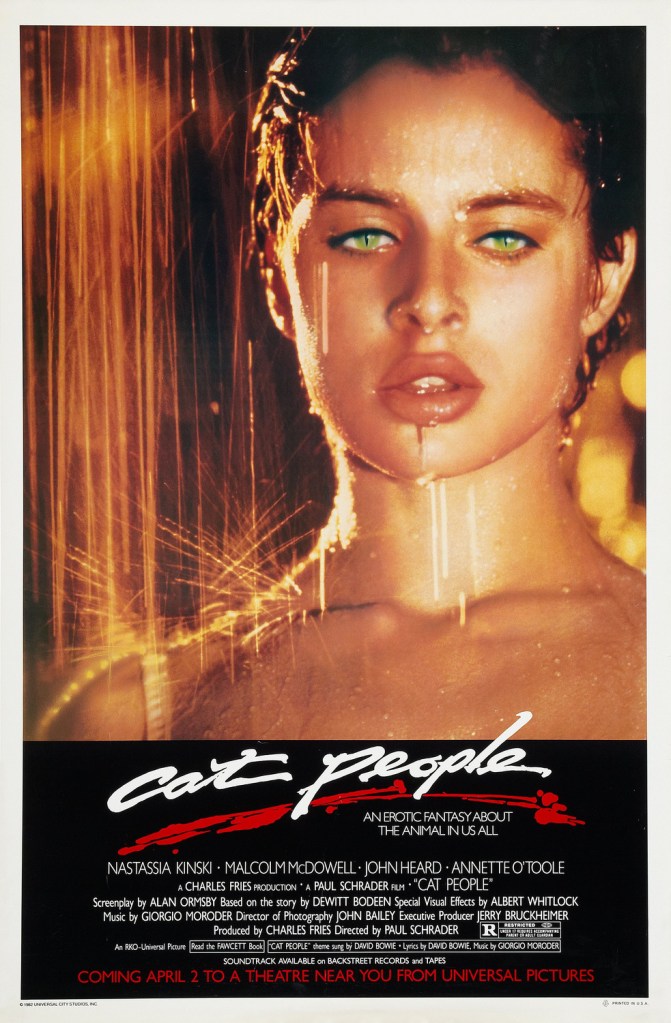
Actress Lynn Lowry, one of the famous horror queens of 1970’s movies, made a special appearance at New Beverly Cinema on Thursday, April 19, 2012 for a double feature of George Romero’s original version of “The Crazies” and Paul Schrader’s erotic remake of “Cat People.” Lowry took some time to talk about her brief appearance in Schrader’s take on the 1942 horror film, and her responses truly surprised the small but faithful audience attending this screening.

Filmmaker Ryan Stockstad, who was about to make a movie with Lowry called “Eggs,” asked the veteran actress what it was like working with Schrader, who may be best known for writing the screenplay to “Taxi Driver.” Lowry described Schrader as “insensitive,” and also said, “Is it okay if I say Paul Schrader is the least favorite director I’ve ever worked with?”

In auditioning for “Cat People,” Lowry said she asked the casting directors if they wanted her to do the scene “full out.” They said they had no problem with that, and she didn’t hold anything back as a result. Looking back, she said the secretaries who heard her from a distance loved what she did.

Lowry’s scene had her playing Ruthie, a prostitute who goes to a seedy motel to fulfill the pleasures of a particular customer. While there, she gets attacked by a black leopard hiding underneath the bed and screams in horror when she realizes how badly one of her feet has been slashed.

Lowry started the scene by walking to the hotel, and Schrader wanted the makeup people to spruce her up from head to toe. He wanted to light up the streets of New Orleans where “Cat People” was being filmed as she made her way to the location, but she ended up only being filmed from below her knees.

The actress described Schrader as working so fast to where he couldn’t quite get what he needed. For her scene, Lowry had to keep falling on her knees over and over again. As the day went on, she said the crew finally had to put a cat paw on the leopard to make this scene work.

The climax of had Lowry falling down a flight of stairs, a sequence she noted had to be shot multiple times. Part of the problem was her bra would not open up on cue, and she said Schrader wanted to see a lot of skin throughout the film. This ended up necessitating the use of Velcro on the undergarment to make it open more easily.

Lowry also remarked how there were nails on the stairs which the crew members did not bother removing. As a result, she ended up getting cuts on various parts of her body.

On the DVD commentary for “Cat People,” Schrader said he wanted to share credit with the movie’s visual consultant, Ferdinando Scarfiotti, and this was because he felt Scarfiotti was mostly responsible for the look of the film. Lowry, however, said she never ever saw anyone else on set directing.

It is a bummer to hear Lynn Lowry was not very happy with her time making “Cat People,” and she is certainly entitled to her opinion. But after all these years, this movie is a fascinating remake which truly stands on its own.

Kevin Smith Discusses Red State at New Beverly Cinema

WRITER’S NOTE: As the opening paragraph indicates, this article was written back in 2011.

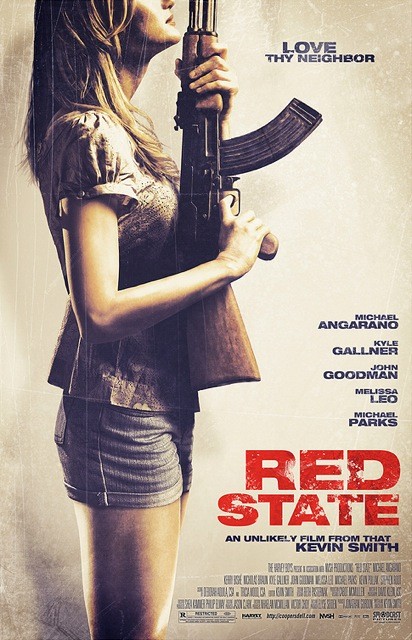
On August 19, 2011, Kevin Smith began a one-week run of “Red State” at New Beverly Cinema making it eligible for Academy Awards consideration. Smith also came to just about every showing there to do a Q&A afterwards as he came to love “sitting back and loudly appreciating the movie.” Of course, this led one audience member to confront him at a local Coffee Bean & Tea Leaf and say, “You were yelling ‘genius’ at your own movie?”

Red State” is astonishingly different from any movie Smith has previously helmed including the Bruce Willis starring “Cop Out.” This is largely the result of him and his longtime director of photography Dave Klein, who also shot “Clerks,” making use of the Red One digital camera. Smith said he loved chasing around the set with it, and he remarked how the camera looked like something out of “The Bourne Identity.” Smith, however, was aiming for “Red State” to look more like “Half Nelson” and less like “NYPD Blue,” and he told Klein him he wanted it to look unlike any movie they had made before. To this, Klein said, “Thank God!”

Smith felt he improved as a filmmaker with the Red One, and he figured the company which made them would give him one for free. However, it turned out getting a free camera was as likely as getting anything for free from Apple.

When it came to the actors, Smith saw himself as more of a cheerleader than a director. He made this blunt in saying, “You don’t direct mother fuckers like these! Who am I to tell John Goodman or Melissa Leo about acting?!”

The actor he talked about most was Michael Parks who played Abin Cooper, Pastor of the Five Points Trinity Church, a highly fanatical and conservative church which makes the Westboro Baptist Church look tame by comparison. Smith, like many of us, first saw him as Texas Ranger Earl McGraw in “From Dusk Till Dawn,” and he declared that Parks “owned the first ten minutes” of it. Parks, however, told Smith he didn’t want impersonate Fred Phelps as he described him as being “boring.” Instead, Parks wanted Cooper to be “charismatic,” and his brilliant performance has Phelps only wishing he could be as such.

Speaking of the Phelps family, five of them came to a midnight screening of the movie. Or at least, five of them planned to until Megan Phelps contacted Smith and asked for 15 more tickets. Smith couldn’t resist having a laugh at the inescapable contradiction:

“God may hate fags, but the Lord loves a bargain!”

Megan described “Red State” as being “filthy” even though she kept watching it for ten minutes as a gift to Smith before walking out. She did, however, send him a couple of signs with the sayings “God Hates Fag Enablers” and “Red State Fags” on them. Smith’s wife, Jennifer Schwalbach, ordered him to throw them out, but he pointed out they were signed by all the WBC church members. Their daughter Harley ended up coming across the “Red State Fags” sign by accident. While he and his wife were looking at each other, Harley asked them, “Is this the sequel?”

Kevin Smith said “Red State” exists because of Quentin Tarantino. The Madonna speech at the beginning of “Reservoir Dogs” was such a big thing to him, and it made filmmaking seem all the more fun and possible to do. He sees “Red State” as the “true spiritual sequel” to “Clerks,” and he has had a joyous experience taking it out on the road. It’s very easy to believe to him when he said no one has had a bad experience with a premium ticket they bought for it.

Running Scared Celebrates Its 25th Anniversary at New Beverly Cinema

WRITER’S NOTE: As the opening paragraph indicates, this screening took place back in 2011.

On September 28, 2011, New Beverly Cinema played host to the 25th anniversary screening of the 1986 buddy cop action comedy film “Running Scared.” It stars Billy Crystal and the late Gregory Hines as Chicago police detectives Danny Costanzo and Ray Hughes who, after almost getting killed, decide to retire in Key West, Florida. But before they can retire, they first need to bring down a vicious drug dealer (is there any other kind?) played by Jimmy Smits. Attending the screening were the film’s director, Peter Hyams, and actress Darlanne Fluegel who played Costanzo’s ex-wife, Anna.

Hyams had just finished making “2010” for MGM, and the studio wanted to keep him there. He got offered the script for “Running Scared” which he said was originally about two “elderly” cops who want to retire. However, he instead suggested that the cops be younger guys, and he made it clear how he wanted Billy Crystal and Gregory Hines for it.

At the mention of Crystal, Hyams said “you could hear the thump in the office.” Keep in mind, this was long before Crystal became the actor and Oscar host we know him as today. Back then, he was primarily known for being a cast member on “Saturday Night Live,” and he had only done one movie previously which he would rather people forget ever existed (“Rabbit Test”).

As for Hines, an unnamed studio executive told Hyams:

“But the part’s not written for a black guy.”

To this, Hyams replied:

“Hines isn’t playing a black guy, he’s playing a guy.”

One of “Running Scared’s” biggest action scenes involves Hines’ character climbing to the top of a Chicago building on a window washer’s rig. Many of Hyams’ films feature scenes shot from great heights, and he said this is because he is highly acrophobic. The director is so terrified of heights that he keeps shooting scenes from a high elevation in order to get people as scared as he is of them. It turns out the film crew was unable to get a stuntman for this sequence, so they got the actual window washer of the building to do it.

In talking about Fluegel, Hyams said he had such a crush on her after watching “To Live and Die in L.A.” and wanted her to play Crystal’s ex-wife. Her character was the “least eccentric” in “Running Scared,” Hyams noting if the character was not made interesting, the film was going to die. Fluegel said she felt very free when working with Hyams because she could see the kind of environment he had her working in. She found herself creating things for Anna as the production went on, and you could feel the relationship between her and Crystal without words. Fluegel replied much of it came from the fact that the two of them “were just buds.”

“Running Scared” did well at the box office, and MGM of course became interested in doing a sequel. The studio wanted the cops to go to England and fight crime there, but Crystal and Hines were not particularly interested in doing a follow-up. As for Hyams, he said he didn’t want to make the same movie again as he felt it would not be interesting.

Crystal, while at a screening for “City Slickers,” remarked at how “Running Scared” was “the first interracial cop buddy movie.” After 25 years, it’s important to note this as it was released before “Lethal Weapon.” It still holds up well today, and while the studio didn’t think it would work, Hyams stayed true to his instincts on how to make it. Not bad for a man who openly admitted he is “terrified of shooting movies” and never had a confident day in his life.

Steven Soderbergh Looks Back at King of the Hill

WRITER’S NOTE: The following article is about a screening which took place back in 2011.

In the midst of promoting “Contagion” in Los Angeles, California, filmmaker Steven Soderbergh dropped by the Silent Movie Theater where Cinefamily was screening one of his earlier and most underrated features, “King of the Hill.” Not to be confused with the Fox animated series, the film follows 12-year-old Aaron Kurlander (Jesse Bradford) who is forced to fend for himself in Depression era America after his parents leave him alone at the Empire Hotel in St. Louis. Aaron is forced to grow up a lot faster than any kid should ever have to, and he desperately searches for ways to avoid eviction from the family’s apartment. Soderbergh thanked the sold-out crowd for coming to the theater, and he started off by saying, “Why aren’t you guys going to see ‘Contagion’? This film is never going into profit!”

“King of the Hill” was Soderbergh’s third film after “Sex, Lies & Videotape” and “Kafka,” and it was released back in 1993. Based on the memoir of the same name by A.E. Hotchner, it was given to him as a gift by a friend. At the time he was looking for something different than “Sex, Lies & Videotape,” and he found Hotchner’s story to be just what he needed. He did, however, describe it as a “tricky adaptation” since he only had a budget of $8 million and 48 days to shoot the film, and it was a period piece. On the upside, though, he said Universal Pictures, which released the movie through its Gramercy Pictures division, was “hands off” during the production.

Watching it again, Soderbergh described it as the one movie of his he might change aesthetically. He felt the prettiness of the picture would help counteract the harsher parts of the story, but now finds the film to be “almost too pretty.” Most of the conversation he had in pre-production involved the overall palette color which he and cinematographer Elliot Davis wanted to remain within a certain range. Were he to film it today, Soderbergh said he would go out of his way to make it “less commercial.”

Soderbergh recalled doing three preview screenings of his movie, none of which went well. When finished with the project, he admitted feeling somewhat dissatisfied as the movie’s ending did not seem entirely satisfactory to him. Whatever problems he had, they did not stop him from trying to adapt Hotchner’s follow up memoir “Looking for Miracles” which focused on the writer’s relationship with his brother. Sadly, Soderbergh’s hopes were quickly dashed when “King of the Hill” did not find an audience upon its release.

Regardless of his feelings, the audience was in agreement that “King of the Hill” is a great film, and it truly is one of Soderbergh’s best works. The director also found a big fan in Sid Sheinberg, the famous entertainment executive, who, soon after seeing it, introduced him to Lew Wasserman. It also made Soderbergh how that he didn’t enjoy writing as much as he thought, but he did continue writing screenplays for his films “The Underneath,” “Schizopolis,” and his remake of “Solaris.” This was one of five films he did after “Sex, Lies & Videotape” which he openly admitted “did no business,” but perhaps they will eventually.

“King of the Hill” is not currently available on DVD (not in America anyway) or Blu-ray, nor is it available to stream on Netflix. Soderbergh remarked this is because “cult flicks are not marketable right now” and that “no one buys DVD’s anymore.” But with this director being so highly regarded in Hollywood, hopefully this third film of his will get the digital release it deserves so fans can discover it for the great movie it is.

UPDATE: “King of the Hill” has since been released by the Criterion Collection in a DVD/Blu-ray combo pack. It features a new restored 2K digital film transfer, interviews with Soderbergh and Hotchner, movie trailers, and Soderbergh’s fourth film “The Underneath.” To find out more about this release, click here.

Phil Joanou on How He Came to Direct U2: Rattle and Hum

WRITER’S NOTE: This article is about a screening which took place back in 2012.

Filmmaker Phil Joanou was at New Beverly Cinema when the theatre showed two of his films: “Three O’Clock High” and the U2 documentary “Rattle and Hum.” While most of the evening was spent talking about “Three O’Clock High” as it had arrived at its 25th anniversary, Joanou did take some time to talk about how he was hired by U2 to direct their first music documentary (or rockumentary if you will). The story ended up becoming one of the strangest and funniest ones told on this evening.

Joanou was busy doing post-production on “Three O’Clock High” when his agent got him a meeting with U2 on the day before the band had to leave America for Ireland. They had already interviewed a number of directors already, but Joanou said they hit it off to where they asked him, “can you come to Dublin tomorrow?” He said sure, but he had to call the producer of “Three O’Clock High” to explain why he had to leave post-production on a little early. The producer apparently was not too happy about this sudden opportunity, but Joanou got to go anyway.

Once in Dublin, Joanou said U2 interviewed him for five days about directing “Rattle and Hum.” Where the story goes from there is not what you might expect as the band kind of left him hanging.

Phil Joanou: They would take me to a friend’s house and then Bono and Edge would leave and I would have dinner with the husband and wife. After that they took me to a wedding and they left me there as well. I’m there in Northern Ireland and I’m all by myself at an Irish wedding and I’m like, okay great! I don’t know anyone here. I had to figure out how to get home. So, they would do weird things like that to me. They’d drop me off at a bar and leave me. This went on for five days!

After all this craziness, U2 came up to Joanou and said, “alright, you can do the film.” Joanou said that to this day he still does not know what the criteria was for them hiring him, but he described making “Rattle and Hum” as being an “incredible experience.” Looking back, he described the Irish rock band as having taught him so much while being on the road and in the studio with them.

“Rattle and Hum” was greeted with a critical backlash when it came out as critics accused the band of being too grandiose and self-righteous. Watching it today, however, is a different experience as “The Joshua Tree” tour, as it is presented here, feels far more intimate than any tour they have done since. The musical numbers are exhilarating to watch, especially in black and white, and their journey through the American music scene gives us a number of unforgettable moments. But moreover, it was especially great to see it on the big screen for the first time in many years. Concert movies like these really need to be seen on the big screen to be fully appreciated.

Michael Keaton on How He Came to Play Batman

WRITER’S NOTE: This article was written in 2011 when this screening took place.

One of the double features shown during American Cinematheque’s tribute to Michael Keaton was “Batman” and “Batman Returns.” When the actor was originally cast as Bruce Wayne/Batman, fans objected to it as he was primarily known for his comedic performances in “Mr. Mom,” “Night Shift,” and “Beetlejuice” among others, and they could not see him playing such a traumatized character. Of course, many forgot about his powerhouse performance in “Clean & Sober” which won him a Best Actor award from the National Board of Review. In retrospect, his portrayal of Batman is still the best in the movie franchise, and Christian Bale’s portrayal is a very close second.

While talking with Geoff Boucher at the Aero Theatre, Keaton said it was “Beetlejuice” director Tim Burton who wanted him to play Bruce Wayne and his alter ego of Batman. At that point, Keaton said he did not fully understand the comic book super world. It was through his introduction to Frank Miller’s books that he got some ideas as to how Burton’s vision would reflect Gotham City in a darker way than ever before. Keaton said Bruce Wayne turned out to be the key to getting into the character.

Michael Keaton: The coolest thing from the get-go is that he doesn’t have superpowers, there are no magical things. He is a hero of intuition and inventiveness and discipline. I always knew the way in was Bruce Wayne. It wasn’t Batman. It was never Batman. That was the key. The only reason to do it, really, was to come at all of this from this guy’s point of view.

When Keaton and Burton made “Batman” back in 1988-89, Keaton said there was nothing else like it before, and that there was no example for either of them to follow. Unlike the television series from the 1960’s, this was not going to be full of campy humor. The fact that “Batman” became such a landmark film in Hollywood history is something Keaton owes to Burton.

Michael Keaton: What Tim accomplished changed everything. It was hard. It was harder on Tim than anyone and he changed the way people look at those movies. That really is the case and the reason for that is the originality of Tim and the people Tim put together. Anton Furst was off the chart, Danny Elfman was perfect, bringing in Prince and Nicholson, all of it was just so right and so huge. The promotion of the movie was genius too. The look of the movie was a turning point too; you still see that around in different versions.

When it came time to start making “Batman Forever,” Warner Brothers wanted to take the franchise in a different direction. The executives wondered if everything really had to be so depressing, and Keaton said when he realized they were going to lighten things up, he dropped out along with Tim Burton. We all know what happened after they left, and no real explanation is needed here.

Keaton said he never really got around to seeing “Batman Forever” or “Batman & Robin,” but he said he did see most of “the one that starred Heath Ledger” (“The Dark Knight“). In describing Ledger’s performance as The Joker, he called it “crazy great,” and that the tone of the film is what he wanted the third one to be like. But by then the whole thing had become a big machine which was going to go on with or without him. Had he been in “Batman Forever,” Keaton is convinced he would have been horrible because he would not have been able to give the studio what they wanted. The sad thing is, he is probably right.

Michael Biehn and Jennifer Blanc-Biehn on The Victim

Michael Biehn and his wife Jennifer Blanc reappeared at New Beverly Cinema on September 11, 2012 to do another Q&A on his directorial debut of “The Victim.” It had been playing at the famed revival movie house since Friday, September 7, and Biehn and Blanc were determined to make as many appearances there as they could to promote their fun little grindhouse flick. This particular evening had Biehn talking about its making, another movie he was involved in which did not get much of a release, and there was also a big surprise in store for yours truly.

Biehn first made his presence known to the small audience on this evening when the end credits for “The Victim” began, and he ended up doing a running commentary as they played on how he got everyone’s picture on screen whether they were acting in the movie or working on it behind the scenes. He once again alluded to the fact he had such a low budget to work with, and he described how most films don’t have end credits like this one, nor are they as fun to watch.

Among the people in the audience was Brian McQuery who served as the movie’s assistant director, and Biehn pointed out how McQuery worked 4 or 5 days “for nothing.” Biehn said this was the result of a “friend helping out a friend,” and he got the audience to applaud McQuery for his selfless efforts.

During the Q&A, Biehn talked about when he worked with filmmaker William Friedkin on the movie “Rampage” and how the filmmaker kept calling everyone on his set “Moe.” Biehn ended up working on two movies with Friedkin and he remarked how no other actor has worked with him twice. It turns out no one saw “Rampage,” Biehn said, because Dino De Laurentis’ company, which produced it, ran out of money and was not able to give it a proper release. Biehn did say he liked “Rampage” a lot and thought Ennio Morricone’s film score to it was fantastic.

Biehn also pointed out how he got some of the best directing advice ever from Friedkin. When Biehn asked Friedkin where he decides to put the camera when filming a scene, Friedkin ended up telling him, “I just think of where I would like to see the scene from, and I put the camera there.”

Even after making “The Victim,” Biehn told the audience he does not consider himself a director as he “never had a feeling for the camera, lenses, angles or close ups.” This was the result of him always being so focused as an actor to where he never learned all that stuff. Although he said he is never going to be a great director, his directorial debut showed he is better and cleverer at this job than he gives himself credit for.

Blanc also went out of her way to say that Biehn is a “phenomenal director” and that she “always looks to him for audition help.”

Biehn went on to talk about how a movie needs to be in escrow before it even gets made, and this led to him discussing how he got the money to make “The Victim.” At the time he was recovering from a hernia operation and was on Vicodin when he took a meeting at a restaurant with some guys looking to finance a movie. They told Biehn how they wanted to work with him and that they had “a small amount of money” to make a film with. Biehn, in his drugged out state, told them he would do the project but only if he had total creative control over it. They ended up agreeing to this, and the next day Blanc told Biehn the check those two gave him had cleared. Biehn, now off the Vicodin, ended up saying out loud, “What the fuck?!”

Whatever the case, Biehn clearly put a lot of effort into making “The Victim” with the limited resources he had. He described how the film was shot most days from 6 a.m. in the morning to 6 p.m. at night, how he had to write the script and do pre-production in just three weeks, and all the driving scenes were shot on some guy’s driveway which had bushes on both sides. Biehn also said the character he plays is like him but “with a few problems.”

There were also days on set where he got so upset to where Biehn became like “William Friedkin, Michael Bay, James Cameron and Val Kilmer all together on their worst day.” Blanc said his temper tantrums among other behind the scenes fodder can be found on “The Victim’s” Blu-ray which will be released on September 18, 2012.

Ok, now I don’t brag about myself too much but this is something I have to talk about: I was sitting in the front row of the New Beverly taking notes down in my journal of what was being said during this screening, and Biehn saw me writing furiously and asked me, “Are you a reporter?”

“No,” I said (for some reason, I did not consider myself an official reporter back then).

“Oh, okay,” Biehn said. “You’re not gonna write a bad review of this, are you?”

I assured him I had already written my review of “The Victim,” and that it was good. Blanc then asked who I was and I told her my name and the websites I submit reviews to. It turns out she actually read my review and thought it was awesome, and she ended up coming over to give me a hug.

Biehn then asked his wife, “was it a good review?”

“It was fantastic,” she said.

Biehn then looked right at me with open arms and said, “come here!”

Who would have thought I would get a hug from the man who played Corporal Dwayne Hicks in “Aliens,” Kyle Reese in “The Terminator” and Navy SEAL Hiram Coffey in “The Abyss?” When things like this happen while you live in Los Angeles, it reminds you of how magical this town can be.

Michael Biehn Premieres The Victim at New Beverly Cinema

Michael Biehn dropped by New Beverly Cinema on September 7, 2012 where the theater was hosting the Los Angeles premiere of his feature film directorial debut, “The Victim.” Joining Biehn for a Q&A were his wife and co-star Jennifer Blanc, Denny Kirkwood who plays one of the police detectives, producer Lorna Paul and musician Randy Chance who provided some original songs for the movie.

The first question Biehn was asked was, of course, what finally persuaded him to step behind the camera and direct. Biehn replied he was “not all that aware of really low budget movies until he worked on ‘Grindhouse‘” with Quentin Tarantino and Robert Rodriguez. Those two directors ended up showing him a bunch of their favorite grindhouse/exploitation movies, and Biehn recollected of how he was on the set of “The Divide” one day and saw a crew member reading Rodriguez’s book “Rebel Without a Crew” in which he wrote about his first film, “El Mariachi.” Those elements are what finally got Biehn to direct as well as Blanc’s insistence in her telling him to direct. Then again, she also said, “you can’t bully him into anything.”

Biehn also stars in “The Victim” as Kyle, a loner living in a remote cabin in the woods. He said he kept thinking of “The Shining” and of how Stanley Kubrick made the hotel look so isolated out in the snowy wilderness. It was this feeling of isolation Biehn wanted to capture, and “The Victim” ended up being shot in Topanga Canyon, California which seemed to have the perfect look. He went on to say how Blanc’s mother was especially helpful as she lives up there and talked to all her neighbors about what was going to happen. Apparently, the residents of Topanga Canyon do not like it when filmmakers come to town and shoot their movies there, but Blanc’s mom ended up making things a lot easier as a result.

“The Victim” ended up being shot in 12 days, and both Biehn and Blanc said they were “not allowed to say how small the budget was.” They did, however, say it was “much lower than what it says on the IMDB website” ($800,000).” Biehn also joked about how the budget was “so low that there’s a lot about the movie I wish was different. ‘The Terminator’ had a budget of $6.5 million, and the budget on this one was about a tenth of that.”

As a result, the crew ended up doing 35 setups a day compared to the average Hollywood blockbuster which manages just 2 or 3. All the car scenes in the movie were shot in a single day on someone’s driveway out in the woods, and Biehn joked about how the crew had to keep “driving in circles all fucking day long.” They didn’t even have money to hire a stunt coordinator, and the scenes in the house between Biehn and Kirkwood had them fighting and trying not to hurt one another in the process.

Day one of production, Biehn said, was “all about sex” as he shot the sex scene between him and Blanc. He said this was because the script wasn’t finished yet and that they “had to shoot something.” This led Blanc to tell the audience Biehn’s niece worked on the film in the makeup department, and this was her first experience in the movie business. His niece ended up watching Biehn drop his robe and go onto the set stark naked, and she was apparently so freaked out by what she saw that she didn’t speak about it for days afterwards.

This led to another funny story of when one of Biehn’s sons came to the set and ended up being traumatized by the sex scene between his dad and Blanc. Biehn even said his son has not seen “The Terminator” sex scene he had with Linda Hamilton, and that scene was, as he put it, “essential to the plot.”

All this sex talk led Biehn to point out how one of the characters in “The Victim” ends up “losing their life over a blow job.” Women’s sexuality, he said, ends up giving them a lot of power over men, and this proved to be the case in real life for John Edwards and Elliott Spitzer among others. Biehn described being amused at how some men end up messing up all the good they have done in life by “blowing it all for some pussy.” Sadly, there is a lot of truth to this.

Another scene discussed was when Biehn’s character gets put in a choke hold. He ended up telling actor Ryan Honey to put him in a real choke hold and assured the actor he would tap him on the arm if it became too much. Biehn recollected he was “surprised at how fast it worked” and that he was “gonna be lucky” if he could tap out. After this, Biehn said he was in “la la land” for a while and remembered one of the producers saying they would not be trying this again.

One audience member asked how Danielle Harris (best known for her work in the “Halloween” movies) got cast as Mary. Blanc responded she and Harris are good friends and that Harris liked the script. Biehn said he always saw Harris playing “teenagers who are always running away from monsters, but here she gets to play a woman.” He also remarked at how Harris started out as an actress at a very young age and that she at times directs herself which made him see he did not have to tell her anything.

Before “The Victim” began its screening at New Beverly Cinema, Biehn made an announcement to the audience:

“If you don’t like fucking or fighting, get up and leave now,” Biehn said. “Don’t take any of what you see seriously. Think of this movie as being food like cotton candy; it doesn’t fill you up, but you will remember having fun eating it.”

The above description says it all, and we thank Michael Biehn and his colleagues for giving us a highly entertaining time at New Beverly Cinema.