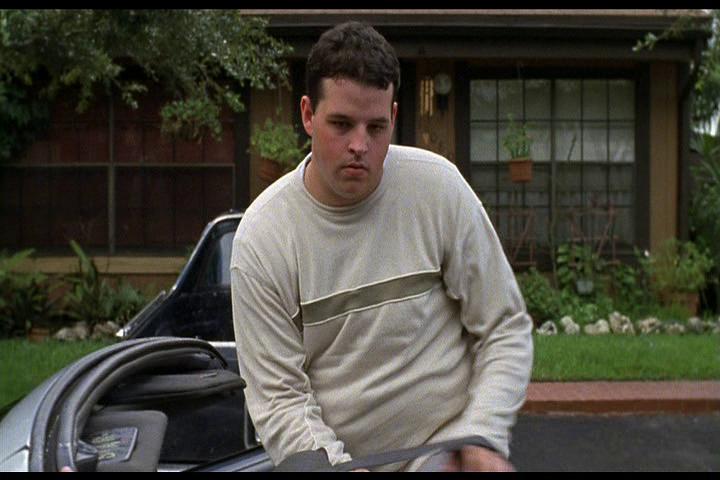
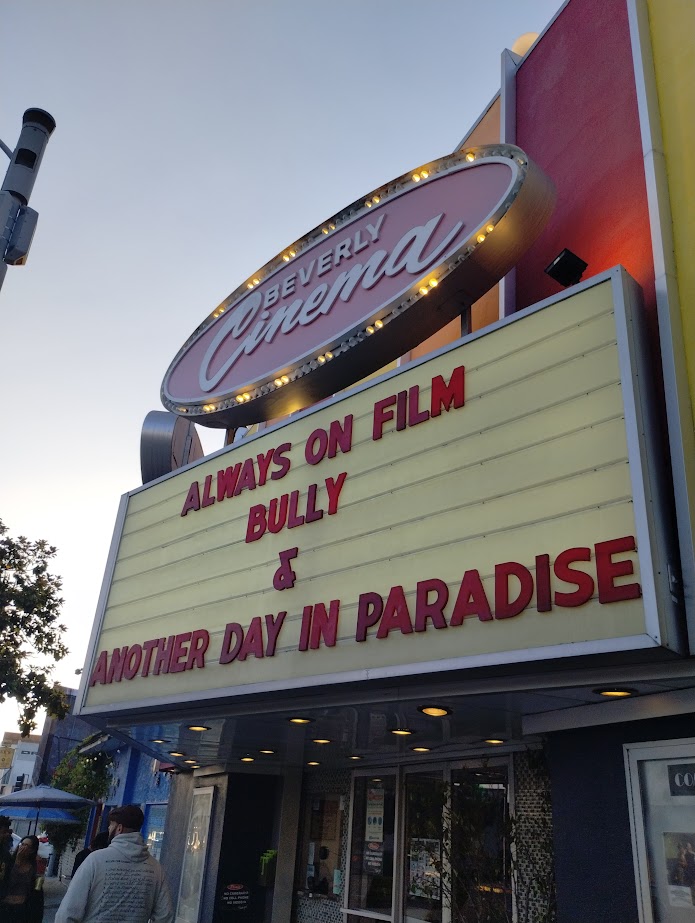
On August 12, 2025, New Beverly Cinema presented a Larry Clark double feature of two of his films: “Bully” and “Another Day in Paradise.” Before “Bully” unfolded on the silver screen, actor and filmmaker Joel Michaely brought out a special guest: Daniel Franzese who played Derek Dzvirk. “Bully” was Daniel’s film debut, and it quickly earned him his SAG card. Daniel thanked Joel for being there and remarked how he killed Joel once in a horror movie entitled “Cruel World” where he shot him in the head.
Daniel said “Bully” was the first time he ever got to hold a screenplay in his hands, and he talked about meeting the casting director, Carmen Cuba, at his audition.
Daniel Fransese: She was like, “Do you wanna see who you are going to play?” I said okay, and she opened up the true crime novel (written by Jim Schutze), and I looked exactly like the guy. And I was just like, oh shit! I can actually get this! So, it was very scary and nerve wracking.”
Rumors are that the set of “Bully” was a crazy one, and being that this was Daniel’s first film as an actor, you can understand and appreciate his feelings at the time.
DF: I’m a pretty easy-going guy, and I am also a theatre guy and a standup comedian. I’m used to being around other people, and I am good at getting along with different personalities. But this movie was next level. we are getting ready to do fittings and start our first day of this movie, and Larry (Clark) is screaming because Brad (Renfro) was in jail for trying to steal a boat. He’s screaming, “This was three years of my life! This kid’s not going to ruin it!” He’s throwing papers and I was like, whoa! That was day one and you can just imagine how the stress level got worse from there.
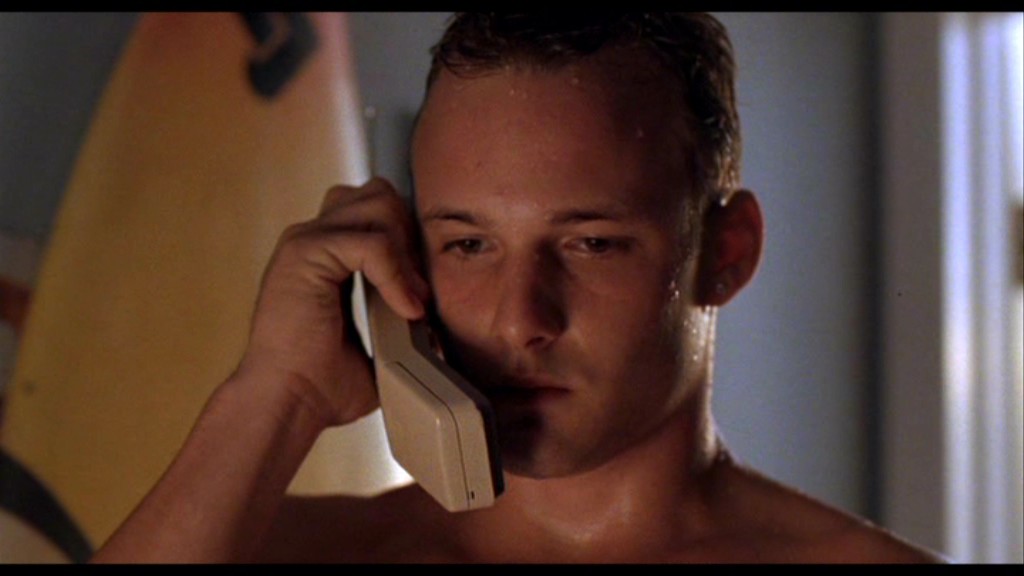
From there, the discussion went to the late Brad Renfro who played Marty Puccio in “Bully.” Brad first gained worldwide attention at the age of 12 years old when he was cast as Marcus “Mark” Sway in Joel Schumacher’s cinematic adaptation of John Grisham’s “The Client.” Like many people on this planet, let alone actors, he died at far too young an age He was only 25 years old, when he passed away after a drug overdose. Daniel talked about working with Brad.
DF: Brad was great. I think he was like one of those golden retriever type people. Not evil, but dangerous. We were doing the table read for the first time, and Brad showed up wearing a white tank top completely soaked in lighter fluid. He came in saying, “I’M TRYING TO GET THE BARBECUE TO GO!” It was like, whoa! He was from Knoxville and had like that “Jackass” sensibility where you didn’t know what he could do, but I don’t think he ever had a mean bone. His intentions were always nice. If anything, he partied too much, and he once told me that at 12, he made hundreds of thousands of dollars to do “The Client,” and he was getting a lot of his drugs and stuff from family members as a kid. I don’t think he got a fair shot. If anything, the reason why I advocate for younger people in Hollywood or talked about my experiences on this movie which were crazy, I was never speaking from a victim place. I was speaking from a place of advocating for people like Brad who didn’t have anyone saying anything for them. I just think, we’re making art. It doesn’t have to be that crazy. We don’t have to be stealing boats or going nuts on sets to produce good material.
After “Bully,” Daniel went on to appear in many films, but he may still be best remembered for playing high school social outcast Damian in 2004’s “Mean Girls.” Like Joel and myself, I wondered what it was like going from an independent film to a studio movie where everybody is expected to be on their best behavior.
DF: I just don’t think the 2000s will be looked upon as a time where it was easy for people on movie sets. I really don’t. People always ask me all the time how to get their kid in Hollywood, and I say don’t. I waited until I was at least in my 20’s (before going to Hollywood), and that’s the only thing which might have saved me. A lot of our contemporaries are not around with us anymore or are in a crazy state. It was a rough time. I can’t say it was easier or better, but I think it’s better now.
Regardless of the crazy set, Daniel made it clear to the New Beverly audience what the experience of making “Bully” was like, and of how the filmmakers strived to capture the spirit of the true story it is based on.
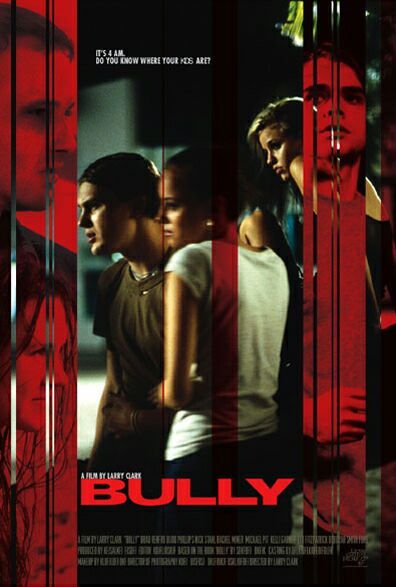
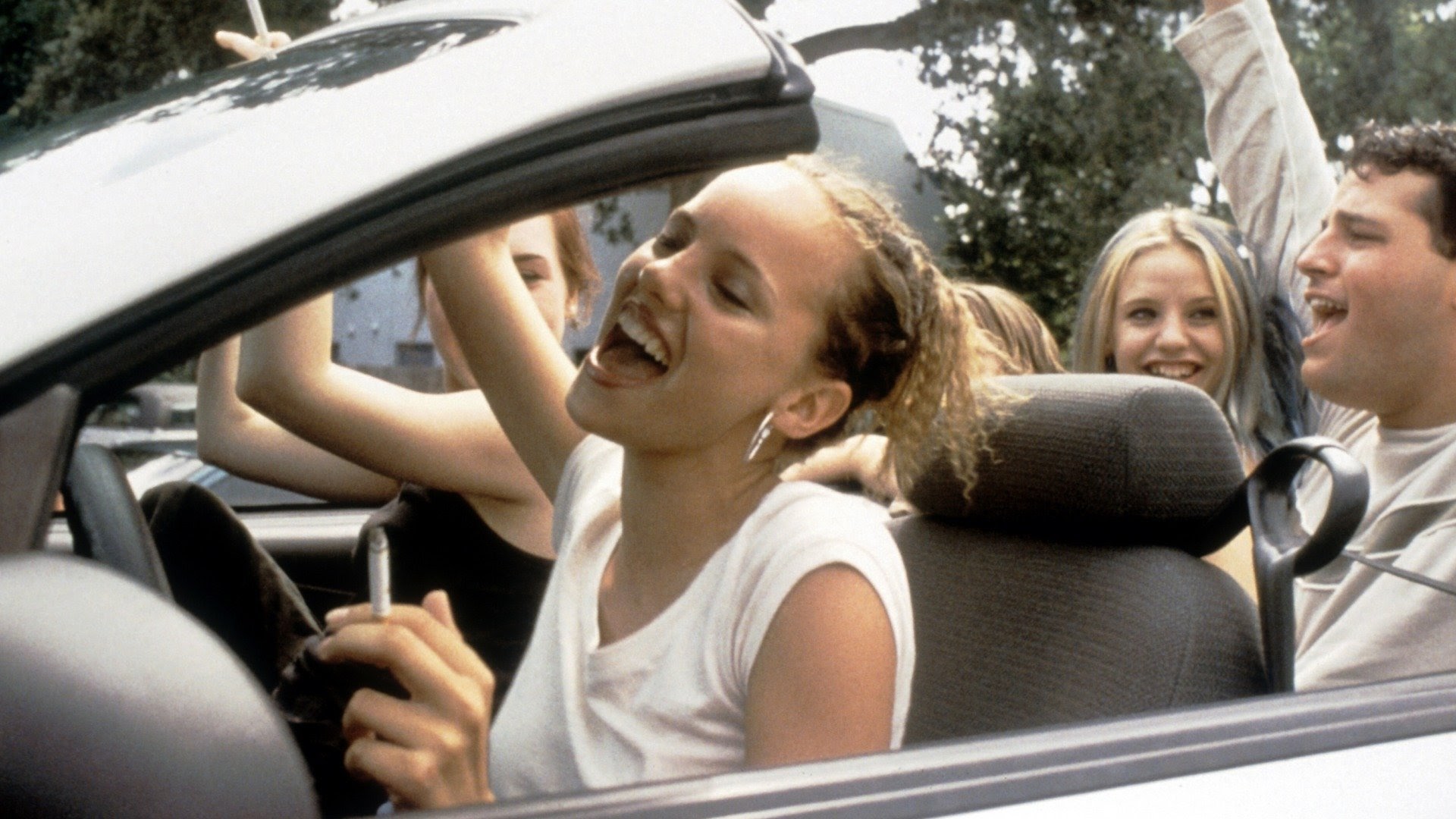
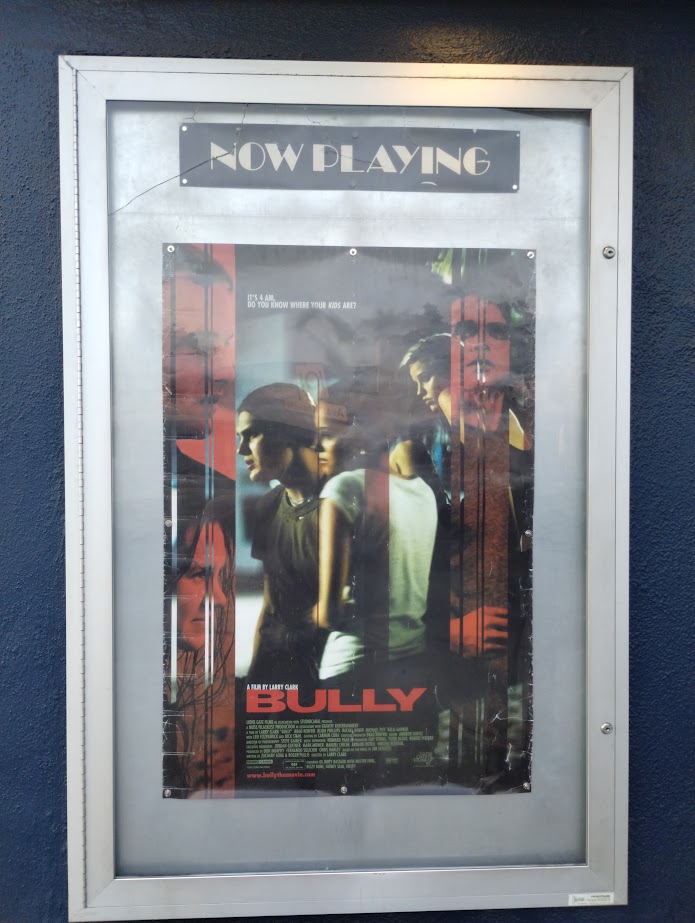
Bully (2001)
Directed by Larry Clark
Shown in foreground: Bijou Phillips
DF: On a positive note, though, this movie was awesome. It was so fun to make. Larry was cool, the people I was working with were all like people from Thrasher Magazine, it was just like bad ass people. They did shoot in the real locations; it was the real apartment complexes, and it was the real Pizza Hut (we shot in).
Daniel also made it clear how he was the only local hero for hire in Larry Clark’s “Bully.”
DF: They were scouting locations for the gay clubs, and I was just a young kid just figuring that stuff out and performing at the clubs with people I was in musical theatre with and stuff like that. They were like hey we’re making a movie, and I’m like I’m an actor! I had no idea it was going to turn into this. Carmen Cuba, she discovered a lot of people, and I give her all the credit for plucking me out of obscurity and putting me with these people.
An audience member told Daniel that he was from South Florida, and this led Daniel to talk about when he worked at The Gateway Theater in Fort Lauderdale as a kid. a year later, “Bully” premiered there. Daniel found his road from being an usher to a working actor to be honestly insane.
DF: I was there at the theater going, would you like the popcorn combo? I am a movie lover. I worked at Blockbuster (Video), I worked at movie theaters, that’s all I did. Until I was able to support myself as an actor, I was either an usher in theatre or worked at movie theaters. It (“Bully”) was shot in Fort Lauderdale and the whole crew got their premiere at the movie theater where I worked at. So, whoever served me popcorn today, keep writing your scripts.
Like many, Daniel Franzese considers New Beverly Cinema to be one of his favorite places in Los Angeles, and that it was extra special for him to see “Bully” being screened there on 35-millimeter film. To see films presented there in their original format, something often not available to movie buffs in most places, means a lot to him.
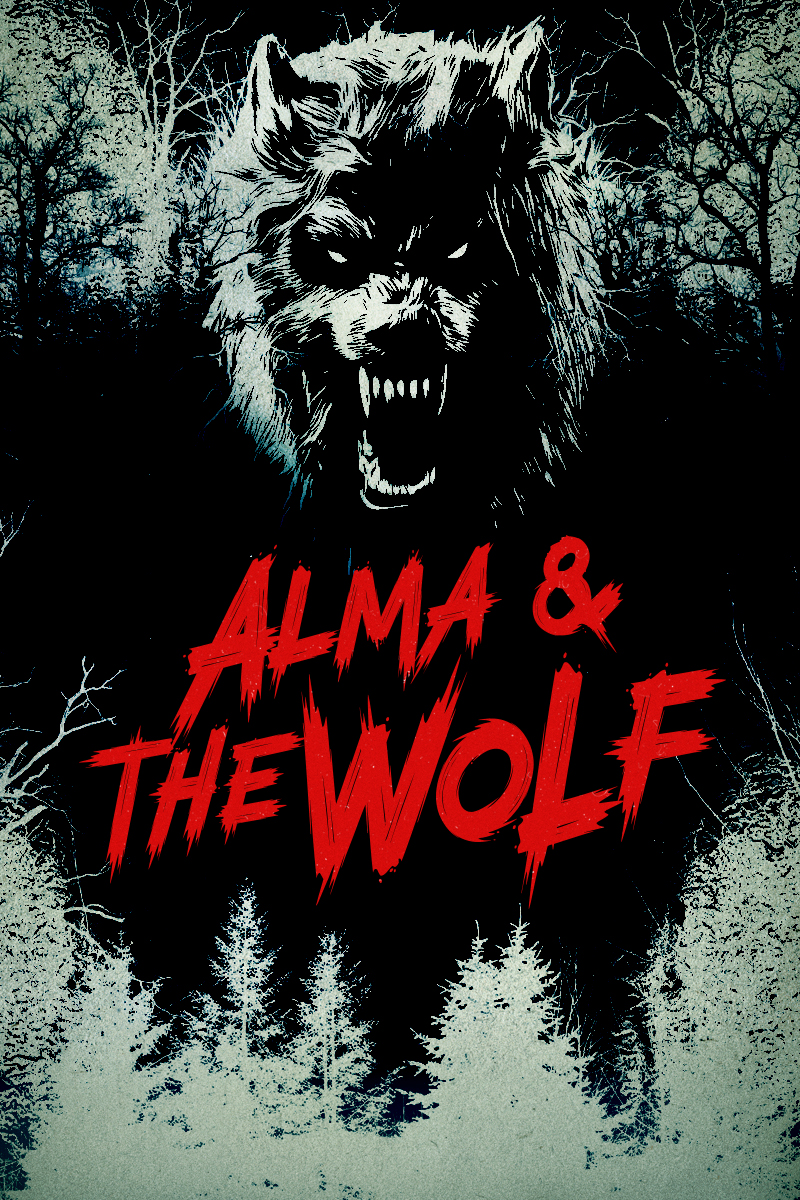
Michael Patrick Jann is best known for his work in comedy and as a cast member on MTV’s sketch comedy show “The State.” In 1999, he made his feature film directorial debut with “Drop Dead Gorgeous” which over the years has developed quite the cult following. With his second feature film as a director, “Organ Trail,” he got out of his comedy safety zone to enter the horror genre. Michael now returns to that genre again with his latest film, “Alma & The Wolf,” which stars Ethan Embry as a troubled police officer who investigates a mysterious wolf attack which happened to a high school classmate of his, Alma (played by Li Jun Li). The investigation becomes even more intense, however, when his son goes missing, and it puts him a collision course with an unbearable truth that can only stay hidden for so long.
I got to speak with Michael one-on-one recently about “Alma & The Wolf,” and we talked a lot about how comedy and horror deal with the various forms of suffering. Also, he discussed the challenges of filming on the Oregon Coast when the weather was really bad and cold, working with animals, and of working with his son, Lukas Jann, who plays Ethan Embry’s son here. In addition, this film also co-stars a classmate of mine from my University of California, Irvine school days, Beth Malone, who plays a rather nosy neighbor. It was great to talk with Michael about what Beth brought to her role and the movie, and it is always great to see her in anything and everything.
“Alma & The Wolf” is now available to rent and stream on select digital platforms. Please check out my interview with Michael down below, and I have also included a trailer for the film as well.
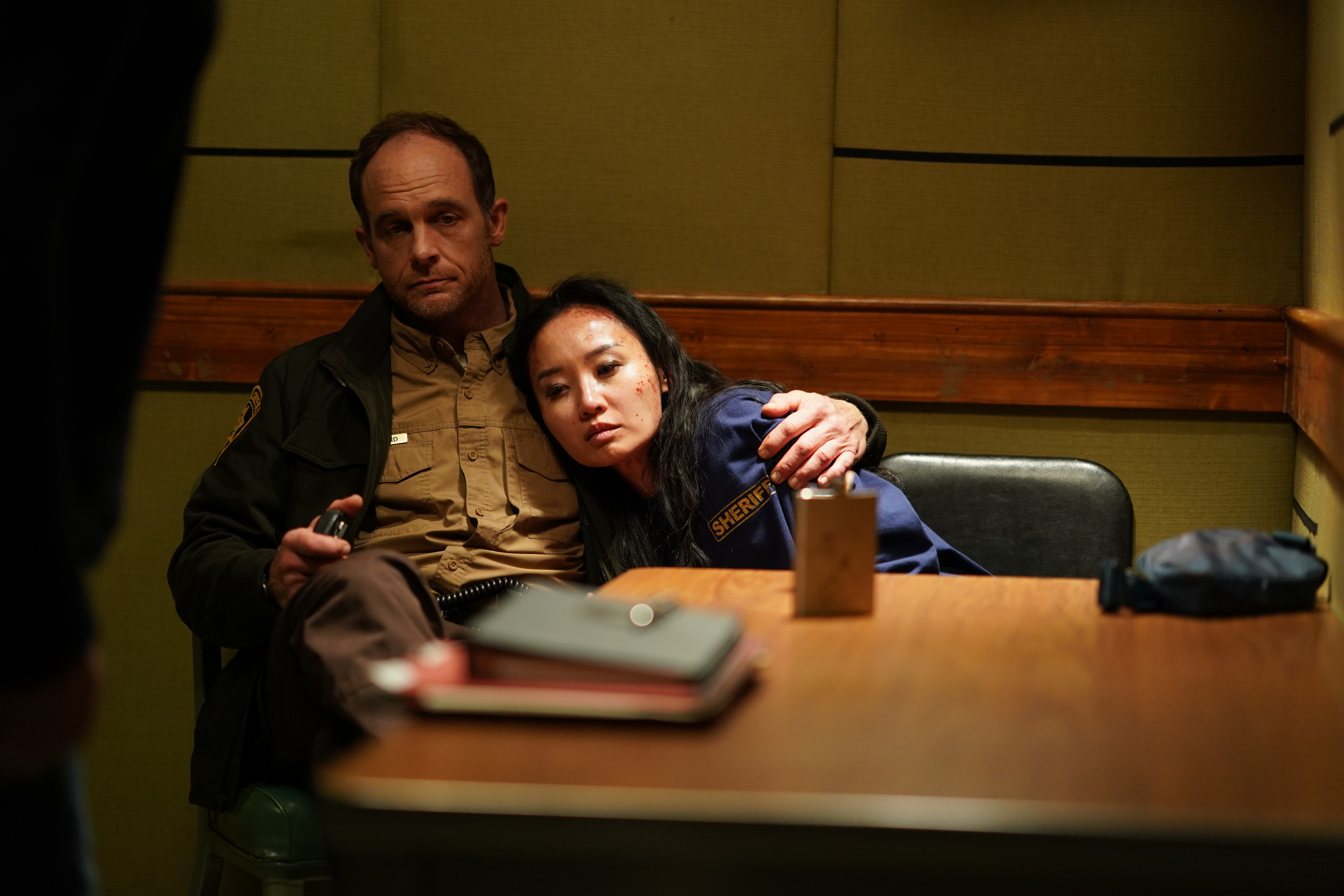
One of the many horror films coming to us in 2025 is arriving this week, and that’s “Alma & The Wolf.” Directed by Michael Patrick Jann, it stars Ethan Embry as Deputy Ren Accord, a very troubled man who has been thrust into a horrifying investigation he may not be fully prepared for. One day while driving on his usual route, he comes across Alma, played by Li Jun Li, who is walking alone in the rain while clutching to what is left of her dog. Alma tells Ren a wolf killed her dog and begs him to kill the wolf for her as an act of revenge. Wolves, however, are protected wildlife in the state of Oregon, so Ren tells Alma he cannot help her that way. But when his son goes missing in the Oregon coast, Ren comes to believe it may have everything to do with the wolf that killed Alma’s dog, and he becomes infinitely determined to find his son and kill the elusive wolf.
I was lucky enough to speak with Ethan Embry and Li Jun Li who are the main stars of “Alma & The Wolf” this past week. Ethan started off his career as a child actor, and he starred opposite Ed O’Neil in the John Hughes written and produced film “Dutch,” and he is best known for his roles in “A Far Off Place,” “Empire Records” and “That Thing You Do.” Li got her start as an actress in the theatre, and she later became known for her role as Iris Chang in the television series “Quantico.” In addition, she has received critical acclaim for her roles as Lady Fay Zhu in Damien Chazelle’s “Babylon” and Grace Chow in Ryan Coogler’s “Sinners.”
Much of my talk with Ethan and Li Li, as she likes to be called, was about acting and their choices. With “Alma & The Wolf,” they were involved in a cinematic production which had a very short production schedule, and I was curious how the speed of it affected their performances overall. Being an actor myself, I found their answers to be deeply informative and fascinating.
“Alma & The Wolf” will be dropped on streaming services starting on June 20, 2025. Please check out the interview below, and I have included a trailer for the film as well.
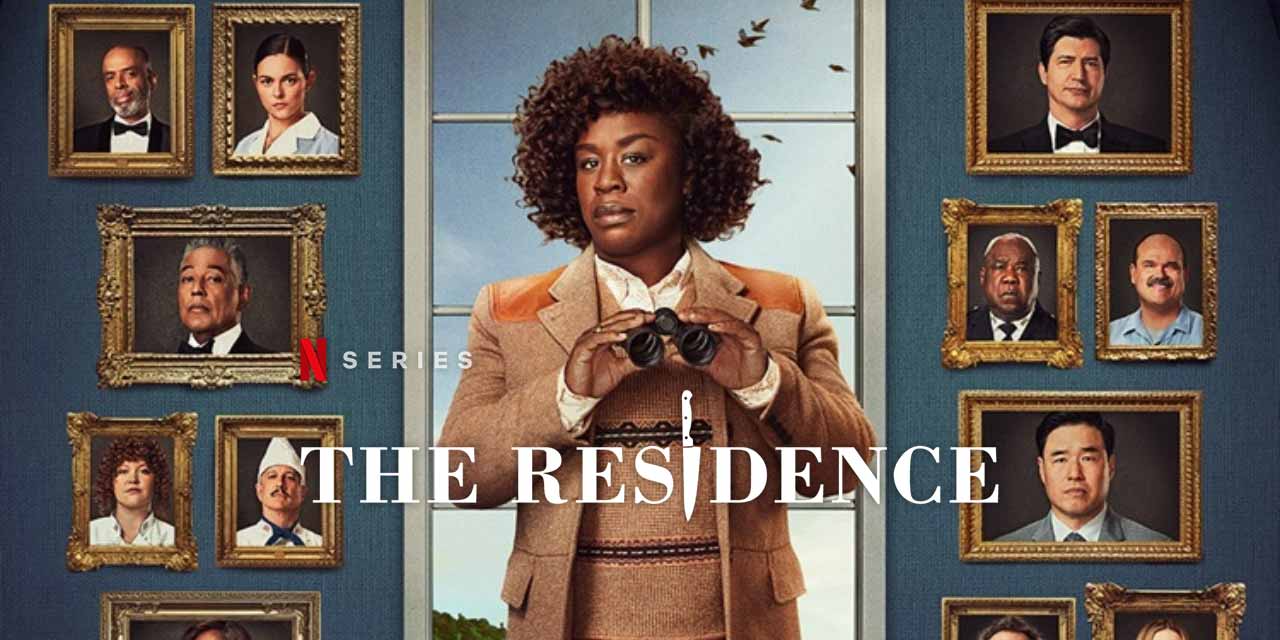
There is always a wealth of original content being dropped on Netflix from one month to the next, and one of the latest additions to its streaming service is a miniseries called “The Residence” which I watched all the way through in just one day. A murder comedy mystery created by Paul Williams Davies, based on Kate Andersen Brower’s novel “The Residence: Inside the Private World of the White House” and produced by Shondaland, the amazing television empire overseen by Shonda Rhimes, it tells the tale of the White House Chief Usher, A.B. Winter (Giancarlo Esposito), who ius found murdered in one of America’s most secured locations, the White House. Into the crime scene comes Cordelia Cupp (Uzo Aduba), a consultant with the Metropolitan Police Department and an avid birdwatcher, who is determined to find the culprit responsible. The problem is, there dozens upon dozens of suspects to consider, be it those with quite the public presence or the staff who works behind the scenes. Suffice to say, it proves to be one very long night for everyone involved.
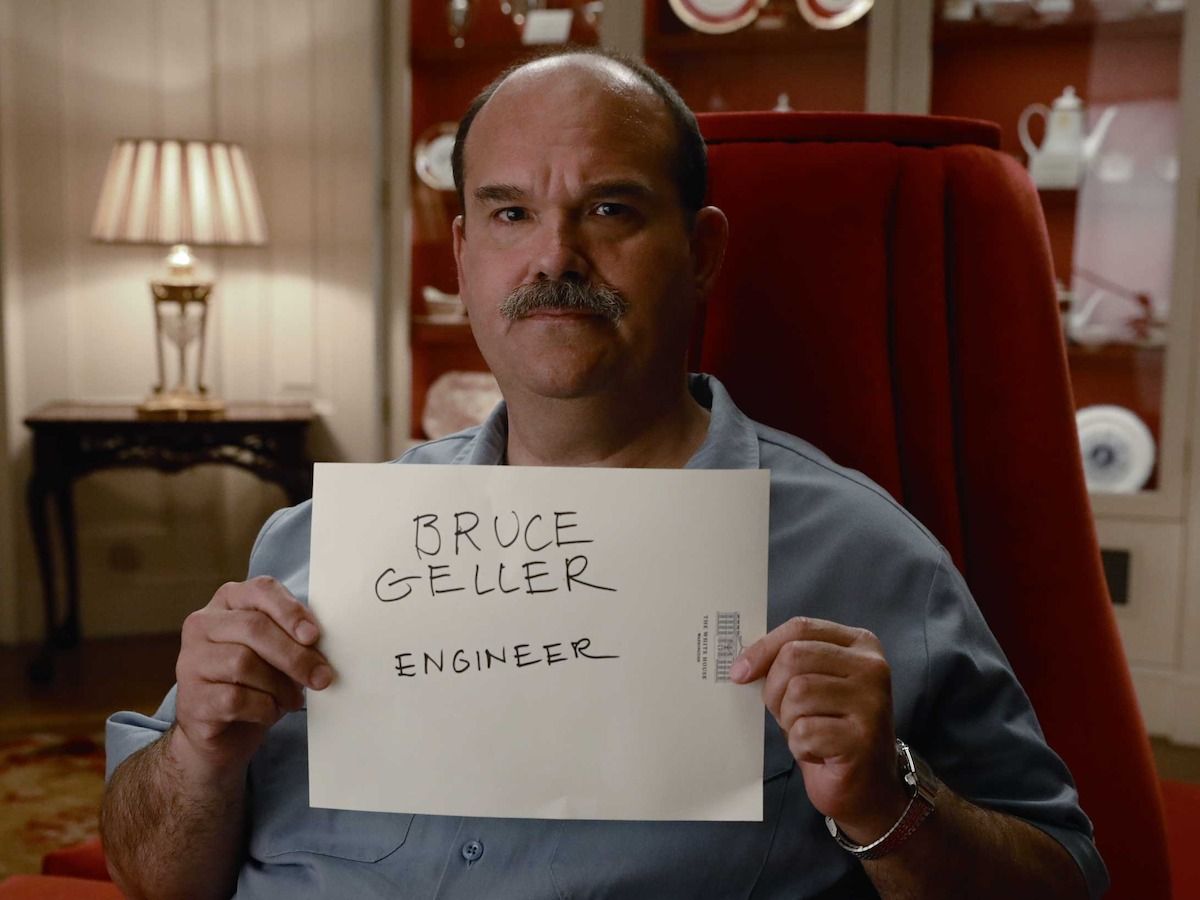
Among those suspects is engineer Bruce Geller, an engineer who succeeds in getting the water pressure in the United States President’s shower just right after far too many tries. Bruce is played by Mel Rodriguez, a native of the Little Havana neighborhood in Miami, Florida, and a graduate of SUNY Purchase (State University of New York Purchase) which has produced unforgettable actors like him, Melissa Leo, Edie Falco, Wesley Snipes, and Ving Rhames among so many others. Mel’s most memorable appearances include playing Nurse Patsy de la Serda on the HBO comedy “Getting On,” Ernie Gomes on the Showtime drama “On Becoming a God in Central Florida,” Marco Pasternak on “Better Call Saul,” and Chief Medical Examiner Dr. Hugo Ramirez on “CSI: Vegas.” Suffice to say, he is a character actor who continues to find work in an industry which is notoriously hard to break into, and more power to him.
I was lucky enough to interview Mel about his role of Bruce Geller in “The Residence,” and it was a lot of fun talking to him about this Netflix miniseries and about other things. Those things included what he learned as a student at SUNY Purchase, why the scripts for this show were among the best he had ever read, and his memories of the late Andre Braugher who was originally cast as A.B. Winter before he unexpectedly passed away.
“The Residence” is now streaming on Netflix, and it is highly recommended by The Ultimate Rabbit as it is highly entertaining and wonderfully intricate. Please check out our interview with Mel Rodriguez down below.
I was lucky enough to attend an anniversary screening of Alexander Payne’s “Sideways” at Laemmle’s Monica Film Center in Santa Monica, California. I remember and watching and loving this film back when it was released back in 2004, and now it has reached its twentieth anniversary which just scares the hell out of me. This screening was followed by a Q&A with some of the film’s participants as well as the authors of the recently released book “Sideways Uncorked,” Kirk Honeycutt and Mira Advani Honeycutt.
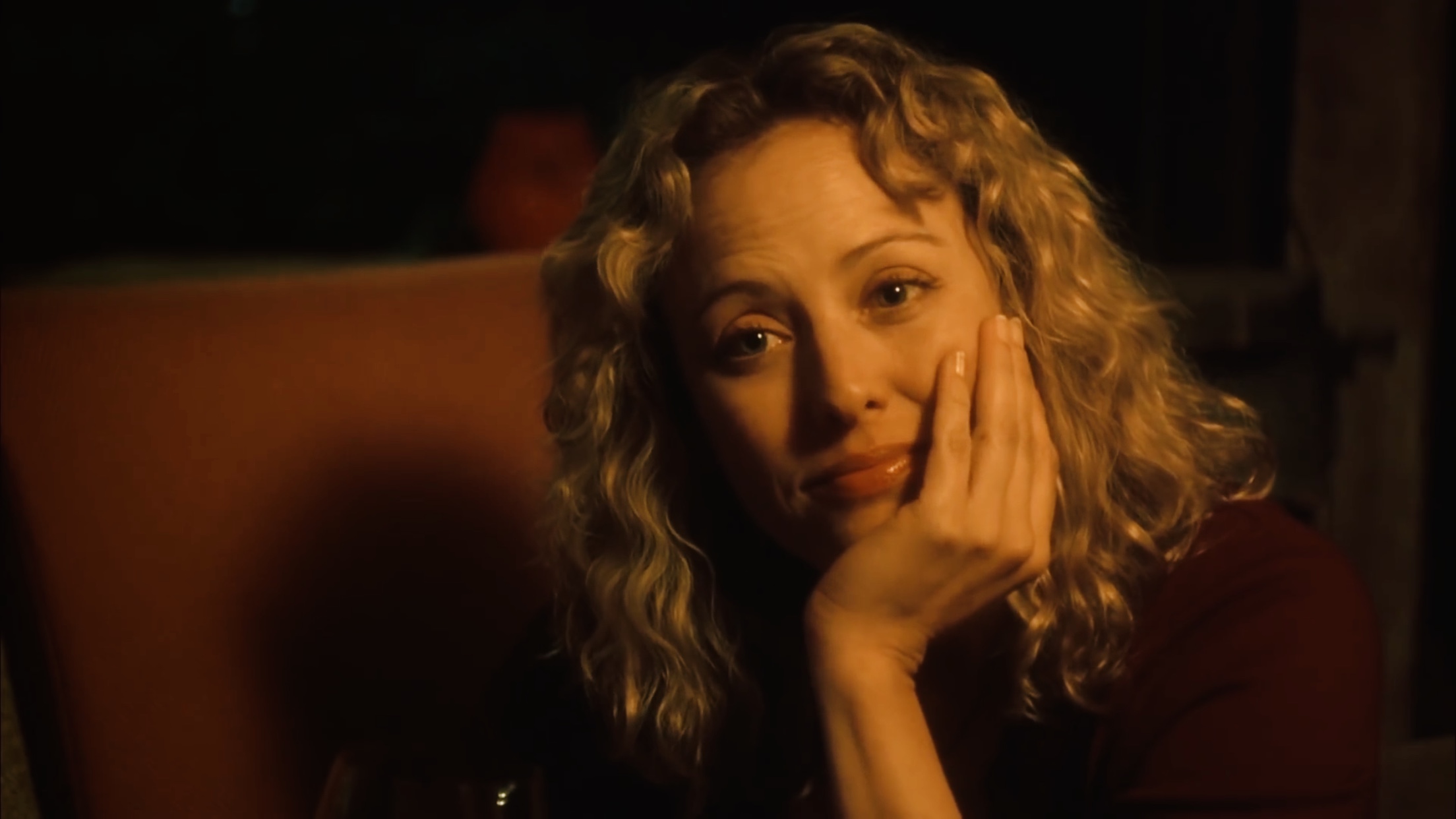
But make no mistake, the real star of the evening was Virginia Madsen whom everyone who loves “Sideways” was truly thrilled to see. She portrayed Maya, the divorced waitress who captures the attention of the ambitious but very depressed Miles (Paul Giamatti), a writer who just might be about to publish his novel for the world to see. Madsen deservedly earned an Oscar nomination for Best Supporting Actress for her unforgettable performance here. Cate Blanchett ended up winning it that year for her work in “The Aviator,” but there is no forgetting what Madsen did, especially after Maya’s speech about her love of wine.
Before “Sideways,” Madsen was best known for her work in movies like “Candyman,” “Electric Dreams,” “The Prophecy” and “The Rainmaker.” Around the time it came to audition for this now classic film, Madsen openly admitted her career was not doing well and that the odds were against her in playing Maya.
Virginia Madsen: There was talk about getting someone who had a bigger name, but I got the audition and I was working with a coach, so I was really, really ready. They weren’t giving us the whole script though, and then I said, well, can I just have a couple of more scenes, and they just sounded like me.
In addition, she was very familiar with the Santa Inez valley and the other areas which “Sideways” takes place in as she considers them her weekend getaway. Also, this film marked the first time Payne made a film outside of Omaha, Nebraska.
Virgina Madsen: I lived about an hour from there. I didn’t ever go wine tasting. I just went there to sort of be a hippie and climb trees and have this beautiful sense of serenity, so I knew what I felt like when I was in the valley. So, I just went to play myself.
And we can all agree that Madsen’s greatest scene in “Sideways” was when she talks to Miles about her love of wine as it seduces us every bit as much as it seduces Miles. As a result, this made her meeting with Paul Giamatti all the more agonizing.
Virginia Madsen: I loved the part where I talked about wine in that scene with Paul, so I just got this one chance in the room with him. So, I said I just love this screenplay, I love this role, and I love when she talks about the life of wine. I went into the monologue, which you were not supposed to do for the audition. He went, “would you like to do the monologue?” I said, “Yes, sure.” I was so prepared. The tone in the writing changes in that scene. And when it was over, we just looked at the casting director and he said, “You know, we should have everyone do that monologue!” He (Giamatti) wanted me, but it took a while to hear a yes. I knew who Paul was as an actor, and I knew we would have chemistry. I am never wrong about that.
Then there came the time when Madsen met up with Payne about “Sideways,” and he offered her the role of Maya at the Chateau Marmont, something any actor or actress loves to be given the role of a lifetime at. But this also resulted in something actors might be reluctant to agree to.
Virginia Madsen: We met at the Chateau Marmont, and he said, “I want to ask you, would you do me the honor of playing Maya in my film ‘Sideways?’ And I was like, “Oh, well.” And he said, “I have one request though, are you willing to do this movie without makeup?” And I said, “Well Alexander, I’m not wearing makeup now, and that’s what I mostly do.” I did that in three films before that, and the greatest thing about that is you don’t have to get up quite so early. The only request I made back to him was, as long as I can wear mascara and some lip gloss on the date because, if a woman goes on a date, she’s just gonna do a little something, and he agreed to that. It seems to be nowadays more than ever this effort to make people look real, and they kind of look like hell, and that’s also distracting.
After all these years, “Sideways” has lost none of its power to entertain, be it in comedic or dramatic ways. Some films are quickly undone by time, but this one never will as everyone can relate to it and its characters in various ways. And when it comes to Madsen’s performance, she will make you fall in love with Maya every single time.
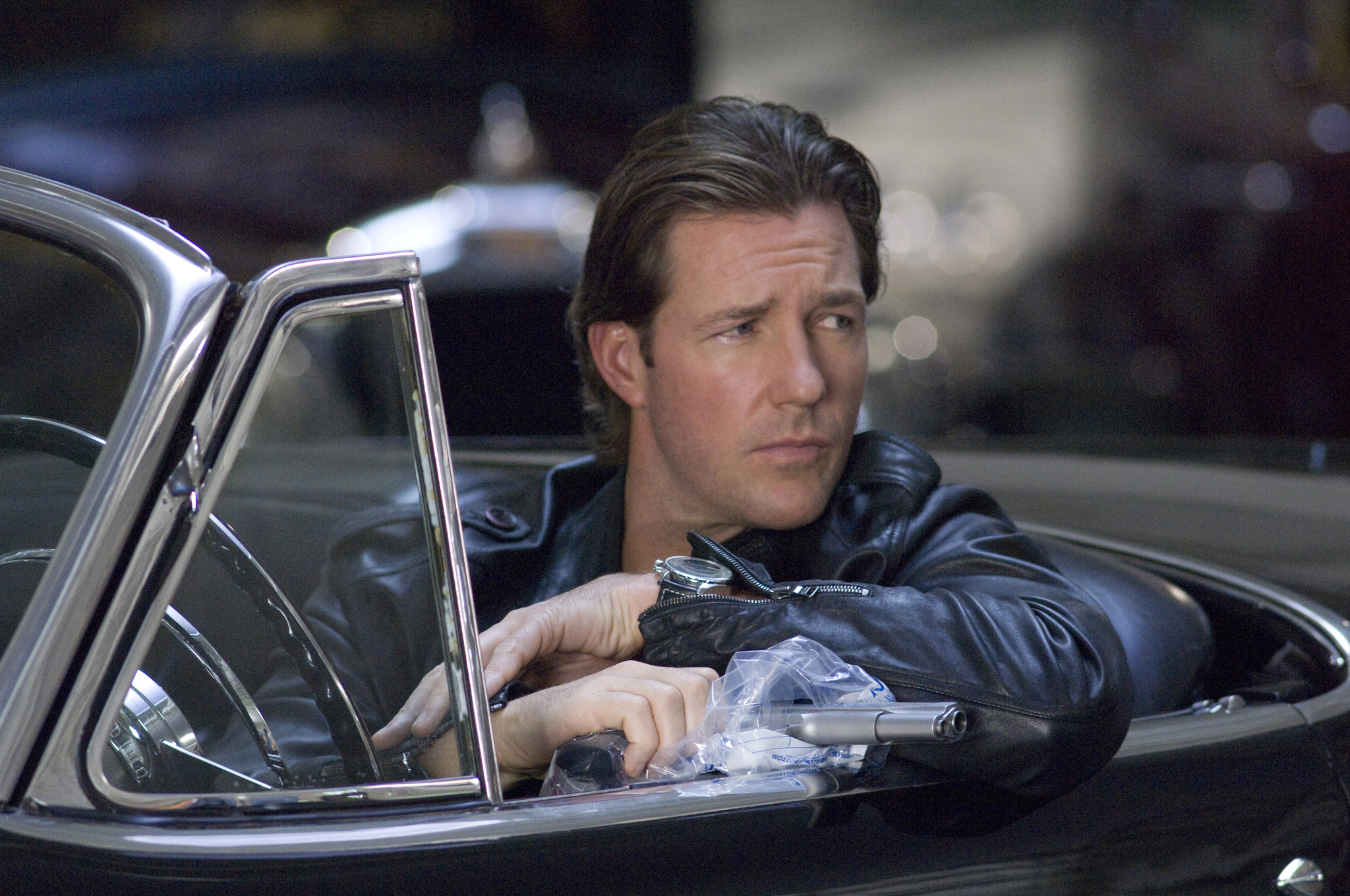
Actor and filmmaker Edward Burns comes from a family of cops, and he always relishes the opportunity to play one in a movie. In “Alex Cross,” he got to portray Detective Tommy Kane who is partner and childhood friend to Dr. Cross (played here by Tyler Perry), and the boyfriend of Detective Monica Ashe (Rachel Nichols). While at the movie’s press conference which took place at the Four Seasons Hotel in Beverly Hills back in 2012, he talked about what drew him to the role.
Burns said he was aware of James Patterson’s Alex Cross books and that he had read a few of them. The character he plays, however, is not actually in any of Patterson’s books and was an original creation for this movie. He ended up getting a call from the movie’s director, Rob Cohen, who was determined to make this particular Cross film more of an action picture than a police procedural.
Edward Burns: Rob told me that he wanted to develop this new character opposite Alex that’s sort of a best friend. He said we’ll be working on this script up until we shoot and that he’d love to have some input from me. Anytime a filmmaker says they want you to collaborate with them that gets an actor excited, so I jumped in.
When it came to establishing the relationship between Tommy and Alex, Burns said there are two scenes in the movie that give viewers insight as to when these two met and how their relationship has evolved over the years.
Edward Burns: The thinking was we became friends as kids, and when we were little, I was a little more of the protector of him. When we got older, bigger and smarter, he then became the guy that looked after me. That’s what the tone of the relationship is between these characters in the film, and in our last scene together in the car we reminisce about how our roles have changed over time.
For Burns the one fun thing about playing cops in movies is that there’s always that period of when you have to do tactical police training.
Edward Burns:We had a great time working with the guys from the Detroit SWAT team and police department, and that’s always a lot of fun. It’s amazing because you always have to keep relearning that stuff (sweeping a room and proper weapons procedure).
Some actors hate being typecast as cops, but Edward Burns appears to be happy to play as many of them as he can. We look forward to him playing as many more cops in the future, and we applaud him on his continued dedication to the realm of independent film.
“Alex Cross” is now available to own and rent on physical media and digital.
WRITER’S NOTE: This interview took place back in 2012 and may contain outdated information.
Born and raised in Los Angeles, California, filmmaker David Twohy has left a strong impression on moviegoers everywhere. He got his start as a screenwriter on “Warlock,” “The Fugitive” and “Waterworld,” and he eventually proved himself to be an effective director with the underrated “The Arrival” which starred Charlie Sheen as an astronomer who discovers evidence of intelligent alien life, and the equally underrated submarine supernatural horror film “Below.”
But the movie Twohy is still best known for is “Pitch Black” which had him joining forces with “The Fast & The Furious” star Vin Diesel who played the dangerous criminal, Riddick. Its budget was only $23 million, but Twohy and Diesel created a movie that was intensely exciting and which made the most of its modest budget. So strong was the cult following for “Pitch Black” that the two later made “The Chronicles of Riddick” which had a budget of over $100 million. While the sequel was not a commercial success, fans were still craving another Riddick movie and kept pushing at Twohy and Diesel to bring this anti-hero back to the silver screen.
Fans got their wish when “Riddick,” the third movie in the “Pitch Black” franchise, opened in theaters on September 3, 2013. After dealing with a big budget and a Hollywood studio, Twohy and Diesel ended up raising the money independently to make this particular sequel a reality and maintain full creative control over it. It follows Riddick as he is left for dead on a desolate planet and ends up being sought out by bounty hunters who are prepared to bring his head back in a box. But soon they are stalked by vicious alien predators, and they are forced to join forces with Riddick in order to survive the long dark night.
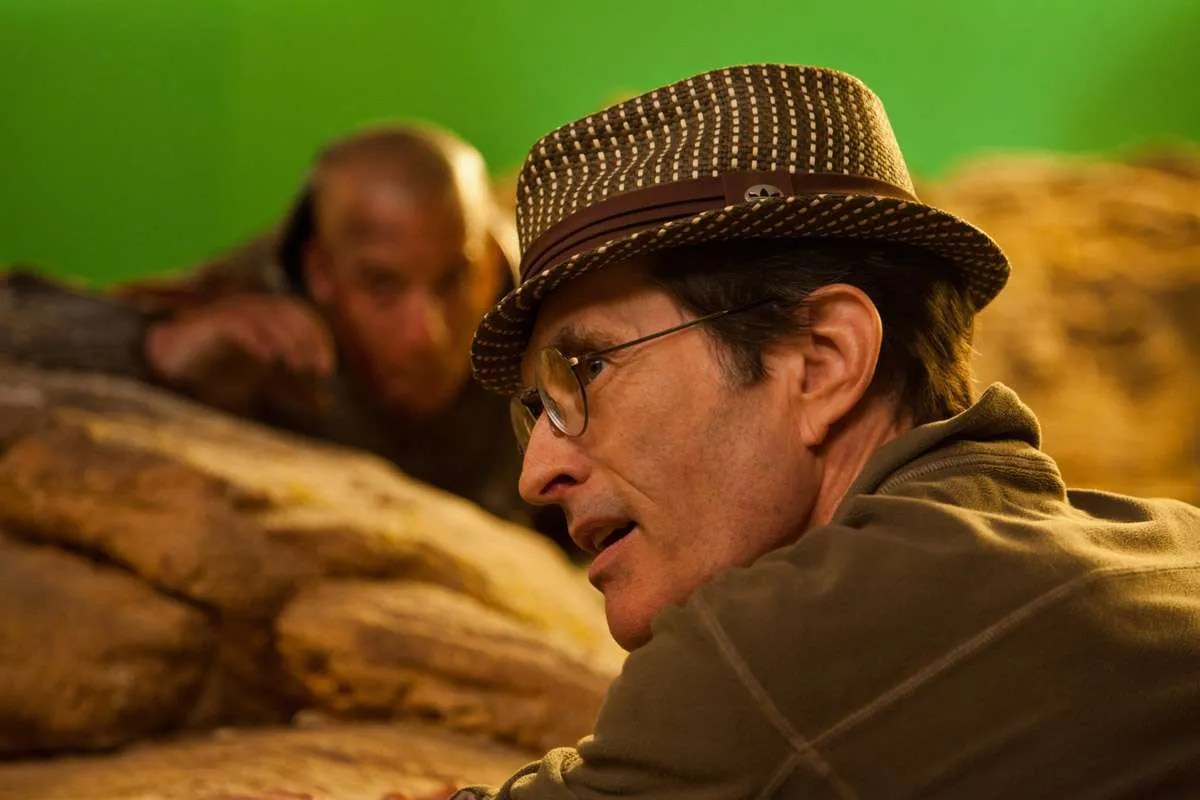
I was lucky enough to attend the “Riddick” press conference at the Four Seasons Hotel in Los Angeles, California just before this sequel was released back in 2013. Twohy talked about the challenges of making this particular movie as well as what it was like working with Diesel who had just received his star on the Hollywood Walk of Fame.
Question: How did the final film compare to what you originally envisioned, and were there any big challenges you faced in terms of the look of the film?
David Twohy: Did the finished product end up like we had imagined it? Yeah, it does because really, as a responsible filmmaker, I have to imagine the whole movie. After I script the movie, I have to storyboard it out, I have to budget it, and I have to understand if I can afford all those visual effects or not. So more than anybody, it looks like the movie I had imagined, sometimes better, sometimes not quite as good depending on how we execute the visual effects. But yeah, I’m not surprised by it because it’s what I do and it’s what I set out to make. Sometimes Vin, who is not privy to everything that’s in my head and all the work that I’ve done with the concept artist (and he likes it that way), is surprised, but I don’t have the luxury of being surprised. I can’t be surprised by anything in the filmmaking process if I’m doing my job right. So, it’s very much the movie we set out to make, and we set out to make something that would fit into the budget that we had ($38 million). I think you all know that this was an independent movie this time out instead of a studio movie. So, knowing that we would have limited resources, Vin and I sat down in his kitchen and we came up with a story that would fit that budget. It couldn’t be as grand as the last movie, and it had to be more contained. It feels more like “Pitch Black” to some people. It probably is more like that at least in its tone and scope (we limited it to one world), but it’s very much the movie we set out to make, and there were not that many surprises for me along the way.
Question: It was interesting to see that Dahl (played by Katee Sackhoff) was not a love interest in this movie. Usually, the girl ends up being the love interest of someone, but instead she was this independent woman who can hold her own. Can you talk about casting Katee and why you chose to make her this independent woman who can take care of yourself?
David Twohy: I remember Ridley Scott telling me this story about the original “Alien;” Ripley was scripted to be a man, and he decided to make her a female thinking that these parts should be gender-neutral. I’ve always remembered that, and the women in my movies do stand up on their own two feet and are not pieces to anybody, and I like that. In terms of Katee, she was the first person to read for the role of about a hundred actresses, and that I remembered her throughout the whole process speaks highly of her. So finally, I said, “Who was that girl who came in the first day, she had blonde hair and she kind of killed it? Who is she?” They said, “Oh that’s Katee Sackhoff from ‘Battlestar Galactica.'” Well, I didn’t really follow “Battlestar Galactica,” so I didn’t even know her from that, so I’m not casting or for that. I just thought she was the best available actress so we cast her like that, and I’m so glad we did because she was a joy to have on the set. And clearly, like the character, she holds her own amongst the men and swears worse than any of them. Her off-screen lines are just as good.
Question: What made you bring this franchise back to R-rated territory after the PG-13 “Chronicles of Riddick,” and is there going to be another “Riddick” anime, game or ride?
David Twohy: (laughs) A Riddick ride? Well, actually we are doing some D-Box seats in theaters, the motion platform seats. I just experienced them for the first time and it’s the closest thing to a Riddick ride as you’ll get. It’s watching the movie, but it’s motion based. I don’t know what that in between thing will be, but we embrace them, and I would like to do more. We published the motion graphic novel as well which helped with the back story of how Riddick went from King of the Necromongers to a man alone on a planet. We embrace those things, and it would be great to get another game off the ground, but those things are very hard to launch. They are costly and they need a lot of lead time, so it’s hard to sync those games to the release of a movie. But we would like to do another one and we are talking about it. The R-rated movie was important to us because, as a filmmaker, I have the flexibility I need to do what I want. With PG-13 I feel like I’m pulling my punches either in the script or working with my actors on the set and coming up with stupid analogues for the word “fuck.” I’m getting tired of that. It gets to the point where people aren’t talking like people talk anymore. Just because I don’t want to pull my punches anymore, I felt this was important to me. It also plants a flag in the ground for our fans as well and lets them know we are true to the character and the nature of the series. The reason for PG-13 last time is obvious. It was because we were a big studio movie funded by a big studio, and to minimize their risk they wanted to branch out to what they think is the widest possible audience and they think that’s PG-13. There is actually a sound reason for that, but Vin and I feel more comfortable back in the R-rated universe.
Question: In “Riddick” you deal with the Necromongers briefly and just move on from there. Do you plan on going back to that story thread if this movie is successful enough to merit a sequel?
David Twohy: Yes. If it is successful and if we have a flexibility to go wherever want for the next movie, and Vin and I are talking about two more movies and probably just that (it would be good to do a closed ended franchise rather than a franchise that just keeps spitting them out just to spit them out), we would like to get back to the Necromongers. I am currently cutting the director’s cut DVD right now which includes more of an epilogue which has Riddick returning to the Necromonger empire and actually setting things right there in terms of the guy who abandoned him on this planet and left him for dead, and his search for Vaako (played by Karl Urban) who he thinks has the answer to where his home world lies. The next few weeks will be telling for us, and we want to pay off the fans who have stuck with us all this time. They have never stopped talking about this movie to us, and it was them who made us open our eyes and say it will be honestly irresponsible to leave it like it was and not make another movie.
Question: How did you and Vin get back to the savagery of the “Pitch Black” with this one and made it look like “Conan the Barbarian” as opposed to “Conan the Destroyer?”
David Twohy: That was important too, and it was also part of the character who thinks at the story’s outset that maybe he feels that he is gotten a little slow, a little soft, who has dulled his own edge as King of the Necromongers and wonders what happened to him. Did he commit the greatest crime of all? Did he get civilized? So, the exploration of him trying to get back to basics to find his edge again, to get back to the lean thing he was, it’s a good evolution for Riddick and it’s also sort of a parallel to what the franchise has undergone
Question: What do you like most about collaborating with Vin Diesel?
David Twohy: That he doesn’t shut up (laughs). He’s a guy who aims high and pushes me to aim high. He’s a guy who dreams and thinks that anything is possible, and me I’m more of a practical guy. I try to be a responsible filmmaker, living with the constraints of what I’m given to make a movie with, but Vin doesn’t think like that. Vin thinks like anything is possible and he thinks big. Sometimes that’s almost a folly but other times it can be inspiring and it can open up my ideas to other ways of doing things. What’s great about it is that he’s a guy who has all the confidence in the world and always has ever since I cast him as just a guy, an actor, in “Pitch Black.” But he had an unshakable confidence in himself even back then, and he just seems to see the future or will it into being (laughs) so that he can say “hey I was right all along!” He’s great like that and he’s inspiring like that. Just about the time you think that Vin Diesel is a guy with big muscles and a big head and your kind of willing to dismiss him as that, you realize that this is a guy with a big heart too. He dreams no small dreams, and that’s good and that rubs off on everybody else he works with.
Question: Can you talk about crafting Riddick’s voiceover in the movie?
David Twohy: Here’s how I craft it, I sit in front of my computer screen and I write it. Then I’ll rewrite it, I’ll tweak it, I’ll rewrite it and then I’ll show it to Vin and he’ll say I’m digging this or I’m digging that. When he gets in front of a microphone, he’ll say 90% of it, but every once in a while, he’ll just stick in a line. I later find out it’s because it’s too similar to something else he said in another movie. We just work it out and then I’ll spitball three alternatives and when something pops up that he likes we’ll just lay it down. We’ve built a good level of trust with each other lately. As opposed to the voiceover in “Blade Runner” where it was just filling in stuff that you needed to know about the world and it wasn’t character-based, the one in “Riddick” is character-based and it comes with Riddick’s voice and how he sees the world. It takes a while to get it right.
Question: Riddick’s relationship with the puppy is one of the best things about this movie…
David Twohy: By the way, every woman who has interviewed me today talked about the damn puppy (laughs). I cut a trailer of this movie that was all about Riddick and his relationship with the dogs and I gave it to Universal and said, “Hey maybe we want to broaden our audience a little bit and make sure we get the women in here, you know?” Then they go, “It’s a little soft for a Riddick movie Dave.” God, I wish the marketing people were listening to this! I’ve been trying to tell Universal, I’ve been trying…
Question: Since the puppy was created with CGI effects and has a lot of interactive scenes with the actors, what did they have to work with on the set?
David Twohy: All the actors have plenty of reference whether its concept art which they can paper their trailers with or I’ll show them on the morning of the shoot. The puppy has stand ins. For the puppy, I got a 12-pound silicone puppy that looks like the real puppy. It’s furred, it’s got glass eyes and everybody wants to hold it, and it just feels right. The puppy made it into the movie in a couple shots. Plus, Vin has big dogs too, so more often than not he’s telling me how to greet the dog and how to pet it (I’m a cat guy, Vin’s a dog guy). So, he says, “No you don’t pet it like a cat. If you want to say hello to your big dog, you slap it on the shoulder.” So that’s what we do in the movie.
Question: What were the differences, both positive and negative, that you found making this movie independently versus working on a studio movie?
David Twohy: Mostly positive. We shot it in 48 days which was pretty streamline. During postproduction I showed it to an audience of 50 or 60 people and didn’t score it, didn’t test it. I just wanted to know what confused them so I could go back and clear up the confusions. I showed one or two cuts to Vin and then I locked the picture. That is as atypical as it gets in the professional filmmaking world because a lot those movies you saw this summer were focus grouped, tested, scored, recut, reshot, recut, tested, scored, and after a while there is a factory-made feel to those movies. So hopefully something this simple, streamline and filmmaking pure results in something that’s at least different and maybe better just in the handcrafted sense of it.
Question: So, would you say you had more fun with less money in some ways?
David Twohy: Yeah, we did, and I’m sure most independent filmmakers will tell you that. The downside is that we staggered to the starting line. We were up, we were down, we were up, and we were down. It all comes down to, is the paperwork closed? Is the bond closed? You have to close the bond to get the bank loan. It’s a lot of stuff I don’t know much about, and I wish it didn’t affect my life but it does. We started and we were shut down, kicked out of our studios, the doors locked. We had to come back three months later and pay our bills and start over. So those are the vicissitudes of independent filmmaking.
“Riddick” is now available to own and rent on DVD, Blu-ray, 4K UHD and Digital.
As this interview was conducted in the past, it may contain outdated information.
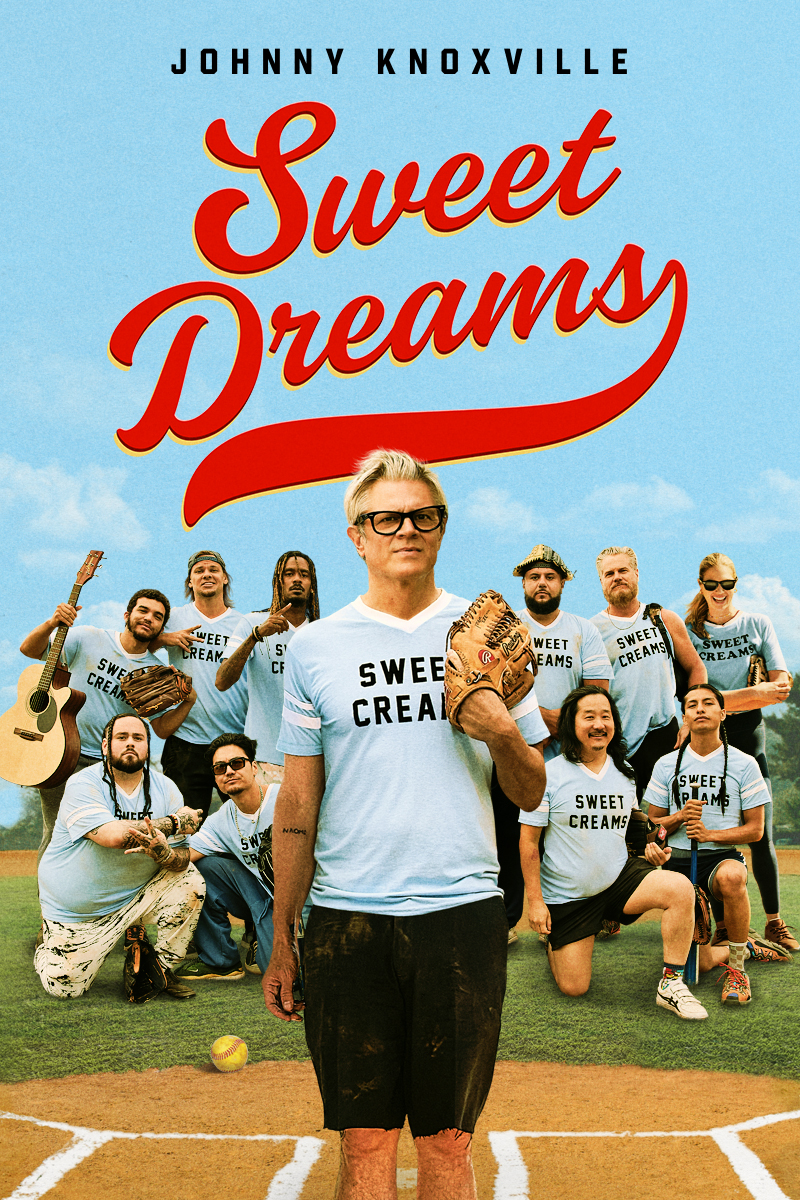
There are many movies out there about addiction issues and the rehabilitation which comes about when some finally can take no more pain and punishment. Those which come to mind include “Clean & Sober,” “When a Man Loves a Woman,“ “I Smile Back” and “The Way Back” to name a few. Now we have “Sweet Dreams” which stars “Jackass” alumnus Johnny Knoxville as Morris, a man who has finally hit rock bottom when it comes to drugs and alcohol, and we watch as he enters a sober living facility named Sweet Dreams where he meets others struggling with the same demons. While there, he gets recruited to coach the rehab center’s softball team which he is at first reluctant to do, but it gives his life a direction and purpose he was previously lacking.
“Sweet Dreams” was written and directed by Lije Sarki whose previous films include “Concrete Kids” and “Alphonso Bow,” and he was one of the producers of the indie hit “The Peanut Butter Falcon.” Like the characters here, he has also struggled with addiction issues but has since found his way past them and very much enjoys his sober lifestyle. With this film, he wanted to present the sober living, anonymous meetings and 12-step programs in a different way. Whereas most movies of this sort tend to be dark and depressing, he wanted “Sweet Dreams” to be more uplifting and to show how recovery can be fun and a joyous thing even after you have hit rock bottom. What results is a motion picture with a lot of heart, and you can see this in the writing and the performances, particularly Knoxville’s.
I got to speak with Lije recently about “Sweet Dreams,” and we talked about how the challenges he had in shooting this film (he only had 20 days), and of how he made this one stand out from so many other movies like it.
“Sweet Dreams” is now playing in theaters and is available to own and rent on digital platforms. Please check out the interview below as well as the trailer.
“Sweet Dreams” is one of those movies coming out underneath the radar, and it deserves more attention than it is currently getting. Johnny Knoxville stars as Morris, a music video director who, as the movie opens, has hit rock bottom and wakes up in a park almost completely nude and with a bloody face. Next day, he enrolls at Sweet Dreams, a recovery center which cannot be mistaken for Promises or the Betty Ford Center, where he meets up with a group of misfits struggling to maintain their sobriety. In the process, Morris becomes the coach of the center’s softball team, and he gets another chance at life as well as the opportunity to be the dad his daughter deserves.
I got to talk with two of the stars of “Sweet Dreams,” Bobby Lee and Davionte Ganter, better known professionally as GaTa. Both play fellow patients who quickly bond with Morris and share their pasts and philosophies on life to him. Bobby is a stand-up comedian, actor and podcaster who was a cast member of “MADtv” and co-hosts the podcasts “Bad Friends” and “TigerBelly.” GaTa is an actor and rapper best known for playing a fictional version of himself on the FXX series “Dave.”
I was especially interested in talking to Lee and GaTa about their own experiences with drug addiction and mental health issues and how they informed their roles as Cruise and Jake in this film. Lee was introduced to drugs when he was just 12 years old, and it took him several trips through drug rehab before he got sober. GaTa has been diagnosed with bipolar disorder, and he has become a big mental health advocate.
I really want to thank them for being so open about their struggles as it proves how “Sweet Dreams” has such a big heart, and that, for these two, doing this movie felt like an extension of the things they work hard for in life. Anyone with addiction issues may very well benefit from watching this movie.
“Sweet Dreams” opens in theaters on April 12, and will be available on digital platforms on April 16. Check out the interview below.
WRITER’S NOTE: This article was originally written in 2013.
Ever since she first found recognition for her character of Sookie St. James on “Gilmore Girls,” Melissa McCarthy has left an indelible impression on us all. After watching her breakthrough role as the abrasive and shamelessly raunchy Megan in “Bridesmaids,” a role which earned her a deserved Oscar nomination for Best Supporting Actress, there was no forgetting who she was. McCarthy wasn’t just funny in the role, she also made Megan a complex character with wants and needs we could easily relate to, and this made her performance all the more wonderfully memorable.
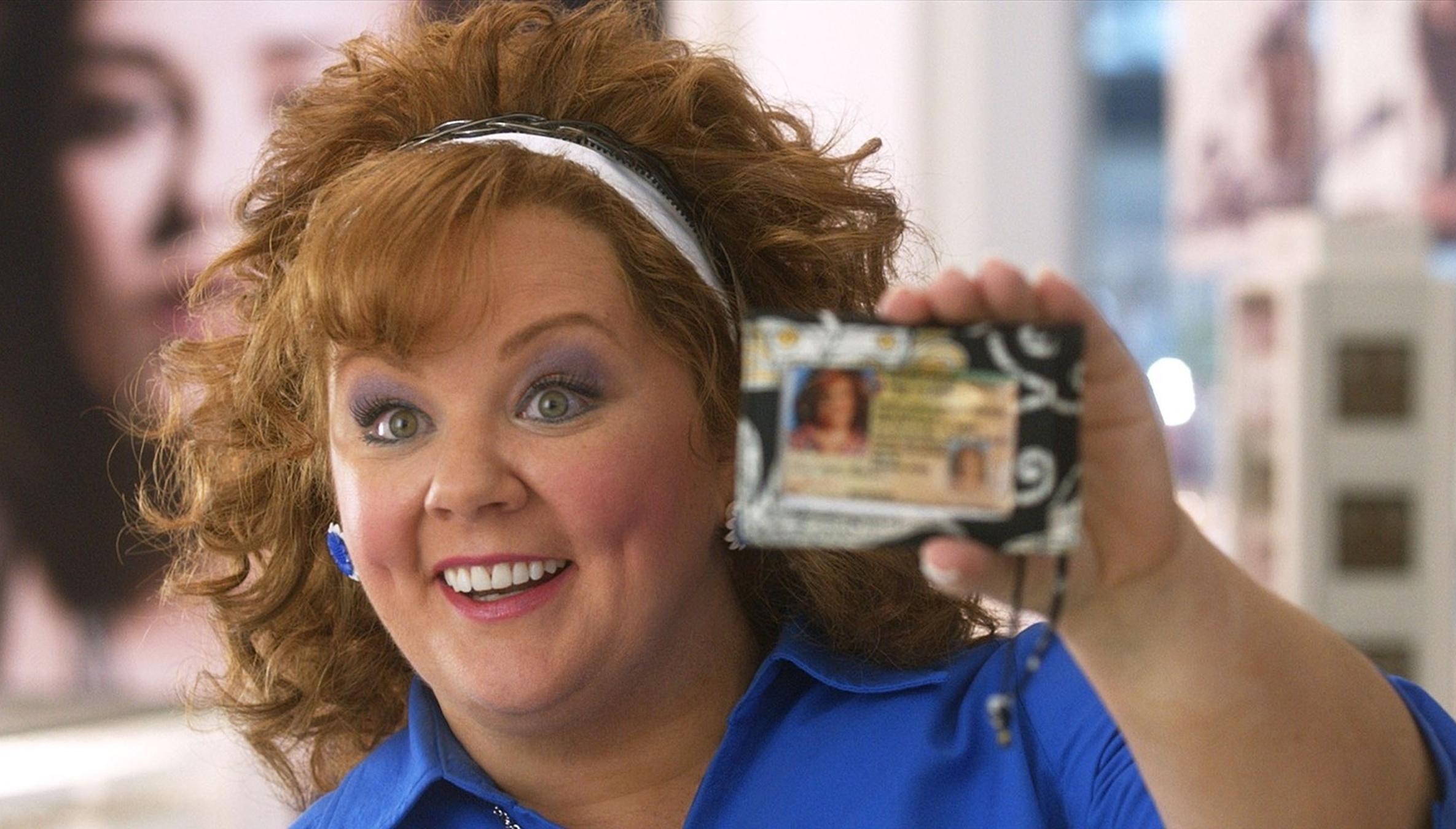
Now she gets the opportunity to put her comedic skills to solid use again in “Identity Thief” as Diana, a con artist who steals the identity of Sandy Bigelow Patterson (played by Jason Bateman) for her own benefit. This actually marks McCarthy’s first lead role in a motion picture, and it came as the result of Bateman loving her performance in “Bridesmaids.” The role of Diana was originally written as a man, but Bateman had the character’s gender changed to a woman just so he could get her cast in the movie.
Now the role of a con artist is a challenging one to make the least bit sympathetic, but McCarthy proved to be up to the challenge. She got her start at The Groundlings which is an improvisational and sketch comedy troupe located in Los Angeles, but while this character would have made for a hilarious five-minute sketch, McCarthy realized she had to do things differently in a feature length motion picture. She made this clear in her interview with Amy Longsdorf of Delaware Online.
“I wanted to make sure Diana wasn’t just a one-dimensional, mustache-twirling villain because I thought that while that’s kind of interesting for a scene, I don’t know how to play that for a whole movie,” McCarthy told Longsdorf. “I love the thought of someone doing criminal acts but not doing them to be menacing. She does them because she’s lonely and doesn’t have anyone. She kind of steals identities so she can go out to a store and pretend to have these lives. She can pretend to have a husband and a family, pretend to be engaged.”
Whether it is film or television she is doing, McCarthy is a comic force of nature and she appears fearless in what she will do to get a laugh. This was especially the case when she hosted an episode of “Saturday Night Live” and came close to swallowing a whole bottle of ranch salad dressing. I was lucky enough to attend the “Identity Thief” press conference which I covered for the website We Got This Covered, and I asked her if there ever is a limit to how far she will go for a laugh, or if she is willing to do anything to get one.
“For me, I think as long as it makes sense for the character,” McCarthy said. “I like to see if you can, on the worst day or the most extreme circumstance, I like to see how far you can push it. But to me it’s not funny anymore if it doesn’t make sense. And I don’t like to do anything that’s mean-spirited just because I don’t find it funny. I’d rather be the jackass than make fun of somebody else because that just seems too cheap and easy. So those are my only limits.”
The one thing, however, that McCarthy was more fearless about than getting laughs was doing her own stunts. It turns out that she tried to do as many of them as possible on the set of “Identity Thief,” and Bateman was stunned at just how far she was willing to go. She even volunteered to do the stunt where Diana gets hit by a car, and it does look very painful when you watch it onscreen. McCarthy ended up admitting to Kevin P. Sullivan of MTV News that she and Bateman did a lot of hand-to-hand combat in order to make their fight scenes look more believable.
“We hurt each other the most, for real, and the most exhausting,” McCarthy said. “You’re just covered in bruises and muscles are ripped.”
Many also wonder where McCarthy comes up with the inspirations for each character she portrays. It is said most actors base their characters on people they grew up with or whom they remember from their hometowns. McCarthy herself was raised on a farm in Plainfield, Illinois, and during the press conference she realized that her upbringing still plays a big part in the roles she chooses.
“In terms of the characters I think are really fun to play, a lot of times it’s someone in my head saying I know that woman,” McCarthy said. “There are women like that in my hometown and there’s one like that the Midwest. I guess I do kind of always go back to that them and draw from there because I really love them. I find them great and interesting and quirky and eccentric. I think everything that any actor does, I would assume, is shaped by how and where they grew up. I steal a lot from a lot of Midwestern women that I weirdly watch, that’s what I should say.”
We are going to be seeing a lot more of Melissa McCarthy in the near future as her star continues to rise in Hollywood. In addition to her television show, “Mike & Molly,” she has a number of starring roles in movies coming up like “The Heat” with Sandra Bullock. No matter what that thoughtless snob Rex Reed may think of her, McCarthy is a superb comedic actress who has many unforgettably hilarious performances left to give the world.
SOURCES:
Amy Longsdorf, “Melissa McCarthy morphs into ‘Identity Thief,'” Delaware Online, February 9, 2013.

 The Ultimate Rabbit