When this trailer begins, it looked like we were going to get another period piece movie. Back in the 1990’s, a lot of period movies were being released such as “Howard’s End” which my parents took me to see, and I found myself really liking it. From there, we got others such as “The Remains of the Day,” “The Age of Innocence” and “The Madness of King George,” and they contained many great performances and much more to take in. Whatever movie this trailer was for, it felt like I was in store for another period piece which would immerse me into a whole other time and place.
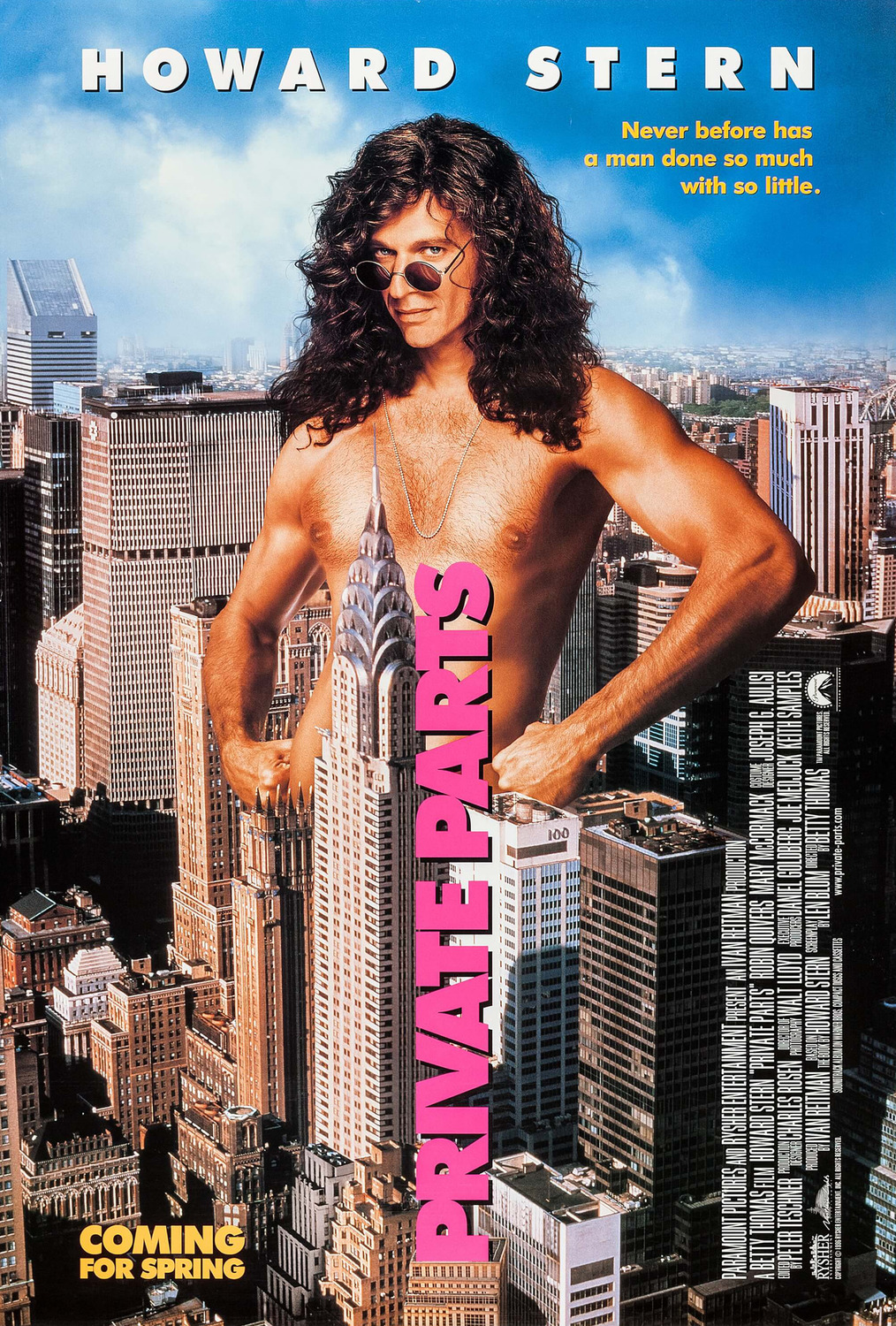
But the next thing I know, subliminal messages such as “SEX,” “BABES” and “CHICKS” started flashing at us from the silver screen, and I am wondering to myself, while laughing out loud, what the hell? Clearly, something far more devious was in store for audiences as these flashes of “SEE IT,” “FEEL IT” and “NUDITY” came straight at us with a thunderous guitar lick. Was this a trailer for another “Naked Gun” sequel?
Before I knew it, Howard Stern appeared onscreen making funny noises into a microphone, and I found myself getting really excited. I was not the biggest fan of Stern’s in the 1990’s but, like everyone else, I was constantly curious to see what he was going to do next. With this trailer being scored to AC/DC’s “You Shook Me All Night Long,” I found myself getting excited for it in a way Stern had not excited me before. While I wondered what was going on in his head from time to time, seeing him in a motion picture quickly seemed like a monumental event.
This trailer for “Private Parts” quickly made my list of my all-time favorites as it presented me with something highly unusual and wonderfully rebellious. This trailer went out of its way to satirize the kind which promised something to a select audience, and then proceeded to pull the rug out from under us all. It made me super excited to the film, and I loved how it twisted the form of the average movie trailer to an exhilarating extent. And, having seen this film many times since, I can confirm that the trailer delivered on what it promised audiences to great effect.
Some great family friends of mine went out of their way to give me a special edition VHS copy of the 1967 classic “The Graduate” as a high school graduation gift. I was thrilled to receive it, and I very much enjoyed it. In retrospect, however, I would have loved it even more if they had given it to me after I had graduated from college as, like Benjamin Braddock, I found myself feeling lost and alienated following that momentous occasion, and the film would have given me something necessary to relate to.
As the opening credits to “The Graduate” begin, we see Benjamin standing listlessly on one of those automated walkways in the airport, and he looks absolutely lost. I love how the camera is positioned as Benjamin is to the right, and there is a big piece of space ahead of him. On one hand, this allows for the opening credits to be displayed without any distractions, but it also illustrates the distance Ben feels from everything around him. This feeling is perfectly accentuated here by one of the classic songs from the 1960’s, “The Sound of Silence” sung by Paul Simon and Art Garfunkel.
I love the opening credits because they perfectly set up Benjamin Braddock for the rest of the film. He has just graduated from college, obtained his undergraduate degree, and now the rest of his life is ahead of him and he looks like a deer caught in the headlights. “The Graduate,” from there, follows his attempts to find some meaning in his life which includes an ill-fated affair with Mrs. Robinson (Anne Bancroft), and his parents treating him like a prized trophy. No wonder we see Ben hiding from the world by diving underneath the water. At least there, he can find some temporary peace from the craziness surrounding him.
Please feel free to check out the opening credits to “The Graduate” down below:
WRITER’S NOTE: This review was written back in 2012. Some edits have been made since then to make it more interesting in the Ultimate Rabbit’s eyes.
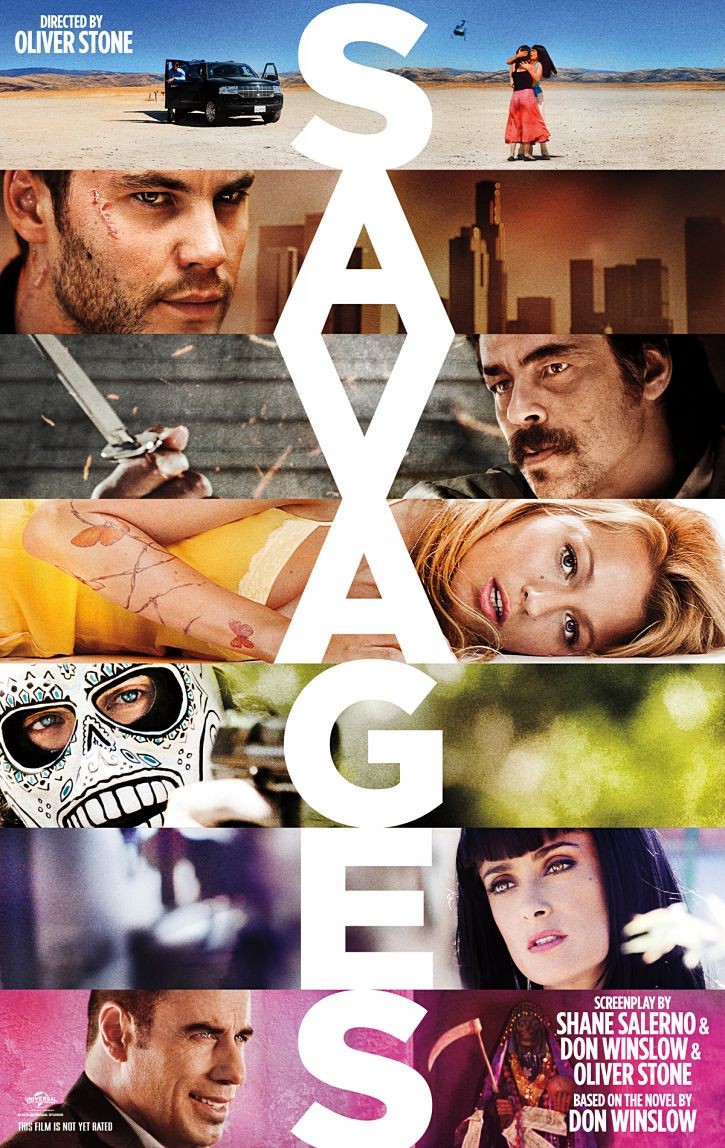
“Savages” is being looked at as Oliver Stone’s comeback movie, as if it is implied that he hasn’t made one worth watching in years. Granted, movies like “World Trade Center,” “Wall Street: Money Never Sleeps” and even “W.” might have made it look like Stone was starting to get too soft on us, but none of these movies, however, showed him to be losing any of his power as a filmmaker. I guess we just miss him generating some kind of controversy because we all expect him to have some conspiracy he is just waiting to unleash on an unsuspecting populace.
Based on the book of the same name by Don Winslow, “Savages” shows Stone getting down and dirty again as the film deals with a couple of weed producers who, quite unfortunately, capture the attention of a brutal and greedy Mexican cartel. While it doesn’t reach the exhilarating highs of “Natural Born Killers” or “Scarface” (which he didn’t direct but wrote the screenplay to), it is still a compelling film to watch. However you look at it, Stone is not about to play it safe with the story or its characters this time around.
Blake Lively stars as O (short for Ophelia) who begins “Savages” by saying that just because she’s narrating the movie does not mean she will be alive at the end of it. Now this is a clever beginning as Stone teases us with the possibilities of what is to come, fully ready to rip the rug out from right under us if the occasion calls for it. These days, it is so nice to see any filmmaker, let alone one who has won several Oscars, take such risks these days.
O lives with her two boyfriends, former U.S. Navy SEAL Chon (Taylor Kitsch) and University of California at Berkeley graduate Ben (Aaron Johnson), both of whom happen to grow some of the best marijuana you could ever hope to inhale. They live their days in Laguna Beach, California which is so beautifully captured by cinematographer Dan Mindel to where I want to drive down there in a New York minute. Heck, I used to go to school near there!
Anyway, Chon and Ben receive a very cryptic message from the Baja Cartel which comes along with a video featuring beheaded drug dealers whom, like these two guys, were independent sellers. Basically, the cartel wants to go into business with them and take a cut of their profits. Chon and Ben, however, refuse to get involved with any cartel, and they make plans to move out of the country with O to another where they can stay for at least a year. But the head of the cartel, Elena Sánchez (Salma Hayek), believes these guys need to show her some respect, so she gets her henchmen to kidnap O in order to make them comply with her demands. But Chon and Ben are not about to let go of their O without a fight.
The movie’s title, “Savages,” makes me wonder who it is referring to among its cast of characters. It is tempting to think it refers to the Baja Cartel as they utilize horrific methods to get what they want, but it could really be referring to any of the characters we see here. Stone is examining just how far we can be pushed before we are forced to embrace our animalistic nature, and he gets at this horrifying truth of what violence we are all capable of when we get pushed to extremes.
“Savages” is far from original as its story may remind many of their favorite “Miami Vice” episodes. With a movie like this, I expected Stone to be pushing our buttons a little bit harder than he does here. But even though I came out of it feeling Stone could have gone even further with the violence, the action is still jolting and, at times, extremely graphic; one guy even finds one of his eyes hanging out of its socket during a moment of torture. Stone also utilizes his many ways of shooting which include black and white footage along with scenes of psychedelic power as characters find themselves under the influence either by choice or by force.
Now I don’t care what anybody says, Blake Lively is a good actress. Many seem to sneer whenever she is starring in a movie, but maybe this is because she was on “Gossip Girl,” a show I have never bothered to watch. Lively has to take her character of O from being a fun seeking woman to one who has to learn to live again, and she is excellent throughout. After her turn as a drug addicted single mother in Ben Affleck’s “The Town,” there should be zero doubt that she can act.
It has been a tough year thus far for Taylor Kitsch who has seen two big budget blockbusters he starred in, “John Carter” and “Battleship,” bomb hard at the box office. Then again, those movies probably would have bombed no matter who starred in them. With his role as Chon, he shows a toughness and attitude which is not easily faked, and you can see why so many were looking to cast him in their projects. Many actors yearn to play a ballbuster when given the opportunity, and Kitsch rises to the occasion and gives a terrific performance.
Aaron Johnson, who plays Chon’s more philosophical partner Ben, seems to have grown up a lot between this movie and “Kick Ass.” Once again, Johnson is playing a character who is eager prove himself and yet completely unaware of what that will take. From start to finish, he does an excellent job of transitioning his character from a peaceful man to a bloody defender of what he loves.
But leave it to some acting demigods to give “Savages” its potent power which nails us right into our seats. Benicio Del Toro is brilliant as the sociopathic henchman Lado. Like the most entertaining cinematic sociopaths, Lado is at times charming while more often menacing and extremely sick. He thinks nothing of killing people when the opportunity presents itself, and Del Toro looks to be having a blast as he explores the different facets of his character’s twisted personality.
And then there’s Salma Hayek who singes the screen as drug queen Elena Sánchez. All Hayek has to do is give the audience one look, and you know this is a person you do not want to mess with. She also gets a surprisingly complex character to play as Elena’s ascent to being a big-time drug dealer had more to do with tragedy than it did with opportunity.
“Savages” also features strong performances from John Travolta as a corrupt DEA agent, Emile Hirsch as the money launderer Spin, and Demián Bichir as one of Elena’s representatives, Alex. There is not a single weak performance to be found here as everyone looks to be as thrilled as can be to be acting in an Oliver Stone movie.
Now there has been some controversy over the movie’s ending as it offers up two very different conclusions. The way it comes across reminded me of when Michael Haneke got one of his characters to grab a remote control to reverse and alter the events in “Funny Games.” Both directors are looking to mess with our heads. While the fates of the characters are not entirely resolved, it was worth seeing things turn out the way they did as some end up getting very clever about the situations they are trapped in.
Is “Savages” classic Oliver Stone? Not quite, but it is certainly more potent and energetic than some of his other recent work. Give him the right story, and he can still give you a cinematic experience like few others can.
The following review was written by Ultimate Rabbit correspondent, Tony Farinella.
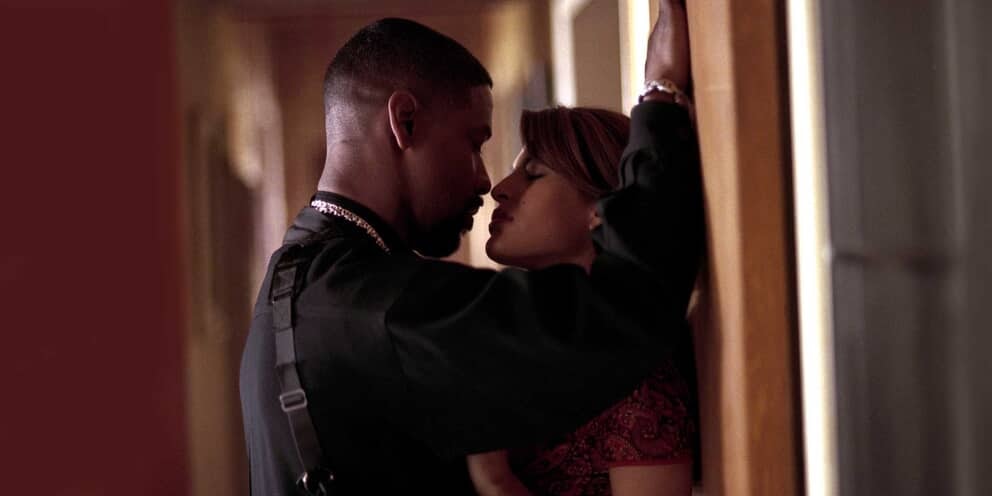
It has been a long time since I have sat down and watched “Training Day” from start to finish. Upon hearing about its 4K release from the fine folks over at Warner Brothers, I was looking forward to sitting down and revisiting it and seeing how it would hold up twenty-two years later. Denzel Washington can always be counted on to give a powerful performance, and he does not disappoint here in a role that earned him an Oscar. Ethan Hawke is one of Hollywood’s most underrated actors, and the pairing of these two together was something I looked forward to with great anticipation. When you throw in the direction of Antoine Fuqua, a frequent collaborator with Washington, everything seemed to be in order for a great film.
“Training Day” opens up by introducing the audience to Jake Hoyt, played by Hawke. Jake is a young up-and-comer on the police force who is looking to make a name for himself in the Los Angeles Police Department. But before he’s considered for a promotion, Jake must spend a day under the watchful eye of Detective Alonzo Harris (Denzel Washington) who will see if he’s cut out for the big leagues. Jake is looking to clean up the streets and get rid of the drugs and crime in the Los Angeles area. He’s eager to learn from Alonzo, but he’s not exactly sure what to make of him as Alonzo has a big personality. Also, Alonzo doesn’t always play by the rules.
In Alonzo’s mind, he has to do what is necessary to survive out there in Los Angeles as a detective. The great director William Friedkin used to talk about how there was a fine line between the police officer and the criminal as well as the good guy and the bad guy. Alonzo is someone who definitely falls under that category. However, the more time Jake spends with Alonzo, the more Jake realizes he didn’t exactly sign up for Alonzo’s unique style of being a detective. Alonzo has got an edge to him, and it is something which makes Jake quite uncomfortable at times.
Make no mistake about it, this is Washington’s movie. It is a big performance from the actor as he finds himself in many situations where he seems to be in control of things, but he’s also losing his sense of reality. When certain people get into a position of power, they don’t always know when to stop or reel it in before it ends up biting them in the behind. Washington is captivating on screen, and he hits all of the right notes without ever being too over-the-top. Yes, it’s a showy, loud and in-your-face performance, but this is what the film needs in order for the character to come across the way writer David Ayer and Fuqua drew him up to be.
Hawke, on the other hand, is subdued for most of the film, but you can also see the anguish on his face. He’s uncomfortable by this whole situation, but he’s not in a position of power where he can do anything about it. In the last forty-minutes, Hawke gets his chance to shine, and he delivers in a meaningful and intense way. He’s one of those actors who knows how to make big moments count. In many ways, Jake is waiting in the wings and waiting for his chance to pounce and take over. Jake is not corrupt or out for money like Alonzo. He truly wants to be a good cop and help people. Their car rides provide for fascinating dialogue as we see the hardened and rough Alonzo interacting with the young and prideful Jake as he tries to fight off the cynicism and charisma of Alonzo.
Overall, “Training Day” is far from a perfect film. The acting, though, is flawless. Every single actor on screen is at the top of their game. We even get scenes with Snoop Dogg and Dr. Dre. The soundtrack is also really, really good. However, I found the script to be a little bit repetitive in certain instances. After a while, we get the idea of what’s happening with Alonzo and his moral compass. We know what to expect from him and, at times, it seems like it’s the same scene just played out in a different setting and with different actors. I was looking for more character development as well from the supporting cast. The two leads could have been fleshed out more too.
In the end, the performances from Hawke and Washington mixed with a violent and brutal final act are what make this film worth watching and worth recommending. I think it’s a good cop movie, but it could have been a great cop movie. It’s a good movie with great performances, and I wish it was as good as the performances from its leads. As mentioned previously, the third act features some really, really gripping material which stayed with me. The middle act, however, tends to drag and seems to be spinning its wheels. I liked “Training Day” a lot, but I didn’t love it.
* * * out of * * * *
4K Info: “Training Day” is released on a two-disc 4K combo pack from Warner Brothers Home Entertainment. It comes with the 4K, Blu-ray and a digital copy of the film as well. I found it interesting, however, that the 4K and Blu-ray are in Blu-ray packaging as opposed to a black 4K case. It was different, and I didn’t mind it, but it is worth noting. It also comes with a really nice slipcover. The film has a running time of 122 minutes and is rated R for strong brutal violence, pervasive language, drug content and brief nudity. The 4K looks really, really good with its HDR. When the film gets darker, it has a really grim and moody look that makes it worth the upgrade. This is the best I’ve seen this film look, and I was very impressed with the finished product.
Audio Info: We are treated to a Dolby Atmos track, and it really packs a big wallop here during the more intense and violent scenes. However, it’s not so loud and overwhelming that it’s distracting or you need to look for your remote. It’s perfect.
Special Features:
Pharoahe Monch’s “Got You” music video
Nelly’s “#1” music video
Deleted Scenes
Commentary by director Antoine Fuqua
“Training Day:” Crossing the Line Featurette
Alternative Endings
Should You Buy It?
Considering the memorable moments and performances, “Training Day” is a film I firmly believe you should add to your 4K collection. As per usual, we get the same special features that have been transported over from the Blu-ray release. I can’t be disappointed by this anymore, as it’s to be expected. At this point, if you don’t own “Training Day” at all, or if you own the Blu-ray, you are wondering if you should upgrade to 4K. In my eyes, it’s a no-brainer. I loved the dark and murky look of it. It’s an unsettling film (in a good way) and the HDR transfer really encapsulates the dread and moodiness. If you haven’t seen the film before, there is a lot to like from Hawke and Washington on screen. Washington shows why he is one of the greatest actors of his generation as he crushes it here. Hawke, one of my favorite actors, gives a very subdued, conflicted and under-the-radar performance which only gets better with age. This is a film which, if you are going to own it, you have to own it on 4K.
**Disclaimer** I received a copy of this film from Warner Brothers to review for free. The opinions and statements in the review are mine and mine alone.
I remember when Gaspar Noe’s “Irreversible” was released in 2002 and of the polarizing responses it received at the Cannes Film Festival and from audiences around the world. A rape and revenge story which, like Christopher Nolan’s “Memento,” is told in reverse and comprised of scenes done in long takes, it is still best known for two scenes of punishing ultraviolence: one in which Monica Bellucci’s character is raped in an underpass which lasts for almost ten minutes, and another where a man’s face is bashed in by a fire extinguisher to where he is no longer recognizable to anyone.
I never got to watch “Irreversible” when it played at a theater near me. Back in the day, I considered myself quite the adventurous moviegoer as I went out of my way to watch those films which did not often screen at the local multiplex because they were considered too disturbing for mainstream audiences. But after being so emotionally drained by “Breaking the Waves” and “Dancer in the Dark,” not to mention going through the cinematic equivalent of electric shock treatment that was “Requiem for a Dream,” I was not sure I could stomach what “Irreversible” had to offer, so I waited to view it on DVD where I could lower the volume or fast forward through the hard to watch parts.
Still, part of me regretted never having witnessed Noe’s unnerving film on the silver screen, and this is coming from someone who watched Larry Clark’s controversial “Kids” in a theater with his parents. But now, Noe has released a new cut entitled “Irreversible: Straight Cut,” and on top of it being remastered, it presents the story in chronological order this time around. The question, however, is if this cut will be just a mere gimmick.
The story remains the same with lovers Alex (Monica Bellucci) and Marcus (Vincent Cassel) going to a party along with Alex’s former boyfriend, Pierre (Albert Dupontel). But this straight cut starts with Alex and Marcus waking up after a night of passionate love making. I love watching this opening scene as the intimacy between these two characters, played by actors who were married at the time, as it is so lovely and unforced. So much attention has been paid toward those two unwatchable violent scenes that many forget about these scenes here. Seeing these two lovers together proves to be a wonderful sight as this intimacy is rarely shown enough in movies, and I came out of it feeling envious for Cassel as he got closer to Bellucci than I ever will.
From there, “Irreversible: Straight Cut” goes on a path which leads straight to hell as the road to it is always paved with good intentions. Alex is eager to bring Pierre along for the ride because she knows he gets along rather well with Marcus, and he still has feelings for her. Hearing Marcus and Pierre brag about who was better in bed with her played more strongly for me this time out in this chronological take. In fact, as we are thrust more deeply into one of “Irreversible’s” main targets which is toxic masculinity. Marcus is so consumed with rage over what happened to Alex that he is utterly impulsive and not using anything resembling common sense. Pierre is infinitely desperate to make Marcus see that he would be better off staying in the hospital with Alex rather than trying to seek vengeance and, even though I have long since seen the original cut, I found myself hoping Pierre would succeed this time around.
With “Irreversible: Straight Cut,” Noe has done an excellent job of making this version more than just a mere gimmick. The edits between each scene feel as seamless as they did before, and our attention is now glued to what may happen as opposed to what has already transpired. The more I watched this cut, the more I came to see how it dealt more with the uncontrollable impulses of man to where anything can happen, and this makes the final outcome all the more devastating. Truth be told, the events portrayed here remind me of all those moments I would love to get back as they created a level of damage I never intended.
As for the elongated rape scene, it remains as brutal and unnerving as ever. I did see one man walk out of the theater during it, and part of me expected to see more audience members to do so. I found myself looking away from the screen at times as I became increasingly enraged as ever at what the unrepentant pimp, La Tenia (played by kick boxing champion Jo Prestia in a truly fearless performance), was doing to Alex. There are few other motion pictures I have sat through where I wanted to see a certain character die a most painful death, and La Tenia is seriously deserving of such a fate.
At this point, I should make clear some facts about the rape scene as many of “Irreversible’s” detractors consider this film to be “pro-rape,” something I completely disagree with. The truth is, Noe was not sure how long the rape scene was going to last, and it turns out Bellucci was the one who ended up directing the scene as she wanted it to be as disturbing as possible. Also, Noe’s camera is constantly moving all over the place throughout “Irreversible,” but it remains paralyzed throughout the rape scene as he wants us to remain in Alex’s frame of mind instead of La Tenia’s. Had the camera moved along with every thrust of La Tenia’s body, we would have been in his mindset, and that would have affected the morality of this film in an inescapable way. In my mind, Noe justifies the rape scene in “Irreversible” because of the way he filmed it.
Seriously, “Irreversible: Straight Cut” reminded me of when I first watched “Deliverance” years ago. While many motion pictures are meant to be enjoyed, this one was made to be experienced even if it was against my will. There is no easy escape from the rage of revenge here as Marcus descends even deeper into a hell which Pierre desperately wants to keep him away from. While I have watched “Irreversible” several times before, I still found myself praying still for another outcome.
This film has also been accused of being homophobic as Marcus yells out many degrading insults to the patrons at the Rectum club, but there a couple of things to consider. Noe himself has a cameo as a Rectum regular who is busy pleasuring himself, and this was his way of showing he was on equal footing with characters he portrayed here. As for Marcus, all I can say is that when you find yourself in a state of intense anger or rage, you find yourself saying things you never thought you would ever utter.
As for Pierre, whose vicious actions end up giving him the worst outcome in this film, he represents a case study of deep repression as he keeps his emotions deep inside. But when he bashes that guy’s head in with the fire extinguisher, his repression ends up finding an exit in the worse way possible, and he ends up destroying himself in a way he could never have seen coming.
Basically, what I am trying to say about either cut of “Irreversible” is that Noe did not make this film simply to shock audiences. Yes, he went out of the way to make us feel uncomfortable while we watched it, but there is more substance to this film than we initially saw on the surface of it. In the end, it presents us with a tragedy we would be best to avoid in our own lives as it is anti-rape and anti-revenge more than anything else. If you do not believe me, then you did not look at this film closely enough.
In comparing the two cuts, I have to say I prefer the original cut more as its reverse structure carries more dramatic weight. As we come to see these horrific acts and what led to them, each preceding scene makes us think about what could have been done to avoid such horrific fates. Still, “Irreversible: Straight Cut” gives audiences something to chew on even as it takes things to a finale which is as bleak as can be. When it comes down to it, I am curious to see what people think about the straight cut, particularly those who have not seen either cut before this one. With a film like this, the responses to it prove to be endlessly fascinating.
Come to think of it, comparing “Irreversible” to “Deliverance” reminds me of the pieces of advice characters give in each film. In “Deliverance,” Jon Voight tells Burt Reynolds, “Let’s go back to town and, ah… play golf.” Imagine the horrors those men would have avoided had Reynolds heard Voight out. But when it comes to “Irreversible,” it features a terrible piece of advice which hangs over the film as Alex attempts to cross a busy street when she is told by a woman nearby:
The opening credits to “Superman” and “Superman II” are among the best when it comes to movies. When Bryan Singer used this format for his “Superman Returns,” it felt like the return of a friend who had been gone for far too long, and the theme by John Williams is among the finest he has ever composed.
But then came “Superman IV: The Quest for Peace,” a sequel which was supposed to put this movie franchise back on track after the critical and commercial disappointments of both “Superman III” and “Supergirl.” Instead, we got a sequel which quickly became labeled as one of the worst motion pictures of all time. With the Salkind family abandoning the franchise and Cannon Pictures taking over, the budget got slashed in half do to their money problems, and everything came to look liken nothing but bargain basement deals or useless stuff which had been long since thrown in the trash.
As soon as the opening titles for “Superman IV” begin, we know it is going to be a rough ride even as Williams’ famous theme, conducted this time by Alexander Courage, is not enough to make our spirits soar. Even co-screenwriter Mark Rosenthal, whose audio commentary for this sequel I highly recommend, is quick to say the following in his opening remarks:
“You can tell from the very first credit that says Warner Brothers that something is terribly wrong in Metropolis.”
This is the Wal Mart, 99 Cent Store or Dollar Tree of opening credits as they look ridiculously cheap in ways the ones for the previous installments never did, and this proved to be quite the shock. Then again, perhaps they fit this sequel perfectly as the visual effects and sets look every bit as cheap as the opening titles. Watching them is heart breaking as they make clear that it is all downhill from here. No wonder this sequel was such a big bomb at the box office.
If you must, please feel free to check out the opening titles to “Superman IV: The Quest for Peace” down below:
When I started thinking of writing about my favorite opening credits to movies, the first which came to mind were the ones for “A Few Good Men.” Directed by Rob Reiner, it is based on the play by Aaron Sorkin who also wrote the screenplay, and it is about the court-martial of two United States Marines who have been charged with the murder of a fellow Marine. Furthermore, it deals with the difficulties the lawyers are forced to endure in their defense, but you knew this already as the film stars Tom Cruise, Demi Moore, Jack Nicholson and Kevin Bacon among others.
What I love about these opening credits is the military exercises, or choreography if you will, by the Marines on display. They were performed here by the Texas A&M University’s Corps of Cadets Fish Drill Team, and I was enthralled at how in sync each member of this team was with the other. Throughout, they all move and react in a uniform way to where there is no weak link in the bunch. These military officers have been trained thoroughly to act as one unit, and it shows here as not one of them misses a beat throughout their exercises. They do not even have to look at one another to make sure they are in sync as all of them move like a well-oiled machine.
The drill these Marines perform during the opening titles hang over the rest of “A Few Good Men” as the film deals with many characters who are forced to deal with the death of a recruit whose passing has now put this platoon completely out of sync. The unity is now broken, and it may be a permanent break unless those in power can fix the situation to where everything is back in balance. But what will it take to put this platoon back to a unifying standard While some suggest charging the two marines with murder, others come to see they were only acting under orders by their superiors who had a different, yet illegal, way of bringing order to chaos. The whole movie, in essence, is about bringing an unbreakable unity back to a military system which has been seriously run off course by those whose powers have long since become corrupt.
Please check out the opening titles of “A Few Good Men” down below:
I will never forget the first time I watched this Gaspar Noe film. “Enter the Void” was screening at the Laemmle Sunset 5 (which has since become another AMC Dine-In Theater), and I had been very, very eager to check out his long-awaited follow-up to his powerful and devastating “Irreversible.”
Noe has always been a playful filmmaker when it comes to title credits, regardless of whether appear at the start or the end of his works. “Irreversible” started with the end credits and went backwards from there, “Climax” did not dare to reveal its title until the film’s final moment and spread its opening credits throughout, and “Vortex” started with its end credits in a solemn fashion which indicated we would be following a pair of characters to their last dying breath.
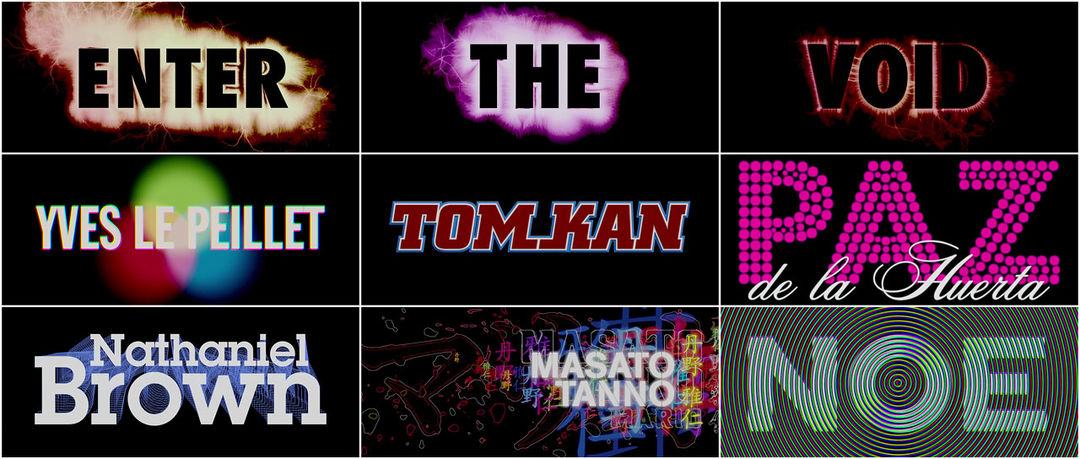
With “Enter the Void,” Noe zooms through the end credits super-fast to some hypnotic sound which acts like a flashing light. Once they are finished, he thrusts int the opening credits which look like they came out of some kind of modern disco while the song “Freak” by British electro artist LFO plays loudly over the speakers. This is Noe’s way of telling the audience they were about to go on quite the cinematically visual ride.
The opening titles of “Enter the Void” are among my favorites as they are unlike any others I have seen before and after it. Seeing the different visual styles employed for it is endlessly fascinating as it made me wonder just how many styles they came up with. When it comes to LFO’s “Freak,” it proves to be the perfect music cue to score these titles. And when these titles concluded to where we came to “enter” this motion picture, the small but attentive audience at the Sunset Laemmle, including myself, burst into applause. Opening titles are never quite this exhilarating when it comes to your average motion picture.
According to Noe, “Enter the Void” was screened at various film festivals without any titles, be it opening or closing. The title logo was designed by German experimental filmmaker Thorsten Fleisch, and the opening titles were designed by Franco-Japanese filmmaker and designer Tom Kan whose other works include “The Matrix Reloaded” and “The Matrix Revolutions,” “Speed Racer” and “Cloud Atlas.
For years now, motion picture opening credits have increasingly become a lost art form as filmmakers want to hit the ground running and leave all the credits to the very end. But while audience members are quick to exit the theater to take care of their ever-growing urine aches, it feels like increasingly shameful that filmmakers are less and less interested in giving their works a prologue which helps to illustrate the cinematic stories audiences are about to take in.
Now when it comes to my favorite opening titles, the first one which comes to mind is for “Seven,” David Fincher’s 1995 film which proved to be his true big breakthrough. Things start off with us being introduced to Detective William Somerset (Morgan Freeman), a veteran homicide detective on the verge of retirement, and his partner and eventual replacement David Mills (Brad Pitt). From there, we watch Somerset try to fall asleep in his bed to the sound of a metronome, and the sound of the metronome is constantly overwhelmed by the violent sounds coming from the streets outside of his apartment.
After this, the opening titles, which I did not expect “Seven” to have, began, and they were done to a remix of the Nine Inch Nails song “Closer” which was entitled “Precursor.” Right from the start, they serve as an introduction to the main antagonist known as John Doe who commits murders based on the seven deadly sins. The way Fincher saw it, these titles were a way of introducing the audience to this character’s perverted state of mind, and there was no forgetting this throughout the rest of the film.
I love the shakiness of the credits as they illustrate the deeply disturbed mindset of John Doe as he writes in his journals and attaches pictures of people who are either his intended victims, those he has already harmed in an inescapable way, or those young ones whom he would prefer not to witness the bloodiness of what he is doing.
These opening titles captivated me from the get-go as they were unlike any that I had ever previously seen in other motion pictures. They were designed by Kyle Cooper whose other credits include the titles to “Home Alone,” “Passenger 57,” “Carlito’s Way” and the acclaimed television series “Homicide: Life on the Street.” Cooper was assigned by Fincher to create a montage reflecting the disturbed perspective of John Doe. The images presented here hang over everything else we come to see in “Seven” as the film heads towards a climax which proves to be utterly devastating.
It should also be noted that the opening titles to “Seven” were filmed over the course of eight days and cost around $50,000 to complete.
Please feel free to check out the opening titles of “Seven” down below:
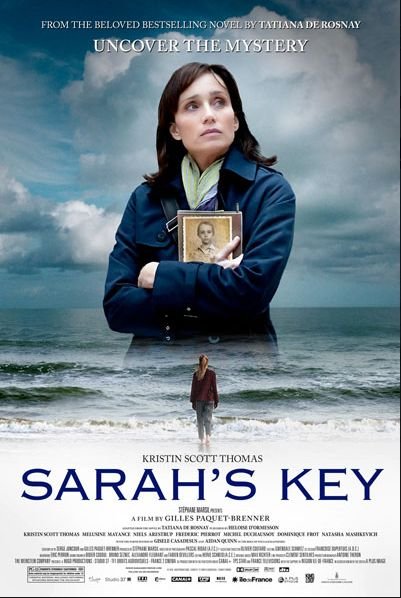
“Sarah’s Key” is what some would say is yet another movie dealing with the Holocaust and its impact on us all, but do not be fooled into thinking it is going to be the same old thing. Based on the novel “Her Name Was Sarah” by Tatiana de Rosnay, it ventures into this dark part of history from a different perspective as we watch the French army and bureaucracy aiding the Nazi party as they rounded up Jews and shipped them to Auschwitz; this event was called the Vel’ d’Hiv’ Roundup. As the story moves back and forth in time from 1942 to 2009, American journalist Julia Jarmond (Kristin Scott Thomas) works to solve a decades-old mystery which can no longer remain hidden, and these days we are all sick of things remaining hidden.
In 2009, Julia has moved into an apartment with her French husband and teenage daughter. She had previously written a celebrated article about the Vel’ d’Hiv’ Roundup, and he soon learns her husband inherited the apartment from his grandparents who came into possession of it during the 1940’s. From there, she becomes obsessed in learning about the apartment’s history, and she learns it was the scene of an unspeakable incident. Finding out the truth about this incident, however, proves to be extremely difficult as her family sees it as too damaging to reveal to the world at large.
Julia’s main focus is centered on a young girl named Sarah Starzynski (Mélusine Mayance) who hid her little brother Michel in a closet to keep him from getting rounded up by the Nazis along with everyone else. She makes him promise to stay in the closet until she returns, and she takes with her the only key which can unlock it. But Sarah soon realizes no one will be going back home anytime soon, and she escapes her captors in a desperate attempt to save Michel before it’s too late.
Like Stephen Daldry did with “The Reader,” director Gilles Paquet-Brenner makes the transitions between the past and present feel seamless to where it never feels jarring. He also avoids turning “Sarah’s Key” into a schmaltz fest begging for Oscar consideration which is quite the relief. By getting naturalistic performances from the cast, he creates an atmosphere which feels real and not exaggerated for effect. You end up getting caught up so emotionally in the story and its characters to where you do not feel like you’re watching just any motion picture.
Thomas is an amazing actress who never gets the same acclaim actresses like Meryl Streep or Viola Davis do on a regular basis. Maybe it is because her acting is not as theatrical, but Thomas’ strength is in inhabiting characters to where you never catch her acting. She pulls off a flawless American accent to where she makes the act look effortless, and she speaks fluent French ever so beautifully.
Attention must also be paid to Mélusine Mayance who gives a very believable performance as the young Sarah. Called upon to portray a child going through horribly nightmarish circumstances, Mayance holds her own amongst the adults, and she breaks your heart through her utter commitment to the character she portrays. Throughout, she makes you share Sarah’s desperation in getting to her little brother before someone else does, and she makes you feel her accomplishments and disappointments in every which way.
“Sarah’s Key” is one of those movies I find it hard to find any fault with it. Everything seems to fit together perfectly, and nothing ever appears superfluous to the story. While it treads the well-worn ground of Holocaust movies and of what happened to millions of Jews, it finds an interesting angle by looking at the complicity of the French in this atrocity. It never did get much of a release as it spent little time in theaters near you, and you will probably be hearing about it more about on physical and digital media. Here is hoping that it finds a bigger audience than the one it has already gotten to date.